Some reality breaks out in the EU

image_pdfimage_print

It was good to hear Mr Juncker say the EU had made a mistake in briefing in the way they did about the Downing Street dinner. Just as it makes sense for the UK to be friendly and positive in its offer and dealings with the EU as we prepare to leave, so it makes sense for the EU to be the same. We, after all, are an important market for their exports, a valued partner in many collaborations, an important part of their defence and security alliance, and a frequent ally or coalition partner in international matters. We are happy for that to remain true in the future but expect reciprocal good will.

There is a clear need for strong and stable leadership in the UK to represent our interests. The UK needs to explain patiently and firmly that we will be taking back control of our laws, our money and our borders. We also need to make clear that we are making a generous offer of continuity over trade, defence, security and many other joint ventures and common workings across a wide range of areas. There are technical matters to be settled over market access, transport rights, the rights of citizens living in each other’s territories and the rest that need not be difficult to resolve if there is good will on both sides. I see no lack of good will on the UK side. That is why Mr Juncker’s recalibration of the EU response is welcome.

It is never a good idea to try to punish your main customer. I still expect reality and commonsense to break out in due course in the EU over the UK departure, as it has done over the commentary on a dinner.

Meanwhile I see the Evening Standard on line gives prominence to the fear that university research will be damaged by Brexit. Have they not heard Ministers stating clearly talented and well qualified people will be free to come to the UK. This will include faculty members, with an open door for foreign students to undertake courses at our universities.

Promoted by Fraser Mc Farland on behalf of John Redwood, both at 30 Rose Street Wokingham RG40 1XU
News story: BRITISH & IRISH LIONS TOUR 2017 – TRAVEL ADVICE

image_pdfimage_print

The British & Irish Lions are touring New Zealand from 3 June to 8 July. The Tour is expected to attract up to 30,000 travelling fans. If you’re one of them, please read the following advice and check out our travel advice for New Zealand.

Passports

Your passport should be valid for a minimum period of one month from the date of exit from New Zealand.

If you lose your passport, or it’s stolen, you will need to get an Emergency Travel Document from the nearest British Consulate.

Visas

British passport holders can enter New Zealand as a visitor for up to 6 months on arrival without a visa, provided you can satisfy an Immigration Officer that you meet the requirements of the immigration rules. Visitors must have an onward ticket.

If you’re transiting another country en route to or from New Zealand, make sure you check the entry requirements for that country. New Zealand’s immigration rules are strict, particularly regarding employment. Anyone wishing to work will need a visa allowing employment.

For more information about visas, visit the New Zealand Immigration website or contact the nearest New Zealand High Commission.

Travel Insurance

Take out comprehensive travel and medical insurance before you travel.

At the matches

Match venues will be enforcing their standard conditions of entry. Generally speaking, prohibited items include: alcohol; drugs; glass bottles or breakable containers; metal containers, cans; offensive weapons, including potential missiles; flags over 1m x 1m in size; and professional camera/video/ audio equipment.

All match venues reserve the right to refuse entry to anyone who is intoxicated and/or disorderly. Licensing laws are strictly enforced: even being mildly intoxicated can lead to being refused entry.

Crime

The level of crime is no higher than in the UK. Be careful with personal possessions and travel documents in cities and other popular tourist destinations. Avoid carrying everything in one bag; only carry what you need; and leave spare cash and valuables in hotel safety deposit boxes. Don’t leave bags unattended in vehicles, internet cafes, pubs or clubs.

Driving

See the extensive advice available on the following websites, NZ Police, NZ AA, and Freedom Camping.

  • do recognise that NZ roads are different; outside of the main cities, there are very few motorways; if you’re travelling a long distance your average speed will be 80 kmh, not 100 kmh, (even on State Highway 1 due to hills, weather and all the little towns where there are no by-passes);
  • don’t travel in convoys of camper vans; if you’re travelling slower than the local traffic it is convention in New Zealand to pull over to the left often to allow faster traffic to pass you;
  • don’t rely exclusively on GPS to select routes, it may direct you to roads that aren’t suitable for your vehicle; talk to locals (at service stations perhaps) and take their advice

Emergency services numbers

The number for the emergency services in New Zealand is: 111.

Further information

British & Irish Lions website

NZ Police Website

Like UK in New Zealand on Facebook, and follow @ukinnz and the LIONS APP on Twitter

Star UAV to monitor forest fire

image_pdfimage_print

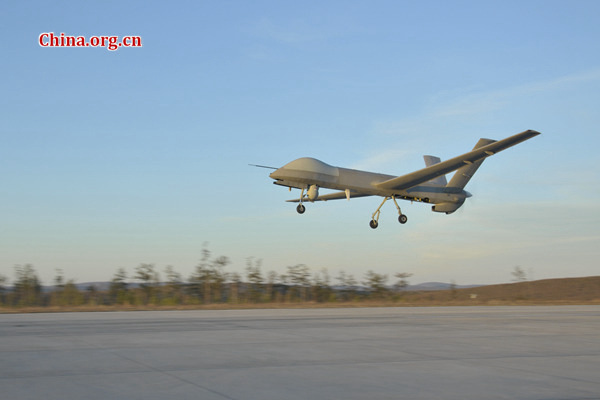
A CH-4 UAV takes off from a regional airport in the Greater Khingan Mountains for forest monitoring on May 10. [Photo provided to China.org.cn]

A CH-4 unmanned aerial vehicle (UAV), also known as a “rainbow drone,” was deployed recently in northeast China’s Greater Khingan Mountains to provide an “eye in the sky” for possible forest fires.

Its deployment followed pressing demands from local forestry authorities for an advanced form of forest monitoring and to provide an early warning in case of fire. It coincided with the 30th anniversary of a major fire in the Greater Khingan Mountains, on May 6, 1987.

Monitoring and surveillance to spot forest fires in the region were traditionally conducted by forest keepers’ visual observation from fixed look-out posts and, occasionally, from a manned aircraft.

Although quite effective, such methods were far from efficient enough and involved too much manpower, said Wu Pengchao, chief of the Tahe Aviation Station in the mountains.

By contrast, a fixed-wing UAV like the CH-4 is a far better solution. Its service ceiling is 7,200 meters. In normal operation, it can hover at an altitude of 4,000 – 5,000 meters and stay airborne for up to 40 hours, meaning one sortie can provide constant surveillance for almost two days during which time ground staff can take a rest in shifts.

The CH-4 is equipped with both visual and infrared sensors to allow it to see day and night.

In particular, its near-infrared sensors allow CH-4 to see through dense smoke and pinpoint the source of any fire, according to Zhou Nai’en, deputy general manager of CH UAV Company, which is affiliated to the China Academy of Aerospace Aerodynamics (CAAA).

“This is something human eyes can never achieve, no matter how many manned planes are mounted,” said Zhou, noting that traditional aerial observation for forest fire was conducted by people looking out through the plane’s portholes with binoculars.

The Tahe aviation station chief said the introduction of the UAV also followed the call from State Forestry Administration to enhance and innovate forest monitoring; the station chose CH-4 out of other homebuilt UAVs because of its superb performance over affordable price.

Forest surveillance is the latest mission to add to the list of civil tasks of rainbow drones whose good performance in overseas anti-terrorism operations has earned them fame as “star UAVs.”

Zhou, a designer for rainbow series drones, maintained that a UAV was a basic platform with the payload deciding whether its mission is military or civil.

Domestically, different types of rainbow drones have shown their strengths in geological exploration and exploitation, disaster area observation and regional communications enhancement. Their roles will soon be expanded to maritime surveillance, according to Zhou.

Explanatory document issued on Belt and Road Initiative

image_pdfimage_print

China issued a detailed explanatory document on the Belt and Road Initiative on Wednesday.

The document, titled Jointly Build the Belt and Road: Ideas, Practices and Chinese Contributions, was released by the Leading Group on the Construction of the Belt and Road.

The Belt and Road Initiative is a China-proposed trade and infrastructure plan connecting Asia with Europe and Africa.

The document aims to promote understanding of the initiative, demonstrate the achievements, and enhance strategic mutual trust, dialogue and cooperation among nations, so as to contribute to the building of a community of common destiny, said the introduction to the document.

In addition to an introduction and conclusion, the document comprises five chapters on the initiative’s blueprint, cooperation framework, spheres and mechanisms, and forecast on future cooperation.

China will host the Belt and Road Forum for International Cooperation on May 14 and 15.

Press Releases: Statement on the President’s Intent to Nominate Mark Green to Lead the U.S. Agency for International Development

image_pdfimage_print

Press Statement

Rex W. Tillerson

Secretary of State

Washington, DC

May 10, 2017


I welcome President Trump’s announcement of his intention to nominate Mark Andrew Green as the new Administrator for the U.S. Agency for International Development (USAID).

Mark brings vast experience to this position, having served as a U.S. Ambassador to Tanzania, a Member of the House of Representatives from Wisconsin, and a board member of the Millennium Challenge Corporation. He currently serves as the president of the International Republican Institute, an organization dedicated to building strong and lasting democracies across the globe. Mark will help us prioritize where America’s future development investments will be spent so that we can ensure every tax dollar advances our country’s security and prosperity.

USAID plays a vital role in protecting U.S. national security by fostering stability, resolving conflict, responding to humanitarian crises, and ending infectious diseases. He will serve as an outstanding leader for the men and women of USAID, and will work to build a more safe and prosperous global community.