Author Archives: hksar gov

LCQ14: Promoting research and development of Hong Kong

     Following is a question by the Hon Tang Fei and a written reply by the Secretary for Education, Dr Choi Yuk-lin, in the Legislative Council today (May 21):
 
Question:
 
     According to a research publication released by the Legislative Council Secretariat last month, the number of research and development (R&D) personnel per million population in Hong Kong is significantly lower than that of neighbouring regions, and the proportion of local research postgraduates is continuously declining. There are views that research postgraduates also face multiple challenges in employment and the transformation of research outcomes. If such issues are not addressed in a timely manner, Hong Kong’s future innovation development and economic restructuring will be affected. In this connection, will the Government inform this Council:
 
(1) given that according to the aforesaid research publication, Hong Kong currently has only 4 809 researchers per million population, lagging far behind Singapore and South Korea, whether the Government has drawn up specific measures to attract and nurture local R&D talent, particularly in STEM fields; if so, of the details; if not, the reasons for that; whether it has set specific targets and timelines to increase the number of local R&D personnel in the next three years;
 
(2) given that according to the aforesaid research publication, in the 2022-2023 academic year, only 63 per cent of research postgraduates from universities funded by the University Grants Committee secured full-time employment within six months after graduation, and only 11.6 per cent of graduates could manage to find jobs directly related to their studies, whether the Government has tailor-made support measures to address the employment challenges faced by research postgraduates, so as to help them maximise their potential and meet the needs of the local R&D industry; if so, of the details; if not, the reasons for that; and
 
(3) as there are views pointing out that while Hong Kong’s R&D outcomes reach international standards, they fall short in terms commercialisation and industrialisation, whether the Government will strengthen efforts to promote industry-academia-research collaboration to enhance the industrialisation of R&D outcomes and foster the development of an innovative economy; if so, of the details; if not, the reasons for that?
 
Reply:
 
President,
 
     The Government has all along been dedicated to promoting the development of innovation and technology (I&T), with a view to driving economic restructuring and more diversified development. Apart from the nation’s clear support for Hong Kong’s development into an international I&T hub under the 14th Five-Year Plan, the recently promulgated 2024-2035 master plan on building China into a leading country in education also proposed to establish an integrated co-ordinating mechanism for education, technology and talent, strengthening the supportive role of education for science and talent, closely tying in with the development of technological innovative centres in the Guangdong-Hong Kong-Macao Greater Bay Area and the development of a highland for high-level calibre and platform for attracting talent, and enhancing the overall efficacy of the innovation system.
 
     The replies from the Education Bureau and the Innovation, Technology and Industry Bureau to the Hon Tang Fei’s question are as follows:
 
(1) and (2) The Government has been expanding the local research and I&T talent pool through a multi-pronged approach. On the front of nurturing talent, the Government guides the University Grants Committee (UGC)-funded universities to align their planning with the nation’s strategy of invigorating China through science and education, and support the goal of developing Hong Kong into an international I&T hub, including setting the key performance indicators in the 2022 Policy Address with 35 per cent of the students pursuing UGC-funded programmes to study in STEAM (science, technology, engineering, arts and mathematics) subjects. In addition, publicly-funded research postgraduate (RPg) places have been gradually increased from 5 595 in the 2022/23 academic year to 7 200 places in the 2024/25 academic year. Together with the gradual uplift of the over-enrolment ceiling from 70 per cent in the 2021/22 academic year to 100 per cent, institutions could flexibly enrol 14 400 RPg students at most, which is an increase of more than half, to constantly expand the I&T and research talents of Hong Kong.
 
     Additionally, the STEM Internship Scheme under the Innovation and Technology Commission (ITC) subsidises undergraduates and postgraduates taking full-time STEM-related programmes to enrol in short-term internships, so as to foster their interest early in pursuing careers in I&T after graduation. The Research Talent Hub under the ITC also provides funding support for eligible companies or organisations to engage university graduates to conduct research and development (R&D) work.
 
     For attracting talent front, the InnoHK Research Clusters has successfully attracted R&D talents from all over the world to Hong Kong, with over 2 500 local, overseas and Mainland researchers involved, and has provided training for over 1 200 PhD students. The ITC will launch the Frontier Technology Research Support Scheme, with a view to attracting international top-notch talents to conduct basic research in frontier technologies in Hong Kong and nurture local researchers.
 
     According to the report “Hong Kong Innovation Activities Statistics 2023” released by the Census and Statistics Department in December 2024, the number of R&D personnel has reached 43 403 in 2023, which has increased steadily over the years.
 
(3) With an aim to enhance the I&T ecosystem and Hong Kong’s competitiveness on the I&T front, the Government has been promoting collaboration among the industry, academic and research sectors through various measures, and adopting a multi-pronged approach to support commercialisation of R&D outcomes of local universities. For example, the $10 billion Research, Academic and Industry Sectors One-plus Scheme under the Innovation and Technology Fund (ITF) funds, on a matching basis, research teams from universities with good potential to become successful start-ups to transform and commercialise their R&D outcomes, while industry sponsorship is a mandatory requirement. Furthermore, the ITF will continue to provide annual funding to the Technology Transfer Office of each of the eight UGC-funded universities, thereby supporting the development of innovative ideas and R&D outcomes into new products or services. The R&D centres set up by the Government have also been taking forward industry-driven applied R&D work that suits market needs and transferring technologies to the industries through contract researches, licensing arrangements, etc to commercialise their R&D outcomes. Meanwhile, the Government facilitated the establishment of the Hong Kong New Industrialisation Development Alliance. Pooling together talent and resources from various fields, the Alliance aims to serve as a platform for collaboration among the Government, industry, academia, research and investment sectors. With a view to promoting co-operation among enterprises and organisations, we believe that the Alliance will also be conducive to the promotion of transformation and commercialisation of R&D outcomes. read more
LCQ13: Measures for elderly residents to retire in the Mainland

     Following is a question by Dr the Hon Dennis Lam and a written reply by the Secretary for Labour and Welfare, Mr Chris Sun, in the Legislative Council today (May 21):
 
Question:

     It is learnt that moving north for retirement has become a growing trend in recent years, and the Government has been proactively promoting cross-border elderly care measures to facilitate retirement of Hong Kong elderly residents in cities of the Guangdong-Hong Kong-Macao Greater Bay Area (GBA). In this connection, will the Government inform this Council:

(1) of the respective latest numbers of participants in the Residential Care Services Scheme in Guangdong and the Pilot Scheme for Elderly Comprehensive Social Security Assistance Recipients to Reside in Residential Care Homes in Guangdong;

(2) of the respective numbers of Hong Kong elderly residents currently living in GBA Mainland cities who are receiving (i) Comprehensive Social Security Assistance, (ii) Old Age Allowance, and (iii) Old Age Living Allowance;

(3) whether it has considered establishing an integrated cross-border elderly care information platform to facilitate elderly residents who wish to retire in GBA Mainland cities and their families in accessing more comprehensive and up-to-date policy information and service guidelines; if so, of the details; if not, the reasons for that; and

(4) whether it has conducted any survey on the needs of Hong Kong middle-class elderly residents seeking to retire in the Mainland (including healthcare and everyday needs), and explored how to provide such elderly residents with high-quality elderly care services (such as smart elderly care); if so, of the details; if not, the reasons for that?

Reply:

President,

     The Government continues to implement a number of measures, including providing subsidised residential care services and portable cash assistance, to facilitate Hong Kong elderly people’s retirement in the Greater Bay Area (GBA) Mainland municipalities and offer more choices for them. I reply to the question raised by Dr the Hon Dennis Lam as follows:

(1) As at end-April 2025, there were around 460 elderly persons joining the Residential Care Services Scheme in Guangdong (GDRCS Scheme) and staying in the 15 designated residential care homes for the elderly (RCHEs) in the GBA Mainland cities.

     The three-year Pilot Scheme for Elderly Recipients of Comprehensive Social Security Assistance (CSSA) to Reside in Residential Care Homes in Guangdong (Pilot Scheme) will be launched in the second half of 2025 to subsidise elderly CSSA recipients who opt to retire in Guangdong and reside in designated RCHEs in the province, so as to improve their living environment and quality of life. Each eligible elderly person will receive a monthly subsidy of HK$5,000 with a quota of 1 000. 

(2) As at end-April 2025, the numbers of elderly persons living in GBA Mainland cities and receiving Portable Comprehensive Social Security Assistance (PCSSA), Old Age Allowance (OAA) or Old Age Living Allowance (OALA) are set out in the table below:
 

GBA Mainland
cities
PCSSA OAA OALA Sub-total
Guangzhou 62 1 720 2 353 4 135
Shenzhen 141 2 652 5 693 8 486
Zhuhai 9 430 639 1 078
Foshan 53 605 1 330 1 988
Huizhou 60 399 1 180 1 639
Dongguan 61 980 2 268 3 309
Zhongshan 18 868 1 412 2 298
Jiangmen 23 328 922 1 273
Zhaoqing 12 105 228 345
Total 439 8 087 16 025 24 551

(3) Apart from promoting the GDRCS Scheme to the general public through various means (e.g. District Elderly Community Centres/Neighbourhood Elderly Centres, radio and TV promotion clips), information on the GDRCS Scheme and the portable cash assistance is available on the Social Welfare Department’s (SWD) website. The SWD updates relevant information in a timely manner and will consider optimising the website to facilitate access to relevant information by the public. Besides, the application procedures of the OAA and the OALA under the Guangdong Scheme are available on the “Cross-boundary Public Services” website. The SWD will consider including the information on the GDRCS Scheme in the relevant website.

(4) As the various needs of Hong Kong’s middle-class elderly people living on the Mainland are not under the policy purview of the Labour and Welfare Bureau, we have not conducted any relevant surveys. Upon our enquiry, other bureaux or departments (e.g. the Constitutional and Mainland Affairs Bureau, the Commerce and Economic Development Bureau and the Census and Statistics Department) have advised that they have not conducted such surveys either. read more

LCQ10: Joint University Programmes Admissions System

     Following is a question by the Hon Gary Zhang and a written reply by the Secretary for Education, Dr Choi Yuk-lin, in the Legislative Council today (May 21):
 
Question:
 
     It is learnt that applicants who wish to apply for admission to the programmes under the Joint University Programmes Admissions System (JUPAS) should submit their applications by the deadline in December of the year preceding the intended school year of admission. Applicants who have missed the deadline may typically submit late applications from December of the same year to May of the following year. In this connection, will the Government inform this Council whether it knows the number of applications processed under JUPAS in each of the past five years and this year to date, and the number of late applications among them (with a tabulated breakdown by the type of documents held by the applicants (i.e. LS1 to LS9))?
 
Reply:
 
President,
 
     The Joint University Programmes Admission System (JUPAS) is the main application route to assist local students with Hong Kong Diploma of Secondary Education Examination results (past and/or current) in applying for admission to post-secondary programmes. These programmes include the University Grants Committee (UGC)-funded full-time bachelor’s degree programmes, Hong Kong Metropolitan University’s self-financing full-time bachelor’s degree programmes, and the Education University of Hong Kong’s UGC-funded full-time higher diploma programme.
 
     After consultation with the JUPAS Office, our reply to the Hon Gary Zhang’s question is as follows –
 
     The JUPAS Office has published historical application statistics, including the total number of applicants, on the JUPAS statistics webpage. Over the past five JUPAS admissions exercises (2020-2024), the numbers of applicants (as at the Day of Announcement of Main Round Offer Results) were 41 664, 40 658, 39 523, 39 948 and 39 634 respectively. Details are on the relevant website at www.jupas.edu.hk/en/statistics/main-round-offer.
 
     In the aforementioned admissions exercises, late applications on average accounted for about 2 per cent of the overall applications, which has maintained at a relatively stable level. The majority of these late applications were from the LS1 category (i.e. Hong Kong Permanent Identity Card holders), representing an average of about 96 per cent of the late applications. The percentage also remained consistently stable. There were only few late applicants in other categories. read more

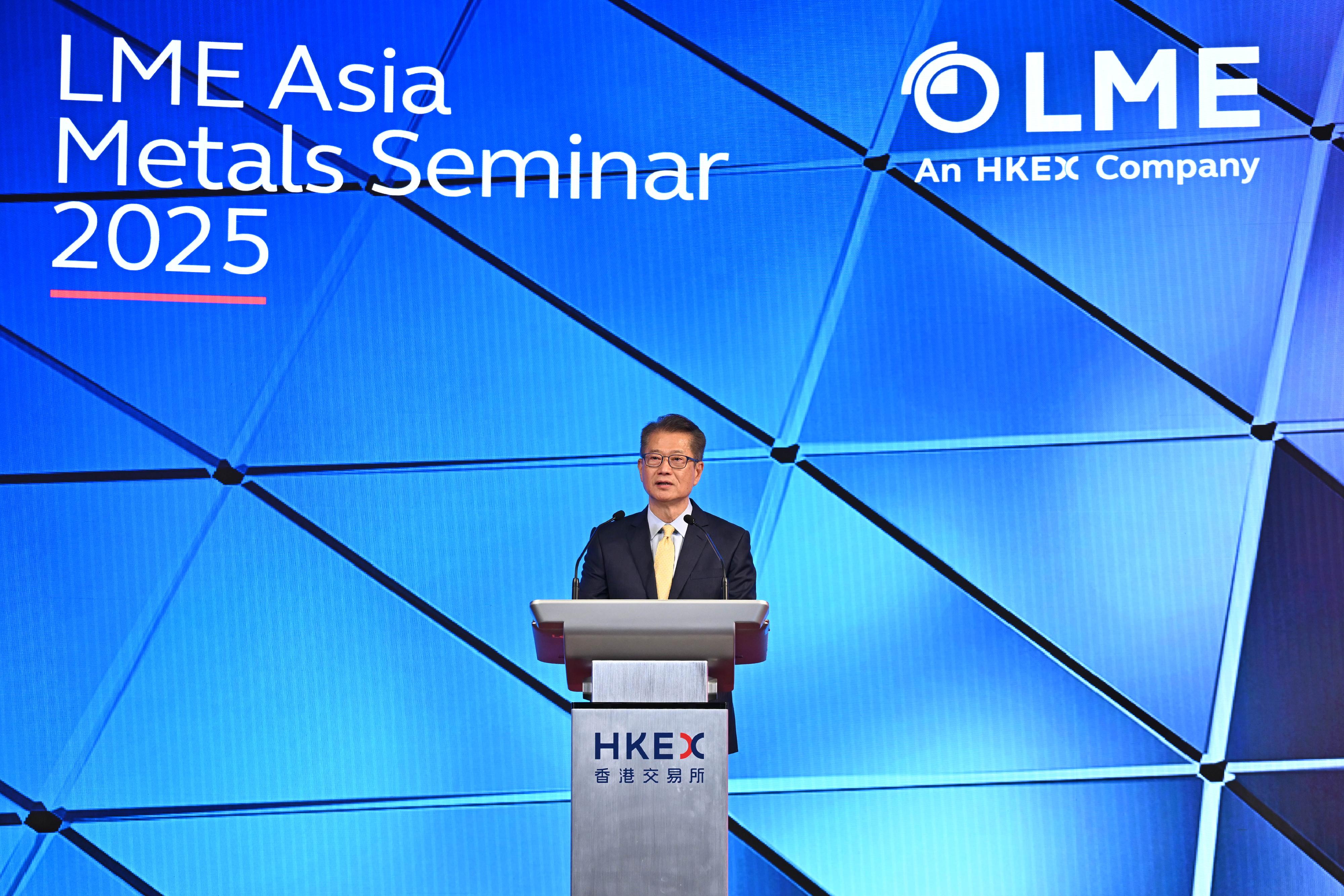
Speech by FS at LME Asia Metals Seminar 2025 (English only) (with photo/video)

     â€‹Following is the speech by the Financial Secretary, Mr Paul Chan, at the LME Asia Metals Seminar 2025 today (May 21):

Carlson (Chairman of the Hong Kong Exchanges and Clearing Limited (HKEX), Mr Carlson Tong), Bonnie (Chief Executive Officer of the HKEX, Ms Bonnie Chan), John (Chairman of the London Metal Exchange (LME), Mr John Williamson), Matthew (Chief Executive Officer of the LME, Mr Matthew Chamberlain), distinguished guests, ladies and gentlemen,

     Good morning.

     It is a pleasure to join you all today at the LME Asia Metals Seminar 2025.

     First, my heartfelt thanks to HKEX and the LME for bringing this important event once again to Hong Kong. To international guests travelling from afar, a very warm welcome. Your presence today highlights not only the importance of ongoing dialogue in shaping the global metals landscape, but also your recognition of Hong Kong’s strategic role as a vital platform for these conversations.

The world of metals

     Over the past year, the global market for non-ferrous metals continued to exhibit strong momentum. In 2024, despite varied trends across different metals, the overall trading volumes at LME reached 178 million lots, representing a 20 per cent increase year-on-year. Particularly notable was the impressive growth in new-energy metals such as nickel and cobalt, which reflects their significance in driving industrial transformation and technological advancement worldwide.

     China remains a pivotal force in this landscape, both as a leading producer and consumer of non-ferrous metals. In 2024, our country’s trade in non-ferrous metals exceeded US$368 billion, a growth of 11 per cent. With strong policy support and sustained investments towards new energy and high-tech industries, the demand for metals is widely expected to accelerate further in the years ahead.

     Despite global and regional geo-economic dynamics, Hong Kong is uniquely positioned to harness this growth momentum, and serves as a central platform for the industry’s development. 

Hong Kong’s unparalleled advantages

     Under the “one country, two systems” framework, Hong Kong is the only place in the world that enjoys the unique dual advantages of being part of China, while maintaining an internationally most open, transparent, and globally connected economy, operating with best international standards.

     We are a free port, with zero import tariffs and unrestricted movement of goods, capital and information. Our customs clearance regime is efficient, connectivity to the Greater Bay Area and the broader Mainland and Asian markets is seamless, and the logistics and maritime network is world-class.

     Crucially, our rule of law tradition, rooted in the common law system and underpinned by a judiciary exercising powers independently, provides a trusted and respected platform for conducting trade and resolving disputes. 

     Complementing this is our ecosystem of top-notch financial and professional services. Hong Kong is home to 70 of the world’s top 100 banks, and six of the top 10 global insurance companies. The market capitalisation of our stock market has reached US$5.2 trillion. We offer unparalleled expertise and deep liquidity to support metals trading and investment activities.

The development ahead

     Looking ahead, a key driver of the growth of this industry is the global push for sustainability. Despite backlashes in individual countries, green transition continues to be the mainstream worldwide. For example, our country remains firmly committed to sustainability and its goal of carbon neutrality by 2060. According to the International Energy Agency, achieving global net-zero emissions will require annual investments of US$4.5 trillion from 2030 onward. The quest for renewable energy, cleaner production methods and a greener lifestyle by consumers around the world will support the demand for metals necessary for the production of new energy vehicles, solar panels, lithium batteries, and more. 

     Here in Hong Kong, we are committed to carbon neutrality by 2050 with four key strategies: net-zero electricity generation, green transport, green buildings and waste reduction.

     An important dimension of our work is to align our standards with the international ones, including financial reporting. Last year, we launched the Roadmap on Sustainability Disclosure in Hong Kong, which provides a well-defined pathway for large publicly accountable entities to fully adopt the ISSB Standards no later than 2028. As the first step, the HKEX has already introduced enhanced climate-related disclosure requirements, mandating listed companies to comply starting from this year. 

     We are encouraged by LME’s leadership and commitment in this respect too, including your new emission reporting requirements for aluminium brands. We believe these initiatives will help drive a more sustainable metals industry.

     Recognising the vast potential in the metals trading space, our Chief Executive outlined in his Policy Address last year the vision to create a commodity trading ecosystem in Hong Kong. This ecosystem will catalyse growth across related sectors, including warehousing and distribution, trading, testing and certification, insurance, financial and maritime services.

     An on warehousing, I’m delighted to note that since January, Hong Kong has officially joined the LME’s global warehouse network, bringing storage facilities closer than ever to the industrial heartlands and consumption centres on the Chinese Mainland. The progress is impressive: within just a few months, seven warehouses have already been approved, with operations commencing as early as July.

     We are also moving forward with policy initiatives to drive this development. For example, as announced in my 2025-26 Budget, we will introduce a 50 per cent profits tax concession for eligible commodity trading activities. We aim to bring the relevant bill to the Legislative Council as soon as possible.

     Ladies and gentlemen, in closing, I would like to express my sincere appreciation to LME and HKEX once again for organising this seminar. I wish you all fruitful discussions, and every success in the time ahead. Thank you.

Photo  
read more

Special traffic arrangements for race meeting in Happy Valley

     Special traffic arrangements will be implemented in Happy Valley today (May 21). The arrangements will last until the crowds have dispersed after the race meeting.

A. Traffic arrangements before the commencement of the first race

     The following road closure and traffic diversions will be implemented from 50 minutes before the start of the first race for day racing, or from 6pm onwards for night racing:

1. Road closure

     Southbound Wong Nai Chung Road between Queen’s Road East and the up-ramp outside the Hong Kong Jockey Club (HKJC) will be closed, except for vehicles heading for Aberdeen Tunnel.

2. Traffic diversions

– Southbound Wong Nai Chung Road between Village Road and the up-ramp outside the HKJC will be re-routed one way northbound;
– Traffic along eastbound Queen’s Road East heading for Wan Chai and Happy Valley will be diverted to turn left to Morrison Hill Road;
– Traffic along southbound Morrison Hill Road heading for Happy Valley will be diverted via Sports Road and Wong Nai Chung Road;
– Traffic along Queen’s Road East cannot turn right to Wong Nai Chung Road, except for vehicles heading for Aberdeen Tunnel;
– Traffic from Cross Harbour Tunnel heading for Queen’s Road East will be diverted via the down-ramp leading from southbound Canal Road flyover to Morrison Hill Road to turn right at the junction of Wong Nai Chung Road and Queen’s Road East; and
– Traffic from Cross Harbour Tunnel heading for Happy Valley or Racecourse will be diverted via the down-ramp leading from southbound Canal Road flyover to Canal Road East, southbound Morrison Hill Road, Sports Road and Wong Nai Chung Road.

B. Traffic arrangements before the conclusion of race meeting

     The following road closure and traffic diversions will be implemented from about 35 minutes before the start of the last race:

1. Road closure

– The up-ramp on Wong Nai Chung Road outside the HKJC leading to Aberdeen Tunnel;
– Southbound Wong Nai Chung Road between Queen’s Road East and the up-ramp leading to Aberdeen Tunnel;
– Southbound Wong Nai Chung Road between Village Road and the Public Stands of the HKJC;
– Westbound Leighton Road between Wong Nai Chung Road and Canal Road East; and
– Southbound Morrison Hill Road between Leighton Road and Queen’s Road East.

     In addition, southbound Wong Nai Chung Road between the up-ramp leading to Aberdeen Tunnel and the Public Stands of the HKJC will be closed from about 10 minutes before the start of the last race.

2. Traffic diversions

– Eastbound Queen’s Road East at its junction with Morrison Hill Road will be reduced to one-lane traffic heading for northbound Canal Road flyover;
– Traffic from Cross Harbour Tunnel heading for Wan Chai will be diverted via the down-ramp leading from southbound Canal Road flyover to Canal Road East, U-turn slip road beneath Canal Road flyover, Canal Road West and Hennessy Road;
– Traffic from Cross Harbour Tunnel heading for Happy Valley will be diverted via the down-ramp leading from southbound Canal Road flyover to Canal Road East, eastbound Leighton Road and Wong Nai Chung Road;
– Traffic along southbound Morrison Hill Road will be diverted to turn left to eastbound Leighton Road;
– Traffic along southbound Morrison Hill Road heading for Happy Valley will be diverted via eastbound Leighton Road and Wong Nai Chung Road; and
– Traffic along westbound Leighton Road will be diverted to Wong Nai Chung Road.

C. Learner drivers prohibition

     Learner drivers will be prohibited to turn left from Caroline Hill Road to Leighton Road between one and a half hours before the start of the first race and one hour after the last race. In addition, learner drivers will be prohibited from accessing the following roads within the above period of time:

– Shan Kwong Road between Yik Yam Street and Wong Nai Chung Road;
– Village Road between its upper and lower junctions with Shan Kwong Road;
– Percival Street between Hennessy Road and Leighton Road;
– Canal Road East; and
– The service road leading from Gloucester Road to Canal Road flyover.

D. Suspension of parking spaces

     Parking spaces on southbound Wong Nai Chung Road between Sports Road and Blue Pool Road will be suspended from 11am to 7pm for day racing, and from 5pm to 11.59pm for night racing respectively.

     All vehicles parked illegally during the implementation of the above special traffic arrangements will be towed away without prior warning, and may be subject to multiple ticketing.

     Actual implementation of road closure and traffic diversion will be made by the Police at the time depending on traffic conditions in the areas. Motorists should exercise tolerance and patience, and follow the instructions of Police on site. read more