Tag Archives: Governmental

image_pdfimage_print

Long-time Russian Ambassador to UN, Vitaly Churkin, dies suddenly in New York

Vitaly Churkin, Permanent Representative of the Russian Federation to the United Nations, briefing journalists late last year at Headquarters. UN Photo/Amanda Voisard

20 February 2017 – The General Assembly today held a moment of silence honouring the memory of the Permanent Representative of the Russian Federation to United Nations, Vitaly Churkin, who died suddenly this morning in New York.

During a meeting of the Assembly on the reform of the world body, Russia’s Deputy Permanent Representative, Petr Iliichev, informed those present about Ambassador Churkin’s sudden passing.

The seasoned diplomat, who would have turned 65 tomorrow, served as Permanent Representative since 2006.

read more

UN Security Council condemns latest terrorist attack in Mogadishu

20 February 2017 – Strongly condemning the latest deadly terrorist attack in the Somali capital, Mogadishu, the United Nations Security Council today reiterated that its determination to support peace, security and development in the long-troubled country would not be swayed by this, or any other such attack.

In a press statement that follows yesterday’s terrorist attack at a market in Mogadishu that killed at least 39 people and injured many more, the members of the Council expressed their deep sympathy and condolences to the families of the victims, as well as to the people and Government of Somalia. They also wished a speedy recovery to those injured.

The Council went on to commend the swift response of Somalia’s security and first responders.

It also reaffirmed that terrorism in all its forms and manifestations constitutes one of the most serious threats to international peace and security and underlined the need to bring perpetrators, organizers, financiers and sponsors of these reprehensible acts of terrorism to justice, as well as reaffirmed the need to combat the scourges in accordance with international law.

Further to the statement, the Security Council paid tribute to all Somali and international actors working to bring peace and stability in Somalia. The 15-nation body reiterated its determination to support peace, stability and development in Somalia and underlined that &#8220neither this nor any other terrorist attack would weaken that determination.&#8221

read more

Famine declared in region of South Sudan – UN

20 February 2017 – Famine has been formally declared in parts of South Sudan, the United Nations said today, warning that war and a collapsing economy have left some 100,000 people facing starvation there and a further 1 million people are classified as being on the brink of famine.

&#8220Famine has become a tragic reality in parts of South Sudan and our worst fears have been realised,&#8221 said Serge Tissot, the Food and Agriculture Organization (FAO) Representative in South Sudan, in a news release issued jointly with the United Nations Children’s Fund (UNICEF) and the World Food Programme (WFP).

&#8220Many families have exhausted every means they have to survive,&#8221 he stated, explaining that these people are predominantly farmers who have lost their livestock, even their farming tools.

Famine is currently affecting parts of Unity State in the northern-central part of the country. A formal famine declaration means people have already started dying of hunger.

Famine has become a tragic reality in parts of South Sudan

The situation is the worst hunger catastrophe since fighting erupted more than three years ago between rival forces &#8211 the Sudan People’s Liberation Army (SPLA) loyal to President Salva Kiir and the SPLA in Opposition backing First Vice-President Riek Machar.

The three UN agencies warned that urgent action is needed to prevent more people from dying of hunger.

According to the Integrated Food Security Phase Classification (IPC) update released today by the government, the three agencies and other humanitarian partners, 4.9 million people – more than 40 percent of South Sudan’s population – are in need of urgent food, agriculture and nutrition assistance.

The total number of food insecure people is expected to rise to 5.5 million at the height of the lean season in July if nothing is done to curb the severity and spread of the food crisis.

&#8220More than one million children are currently estimated to be acutely malnourished across South Sudan; over a quarter of a million children are already severely malnourished. If we do not reach these children with urgent aid many of them will die,&#8221 said Jeremy Hopkins, UNICEF Representative a.i in South Sudan.

&#8220We have also warned that there is only so much that humanitarian assistance can achieve in the absence of meaningful peace and security, both for relief workers and the crisis-affected people they serve,&#8221 said WFP Country Director Joyce Luma.

read more

Bird flu vaccines set to undergo clinical trials

Four kinds of vaccine for the H7N9 strain of bird flu virus have been approved for clinical trials by China’s top drug regulator, according to the Beijing Food and Drug Administration.

The China Food and Drug Administration. [File photo/Xinhua]

The China Food and Drug Administration. [File photo/Xinhua] 


The administration will continue to provide assistance and guidance for clinical trials of the vaccines so they can enter the market as soon as possible, it said in a statement last week.

Beijing Tiantan Biological Products Co, a State-owned enterprise in Beijing, which developed the vaccines, announced on Wednesday that the China Food and Drug Administration had approved clinical trials. The company added that it must conduct other procedures after the completion of clinical trials before the vaccines can be sold on the market, including applying for registration of the drugs and acquiring certificates for their manufacture from the CFDA.

There are currently no vaccines for the H7N9 strain of bird flu-which is most active in winter and spring-available on the market in China or overseas, although several other domestic companies have also acquired approval from CFDA for clinical trials for similar products, Beijing Tiantan said.

Two human cases of H7N9 have been reported in Beijing this year, with both patients suspected of having been exposed to live poultry markets. Both are in critical condition, the Beijing Center for Disease Control and Prevention said last week.

A 41-year-old woman infected with the H7N9 strain of bird flu in Nanning, Guangxi Zhuang autonomous region, died on Sunday, the regional Health and Family Planning Commission said.

The central government has intensified measures to control the spread of H7N9, including shutting down live poultry markets, according to the National Health and Family Planning Commission. The commission called on the public to take precautionary measures such as avoiding contact with live poultry and cooking chicken meat thoroughly.

Human cases of H7N9 have been reported in 16 provinces in China since October, including in Yunnan, Fujian, Hubei and Hunan provinces, with most of them involving exposure to live poultry markets, according to the commission.

In January alone, 192 human cases of H7N9 were reported on the Chinese mainland, including 79 deaths, making it the worst period since the virus first appeared in China in 2013, the commission said.

There is no evidence to support sustained human-to-human transmission of the virus, which was first reported in the spring of 2013, according to the World Health Organization.

The Beijing Center for Disease Control and Prevention said last week that more sporadic cases are expected in the city.

Sporadic cases of the bird flu may last until late April, said Ni Daxin, deputy director of emergency response at the Chinese Center for Disease Control and Prevention.

read more

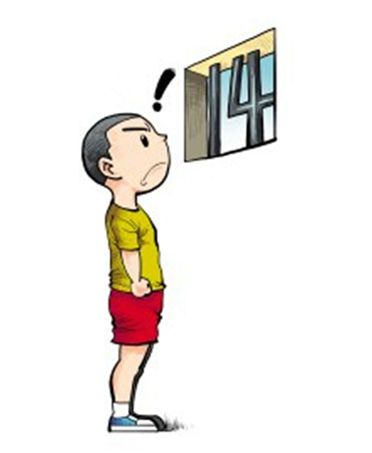
Plan to lower age to 14 on detention gets mixed review


 [Shanghai Daily]

A new draft law that would change the minimum age for administrative detention from 16 to 14 has been met with both concerns of over correction and voices of support, albeit cautious.

In China, administrative detention is a punishment for violations that threaten public security but do not constitute a criminal charge. Sentences usually do not exceed 20 days. People awaiting trial are sometimes held in administrative detention.

Currently, minors are exempt from administrative detention. However, the draft public security administration law released last Friday proposed administrative detention should be applicable for individuals “at least 14 and under 18.”

The draft law comes in response to rising concerns about young offenders, especially those involved with bullying or violence at school.

Moreover, a survey by China Youth and Children Research Center in 2015 showed that juvenile offenders are getting younger.

Many people, however, are wary about the new draft law.

“I don’t agree with it,” said Ge Haiyan, a mother in Beijing. “Children of that age are not mature enough to understand the consequences of their actions, and they are often rebellious at puberty. If we are too strict, our methods could have a negative effect.”

Wang Tingting, another Beijing parent, said there should be a more holistic approach to punishment, as juvenile offences were influenced by home and school life. “Teachers and parents should step up,” she said.

Song Ruiyong, an education official in Beijing, said he was more concerned about the negative effects administrative detention had on young offenders.

“There is a risk that they will interact with more seasoned criminals while in detention, and they could have a negative influence on them,” Song said. “Being locked-up is an irreversible experience, especially for children.”

He said youth education services would be better suited for young offenders.

Bian Feng, a judge in Shenyang City, said that the incarceration of minors was ignoring the fundamental problem. “I think community or social services could be a better option.”

Some people welcomed the proposed law, but not without conditions.

Wu Changhai, a law professor at China University of Political Science and Law, argued that the minimum age should only be applied in certain situations. “The rule should only be executed if the misconduct has had a huge social impact or if the suspect is a repeat offender,” Wu said.

Deng Xiquan, deputy director of CYCRC, also supports the new rules. “There are no existing actions in the current law for young offenders aged 14 to 16, and this has been exploited by some criminals who use kids of that age to circumvent the criminal law process,” Deng said. “The new rule, in a way, protects minors.”

Deng’s support comes with a condition. “All young offenders should be kept at a specialized complex, away from bad influences,” he said.

Wang Na, a lawyer in Beijing, supported the lowering of the minimum age, especially for those suspected of severe crimes.

“Teenagers these days mature earlier,” Wang said. “I have encountered cases of 14-year-olds suspected of molesting girls.”

She said the number of reported school bullying cases had increased, so the new law could work as a deterrent.

read more