Tag Archives: China

image_pdfimage_print

Government gazettes compulsory testing notice

     The Government exercises the power under the Prevention and Control of Disease (Compulsory Testing for Certain Persons) Regulation (Cap. 599J) and publishes in the Gazette a compulsory testing notice, which requires any person who had been present at 40 specified places during the specified period (persons subject to compulsory testing) to undergo a COVID-19 nucleic acid test.

     In view of a number of cases testing positive, 40 specified places are included in the compulsory testing notice. The Government strongly reminds members of the public to strictly follow the compulsory testing requirements and undergo testing on time as required. Mobile specimen collection stations have been set up by the Government in different districts to facilitate testing to be conducted in compliance with the compulsory testing notice. The above compulsory testing requirement applies to those who have completed a COVID-19 vaccination course as well.

     Persons who have tested positive in the past three months (including positive cases tested either by nucleic acid tests recorded by the Department of Health (DH) or by rapid antigen tests (RATs) that have been self-declared to the DH) do not need to undergo compulsory testing. For those who are subject to compulsory testing (save for those who have declared their positive RAT results as mentioned above), they must undergo nucleic acid tests in accordance with relevant compulsory testing notices and cannot use RATs to fulfil the requirement of such notices. In other words, a negative RAT result cannot be deemed as fulfilling the compulsory testing requirement. Furthermore, unless a person subject to compulsory testing has obtained a medical certificate proving that he or she is unfit to undergo testing using a sample taken through combined nasal and throat swabs because of health reasons, the person cannot provide a deep throat saliva sample to fulfil the compulsory testing requirement.

     Details of the compulsory testing notice are available on the Centre for Health Protection (CHP)’s website via the following link: www.chp.gov.hk/files/pdf/ctn_20220503.pdf.

     If any persons test positive under compulsory testing, such positive cases will be handled in the same manner as in those identified through other nucleic acid tests or self-declared through RATs. Their isolation arrangements (as well as the quarantine arrangements of their household members) are no different from other positive cases.

     Persons subject to compulsory testing in accordance with a compulsory testing notice must go to any of the mobile specimen collection stations, community testing centres (CTCs) or recognised local medical testing institutions to undergo professional swab sampling in fulfilling the requirements for compulsory testing. Young children may continue to undergo the test using a stool specimen. For details on obtaining stool specimen bottles, please refer to the COVID-19 thematic website: www.coronavirus.gov.hk/pdf/Stool_bottle_collection_points.pdf.

     The Comirnaty and CoronaVac vaccines are highly effective in preventing severe cases and deaths from COVID-19. They can provide protection to those vaccinated to prevent serious complications and even death after infection. The Government appeals to persons who are not yet vaccinated to get vaccinated without delay. The Government is working towards the goal of boosting the vaccination rates of children, teenagers and the elderly so that they can be protected by the vaccines as early as possible. Furthermore, the Scientific Committee on Vaccine Preventable Diseases and the Scientific Committee on Emerging and Zoonotic Diseases under the CHP of the DH has updated the consensus interim recommendations, and persons aged 60 or above who have taken three doses of vaccine are recommended to receive an additional dose (i.e. fourth dose) of either Comirnaty vaccine or CoronaVac vaccine at least three months after their last dose. Members of the public who are eligible should get the fourth dose as early as possible for better protection.
 
     CTCs provide testing services for the public. Booking and walk-in services are available. Members of the public only need to provide simple personal information on the 24-hour booking system (www.communitytest.gov.hk/en). The system shows the booking status of the centres for the coming two weeks to facilitate the public’s planning and selection of a suitable testing centre and a time slot for testing. The testing centres will accord priority to serve individuals with advance bookings. As of 6pm today (May 3), there was around 97 per cent availability for booking places for the coming two weeks. Members of the public may call the testing centres for enquiries on the availability of bookings or walk-in quotas before visiting the centres.
 
    The Government will reopen the mobile specimen collection station at Cheung Hang Estate in Tsing Yi tomorrow (May 4). Separately, ticketing machines have been installed in a number of service points for on-site ticket arrangement. Members of the public who have obtained a ticket can visit the CTC website (www.communitytest.gov.hk/en) to check the real-time queueing ticket status. Booking service is also provided for some large-scale mobile specimen collection stations, and members of the public may use the 24-hour booking system (www.communitytest.gov.hk/en) to reserve a suitable time slot for testing.
 
     Other than persons subject to compulsory testing, all members of the public may conduct free testing at CTCs or mobile specimen collection stations (if the service scope is applicable). The opening dates and operating hours of the mobile specimen collection stations are stated in the Annex.

     Persons subject to compulsory testing may choose to undergo testing via the following routes:

(a) For tests which require using a sample taken through combined nasal and throat swabs
1. To visit any of the mobile specimen collection stations (see the list and target groups (if applicable) at www.coronavirus.gov.hk/eng/early-testing.html) for testing;
2. To attend any of the CTCs (see the list at www.communitytest.gov.hk/en);
3. To self-arrange testing provided by private laboratories which are recognised by the DH and can issue SMS notifications in respect of test results (see the list at www.coronavirus.gov.hk/pdf/List_of_recognised_laboratories_RTPCR.pdf), and the relevant sample must be taken through combined nasal and throat swabs; or
4. To use a specimen bottle distributed to the relevant specified premises by the CHP (if applicable), and return the specimen bottle with the stool sample collected as per relevant guidelines.

(b) For persons holding a medical certificate issued by a registered medical practitioner proving that they are unfit to undergo testing using a sample taken through combined nasal and throat swabs because of health reasons
1. To obtain a deep throat saliva specimen collection pack from post offices, vending machines set up at MTR stations or designated general out-patient clinics (GOPCs) of the Hospital Authority and return the specimen to one of the designated specimen collection points (see the distribution points and times, and the specimen collection points and times, at www.coronavirus.gov.hk/eng/early-testing.html);
2. To undergo testing at any of the GOPCs of the Hospital Authority as instructed by a medical professional of the Hospital Authority; or
3. To self-arrange testing provided by private laboratories which are recognised by the DH and can issue SMS notifications in respect of test results.

     A spokesman for the Food and Health Bureau cautioned that testing received at the Accident and Emergency Departments of the Hospital Authority, or testing provided by private laboratories which cannot issue SMS notifications in respect of test results, does not comply with the requirements of the aforementioned compulsory testing notice.

     “If persons subject to compulsory testing have symptoms, they should seek medical attention immediately and undergo testing as instructed by a medical professional. They should not attend the mobile specimen collection stations or the CTCs.”

     Persons subject to compulsory testing must keep the SMS notifications containing the result of the test and the relevant medical certificate (if applicable) for checking by a law enforcement officer when the officer requires the persons to provide information about their undergoing the specified test.

     Any enquiries on compulsory testing arrangements may be addressed to the hotline at 6275 6901, which operates daily from 9am to 6pm.

     The Government will continue to trace possibly infected persons who had been to relevant premises, and seriously verify whether they had complied with the testing notices. Any person who fails to comply with the testing notices commits an offence and the maximum penalty upon conviction is a fine at level 4 ($25,000) and imprisonment for six months. The fixed penalty for discharging the liability is $10,000. The person may also be issued with a compulsory testing order requiring him or her to undergo testing within a specified time frame. Any person in breach of the compulsory testing order would be liable to a fine at level 5 ($50,000) and imprisonment for six months.

     The spokesman said, “The Government urges all individuals who are in doubt about their own health conditions, or individuals with infection risks (such as individuals who visited places with epidemic outbreaks or had contact with cases tested positive), to undergo testing promptly for early identification of infected persons.” read more

Alliance for Green Commercial Banks hosts “Green and Sustainable Capital Market Evolution Roundtable Session” (with photo)

The following is issued on behalf of the Hong Kong Monetary Authority:

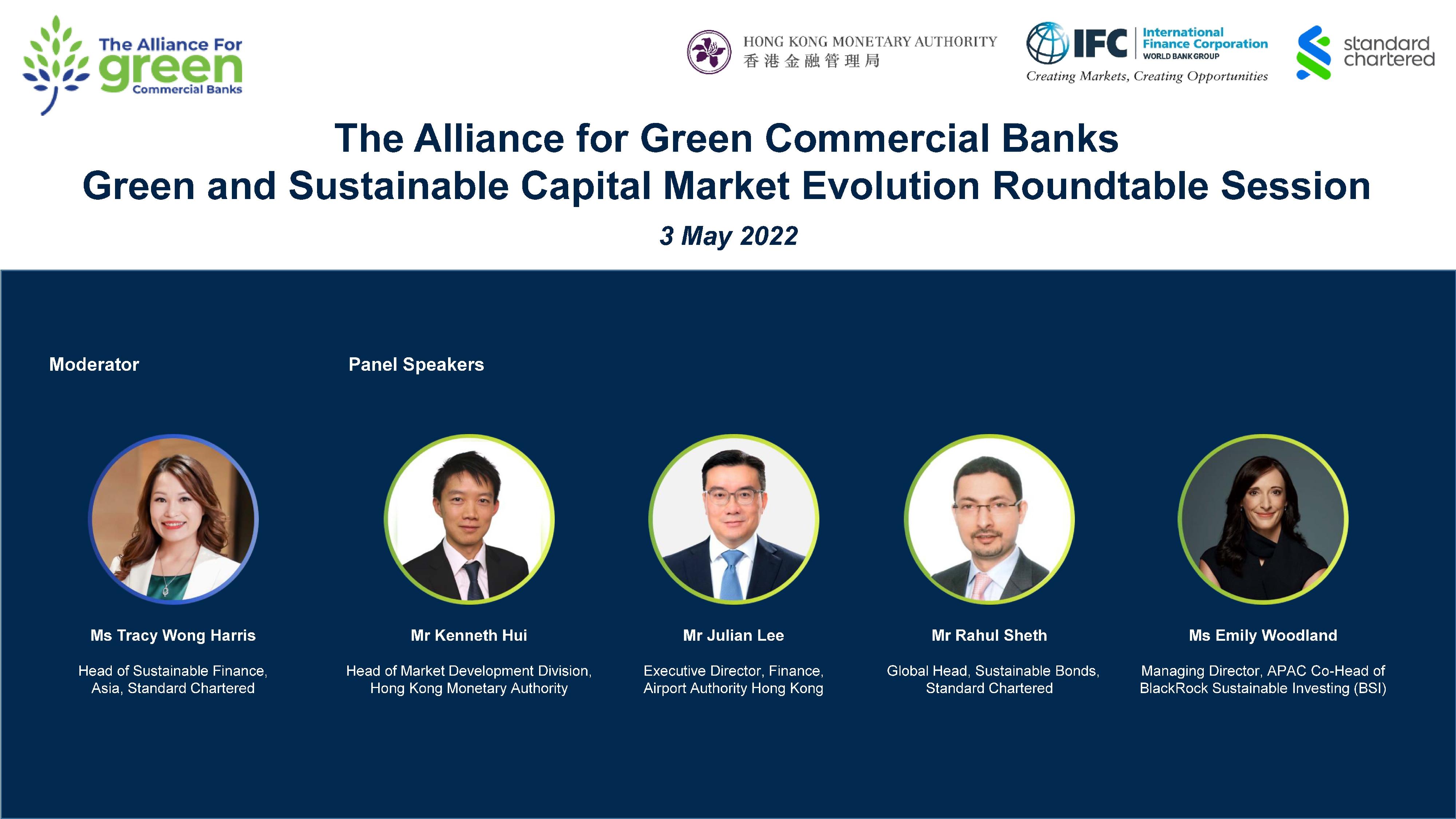
     The Alliance for Green Commercial Banks (the Alliance), co-launched by the Hong Kong Monetary Authority (HKMA) and the International Finance Corporation (IFC), co-hosted the “Green and Sustainable Capital Market Evolution Roundtable Session” with Standard Chartered virtually today (May 3).
      
     The Alliance was jointly launched by the HKMA and the IFC in November 2020 to help banks develop the solutions needed to address climate change across emerging markets. As part of its knowledge-sharing and capacity-building efforts, the Alliance has been hosting a series of roundtable sessions on relevant topics. The sessions will equip participants with the knowledge needed to support them in their green banking transition, and will provide a platform for market participants from commercial banks, leading real sector companies, technology innovators, thought leaders, and regulators to share their first-hand experiences and intelligence.
      
     The roundtable session was moderated by Head of Sustainable Finance, Asia, Standard Chartered Ms Tracy Wong Harris, and featured the following speakers:

  • the Head of Market Development Division, HKMA, Mr Kenneth Hui;
  • Executive Director, Finance, Airport Authority Hong Kong (AAHK) Mr Julian Lee;
  • Global Head, Sustainable Bonds, Standard Chartered Mr Rahul Sheth; and
  • Managing Director, APAC Co-Head of BlackRock Sustainable Investing Ms Emily Woodland.
 
     During the roundtable session, speakers discussed the rapid growth of the sustainable finance market, the huge funding gap to achieve net zero, and the associated opportunities for global capital markets.
      
     Ms Tracy Wong Harris said, “According to Standard Chartered’s ‘Sustainable Debt Market – Up, up and away’ report, the global issuance of green, social, sustainable and sustainability-linked bond will grow 52 per cent year on year to US$1.7 trillion in 2022, and continue surging to reach US$4.2 trillion in 2025. With the vision to be the world’s most sustainable and responsible bank, Standard Chartered is keen to help close the financing gap and meet our clients’ sustainability aspirations through innovative sustainable finance solutions.”
      
     Mr Hui said, “We recognise the need and the urgency to tackle climate and environmental risk and transition to a more sustainable economy. Finance is key to driving that change. By consolidating our existing strengths and expertise and developing new and innovative capabilities, we hope to leverage on our role as an international financial centre to support the carbon neutrality goals and mobilise capital towards driving sustainable action in this region.”
      
     Mr Lee said, “AAHK aspires to develop Hong Kong International Airport to be one of the greenest airports in the world through a series of sustainability strategies including carbon reduction and green designs. Appropriate form of green financings, in AAHK’s case, such as the five-year US$1 billion green bond issuance earlier this year, would align such goals with the capital markets.”
      
     Mr Sheth said, “As the environmental, social and governance (ESG) debt market develops further, we see investor conversations become a lot more granular around the borrowers’ overall sustainability aspirations, the management of ESG risks and the compliance with national and global decarbonisation trajectories. In that, the sustainability linked financing product has become the fastest growing category within the basket.”
      
     The Alliance will be hosting other roundtable events in the coming future. Participants will have the opportunity to learn and exchange knowledge with global sustainability and ESG experts, leaders in green finance and the real sector, as well as peers from across the region on topics including green finance, carbon neutrality, climate risk, ESG, market trends and opportunities, the policy environment, and more.

About the Alliance
 
     The Alliance is an initiative that brings together financial institutions, research institutions, and innovative technology providers to develop a green community in emerging markets to collectively finance the infrastructure and business solutions needed to urgently address climate and environmental risks. The Alliance was launched in Nov 2020 by the IFC and its first regional anchor, the HKMA. For more information, please visit: www.allianceforgreencommercialbanks.org.
 
About IFC
 
     The IFC, a member of the World Bank Group, is the largest global development institution focused on the private sector in emerging markets. The IFC works in more than 100 countries, using its capital, expertise, and influence to create markets and opportunities in developing countries. In fiscal year 2021, the IFC committed a record $31.5 billion to private companies and financial institutions in developing countries, leveraging the power of the private sector to end extreme poverty and boost shared prosperity. For more information, please visit www.ifc.org.
 
About HKMA
 
     The HKMA is Hong Kong’s central banking institution. The HKMA’s four main functions are: (i) maintaining currency stability within the framework of the Linked Exchange Rate System; (ii) promoting the stability and integrity of the financial system, including the banking system; (iii) helping to maintain Hong Kong’s status as an international financial centre, including the maintenance and development of Hong Kong’s financial infrastructure; and (iv) managing the Exchange Fund.
Photo  
read more

Seminar on Family Mediation 2022 held today (with photos)

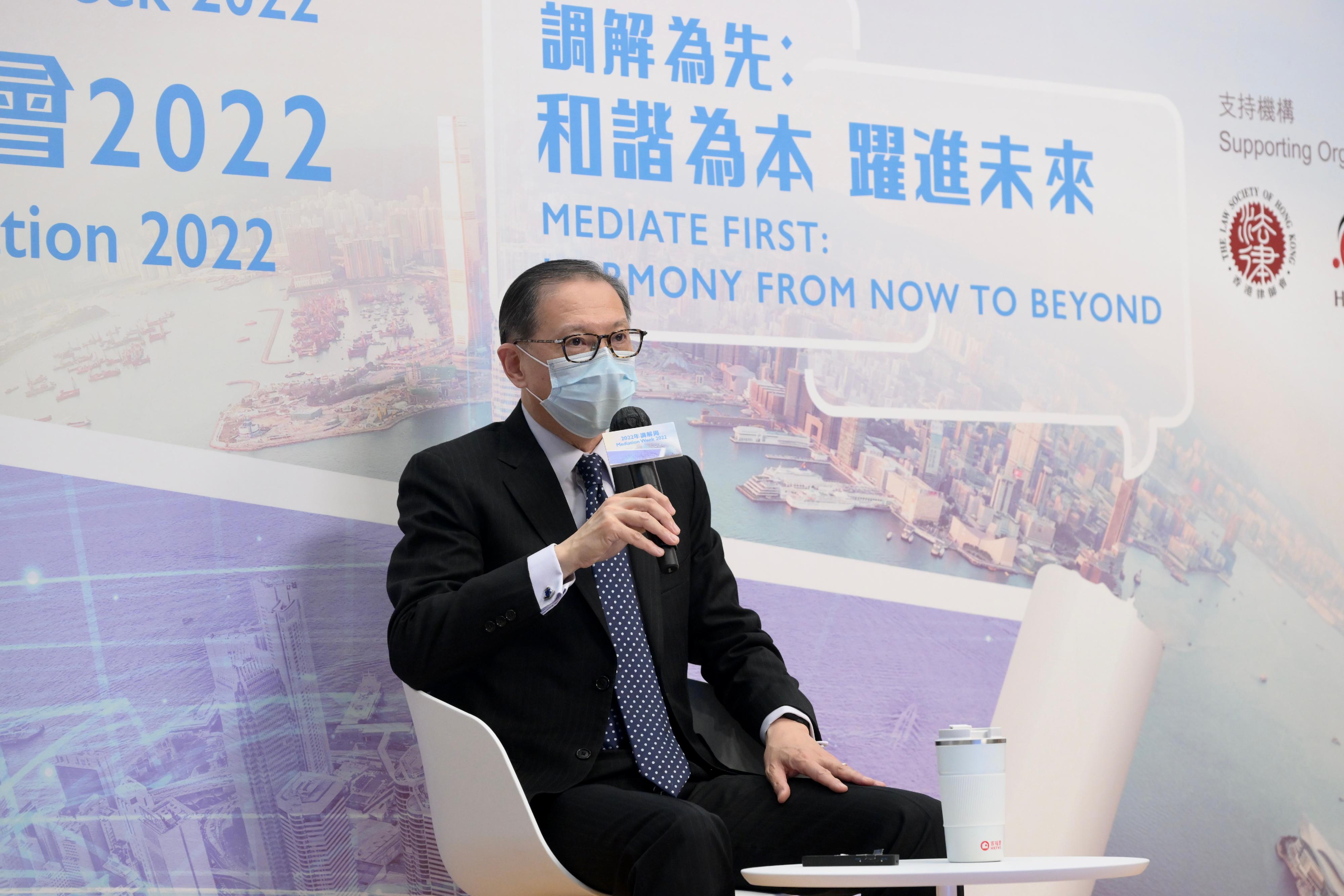
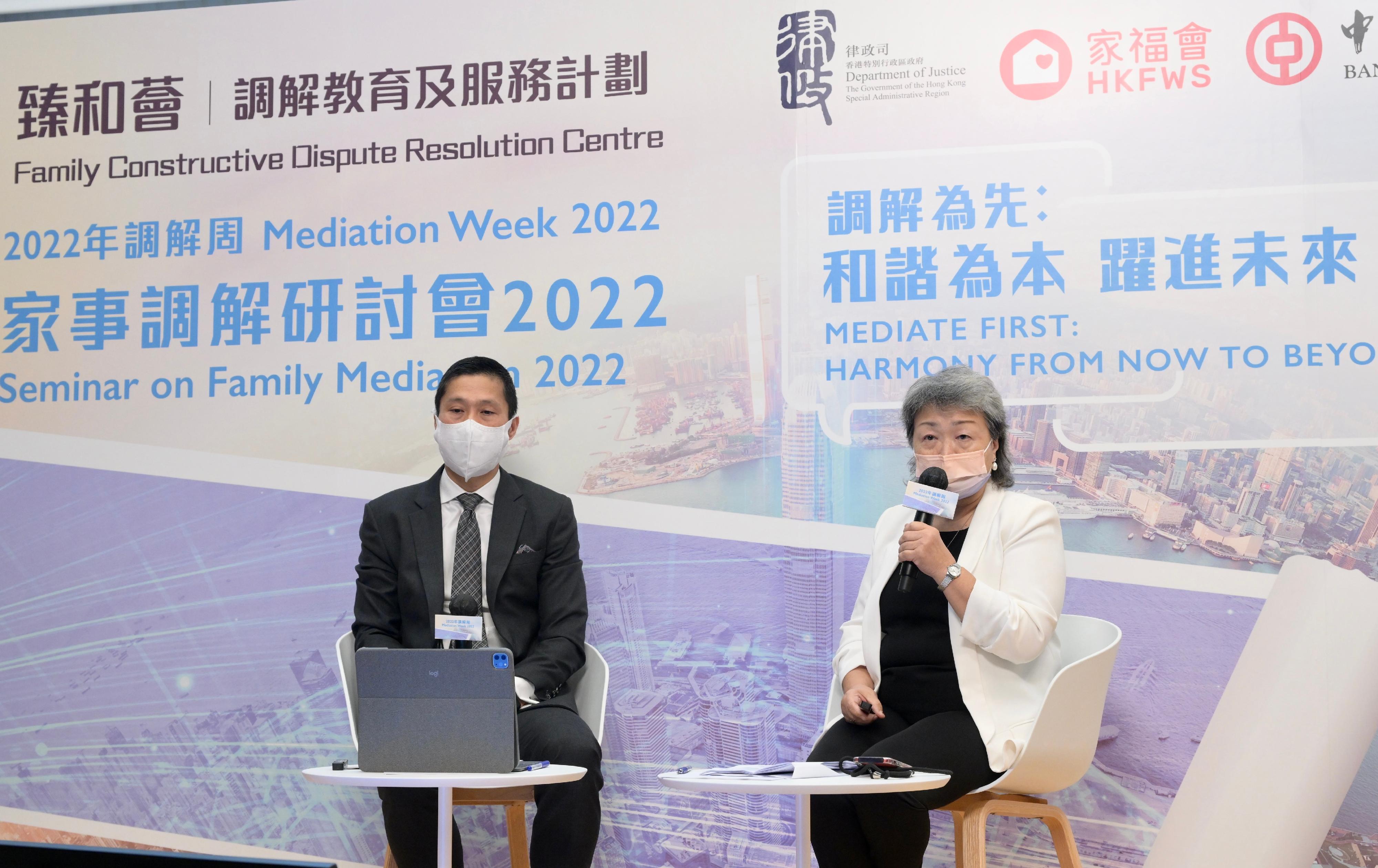
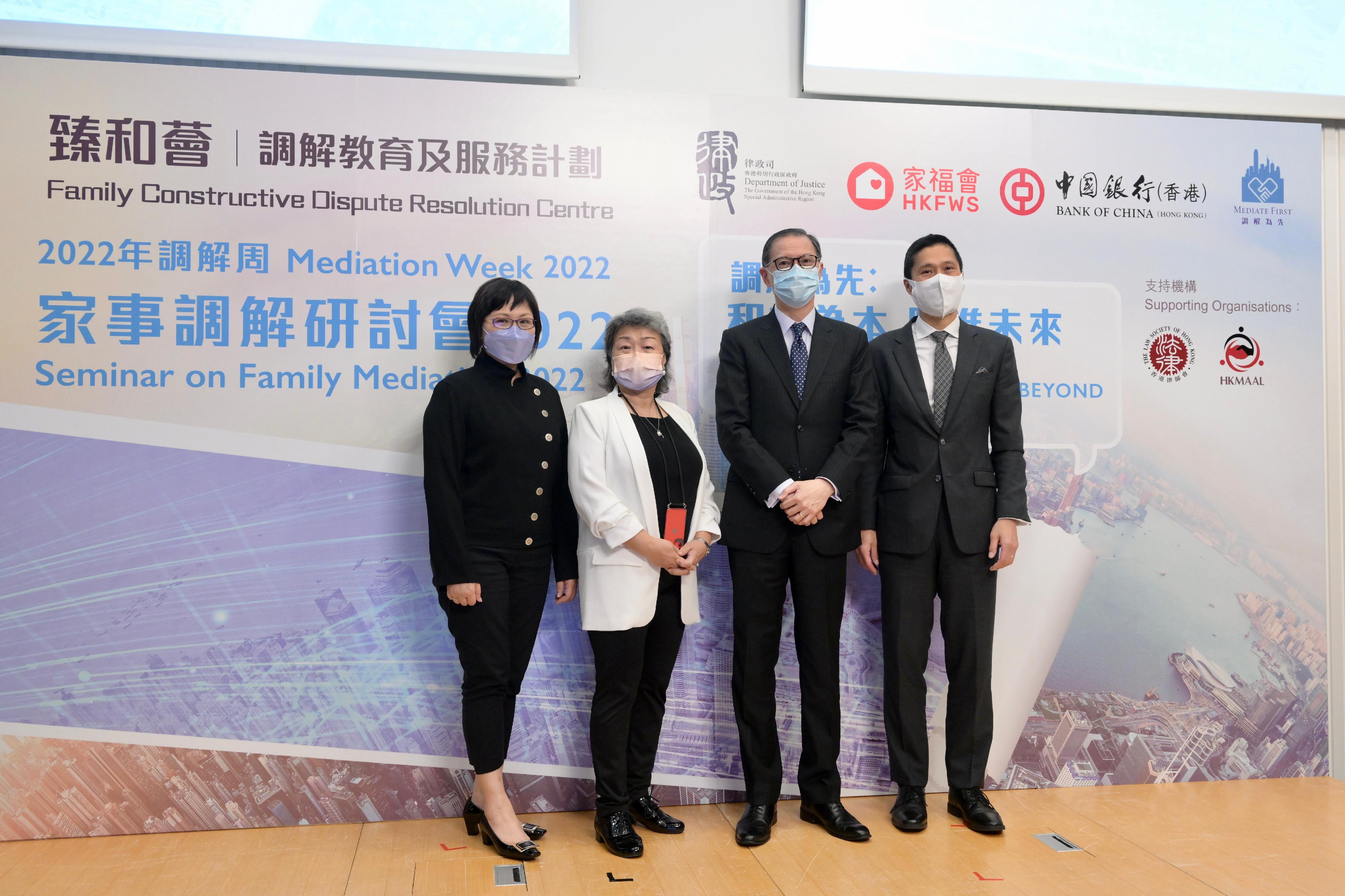
     The Seminar on Family Mediation 2022 jointly organised by the Department of Justice and the Hong Kong Family Welfare Society was held today (May 3) to promote the wider use of mediation in resolving family disputes.

     In the Seminar, Principal Family Court Judge, His Honour Judge C K Chan, discussed the new Mainland Judgments in Matrimonial and Family Cases (Reciprocal Recognition and Enforcement) Ordinance (Cap. 639) from the Judiciary’s perspective, noting the importance of bilateral recognition and enforcement of judgments in view of the large number of cross-boundary marriages and related issues. It was then followed by a sharing session by Hong Kong legal practitioners and mediators, Mr Vod Chan and Ms Stephanie Cheung, in which they shared their views on various issues in family mediation, and highlighted some of the salient matters which required more attention in the drafting of mediated settlement agreements in family settings. In particular, they shared how children issues such as child access, and financial issues such as spousal maintenance and third parties’ interests, are to be addressed when drafting a mediated settlement agreement, with illustration by real cases.

     The Seminar was well received by over 400 participants from different sectors, including social workers and legal practitioners, in Hong Kong and the Mainland.

     For more information of the Seminar, please visit the dedicated homepage.

Photo  Photo  Photo  
read more