Tag Archives: China

image_pdfimage_print

Pest Control Steering Committee reviews progress of anti-mosquito and anti-rodent work implemented by departments (with photo)

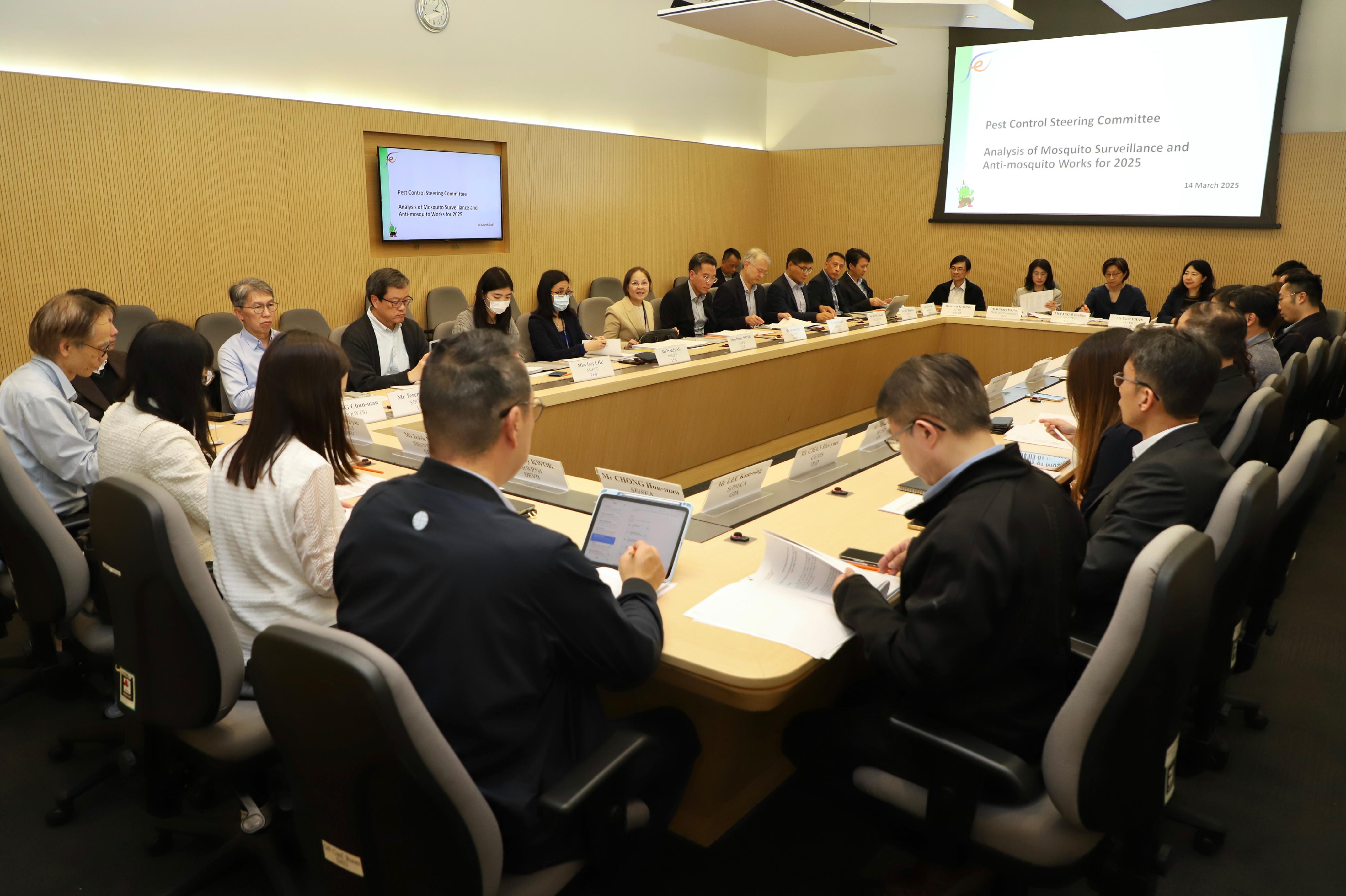
     The interdepartmental Pest Control Steering Committee (PCSC) held its 19th meeting today (March 14) to review the latest situation of mosquito proliferation and the anti-mosquito work of departments. The PCSC also examined the work progress of departments under the Cross-sectoral Territory-wide Anti-rodent Action (the Action) and planned their anti-rodent work for the future.
 
Mosquito control
 
     The representative of the Food and Environmental Hygiene Department (FEHD) reported to the PCSC the situation of mosquito proliferation last year and this year thus far. Last year’s mosquito infestation was generally under control, and the overall trend of the gravidtrap index for Aedes albopictus is similar to that of 2023. The indices for January and February 2025 remained low, consistent with the same period in past years. It is anticipated that as the rainy season approaches, the index will rise starting in April as in previous years. The FEHD and the relevant departments have stepped up their mosquito prevention and control work since March 2025. Other than continue eliminating mosquito breeding places, the FEHD will apply larvicides and conduct fogging operations to eradicate adult mosquitoes, and place mosquito trapping devices at suitable locations. The FEHD will continue to conduct on-site inspections with relevant departments, and provide them with professional advice and technical support.
      
     The rainfall in April last year was higher than usual causing the gravidtrap indices in some monitored areas to reach the alert levels. As the hot and rainy weather approaches, combined with the increase in inbound and outbound passenger traffic during the upcoming long holiday, the overall risk of dengue fever may rise. The departments will closely monitor the situation of mosquito infestation as reflected by the surveillance indices, and constantly update the list of mosquito infestation hotspots to adjust and plan their work based on the actual situation to ensure prompt and effective mosquito prevention and control work. The Under Secretary for Environment and Ecology, and the Chairperson of the PCSC, Miss Diane Wong, particularly reminded the departments to be well prepared and take proactive mosquito control actions, including eliminating potential mosquito breeding places before the rainy season, as well as conducting fogging operations in a timely and concerted manner until the end of the rainy season to mitigate the risk.
 
Rodent control
 
     Under the Action, the FEHD has implemented a series of targeted rodent prevention and control measures, including continuing overnight anti-rodent operations and the application of new anti-rodent technologies and tools, which have gradually shown positive results. The FEHD collected a total of approximately 122 900 live and dead rodents in 2024, marking an increase of around 26 per cent compared to the approximately 97 800 rodents collected in 2023. In 2024, the number of major rodent black spots was reduced by 63, achieving the performance indicator of a 60 per cent reduction as set out in the 2023 Policy Address.
      
     The effectiveness of rodent control also relies on the concerted efforts and active participation of stakeholders from various sectors, including pest control operators in both public and private sectors, venue management (e.g. the management personnel of residential and commercial buildings, recreational facilities, markets and food premises), and the general public, who maintain good hygiene practices and implement timely effective rodent prevention measures. District Environmental Hygiene Offices of the FEHD will continue to extend the scheme of allowing food premises to place large-sized refuse bins from rear lanes to more appropriate locations, and encourage relevant food premises to participate.
      
     In December 2024, the FEHD launched the first phase of the Anti-rodent Charter, targeting residential premises to raise residents’ awareness of environmental hygiene and foster good habits to create a rodent-free environment. Residential premises that sign the Charter will be provided with free anti-rodent technical support from the FEHD, including invitations to attend pest control seminars organised by the department. As of now, 578 residential premises have signed the Charter. Based on the practical experiences from the first phase of the Charter, the next phase will focus on locations prone to rodent infestations and their vicinities, including markets, hawker bazaars, typhoon shelters, and rear lanes, to enhance the communities’ anti-rodent awareness and encourage proactive actions. The FEHD and district councilors will jointly contact property management companies and vendors to convey rodent control messages more effectively.
      
     Moreover, starting in 2024, the FEHD has fully adopted thermal imaging cameras with AI technology to conduct the Rodent Activity Survey (RAS) and establish a Rodent Absence Rate in each district. The FEHD uses AI to analyse thermal images captured by cameras to detect and understand rodent pathways and activity ranges. This helps assess rodent infestation objectively and effectively to allocate resources precisely for targeted rodent control measures. From 2025, the FEHD’s RAS has been extended to public housing estates and parks managed by the Housing Authority and the Leisure and Cultural Services Department. Relevant departments will have more data to enhance precision in rodent control work and make the survey more representative.
      
     All departments agreed to continue to strengthen rodent prevention and control measures in premises under their respective management, to strengthen internal monitoring and assessment of the outcome of rodent control work, and to actively encourage relevant sectors and stakeholders to co-operate with the Government’s work, eliminating rodents’ fundamental survival conditions of food, harbourage and passages from their respective areas.
      
     The meeting was chaired by Miss Wong. Participants of the meeting came from three policy bureaux and 20 government departments and organisations.
Photo  
read more

WSD seizes first Most Outstanding Award in Global Most Innovative Knowledge Enterprise (MIKE) Award (with photo)

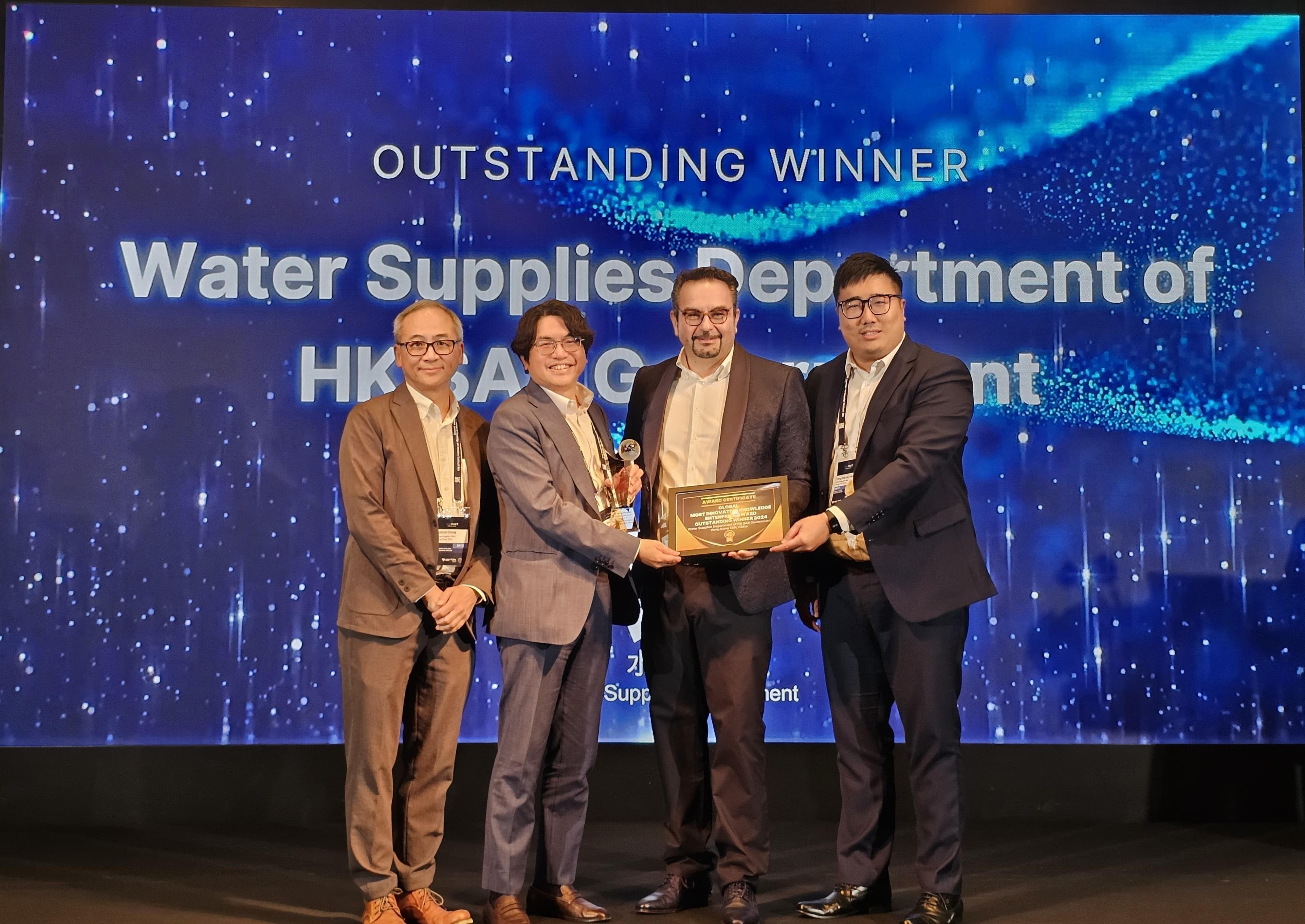
     The Water Supplies Department (WSD) today (March 14) was awarded the Most Outstanding Award at the 2024 Global Most Innovative Knowledge Enterprise (MIKE) Award Ceremony held in Bangkok, Thailand. Alongside the earlier recognition of the Hong Kong MIKE Award 2024 by the Hong Kong Polytechnic University, the WSD’s outstanding performance in knowledge management and innovation has garnered significant acclaim both locally and internationally.

     The Director of Water Supplies, Mr Roger Wong, attended the ceremony to receive the award. He expressed gratitude to colleagues for their dedication and efforts in implementing knowledge management and promoting the digitisation of water supply services to serve the public with excellent quality water supply services. He remarked that this year marks an important milestone as it is the 60th anniversary of Dongjiang Water Supply to Hong Kong, making the receipt of this international accolade particularly meaningful. During the ceremony, Mr Wong also shared insights on innovation and knowledge management with experts across the world.

     In the winners’ report, the judging panel highly praised the WSD for its outstanding performance, particularly noting management’s commitment to establishing the Digital Water Office and actively participating in knowledge management initiatives, fully recognising the WSD’s efforts in promoting innovation and knowledge management. The panel also specifically commended the WSD for its initiatives in exploring the application of artificial intelligence, developing the Asset Management Information System (AMIS), and implementing Building Information Modelling (BIM).

     Last year, the WSD established the Digital Water Office, merging the divisions responsible for efficiency enhancement, digital modelling, and information systems within the department. The Office is dedicated to driving the digitalisation of water supply services. The Office has formulated a three-phase plan to optimise existing waterworks infrastructure and customer services, providing higher quality and more environmentally friendly water supply services.
     â€‹
     The Global MIKE Award is the highest accolade in the field of knowledge management, organised by the Institute of Knowledge and Innovation, Southeast Asia (IKI-SEA) at Bangkok University. The independent judging panel consists of experienced industry experts and corporate management personnel. This year, a total of 19 organisations received this honor, with three organisations, including the WSD, receiving the Most Outstanding Award. The Global MIKE Award is the most prestigious of its kind in which entries were assessed by 36 international judges through rigorous adjudication. Since 2021, the WSD has consecutively won the Global MIKE Award and the Hong Kong MIKE Award, and last year achieved the Hong Kong Top Winner for the first time.

Photo  
read more

Nine persons arrested during anti-illegal worker operations (with photo)

     The Immigration Department (ImmD) mounted a series of territory-wide anti-illegal worker operations codenamed “Contribute”, “Fastrack” and “Twilight”, and a joint operation with the Hong Kong Police Force codenamed “Windsand”, for four consecutive days from March 10 to yesterday (March 13). A total of eight suspected illegal workers and one suspected employer were arrested.
 
     During the anti-illegal worker operations, ImmD Task Force officers raided 28 target locations including massage parlours, premises under renovation and restaurants. Eight suspected illegal workers and one suspected employer were arrested. The arrested suspected illegal workers comprised six men and two women, aged 21 to 43. One man, aged 48, was suspected of employing the illegal worker and was also arrested.
 
     An ImmD spokesman said, “Any person who contravenes a condition of stay in force in respect of him or her shall be guilty of an offence. Also, visitors are not allowed to take employment in Hong Kong, whether paid or unpaid, without the permission of the Director of Immigration. Offenders are liable to prosecution and upon conviction face a maximum fine of $50,000 and up to two years’ imprisonment. Aiders and abettors are also liable to prosecution and penalties.”
 
     The spokesman warned, “As stipulated in section 38AA of the Immigration Ordinance, an illegal immigrant, a person who is the subject of a removal order or a deportation order, an overstayer or a person who was refused permission to land is prohibited from taking any employment, whether paid or unpaid, or establishing or joining in any business. Offenders are liable upon conviction to a maximum fine of $50,000 and up to three years’ imprisonment. As stipulated in section 20(1)(a) of the Immigration Ordinance, the Chief Executive may make a deportation order against an immigrant, prohibiting the immigrant from being in Hong Kong at any time thereafter if the immigrant has been found guilty in Hong Kong of an offence punishable by imprisonment for not less than two years.”
 
     The spokesman reiterated that it is a serious offence to employ people who are not lawfully employable. Under the Immigration Ordinance, the maximum penalty for an employer employing a person who is not lawfully employable, i.e. an illegal immigrant, a person who is the subject of a removal order or a deportation order, an overstayer or a person who was refused permission to land, has been significantly increased from a fine of $350,000 and three years’ imprisonment to a fine of $500,000 and 10 years’ imprisonment to reflect the gravity of such offences. The director, manager, secretary, partner, etc, of the company concerned may also bear criminal liability. The High Court has laid down sentencing guidelines that the employer of an illegal worker should be given an immediate custodial sentence.
 
     According to the court sentencing, employers must take all practicable steps to determine whether a person is lawfully employable prior to employment. Apart from inspecting a prospective employee’s identity card, the employer has the explicit duty to make enquiries regarding the person and ensure that the answers would not cast any reasonable doubt concerning the lawful employability of the person. The court will not accept failure to do so as a defence in proceedings. It is also an offence if an employer fails to inspect the job seeker’s valid travel document if the job seeker does not have a Hong Kong permanent identity card. Offenders are liable upon conviction to a maximum fine of $150,000 and to imprisonment for one year. In that connection, the spokesman reminded all employers not to defy the law by employing illegal workers. The ImmD will continue to take resolute enforcement action to combat such offences.
 
     Under the existing mechanism, the ImmD will, as a standard procedure, conduct an initial screening of vulnerable persons, including illegal workers, illegal immigrants, sex workers and foreign domestic helpers, who are arrested during any operation with a view to ascertaining whether they are trafficking in persons (TIP) victims. When any TIP indicator is revealed in the initial screening, the ImmD officers will conduct a full debriefing and identification by using a standardised checklist to ascertain the presence of TIP elements, such as threats and coercion in the recruitment phase and the nature of exploitation. Identified TIP victims will be provided with various forms of support and assistance, including urgent intervention, medical services, counselling, shelter or temporary accommodation and other supporting services. The ImmD calls on TIP victims to report crimes to the relevant departments immediately.

Photo  
read more

Hong Kong Customs detects four sea smuggling cases with goods worth about $355 million seized (with photo)

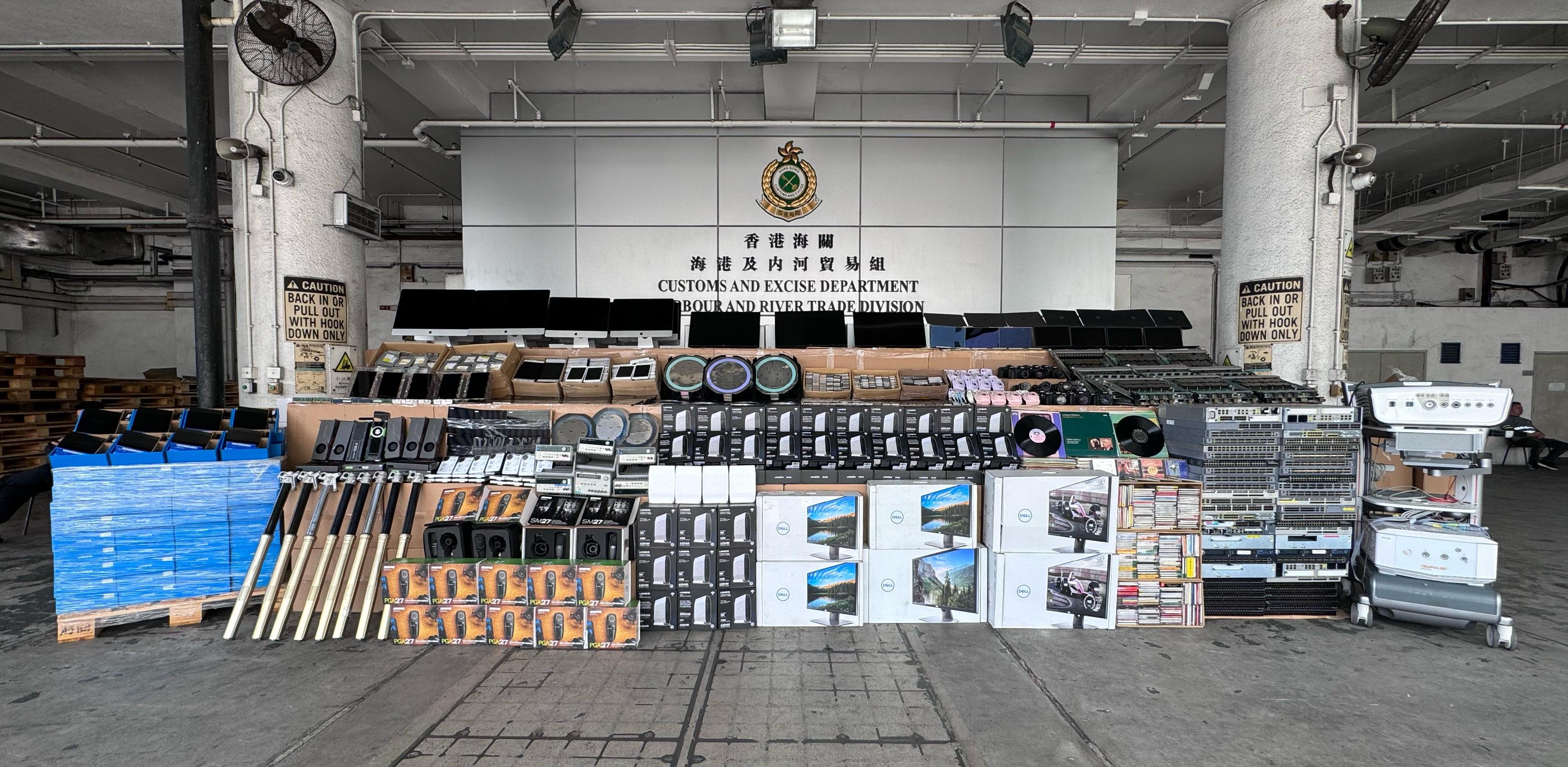
     Hong Kong Customs on March 1 and 3 detected four sea smuggling cases involving ocean-going vessels and a river trade vessel at the Kwai Chung Container Terminals and the Tsing Yi Customs Cargo Examination Compound. A large batch of suspected smuggled electronic goods with a total estimated market value of about $355 million was seized.

     Through intelligence analysis and risk assessment, Customs officers on March 1 and 3 identified three ocean-going vessels preparing to depart from Hong Kong for Korea, Thailand and Malaysia, and a river trade vessel destined for Guangxi, for inspection. A large batch of suspected smuggled electronic goods, including integrated circuits, monitors, routers, tablets and vehicle spare parts, was seized inside four containers on board the vessels.

     An investigation is ongoing. The likelihood of arrests is not ruled out.

     Customs is the primary law enforcement agency responsible for tackling smuggling activities and has long been combating various smuggling activities on all fronts. Customs will keep up its enforcement action and continue to resolutely combat sea smuggling activities through proactive risk management and intelligence-based enforcement strategies, and carry out targeted anti-smuggling operations at suitable times to crack down on related crimes.

     Smuggling is a serious offence. Under the Import and Export Ordinance, any person found guilty of importing or exporting unmanifested cargo is liable to a maximum fine of $2 million and imprisonment for seven years upon conviction.

     Members of the public may report any suspected smuggling activities to Customs’ 24-hour hotline 182 8080 or its dedicated crime-reporting email account (crimereport@customs.gov.hk) or online form (eform.cefs.gov.hk/form/ced002).

Photo  
read more