New drug price markups show positive results
|
|
|
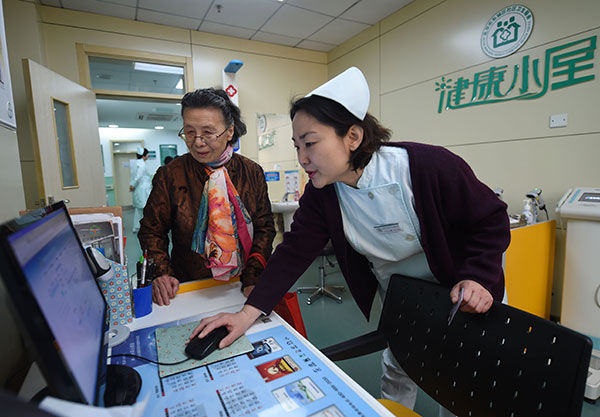
A patient is given her physical checkup results at a community medical service center in Beijing in April, after a comprehensive medical reform started in the capital. [Photo/China Daily] |
A move to scrap drug price markups has shown early signs of success in optimizing medical resources-particularly the work of specialists-and in lowering the costs of medicine for most patients, according to the Beijing health authority.
As part of the general healthcare reform, measures introduced on April 8 aimed at ending the markup on drugs prescribed at public hospitals and modifying the prices for registration, consultation and treatments.
The average drug cost for each outpatient visit during the past month has decreased by 9.6 percent compared with March, the Beijing Health and Family Planning Commission said.
For inpatient care, the average drug cost for each hospitalization has fallen by nearly 18 percent, while the entire cost dropped by 4.1 percent compared with March.
Fang Laiying, head of the commission, said the latest measures worked well to provide better and more rational treatment at more affordable prices.
Under a hierarchical medical system, he said, patients with minor diseases visit community clinics. Only the seriously ill go to large hospitals for specialist care.
But with no price difference, patients tend to swarm into already crowded large hospitals, even those suffering from a common cold, experts said. Meanwhile, community clinics are underused, resulting in a waste of medical resources.
After modifying the prices for registration, consultation and treatment in the latest reform, more residents, particularly those suffering chronic diseases, began to visit community clinics, Fang said.
Total outpatient visits in community clinics increased by 3.4 percent during the past month over March, according to official data, while visits at large top-level hospitals dropped by 15 percent.
All 3,600 medical institutions in the city, under the new reform, were required to purchase drugs directly from pharmaceutical manufacturers through an open public bidding platform to further reduce prices, he added.
That has helped the capital save 420 million yuan ($60.8 million) in the past month, according to the latest figures available.
Starting in the 1950s, a system to add an average 15 percent to drug prices was implemented at all public hospitals in China to help subsidize hospital operations.
But that led to hospitals prescribing too many medications, and more expensive ones, which contributed to soaring healthcare costs.
read more