New drug price markups show positive results

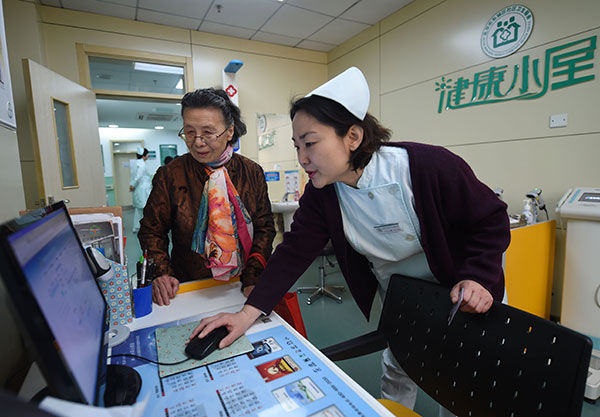
A patient is given her physical checkup results at a community medical service center in Beijing in April, after a comprehensive medical reform started in the capital. [Photo/China Daily]

A move to scrap drug price markups has shown early signs of success in optimizing medical resources-particularly the work of specialists-and in lowering the costs of medicine for most patients, according to the Beijing health authority.

As part of the general healthcare reform, measures introduced on April 8 aimed at ending the markup on drugs prescribed at public hospitals and modifying the prices for registration, consultation and treatments.

The average drug cost for each outpatient visit during the past month has decreased by 9.6 percent compared with March, the Beijing Health and Family Planning Commission said.

For inpatient care, the average drug cost for each hospitalization has fallen by nearly 18 percent, while the entire cost dropped by 4.1 percent compared with March.

Fang Laiying, head of the commission, said the latest measures worked well to provide better and more rational treatment at more affordable prices.

Under a hierarchical medical system, he said, patients with minor diseases visit community clinics. Only the seriously ill go to large hospitals for specialist care.

But with no price difference, patients tend to swarm into already crowded large hospitals, even those suffering from a common cold, experts said. Meanwhile, community clinics are underused, resulting in a waste of medical resources.

After modifying the prices for registration, consultation and treatment in the latest reform, more residents, particularly those suffering chronic diseases, began to visit community clinics, Fang said.

Total outpatient visits in community clinics increased by 3.4 percent during the past month over March, according to official data, while visits at large top-level hospitals dropped by 15 percent.

All 3,600 medical institutions in the city, under the new reform, were required to purchase drugs directly from pharmaceutical manufacturers through an open public bidding platform to further reduce prices, he added.

That has helped the capital save 420 million yuan ($60.8 million) in the past month, according to the latest figures available.

Starting in the 1950s, a system to add an average 15 percent to drug prices was implemented at all public hospitals in China to help subsidize hospital operations.

But that led to hospitals prescribing too many medications, and more expensive ones, which contributed to soaring healthcare costs.

Li highlights craftsmanship, innovation in vocational education

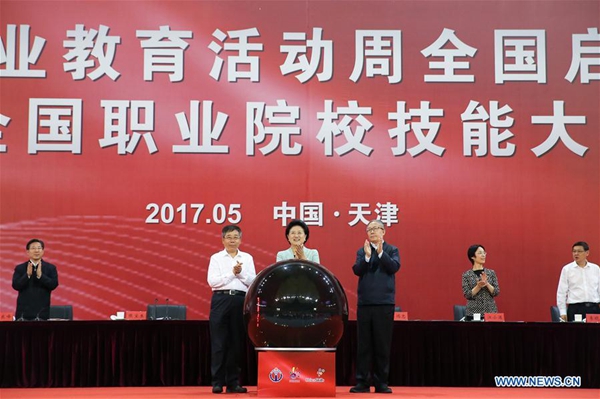
Chinese Vice Premier Liu Yandong (C front) launches the 2017 National Vocational Students Skills Competition in north China’s Tianjin Municipality, May 8, 2017. [Photo/Xinhua]

Chinese Premier Li Keqiang had called for craftsmanship and innovation in developing vocational education.

Vocational schools should cultivate craftsmanship and encourage students to start businesses, said Li in a written instruction delivered to a competition of vocational students which started on Monday.

Vocational education is crucial to the transformation and upgrading of the real economy, in terms of strengthening the country’s advantages in human resources, the premier said.

Vice Premier Liu Yandong, at the opening ceremony in Tianjin, called for vocational education to play a greater role in poverty reduction and offering more opportunities for youth.

Liu suggested vocational schools cover socialist core values throughout their curriculum.

The National Vocational Students Skills Competition has been held annually since 2008.


Shanghai’s rail mileage now ranks first in the world

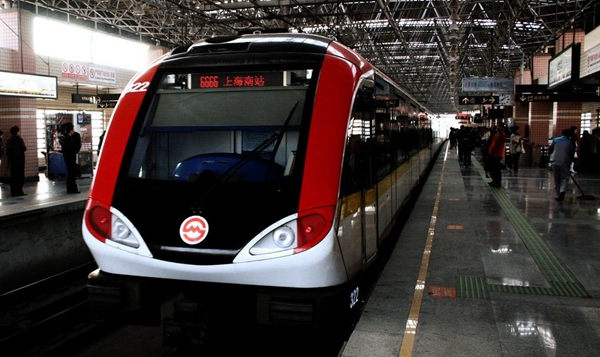
Shanghai subway [File Photo]

The length of Shanghai metro system is now the longest in the world, surpassing the size of networks in other world cities, including New York and Paris.

Shanghai Party Secretary Han Zheng said on Monday that infrastructure transportation within the city is now an important part of the development between urban and rural areas of Shanghai.

Han added that Shanghai strengthened its position as global port city, with the transport of containers leading the world the past 7 years. Freight transport out of Shanghai’s main airports ranks the third in the world. Air passenger volumes have reached 100 million, which tops China.

In the next five years, more efforts will be made in the transportation integration of Yangtze River Delta, with plans to make every city within the Yangtze River Delta region reachable within 90 minutes of one another.

Additionally, Shanghai will work on increasing its so-called ‘last one kilometer’ transportation, and make public transport the most convenient way of transportation for citizens. ‘Last kilometer’ transportation refers to modes of transport which don’t involve buses or trains, but get you to your final destination, such as bike sharing.


Bird flu hits Taipei poultry market

A poultry market in Taipei was to be the source of an outbreak of the H5 subtype of avian influenza virus, the city’s animal protection office said Monday.

The market culled 304 chickens and suspended operation for 24 hours so that the premises could be disinfected, after birds suspected to be carrying the virus were found in five batches of chickens transported to the market Sunday.

The birds were confirmed to have the virus Monday, although the exact strain has yet to be determined.

The infected birds were from four farms in Kaohsiung, Miaoli, Pingtung and Yunlin, the office added.


Commonwealth Society in Beijing hosts annual charity gala

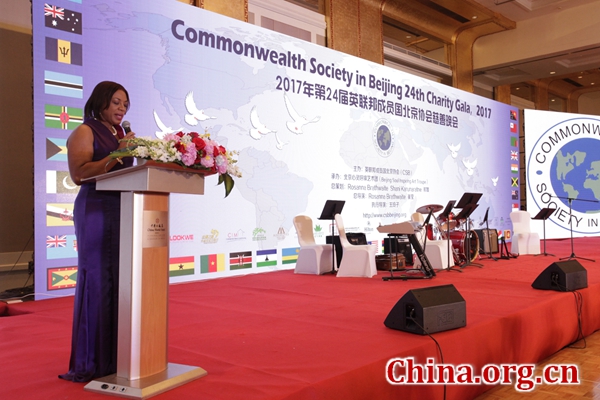
CSB President Madam Rosanna Brathwaite delivers a speech during the gala. [Photo courtesy of CSB]

The 24th Charity Gala of the Commonwealth Society in Beijing (CSB) was held at the China World Hotel on May 6.

Some 600 guests were present, including ambassadors from South Africa, Indonesia, Cuba, Guyana, Grenada, Barbados, Cyprus etc., diplomats from both Commonwealth and non-Commonwealth countries, entrepreneurs, sponsors and other dignitaries.

The CSB Charity Gala is an annual fundraising event for supporting local charities.

Proceeds were raised through ticket sales, donations, raffles and silent auctions, among other activities. The money will be distributed to eligible charity organizations identified by the All China Women’s Federation and the social volunteers’ organization roundabout.

Participants were also treated to guest performances by renowned entertainers from the Americas & Caribbean, Europe, Asia, Africa and Pacific regions.

“We must open our eyes, our ears and our hearts and, in whatever way we can, dig deeper and answer the call of communities that are in need,” said CSB President Madam Rosanna Brathwaite during the gala.

“Through our partnerships, we have been able to help women and children, promote education initiatives among the young, and continue to support persons who are advocating health and wellness in China,” she added.

The CSB was founded in 1993 by female diplomats from the Commonwealth, all of whom have been diligently working for the strengthening of bonds between Commonwealth countries and China by engaging in various social welfare projects across the nation.

Statistics show that CSB donated over 3 million yuan (about US$430,000) to several under-privileged communities in China between 2012 and 2016. The Society serves to specifically assist children, women and the elderly.