Tag Archives: China

LCQ1: Improving online bank account opening

     Following is a question by Professor the Hon Alex Fan and a reply by the Under Secretary for Financial Services and the Treasury, Mr Joseph Chan, in the Legislative Council today (October 21):
 
Question:
 
     It is learnt that in a number of money laundering cases in recent years, the account holders involved (including foreign domestic helpers and elderly persons) claimed that their bank accounts were opened via mobile applications without their knowledge and used as stooge accounts, where lawbreakers typically first obtain victims’ identity cards and personal data, enter the information into bank mobile applications without authorisation, register and link the accounts with mobile phone numbers prepared in advance, and then deceive the victims into “taking photos” on screens lacking prompts to pass facial recognition verification. Once the accounts have been opened, the lawbreakers immediately receive one-time passwords via the linked numbers to carry out money laundering transactions. In this connection, will the Government inform this Council:
 
(1) whether the Hong Kong Monetary Authority will require banks to clearly display the words “bank” and “account opening application” on the facial recognition screens for online account opening, and to remind the applicants in a familiar language that they are opening an account;
 
(2) given that the Real-name Registration Programme for Subscriber Identification Module Cards was fully implemented in 2023, whether the Government will mandate banks to verify that the mobile phone numbers used by applicants for account registration and linkage are under the names of the applicants or their specified relatives; if not, of the reasons for that; and
 
(3) whether the Government will empower banks to access the real-name registration data, so as to verify that the registered users of the linked numbers are the applicants or their specified relatives; if not, of the reasons for that?

Reply:
 
President,
 
     The Government attaches great importance to preventing the illicit opening of bank accounts, and is particularly concerned about the risk of fraudsters stealing others’ identities to open bank accounts remotely. The Hong Kong Monetary Authority (HKMA) has set out relevant regulatory requirements and provided guidance to banks, requiring them to implement appropriate identity verification and risk management measures for remote account opening. Banks are also required to continuously review and enhance their systems and controls to protect bank customers, while preventing bank accounts (including those opened through illicit means) from being used as stooge accounts to receive, transfer, or launder crime proceeds.
 
     Having consulted the Commerce and Economic Development Bureau and the HKMA, my reply to the three parts of the question is as follows:
 
(1) The HKMA has maintained continuous supervision of the banking sector, requiring banks to put in place multi-layered controls to verify customers’ identities and prevent fraud. The HKMA also shares the latest modus operandi of fraudsters with banks to help the industry defend against fraud. When processing account opening applications, banks must effectively identify and verify customer identities, such as using technology solutions to verify the authenticity of identity cards and using facial recognition technology to confirm that the customer is the holder of the identity card. At the same time, banks must continuously improve these technological solutions to address evolving fraud tactics. After bank accounts are opened, ongoing due diligence and transaction monitoring must also be conducted, with suspicious transactions reported to law enforcement agencies to assist their investigations.
 
     To address scams involving bank accounts being opened without customers’ knowledge, the HKMA issued further guidance to banks in 2023 reminding them to adopt appropriate measures during remote account opening process. These include displaying clear on-screen messages to remind customers that the selfies collected or liveness tests being conducted are for account opening purposes, so that customers are aware that they are undergoing the relevant procedures.
 
(2) and (3) Under the existing regulatory framework, regulated financial institutions (including banks) must establish effective and appropriate anti-money laundering and counter-financing of terrorism controls, covering customer due diligence, transaction monitoring, and suspicious transaction reporting.
 
     In fact, to address the potential risks associated with bank customers using SMS One-Time Passwords (OTPs) for transaction authentication, banks have implemented “In-app Authentication” in accordance with the HKMA’s requirements. For customers who have installed a bank’s mobile application on their mobile phones, they are required to authenticate via that mobile application when logging into internet banking and conducting high-risk transactions (such as adding new payees, raising transfer limits, or changing the phone number for receiving bank messages). This helps reduce the risk of fraudsters stealing internet banking login credentials and SMS OTPs to carry out unauthorised transfers. In addition, when binding their internet banking accounts to mobile devices, customers are also required to complete facial recognition, reducing the reliance on SMS OTPs.
 
     Currently, under the Real-name Registration Programme for SIM cards, users’ registration data are collected and kept by the systems and databases established by the respective telecommunications operators. Pursuant to sections 12 and 13 of the Telecommunications (Registration of SIM Cards) Regulation (Cap. 106AI) (the Regulation), telecommunications operators are only authorised to provide user records to law enforcement officers of designated agencies for the purpose of investigating or preventing crimes. The Regulation does not authorise other organisations (including banks) to access the user registration data under the Real-name Registration Programme. As banks are progressively reducing their reliance on SMS OTPs as required by the HKMA, the Government currently has no plans to authorise banks to access the user registration data of the Real-name Registration Programme.
 
     Nevertheless, in respect of the more common criminal modus operandi and emerging risks relating to the use of stolen identities for remote opening of bank accounts, the Government has, through cross-departmental collaboration, jointly launched a series of countermeasures together with the banking sector.
 
     Among them, the HKMA announced in August 2025 new measures to enhance internet banking security, namely “e-Banking Security ABCD”, and through the “Deepfake Detection” measure therein, shared with banks good practices for defending against deepfake attacks. These good practices apply to all processes involving facial recognition, including remote account opening applications and high-risk online transactions.
 
     Furthermore, the HKMA is working closely with the Digital Policy Office and the banking sector to progressively integrate the Step-up Authentication function of “iAM Smart” into critical processes. Leveraging the function to conduct facial recognition and read identity card chips can prevent fraudsters from using fake or stolen identity documents. This will provide another layer of protection to the customer identity authentication process. The first phase of testing for remote account opening has already commenced. The HKMA will assess the security, stability, and customer experience of the overall process and gradually expand it to other business areas on a risk-based approach. We expect this measure to further combat crimes involving account opening with stolen identities.
 
     The Government will continue to monitor the risks and relevant trends associated with remote opening of bank accounts, as well as review and optimise countermeasures, so as to better protect the property of the general public and mitigate potential money laundering risks.
 
     Thank you, President. read more
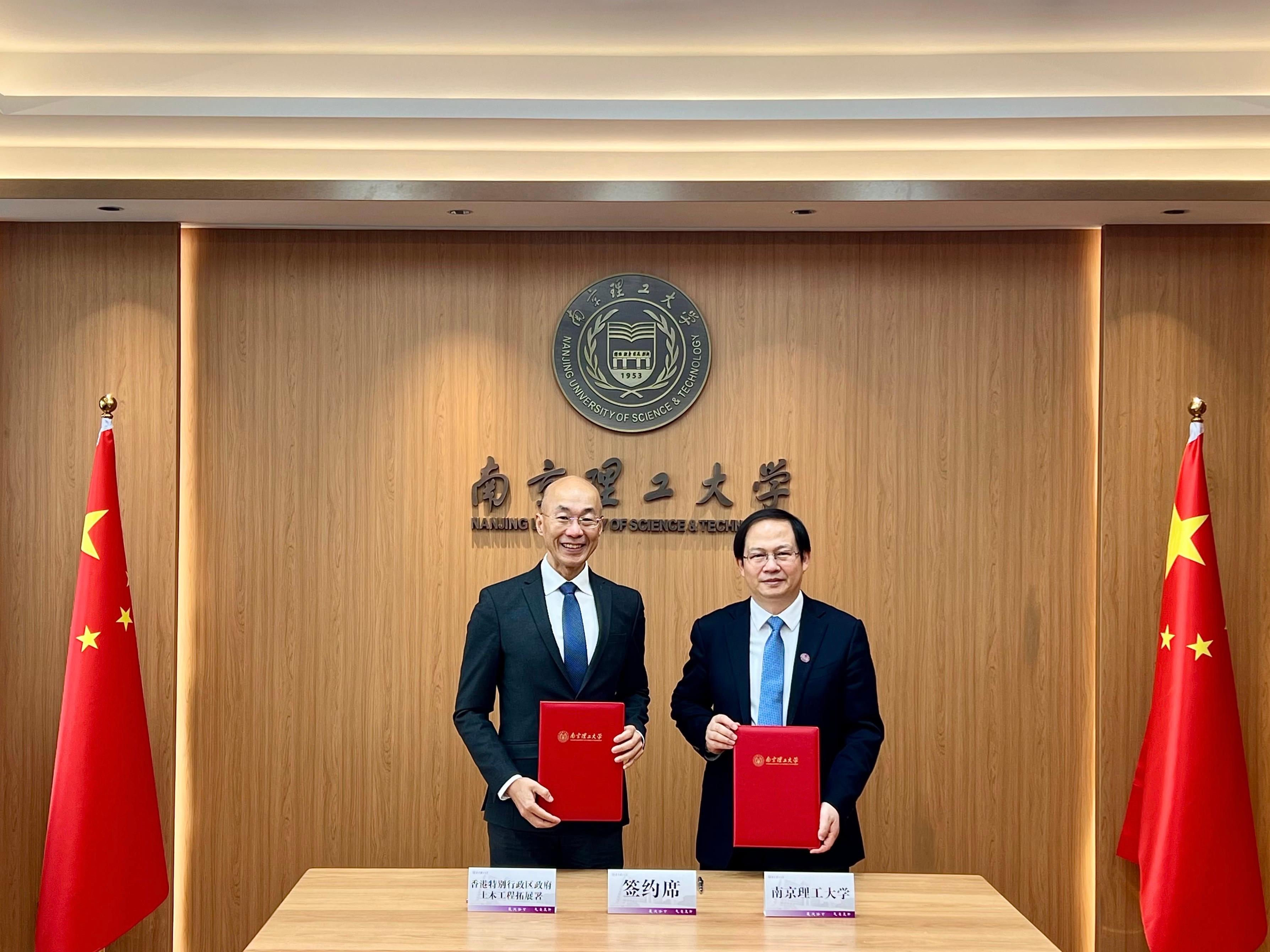
CEDD signs MOU with Nanjing University of Science and Technology (with photos)

     The Civil Engineering and Development Department (CEDD) and the Nanjing University of Science and Technology (NJUST) signed a three-year Memorandum of Understanding (MOU) in Nanjing today (October 21) to enhance collaboration in the fields of civil explosives and safe blasting technologies.

     The MOU was jointly signed by the Director of Civil Engineering and Development and the Commissioner of Mines, Mr Michael Fong, and the President of the NJUST, Professor Yang Yixin. The scope of co-operation covers personnel training, technical exchanges, and the promotion of research, development, and application of frontier technologies, with a view to enhancing the safety and efficiency of blasting operations in infrastructure projects.

     Speaking at the signing ceremony, Mr Fong expressed his hope that deepening co-operation would further enhance the professional capabilities of frontline regulatory and operational personnel. He added that the collaboration will drive the digital and intelligent development of civil explosives technology and management, thereby providing efficient and safe technical support for works projects such as those in the Northern Metropolis, while assisting in promoting the country’s advanced civil explosives technologies to overseas markets.

     Professor Yang stated that the civil explosives field is continuously advancing towards safe development and high-quality development in accordance with the National 15th Five-Year Plan. Capitalising on its research experience and technological edge in frontier blasting safety, the NJUST will combine its expertise with the engineering practice and practical applications of the CEDD to achieve in-depth synergy.

     The NJUST is a national key university affiliated with the Ministry of Industry and Information Technology. Many of its research achievements in fields such as chemistry, chemical engineering, and energetic materials hold leading positions both domestically and internationally. The university houses the China National Quality Inspection and Testing Center for Industrial Explosive Materials, which is a recognised national-level statutory inspection agency.

Photo  Photo  
read more

LCQ11: Regulation of cross-boundary medical advertisements

     Following is a question by Dr the Hon Hoey Simon Lee and a written reply by the Secretary for Health, Professor Lo Chung-mau, in the Legislative Council today (October 21):
     
Question:

     There are views that with the accelerated development of healthcare integration in the Guangdong-Hong Kong-Macao Greater Bay Area, a number of advertisements placed by non-local medical institutions have appeared on the local market and online platforms. However, some advertisements vary in the standards of disclosure concerning service efficacy and risks, and members of the public may face issues relating to consumer or medical rights and interests when seeking medical consultations outside Hong Kong based on such information, which may even pose potential safety hazards. In this connection, will the Government inform this Council:
     
(1) of the respective numbers of advertisements involving non-local healthcare services screened by the Department of Health and the Customs and Excise Department over the past three years; among such cases, the number of those prosecuted for suspected contravention of the Undesirable Medical Advertisements Ordinance (Cap. 231) or the Trade Descriptions Ordinance (Cap. 362);

(2) as there are views that while locally registered healthcare personnel, bound by the Medical Council of Hong Kong’s Code of Professional Conduct or the Dental Council of Hong Kong’s Code of Professional Discipline, are in principle prohibited from soliciting business through advertising, non-local institutions are not subject to such ethical restrictions, resulting in discrepancies in marketing regulations between the two, whether the Government will review the application of existing legislation to non-local medical advertisements and optimise the regulatory mechanism; if so, of the details; if not, the reasons for that;

(3) given that the country’s Measures for the Administration of Medical Advertisements apply only to advertisements within the Mainland and do not directly regulate Mainland institutions’ marketing in Hong Kong, whether the Government will establish interface and notification mechanisms with relevant Mainland authorities (e.g. the State Administration for Market Regulation or the National Health Commission) to jointly regulate cross-boundary marketing; if so, of the details; if not, the reasons for that;

(4) as there are views that the healthcare regulatory systems of Hong Kong and the Mainland are independent of each other, and members of the public seeking cross-boundary medical consultations may find it difficult to seek assistance should they encounter issues relating to consumer or medical rights and interests, whether the Government will explore with relevant Mainland authorities the establishment of a case referral or interface mechanism for cross-boundary medical disputes, and provide members of the public with clear guidelines on protecting rights and interests in cross-boundary medical care; if so, of the details; if not, the reasons for that; and

(5) of the specific measures in place to step up the provision of objective medical risk alerts, information guidelines as well as health education and publicity to members of the public who wish to seek medical consultations outside Hong Kong?

Reply:

President,

     In response to Dr the Hon Hoey Simon Lee’s question, the consolidated reply to parts (1) to (5) of the question after consultation with the Commerce and Economic Development Bureau and the Department of Health (DH) is as follows:

     Medical services are a matter of life and health for the public. Hong Kong has a comprehensive regulatory system in place to ensure that members of the public can obtain appropriate and quality professional medical services in Hong Kong. 

     All healthcare professionals under statutory regulation in Hong Kong must comply with the relevant registration ordinances and the codes of professional conduct formulated by the relevant statutory boards and councils of the professions. These boards and councils generally require in their codes that registered persons maintain accuracy, objectivity and impartiality when providing medical information or services, without exaggerating or making misleading statements, nor soliciting patients or engaging in commercial promotion. In the event of breach of the codes, the relevant boards and councils may initiate disciplinary proceedings to uphold professional integrity and public trust.

     In addition, to prevent members of the public from seeking improper treatment for certain health conditions and thereby delaying proper diagnosis and treatment, the Undesirable Medical Advertisements Ordinance (Cap. 231) prohibits or restricts the publication of advertisements likely to lead to the use of any medicine, surgical appliance or treatment for the purpose of preventing or treating the diseases or conditions specified in Schedules 1 and 2 to Cap. 231 (including any benign or malignant tumour, parasitic disease or respiratory illness). The Undesirable Medical Advertisements Ordinance also prohibits or restricts the making of the six groups of claims specified in Schedule 4 (including regulating blood sugar or glucose, blood pressure, blood lipids or cholesterol) in advertisements for orally consumed products. 

     At present, all advertisements published in Hong Kong, irrespective of whether the medical services to which their contents relate are provided locally or outside Hong Kong, must comply with the Undesirable Medical Advertisements Ordinance. The DH has all along been actively screening medical advertisements published in Hong Kong, which includes advertisements that promote medical services outside Hong Kong. From January 2023 to September 2026, the DH reviewed over 150 000 advertisements published across various media in Hong Kong (including newspapers, magazines, leaflets, signs, posters, as well as radio, television and internet), and issued over 1 600 warning letters concerning advertisements suspected of contravening Cap. 231. Among them, there were nine warning letters related to advertisements promoting medical services outside Hong Kong. The concerned advertisements have all been removed upon the issuance of warning letters by the DH. For cases where the relevant advertisement contents are still not removed or deleted upon receipt of warning letters, the DH will initiate prosecution proceedings based on its mechanism. Upon first conviction, an offender is liable to a fine of $50,000 and imprisonment for six months; upon a subsequent conviction for the same offence, an offender is liable to a fine of $100,000 and imprisonment for one year. Furthermore, if the promotion of services to consumers in Hong Kong involves unfair trade practices such as false trade descriptions, misleading omissions or bait advertising, Hong Kong Customs may follow up under the Trade Descriptions Ordinance (Cap. 362). The Trade Descriptions Ordinance does not apply to services not provided in Hong Kong. 

     The Government will from time to time examine the scope and enforcement of the Undesirable Medical Advertisements Ordinance, and study whether there is a need to further optimise the provisions with a view to more effectively regulating medical advertisements. In the course of the examination, the Government will make reference to the regulatory experience of other places and take into account the views of the trade and the community, and has to carefully balance a range of considerations at the same time, including the need to protect public health, the right of members of the public to access information, as well as the proportionality and enforceability of regulatory measures.

     Where to receive medical services is a personal choice. Hong Kong residents may elect to receive medical services outside Hong Kong, and non-Hong Kong residents may also elect to come to Hong Kong for consultation and treatment. Irrespective of where patients come from, medical services provided in Hong Kong must comply with the laws and professional regulatory requirements of Hong Kong. On the other hand, medical services provided outside Hong Kong are regulated by the local regulatory authorities in accordance with the local laws and regulations. If members of the public elect to receive medical services outside Hong Kong, they should take note of the relevant local regulations and fully understand the necessity, risks, follow-up arrangements and total costs of the treatment, and retain relevant documents such as medical history, bills and written consent.

     The DH has established liaison and notification mechanisms with the relevant Mainland authorities to exchange information on irregularities and, where necessary, to notify individual cases, so that both places can take follow-up action in accordance with the law within the respective purviews.

     As regards consumer disputes, the Consumer Council has established a mechanism for referral of cross-boundary complaints through signing Memoranda of Understanding with consumer protection bodies of other places, including Macao and more than 30 Chinese Mainland provinces and cities. Upon receiving a complaint regarding cross-boundary consumption, the Council will refer the case to the relevant consumer protection body for follow-up as per established practice. The Council will continue to work with consumer protection bodies on the Mainland to strengthen public education work, with a view to helping consumers from both places gain deeper understanding on the matters to be aware of when engaging in cross-boundary consumption, as well as the current referral mechanism for cross-boundary complaints. read more

LCQ21: Manpower in the security services industry

     Following is a question by the Hon Chau Siu-chung and a written reply by the Secretary for Security, Mr Tang Ping-keung, in the Legislative Council today (October 21):

Question:
 
     Regarding the manpower in the security services industry and the importation of security practitioners, will the Government inform this Council:
 
(1) of the numbers of persons employed to perform security work in each of the past three years and this year to date, with a breakdown by the type of security work they did (i.e. Category A, B, C and D security work);
 
(2) of the current number of valid Security Personnel Permit (SPP) holders, with a breakdown by the age group of the holders and the category of SPPs they hold;
 
(3) of the respective numbers of SPPs issued by the Police Licensing Office of the Police Force to new applicants in each of the past three years and this year to date, with a breakdown by the age group of the applicants;
 
(4) from the introduction of the Enhanced Supplementary Labour Scheme (ESLS) on September 4, 2023 to the announcement of the review findings and enhanced measures of ESLS on June 15, 2026 by the Government, and from June 16, 2026 to the present, of the respective numbers of applications for the importation of security personnel received, approved and rejected under ESLS by the authorities each month, with a breakdown by the category of security work to which the posts belong; among the aforesaid approved cases, of the number of imported workers who have arrived in Hong Kong; and
 
(5) as some members of the industry have pointed out that the relaxation under ESLS allowing imported workers to work at business locations in no more than five districts has substantially enhanced employers’ flexibility in work arrangements, which may encourage security and property management companies to apply more actively for the importation of security practitioners, of the measures put in place by the authorities to ensure the employment priority for local workers, including whether they will consider establishing a mechanism whereby a job category will be included in a more stringent Tier 2 vetting mechanism under ESLS if its imported workers exceed a certain proportion of the total number of practitioners; if so, of the details; if not, the reasons for that?
 
Reply:
 
President,
 
     According to the Security and Guarding Services Ordinance (Cap. 460) (the Ordinance) , the Security and Guarding Services Industry Authority is responsible for formulating issuing criteria and conditions for security personnel permits (SPPs), while the Police Licensing Office (PLO) is responsible for issuing SPPs to individuals performing security work.
      
     At present, SPPs are classified into four categories, namely A, B, C and D, according to different types of security work. Category A is applicable to guarding work provided for a single private residential building which does not require the carrying of arms and ammunition; Category B is applicable to guarding work provided for any persons, premises or properties which does not require the carrying of arms and ammunition; Category C is applicable to guarding work which requires the carrying of arms and ammunition; and Category D is applicable to the installation, maintenance and repairing of a security device, or the designing of a system incorporating a security device for any particular premises or place.
      
     Having consulted the Labour and Welfare Bureau, the reply to the question raised by the Hon Chau Siu-chung is as follows:
 
(1) and (2) The number and age distribution of security personnel currently holding valid SPPs (i.e. SPPs of Category A, B, C or D) are set out in Table 1.
 
Table 1: Current number and age distribution of holders of various categories of SPPs
 

Age SPP Category Total@
A B* C^ D
18-20 3 767 3 764 7 8 3 775
21-30 25 765 25 751 194 550 26 273
31-40 31 036 31 021 308 1 429 32 334
41-50 57 114 57 082 255 2 103 58 991
51-60 108 962 108 933 143 2 005 110 697
61-70 115 523 109 162 – 1 049 116 309
71-80 19 213 – – 98 19 290
Above 80 946 – – 2 949
Total 362 326 335 713 907 7 244 368 618

@ Some SPP holders may simultaneously hold SPPs of more than one category.
* The upper age limit for performing Category B security work is 70.
^ The upper age limit for performing Category C security work is 60.
 
     The number of security personnel holding valid SPPs and employed to perform security work (including full-time, part-time and temporary positions) over the past three years and this year (up to September) is set out in Table 2. Regarding employed personnel, the PLO does not maintain statistics broken down by type of security work (i.e. Categories A, B, C or D) or age group.
 
Table 2: Number of persons employed to perform security work@
 
Year Total
2023 155 599
2024 160 970
2025 160 292
2026
(up to September)
161 399

@ According to section 13 of the Ordinance, a security company or an employer of security personnel shall, within 14 days after the commencement/termination of the employment, give written notice to the Commissioner of Police of the names of the employees and of the date on which the employment commenced/ceased. The PLO has compiled the statistics based on the information collected.
 
(3) The number and age distribution of new applicants issued with SPPs by the PLO in the past three years and this year (up to September) are set out in Table 3.
 
Table 3: Number and age distribution of new applicants issued with SPPs
 
Age Year
2023 2024 2025 2026
(up to September)
18 – 20 1 260 1 622 2 160 2 373
21 – 30 4 194 5 293 6 362 5 761
31 – 40 4 996 5 857 7 287 5 611
41 – 50 10 352 11 557 13 964 9 521
51 – 60 15 987 18 184 22 917 16 553
61 – 70 9 940 11 601 15 428 11 344
71 – 80 597 590 768 1 497
Over 80 55 48 61 53
Total 47 381 54 752 68 947 52 713

(4) The Labour Department (LD) has implemented the Enhanced Supplementary Labour Scheme (ESLS) since September 4, 2023. Up to September 2026, applications for importing 17 742 security guards were received from employers, and approvals for importing 7 275 security guards were granted. The others involved applications of which the processing was discontinued (including applications withdrawn by employers, applications for which the employers failed to provide the required information, and those failing to pass the preliminary screening), applications under processing, applications that were not fully approved, etc. According to the statistics from the Immigration Department, as at August 2026, 2 736 imported security guards were working in Hong Kong under ESLS. The LD currently does not maintain the number of applications received and approved broken down by type of security work.
 
     The annual figures (including the monthly average) of imported security guards applied for and approved under ESLS from September 4, 2023 to September 2026 are set out in Table 4. The LD does not maintain the number of imported security guards under ESLS broken down by type of security work (i.e. Categories A, B, C or D).
 
Table 4: Number of imported security guards applied for and approved under ESLS@
 
Year No. of imported security guards applied for* Average no. of imported security guards applied for per month No. of imported security guards approved* Average no. of imported security guards approved per month
2023
(September to December)
1 851 463 0 0
2024 5 631 469 1 945 162
2025 6 753 563 3 039 253
2026
(January to June)
1 814 302 1 593 266
2026
(July to September)
1 693 564 698 233
Total 17 742 – 7 275 –

@ The classification of job categories may be subject to revisions upon verification of information from employers.
* The LD has implemented ESLS since September 4, 2023. The vetting of applications received during the above period may be completed thereafter, and hence the number of imported workers approved only reflects the results of some of the applications received during the same period.
 
(5) The Government has always been committed to ensuring employment priority for local workers, while allowing only employers facing genuine recruitment difficulties and shortages of local manpower to import labour after approval, on a limited scale. The Government stringently vets each application for labour importation. Employers are allowed to import labour only upon meeting the manning ratio requirements of local employees to imported workers, undertaking local recruitment thereby according priority to employing qualified local workers to fill job vacancies at a salary not lower than the median monthly wage of a comparable position in the market, and proving that vacancies cannot be filled by local workers.
 
     To further safeguard the employment priority for local workers, ESLS has implemented a tiered vetting mechanism. Job categories falling under the Tier 2 mechanism are subject to more stringent requirements in respect of manning ratio and local recruitment requirements, etc. The LD will continue to monitor the economic and labour market situation, the manpower supply and demand in relevant sector(s) and post(s), the application and vetting situations of ESLS, etc. If there is a need to tighten the vetting criteria for specific sector(s) and post(s) (including security guards), the LD will include relevant sector(s)/ operating section(s) in the Tier 2 vetting mechanism to ensure employment priority for local workers. read more

LCQ17: Manpower of lifeguards as well as lifesaving and first aid services

     Following is a question by the Hon Chan Pui-leung and a written reply by the Secretary for Culture, Sports and Tourism, Miss Rosanna Law, in the Legislative Council today (October 21):
 
Question:
 
     The Leisure and Cultural Services Department (LCSD) is responsible for managing 46 public swimming pools, 42 gazetted beaches and five water sports centres across the territory. There are views that the manpower of lifeguards under the LCSD is insufficient, and the vacancy rate has also soared. In this connection, will the Government inform this Council:
 
(1) of the establishment, strength, vacancies and mid-point salaries of seasonal lifeguards, full-year lifeguards on a two-year contract and civil service lifeguards in the past five years respectively (provided in tabulated form);
 
(2) of the respective numbers of summer days and total number of days on which public swimming pools, gazetted beaches and water sports centres had to be temporarily closed due to a shortage of lifeguards in the past five years (provided in tabulated form);
 
(3) of the latest vacancy rate of civil service lifeguards; as there are views pointing out that the continuous increase in the number of local private swimming pools in recent years has led to a growing market demand for lifeguards, what enhancement measures the authorities have in place in respect of lifeguard recruitment to address the aforesaid situation (including narrowing the gap in remuneration packages between the public and private markets); in addition, whether the authorities will reconsider reviewing the grade structure of civil service lifeguards;
 
(4) as the LCSD has launched a two-year programme of outsourcing the lifesaving and first aid services at six public swimming pools on a trial basis (trial programme) since September 2024; of the current progress of the trial programme; whether the authorities have reviewed the effectiveness of the trial programme, and whether they will consider extending the trial programme and expanding it to all public swimming pools across the territory;
 
(5) as there are views pointing out that the cost of full-year outsourcing of lifesaving and first aid services is too high, whether the authorities will consider outsourcing lifesaving and first aid services only during peak periods of the swimming season and public holidays under a seasonal supplementary mode, or using the relevant outsourcing expenditure to subsidise lifeguards undertaking overtime work instead; and
 
(6) given that in recent years, the authorities have put on trial two different sets of artificial intelligence drowning detection systems at Kwun Tong Swimming Pool and Sun Yat Sen Memorial Park Swimming Pool respectively, but it has been reported that the detection system equipment has encountered problems such as cameras being blocked by swimmers and high system maintenance costs, what enhancement and improvement measures the authorities have implemented in response to such problems, and whether they will extend the use of the detection systems to all public swimming pools across the territory?
 
Reply:
 
President,
 
     My reply to the question raised by the Hon Chan Pui-leung is as follows:
 
(1) Statistics on the strength of non-civil service contract (NCSC) seasonal lifeguards and full-year lifeguards from 2022 to 2026; the establishment, strength and vacancies of civil service lifeguards from 2022 to 2026; and the mid-point salary of civil service lifeguards from 2022-23 to 2026-27 are tabulated in Annexes I, II and III respectively. Since the NCSC lifeguards are not part of the civil service, there are no figures for their establishment and mid-point salary.
 
(2) No public swimming pools or water sports centres were closed due to lifeguard shortages from 2022 to 2026. During the same period, 25 of the 42 gazetted beaches had suspended lifesaving services at some point due to lifeguard shortages (the number dropped to 18 in 2026). The number of days of service suspension is tabulated in Annex IV.
 
(3) In recent years, the number of private swimming pools has continued to rise with the current figure standing at around 1 400, whereas the number of people joining the lifesaving profession has been on the decline, leading to an increasingly acute shortage of lifeguards. 
 
     In view of this, the Leisure and Cultural Services Department (LCSD) has been actively studying and adopting various measures to increase and stabilise the supply of lifeguards with a view to ensuring the public can enjoy public swimming pool facilities.
      
     In addition to hiring NCSC seasonal lifeguards for the swimming season every year, the LCSD has progressively recruited full-year lifeguards on a two-year contract since 2023 to increase lifeguard manpower. To remain competitive on the labour market, the LCSD has enhanced the remuneration package for contract lifeguards, under which the monthly salary plus end-of-contract gratuity can be as high as $26,900.
      
     Moreover, the LCSD has launched the Combined Seasonal Lifeguard Training Scheme since 2023, which adopts a hire-and-train approach to provide full-time training and work placement. Under this scheme, people with no lifesaving qualifications may obtain the Pool Lifeguard Award and/or Beach Lifeguard Award, while existing Pool Lifeguard Award holders may further obtain the Beach Lifeguard Award and become LCSD seasonal lifeguards. To further expand the supply of lifeguard, the LCSD has, since 2025, been collaborating with the Employees Retraining Board to organise dedicated lifesaving training programmes with employment arrangements. So far, about 40 trainees have been appointed as full-year lifeguards on a two-year contract upon completion of the programme.
      
     The LCSD has also produced a series of recruitment videos to demonstrate the items and the relevant requirements of the trade tests for lifeguards, with a view to enhancing recruitment effectiveness by helping people interested in applying for the lifeguard positions of the LCSD to fully prepare for the trade tests.

     In addition, the LCSD continues to step up its publicity efforts, including disseminating recruitment information on the websites of various government departments, conducting publicity work targeting secondary schools, post-secondary institutions and non-governmental organisations, and placing recruitment advertisements in public transport, newspapers, electronic media and the department’s website etc, to reach out to more people interested in working as lifeguards. The LCSD continues to actively participate in career fairs hosted by tertiary institutions, and disseminate recruitment information via the relevant email networks and messaging groups of the institutions to promote a career in lifesaving and encourage young people to join the profession.
      
     Under the prevailing policy, when a specific civil service grade has proven and persistent recruitment and retention difficulties, or fundamental changes in the job nature, job complexity and responsibilities, the Government will consider conducting a grade structure review for the grade concerned.
      
(4) and (5) To address lifeguard shortages, the LCSD has outsourced lifesaving and first-aid services at six public swimming pools of smaller scale on a trial basis since September 2024 to stabilise the supply of lifeguards and maintain swimming pool services by leveraging the greater flexibility of private service contractors in lifeguard recruitment. Having reviewed the effectiveness of the trial programme, the LCSD considers that this arrangement has been generally satisfactory. As a result of the flexible manpower deployment by the service contractor and the rigorous supervision of the LCSD, all facilities at the six swimming pools have remained open for public use, and none has been closed due to lifeguard shortages. The LCSD will continue to implement the programme in the six swimming pools. Following a re-tendering exercise, a new three-year contract vetted and approved by the Central Tender Board came into effect on August 1, 2026, with an annual expenditure comparable to that of employing civil service and contract lifeguards. Outsourcing is one of the practicable measures adopted by the LCSD to ease the lifeguard shortages. In fact, as swimming pools differ in scale, types of facilities, and manpower requirements, the LCSD will carefully consider the feasibility of further extending the outsourcing of lifesaving and first-aid services to other public swimming pools having regard to factors such as the financial situation, complexity of operation, and availability of manpower in the market. The LCSD will continue to closely monitor and evaluate the effectiveness of the outsourced services while maintaining close communication with stakeholders, with a view to continuously optimising staffing arrangements for swimming pools.
 
     The LCSD has been striving to maintain aquatic venue services by adopting a multi-pronged strategy to flexibly deploy serving lifeguards. Specifically, the LCSD arranges sufficient lifeguards to be on duty at aquatic venue facilities that are open and makes special arrangements according to actual needs, including providing allowances to lifeguards working overtime during the peak swimming season (i.e. June to August every year). For occupational safety and health reasons, overtime work is voluntary to avoid fatigue at work. Therefore, there is still a need to engage outsourced lifesaving and first-aid services. Furthermore, as the contractor was able to provide a stable supply of lifeguards throughout the past two-year contract period, enabling the swimming pools facilities to remain fully open for public use, the existing mode of operation will be maintained under the new contract. Taking into account factors such as the operational effectiveness of the new contract and the availability of manpower in the market, the LCSD will carefully consider whether to adopt a seasonal supplementary mode for outsourcing lifesaving and first-aid services in the next tender exercise.
 
(6) The LCSD is putting on trial two artificial intelligence (AI) drowning detection systems at Kwun Tong Swimming Pool and Sun Yat Sen Memorial Park Swimming Pool respectively. Generally speaking, the two systems are effective in assisting lifeguards in monitoring the real-time condition of swimmers and promptly locating drowning victims.
 
     With the rapid development of AI technology in recent years, the LCSD has continuously reviewed the performance and reliability of the relevant systems during the trial period. Drawing on the experience gained so far at the two aforementioned swimming pools, the LCSD is currently working with the Digital Policy Office and the Electrical and Mechanical Services Department to study other intelligent drowning detection solutions suitable for use at its public swimming pools, and is planning a trial run of the new system at the main pools of Morse Park Swimming Pool and Ma On Shan Swimming Pool. The relevant procurement exercise commenced in September 2026 in accordance with the Government’s procurement procedures, and the installation works are expected to be completed in the first quarter of 2027. Subject to its outcome, the LCSD will consider whether to extend the use of AI drowning detection systems to more public swimming pools in a progressive manner. Nevertheless, the LCSD has always accorded top priority to the safety of swimmers. With current technology, AI drowning detection systems primarily serve to expedite rescue operations by assisting lifeguards in monitoring the real-time condition of swimmers and promptly locating drowning victims. They will not replace the professional judgement and lifesaving duties of lifeguards. read more