UN and international partners express support for working with new Somali president

image_pdfimage_print

9 February 2017 – The United Nations and its international partners in Somalia today said that they were eager to partner with President Mohamed Abdullahi ‘Farmajo’, his new Government and the people of Somalia to avert another famine in the country and to assist with improving security for all Somalis.

The comments were made in a congratulatory statement on behalf of the United Nations, the African Union (AU), the European Union (EU), Inter-Governmental Authority on Development (IGAD), Ethiopia, Italy, Sweden, the United Kingdom and the United States.

&#8220The international partners urge all political forces in Somalia to work together in support of President Farmajo and the incoming government,&#8221 the statement read.

Distributed by the UN Assistance Mission in Somalia (UNSOM), the statement also noted the need for reconciliation and the peaceful resolution of a number of local conflicts, as well as the resumption of the constitutional review process.

The Somali Parliament selected the new president yesterday in two rounds of vote. A one-person, one-vote election is expected in 2020.

The international community welcomed the election results and commended outgoing Federal President Hassan Sheikh Mohamed and his Government for their &#8220many achievements&#8221 over the past four years.

They also thanked him for a &#8220gracious&#8221 concession speech that facilitated a peaceful and orderly transfer of power in decades.

&#8220Yesterday’s orderly and peaceful transfer of power is a major achievement for Somalia and should boost confidence in the country’s future both at home and abroad,&#8221 said Michael Keating, Special Representative of the Secretary-General in Somalia and head of UNSOM.

He added &#8220Hambalyo Somalia&#8221 in Somali, which translates to &#8220Congratulations Somalia.&#8221

UN calls for 50 per cent increase in funding for mine action in 2017

image_pdfimage_print

9 February 2017 – The United Nations has launched a $511 million international appeal for humanitarian mine action in conflict and post-conflict settings for 2017, a 50 per cent increase from last year’s $347 million consolidated appeal.

&#8220Across the world, the conflicts tearing countries, communities and lives apart cause a tragic increase in the number of casualties due to landmines and other explosive hazards,&#8221 said the Director of the United Nations Mine Action Service (UNMAS), Agnès Marcaillou, in a press release issued earlier this week.

&#8220There is an absolute necessity for a humanitarian mine action response. The knowledge and willingness to help are there &#8211 it is adequate funding that is missing,&#8221 added Ms. Marcaillou, who also chairs the UN Inter-Agency Coordination Group on Mine Action.

According to the Portfolio of Mine Action Projects 2017, an online resource for information on such projects, there is a sharp increase in the need for humanitarian mine action, including landmine clearance, risk education and victim assistance.

The Portfolio covers over 200 projects and presents a consolidated picture of the needs and strategies of 22 countries and territories contaminated with landmines and other explosive hazards such as unexploded cluster munitions, rockets and improvised explosive devices across Africa, Asia, Europe, the Middle East and South America.

Needs are the greatest in active conflict zones, with Afghanistan requiring $124 million; Iraq $75 million; Syria $52 million; and Yemen $17 million. In addition, countries which have extensive residual contamination also need substantial support, with Cambodia requiring $23 million and the Lao People’s Democratic Republic $26 million, according to UNMAS.

Guangxi officials probed over pangolin dinner

image_pdfimage_print

The disciplinary authority in south China’s Guangxi Zhuang Autonomous Region has launched a probe into the case of a “pangolin dinner”, after a newly discovered social media post went viral online.

A controversial microblog post in 2015 about an official banquet has been dug up by netizens, sparking public outrage with regards to eating endangered animals and putting local officials in serious trouble.

Weibo user Al_cal, later identified to be the son of a clock tycoon in Hong Kong, posted on his Weibo account that he’d been hosted by local officials in Guangxi to a banquet that included a pangolin dish.

Al_cal’s microblog post on the pangolin banquet has sparked public outrage with regards to eating endangered animals. [Photo: Weibo] 

“Thanks to the hospitality of Director Li and Secretary Huang for inviting me to their office and cooking pangolin meat for us,” wrote Li Jiahe in July 2015, when he was on a research trip in south China with a Hong Kong delegation. “This is the first time that I had it, and I find it very delicious.”

The post also includes pictures from the alleged banquet, including the pangolin dish and a group photo of Li with several government officials. All of his posts were later deleted after wide online circulation.

In response to the extensive public attention, Guangxi Investment Promotion Agency, which was hosting the Hong Kong delegation, said that they cannot recognize any of its leaders or employees among the diners in the photo. It also claimed that there is no senior official surnamed Li or Huang when the post was published on July 15, 2015.

The current Party secretary of the agency, named Huang Wenbiao, is said to have been in Singapore at the time and was only appointed to the job on July 21.

According to a written statement issued on Feb. 8, the Hong Kong business delegation revealed that all the members were having group buffet dinner during their visit in Guangxi between July 8 and 10, and Li did not return to Hong Kong with rest of the group. “The alleged pangolin dinner was Li’s personal involvement and the delegation has nothing to do with the case.”

The investigation is still underway.

The Chinese pangolin, one of the eight species of pangolins, has been heavily hunted and trafficked for its meat and scales, which are believed to have medicinal qualities.

The International Union for Conservation of Nature listed the Chinese pangolin as “critically endangered” in 2014 on the basis of predicted decline of up to 90 percent over the next couple of decades.

Late last year, Shanghai customs officials seized more than 3 tons of pangolin scales – the largest pangolin seizure in China’s history, officials said.

China to continue cracking down on surrogacy

image_pdfimage_print

China will continue cracking down on surrogacy, despite recent speculation that the country may loosen related policies, reports said on Wednesday.


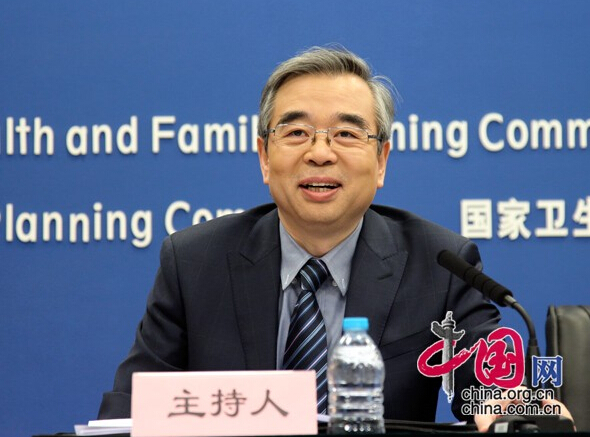
Mao Qun’an, a spokesperson of the National Health and Family Planning Commission, speaks during a press conference Wednesday in Beijing. [Photo:China.org.cn] 

“We will continue cracking down on the illegal practice of surrogacy to ensure people’s safe, legal and efficient access to assisted reproductive technology,” said Mao Qun’an, a spokesperson of the National Health and Family Planning Commission, during a press conference on Wednesday.

The state-run People’s Daily published a story recently which quoted several experts who argued that the country should loosen its restraints on surrogacy. The story was then interpreted by some as a signal that the country would loosen its grip. But Mao responded that surrogacy is still prohibited in China, citing a law in 2001 which banned surrogacy in any form.

According to the People’s Daily article, there are 90 million Chinese households which are eligible to have a second child after the country loosened its one-child policy in 2015. But 60 percent of the females are 35 years old or above, and 50 percent are more than 40 years old, making it quite difficult for them to have a second child.

Experts in that article also cited the high rate of diseases which cause lowered fertility and loss of children in a Chinese household as reasons for surrogacy to be allowed.

Confucius Museum to be opened in Shandong

image_pdfimage_print

An artist’s impression of the newly-built Confucius Museum in Qufu, Shandong province. [Photo/Xinhua] 

The Confucius Museum in Qufu, Shandong province – the birthplace of China’s most famous sage – will be opened in the second half of this year, a local official said on Wednesday, describing it as the country’s first comprehensive museum to focus on Confucius (551-479 BC) and his ideology.

“Work on the exhibition center, the main building of the museum complex, has been completed, while detailed work on exhibition platforms and landscaping is underway,” said Zhang Lizheng of the Qufu Culture Industry Park where the museum is located.

The museum complex, with a total investment of 700 million yuan ($102 million), consists of an exhibition center and six subordinate halls, covering a total of 57,000 square meters.

The museum is a cultural project showcasing Confucian teachings and relics collected by generations of Confucius, as well as a place to learn about traditional culture, said Yang Jinquan, deputy head of the Qufu bureau of cultural relics.

Construction of the museum started in 2013, but was disrupted due to financial issues and discussions over how to present the essence of Confucian thoughts and teachings in the most accurate way.

Local government statistics show that by the end of last year, a total of 380 million yuan had been spent on the museum.

Yang Chaoming, head of the Confucius Research Institute in Qufu, said the museum is of great importance.

“Currently, people learn Confucian teachings mainly from textbooks and at the Confucius Temple. At the museum, visitors will be able to gain a more in-depth understanding about Confucius and his teachings via images, modern technologies and relics related to the sage,” said Yang Chaoming, who is also a member of the provincial political advisory body.

Yang Yitang, an expert on Confucian studies at the Jining bureau of cultural relics, said, “About 350,000 Confucius-related relics and archives that now rest in storerooms will be better protected and presented to the public, helping experts and tourists to learn about the sage.”

Teachings of Confucius, an educator and philosopher, deeply influenced later Chinese generations. He was the first Chinese to set up private schools and enroll students from all walks of life.

The government of Shandong is exhibiting the work of Confucius to promote traditional Chinese culture.

Guo Shuqing, governor of Shandong, said in his government work report at the ongoing sixth session of the 12th Shandong Provincial People’s Congress, the province’s top legislature, that Shandong will continue to promote the essence of traditional Chinese culture, completing construction of the Confucius Museum and opening it to the public this year.