UN chief Guterres unveils proposals to end ‘scourge’ of sexual exploitation and abuse

image_pdfimage_print

9 March 2017 – Underscoring that the United Nations should not be, in any way, associated with the vile and vicious crimes of rape, sexual violence, exploitation and abuse, Secretary-General António Guterres has outlined a new victim-centred approach to prevent and respond to such abuses committed by those serving under the UN flag.

&#8220Such acts of cruelty should never take place. Certainly no person serving with the United Nations in any capacity should be associated with such vile and vicious crimes,&#8221 said Mr. Guterres in a message announcing his report released today on ‘Special Measures for Protection from Sexual Exploitation and Abuse: A New Approach.’

&#8220Let us declare in one voice: We will not tolerate anyone committing or condoning sexual exploitation and abuse. We will not let anyone cover up these crimes with the UN flag,&#8221 he added.

The Secretary-General’s report, Special measures for protection from sexual exploitation and abuse: a new approach, outlines a victim-centred strategy that is rooted in transparency, accountability and ensuring justice.

Noting that exploitation is also deeply rooted in gender inequality and discrimination, Mr. Guterres said that promoting gender equality throughout the UN system, including its missions and peacekeeping forces, would help advance parity and at the same time decrease incidents of abuse.

&#8220Let us do so in the name of all who look to the UN for life-saving protection and support &#8211 and on behalf of the tens of thousands of UN personnel around the world who deliver that assistance with courage and commitment to the highest ideals,&#8221 he stressed.

VIDEO: A New Approach – How the United Nations is responding to sexual exploitation and abuse

Four-track, victim-centred approach

Based on four tracks, the approach documented in the report focuses on the rights and dignity of victims; ending impunity for those guilty of crimes and abuses; drawing on the wisdom and guidance of all those who have been affected, civil society, local communities and others to strengthen and improve UN’s efforts; and to raise awareness and share best practices to end the vicious scourge.

The report also emphasizes the need to engage with UN Member States and calls for a high-level meeting on sexual exploitation and abuses in 2017 on the margins of the general debate of the 72nd session of the General Assembly.

The report further notes that the UN chief would seek Member States support to establish a system-wide consolidated confidential repository of case information to be placed under the supervision of the Special Coordinator on Improving UN Response to Sexual Exploitation and Abuse.

It also includes a detailed list of actions and recommendations, along with the relevant UN entity that would be responsible for consultation with relevant stakeholders, as well as provides data on allegations of sexual exploitation and abuse across the UN system and by non-UN international forces authorized by a Security Council mandate, covering the period 1 January to 31 December 2016.
Peacekeeping initiatives in action
Addressing Sexual Exploitation and Abuse

Yemen: UNICEF vaccination campaign reaches 5 million children

image_pdfimage_print

9 March 2017 – Amid escalating violence, the United Nations humanitarian agency for children and its partners have completed the first round of a nationwide door-to-door vaccination campaign reaching 5 million children under the age of five with oral polio vaccine and vitamin A supplementation.

&#8220In the last two years, more children have died from preventable diseases than those killed in the violence,&#8221 said Meritxell Relaño, the UN Children’s Fund (UNICEF) Representative in Yemen, in a press release. &#8220This is why vaccination campaigns are so crucial to save the lives of Yemen’s children and to secure their future.&#8221

In the first campaign of its kind this year, 40,000 vaccinators spread across Yemen to provide children with polio vaccine and vitamin A supplements. Mobile health teams have reached children wherever they are, including in places where access to health services has been cut off by the fighting. Health workers have shown heroic resolve in crossing frontlines, mountains and valleys to vaccinate children.

UNICEF says that the campaign comes at a critical time. Children in Yemen are living on the brink of famine and widespread malnutrition has drastically increased their risk of disease. More than half of Yemen’s medical facilities are no longer functional and the health system is on the verge of collapse.

UNICEF is scaling up its humanitarian response, including support for the treatment of 323,000 children against severe acute malnutrition, and the provision of basic healthcare services to one million children and over half a million pregnant and breastfeeding mothers.

&#8220Children are dying because the conflict is preventing them from getting the health care and nutrition they urgently need. Their immune systems are weak from months of hunger,&#8221 said Dr. Relaño, calling on all parties to the conflict to find a political solution to this crisis.

Cliff walkway decorated with 3D images

image_pdfimage_print

Photo taken on March 7, 2017 shows 3D images created on the walkway encircling the vertical cliffs in Shiniuzhai National Geological Park in Pingjiang County, Central China’s Hunan province. Seven painters worked to complete the drawing on a 106-meter-long walkway. [Photo/Ecns.cn]

Most advanced rescue ship put into use in S. China Sea

image_pdfimage_print
 

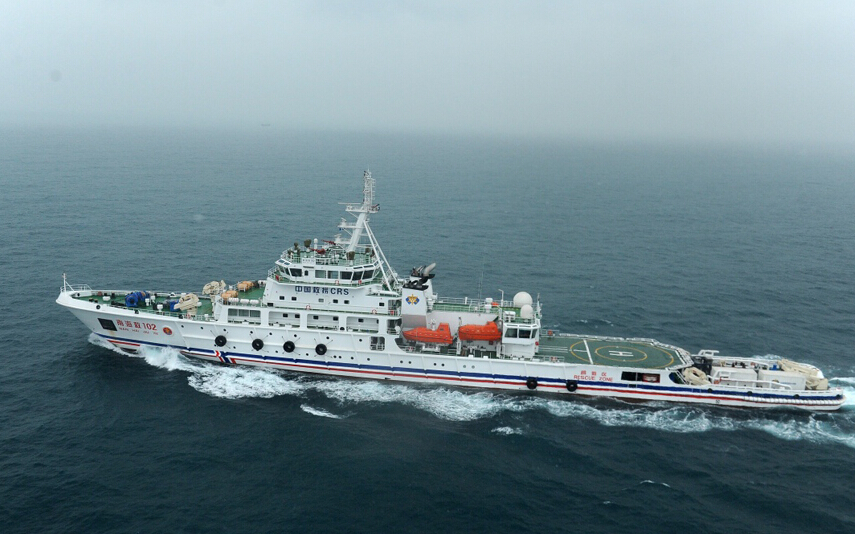
Nanhaijiu 102, China’s most advanced rescue vessel put into service on Wednesday in the South China Sea. [Xinhua photo]

China’s first vessel capable of conducting rescue in deep, open water was delivered and put into service on Wednesday in the South China Sea.

The ship, Nanhaijiu 102, is the most advanced rescue vessel in the area and will play a role in emergencies, said the Ministry of Transport.

An all-weather, high-powered rescue ship designed and built by China, is 127 meters long and 16 meters wide, with displacement of 7,300 tonnes and range of 16,000 nautical miles.

Carrying a towing system and autonomous underwater vehicle that can dive as deep as 6,000 meters, the ship is the country’s first rescue ship that can conduct air, sea and underwater searches at the same time.

The ministry said Nanhaijiu 102, which can rescue 200 people at a time, is designed for bad sea conditions including 12th grade waves and is suitable for the refueling and landing of helicopters.

China has 74 special rescue ships, among which 31 are in southern sea areas. In addition, the country has 20 rescue helicopters, according to the ministry.

1st national park gets strong legal and financial support

image_pdfimage_print

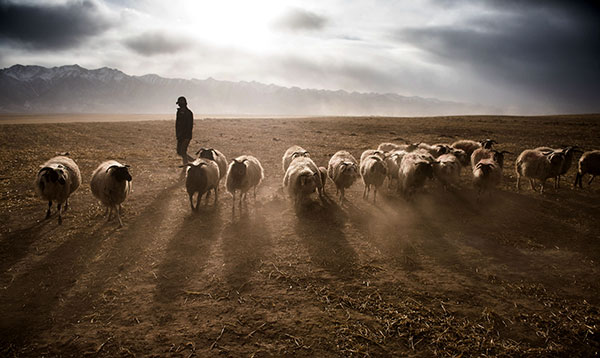
A shepherd takes his flock to graze on a grass-covered slope in the Yushu Tibetan autonomous prefecture in Qinghai province.[Photo/Xinhua]

China’s first national park will develop rapidly this year, with stronger legal and financial support from Qinghai province, the top provincial official said on Wednesday.

The plan for Sanjiangyuan National Park will set specific targets for environmental protection, Wang Guosheng, Party chief of Qinghai province, said on Wednesday at a group discussion of the ongoing session of the national legislature.

“Both are important legal measures: To build the national park and support environmental protection in this key regions,” said Wang, adding that they will also make special plans for major natural resources in the region.

The province plans to allocate 1 billion yuan (US$144.8 million) in 2017 for infrastructure construction, said Li Xiaonan, head of the park’s administration bureau.

Under management of the national park, herders and farmers will be major forces behind environmental protection, said the provincial Party chief.

The work is expected to provide jobs, boost farmers’ incomes and give them an incentive to protect the environment, he said.

Sanjiangyuan National Park, covering 123,100 square kilometers in Qinghai, is home to the headwaters of the Yangtze, Yellow and Lancang (Mekong) rivers, which run through more than 20 provincial regions in China, making the region critical for water resources in the country.