Farmers can be your neighbors

image_pdfimage_print

A farmers market, called “Farm to Neighbors” on the Lantern Festival, Feb. 11, 2017. [Photo/Wang Zhe] 

Besides shopping in supermarkets, people in Beijing can buy fresh vegetables from farmers’ markets, which are located in shopping malls. The initiative is called “Farm to neighbors”.

Lantern Festival Market

The Lantern Festival Market was held from February 11 to 12 for the traditional Chinese festival when people eat Yuanxiao, or rice dumplings, and other dishes to celebrate the first full moon after the Chinese New Year with their families.

Many locals came to this farmers’ market to purchase food or enjoy interesting activities.

An elderly couple made Yuanxiao with two different fillings on-site, attracting many customers. Many families also painted lanterns under the guidance of a Chinese folk maestro.

Vegetables, meat, noodles, bread and sauces are sold by their producers, who own their own farms or factories. Most of them just produce organic food.

“Because our Yuanxiao are made of organic glutinous rice flour, they are more expensive than those in supermarkets. In fact, the numbers of Yuanxiao I rolled can’t meet the demand, and many locals, especially foreigners prefer this healthy food,” said the Yuanxiao roller.

Located in the embassy area, the farmers’ market is popular with foreigners who live in Beijing. James, an American, always takes his Chinese wife to shop here.

“We come here twice a month, it has a lot of stuff that can be guaranteed and every time you can find new things,” said James.

Beijing bans higher emission vehicles from road

image_pdfimage_print
 

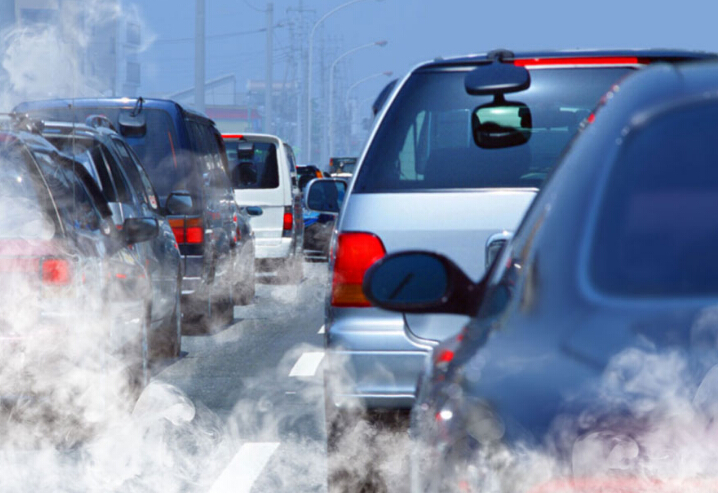
Starting from Feb. 15, light-duty gasoline-powered cars that fail to meet the National Emission Standard III will be banned from entering Beijing’s fifth ring on weekdays. [Photo: CRI]

Beijing will ban high-emission vehicles from its urban areas starting Wednesday, authorities said Monday.

Starting from Feb. 15, light-duty gasoline-powered cars that fail to meet the National Emission Standard III will be banned from entering Beijing’s fifth ring on weekdays.

Violators will be fined 100 yuan (US$14.50) for every four hours that they drive on the road. Substandard cars will also be taken off the road through annual inspections or spot checks.

The Chinese capital currently requires new cars to comply with the “Beijing VI” emission standard, which is higher than the widely-used National Emission Standard V and equivalent to the Euro VI standard, the strictest in China.

The National Emission Standard I was introduced in 1999 and the National Emission Standard II followed in 2004.

“After weeding out yellow-labeled cars [outdated and heavy-polluting vehicles], vehicles consistent with the National Emission Standards II and III release most of the pollutants on the roads,” said Yu Jianhua, chief engineer of the Beijing Municipal Environmental Protection Bureau.

Higher-polluting gasoline vehicles account for less than 10 percent of vehicles on the road, but discharge over 30 percent of nitrogen oxide and 25 percent of volatile organic compounds, according to Yu.

Beijing’s 5.7 million vehicles produce 500,000 tonnes of various pollutants annually and account for 31 percent of locally-generated PM 2.5, a particulate matter associated with hazardous smog, making it the prime source of PM2.5, according to the environmental authority.

Plagued by smog over the past decade, the capital city has initiated a series of regulations to improve its air quality.

It has moved out high-polluting industries, pulled outdated cars off the road, continued to improve the public transportation system and rolled out policies to support new energy vehicles.

Average density of PM 2.5 in the capital was 73 micrograms per cubic meter in 2016, down 9.9 percent from the previous year, according to the Beijing Municipal Reform and Development Commission.

News story: 6 weeks until the pound stops being round

image_pdfimage_print

Baroness Neville-Rolfe will pay tribute to the Royal Mint’s role as a global leader in the production of coins and medals – exporting to an average of 60 countries every year.

The visit comes ahead of a major export conference in Cardiff due to take place next month, celebrating Wales’ position as a leading exporter for goods and services across the world.

The minister will be accompanied on the visit to the factory in Llantrisant, Wales by the Welsh Secretary Alan Cairns.

Commercial Secretary to the Treasury Baroness Neville Rolfe said:

The introduction of a new pound coin, the most secure coin in the world, is a historic event. The fact this coin is made in Wales makes it even more special as it underlines the importance of the Union.

Our message is clear: if you have a round one pound coin sitting at home or in your wallet, you need to spend it or return it to your bank before 15 October.

Alun Cairns, Secretary of State for Wales, said:

It is particularly exciting to get a sneak preview of history being made today at the Royal Mint as the new pound coin is prepared for circulation. The presence of the Royal Mint in Wales as the creator of our currency – as well as being a major employer – underlines how central Wales is to the union.

The Royal Mint is also blazing a trail as an exporter. The UK government will shortly hold a conference for exporters in Wales, and companies like the Royal Mint are a great example to follow.

This is the first time the £1 coin has been changed in over 30 years. Around £1.3 billion worth of coins are stored in savings jars across the country, and the current £1 coin accounts for almost a third of these.

Therefore ministers are reminding the public of the importance of all old £1 coins being returned before 15 October 2017 when they lose their legal tender status.

The new 12-sided £1 coin will be the most secure coin in the world. It boasts several new security features, including a hologram, to prevent counterfeits, which cost taxpayers and businesses millions every year.

With humanitarian catastrophe looming, civilians in Syria’s ‘Four Towns’ need support now – UN relief official

image_pdfimage_print

13 February 2017 – A senior United Nations relief official has today called on all parties to come to an agreement and allow immediate and unfettered humanitarian access to more than 60,000 civilians trapped in four Syrian towns of Al-Zabadani, Al-Fu’ah, Kafraya and Madaya.

These four locations were referred to specifically in the so-called ‘Four Towns’ Agreement to facilitate humanitarian access to the people in need. However, these places have remained inaccessible for humanitarian workers since November last year.

“The unfair and totally unjustified besiegement is compounded by the tit-for-tat arrangement between the Four Towns, which makes humanitarian access prone to painstaking negotiations that are not based on humanitarian principles,” Ali Al-Za’tari, the UN Resident and Humanitarian Coordinator for Syria, said in a news release.

Mr. Al-Za’tari stressed that the situation is a looming humanitarian catastrophe and called on all those directly involved forces and all parties which have influence on them to convince them to allow urgent humanitarian assistance, including medical evacuations, to take place without delay.

“This has prevented medical cases from receiving proper treatment and evacuation. People are in need, and they cannot wait any longer. We need to act now,” he underlined.

Recalling that the principle of free access to people in need must be implemented the news release noted that civilians trapped in the four towns continue to suffer a cycle of daily violence and deprivation, where malnutrition and lack of proper medical care prevail.

The moral and ethical accountability befalls all those who hinder this access, the release read, adding that the UN and humanitarian partners stand ready to provide humanitarian assistance to the Four Towns as soon as negotiations with the parties to the conflict come to conclusion.

Speech: “Not intent simply with killing innocents, terrorists seek to destabilise, demoralise, and disrupt our way of life.”

image_pdfimage_print

Thank you, Mr President

I am most grateful for the analysis shared by our briefers this morning. And I join others in paying tribute to you, Mr Minister, for your leadership in bringing this important issue to our attention.

Over the past decade, the terrorist threat has evolved. We face increasingly complex threats as terrorists acquire new knowledge and new technology. Not intent simply with killing innocents, terrorists seek to destabilise, demoralise, and disrupt our way of life.

Critical infrastructure, be it a transport system, a communications hub, or a power grid represents an attractive target for these sinister actors. The fact that those responsible for the attack on the Brussels Metro and airport last March had also invested time in surveillance of a Belgian nuclear scientist should concern us all. We must redouble our vigilance to ensure that we are ready to defend the systems that allow our societies to function.

So we wholeheartedly welcome the action taken by this Council today in adopting resolution 2341. That resolution raises the profile of this important issue; it calls on states to improve preparedness; and it strengthens our cooperation in protecting the security of our people and our critical infrastructure.

If we are to truly tackle this threat, I believe we need to focus, Mr President, on three things: preparation, protection and partnerships. So firstly, preparation

It’s vital that plans for protecting our critical infrastructure are comprehensively developed, maintained and tested. We echo the call of the resolution for states to develop their own strategies to prepare and respond to any attack.

Threats to our infrastructure can come from many sources: terrorism, criminality or natural hazards. In reducing the risk to our infrastructure, the United Kingdom takes an ‘all-risks’ approach. That means developing plans that can be used to respond to many types of disruption or threats to life. Measures taken by states to prevent unlawful or criminal interference in our infrastructure can also serve to help prevent terrorist attacks. It’s in part because of the strong measures we have taken that terrorist threats to our infrastructure are being mitigated.

Secondly, protection. The threat to some elements of our national infrastructure may be aspirational, but there is one area where the threat is very real and very high: and that is transport. As recent reports from the UN Secretary General show, there continues to be a serious and enduring threat from international terrorism to our transport networks – specifically to civil aviation.

Three billion passengers reach their destination by air every year. This past year has offered us too many reminders of the risks they face. Attacks on airports in Brussels and Istanbul. The destruction of the Russian Metrojet aircraft over Sinai. The explosion on board a Daallo Airways flight from Mogadishu.

It was to combat these threats that the United Kingdom authored resolution 2309, and today echo its call on States to work with the International Civil Aviation Organisation. Working together we can ensure not only that international security standards keep pace with the terrorist threat, but also, crucially, that they are implemented effectively on the ground.

Finally, partnerships. The critical infrastructure that we need to protect is largely owned by the private sector, and can also form part of complex international networks and supply chains. Preparation and protection of infrastructure are simply good intentions if we fail to work across sectors to achieve them.

Each side has its part to play. Private companies are responsible for ensuring that their infrastructure is protected and that essential services are maintained, just as governments have an obligation to ensure that industry is managing these risks fully and responsibly.

And as this resolution identifies, stronger international partnerships are vital at a time when the functioning of infrastructure relies on cross border networks and supply chains. The sharing of information, early warning networks and expertise will strengthen our common approach.

Mr President,

This Council needs to stay abreast of the evolution of the terrorist threat, and to respond to it. Just as we act to prevent conflict, we should also act pre-emptively to prevent terrorism. Today, we have put another building block in place to strengthen our common effort. Because of our efforts, terrorists intent on stirring chaos have another hurdle to cross. Because of our efforts, our societies are a little safer than they were yesterday.

Thank you.