Recording of the week: Pierre Bourdieu and Terry Eagleton

image_pdfimage_print

This week's selection comes from Dr Eva del Rey, Curator of Drama and Literature Recordings and Digital Performance.

In this recording, made in 1991 at the Institute of Contemporary Arts in London, British literary theorist Terry Eagleton discusses the intricacies of the concept of ideology with French sociologist, anthropologist and philosopher Pierre Bourdieu (1930-2002).

Bourdieu explains his concept of symbolic violence, by which he means the systems of meaning that legitimize and thus solidify structures of inequality, often in a way that is undetectable and invisible to its very victims. 

Pierre Bourdieu and Terry Eagleton in conversation

Francisco_de_Goya_y_Lucientes_-_Duelo_a_garrotazosFight with Cudgels (c.1820-1823), Francisco de Goya. Wikimedia Commons.

This recording is an accessible introduction to one of the most influential social thinkers of the last three decades of the twentieth century, and also one of the very few available online featuring Pierre Bourdieu explaining his work in the English language.

Over 800 recordings of talks and discussions held at the ICA between 1982-1993 can be explored on British Library Sounds

Follow @BL_DramaSound and @soundarchive for all the latest news.   

Subway lines to link Beijing with cities in Hebei

image_pdfimage_print

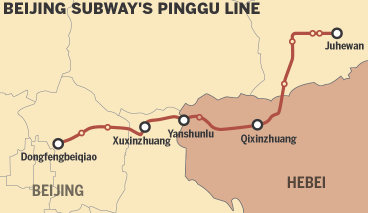
Four new subway lines will be built to link Beijing and neighboring Hebei province by 2021, as part of the region’s integrated development, Hebei’s top economic planner said.
[China Daily] 

The subway lines, together with other means of transportation, will cut the transfer time between the capital and cities in Hebei to less than 1 hour, according to a transportation plan released by the Hebei Development and Reform Commission for the 13th Five-Year Plan period (2016-20) period.

According to the plan, one of the four subways-the Pinggu Line-will link Beijing’s Pinggu and Tongzhou districts with Sanhe in Langfang, Hebei.

Preparatory work for the Pinggu Line has already started and is expected to be completed by 2021, according to the National Development and Reform Commission.

The other three lines, which are in the planning phase, would link Yizhuang in Beijing with downtown Langfang; Daxing in Beijing with Gu’an in Langfang; and Fangshan in Beijing with Zhuozhou in Baoding.

Development of the urban rail transportation system in the Beijng-Tianjin-Hebei region must be accelerated as there is significant demand for transportation services for short- and medium-distance journeys in the region, according to the plan.

By 2015, five cities in Hebei-Langfang, Cangzhou, Shijiazhuang, Baoding and Tangshan-had become part of a “one-hour traffic circle” connecting them to the capital.

However, large volumes of commuters traveling to and from Beijing every day require bus, subway or intercity railway services that provide faster and more frequent modes of transport.

To better meet demand, a 58-billion-yuan ($8.4 billion) investment will see the total length of the urban rail transportation system in Hebei, including lines connecting Beijing, reach 80 kilometers by 2020.

Intercity railway lines that connect Beijing, Tianjin and Hebei, not including subway lines, will be extended to a total of more than 400 km.

Intercity railway stations will be established mainly around Beijing’s new airport in Daxing district and Chongli in Zhangjiakou, a co-host of the 2022 Winter Olympics.

Construction of the stations is expected to guarantee convenient routes for passengers traveling between the new airport and Winter Olympics venues.

The upgrade of the transportation system will aid in moving Beijing’s noncapital functions, and the transfer of industries and people to Hebei, the plan said, adding that it will also create job opportunities and help develop the local economy.

“The system will make life more convenient for residents of the capital’s neighboring cities, which will attract more investment,” said Wang Yuling, an official at the Hebei Development and Reform Commission.

Arxan’s tourism prospects for poverty alleviation

image_pdfimage_print

Arxan, a small city of Hinggan League, north China’s Inner Mongolia, has begun developing a sustainable tourism industry following the “Tourism Plus” program proposed by the China National Tourism Administration in 2015.

“Arxan is beautiful in all seasons,” said President Xi Jinping on his first visit to Arxan on Jan. 26, 2014. “Arxan will become a popular tourist destination.”

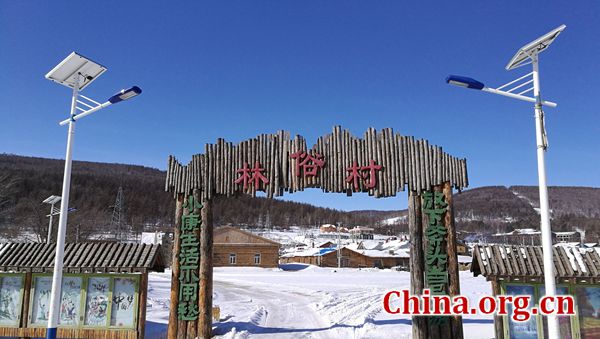
Linsu Village, tourists resort in Bailang Village, Arxan, north China’s Inner Mongolia. [Photo provided to China.org.cn by Pei Xiaoge]

Natural Charm

Arxan has one of the world’s largest functional hot springs. The Haishen Hot Spring Resort is a 4A national scenic spot with 48 springs that are said to be able to cure eight types of disease.

Its long winter lasts from early October to April, making it the best destination to enjoy winter scenery. You can even ski from the slopes directly to the front door of some hotels.

Chaihe Scenic Spot in Arxan has the best-preserved volcanic landforms in Asia. Due to the area’s geothermal conditions, Budong River or “never-frozen river” flows year round.

Arxan sits at the junction of four grasslands, which cover 95 percent of the area with vegetation. This makes Arxan an ideal destination to escape the summer heat and enjoy the beauty of the natural foliage.

You also have to try the local food, but brace yourself for some unusual local dishes. One specialty dish here is fried eggs with ants.

Expert: Gender equality vital for population planning

image_pdfimage_print

China’s population is expected to reach 1.42 billion by 2020, while the birth gender ratio is expected to be reduced to 112 boys for every 100 girls, according to a population development plan for the 13th Five-Year Plan (2016-20) recently released by the National Health and Family Planning Commission (NFHPC).

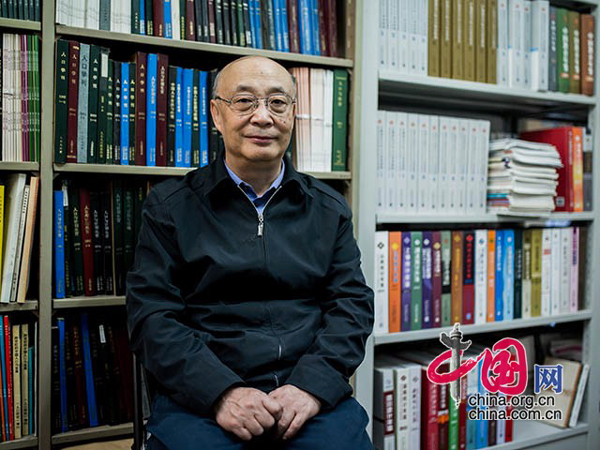
Zhai Zhenwu, vice chairman of China Population Association and professor of sociology and population studies at Renmin University of China. [Photo by Zheng Liang/China.org.cn] 

In a wide-ranging interview with China.org.cn to coincide with the report’s release, Zhai Zhenwu, vice chairman of China Population Association and professor of sociology and population studies at Beijing’s Renmin University of China, discussed the population development planning.

Imbalanced sex ratio at birth since 1985

Prof. Zhai said gender imbalance has become a very acute issue in China with a far-reaching impact on the country’s population structure and social-economic development.

He cited some statistics from the development plan. “Before 1985, the birth gender ratio was 106 or 107 boys for every 100 girls, which was still a normally-accepted gap. However, the number kept growing year-by-year, and in 2000 it reached 120 boys for every 100 girls; in some provinces it was even up to 135 to100.”

Such a big imbalance is rarely seen in the world in terms of degree, duration and scope, he stressed. “The issue has aroused great concern throughout society, and some media have continuously reported that millions of men are facing a ‘bachelor crisis,'” he said.

Thanks to great efforts by all sides, the ratio declined to 113 boys to 100 girls in 2016, the lowest in decades, Professor Zhai added.

Main reasons for imbalance

The professor identified three main reasons for the gender imbalance.

The first is a traditional social attitude that regards men as superior to women, which prevails especially in rural areas like those in Guangdong and Fujian provinces in southern China. This reflects the financial reality that a son will take care of his ageing parents, while a daughter will normally marry and be lost to the family in this regard.

Even though people’s living standards have greatly improved, their deep-rooted attitude in this regard has not changed accordingly.

The second reason is sex-selective abortion, which has made the situation worse. Despite a ban on pre-natal sex tests and gender-based abortions, both have seen a steady rise in some areas since ultrasound technology was introduced. Early sex-selective abortions were performed in many rural hospitals, where pregnant women asked doctors to help identify the sex of the fetus and induce an abortion if it was a girl.

The third reason is an overall decline in the country’s birth rate. This is related to the state family planning policy implemented for nearly four decades known as the “one-child policy.”