LCQ2: Preventing fraud involving use of Subscriber Identification Module cards

     Following is a question by the Hon Grace Chan and a reply by the Acting Secretary for Commerce and Economic Development, Dr Bernard Chan, in the Legislative Council today (November 18):
 
Question:
 
     It has been reported that some people hand over registered Subscriber Identification Module (SIM) cards to fraud syndicates through various means. As renting or selling SIM cards is not an offence, the registered holder of a SIM card may use ignorance as an excuse to evade criminal liability for fraud. In this connection, will the Government inform this Council:
 
(1) whether it has studied the common methods by which real-name registered SIM cards fall into the hands of fraud syndicates, and assessed the standard of proof and feasible approaches for establishing that the registered holders of the SIM cards have committed fraud;
 
(2) as the Government indicated last year that it would introduce a bill into this Council this year to combat the misuse of SIM cards, of the relevant progress; whether it will introduce administrative measures prior to enacting legislation to plug the relevant loopholes, such as requiring telecommunications operators to verify cases involving a large number of SIM card registrations within a short period or frequent changes of registered holders; and
 
(3) as it is learnt that some jurisdictions prevent fraud through the approach of shifting responsibility upstream (i.e. requiring the party with the greatest capacity for risk management to bear the responsibility for prevention), including imposing criminal liability on persons who hand over SIM cards to fraud syndicates and restricting them from registering new SIM cards, or requiring financial institutions to share the losses arising from fraud, whether the authorities will consider introducing the principle of responsibility allocation, as well as launching a public consultation on the loss-sharing mechanism and including this in the scope of the study on legislative amendments?
 
Reply:
 
President,
 
     The Office of the Communications Authority (OFCA) has been working closely with the Hong Kong Police Force (Police) and major telecommunications service providers (TSPs), and has implemented a number of measures from the telecommunications perspective to combat telephone fraud through the collaboration among the Government, business sector and the public. In response to the question raised by the Hon Grace Chan, and in consultation with the Security Bureau, the Financial Services and the Treasury Bureau (FSTB) and OFCA, the consolidated reply is as follows:
 
     According to investigations and analysis by the Police, fraud syndicates routinely use financial incentives as bait to recruit mule registrants, instructing them to purchase and register batches of physical SIM cards at retail outlets with their own identities, and then pass these SIM cards to other members of the fraud syndicates. The fraud syndicates would then connect multiple physical SIM cards to a telephone modem and computer system commonly known as "modem pool" to make or send a large number of fraudulent calls or phishing text messages within a short period of time. In cases involving the use of SIM cards to commit fraud, the Police generally brings charges under fraud, obtaining property by deception and obtaining services by deception, etc, of the Theft Ordinance (Cap. 210).
 
     Having regard to the analysis of telephone fraud provided by the Police and the operational experience since the full implementation of the Real-name Registration Programme for SIM Cards in 2023, the Government proposes to criminalise certain improper conduct of using SIM cards, such as provision of personal information for the registration of a SIM card intended for use by another person as well as purchase, sale, rental, borrowing or other activities involving supply or acquisition of registered SIM cards without lawful authority or reasonable excuse or justification. This proposal will prevent fraud syndicates from using SIM cards registered under others' identities to commit telephone fraud, and will also deter members of the public from providing their personal information or registered SIM cards to unknown individuals. Furthermore, we propose lowering the maximum registration limit of the number of pre-paid SIM (PPS) cards for individual users from the existing limit of 10 PPS cards per TSP per person to three PPS cards per TSP per person, which will help minimise the risks of PPS cards being exploited by criminals for fraudulent purposes. The Government is actively preparing the details for legislative amendments and plans to consult the public and the industry on the proposals as soon as possible in the coming months. Upon completion of the relevant legislative amendments, we envisage that a more targeted legal framework will be in place to combat activities involving illegal lease or sale of registered SIM cards, thereby lowering the standard of proof and enhancing the effectiveness of law enforcement.
 
     At present, OFCA has required the TSPs to step up monitoring and conduct further verification of users who have registered PPS cards approaching the current registration limit. If users subject to sample checks are unable to verify the registration information in accordance with the instructions of the TSPs, the relevant PPS cards will be deregistered and rendered invalid. The TSPs have conducted multiple rounds of verification since February 2023, resulting in the cancellation of approximately 4.2 million PPS card registrations due to non-compliance with verification requirements. The TSPs will also refer cases of suspected fraud or impersonation identified during the process for handling by the Police. According to the analysis of statistics provided by the TSPs, the vast majority (about 98 per cent) of individual users have currently registered no more than three PPS cards with each TSP. The TSPs will continue to closely monitor abnormal patterns of SIM card registration and usage, suspend relevant telephone services where necessary, and refer suspicious cases to the Police for follow-up.
 
     As for the banking sector, the Hong Kong Monetary Authority (HKMA), in collaboration with the Police and the Hong Kong Association of Banks, launched the Financial Intelligence Evaluation Sharing Tool in June 2023, providing the banking industry with a secure and efficient electronic platform to exchange business accounts information suspected to be related to financial crimes, and its scope of information exchange was expanded in December 2025 to cover suspicious individual accounts. The HKMA also introduced new measures, "E-Banking Security ABCD", in August 2025, requiring banks to further enhance protection for their banking customers through "Authenticate in-App", "Bye to unused functions", "Cancel suspicious payments" and "Deepfake detection". In addition, the FSTB is exploring to enhance the legal framework to bolster detection and removal of content relating to financial fraud by different sectors such as technology and telecommunications. The FSTB plans to launch a public consultation on the proposed legal framework by the end of this year.
 
     Regarding how banks handle claims for fraud losses arising from authorised payment transactions by customers, the HKMA consulted the banking industry last year. Taking into account the feedback received and other relevant developments, the HKMA will further explore how each relevant party's responsibility in frauds should be determined and the arrangements for handling customers' claims for fraud losses.
 
     Telephone fraud tactics are constantly evolving. The Government will continue to adopt a cross-departmental, collaborative approach to fortify defences on all fronts. However, public awareness of fraud prevention is also crucial. The Government will therefore continue to step up anti-fraud publicity and education, and build a comprehensive and robust anti-deception system from multiple perspectives. Thank you, President.

LCQ17: Facilitating customs clearance for pets

     Following is a question by Dr the Hon Thomas So and a written reply by the Secretary for Environment and Ecology, Mr Tse Chin-wan, in the Legislative Council today (November 18):

Question:

     With the continuous deepening of the development of the Guangdong-Macao In-Depth Cooperation Zone in Hengqin, since the implementation of the Hengqin-Macao pet customs clearance policy on March 1, 2024, eligible Macao residents holding a valid International Vaccination Certificate and a travel approval may travel between Macao and Hengqin with their pet dogs and cats via the Hengqin Port without having to make repeated applications and undergo prolonged quarantine. There are views that, as the pet industry in Hong Kong also continues to grow, the above reflects that there is still plenty of room for optimization of Hong Kong's cross-border pet policy. In this connection, will the Government inform this Council:

(1) as there are views that given the vast territory of the Mainland, classifying the quarantine arrangements for imported cats and dogs by the overall area may not be fair, of the timetable for the authorities to extend the Group IIIA arrangements to other cities in the Guangdong-Hong Kong-Macao Greater Bay Area (GBA); whether the authorities have conducted independent risk assessments on the rabies prevention and control levels of various GBA cities;

(2) whether the authorities will study upgrading the quarantine arrangements for imported cats and dogs to Group II based on the risks of individual GBA cities, so as to waive the requirement of quarantine upon import; whether the authorities have studied launching a pilot scheme on "regionalised quarantine-free clearance" by leveraging the Hetao Co-operation Zone;

(3) as it is learnt that the Agriculture, Fisheries and Conservation Department has completed the feasibility study on introducing the International Organization for Standardization (ISO) pet microchips as well as the amendments to the Rabies Regulation (Cap. 421A), under which dogs already implanted with 15-digit ISO microchips may be exempted from being re-implanted with AVID microchips when they are legally imported into Hong Kong, of the current implementation of such ISO pet microchips; if the microchip registration information contains errors or involves false statements, of the liabilities of the registrant and the licensee, and whether the authorities will increase the penalties; and

(4) whether the authorities will draw reference from the temporary import mechanism for racehorses to set up similar arrangements for cross-border pets, and streamline the quarantine arrangements for pets coming to Hong Kong on a short-term basis to participate in mega events such as pet expos and beauty pageants?

Reply:

President,

     Rabies is an infectious disease with an extremely high fatality rate for which there is currently no effective treatment, nearly 60 000 people die of rabies globally every year. To safeguard public health, the Agriculture, Fisheries and Conservation Department (AFCD) regulates the import of live animals under the Public Health (Animals and Birds) Regulations (Cap. 139A) and the Rabies Regulation (Cap. 421A). Under effective control measures, Hong Kong, as a separate import and export quarantine zone, has long been widely recognised as a rabies-free place.

     The AFCD classifies places of export into different groups according to different risk of animal disease and applies corresponding import and quarantine requirements. Since June 2025, the Chinese Mainland has been included in Group IIIA. For cats and dogs from the Chinese Mainland that meet relevant quarantine requirements, the quarantine period upon arrival in Hong Kong has been substantially shortened from 120 days to 30 days.

     The reply to the questions raised by Dr the Hon Thomas So is as follows:

(1) and (2) According to the standards established by the World Organisation for Animal Health (WOAH), if a specific zone within a country or territory is to be delineated based on a different animal disease status with a view to relaxing the import requirements for animals, that specific zone must have in place an extremely stringent biosecurity management system and a comprehensive disease surveillance mechanism to regulate the entry of specified animals and effectively isolate them from animals of the same species and wildlife outside the zone. At present, the Equine Disease-Free Zone in Conghua, Guangzhou, was established in accordance with these stringent standards.

     Cats and dogs entering Hong Kong may come from anywhere in the country, and during their stay in the Chinese Mainland (including the Guangdong-Hong Kong-Macao Greater Bay Area (GBA) and the Hetao Co-operation Zone), they may come into contact with animals carrying the rabies virus. Therefore, based on scientific and public health risk assessments, the conditions are not yet ripe at this stage to upgrade individual cities in GBA to Group II, or to establish a quarantine-free customs clearance pilot scheme in the Hetao Co-operation Zone.

     On the premise of safeguarding public health in Hong Kong, the AFCD will continue to maintain communication with the Chinese Mainland authorities, closely monitor the latest disease situation and prevention and control measures, and timely review the quarantine arrangements for cats and dogs imported from the Chinese Mainland based on risk assessments of the actual circumstances.

(3) To enhance the effectiveness of pet registration and tracing, the Government introduced in August 2025 microchips embedded with a Hong Kong-specific code conforming to the International Organization for Standardization (ISO) format as proof of dog identification and rabies vaccination. The new arrangement has been operating smoothly since its implementation and has effectively streamlined microchip verification for dogs entering and leaving Hong Kong.

     When applying for dog licences and import permits in Hong Kong, applicants are required to provide their names, addresses and identity documents for verification by the AFCD, and ensure that the information provided is accurate and updated as required. The Rabies Ordinance (Cap. 421) stipulates that any person who, without reasonable excuse, fails to provide information as required or knowingly provides false information commits an offence and is liable on conviction to a maximum fine at level three (HK$10,000) and to imprisonment for six months.The AFCD will continue to monitor the situation and timely review the penalty levels.

(4) The existing arrangements for the temporary import of horses for participation in international races in Hong Kong is implemented in accordance with the international standards established by WOAH for "high health, high performance horses". These horses must meet multiple animal health requirements, including being accompanied by an animal health certificate issued by an official veterinarian of the place of export and being transported under stringent biosecurity conditions. Except during training and racing, the horses must be housed in isolation stables at all times under the direct supervision of veterinarians of the Hong Kong Jockey Club.

     At present, there are no international management standards applicable to the temporary import of cats and dogs. Considering that both cats and dogs can transmit rabies which has an extremely high fatality rate, and that no private premises or commercial event venues in Hong Kong, other than official or licensed quarantine centres, can provide the required biosecurity safeguards, the AFCD has no plan to establish temporary import quarantine arrangements for cats and dogs participating in activities such as pet exhibitions or competitions. Persons intending to arrange for cats and dogs to come to Hong Kong to participate in events must apply for a permit from the AFCD, obtain health certificates in accordance with the requirements applicable to the place of export, and meet Hong Kong's quarantine requirements.

LCQ12: Strengthening history and patriotic education

     Following is a question by the Hon Ken Wong and a written reply by the Secretary for Education, Dr Choi Yuk-lin, in the Legislative Council today (November 18):

Question: 

     There are views that history education is a crucial cornerstone for cultivating students' sense of nationhood, national pride and identity, and is vital for promoting patriotic education. With 2026 marking the 90th anniversary of the victory of the Long March of the Chinese Workers' and Peasants' Red Army, this presents a timely opportunity to deepen students' understanding of significant historical events of the country. In this connection, will the Government inform this Council:

(1) of the proportion of teachers possessing a degree majoring in Chinese History or a history-related discipline among the Chinese History teachers at junior secondary level in secondary schools across the territory in the past three school years; whether the authorities have any plans to promote the full implementation of "teaching by subject specialists" in respect of Chinese History at junior secondary level in secondary schools across the territory; if so, of the timetable; if not, the reasons for that;

(2) to support the promotion of digital education, whether the authorities will consider reforming the assessment methods for Chinese History by introducing more electronic assessments, interactive scoring or using big data to analyse students' learning performance, so as to more comprehensively and diversely reflect students' understanding and mastery of Chinese History; if so, of the details; if not, the reasons for that;

(3) regarding non-Chinese-speaking students and students with special educational needs who face different difficulties in learning Chinese History and Geography respectively, whether the authorities will separately develop more targeted teaching materials on Chinese History and Geography to help these two groups of students to overcome their learning difficulties; if so, of the details; if not, the reasons for that;

(4) as it is learnt that quite a number of schools are actively organising learning activities related to the 90th anniversary of the victory of the Long March, whether the authorities will collect exemplary teaching practices from various schools to build a more extensive repository of specialised teaching resources; if so, of the details; if not, the reasons for that; how teachers will be continuously supported in the future to integrate important historical topics, such as the Long March spirit, into their daily lessons; and

(5) the authorities announced the optimised senior secondary Chinese History and History curriculum frameworks in late 2025, planning to strengthen history and patriotic education; when the authorities expect to provide the relevant textbooks, teacher training programmes and updated assessment frameworks and sample questions from the Hong Kong Examinations and Assessment Authority; if there is a timetable, of the details; if not, the reasons for that?

Reply:

President,

     The Education Bureau (EDB) has all along attached great importance to history education and patriotic education. In recent years, a number of initiatives have been rolled out to strengthen Chinese history education effectively, including making Chinese History an independent compulsory subject at junior secondary level since the 2018/19 school year, as well as fully implementing the revised junior secondary Chinese History curriculum from the 2022/23 school year successfully, enabling all students to receive Chinese history education in a systematic and proper manner. Following the announcement of the optimised senior secondary Chinese History and History Curriculum Frameworks in October 2025, the EDB has spared no time in taking forward the relevant work through a multi-pronged strategy. This includes launching a "pilot scheme" in the current school year (2026/27) to prepare teachers for the formal delivery of the curriculum from the 2027/28 school year. The EDB also continues to organise professional development programmes for teachers, develop learning and teaching resources, and hold diverse student activities. Furthermore, the EDB organises a wide range of activities, including the incorporation of "red resources" into the Mainland exchange programmes for students and the inclusion of commemorative activities in the "National Education – Event Planning Calendar" in light of our country's development or major historical events. Through continuous optimisation of history education and patriotic education, we aim to cultivate students' sense of belonging to our country, and their national pride and identity. The achievements and effectiveness of the series of initiatives implemented by the EDB in recent years to enhance the quality of Chinese history education are there for all to see.

     Our reply to the question raised by the Hon Ken Wong is as follows:

(1) In the past three school years, junior secondary Chinese History teachers holding a degree majoring in Chinese History or a History-related discipline accounted for nearly 40 per cent of all those teachers teaching the subject in Hong Kong. Non-specialised teaching has been common in secondary schools and is not unique to the Chinese History subject. Schools adopt a holistic approach in manpower deployment when assigning suitable teachers to teach Chinese History at junior secondary level, taking into account school-based circumstances such as senior secondary elective selection, teachers' teaching workload and areas of expertise, and the number of subject teachers. Many schools arrange for subject-trained teachers with a minor in History to teach junior secondary Chinese History. In fact, quite a number of non-History-major teachers prepare lessons with a professional attitude and sound knowledge, earning recognition and acclaim for the quality of their teaching from students. These arrangements have been in place and in smooth operation for years and have helped nurture a considerable number of Hong Kong students with an interest in Chinese History.

     To support the implementation of the revised junior secondary Chinese History curriculum, the EDB has been actively strengthening the professional capacity of junior secondary Chinese History teachers. Starting from the 2024/25 school year, the EDB has been providing systematic training for 1 000 junior secondary Chinese History teachers who are not History majors within three years. As at August 2026, the EDB has offered various types of training programmes, with a cumulative total of over 4 000 training places. Participating teachers have responded very positively to the programmes, giving them a rating of close to 4.6 out of 5. The training programmes will continue to be organised to help teachers gain a comprehensive and in-depth understanding of the junior secondary Chinese History curriculum as well as the learning and teaching strategies, thereby enhancing the professionalism of Chinese history education.

(2) To promote digital education, the EDB released the Blueprint for Digital Education Development in Primary and Secondary Schools in June 2026, while implementing the AI for Empowering Learning and Teaching Funding Programme. These initiatives serve to facilitate schools' effective planning of school-based artificial intelligence (AI)-empowered education projects as appropriate and their utilisation of AI-assisted teaching tools for analysing learning data and assessing the learning progress of students, so as to refine learning and teaching strategies.

     The EDB also encourages schools to adopt diversified examination and assessment formats and assessment strategies through digital education. In particular, the "Innovations in Chinese History: Student Self e-Learning Platform" for junior secondary Chinese History has been providing teachers with information related to students' self-learning progress and learning performance across various learning areas over the years to strengthen assessment for learning. Moreover, the "JoyfulChist: Student Online Platform for Senior Secondary Chinese History" developed for the subject features an instant question-and-answer and marking system, which enables teachers to give timely feedback and monitor, with the data available on the platform, students' learning progress for providing targeted feedback. To tie in with the development of digital education, AI-enabled functions of the platform will be enhanced to reflect more comprehensively from diverse perspectives students' understanding and grasp of Chinese History. In addition, teacher training activities on AI application (including its application in assessment strategies) have been organised for the Chinese History subject starting from the 2023/24 school year, which cover workshops, study and learning circles for panel heads, experience sharing sessions on learning and teaching strategies, etc. Feedback from participating teachers on the training programmes has been positive. They agreed that the programmes have enhanced their understanding of the application of AI in teaching and gave the programmes an average rating of over 4.5 out of 5. Meanwhile, the Blueprint for Digital Education Development in Primary and Secondary Schools promotes "AI + Curriculum" to systematically integrate AI learning and application into the design of learning activities and assessment tasks across different subjects and cross-disciplinary areas, including the Chinese History subject. The EDB will continue to organise more AI-related programmes for teachers and students to enhance the learning and teaching effectiveness of Chinese History.

(3) To support non-Chinese speaking (NCS) students and students with special educational needs in learning Chinese history and geography, the EDB encourages schools to adopt flexibly different strategies tailored to the characteristics of students to cater for their needs, especially those with different special learning needs. The EDB also provides a wide range of support in this regard.

     NCS students are part of our community and should be given the opportunity to receive Chinese history education. In 2018, the EDB set up an ad hoc committee to formulate for NCS students the Adapted Framework of the Chinese History Curriculum (Secondary 1-3) (2019) (for Non-Chinese Speaking Students). The EDB has also disbursed the One-off Non-recurrent Grant for Supporting Non-Chinese Speaking Students to Learn Chinese History and Culture and developed a series of bilingual learning resources, ranging from classroom teaching materials and teaching examples to field visit guides and a Chinese-English glossary (including trilingual audio files). In addition, the EDB provides on-site support services for schools admitting NCS students to offer professional advice about catering for students' diverse learning needs.

     As regards the multimodal teaching and learning resources developed and provided by the EDB for the Geography subject, most of them are available in Chinese and English versions to cater for students' different learning needs. Examples include audio picture books and the geography videos on Educational MultiMedia. Also, the "Geography Online Game Platform for Understanding Our Motherland" features games of different levels for students to choose from according to their abilities, so as to acquire knowledge of our country's geography effectively. Moreover, the EDB has developed a series of augmented reality maps of China to enhance students' motivation in learning through visual and spatial perception.

(4) To commemorate the 90th anniversary of the victory of the Long March, the EDB has launched a variety of activities this school year to support teachers in integrating more seamlessly the Long March spirit into daily classroom teaching. Under the "pilot scheme" for the optimised senior secondary Chinese History curriculum launched in the current school year (2026/27), the Long March is one of the key topics for trial teaching. Participating schools are required to conduct lesson design and trial teaching, while the EDB will collect examples and organise a sharing session to disseminate relevant teaching practices. Furthermore, the EDB issued in September 2026 the EDB Circular Memorandum No. 150/2026 "'Commemorating the 90th Anniversary of the Victory of the Chinese Workers' and Peasants' Red Army's Long March (1936-2026)' Teacher Professional Development Programmes, Student Activities and Learning and Teaching Resources", which sets out various programmes, activities and resources including, inter alia, a sharing session on teaching examples, film appreciation cum sharing sessions, an academic symposium, a Mainland study tour and a territory-wide junior secondary quiz competition. The EDB has also commissioned the Patriotic Education Centre to organise "Unswerving Original Aspiration; Steadfast Conviction: The 90th Anniversary of the Victory of the Red Army's Long March" Thematic Exhibition, enabling students to learn about the history through visiting the exhibition and participating in related activities. The series of programmes, activities and resources above will help teachers and students deepen their understanding of the history and appreciate the spirit of the Long March, thereby strengthening patriotic education.

(5) The EDB has completed the review of Secondary 4 Chinese History and History textbooks and will include the approved textbooks in the Recommended Textbook List. The review of Secondary 5 and 6 textbooks will be conducted in due course, with a view to making available suitable textbooks for teachers and students before the implementation of the optimised curricula in the 2027/28 school year. The EDB will provide no less than 1 500 training places in the 2026/27 school year for teachers to prepare for the optimised senior secondary Chinese History and History curricula, covering topics such as understanding and interpretation of the curriculum; knowledge enrichment; learning, teaching and assessment strategies; and curriculum leadership and planning. These training programmes are being rolled out progressively. Besides, in mid-July 2026, the Hong Kong Examinations and Assessment Authority published the assessment frameworks and sample papers of Chinese History and History for the 2030 Hong Kong Diploma of Secondary Education Examination.

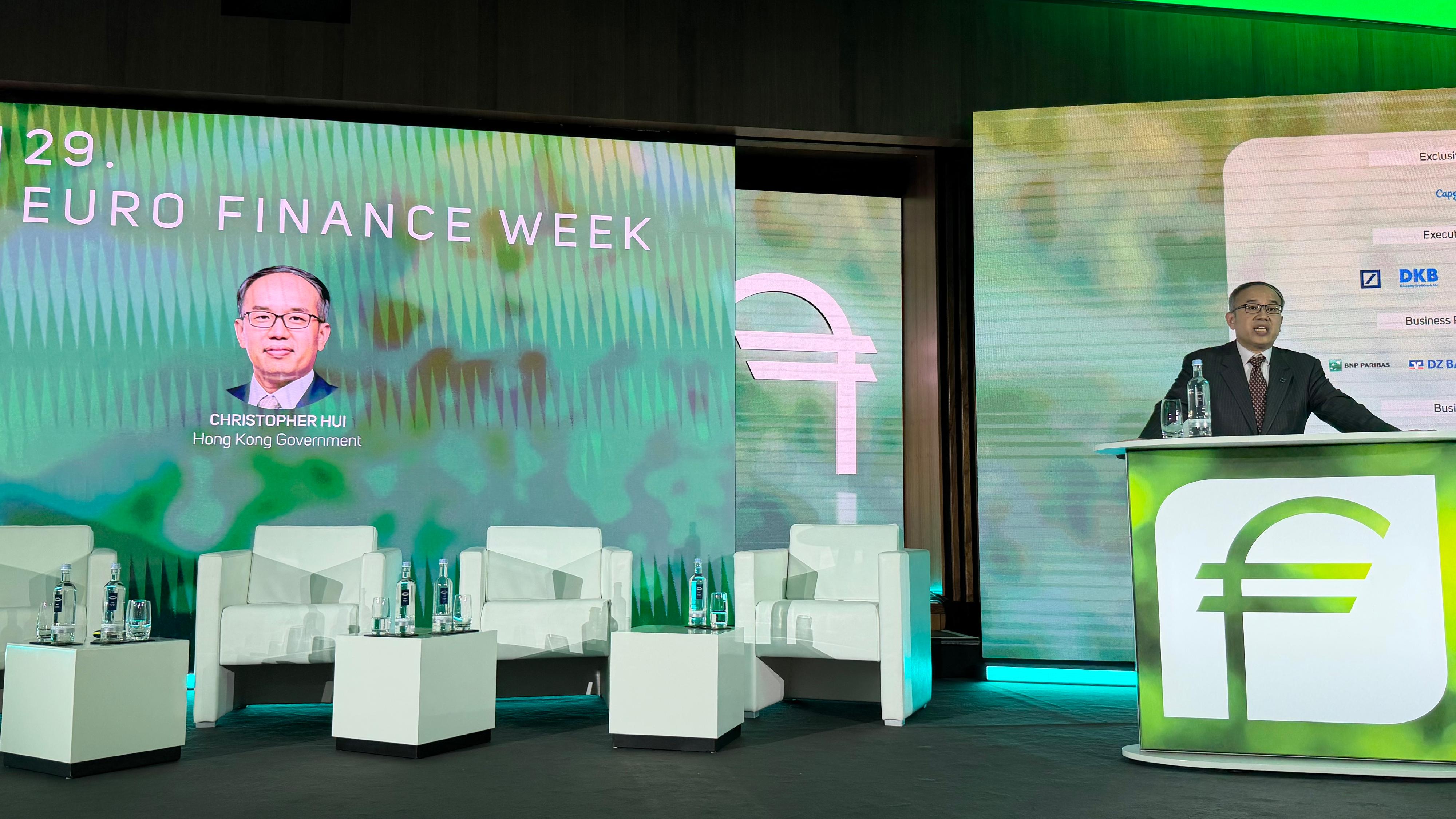
Closing remarks by SFST at 12th Green Finance Forum in Frankfurt, Germany (English only) (with photos)

     The Secretary for Financial Services and the Treasury, Mr Christopher Hui, spoke on "Asia's Green Finance Hub: Connecting Capital, Standards and Regions" at the 12th Green Finance Forum of the 29th Euro Finance Week in Frankfurt, Germany, on November 17 (Frankfurt time). Following are his remarks:
 
Distinguished guests, ladies and gentlemen,
 
     Good afternoon. It is a great pleasure of mine to be here in Frankfurt. In fact, I am only here for less than 12 hours and I am leaving for Luxembourg after this. It is also an honour to deliver the closing remarks of the 12th Green Finance Forum. I thank the dfv Euro Finance Group for inviting me, and for convening such an inspiring day. Today's theme, "Changing perspectives: From Green to Blue Finance", reminds us all that the climate challenge is also a water challenge, and that finance has a decisive role in meeting both. This afternoon, I would like to share how Hong Kong, as Asia's green finance hub, is connecting capital, standards and regions to support that shared mission.
 
     Let me start with the bigger picture. Global climate finance flows reached an all-time high of around US$1.9 trillion in 2023, more than doubling in three years. If this pace continues, annual climate investments could reach at least US$6 trillion by 2028. Much of this demand will come from Asia, home to fast-growing economies, major manufacturing bases and many of the cities and coastlines most exposed to rising seas, floods and extreme heat. Meeting Asia's needs is therefore central to meeting the world's climate goals.
 
     China is firmly committed to this transition. Its 15th Five-Year Plan, our country's national development blueprint for 2026 to 2030, sets the goal of a comprehensive green transformation of the economy and society. China aims to peak its carbon dioxide emissions before 2030 and achieve carbon neutrality before 2060. Hong Kong, being a part of our own country, aims to achieve carbon neutrality slightly earlier, before 2050, and to cut carbon emissions by half before 2035.
 
     As one of the world's leading international financial centres, Hong Kong is also rising as an international green finance centre. Last year, green and sustainable debt issued in Hong Kong, including bonds and loans, exceeded US$76 billion. Green and sustainable bonds arranged in Hong Kong amounted to around US$38 billion, making Hong Kong the largest market in Asia for these bonds for eight consecutive years.
 
     What, then, does Hong Kong bring to the table? Here I would highlight three roles.
 
     First, we are a connector of capital. Hong Kong is part of China, but under the "one country, two systems" principle, we keep our own legal, financial and monetary systems. This means we combine the free flow of capital, a common law system, a freely convertible currency and deep international markets with unique access to the Chinese Mainland. We bring issuers, projects and green technologies from the Chinese Mainland and the wider Asia together with global investors, including many of you here in Europe.
 
     Second, we are a builder of standards. Capital flows most freely where definitions are clear and information is trusted. Hong Kong is aligning our frameworks with international standards, while serving as a bridge between the Chinese Mainland, Asia and the rest of the world.
 
     Third, we are a regional platform. Hong Kong is part of the Greater Bay Area, one of China's most dynamic economic regions, comprising Hong Kong, Macao and nine cities in neighbouring Guangdong Province, including Shenzhen which is now the centre of focus with the APEC (Asia-Pacific Economic Cooperation) Economic Leaders' Meeting taking place. We also work closely with economies participating in the Belt and Road Initiative across Asia, the Middle East, Africa and beyond. Across these regions, we help partners access financing, expertise and markets, turning ambition into investable projects.
 
     Let me now turn to how we are delivering on these roles, starting with the bond market.
 
     The Hong Kong Government has led by example. Since 2019, we have issued government green bonds totalling about US$35.6 billion. These include green bonds for institutional investors denominated in Renminbi (RMB), US dollars and Euro, retail green bonds for local citizens, and tokenised green bonds issued on blockchain-based platforms. Our first tokenised green bond in 2023 was the first of its kind issued by any government in the world. In September this year, our latest digital bond offering of around US$2.6 billion became the largest digital bond issuance in the world. We have a lot of interest from European investors, and some of them I have met today.
 
     Hong Kong has also become a preferred venue for public-sector issuers from the Chinese Mainland. In May this year, China's Ministry of Finance issued RMB green sovereign bonds in Hong Kong for the first time, totalling RMB6 billion. Provincial and city governments in the Chinese Mainland, including Shenzhen, Hainan and Guangdong, regularly issue green, sustainability and social bonds in Hong Kong.
 
     And speaking of today's theme, blue finance is already part of this story. Since 2022, these local governments have issued a series of blue bonds in Hong Kong, financing marine and water-related projects. Guangdong Province, for example, issued a green and blue sustainability bond in Hong Kong in September this year, alongside a bond for a major water infrastructure project. These issuances show how Hong Kong's market can channel capital into ocean conservation, water security and resilient infrastructure.
 
     Water connects not only our ecosystems, but also our economies. Stronger maritime connections and resilient supply chains help businesses reach global markets and sustain trade in an uncertain international environment. In the realm of maritime decarbonisation, Hong Kong in particular has a unique role to play: our proximity to the Chinese Mainland, which is home to the world's largest manufacturing bases for green maritime fuel, means that we have reliable supply that makes us prime for developing green fuel trade. To this end, we are now working closely with industry partners to develop such a trading platform, tapping into the immense potential of this emerging sector as the maritime world steers irreversibly towards a green future and global green fuel bunkering breaks successive records. At the same time, we are determined to build Hong Kong into a green port, and we are working with port operators on formulating a roadmap for the green transformation of our container terminals. All these initiatives create opportunities to connect international capital with cleaner infrastructure and technology, supporting more sustainable and resilient trade between Asia, Europe and beyond. On this front, I invite any of you interested to come to us and to see how Europe can be part of these opportunities.
 
     To attract more issuers to the market, the Hong Kong Government offers a grant scheme that subsidises bond issuance and external review costs for green and sustainable debt. The scheme has been extended to 2027 and now covers transition bonds and loans. As of early October, it has supported close to 720 debt instruments, with total underlying issuance of over US$200 billion. Since April this year, a higher subsidy rate has applied to instruments aligned with Hong Kong's green classification system, encouraging the market to adopt credible standards.
 
     Beyond debt, Hong Kong Exchanges and Clearing (Hong Kong Exchanges and Clearing Limited), or HKEX, the operator of our stock exchange, launched HKEX Green Equity last month. This voluntary designation helps investors identify listed companies with significant green business activities.
 
     This brings me to standards, the second pillar of connectivity.
 
     On disclosure, Hong Kong published its own sustainability disclosure standards in December 2024. They are fully aligned with the global baseline standards issued by the International Sustainability Standards Board, or ISSB, and have been effective since August 2025. Our roadmap provides a clear pathway for large publicly accountable entities to fully adopt the ISSB Standards no later than 2028. The IFRS Foundation (International Financial Reporting Standards Foundation), the ISSB's parent body, has confirmed Hong Kong as among the first set of jurisdictions with a target of full adoption. In June this year, our accounting profession's standard-setting body, the Hong Kong Institute of Certified Public Accountants, was appointed by the IFRS Foundation as an official ISSB Training Partner.
 
     For the audience in Europe, I would stress one point: global baseline standards make capital truly mobile. When a European investor reads the sustainability report of a Hong Kong-listed company, it should be comparable, decision-useful and trusted.
 
     On taxonomy, our central bank, the Hong Kong Monetary Authority (HKMA), published the Hong Kong Taxonomy for Sustainable Finance in 2024. It is aligned with the taxonomies of both the Chinese Mainland and the EU (European Union), helping investors across markets speak a common language. An expanded phase, published this January, increased coverage to 25 economic activities, introduced transition elements, and added climate change adaptation as a new environmental objective.
 
     A further expansion, which we have consulted the public earlier on this year, would increase coverage of our taxonomy to 39 activities. It adds key enabling technologies such as battery manufacturing and recycling, and practical transition pathways for hard-to-abate sectors like air transport, and iron and steel. Importantly for today's discussion, it introduces a process-based approach to adaptation, with 24 adaptation measures focusing initially on shoreline protection and flood management. As a coastal city, in Hong Kong, we know resilience against water-related risks is not optional. Making adaptation investable is a key step in mobilising private capital for it.
 
     Ladies and gentlemen, the third pillar is connecting regions, and the carbon market is a good example.
 
     The HKEX's international carbon marketplace, Core Climate, offers trading of voluntary carbon credits, settled in Hong Kong dollars and RMB. It now has over 140 registered participants, offering credits from over 60 projects certified under leading international standards such as Verra and Gold Standard. Last month, Core Climate completed two cross-boundary pilots with partners in the Greater Bay Area. The first enabled Hong Kong companies to purchase around 100 000 green electricity certificates from the neighbouring Mainland Chinese power market. The second tested settlement arrangements for carbon emission allowances traded in the city of Shenzhen which is our neighbour. Core Climate is also expanding co-operation with Brazil, Malaysia and Kazakhstan, and exploring new environmental products such as Sustainable Aviation Fuel certificates and green hydrogen certificates.
 
     Technology amplifies these efforts. Under a tokenisation initiative led by the HKMA, a tokenised carbon credit transaction was tested last year to improve transparency and traceability. Building on this, the HKEX is exploring the establishment of a blockchain-backed, multi-asset tokenisation platform, and plans to conduct a tokenised carbon credit pilot by the end of this year. The pilot will translate the concept of tokenised carbon markets into real-world transactions and practical application.
 
     We are also developing Hong Kong into a green fintech hub. In September, a green technology accelerator was launched in Hong Kong to help green technology projects in Belt and Road regions become investment-ready, and to connect them with investors and capital.
 
     None of this is possible without people. Our green finance talent subsidy scheme, extended to 2028, has supported over 11 000 applications for training, covering nearly 130 eligible programmes and qualifications. We are building a talent pool equipped for green transition and, increasingly, blue finance.
 
     Let me now look ahead.
 
     First, we will deepen our markets. We will continue our government sustainable bond issuance, explore innovative and digital formats, and welcome more issuers from our motherland, Asia and beyond, including in blue and adaptation finance.
 
     Second, we will strengthen standards. We will support the practical implementation of ISSB-aligned standards, finalise the latest expansion of our taxonomy, and keep both aligned with international frameworks to support cross-border capital flows.
 
     Third, we will build a stronger international carbon market. Working with the relevant authorities in the Chinese Mainland, we will study our country's participation in international carbon markets, including standards, registration, trading and settlement, and develop practical cross-border trading cases.
 
     Fourth, and fundamentally, we will deepen partnerships. Europe has been a pioneer in sustainable finance, from taxonomy to disclosure and many others. Frankfurt is a natural partner. Hong Kong's taxonomy is aligned with that of the EU, and our Government has issued green bonds in Euro. I see ample room for collaboration, from bringing Asian green and blue projects to European investors, to sharing experience on standards, technology and talent.
 
     Ladies and gentlemen, water connects us all. Rivers cross borders, oceans link continents, and ports, like Hong Kong's, have long connected Asia and Europe through trade. Finance should flow the same way, across markets, standards and regions towards a greener and bluer future. In particular, in the Chinese language, water means wealth. So on that front, we hope and we will make sure that water will push for progress not just financially but also socially. Hong Kong as always stands ready to be your gateway to Asia, and Asia's gateway to the world.
 
     Thank you, and I wish you all a pleasant evening at the reception.

Photo  Photo  

LCQ21: Safeguarding cross-boundary consumer rights and interests

     Following is a question by Professor the Hon Priscilla Leung and a written reply by the Acting Secretary for Commerce and Economic Development, Dr Bernard Chan, in the Legislative Council today (November 18):

Question:

     The Regulations of Guangdong Province on Promoting Collaboration in the Protection of Consumer Rights and Interests in the Guangdong-Hong Kong-Macao Greater Bay Area (Regulations) were adopted in July 2026 and came into force in October. It is proposed under the Regulations that the consumer councils of Guangdong Province and the nine Mainland cities within the Guangdong-Hong Kong-Macao Greater Bay Area establish a regular joint collaboration mechanism with the consumer councils of Hong Kong and Macao to strengthen the exchange of information on consumer complaints, major consumer risks, etc. As northbound spending has become increasingly common for Hong Kong people, the safeguarding of cross-boundary consumer rights and interests is becoming increasingly important. In this connection, will the Government inform this Council:

(1) of the communication of the Hong Kong Special Administrative Region Government and the Consumer Council of Hong Kong with the relevant departments and consumer organisations of Guangdong Province since the implementation of the Regulations; the progress made in establishing the regular joint collaboration and information exchange mechanisms;

(2) of the number of complaints received by the Consumer Council of Hong Kong involving northbound spending by Hong Kong people, their major categories and the number of cases successfully handled over the past three years;

(3) of the effectiveness of the current co-operation between Hong Kong and the Mainland in the referral of cross-boundary consumer complaints, dispute mediation and early warning of consumer risks; whether the authorities have assessed the effectiveness of the Regulations in safeguarding the rights and interests of Hong Kong consumers and enhancing the efficiency of handling cross-boundary complaints; and

(4) of the details of the authorities' specific plans to further improve the mechanisms for safeguarding cross-boundary consumer rights and interests and for collaboration, and whether a timetable has been set for the implementation of such work?

Reply:

President,

     As the integrated development of the Guangdong-Hong Kong-Macao Greater Bay Area (GBA) continues to deepen and the flow of people becomes increasingly frequent, cross-boundary consumption has become a key engine driving regional economic development. The Government is committed to establishing a robust consumer protection regime. In this regard, the Consumer Council (Council), as a statutory body, has all along been studying and promoting the protection of consumers' rights and interests, carrying out its statutory functions in accordance with the Consumer Council Ordinance (Cap. 216). In response to the various questions raised by Professor the Hon Priscilla Leung, the reply is as follows:

     In light of the prevalence of cross-boundary consumption, the Council has been making endeavours to sign Memoranda of Understanding with consumer protection bodies in various regions to establish a mechanism for cross-boundary information exchange and referral of complaint cases. At present, the Council has formed collaboration agreements with 30 Mainland provinces and cities (covering nine cities in the GBA) and Macao. Upon receiving complaints from consumers regarding cross-boundary consumption, the Council follows up on such complaints with the relevant consumer protection bodies in accordance with the established mechanism. The aforementioned cross-boundary complaint referral mechanism has been operating effectively, helping consumers in the three places to resolve consumer disputes with traders.

     Between 2023 and 2025, the Council received and referred a total of 92 cases to consumer protection bodies on the Mainland for follow-up. These consumer disputes encountered by Hong Kong consumers in cross-boundary consumption on the Mainland were mainly related to service or logistics delays and the quality of the goods or services consumed. Among these complaints, more than 60 cases were successfully conciliated, whereas the remaining cases were closed due to reasons such as the complainants' failure to provide the required information, the complainants' requests to withdraw the complaints, or the parties being unable to reach a settlement following conciliation.

     In addition to establishing a cross-boundary complaint referral mechanism, the Government has been supporting the Council in strengthening collaboration with consumer protection bodies in the GBA, including:

(1) Strengthening co-operation on consumer education and publicity work by issuing joint alerts with GBA consumer protection bodies on matters involving consumption risks, appealing to consumers to pay close attention to differences in policies, logistics and product standards across the three places;

(2) Conducting joint market surveys and product tests to provide consumers in the three places with practical, timely and comprehensive consumer information; and

(3) Organising joint cross-boundary exchange activities; for example, earlier this year, the Council participated in the "3.15 World Consumer Rights Day" event organised by the Shenzhen Consumer Council, setting up a dedicated stall to provide consumer tips.

     The Regulations of Guangdong Province on Promoting Collaboration in the Protection of Consumer Rights and Interests in the Guangdong-Hong Kong-Macao Greater Bay Area came into force in October this year, providing an institutional basis for the cross-boundary co-operation in respect of consumers' rights and interests protection. In this regard, the Council has been maintaining close communication with consumer protection bodies in the GBA. Notably, the Greater Bay Area Consumer Protection Conference, organised annually by consumer protection bodies from the three places, was successfully held in Hong Kong on November 10 this year, further deepening the exchanges on collaboration in the protection of consumers' rights and interests. In future, the Council will continue to strengthen exchanges and collaboration with consumer protection bodies in the GBA in the following areas:

(1) Regularly reviewing the effectiveness of the complaint referral mechanism, and enabling consumers to lodge complaints regarding cross-boundary consumer disputes through standardisation of procedures and the effective use of technology (including the Complaint Handling ePlatform launched by the Council in end-2025), thereby better aligning with the relevant work of consumer protection bodies in the GBA; and

(2) Fully leveraging social media platforms of the Mainland and other promotional channels to raise awareness among consumers (including tourists from the Mainland) of the complaint referral mechanism and the Council's coordinating role, and encourage them to seek assistance when necessary.

     The Government will continue to promote co-operation among Guangdong, Hong Kong and Macao for protecting consumers' rights and interests. The Council will also continue to maintain close collaboration with consumer protection bodies on the Mainland in respect of various areas for co-operation as mentioned above, with a view to working together to refine consumer protection measures and achieving long-term synergies.