CHP investigates imported Mpox case

     â€‹The Centre for Health Protection (CHP) of the Department of Health (DH) announced today (November 18) that it is investigating an imported Mpox (also known as Monkeypox) case, and strongly urged high-risk target groups to receive Mpox vaccinations. Meanwhile, the public is advised to be vigilant and avoid close physical contact with individuals suspected of contracting Mpox.

Case details
—————

     The case involves a 38-year-old man who developed chills and fatigue on November 11, followed by anal pain. He sought medical attention from a private doctor, and was referred to the Queen Elizabeth Hospital on November 16 for isolation treatment. He is currently in stable condition. Upon laboratory testing by the CHP's Public Health Laboratory Services Branch, his clinical specimen tested positive for the Monkeypox virus.

     According to information provided by the patient, he had high-risk sexual contact with a man met via social media platform outside Hong Kong during the incubation period. The CHP is continuing an epidemiological investigation of the case, and will report the case to the World Health Organization.

Latest situation of Mpox cases
————————————

     Since 2022, Hong Kong has recorded 121 Mpox cases (94 local cases and 27 imported cases). All patients are male. Epidemiological investigations revealed that among the 28 cases recorded since August, all patients reported having engaged in high-risk sexual activities during the incubation period, including having sex with male strangers or multiple partners, and having sex without a condom. Most of them have not received Mpox vaccination.
 
     Among the local cases recorded since August, patients commonly used specific dating apps to find casual male sexual partners. After testing positive, some patients were unable to contact their newly met sexual partners, which hindered the CHP's ability to conduct effective contact tracing and implement corresponding prevention and control measures. In view of this, the CHP has increased its outreach on social media platforms to promote Mpox prevention and vaccination, and has collaborated with the operators of relevant dating apps to regularly push information about Mpox prevention and vaccination to all users in Hong Kong.
 
     The CHP urges individuals who have engaged in high-risk sexual contact, particularly with male strangers, to remain vigilant and take appropriate personal protective measures, including receiving the Mpox vaccination and avoiding high-risk sexual contact, so as to lower the risk of infection. Members of the public should retain their sexual partners' contact information to facilitate contact tracing when necessary.

Strengthening prevention
—————————–

     The Mpox vaccine can prevent infection and severe disease. Since late September, the CHP has set up an additional Mpox vaccination centre at the CHP Building, in addition to regular vaccination venues established by the Government. The CHP has also collaborated with relevant non-governmental organisations to provide outreach vaccination services, providing convenience and incentives to encourage individuals with high-risk contacts to get vaccinated as soon as possible. Since September 28, over 1 000 high-risk individuals have received the Mpox vaccine at the regular and additional vaccination venues.
 
     Vaccination provides a highly effective protective barrier. Studies show that receiving two doses of the Mpox vaccine reduces the risk of infection by 82 per cent, which significantly lowers the risk of transmission to sexual partners, and protects both the vaccinated individual and others. Local data also show that vaccinated patients are 87 per cent less likely to experience viral spread to other parts of the body.

     The CHP's Mpox hotline (2125 2373) will continue to provide health assessments and advice to high-risk individuals. The hotline will arrange for individuals in need to get vaccinated at the CHP. The hotline operates daily from 9am to 6pm.

More information on Mpox
—————————–

     Mpox is not transmitted through respiratory droplets or aerosols in general, and transmission would not occur through social contact. The CHP reminds the public, especially those at higher risk of exposure, to take precautions and avoid close physical contact with persons or animals suspected of being infected. They should seek medical attention as soon as possible if they experience relevant symptoms, including rash, fever, chills, swollen lymph nodes, exhaustion, muscle pain, and severe headaches. They should not engage in activities with others that may involve contact with skin rash or body fluids.

     The DH has been providing Mpox vaccination services for high-risk groups, including individuals with high-risk sexual practices (such as having multiple sexual partners), sex workers, or having a history of sexually transmitted infection within the past 12 months.

     For more details, please visit the CHP's webpages on Mpox and the Mpox Vaccination Programme.

Hong Kong and Viet Nam sign Memorandum of Co-operation relating to prevention and settlement of international disputes (with photos)

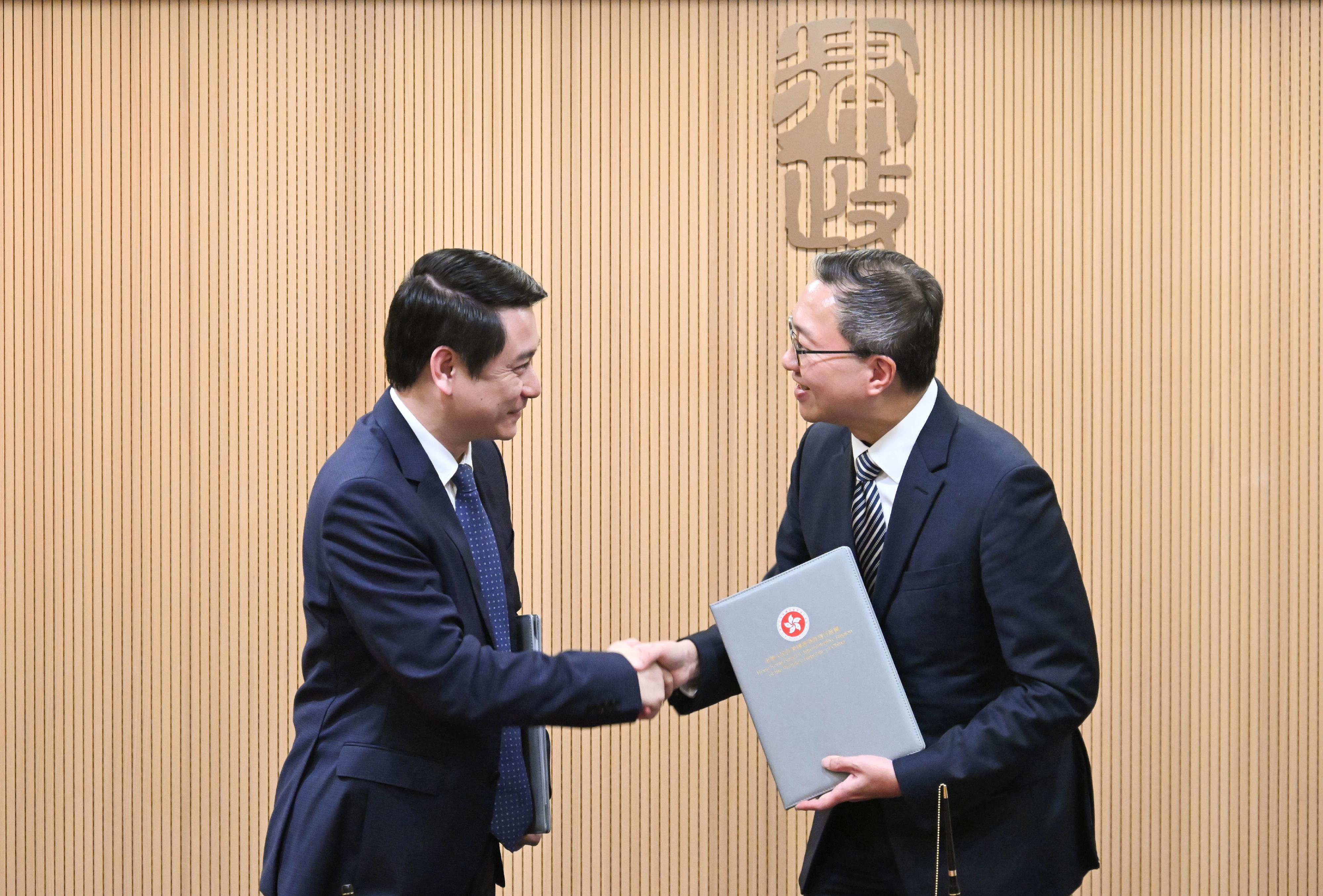
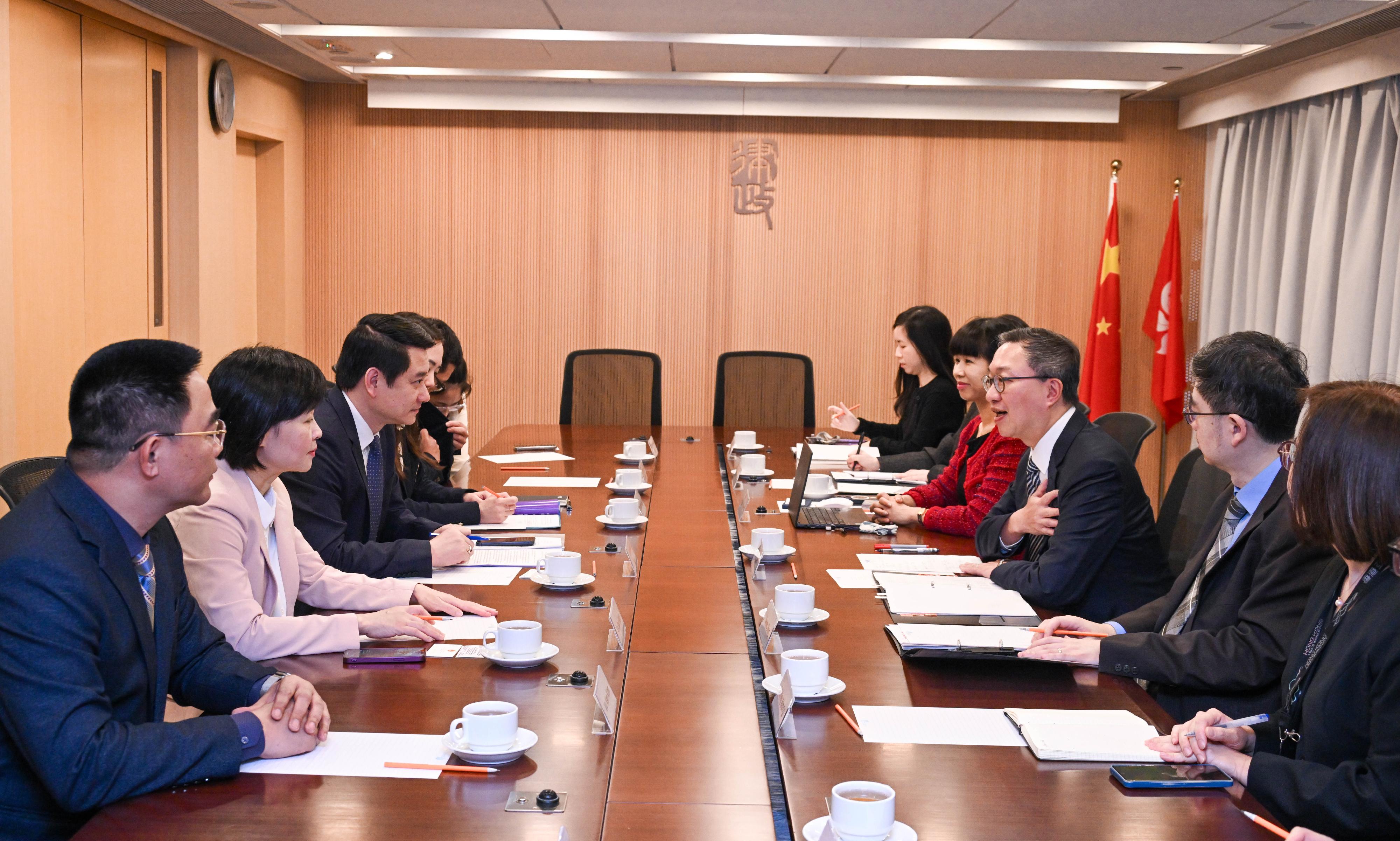
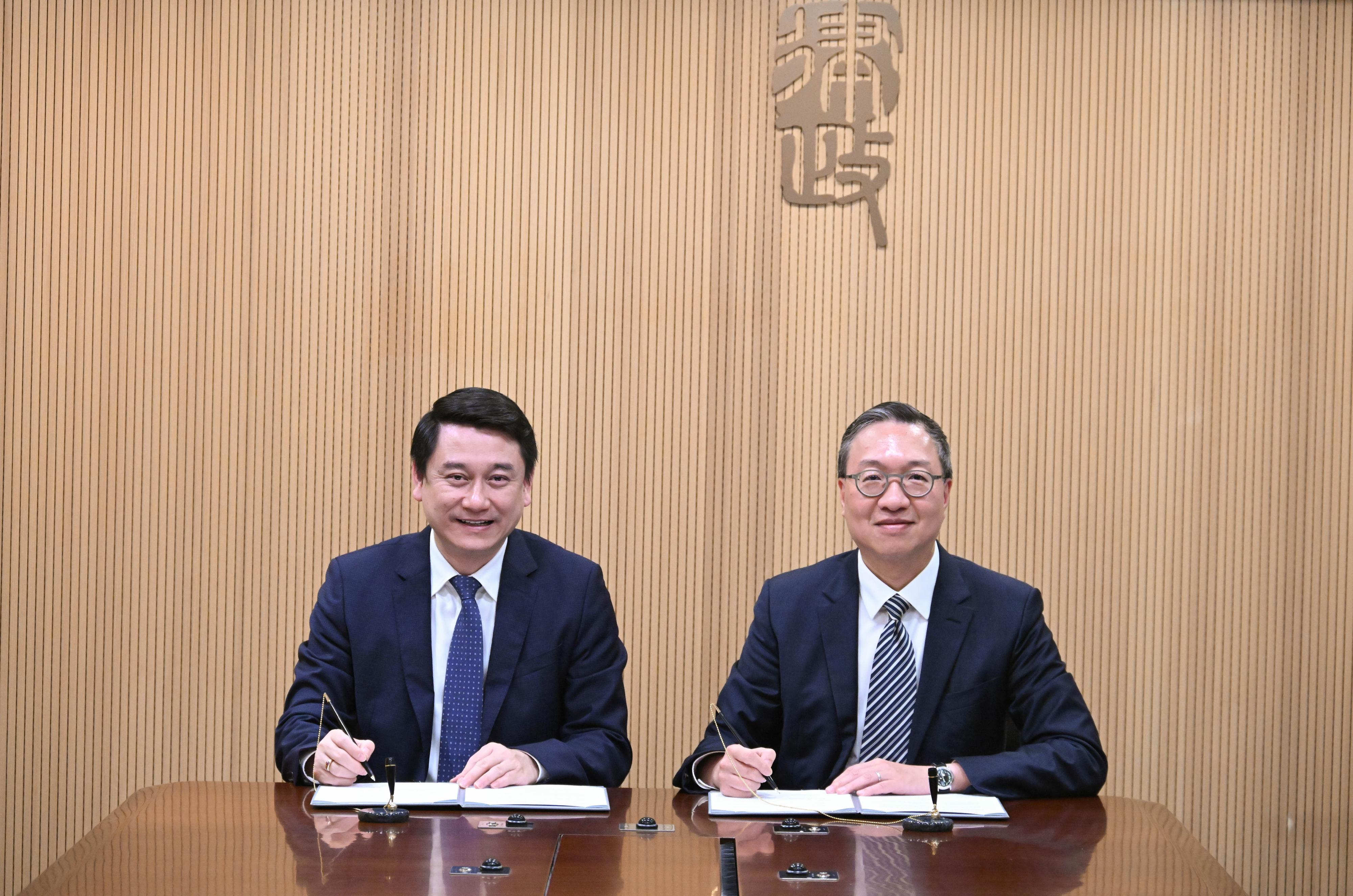
     The Department of Justice (DoJ) of the Hong Kong Special Administrative Region (HKSAR) Government and the Ministry of Foreign Affairs of the Socialist Republic of Viet Nam signed a Memorandum of Co-operation (MOC) today (November 18) to strengthen their co-operation on building capacity in the prevention and settlement of international disputes.

     The MOC was signed by the Secretary for Justice, Mr Paul Lam, SC, and Deputy Minister of Foreign Affairs of Viet Nam Mr Le Anh Tuan.

     The MOC provides a framework for the HKSAR and Viet Nam to strengthen communication, collaboration and co-operation between them on building the capacity of legal officers in the prevention and settlement of international disputes in the economic, commercial and investment fields. It is expected that both places will benefit greatly from the enhanced co-operation under the MOC.

     The signing of the MOC will further consolidate Hong Kong's status as a centre for international legal and dispute resolution services, as well as a centre for capacity building in international law. The DoJ will continue to pursue and conclude co-operation or partnership arrangements with other jurisdictions and international organisations.

Photo  Photo  Photo  

LCQ13: Promoting application of green methanol

     Following is a question by the Hon Hung Kam-in and a written reply by the Secretary for Environment and Ecology, Mr Tse Chin-wan, in the Legislative Council today (November 18):
 
Question:

     Some members of the industry have pointed out that green methanol has considerable potential for reducing emissions in areas such as road transport, port equipment and construction sites, and that its fuel costs are lower than those of conventional diesel. However, due to the existing high rate of duty and complicated administrative procedures, it is relatively difficult to carry out the relevant applications and trials in Hong Kong. In this connection, will the Government inform this Council:

(1) whether the reasons for levying duty on methanol (methyl alcohol, "MA") (other than MA for use as fuel in outbound vessels) under the existing legislation are still primarily to deter the production of adulterated alcohol and prevent MA poisoning; if not, of the main purposes (such as increasing tax revenue or regulating non-fuel uses);

(2) of the total quantity of green methanol imported into Hong Kong in each of the past three years; among such imports, of the respective quantity and proportion of MA which, after importation, has been classified as being for uses other than as fuel in outbound vessels (including use in road transport vehicles and non-road equipment) and hence subject to duty at the full rate;

(3) whether it has completed or is conducting any relevant assessments of the application of green methanol fuel in road transport vehicles and non-road applications (such as construction sites), including emission reduction benefits, cost competitiveness, technical feasibility and safety risks;

(4) whether it will consider, on the basis of the existing duty exemption for green methanol, further extending the scope of duty exemption to cover M100 methanol fuel for motor vehicles and non-road MA-powered equipment (including power generators at construction sites and mobile machinery at ports);

(5) apart from duty exemption, whether it will consider introducing facilitation policies for importing green methanol for land-based applications, such as simplifying government testing requirements, optimising the "pay first, refund later" procedures for denatured MA, or establishing a fast-track approval channel for green methanol used in motor vehicles and at construction sites, so as to promote the use of green methanol in land transport and non-road application scenarios; and

(6) whether the Government will establish an interdepartmental working group dedicated to coordinating the fire safety certification, vehicle registration, licensing of storage warehouses and duty arrangements in respect of green methanol bunkering facilities; and whether the Government will encourage public organisations and public bus companies to formulate guidelines or targets for the priority use of green methanol fuel in their procurement contracts?

Reply:

President,

     While green methanol is a low-carbon fuel with potential, it still emits air pollutants such as nitrogen oxides and respirable suspended particulates during complete combustion with oxygen, and is not entirely zero-emission. The lifecycle greenhouse gas (GHG) emission performance of methanol depends on its production pathway. Coal-based methanol emits roughly twice the GHG emissions of gasoline, while natural-gas-based methanol is comparable to gasoline. Only renewable green methanol synthesised from eligible biomass or captured carbon dioxide can achieve substantial emission reductions up to 95 per cent.

     In vehicle applications, methanol is highly corrosive, which readily accelerates the ageing of engines and exhaust system components, causing the emission control performance of methanol vehicles to deteriorate more rapidly than that of conventional vehicles.

     Although methanol vehicles cannot directly help achieve the target of zero vehicular emissions before 2050 in the same way as vehicles with no tailpipe emissions such as battery electric vehicles, given their potential to reduce both air pollutant and carbon emissions, it remains worthwhile to explore the application of methanol as a transitional new energy source for vehicles and non-road mobile machinery.

     Having consulted the Financial Services and the Treasury Bureau, Transport and Logistics Bureau, and Health Bureau, my response to the question raised by Hon Hung is as follows: –

(1) The Dutiable Commodities Ordinance (Cap. 109) (the Ordinance) has prescribed the duty rate on methanol since 1957, with its objective primarily being to curb the production of adulterated liquor and prevent methanol poisoning. Methanol poisoning poses severe acute clinical risks. To this day, cases of poisoning or even death caused by consuming adulterated, counterfeit, or informally produced alcoholic beverages still occur from time to time in various parts of the world.

(2) The total volume of methanol imported into Hong Kong, the total volume of methanol subject to duty, and their respective percentages for each of the past three financial years are set out in the table below; as for how much of this was green methanol, the Hong Kong Customs and Excise Department (C&ED) does not maintain relevant records.
 

Financial Year  Total volume of methanol imported
(Litres)
Total volume of methanol subject to duty (Litres) Percentage of methanol subject to duty to the total volume of methanol imported
(%)
2023-24 620 300 37 364 6.02
2024-25 1 097 992 71 609 6.52
2025-26 11 518 332* 2 527 0.02

*The increase was related to the relevant provisions of the Dutiable Commodities Regulations (Cap. 109A) regarding the exemption from duty for methanol to be placed in fuel tanks of an outbound vessel, which took effect on 17 October 2025. During the 2025-26 financial year, there were two applications for such duty exemption, involving approximately 2.2 million litres of methanol. In addition, a company imported a large volume of duty-free methanol for the production of biodiesel.

(3), (4) and (6) With regard to the prevailing regulation on vehicle design and fuel, the Air Pollution Control (Vehicle Design Standards) (Emission) Regulations (Cap. 311J) stipulate that, except for taxis and light buses, all vehicles equipped with positive-ignition engines shall use unleaded petrol only.

     Nevertheless, based on the "technology-neutral" principle, the Government remains open to all innovative low-carbon technologies. In May this year, the Environmental Protection Department (EPD) approved an application from a vehicle supplier for an exemption from the fuel requirements under vehicle design standards for a methanol-fuelled vehicle. The vehicle supplier is arranging for vehicle safety examination, and trials will be conducted after the vehicle is proven suitable for use on roads.

     The results of the aforementioned trial will facilitate the Government in assessing the feasibility and environmental benefits of adopting green methanol as a vehicle fuel locally. Following a comprehensive assessment, the Government will also consider whether it is necessary to formulate corresponding promotion strategies and policy measures, including tax concessions. At this initial stage of the green methanol trial, there is currently no need to set up refuelling facilities. Should an actual need arise in the future, the relevant departments may process applications for refuelling facilities in accordance with existing regulations. At present, we also have no plans to encourage public bodies and franchised bus operators to stipulate the priority use of green methanol in their procurement contracts.

     Regarding non-road mobile machinery, while methanol fuel delivers better emission performance than conventional diesel, its high corrosivity and low lubricity requires fuel supply system components to have higher corrosion resistance, resulting in higher overall equipment costs than those of conventional diesel machinery and equipment in general. As local application of methanol-fuelled machinery and equipment is still a relatively new technology, equipment suppliers must take full account of the stability of fuel supply, as well as the safety hazards associated with the storage and use of methanol fuel at construction sites (e.g. methanol is highly flammable and its burning flame is nearly invisible to the naked eye under sufficient bright light) prior to introduction. Such use must also comply with relevant construction site and fire safety requirements. In addition, regulated non-road mobile machinery (including generators, etc.) used at construction sites is required to comply with the statutory emission standards set out in the Air Pollution Control (Non-Road Mobile Machinery) (Emission) Regulation (Cap. 311Z). The EPD will actively assist relevant departments in vetting and approving upon receipt of relevant applications.

(5) Pursuant to the Ordinance, "denatured methanol" (i.e. methanol certified by the Government Chemist as having been mixed with one or more substances approved by the Government Chemist in such a manner that it is not practicable to recover it to its original form) is exempt from duty. The C&ED will take sample(s) of "denatured methanol" from each batch, and submit them to the Government Chemist for analysis to ascertain whether the batch meets the definition of "denatured methanol" under the Ordinance. Where a batch is confirmed as "denatured methanol", the Government Chemist will issue a certificate to exempt the importer from duty, which is charged on a proportional basis on the duty that would otherwise have been payable had the methanol not been denatured, currently being 7 per cent of such duty (or a minimum of HK$7).

     Currently, most importers first pay the duty to import methanol and then, after obtaining the certificate issued by the Government Chemist, apply to the C&ED for duty refund. Generally speaking, the relevant applications can be completed within two months. Since the Ordinance stipulates that methanol is a dutiable commodity and only "denatured methanol" is exempt from duty, this arrangement already provides sufficient convenience to the industry.
LCQ3: Placing of online shopping goods in public places

     Following is a question by the Hon Vincent Cheng and a reply by the Secretary for Environment and Ecology, Mr Tse Chin-wan, in the Legislative Council today (November 18):
   
Question:
 
     As reported, members of the public in various districts across Hong Kong have complained that some freight consolidation operators (FCOs) often leave online shopping goods in public places for prolonged periods, not only obstructing pedestrians and posing road safety hazards, but also affecting environmental hygiene. In this connection, will the Government inform this Council:
 
(1) of the respective numbers of complaints received by the Food and Environmental Hygiene Department and the Police in the 18 districts of Hong Kong in each of the past three years concerning the occupation of public places or street obstruction by goods purchased online, delivered by courier services or handled by FCOs; the respective numbers of enforcement actions taken and cases in which fines were imposed by the authorities in this regard;
 
(2) as it is learnt that many FCOs have evaded prosecution by law enforcement departments on the grounds that the goods are only placed temporarily in public places or are being loaded or unloaded, of the criteria and reasonable time limit defined by the Government for the temporary placement and loading and unloading of goods, and the specific circumstances where law enforcement departments will determine that such placement constitutes an obstruction in a public place and take immediate enforcement action; and
 
(3) in response to the emerging business models of online shopping and freight consolidation logistics, whether the authorities will study the introduction of targeted guidelines or measures to guide and facilitate FCOs in streamlining their operations and distributing goods in an orderly manner; if so, of the details; if not, the reasons for that?
 
Reply:

President,
 
     In recent years, the growing popularity of e-commerce has generated substantial demand for parcel delivery and logistics services. To handle large volumes of parcels within tight timelines, logistics operators often first unload parcels in public places for a short period of time, before arranging for their staff to deliver them to nearby self-pickup points or lockers, or for couriers to distribute to their customers' doorsteps. If not properly managed, these workflows may obstruct pedestrian pathways, impede traffic, and generate noise nuisance, leading to street management issues under the purview of various government departments.
      
     The Food and Environmental Hygiene Department (FEHD) is primarily responsible for maintaining environmental hygiene. In general, FEHD officers do not intervene in normal loading and unloading logistics activities completed within a reasonable timeframe. In determining whether enforcement actions shall be warranted, FEHD officers would endeavor to be both reasonable and sympathetic with due regard to the relevant legislation, available evidence and actual situation, such as whether obstruction is caused to other street users.
      
     Where logistics operators leave parcels in public places for extended periods, or even occupy streets to conduct large-scale sorting and distribution work, such activities may cause obstruction or hinder street cleansing operations. Considering the actual circumstances on site, the FEHD may issue a "Notice to Remove Obstruction" under the Public Health and Municipal Services Ordinance (Cap. 132), requiring the persons concerned, such as staff of logistics operators, to remove the articles within a specific timeframe. For serious cases or cases where no improvement has been made despite repeated complaints, the FEHD may institute prosecutions against the offenders. The FEHD may also issue a fixed penalty notice of $6,000 under the Fixed Penalty (Public Cleanliness and Obstruction) Ordinance (Cap. 570) to offenders whose articles cause obstruction in public places, or institute prosecution under the Summary Offences Ordinance (Cap. 228) against persons causing obstruction in public places. Where necessary, the FEHD will also co-ordinate joint operations with relevant departments, with each department taking actions against contraventions in accordance with the law and their respective purviews.
      
     Regarding the questions from the Hon Vincent Cheng, in consultation with the Hong Kong Police Force (HKPF), our reply is as follows:

(1) According to our records, the FEHD received 126, 324 and 894 complaints across the territory in 2024, 2025 and 2026 (up to October 31) respectively concerning the occupation of public places during the delivery of e-commerce goods, express delivery consignments or consolidated shipments. A breakdown of the complaints by district is set out in the Annex.

     In 2024, 2025 and 2026 (up to October 31), the FEHD issued 18, 156, and 534 "Notices to Remove Obstruction" respectively across the territory, concerning obstruction to street cleansing operations caused by logistics operators in public places. All notices issued in 2024 and 2025 were complied with, and hence no prosecutions were instituted. In 2026, the FEHD instituted seven prosecutions in cases involving non-compliance with the notices or serious circumstances. Of these, six cases resulted in conviction with fines ranging from $1,000 to $1,600, while 1 case is still pending before the court. In addition, the FEHD issued one fixed penalty notice of $6,000 in 2026 to an offender causing obstruction in public places with goods.
      
     The HKPF does not maintain statistics on complaints received concerning the occupation of public places or street obstruction involving e-commerce goods, express delivery consignments or consolidated shipments, nor on the enforcement actions taken and fines imposed in connection with such cases.

(2) In 2025, the Environment and Ecology Bureau amended the Public Health and Municipal Services Ordinance (Cap. 132) to shorten the period specified in the "Notice to Remove Obstruction" for the removal of articles, from four hours to not less than 30 minutes. Under internal guidelines of the FEHD, enforcement officers will allow approximately 30 minutes or a reasonable timeframe for the persons concerned, including staff of logistics operators, to remove the articles from public places. FEHD officers will closely monitor the handling of the articles and will generally not intervene in normal unloading activities.
 
     However, where parcels are left unattended in public places for prolonged periods during logistics operations, hindering street cleansing operations or causing obstruction, FEHD officers will take appropriate enforcement action. Such action includes issuing a "Notice to Remove Obstruction" under the Public Health and Municipal Services Ordinance (Cap. 132), requiring the logistics personnel concerned to remove the articles within the specified timeframe. If the notice is not complied with, the FEHD may institute prosecution and, depending on the circumstances, remove the articles concerned.

(3) To tackle the issue of e-commerce parcels cluttering public places at its source, the FEHD has proactively met with representatives of selective logistics operators and e-commerce platforms, with a view to understanding industry practices, establishing effective communication channels, and encouraging the trade to refine its operational models. Relevant measures include encouraging the rental of available stall spaces in public markets for self-pickup points, or spaces made available for adding lockers. Currently, a total of 53 stalls available for the operation of parcel collection have been provided in 16 public markets under the FEHD, of which 38 have been leased out. Logistics operators have also installed self-pickup lockers at Aberdeen Market and Kowloon City Market. The FEHD will continue to monitor the progress of these initiatives.
 
     Meanwhile, the FEHD has also undertaken publicity and educational work at key concerned locations, including displaying posters and roll-up banners, and distributing leaflets to staff of logistics operators explaining the penalties for causing obstruction in public places.
      
     The Government has also noted that some e-commerce platforms have put in place mechanisms to inform consumers when their preferred self-pickup points or lockers have reached full capacity, requiring them to select an alternative or place their orders on another day. These measures would also help facilitate orderly logistics arrangements.
      
     The FEHD will continue to actively explore opportunities for joint operations with other departments to step up enforcement with regards to the actual circumstances on site, with a view to jointly formulating practicable improvement measures that keep public places unobstructed while facilitating the daily lives of our citizens.

LCQ9: Operation of the new Huanggang Port

     Following is a question by the Hon Yiu Ming and a written reply by the Acting Secretary for Security, Mr Michael Cheuk, in the Legislative Council today (November 18):
 
Question:
 
     Regarding the operation of the new Huanggang Port since its commissioning on October 12, 2026, will the Government inform this Council:
 
(1) of the respective cumulative numbers of inward and outward passenger trips and vehicle trips at the new Huanggang Port during the first month after its commissioning; the daily average numbers of passenger trips and vehicle trips on weekdays, weekends and holidays; the dates with the highest passenger flow and the highest vehicular flow during that period and the corresponding numbers of passenger trips and vehicle trips, as well as the average length of time for completing passenger clearance during peak hours on those dates;
 
(2) given the severe passenger and vehicular congestion at the new Huanggang Port during late-night hours on a number of weekends and holidays, particularly between 11pm and 2am, whether the authorities have comprehensively reviewed the causes and possible solutions, including the adequacy of the design of roads surrounding the Port, the capacity of vehicle buffer areas, the arrangements for picking up and dropping off passengers, and the diversion of cross-boundary private cars and public transport; of the findings of the reviews and the short- and medium-term improvement measures;
 
(3) of the current staffing establishment and deployment at the new Huanggang Port, and the arrangements for increasing frontline staff and extending working hours to cater for major events or long holidays;
 
(4) in order to reduce the use of the new Huanggang Port by private cars and alleviate congestion at the Port, whether the authorities have reviewed the adequacy of the service frequencies and carrying capacities of franchised bus, green minibus and cross-boundary coach routes currently connecting to the Port; whether they have any plans to strengthen public transport connections, including increasing service frequencies and introducing direct bus routes serving North District, and to study the designation of bus-only lanes on San Tin Highway and enhance the design of roads surrounding the Port in the long term; if so, of the timetable for the relevant work; if not, the reasons for that; and
 
(5) of the latest progress of the authorities' discussions with the Mainland on the redevelopment of Sha Tau Kok (STK) Control Point and its estimated time of commissioning; whether the auxiliary transport facilities at the new Huanggang Port and the planning for its surrounding areas can tie in with the commissioning of STK Control Point, and whether the latter can effectively divert the pressure on the boundary-crossing services of the new Huanggang Port when necessary?
 
Reply:
 
President,
 
     The redeveloped Huanggang Port, officially opened on October 12, 2026, implements the co-location arrangement and the "collaborative inspection and joint clearance" mode to provide 24-hour clearance services for passengers and passenger vehicles. Since its opening, the port has been well received by members of the public and visitors, recording a significant increase in the total passenger traffic as compared with that of the Lok Ma Chau Control Point in the past, and overall operations have been generally smooth. In view of the cross-boundary passenger and vehicular traffic peaks observed during individual weekends, festive holidays and late-night hours in the initial stage of opening, relevant policy bureaux and departments of the Government of the Hong Kong Special Administrative Region (HKSAR) have been closely monitoring the operation of the port, maintaining close communication with relevant Shenzhen authorities, and continuously reviewing and enhancing various port operational and transport support arrangements to ensure safe, smooth and orderly clearance for passengers and vehicles.
      
     In consultation with the Transport and Logistics Bureau (TLB), our reply to the various parts of the question raised by the Hon Yiu Ming is as follows:
 
(1) From its opening on October 12 through November 15, 2026, the average daily passenger traffic at the Huanggang Port on weekdays was about 88 000 passenger trips, representing more than a double increase as compared with that of the Lok Ma Chau Control Point in the past; whereas the average daily passenger traffic on weekends and holidays was about 142 000 passenger trips. Figures on passenger trips and vehicular trips of passenger vehicles at the Huanggang Port during the relevant period are tabulated below:
 

October 12 to November 15, 2026 Passengers (passenger trips) Vehicles
(vehicular trips)
Cumulative total 3 679 399 321 122
Average daily figure on weekdays 88 416 9 201
Average daily figure on weekends and holidays 141 583 9 118
Highest single-day record
(Date)
156 354
(November 15)
10 338
(October 19)

     For passenger clearance, the waiting time for the vast majority of passengers did not exceed five minutes. During general peak hours such as weekends and festive holidays, the Immigration Department (ImmD) opens sufficient automated channels and manual counters ahead of time to manage passenger flow, keeping the average waiting time below 15 minutes. On the day recording the highest single-day passenger traffic mentioned above (i.e. November 15), total passenger traffic during the peak period from 8pm to 11pm stood at 35 222 passenger trips, with an average passenger waiting time of no more than 15 minutes.
 
(2) Currently, the Huanggang Port is the only land boundary control point (BCP) between Hong Kong and Shenzhen providing 24-hour clearance services for passengers and passenger vehicles. Therefore, on some weekends, festive holidays and days with mega nighttime events in Hong Kong, a relatively larger volume of northbound passengers and cross-boundary vehicles may converge on the Huanggang Port for departure during late-night hours after the events conclude around midnight.
 
     The Government has set up a public transport lane (dedicated public transport lane) leading directly from Fanling Highway and San Tin Highway to San Sham Road for priority use by franchised buses, cross-boundary coaches (CBCs) and green minibuses (GMBs) (public transport vehicles), enabling them to enter San Sham Road directly for the Huanggang Port without routing via the San Tin Interchange. During vehicular traffic peak hours, the Hong Kong Police Force (HKPF) also conducts traffic management to accord priority to public transport vehicles heading for the Huanggang Port, and activates vehicle holding areas in response to real-time traffic conditions for cross-boundary private cars to queue up before entering the port so as to divert traffic.
      
     Relevant policy bureaux and departments have also comprehensively reviewed the operational experience in the initial stage of the port's opening and implemented a series of enhancement measures as follows:
 
(a) Continued implementation of the principle of "giving priority to public transportation" and enhancement of traffic management on the surrounding roads: The Transport Department (TD) has enhanced road markings and extended the length of the dedicated public transport lane to strengthen its effectiveness in segregating public transport vehicles from private cars/taxis. During vehicular traffic peaks, the HKPF arranges for four franchised bus routes routing via the San Tin Public Transport Interchange (PTI) to enter the San Tin Interchange directly from Castle Peak Road. The HKPF also implements traffic control measures and activates vehicle holding areas in the vicinity of San Tin Highway in response to real-time traffic conditions for traffic diversion in a timely manner;
 
(b) Strengthening passenger diversion and crowd management at the port: Relevant port departments mobilise manpower and liaise closely with Mainland authorities to open sufficient vehicle lanes, automated channels and counters ahead of clearance peaks to facilitate passenger and vehicular flows. The HKPF, the ImmD and the Government Property Agency have deployed additional personnel and service ambassadors at the passenger departure level to assist in crowd management, with public announcements and passenger diversion in the departure hall being stepped up. Furthermore, the ImmD has set up an additional e-Channel enrolment office outside the passenger departure hall on L5, deploying sufficient staff to provide immediate on-site enrolment assistance to eligible persons, and has stepped up queue marshalling in the departure hall and at the entrances to automated channels to direct passengers who are ineligible or have yet to complete enrolment to traditional counters for departure clearance;
 
(c) Rigorous enforcement against illegal carriage of passengers for hire or reward by private cars: The HKPF has been gathering intelligence through various channels and mounting targeted enforcement operations to stringently combat offences involving the use of cross-boundary private cars for illegal carriage of passengers for hire or reward. Upon conviction, apart from offending drivers being liable to a fine, imprisonment and disqualification from driving, the vehicle licence of the vehicle involved will be temporarily suspended and the vehicle will be impounded in accordance with the law. The TD will also revoke the Closed Road Permit (CRP) of the cross-boundary private car concerned on the ground of breaching CRP conditions. The Government will continue to step up enforcement and publicity to remind drivers not to defy the law, and appeal to members of the public and visitors not to use illegal hire car services lest they expose themselves to risks arising from the possible invalidation of the vehicle's third-party risks insurance in the event of a traffic accident;
 
(d) Implementation of special clearance arrangements: In view of multiple festive events and mega concerts held in Hong Kong over the weekend concerned, with a large number of visitors expected to make cross-boundary trips during late-night hours after the events concluded, the HKSAR Government reached a consensus with relevant Shenzhen authorities to extend the passenger and passenger vehicle clearance services at the Shenzhen Bay Control Point, which normally close at midnight, by two hours to 2am the following day on two consecutive nights on October 30 (Friday) and October 31 (Saturday). This provided boundary-crossing passengers with an additional option, effectively diverting cross-boundary passenger and vehicular flows during late-night hours and alleviating traffic pressure on the Huanggang Port and surrounding roads. Having regard to the demand for clearance services during mega events and festive holidays, the HKSAR Government will continue to liaise with relevant Shenzhen authorities on special clearance arrangements as necessary; and
 
(e) Step up the dissemination of real-time information: Through channels including the one-stop information platform on immigration clearance "Easy Boundary", the "HKeMobility" mobile application and official social media platforms, the Security Bureau, the TD, the HKPF, the ImmD and other relevant departments disseminate information such as the latest waiting times for passengers and private cars at various land BCPs as well as special traffic arrangements, assisting members of the public and visitors in planning their journeys in advance and avoiding travelling during peak periods.
 
(3) To tie in with the implementation of the co-location arrangement and 24-hour clearance at the redeveloped Huanggang Port, relevant port departments had drawn up sound manpower deployment plans prior to the opening of the port in light of projected passenger and vehicular flows as well as actual operational needs, including flexible internal redeployment of resources and engagement of staff under the Post-retirement Service Contract Scheme, so as to ensure sufficient manpower to meet service demand. As at the end of October 2026, the overall manpower of the ImmD and the Customs and Excise Department (C&ED) at the Huanggang Port stood at 804 and 500 respectively.
 
     Regarding port operations, relevant departments including the ImmD, the C&ED, the HKPF and the TD have been monitoring the situation at the port in real time through an effective interdepartmental collaboration mechanism. In response to increased cross-boundary passenger and vehicular flows during weekends, festive holidays, late-night hours and mega events, relevant port departments assess clearance traffic in advance and make corresponding arrangements. These include minimising leave for frontline officers and arranging for staff from other sections of the departments to provide on-site support during peak hours to enable flexible deployment of manpower, ensuring that sufficient vehicle lanes, automated channels and traditional manual counters are opened ahead of clearance peaks, as well as implementing appropriate crowd management and traffic diversion measures. Relevant departments will continue to closely monitor the actual operation of the port, and review and adjust manpower deployment in a timely manner to ensure that clearance services at the port remain efficient and smooth.
 
(4) For public transport connections, the TLB and the TD have all along been co-ordinating closely with various public transport operators (PTOs) and steering them to reserve sufficient vehicles and manpower during festive holidays to flexibly step up service frequencies and operate special departures according to passenger demand. In general, service frequencies of franchised buses operating to and from the Huanggang Port can be increased to every two to three minutes, while those of GMB and CBC routes can be increased to around every three to five minutes. During peak hours on festive holidays, apart from the round-the-clock monitoring of traffic and transport conditions at the Huanggang Port by the TD's Emergency Transport Co-ordination Centre, the TD and PTOs also deploy additional staff to conduct on-site monitoring at the Huanggang Port PTI, major bus-bus interchanges, major bus termini, and en-route stops with higher passenger demand for and returning from the port. Changes in passenger and vehicular flows are monitored in real time so that resources can be flexibly deployed to cater for the diverse travel needs of passengers. Moreover, as mentioned above, the TD has enhanced road markings on Fanling Highway, San Tin Highway and San Sham Road, and extended the length of the dedicated public transport lane to strengthen its effectiveness in segregating public transport vehicles from private cars/taxis and ensure smooth public transport operations. The capacity of public transport services serving the Huanggang Port (including during peak hours) is able to meet the travel demand of cross-boundary passengers.
 
     As regards transport connections in the North District, passengers in Sheung Shui area may take any of the three Kowloon Motor Bus routes (Routes 76, 76K and 276B) and interchange at the San Tin PTI for franchised buses or GMB routes serving the Huanggang Port; meanwhile, New Lantao Bus Route B12 will also add new stops in the North District in future to tie in with the development of Kwu Tung North New Development Area.
      
     The TD will continue to closely monitor the operation of relevant public transport services as well as the travel patterns and demand of cross-boundary passengers, while working in concert with the HKPF on traffic management to respond promptly to actual circumstances, ensuring that public transport services can meet the cross-boundary travel demand of passengers.
 
(5) The HKSAR Government and the Shenzhen Municipal Government have reached a consensus on redeveloping the Sha Tau Kok Control Point under a "cross-river construction" arrangement and implementing the "collaborative inspection and joint clearance" mode. To tie in with the implementation of the "East in East out, West in West out" planning strategy for cross-boundary goods traffic, the proposed redeveloped Sha Tau Kok Control Point will become a passenger clearance-only control point, with its design passenger handling capacity increased to 40 000 passenger trips per day.
 
     The HKSAR Government completed the engineering feasibility study for the relevant control point redevelopment project in December 2025, and posted land resumption notices on September 17, 2026 in accordance with the Lands Resumption Ordinance (Cap. 124) to resume relevant private land in Sha Tau Kok for the redevelopment of the Sha Tau Kok Control Point and associated works. The HKSAR Government will seek funding approval from the Legislative Council for the relevant expenditure required for the proposed works in accordance with established procedures in a timely manner, and will continue to work closely with the Shenzhen Municipal Government to actively take forward the redevelopment project.
      
     Regarding transport support and surrounding planning, the aforementioned engineering feasibility study covered matters including the site boundary, roads and infrastructure involved in the proposed redevelopment of the Sha Tau Kok Control Point, as well as a traffic impact assessment. According to the findings of the preliminary traffic impact assessment, having regard to the design passenger handling capacity of the control point, the proposed redevelopment works of the Sha Tau Kok Control Point are not expected to have any adverse traffic impact on the surrounding areas. Relevant policy bureaux and departments of the HKSAR Government will properly plan and continuously review the necessary transport support measures and arrangements in the vicinity of the Sha Tau Kok Control Point, with a view to facilitating members of the public in using the redeveloped Sha Tau Kok Control Point for boundary crossing in future.
      
     Upon completion of its redevelopment and opening, the Sha Tau Kok Control Point will further enhance the overall passenger handling capacity of Hong Kong-Shenzhen land BCPs. Regarding the overall clearance and diversion arrangements across various land BCPs, the HKSAR Government will continue to closely monitor the actual demand for clearance services and liaise with relevant Mainland authorities on corresponding arrangements in light of actual needs and festive holiday situations, ensuring smooth and orderly clearance for passengers and vehicles at all control points.