LCQ20: Transformation of public play spaces

     Following is a question by Dr the Hon Elvin Lee and a written reply by the Secretary for Culture, Sports and Tourism, Miss Rosanna Law, in the Legislative Council today (November 18):

Question:

     There are views that high-quality public play facilities are crucial for children's physical and mental development and are essential for creating liveable communities and supporting the Government's policy of encouraging childbirth. As early as the 2019 Policy Address, the Government announced the launch of a five-year plan of public play spaces (PPS) transformation (the Plan), which was originally intended to transform more than 170 public playgrounds for children managed by the Leisure and Cultural Services Department (LCSD) within five years. However, to date, only 18 venues have completed the transformation works and been opened for public use. According to the information provided by LCSD in its reply to this Council regarding the 2026-2027 Estimates of Expenditure, each PPS transformation project normally takes three to five years to proceed from the stage of preliminary planning and community participation to completion, representing a significant shortfall compared to the target set in the Policy Address at the time. As funding for the relevant works has already been approved, the community is eagerly looking forward to the authorities expediting the transformation of PPSs. In this connection, will the Government inform this Council:

(1) as it is learnt that the reasons why the transformation works take a relatively long time include the complexity of the works procedures, the time required for interdepartmental coordination and the lengthy design and district consultation processes, whether the authorities have further reviewed, among the various stages in project planning and construction, which parts require the longest time and have become bottlenecks; if so, of the details, if not, the reasons for that;

(2) whether, in light of the bottlenecks referred to in (1), the authorities have formulated specific enhancement measures, particularly the reallocation of resources or the streamlining of procedures, to effectively expedite the implementation of the remaining projects; if so, of the details, if not, the reasons for that; and

(3) in order to expedite the implementation of the remaining projects, whether the authorities will set out clear new time targets for the overall progress of the Plan; if so, of the specific time targets; if not, the reasons for that?

Reply:

President,

     My reply to the questions raised by Dr the Hon Elvin Lee is as follows:

(1) In the 2019 Policy Address, the Government announced its plan to modify more than 170 public play spaces (PPSs) managed by the Leisure and Cultural Services Department (LCSD) across the territory over the following five years. The plan encourages and promotes community participation and public engagement in the process of modifying these facilities, making them more innovative and fun while meeting the needs of residents.

     To take the plan forward, the LCSD has announced a list of the PPSs to be modified and drawn up works schedules and arrangements. As modifying all PPSs at the same time would substantially reduce the facilities available for public use during the works periods and cause considerable inconvenience to the public, the LCSD is implementing the plan in phases to better address the actual needs of the public. The LCSD and the Architectural Services Department (ArchSD) have scheduled the projects according to their urgency and priority. One important consideration is to avoid, as far as possible, launching multiple projects concurrently within the same district, ensuring that sufficient children's play facilities remain available in each district during the works period. Phased implementation also enables various departments to draw on the experience gained from completed projects, continuously refine the work processes and consultation arrangements, and make appropriate adjustments to subsequent projects. In this way, the modified PPSs will be innovative and fun while meeting the needs of residents.

     The LCSD has consulted the respective District Councils on site selection. The projects are at various stages of progress – 19 have been completed and opened for public use; 10 are under construction; and five and 25 are scheduled to commence in 2026-27 and 2027-28 respectively. The remaining projects are at various planning stages, their commencement and anticipated completion dates will be announced in due course.

     Unlike regular playground refurbishment projects, the LCSD has, through workshops, questionnaires and other means, widely consulted local communities and other stakeholders, including representatives of children's organisations, and incorporated feasible suggestions into the designs. Each project also makes good use of the site's terrain, integrates natural elements and adopts more tailor-made play equipment with a view to creating distinctive features for each PPS. In fact, the transformed PPSs have been well received by the public. For instance, Sham Shui Po Park is a major project that adopts "nature" as its design theme in response to public views, with "water", "sand" and "plants" as its principal design elements. It also features the tallest and longest slide among all the LCSD playgrounds. Besides, local characteristics are likewise reflected in the design of a transformed PPS. For example, Che Kung Miu Road Playground takes "wind spinner" as its design theme and features a distinctive and challenging windmill adventure play tower, highlighting the district's characteristics while enhancing the appeal of the facilities.

     The modification projects also require substantial preliminary preparation, design and co-ordination. The design team has to work with the awarded contractor on the detailed design, including adjusting facilities to suit site conditions and terrain, selecting materials and colours, and undertaking structural design, mould fabrication, factory production, safety certification, as well as post-installation inspection and accreditation. These processes generally take an additional six months to one year to ensure that the facilities comply with recognised international design guidelines and safety standards. The actual time required for each project will be subject to its design, scale and complexity.

     The construction period for a modification project also depends on whether phased site enclosure is necessary, having regard to actual circumstances, in order to safeguard public safety and minimise the impact of the works on nearby facilities, residents and communities. In addition, the progress may also be affected by unforeseeable circumstances, such as frequent or prolonged adverse weather and the discovery of underground utilities, tree roots or unfavourable ground conditions during construction, etc.

(2) and (3) As stated in part (1) of this reply, the modification of PPSs involves multiple rounds of community consultation. Designs are repeatedly adjusted and refined in response to views from the public and other stakeholders so as to meet the actual needs of users. These consultation and design refinement processes are essential to taking the plan forward, and it takes time to complete. While implementing the plan in phases, the LCSD and the ArchSD have adopted a number of measures to enhance the efficiency of the various processes, including conducting joint community participation activities for multiple projects; making reference to the views and suggestions gathered from previous modification projects when commencing preliminary designs; shortening the lead time required for technical studies and detailed design; undertaking projects through term contracts; and streamlining construction procedures, etc. These measures help taking forward the projects effectively while ensuring the quality and safety of the works.

     The LCSD and the ArchSD will continue to monitor the progress of each project and deploy resources flexibly in light of actual circumstances. They will proceed with the remaining projects in an orderly manner in accordance with the principle of phased implementation, so that the public can enjoy PPSs that are innovative and interesting.
LCQ16: Fire incident at the Integrated Waste Management Facilities Phase 1

     Following is a question by the Hon Chan Siu-hung and a written reply by the Secretary for Environment and Ecology, Mr Tse Chin-wan, in the Legislative Council today (November 18):

Question:

     A No.3 alarm fire broke out at the Integrated Waste Management Facilities Phase 1 (I.PARK1) on October 26, 2026. The waste originally destined for I.PARK1 has to be diverted to the West New Territories Landfill Extension for disposal. In this connection, will the Government inform this Council:

(1) of the respective monthly municipal solid waste (MSW) treatment capacity of I.PARK1 since the commencement of the first phase of trial operation in December 2025; given that the three incineration modules of I.PARK1 will commence trial operation in phases, of the average daily tonnage of MSW treated at the three incineration modules in each phase;

(2) of the damage and cause of the fire at I.PARK1; of the estimated time required for the contractor to conduct repairs; which party will bear the relevant repair costs;

(3) given that according to the Government press release, regarding the third module area where the fire originated, the Environmental Protection Department is conducting a detailed assessment of the damage and its impact on the facility, and will urge the contractor to formulate a recovery plan and conduct repairs as soon as possible, of the latest progress to date;

(4) given the Government's earlier target for I.PARK1 to achieve full operation within 2026, processing 3 000 tonnes of MSW daily, whether the fire incident will affect its implementation of the said target; and

(5) how the Government will draw on the experience gained from the fire incident to safeguard and enhance the safety standards of waste management facilities during the construction and operational phases?

Reply:

President,

     The Integrated Waste Management Facilities Phase 1 (I.PARK1), located on an artificial island off Shek Kwu Chau, has commenced its first phase of trial operation since December 2025. The three incineration modules have progressively undergone system testing and trial operation during 2026 as planned, and on October 23, the facility substantially reached the designed treatment capacity of 3 000 tonnes of municipal solid waste (MSW) per day.

     At approximately 12.40pm on October 26, 2026, a fire broke out in the area of the third incineration module of the I.PARK1 incineration building. It was largely put out at about 4.45pm the same day.

     Following the incident, the facility's contractor immediately took action in accordance with its emergency response protocol. This included reporting to the Fire Services Department (FSD), controlling the fire by trained designated response personnel, orderly evacuating about 970 construction workers and operational staff on the island and suspending the operation of all major systems. To ensure that waste treatment services remain unaffected, the Environmental Protection Department (EPD) co-ordinated the diversion of MSW originally destined for disposal at I.PARK1 to the West New Territories Landfill Extension. Hong Kong's overall waste treatment operations currently remain normal.

     After comprehensively examining all major systems of the facility's first and second incineration modules, the EPD confirmed that the modules were safe and suitable for restarting, and have gradually resumed operation since October 30 to continue system testing and trial operation.

     In consultation with the Security Bureau and the FSD, the consolidated reply to the questions raised by the Hon Chan Siu-hung is as follows:

(1) The three incineration modules of I.PARK1 commenced system testing and trial operation in December 2025, March 2026 and July 2026 respectively. To date, they have treated approximately 390 000 tonnes of MSW, with the average daily treatment volume progressively increasing to about 1 900 tonnes in October 2026. Owing to the engineering and testing requirements of the major systems of each module, the monthly treatment volume may fluctuate, but the overall trend has remained steadily upward. From December 2025 to October 25, 2026 (i.e. before the fire incident), the average daily MSW treatment volumes of the three incineration modules during each stage of system testing and trial operation are tabulated below:
 

Stage Months covered Average daily treatment volume (tonnes)
Phase 1 December 2025 to February 2026 658.6
Phase 2 March 2026 to June 2026 1 090.4
Phase 3 July 2026 to October 25, 2026 1 667.7

(2), (3) and (4) The fire in this incident originated at the rooftop area/near the rooftop area of the third module of the incineration building, where welding and other finishing works were still in progress. The FSD has completed its investigation, which involved collecting evidence at the scene and taking statements from relevant parties. Findings indicated that the fire originated on the upper level within the third incineration module area of the incineration building of the I.PARK1. The investigation has ruled out electrical faults, arson and spontaneous combustion of chemical substances as the cause of the fire, which is instead suspected to be related to welding works or smoking.

     On the impact to the facility, the area affected by the fire was confined to the third module of the incineration building of the facility. The two adjacent modules, the waste storage bunkers and the unloading hall remained unaffected. The preliminary assessment by the Registered Structural Engineer engaged by the contractor confirmed that there was no imminent danger to the building structure.

     The fire mainly affected the upper-levels and rooftop areas of the third module of the incineration building, including the aluminium cladding on the roof sheets, structural steel components supporting the roof as well as the ventilation system, air ducts and piping. The incineration system components located in the middle-levels of the third module building area were only slightly affected. The contractor and the Registered Structural Engineer are conducting detailed assessments and testing of the rooftop section of the third module, as well as the incineration, flue gas treatment, electrical, mechanical and fire services systems and equipment, to formulate and implement a recovery plan, and ensure a safe working environment for workers to carry out clearance and other follow-up work. The completion date for the repair works cannot yet be ascertained. The EPD has instructed the contractor to expedite all repair works, while ensuring safety and quality of works, with a view to resuming the testing of the third module and achieving full operation of the facility as soon as possible.

     I.PARK1 was originally scheduled to achieve full operation in 2026. Its overall construction works (including the incineration, seawater desalination, sewage treatment, power generation and electricity supply systems) were substantially completed earlier, and testing of relevant systems had been proceeding as planned. Due to the impact of the fire incident to the third incineration module, the targetted timeframe for full operation of I.PARK1 is expected to be postponed. The actual schedule will be determined after the contractor has completed the detailed assessments and tests, and implemented the rehabilitation plan.

     According to the contract terms of the I.PARK1, the contractor is responsible for the repair works if any damage occurs before the facility enters formal operation. In accordance with the requirements for government public works, the contractor has procured Contractor's All Risks Insurance which covers losses to structural works, materials, and electrical and mechanical equipment arising from accidents such as fire.

(5) The EPD places great emphasis on the safety standards of the waste management facilities under its purview and strictly oversees contractors' implementation of various safety and fire prevention management measures through multi-pronged approach. In terms of regular supervision, the EPD carries out regular site safety inspections and holds safety meetings jointly with resident site staff and contractors. It also meets with contractors' management to press for strict compliance with the latest legislation and guidelines, so as to ensure a safe construction and operational environment. In addition, the EPD actively promotes a safety culture. In May 2026, it held a sharing session focusing on safe construction and operation to share industry's best practices and safety recommendations with contractors and promote safety management. The contractors of all facilities have implemented a series of safety measures, including enforcing a hot work permit system, enhancing worker training and imposing site-wide smoking ban, to mitigate fire risks on site.

     The aforementioned fire incident demonstrated that the fire service installations at I.PARK1 and the various contingency measures adopted by the contractor, such as establishing an on-site fire response team and personnel evacuation procedures performed as intended. Nevertheless, following the incident, the EPD immediately followed up and strengthened relevant measures, including requiring contractors of all EPD facilities to immediately conduct comprehensive inspections and maintenance of fire service installations and equipment, arrange fire prevention training and emergency drills, enhancing fire risk management, and reiterating the requirement for strict enforcement of the hot work permit system, site safety and fire prevention management, as well as comprehensive site-wide smoking ban. All contractors are currently implementing these requirements. The EPD will hold another sharing session on safe construction and operation in November 2026 to raise awareness of construction and operational safety among contractors and their staff.

     In response to the FSD's investigation findings on the cause of the fire, the EPD has instructed the I.PARK1 contractor to immediately review and strengthen the measures to eliminate fire risks, specifically targeting the handling of hot works (including welding) and further tightening the site-wide smoking ban. To enforce the site-wide smoking ban, the I.PARK1 contractor has implemented corresponding measures since January 2026, including requiring workers to deposit cigarettes and lighters in cigarette racks at the pier before boarding the I.PARK1 artificial island, conducting regular and surprise inspections and holding regular fire safety and smoking cessation talks. If any worker is found smoking on site, the contractor will immediately order the worker to leave the site and be removed from the I.PARK1 project. If cigarette butts or cigarette packs are found in an area under subcontractor's purview, the subcontractor will be liable to a fine of $3,000 per cigarette. The contractor also conducts half yearly safety performance assessments of subcontractors, including compliance with the site-wide smoking ban. Those failing to meet the standard are barred from bidding for the contractor's projects. From January 2026 to date, the contractor ordered nine workers found smoking on site be removed from the I.PARK1 project and penalised subcontractors 59 times, with fines totalling approximately $810,000. The contractor is currently exploring further measures to enforce the smoking ban more strictly. In addition, the EPD has referred cases of non-compliance occurred after the legislation of comprehensive smoking-ban on construction sites took effect to the Labour Department for follow-up.

     The EPD is reviewing the incident to further strengthen contingency measures and enhance the safety operation level of the facility. Relevant best practices will be promoted to other facilities under the EPD's purview to ensure construction and operational safety.

CHP investigates imported Mpox case

     ​The Centre for Health Protection (CHP) of the Department of Health (DH) announced today (November 18) that it is investigating an imported Mpox (also known as Monkeypox) case, and strongly urged high-risk target groups to receive Mpox vaccinations. Meanwhile, the public is advised to be vigilant and avoid close physical contact with individuals suspected of contracting Mpox.

Case details
—————

     The case involves a 38-year-old man who developed chills and fatigue on November 11, followed by anal pain. He sought medical attention from a private doctor, and was referred to the Queen Elizabeth Hospital on November 16 for isolation treatment. He is currently in stable condition. Upon laboratory testing by the CHP's Public Health Laboratory Services Branch, his clinical specimen tested positive for the Monkeypox virus.

     According to information provided by the patient, he had high-risk sexual contact with a man met via social media platform outside Hong Kong during the incubation period. The CHP is continuing an epidemiological investigation of the case, and will report the case to the World Health Organization.

Latest situation of Mpox cases
————————————

     Since 2022, Hong Kong has recorded 121 Mpox cases (94 local cases and 27 imported cases). All patients are male. Epidemiological investigations revealed that among the 28 cases recorded since August, all patients reported having engaged in high-risk sexual activities during the incubation period, including having sex with male strangers or multiple partners, and having sex without a condom. Most of them have not received Mpox vaccination.
 
     Among the local cases recorded since August, patients commonly used specific dating apps to find casual male sexual partners. After testing positive, some patients were unable to contact their newly met sexual partners, which hindered the CHP's ability to conduct effective contact tracing and implement corresponding prevention and control measures. In view of this, the CHP has increased its outreach on social media platforms to promote Mpox prevention and vaccination, and has collaborated with the operators of relevant dating apps to regularly push information about Mpox prevention and vaccination to all users in Hong Kong.
 
     The CHP urges individuals who have engaged in high-risk sexual contact, particularly with male strangers, to remain vigilant and take appropriate personal protective measures, including receiving the Mpox vaccination and avoiding high-risk sexual contact, so as to lower the risk of infection. Members of the public should retain their sexual partners' contact information to facilitate contact tracing when necessary.

Strengthening prevention
—————————–

     The Mpox vaccine can prevent infection and severe disease. Since late September, the CHP has set up an additional Mpox vaccination centre at the CHP Building, in addition to regular vaccination venues established by the Government. The CHP has also collaborated with relevant non-governmental organisations to provide outreach vaccination services, providing convenience and incentives to encourage individuals with high-risk contacts to get vaccinated as soon as possible. Since September 28, over 1 000 high-risk individuals have received the Mpox vaccine at the regular and additional vaccination venues.
 
     Vaccination provides a highly effective protective barrier. Studies show that receiving two doses of the Mpox vaccine reduces the risk of infection by 82 per cent, which significantly lowers the risk of transmission to sexual partners, and protects both the vaccinated individual and others. Local data also show that vaccinated patients are 87 per cent less likely to experience viral spread to other parts of the body.

     The CHP's Mpox hotline (2125 2373) will continue to provide health assessments and advice to high-risk individuals. The hotline will arrange for individuals in need to get vaccinated at the CHP. The hotline operates daily from 9am to 6pm.

More information on Mpox
—————————–

     Mpox is not transmitted through respiratory droplets or aerosols in general, and transmission would not occur through social contact. The CHP reminds the public, especially those at higher risk of exposure, to take precautions and avoid close physical contact with persons or animals suspected of being infected. They should seek medical attention as soon as possible if they experience relevant symptoms, including rash, fever, chills, swollen lymph nodes, exhaustion, muscle pain, and severe headaches. They should not engage in activities with others that may involve contact with skin rash or body fluids.

     The DH has been providing Mpox vaccination services for high-risk groups, including individuals with high-risk sexual practices (such as having multiple sexual partners), sex workers, or having a history of sexually transmitted infection within the past 12 months.

     For more details, please visit the CHP's webpages on Mpox and the Mpox Vaccination Programme.

Hong Kong and Viet Nam sign Memorandum of Co-operation relating to prevention and settlement of international disputes (with photos)

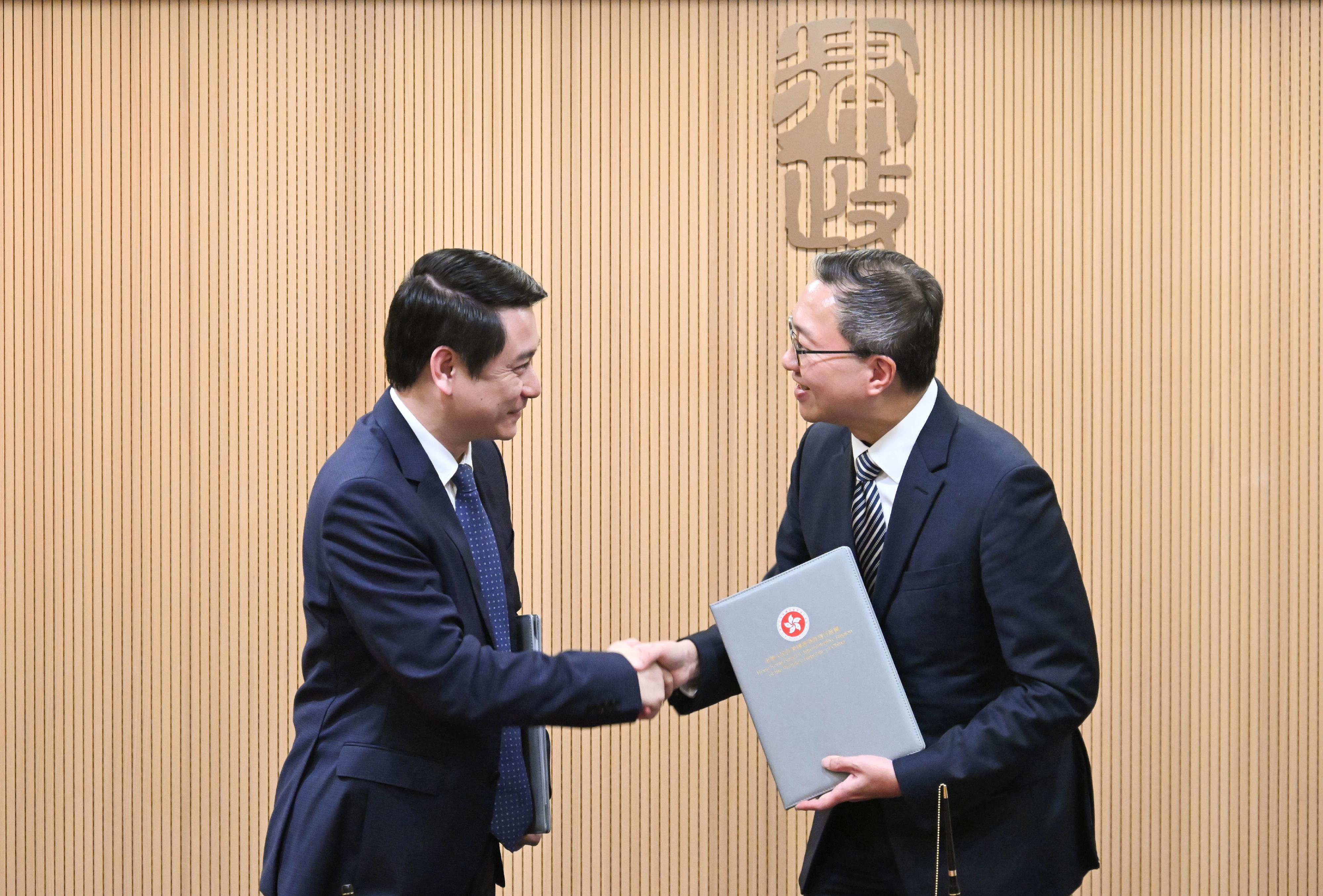
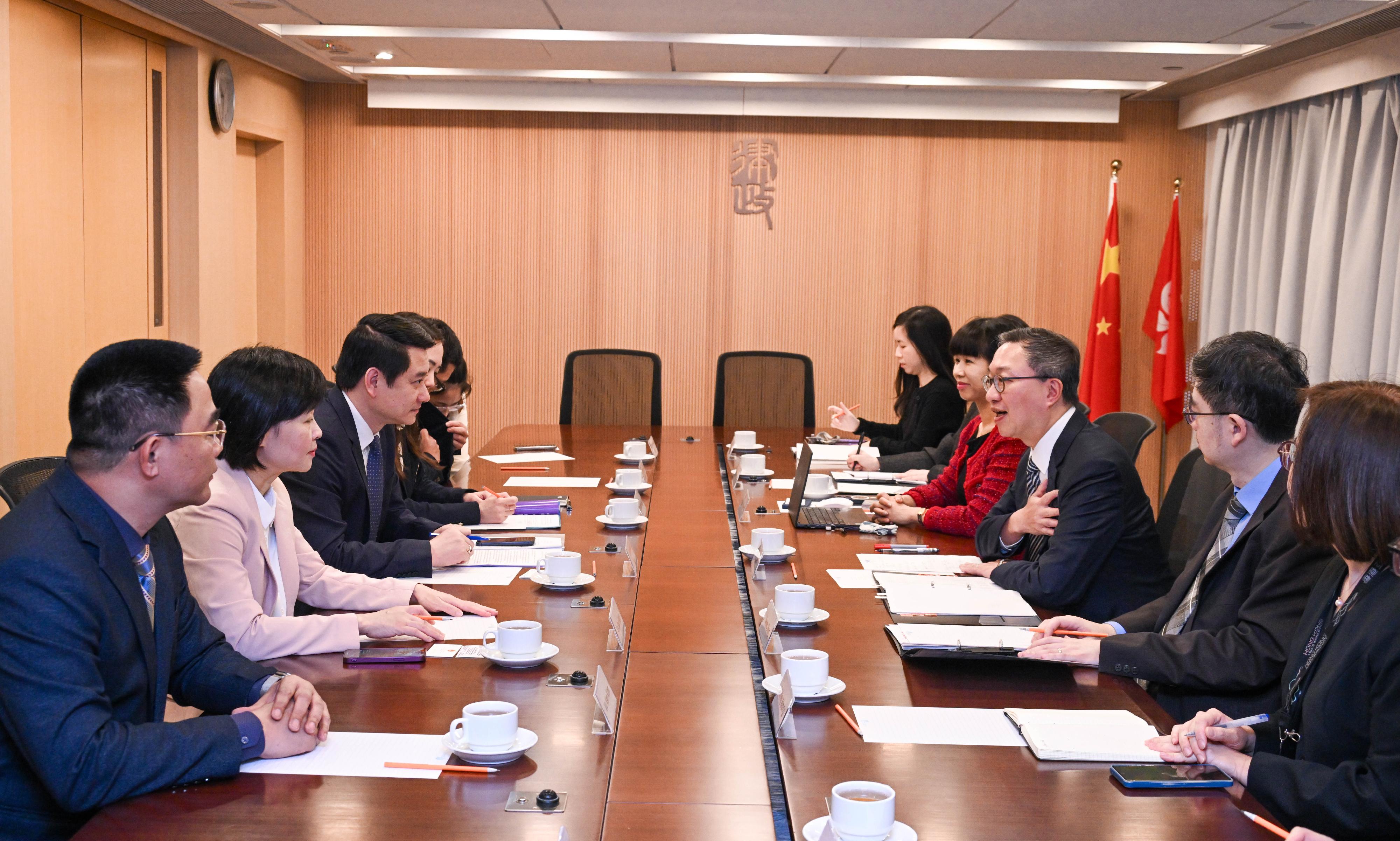
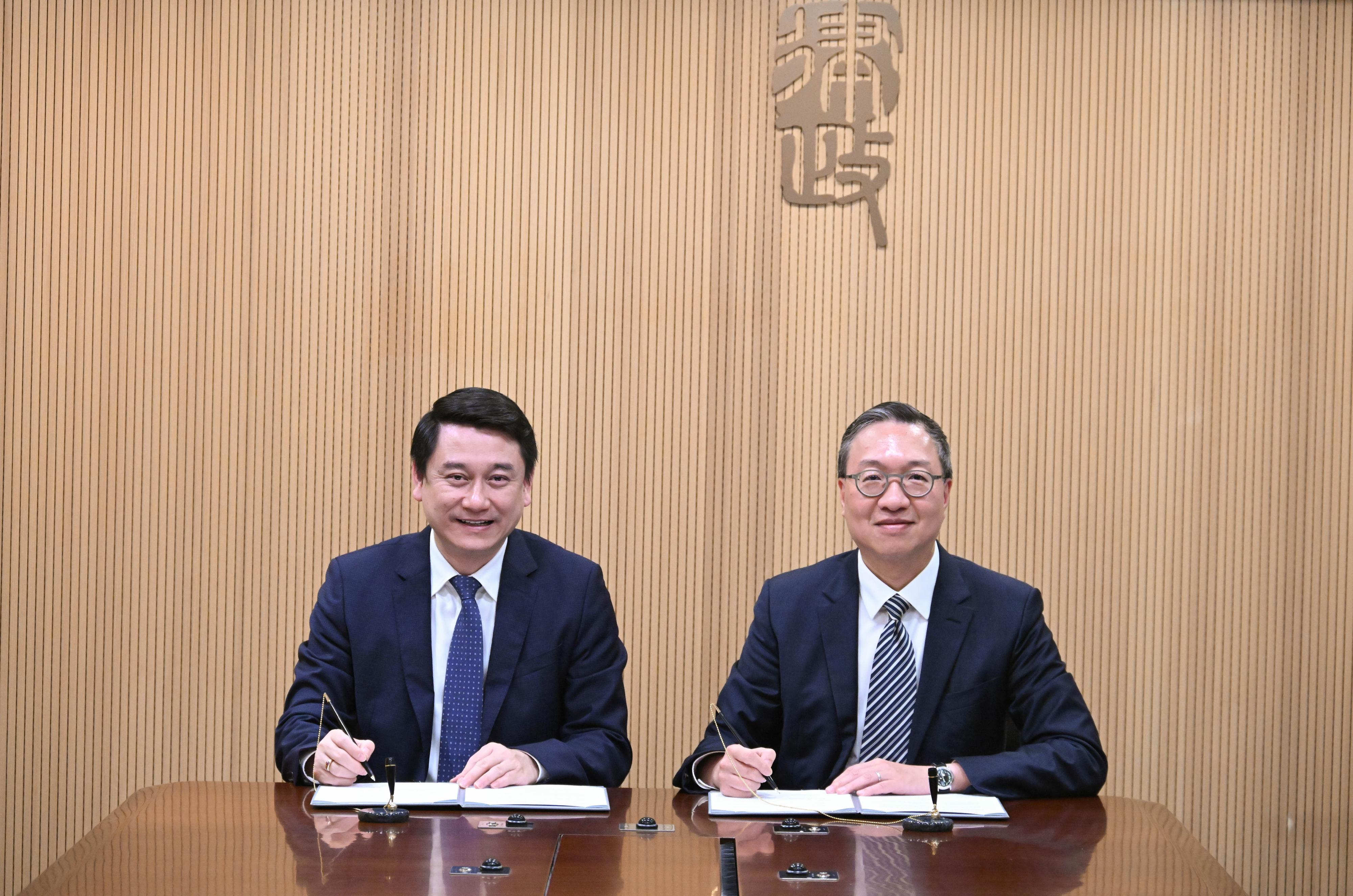
     The Department of Justice (DoJ) of the Hong Kong Special Administrative Region (HKSAR) Government and the Ministry of Foreign Affairs of the Socialist Republic of Viet Nam signed a Memorandum of Co-operation (MOC) today (November 18) to strengthen their co-operation on building capacity in the prevention and settlement of international disputes.

     The MOC was signed by the Secretary for Justice, Mr Paul Lam, SC, and Deputy Minister of Foreign Affairs of Viet Nam Mr Le Anh Tuan.

     The MOC provides a framework for the HKSAR and Viet Nam to strengthen communication, collaboration and co-operation between them on building the capacity of legal officers in the prevention and settlement of international disputes in the economic, commercial and investment fields. It is expected that both places will benefit greatly from the enhanced co-operation under the MOC.

     The signing of the MOC will further consolidate Hong Kong's status as a centre for international legal and dispute resolution services, as well as a centre for capacity building in international law. The DoJ will continue to pursue and conclude co-operation or partnership arrangements with other jurisdictions and international organisations.

Photo  Photo  Photo  

LCQ13: Promoting application of green methanol

     Following is a question by the Hon Hung Kam-in and a written reply by the Secretary for Environment and Ecology, Mr Tse Chin-wan, in the Legislative Council today (November 18):
 
Question:

     Some members of the industry have pointed out that green methanol has considerable potential for reducing emissions in areas such as road transport, port equipment and construction sites, and that its fuel costs are lower than those of conventional diesel. However, due to the existing high rate of duty and complicated administrative procedures, it is relatively difficult to carry out the relevant applications and trials in Hong Kong. In this connection, will the Government inform this Council:

(1) whether the reasons for levying duty on methanol (methyl alcohol, "MA") (other than MA for use as fuel in outbound vessels) under the existing legislation are still primarily to deter the production of adulterated alcohol and prevent MA poisoning; if not, of the main purposes (such as increasing tax revenue or regulating non-fuel uses);

(2) of the total quantity of green methanol imported into Hong Kong in each of the past three years; among such imports, of the respective quantity and proportion of MA which, after importation, has been classified as being for uses other than as fuel in outbound vessels (including use in road transport vehicles and non-road equipment) and hence subject to duty at the full rate;

(3) whether it has completed or is conducting any relevant assessments of the application of green methanol fuel in road transport vehicles and non-road applications (such as construction sites), including emission reduction benefits, cost competitiveness, technical feasibility and safety risks;

(4) whether it will consider, on the basis of the existing duty exemption for green methanol, further extending the scope of duty exemption to cover M100 methanol fuel for motor vehicles and non-road MA-powered equipment (including power generators at construction sites and mobile machinery at ports);

(5) apart from duty exemption, whether it will consider introducing facilitation policies for importing green methanol for land-based applications, such as simplifying government testing requirements, optimising the "pay first, refund later" procedures for denatured MA, or establishing a fast-track approval channel for green methanol used in motor vehicles and at construction sites, so as to promote the use of green methanol in land transport and non-road application scenarios; and

(6) whether the Government will establish an interdepartmental working group dedicated to coordinating the fire safety certification, vehicle registration, licensing of storage warehouses and duty arrangements in respect of green methanol bunkering facilities; and whether the Government will encourage public organisations and public bus companies to formulate guidelines or targets for the priority use of green methanol fuel in their procurement contracts?

Reply:

President,

     While green methanol is a low-carbon fuel with potential, it still emits air pollutants such as nitrogen oxides and respirable suspended particulates during complete combustion with oxygen, and is not entirely zero-emission. The lifecycle greenhouse gas (GHG) emission performance of methanol depends on its production pathway. Coal-based methanol emits roughly twice the GHG emissions of gasoline, while natural-gas-based methanol is comparable to gasoline. Only renewable green methanol synthesised from eligible biomass or captured carbon dioxide can achieve substantial emission reductions up to 95 per cent.

     In vehicle applications, methanol is highly corrosive, which readily accelerates the ageing of engines and exhaust system components, causing the emission control performance of methanol vehicles to deteriorate more rapidly than that of conventional vehicles.

     Although methanol vehicles cannot directly help achieve the target of zero vehicular emissions before 2050 in the same way as vehicles with no tailpipe emissions such as battery electric vehicles, given their potential to reduce both air pollutant and carbon emissions, it remains worthwhile to explore the application of methanol as a transitional new energy source for vehicles and non-road mobile machinery.

     Having consulted the Financial Services and the Treasury Bureau, Transport and Logistics Bureau, and Health Bureau, my response to the question raised by Hon Hung is as follows: –

(1) The Dutiable Commodities Ordinance (Cap. 109) (the Ordinance) has prescribed the duty rate on methanol since 1957, with its objective primarily being to curb the production of adulterated liquor and prevent methanol poisoning. Methanol poisoning poses severe acute clinical risks. To this day, cases of poisoning or even death caused by consuming adulterated, counterfeit, or informally produced alcoholic beverages still occur from time to time in various parts of the world.

(2) The total volume of methanol imported into Hong Kong, the total volume of methanol subject to duty, and their respective percentages for each of the past three financial years are set out in the table below; as for how much of this was green methanol, the Hong Kong Customs and Excise Department (C&ED) does not maintain relevant records.
 

Financial Year  Total volume of methanol imported
(Litres)
Total volume of methanol subject to duty (Litres) Percentage of methanol subject to duty to the total volume of methanol imported
(%)
2023-24 620 300 37 364 6.02
2024-25 1 097 992 71 609 6.52
2025-26 11 518 332* 2 527 0.02

*The increase was related to the relevant provisions of the Dutiable Commodities Regulations (Cap. 109A) regarding the exemption from duty for methanol to be placed in fuel tanks of an outbound vessel, which took effect on 17 October 2025. During the 2025-26 financial year, there were two applications for such duty exemption, involving approximately 2.2 million litres of methanol. In addition, a company imported a large volume of duty-free methanol for the production of biodiesel.

(3), (4) and (6) With regard to the prevailing regulation on vehicle design and fuel, the Air Pollution Control (Vehicle Design Standards) (Emission) Regulations (Cap. 311J) stipulate that, except for taxis and light buses, all vehicles equipped with positive-ignition engines shall use unleaded petrol only.

     Nevertheless, based on the "technology-neutral" principle, the Government remains open to all innovative low-carbon technologies. In May this year, the Environmental Protection Department (EPD) approved an application from a vehicle supplier for an exemption from the fuel requirements under vehicle design standards for a methanol-fuelled vehicle. The vehicle supplier is arranging for vehicle safety examination, and trials will be conducted after the vehicle is proven suitable for use on roads.

     The results of the aforementioned trial will facilitate the Government in assessing the feasibility and environmental benefits of adopting green methanol as a vehicle fuel locally. Following a comprehensive assessment, the Government will also consider whether it is necessary to formulate corresponding promotion strategies and policy measures, including tax concessions. At this initial stage of the green methanol trial, there is currently no need to set up refuelling facilities. Should an actual need arise in the future, the relevant departments may process applications for refuelling facilities in accordance with existing regulations. At present, we also have no plans to encourage public bodies and franchised bus operators to stipulate the priority use of green methanol in their procurement contracts.

     Regarding non-road mobile machinery, while methanol fuel delivers better emission performance than conventional diesel, its high corrosivity and low lubricity requires fuel supply system components to have higher corrosion resistance, resulting in higher overall equipment costs than those of conventional diesel machinery and equipment in general. As local application of methanol-fuelled machinery and equipment is still a relatively new technology, equipment suppliers must take full account of the stability of fuel supply, as well as the safety hazards associated with the storage and use of methanol fuel at construction sites (e.g. methanol is highly flammable and its burning flame is nearly invisible to the naked eye under sufficient bright light) prior to introduction. Such use must also comply with relevant construction site and fire safety requirements. In addition, regulated non-road mobile machinery (including generators, etc.) used at construction sites is required to comply with the statutory emission standards set out in the Air Pollution Control (Non-Road Mobile Machinery) (Emission) Regulation (Cap. 311Z). The EPD will actively assist relevant departments in vetting and approving upon receipt of relevant applications.

(5) Pursuant to the Ordinance, "denatured methanol" (i.e. methanol certified by the Government Chemist as having been mixed with one or more substances approved by the Government Chemist in such a manner that it is not practicable to recover it to its original form) is exempt from duty. The C&ED will take sample(s) of "denatured methanol" from each batch, and submit them to the Government Chemist for analysis to ascertain whether the batch meets the definition of "denatured methanol" under the Ordinance. Where a batch is confirmed as "denatured methanol", the Government Chemist will issue a certificate to exempt the importer from duty, which is charged on a proportional basis on the duty that would otherwise have been payable had the methanol not been denatured, currently being 7 per cent of such duty (or a minimum of HK$7).

     Currently, most importers first pay the duty to import methanol and then, after obtaining the certificate issued by the Government Chemist, apply to the C&ED for duty refund. Generally speaking, the relevant applications can be completed within two months. Since the Ordinance stipulates that methanol is a dutiable commodity and only "denatured methanol" is exempt from duty, this arrangement already provides sufficient convenience to the industry.