

- Scaffolder suffered a broken arm, leg and head injury after falling through skylight
- Principal contractor failed to properly plan, manage and monitor the roof work
- Skylight was ‘almost invisible’ to workers
Two construction companies have been fined £79,300 after a scaffolder broke his arm, leg and suffered head lacerations after falling through a roof skylight while installing temporary scaffolding edge protection at a warehouse in Yorkshire.
James Cranswick, 26, was installing temporary scaffolding edge protection for Clover Access Systems Limited at a warehouse at Acre Mills in Keighley, West Yorkshire, when the incident took place. CCTV footage shows Mr Cranswick falling onto a pallet truck before landing on the warehouse floor.
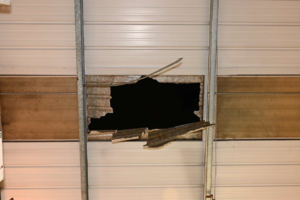
Mr Cranswick was on the roof carrying materials from one end of the unit to the other when he stepped on a skylight and subsequently fell more than 6 metres to the concrete floor beneath.
An investigation by the Health and Safety Executive (HSE) found that both Clover Access Systems Limited and STM360 Limited failed to plan, manage and monitor the work being undertaken by the scaffolders at the unit. As such, no measures were in place to prevent the scaffolders falling from the edge of the unit, or through the fragile elements of the roof. The skylights of the unit were almost invisible to Mr Cranswick and he was unaware of any fragile elements of the roof.
HSE guidance details a clear hierarchy for work involving fragile surfaces. Those in control of roof work should firstly avoid the need for access to fragile roofs. Further guidance can be found here: Health and safety in roof work
Clover Access Systems Limited pleaded guilty to breaching The Construction (Design and Management) Regulations 2015, Regulation 15. They were fined £26,000 and ordered to pay costs of £2866.42 and a victim surcharge £2000 and costs £2866.42 at Leeds Magistrates Court on 4 June 2026. The company are now in liquidation.
STM360 Limited pleaded guilty to breaching The Construction (Design and Management) Regulations 2015, Regulation 13. The company was fined £53,300 and ordered to pay £3167.73 in costs and a victim surcharge of £2000.
HSE Inspector Shauna Halstead, said:
“Mr Cranswick is lucky to be alive after this incident.
“His fall was wholly avoidable; the risks associated with work on, or around fragile surfaces are well-known, and HSE guidance is available to assist companies in complying with the law.
“Everyone working in construction should be aware that HSE will not hesitate to take enforcement action where roof work is not properly managed, as workers should not be needlessly put in harm’s way.
This HSE prosecution was brought by HSE enforcement lawyer Arfaq Nabi and paralegal officer Hannah Snelling.
More information:
- The Health and Safety Executive (HSE) is Britain’s national regulator for workplace health and safety. We are dedicated to protecting people and places, and helping everyone lead safer and healthier lives.
- More information about the legislation referred to in this case is available.
- Further details on the latest HSE news releases is available.
- Relevant guidance can be found here Health and safety in roof work – HSE
- HSE does not pass sentences, set guidelines or collect any fines imposed. Relevant sentencing guidelines must be followed unless the court is satisfied that it would be contrary to the interests of justice to do so. The sentencing guidelines for health and safety offences can be found here.