LCQ15: Transport support facilities and planning for Sai Sha, Shap Sz Heung

     ​Following is a question by the Hon Chan Hak-kan and a written reply by the Secretary for Transport and Logistics, Ms Mable Chan, in the Legislative Council today (November 18):

Question:

     The residential units and facilities in the various phases of the large-scale comprehensive development project at Sai Sha are being completed and occupied in succession. Together with the long-standing villages in the vicinity, the future population of the area may approach 30 000, which will pose a severe test to the overall transport network both within and outside the area. In this connection, will the Government inform this Council:

(1) given that the Shap Sz Heung development project is expected to bring about a massive increase in population, whether the Government will consider extending the Tuen Ma Line eastwards from the existing Wu Kai Sha Station to the Nai Chung and Sai Sha areas, so as to enable railway transport to play its role as the backbone of the public transport system and thereby divert road traffic load at source; if so, of the details; if not, the reasons for that;

(2) whether the Government can provide data on the design capacity and actual traffic flow of Sai Sha Road upon completion of its widening works, as well as the estimated traffic flow and peak-hour load of Sai Sha Road upon full population intake of the aforesaid development project;

(3) whether, apart from local distributor roads, the Government has assessed the traffic load to be imposed on external primary distributor roads connecting the area with the urban areas (including Ma On Shan Road and Tate's Cairn Highway) upon full intake of the additional population in the aforesaid area; of the current design flow, actual usage volume and projected future peak-hour volume/capacity ratio of those roads respectively;

(4) given that there is currently a service gap in the coverage hours of public transport services at the Sai Sha Residences Transport Interchange between 5.30am and 6.20am, which cannot meet residents' needs for early-morning commuting to work and school, whether the Government will urge franchised bus operators to increase the number of early-morning departures or advance the departure time of the first departures; if so, of the details and the implementation timetable; if not, the reasons for that; and

(5) whether, apart from the existing housing projects, the Government has undertaken any longer-term overall land use and development planning for Shap Sz Heung and its neighbouring areas; if so, of the details; if not, the reasons for that?

Reply:

President, 
     
     The Government has been closely monitoring the road network and traffic conditions across various districts and will carry out traffic management and road improvement works in a timely manner, having regard to the actual traffic flow and local development needs. Having consulted the Development Bureau, the reply to the Member's question is as follows: 

(1) During the planning application for the Shap Sz Heung development in Sai Kung, the relevant developer has already conducted a detailed traffic impact assessment in respect of the development scale of the project and the additional traffic flow arising from the development. Based on the assessment results, the developer implemented a series of traffic improvement works, including widening the section of Sai Sha Road between Sai O Village and Tai Tung Tsuen, as well as other related measures to cater for the additional traffic demand arising from the development.

     Taking forward railway transport infrastructure projects requires significant resources, and factors such as technical feasibility and cost-effectiveness have to be considered in a prudent manner. Regarding the suggestion of extending the Tuen Ma Line eastwards from the existing Wu Kai Sha Station to the Nai Chung and Sai Sha areas, having preliminarily reviewed factors such as its transport benefits, service catchment and engineering technology, the Government currently has no plan to extend the Tuen Ma Line eastwards to the Nai Chung and Sai Sha areas.

(2) and (3) At present, the traffic flow of Sai Sha Road urban-bound during the morning peak hours (i.e. from 7.30am to 8.30am on weekdays) is about 1 200 passenger car units per hour (pcu/hr).

     To cope with the traffic demand arising from the Sai Sha comprehensive development project, the developer has widened a 1.5 km section of Sai Sha Road from a single two-lane undivided carriageway with only one lane in eastbound and westbound direction each, to a dual carriageway with two lanes in each direction. Correspondingly, the road capacity has been upgraded from approximately 1 200 pcu/hr per direction to around 3 400 pcu/hr per direction. As a result, the existing volume-to-capacity (V/C) ratio is about 0.35. According to the traffic impact assessment for the development project, upon completion of the project, the morning peak hours traffic flow along Sai Sha Road urban-bound is estimated to be around 2 100 pcu/hr, with a V/C ratio of about 0.62, indicating that the road still has sufficient spare capacity.

     The primary trunk roads connecting Sai Sha to the urban areas are Ma On Shan Road and Tate's Cairn Highway. Although traffic toward the urban areas during weekday morning peak hours is quite heavy, it remains generally capable of meeting traffic demands. The Transport Department (TD) has been closely monitoring the traffic conditions in the vicinity of Sai Sha Road and the primary external trunk roads, and is also aware of the new developments in nearby areas (such as the Pak Shek Kok Station and its associated Ma On Shan land development project). Relevant projects are required to comprehensively assess their traffic impacts on the area's trunk roads. The Government will work with the developers in a timely manner to formulate and implement appropriate traffic improvement measures in order to ensure the road network will be able to cater for future traffic demand.

(4) Currently, Green Minibus Route No. 807K in the New Territories provides services between Tseng Tau (via Shap Sz Heung Development Project) and University Station from 5.45am to 12.15am daily, with a frequency of every six to 15 minutes. In late September this year, the TD conducted an onsite survey at an intermediate stop at Hoi Ying Road along the route, which passes through the Shap Sz Heung Development Project. The results showed that from the first departure of the day until 7am, the occupancy rate of the trips from Tseng Tau to University Station ranged from approximately 20 per cent to 90 per cent upon arrival at that intermediate stop, with no instances of passengers being unable to board, indicating that the route can meet the needs of local residents travelling to and from the railway station during that period. The TD will continue to closely monitor the population intake of the Shap Sz Heung Development Project and changes in passenger demand and will work with public transport operators to explore the feasibility of enhancing services in a timely manner.

(5) The Shap Sz Heung area is mainly covered by the approved Shap Sz Heung Outline Zoning Plan (OZP) No. S/NE-SSH/11. As Shap Sz Heung is predominantly rural in character and rich in natural resources, the planning intention is primarily to preserve sites of visual, ecological and geological significance, and to identify areas with development potential for private residential and recreational uses, ensuring that all developments are compatible with the surrounding rural and natural environment. The majority of the land (about 70 per cent) covered by the Shap Sz Heung OZP is zoned as "Conservation Area" (CA), "Site of Special Scientific Interest" (SSSI), "Coastal Protection Area", "Green Belt" (GB) and "Village Type Development" (V), all of which are not suitable for large-scale development. As for the land on the Shap Sz Heung OZP suitable for more sizeable development, most of it has been zoned as "Comprehensive Development Area" (CDA). Within the "CDA" zone, commercial and recreational facilities have largely been completed, while residential developments are being completed in phases.

     The area adjacent to Shap Sz Heung, including the Nai Chung/Cheung Muk Tau area to the west of Shap Sz Heung along Sai Sha Road, is covered by the approved Ma On Shan OZP No. S/MOS/28, which is situated on the outskirts of Ma On Shan New Town. Apart from areas zoned "V", "Residential (Group C)" for low-density developments, and "Government, Institution or Community", the majority of area is zoned "GB", "CA" and "SSSI", in order to preserve the natural landscape with ecological and geological values. Among the land in Nai Chung/Cheung Muk Tau suitable for sizable development, the major project is the Cheung Muk Tau public housing development currently under construction.

     With regard to the land use of Shap Sz Heung and its surrounding areas, the Planning Department considers that the aforesaid planning intention remains applicable and has struck a balance between the needs for development and conservation.
LCQ6: Information on allergens in non-prepackaged food

     Following is a question by Dr the Hon David Lam and a reply by the Secretary for Environment and Ecology, Mr Tse Chin-wan, in the Legislative Council today (November 18):
  
Question:
 
     Studies have revealed that about 4.8 per cent of persons aged 14 or below in Hong Kong suffer from food allergies, and as many as 15.6 per cent of them have experienced severe allergic reactions, such as anaphylactic shock. However, the existing legislation only requires that prepackaged food must specify eight major categories of allergens, while there is no mandatory labelling requirement for freshly prepared food in restaurants. In this connection, will the Government inform this Council:
 
(1) whether it has grasped the respective numbers of food allergy cases caused by prepackaged and non-prepackaged food in Hong Kong in the past three years; among such cases, of the number of cases involving severe allergic reactions such as anaphylactic shock, and the distribution of such cases by age group;
 
(2) as it is learnt that legislation has been enacted in regions such as the European Union and the United Kingdom to stipulate that information on allergens must be provided for food cooked on site, whether the Government will make reference to the relevant experience and study implementing measures to provide information on specified allergens for non-prepackaged food; and
 
(3) whether it will consider introducing incentive schemes to encourage restaurants to voluntarily specify allergens to facilitate customer enquiries, followed by progressive implementation of measures such as asking restaurants in public hospitals, government facilities and schools to specify allergens on their menus at first, before finally considering launching the measures across Hong Kong; if so, of the details of the scheme; if not, the reasons for that?
 
Reply:

President,
 
     In consultation with the Health Bureau and the Education Bureau, my reply to the question raised by Dr the Hon David Lam is as follows:
      
     The Hong Kong Special Administrative Region (HKSAR) Government does not maintain the statistics mentioned in part (1) of the question. As for the Hospital Authority (HA), since its medical record system primarily serves to record patients' symptoms or injuries for the purpose of providing medical services, it is unable to compile specific statistical breakdowns by reason for patient visit.
      
     Parts (2) and (3) of the question ask whether the Government will draw reference from international experience and explore the introduction of new measures on allergen labelling for non-prepackaged food.
      
     At present, the Codex Alimentarius Commission, which sets international standards for food safety, has not given any recommendations for member countries or regions to regulate the provision of food allergen information by food premises through legislation. There is no uniform practice across different places either. Countries that have introduced relevant legislation in recent years include European Union (EU) member states and the United Kingdom (UK). The EU requires restaurants to provide food allergen information to customers, while allowing member states to decide on the means of providing such information through their own legislation. In the UK, the trade is allowed to choose whether to provide the information in writing (such as on menus, chalkboards or in booklets) or verbally by restaurant staff. It is understood that the trade in those places, out of caution, often adopts relatively general advisory statements. The actual effectiveness of the measures warrants further observation.
      
     As for countries or regions that do not mandate food premises to provide food allergen information, the Mainland, for example, only requires prepackaged food to carry food allergen labels. In Singapore, the food agency issues safety guidelines via its website, advising food businesses to provide relevant information upon customers' requests.
      
     The regulatory approach of the HKSAR is similar to that of the Mainland. Under the Food and Drugs (Composition and Labelling) Regulations (Cap. 132W), all prepackaged food must clearly indicate the presence of eight specified allergens, namely cereals containing gluten; crustacea and crustacean products; eggs and egg products; fish and fish products; peanuts, soyabeans and their products; milk and milk products (including lactose); tree nuts and nut products; and sulphite in a concentration of 10 parts per million or more.
      
     As regards non-prepackaged food, it mainly refers to food prepared on-site served at food premises. Unlike food factories, food premises generally do not mass-produce single food items using standardised processes and dedicated production lines. Taking the example of Chinese restaurants, where kitchen equipment and utensils such as stoves, spatulas, chopping boards and containers are used to prepare and cook different dishes, the large variety of ingredients and sauces used by chefs may not come with allergen information themselves. The catering sector in Hong Kong encompasses a wide range of food premises, including Chinese restaurants, eateries serving foreign cuisines, cha chaan tengs (Hong Kong-style cafes) and coffee shops, offering a great diversity of food items. Introducing mandatory allergen labelling for food premises at this stage therefore would pose practical difficulties to the local catering trade, particularly small and medium-sized eateries.
      
     In view of this, the Centre for Food Safety under the Food and Environmental Hygiene Department disseminates information on food allergens to the public and the trade through various channels, including thematic webpages, social media platforms, publications and food safety seminars, so as to enhance their awareness. The information covers examples of common food allergens and ingredients, with advice offered to the trade and the public. For instance, the trade is reminded to indicate allergens that are present or may be present in food as far as practicable, while consumers are reminded to take the initiative to enquire with restaurant staff about food ingredients or inform them of their specific food allergies when dining in or ordering takeaways, so as to avoid accidentally consuming dishes containing allergens. The Department of Health (DH) also publishes health information on food allergies in children through health education resources such as webpages, leaflets, videos and electronic publications, covering foods that are more likely to trigger allergic reactions in infants and young children, possible symptoms of food allergies in infants and young children, advice for parents on introducing new foods and managing allergies, etc.
      
     Regarding meal arrangements at specific venues, the Education Bureau has reminded primary and secondary schools as well as kindergartens to follow guidelines issued by government departments when formulating and implementing school-based healthy eating policies. The Handbook for Selection of School Lunch Suppliers compiled by the DH recommends that schools may provide in the service contracts that lunch suppliers are required to undertake to provide special meal arrangements for students with food allergies, and in the tender documents that suppliers are required to submit proposals on such special meal arrangements as one of the assessment criteria. Schools should also maintain communication with parents regarding the nutritional quality and arrangements of school lunches, collect feedback from parents and students regularly, and convey such feedback to lunch suppliers in a timely manner to jointly monitor and enhance the quality of school lunches. As for public hospitals, while the HA does not mandate staff and visitor canteens to display specified allergen information, some hospital canteens take the initiative to indicate allergens on their menus for customers' reference to facilitate choices by those in need.
      
     We understand that allergen information helps persons with food allergies in making food choices. The HKSAR Government will keep a close watch on international requirements and practices regarding allergen labelling. It will also explore with the local catering trade, taking full account of their specific operating models and the practical feasibility of the measures, firstly the provision of food allergen information on a voluntary basis and strengthening of staff training in this regard by the trade under a gradual and progressive approach. We also advise members of the public with a history of food allergies to take the initiative to enquire with restaurant staff about food ingredients when placing orders, so that kitchens can make special arrangements where practicable.
      
     Thank you, President.

Appeal for information on missing man in Happy Valley (with photos)

     Police today (November 18) appealed to the public for information on a man who went missing in Happy Valley.

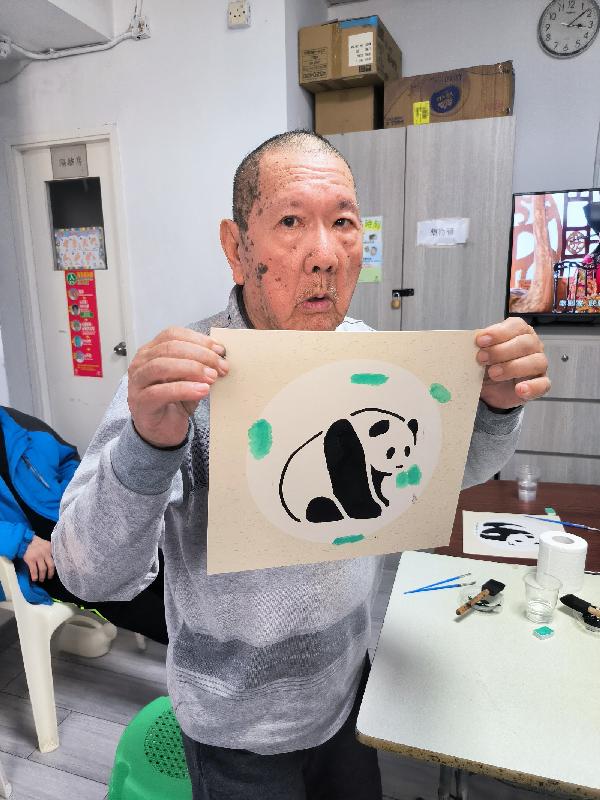
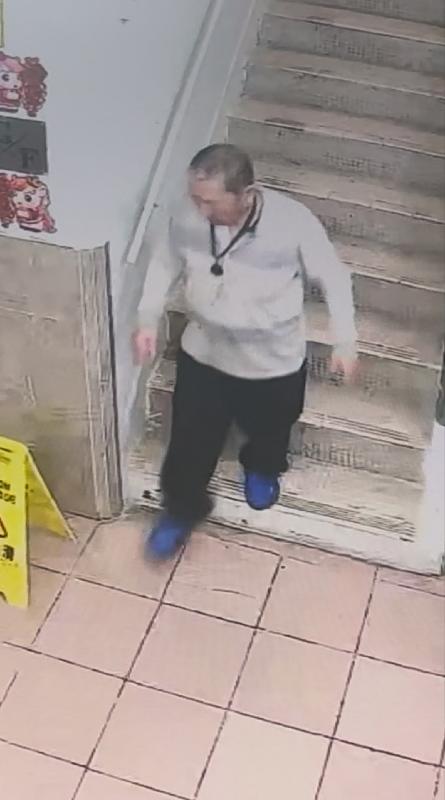
     Wong Mok-wing, aged 77, went missing after he left his care centre on Leighton Road yesterday (November 17) morning. Staff of the caring home then made a report to Police.

     He is about 1.7 metres tall, around 65 kilograms in weight and of medium build. He has a round face with yellow complexion and short black hair. He was last seen wearing a grey long-sleeved shirt, dark trousers and blue sandals.

      Anyone who knows the whereabouts of the missing man or may have seen him is urged to contact the Regional Missing Person Unit of Hong Kong Island on 2860 1040 or 9886 0034 or email to rmpu-hki@police.gov.hk, or contact any police station.
 

Photo  Photo