Author Archives: GovWorldMag

Action plan for 2017 BRICS Youth Forum announced

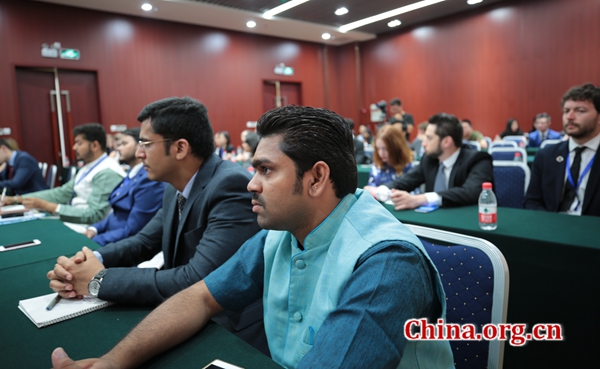
Young delegates from BRICS countries attend the concluding meeting of the 2017 BRICS Youth Forum to witness the announcement of The Action Plan for 2017 BRICS Youth Forum. [Photo by Li Huiru/China.org.cn]

The 2017 BRICS Youth Forum concluded in Beijing on July 27.

After three days of in-depth discussion and deliberation, young delegates from the BRICS countries (Brazil, Russia, India, China and South Africa) reached a consensus and The Action Plan for the 2017 BRICS Youth Forum (The Action Plan) was announced at the last plenary session before the closing ceremony.

The Action Plan, which takes aspects such as youth policy, youth innovation and entrepreneurship, and youth participation in global governance as the main fields for BRICS youth cooperation, has proposed concrete measures to establish a center for BRICS youth research, a platform for information exchanges, a network dedicated to boost BRICS youth innovation and entrepreneurship, and a BRICS volunteer database for international communication.

“The forum strengthened the bond of youth in BRICS,” said Chinese representative Kong Dewei, adding that, “much useful and practical advice has been proposed for youth policy, entrepreneurship and innovation, as well as global management. Delegates from different countries have also formed solid friendships during the forum.” Kong is a student from Nankai University.

Aleksandr Bolotnov, vice chairperson of National Youth Council of Russia emphasized the importance of such communication mechanisms among BRICS youth. In an interview with China.org.cn, he said, “The BRICS youth forum is a big contribution for the BRICS cooperation.” He added that the forum will help consolidate the relationships of BRICS countries.

“We have learnt a lot together during these three days,” Thamsanqa Zulu, manager of Mothosi Holdings in Brazil said. “I hope the vigor from the youth forum will be extended to other fields. Our South African delegation will bring back the documented agreements and make sure it will be carried out in a due manner.”

The Action Plan, as an achievement of BRICS youth cooperation, will be submitted to the preparatory committee of the Ninth BRICS Summit to be held in China’s Xiamen this September.

The 2017 BRICS Youth Forum hosted by the All-China Youth Federation was attended by a total of 50 young delegates from the BRICS countries.

read more
Freedom of movement to end says Minister

The Minister for Immigration confirmed freedom of movement ends in March 2019 when we leave. The Home Secretary is consulting on how much EU migration we want once we are out. Your thoughts would be interesting on this topic.

I am keen to give more job opportunity to people already settled here, and to encourage productivity boosting investment to assist with higher wages. We need  to take capital costs into account for each migrant as we need to provide decent housing, healthcare, educational and transport provision for new arrivals. The government has always made clear it will be welcoming to talent and let business fill skill shortages that the domestic economy cannot manage.

read more

Government grants to charities

Government’s relationship with charities has become another part of the lively debate about how much the government should give in grants and to whom.

Pre New Labour there was an attempt to segregate government from charity. Charities were not encouraged to undertake work in areas covered by government. Government did not spend a lot of money on giving grants to charities. Charity law sought to ensure charities did not use money they had raised for political purposes, and did seek to keep their overheads down to maximise the favourable use of the donations.

Under Labour there was a policy to expand the so called third sector, and to offer it public service contracts to undertake functions that the state wanted done. There was a deliberate wish to blur the distinctions between charities, companies and state activity, and to create collaborations between the three sectors. The state could end up financing more than at first appeared, by making a direct contribution through its own participation in the joint venture, offering contract money to the private sector participant, and offering contact money and donations to the charity. So called public private partnerships also often concealed more state money and underwriting than was at first apparent. The state paid its own contribution, and then helped pay or underwrite the private sector contribution.

The more the state became involved in offering grants and contracts to charities, the more the charities had to build a well paid bureaucracy in their organisation to meet the paperwork requirements of the state. There needed to be lengthier and more detailed appraisals of projects, tasks and outcomes, and plenty of material for record keeping and audit. Charities needed expensive people to participate with the danger that overheads as a proportion of donations rose.

It now seems timely to ask what benefits has all this brought to users of these services and to taxpayers? How do the regular private donors of the charities fell about this? Are current controls on charities’ political involvement and campaigning working well?

read more

China to introduce official medals and titles of honor

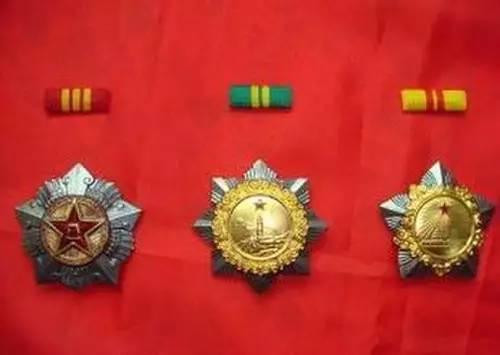
China’s national medals and honorary titles include Medals of the Republic, July 1 Medals, Aug. 1 Medals, Friendship Medals, and national titles of honor. [File Photo] 

The Communist Party of China (CPC) Central Committee has approved a series of documents to set up an honoring system for the contributors in the Party, the country and the military.

According to the documents, China’s national medals and honorary titles include Medals of the Republic, July 1 Medals, Aug. 1 Medals, Friendship Medals, and national titles of honor.

The Medals of the Republic, the highest honor of the country, will be given to honor those with great contributions and distinguished service for the Party, the country and the people, said the documents.

The July 1 Medals, the highest honor of the CPC, will be awarded to CPC members who have made great contributions to the development of socialism with Chinese characteristics and the construction of the CPC.

The Aug. 1 Medals, the highest honor of the military, will be given to servicemen and women who have strongly safeguarded the country’s sovereignty, national security and benefit, and who have made outstanding contributions to the development of national defense and the modernization of the military.

The Friendship Medals will be presented to foreigners who have made outstanding contributions to China’s socialist modernization drive, promoted exchange and cooperation between China and the world, and helped maintain world peace.

National titles of honor will be awarded for prominent figures who have made great contributions and earned reputations in fields such as economy, education, science, culture and sports.

The documents also stressed that a record book will be kept to remember the recipients and their deeds.

read more