Author Archives: hksar gov

Inspection of aquatic products imported from Japan

     In response to the Japanese Government’s plan to discharge nuclear-contaminated water at the Fukushima Nuclear Power Station, the Director of Food and Environmental Hygiene issued a Food Safety Order which prohibits all aquatic products, sea salt and seaweeds originating from the 10 metropolis/prefectures, namely Tokyo, Fukushima, Ibaraki, Miyagi, Chiba, Gunma, Tochigi, Niigata, Nagano and Saitama, from being imported into and supplied in Hong Kong.
 
     For other Japanese aquatic products, sea salt and seaweeds that are not prohibited from being imported into Hong Kong, the Centre for Food Safety (CFS) of the Food and Environmental Hygiene Department will conduct comprehensive radiological tests to verify that the radiation levels of these products do not exceed the guideline levels before they are allowed to be supplied in the market.
 
     As the discharge of nuclear-contaminated water is unprecedented and will continue for 30 years or more, the Government will closely monitor and step up the testing arrangements. Should anomalies be detected, the Government does not preclude further tightening the scope of the import ban.
 
     From noon on January 21 to noon today (January 22), the CFS conducted tests on the radiological levels of 163 food samples imported from Japan, which were of the “aquatic and related products, seaweeds and sea salt” category. No sample was found to have exceeded the safety limit. Details can be found on the CFS’s thematic website titled “Control Measures on Foods Imported from Japan” (www.cfs.gov.hk/english/programme/programme_rafs/programme_rafs_fc_01_30_Nuclear_Event_and_Food_Safety.html).

     In parallel, the Agriculture, Fisheries and Conservation Department (AFCD) has also tested 50 samples of local catch for radiological levels. All the samples passed the tests. Details can be found on the AFCD’s website (www.afcd.gov.hk/english/fisheries/Radiological_testing/Radiological_Test.html).
 
     The Hong Kong Observatory (HKO) has also enhanced the environmental monitoring of the local waters. No anomaly has been detected so far. For details, please refer to the HKO’s website
(www.hko.gov.hk/en/radiation/monitoring/seawater.html).
 
     From August 24, 2023, to noon today, the CFS and the AFCD have conducted tests on the radiological levels of 111 637 samples of food imported from Japan (including 72 790 samples of aquatic and related products, seaweeds and sea salt) and 25 770 samples of local catch respectively. All the samples passed the tests. read more

LCQ22: Promoting immersive and in-depth tourism

     Following is a question by the Hon Benson Luk and a written reply by the Secretary for Culture, Sports and Tourism, Miss Rosanna Law, in the Legislative Council today (January 22):
 
Question:
 
     The Financial Secretary has indicated in the 2024-2025 Budget that, regarding the work of energising tourism in Hong Kong, the Hong Kong Tourism Board will promote immersive, in-depth tourism with themes like Citywalk, and promote young-adult focused activities such as hiking, cycling, stand-up paddle-boarding, trail running and stargazing in the wilderness, which is part of an energising effort to soft-sell Hong Kong. In this connection, will the Government inform this Council:
 
(1) whether it has projected the relevant data on tourist participation in the aforesaid five urban outdoor activities; if so, of the respective numbers of activities that will be organised by the Government and other organisations, as well as the estimated number of participants; if not, the reasons for that;
 
(2) whether it has drawn up specific plans and publicity strategies to promote such outdoor activities to tourists; if so, of the details; if not, the reasons for that;
 
(3) regarding the promotion of such outdoor activities to overseas tourists, whether the Government has consulted, communicated and collaborated with the relevant local industries, stakeholders and host organizsations in order to assist the Government in formulating promotional plans that better suit the needs of promoting in-depth tourism with the theme of Citywalk; if so, of the details; if not, the reasons for that; and
 
(4) whether it has devised plans to increase the number of overnight visitors through promoting in-depth tourism with the theme of Citywalk; if so, of the details; if not, the reasons for that?
 
Reply:
 
President,
 
     Hong Kong’s breathtaking great outdoors are minutes away from the urban hustles, making it an integral part of Hong Kong’s tourism appeal. According to the findings of the Departing Visitor Survey of the Hong Kong Tourism Board (HKTB), around a quarter of the overnight visitors in Hong Kong in 2024 stated that their reasons for visiting were to explore Hong Kong’s culture and arts, enjoy the natural scenery or have a relaxing experience. The Characteristic Local Tourism Incentive Scheme, which was set up with funding from the Government earlier, aims at encouraging the travel trade to develop travel itineraries and products with distinctive themes including those with city walk elements in order to enrich Hong Kong’s tourism offerings. The Leisure and Cultural Services Department also organises courses or activities such as hiking, cycling and trail running. In addition, the Government and the HKTB have been leveraging the city’s scenic nature and outdoor activities for tourism promotion on various channels to provide an enriched experience to visitors.
      
     In respect of the question raised by the Hon Benson Luk, in consultation with the Agriculture, Fisheries and Conservation Department (AFCD), the reply is as follows:
      
     The AFCD’s “Enjoy Hiking” thematic website provides the public with detailed information on hiking trails and attractions. The website provides features of various hiking trails, as well as information on attractions and transportation; and promotes featured attractions, facilitating visitors’ planning of hiking activities to experience Hong Kong’s natural beauty and cultural history. In 2024, there were around 0.4 million pageviews at the thematic website.
      
     Through its year-round promotional platform “Hong Kong Great Outdoors”, the HKTB introduces in detail and promotes Hong Kong’s unique natural scenery and countryside experiences under the themes such as hiking, beaches and outdoor activities (including trail running, cycling, stand-up paddling, stargazing), sightseeing and island hopping. It actively promotes Hong Kong’s nature-based green tourism products and countryside, including the Hong Kong UNESCO Global Geopark, country parks, marine parks, hiking trails and itineraries featuring outlying islands, as well as guided tours and green tourism products organised by the travel trade and other organisations, so as to encourage visitors to appreciate Hong Kong’s mesmerising natural landscape. The HKTB will launch a series of thematic videos this year on the Robin’s Nest Country Park, which was established last year, as well as Po Toi Island, Stanley, Aberdeen, etc., in southern Hong Kong. These videos will be uploaded to the HKTB’s official website and social media platforms to inspire visitors to make plans for countryside and outdoor itineraries.
      
     The HKTB also fully supports various trail running races, including “TransLantau”, “Oxfam Trailwalker”, “Hong Kong 100 Ultra Marathon”, and has partnered with the organisers of “TransLantau” and “Hong Kong 100 Ultra Marathon” to produce captivating footages of the race trails on Lantau Island and in Sai Kung to showcase the city’s scenic nature. Besides, the HKTB has worked with international media such as CNN and The Telegraph to promote Hong Kong’s outdoor experience to international visitors through inviting the director and producer of “Four Trails” to share Hong Kong’s natural beauty and trail running as Hong Kong outdoor enthusiasts.
      
     Meanwhile, the HKTB rolls out different promotional campaigns according to the interests of different source markets (such as the Mainland, Southeast Asia, Korea, Japan) and the increasing demand for in-depth experiences by visitors.
      
     In the Mainland markets, the HKTB joined hands with video-based social platform Bilibili and launched a promotional campaign on outdoor travelling by promoting Hong Kong’s outdoor tourism experiences with user-generated videos. These videos introduce the TransLantau race, stargazing and camping experience in Cheung Chau, street skateboarding, cycling routes and water activities in Sai Kung. The promotion also featured a series with recommendations from popular users, which suggested itineraries in Cheung Chau, Sai Kung, Lantau Island and Shek O.
      
     In Japanese market, the HKTB jointly published an e-guidebook with the Japan Association of Travel Agents to promote the natural attractions on Lantau Island. As regards South Korean market, the HKTB released a promotional video on Hong Kong’s summer experiences, featuring three young Korean talents embarking on an energetic tour to Hong Kong, showcasing the city’s exciting outdoor fun, such as sunshine and beaches, island hopping and outdoor trekking to raise travellers’ interests in visiting Hong Kong. The video will be available on the Korean version of the HKTB’s official website and social media platform; and will be aired in certain metro stations in Seoul to maximise the publicity effect.
      
     In Southeast Asian markets, the HKTB curated a list of hidden attractions that are worth visiting to encourage visitors to explore Hong Kong’s hidden culinary, natural, entertainment and cultural experiences. The HKTB invited more than 30 travel media representatives from Singapore, Indonesia, Thailand, Malaysia and the Philippines to a familiarisation trip to Lai Chi Wo, Ping Chau, Mui Wo, Tsz Shan Monastery and others secluded summer oases in Hong Kong, flagging up the idea of “tourism is everywhere in Hong Kong”.
      
     Besides, the HKTB drives MICE (i.e. Meetings, Incentive Travels, Conventions and Exhibitions) tourism to bring in high-yield visitors to Hong Kong. In April 2024, the HKTB unveiled the “Hong Kong Incentive Playbook”, a travel guide with more than 100 tourism experiences, including green tourism experiences such as hiking and kayaking with both mindful and active elements, that are suitable for incentive travel groups, with a view to deepening the understanding of Hong Kong’s diverse MICE tourism assets among trade partners, and hence attracting more visitors to Hong Kong through their promotions in respective source markets.
      
     Meanwhile, the HKTB has launched the “Hong Kong Neighbourhoods” to encourage visitors to experience Hong Kong’s local characteristics in depth from different perspectives. So far, the promotion has included “Old Town Central”, “Sham Shui Po” and “West Kowloon”. By promoting local neighbourhoods beyond traditional tourist attractions and showcasing the culture, characteristics and history of local communities, the promotion could extend visitors’ length of stay and their footprints in Hong Kong.
      
     We will continue to pay attention to visitor source markets and promote more immersive and in-depth itineraries according to the conditions of different markets to attract visitors to Hong Kong.  read more

Regional Workshop on Risk Management and Intelligence Analysis hosted by Hong Kong Customs and Regional Intelligence Liaison Office for Asia and the Pacific concludes (with photos)

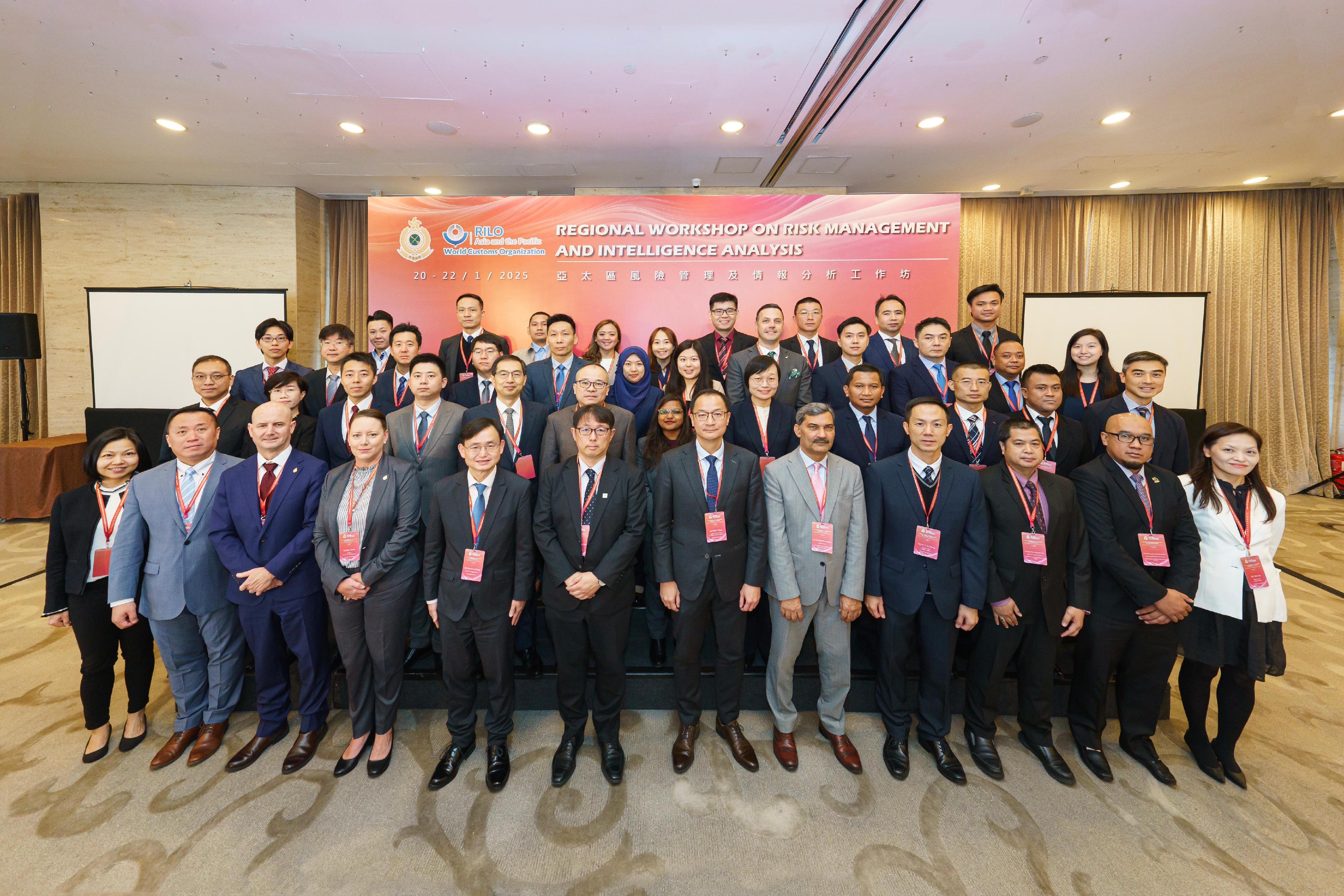
     Hong Kong Customs and the Regional Intelligence Liaison Office for Asia and the Pacific, starting January 20, hosted a three-day Regional Workshop on Risk Management and Intelligence Analysis, which concluded today (January 22).
      
     This is the first large-scale regional workshop on risk management and intelligence analysis held by Hong Kong Customs, gathering more than 30 representatives, experts from law enforcement agencies and data analytics professionals from 14 Asia/Pacific (A/P) members of the World Customs Organization.
      
     With rich content, the three-day workshop included a series of thematic presentations and discussions focusing on risk management initiatives and the latest developments in big data analytics. Participants engaged in in-depth exchanges of views and shared experiences on customs risk management initiatives and the application of big data analysis and artificial intelligence, laying a solid foundation for collaborative risk prevention and control in the Asia-Pacific region.
      
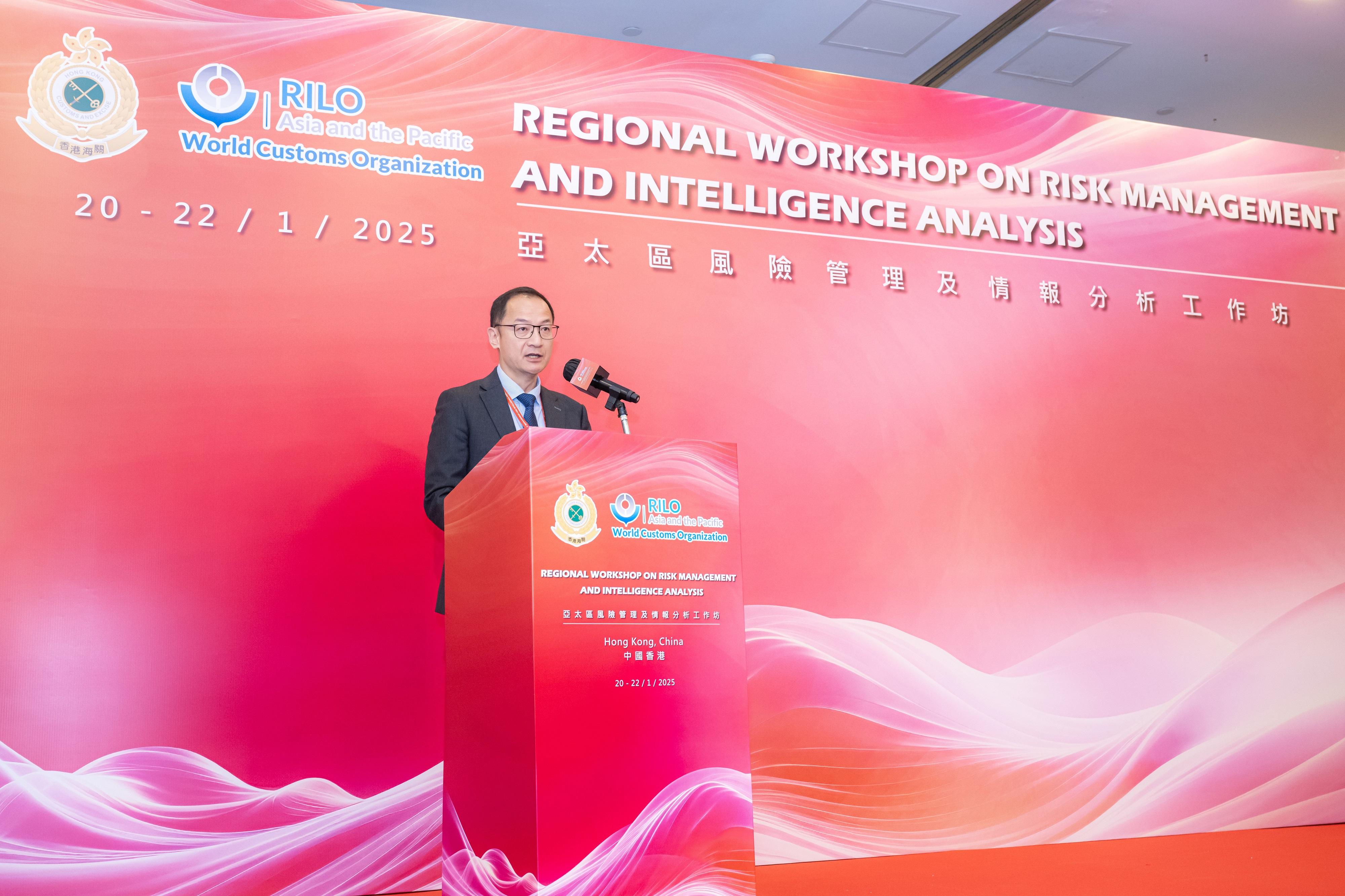
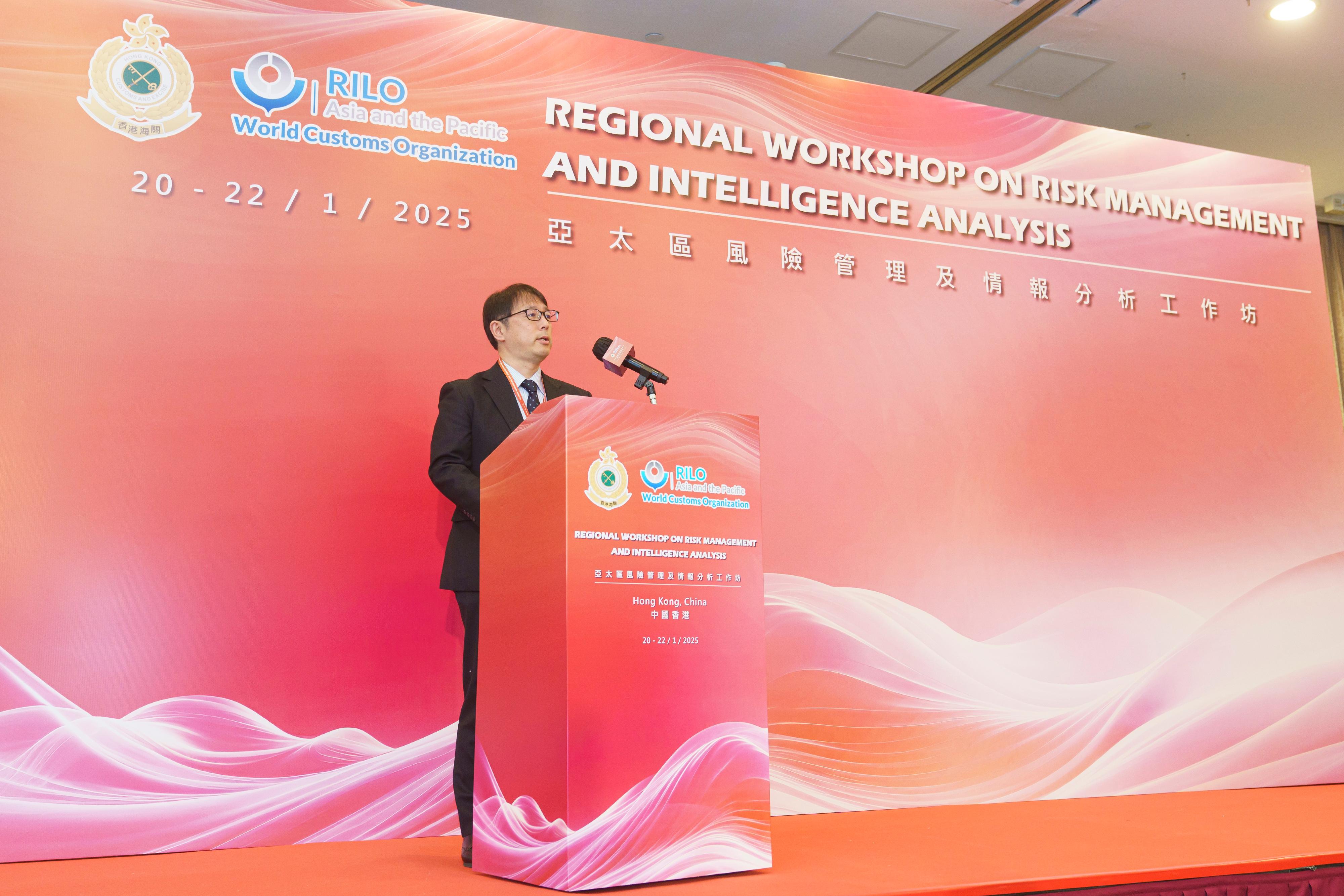
     In his opening speech, the Assistant Commissioner of Customs and Excise (Intelligence and Investigation), Mr Wong Ho-yin, stressed that effective risk management and intelligence analysis strategies are of paramount importance in fighting against transnational smuggling activities in this ever-changing information society. He highlighted that participants could take this opportunity to share practical experiences with one another, which would in turn significantly enhance risk management capabilities and foster co-operation and information sharing among A/P members.
      
     Hong Kong Customs has been developing Smart Customs to complement the country’s Belt and Road Initiative and the Guangdong-Hong Kong-Macau Greater Bay Area development strategies. Customs will continue to utilise advanced technologies such as big data and artificial intelligence to analyse trade data from multiple dimensions, thereby accurately identifying high-risk areas for effectively combating prohibited goods and smuggling activities and safeguarding supply chain security in Hong Kong.

Photo  Photo  Photo  
read more

LCQ10: Sponsored Visitors Programme

     Following is a question by the Hon Mrs Regina Ip and a written reply by the the Secretary for Home and Youth Affairs, Miss Alice Mak, in the Legislative Council today (January 22):
 
Question:
 
     Currently, through the Sponsored Visitors Programme (the Programme), the Visits Sub-division of the Information Services Department invites government and political leaders, academics and think-tank members, as well as leading figures in the business and financial sectors to visit Hong Kong to enhance their understanding of the city. In this connection, will the Government inform this Council:
 
(1) in each of the past five years, of (i) the funds earmarked for the implementation of the Programme and any surplus funds, (ii) the total expenditure on the various activities under the Programme, and (iii) ‍the number of visitors arranged to come to Hong Kong through the Programme, with a breakdown by the country/place from which they came and the trade to which they belonged;
 
(2) given that the Government, in its reply to a question from a Member of this Council on May 23, 2018, indicated that the main considerations in drawing up guest invitations under the Programme included the expertise and influence of the proposed visitors in their respective sectors or fields, as well as the Government’s major policy focuses, and noting that the President of the State, in his address delivered at the Meeting Celebrating the 25th Anniversary of Macao’s Return to the Motherland and the Inaugural Ceremony of the Sixth-term Government of the Macao Special Administrative Region (SAR), stated that the SAR Governments should leverage their unique advantages, reinforce their connectivity with both the Mainland and the world, and extensively develop international liaison to enhance their global influence and appeal, whether the authorities will, by making reference to the contents of aforesaid address, review and revise the considerations for guest invitations under the Programme in a timely manner; if so, of the details and the implementation timetable; if not, the reasons for that; and
 
(3) as there are views that some industry leaders may find it inconvenient to accept the Government’s sponsorship and invitation due to the political sensitivity of their identities to some extent, whether the Government has formulated measures to promote non-governmental exchanges between Hong Kong and the international community; if so, of the details and effectiveness of these measures; if not, the reasons for that?
 
Reply:
 
President,

     In consultation with the relevant policy bureaux, I give the consolidated reply to the Hon Mrs Regina Ip’s question on behalf of the Government as follows:
      
     The Sponsored Visitors Programme (SVP) aims to invite influential figures from places outside Hong Kong, such as political and business leaders, industry dignitaries, think-tank members, opinion leaders, scholars, etc., to come to Hong Kong to understand the latest developments, opportunities and advantages of the city and “bring home” our good stories. When drawing up the list of guests under the SVP, the Government takes into consideration the latest national development strategies as well as its policy priorities, including the Belt and Road Initiative, Hong Kong’s development of “eight centres” as outlined in the 14th Five-Year Plan, and the emerging markets such as the Middle East and the Association of Southeast Asian Nations (ASEAN) that the Government is keen to explore. The Government specifically invites people from the relevant regions, countries and fields to visit Hong Kong under the SVP for expanding Hong Kong’s circle of friends, as well as developing and deepening exchanges and co-operation with them.

     The expenditure on the SVP is covered by the annual financial allocation of the Information Services Department. Due to the COVID-19 pandemic, no sponsored visitors were received under the SVP in the first two years of the three-year period from 2020-21 to 2022-23 while two SVP visitors came in the third year incurring an expenditure of about $34,000. For 2023-24, there were 39 SVP visitors with an expenditure of about $1.9 million. For the current financial year of 2024-25 (up to end December 2024), there are 43 SVP visitors with an expenditure of about $1.1 million. These visitors come from the Mainland, Africa, America, Asia, Europe, the Middle East and Oceania involving different sectors, such as government, business, academia, arts and culture, innovation and technology (I&T), international/regional organisations and think-tanks, etc.
      
     The above increase in the number of visitors shows that the SVP can effectively invite visitors and help expand Hong Kong’s international connections. The Government will continue to make good use of this programme to promote Hong Kong’s strengths to the world.

     â€‹Apart from the SVP, the Government has been promoting non-governmental exchanges between Hong Kong and the Mainland as well as international communities in relevant policy areas through different channels and arrangements. Insofar as the works of the Home and Youth Affairs Bureau (HYAB) are concerned, we have been providing young people with various internship and exchange opportunities in the Mainland and overseas with a view to encouraging them to broaden their horizons and engage in exchange with young people from other places. As of end December 2024, approximately 25 000 and 4 800 young people have joined various internship and exchange programmes outside Hong Kong organised by the HYAB in 2024/25. In 2025/26, the HYAB will also implement enhancement measures to encourage subvented non-governmental organisations to organise more two-way exchange programmes. Besides, to expand spaces and network for youths, the HYAB will create a youth development facility in the Kai Tak Community Isolation Facility, which includes setting up a Youth Post hostel for Mainland, overseas and local young people to stimulate creativity, develop culture, arts and sports, and engage in mutual exchange. To take forward the programme, the Government has issued the tender document on December 20, 2024, with a view to conducting an open tender exercise to select a suitable organisation for operating this new youth facility by way of short term tenancy. We anticipate the said facility will progressively commence its operation within 2025.
      
     In addition, the 14 overseas Economic and Trade Offices (ETOs) of the Hong Kong Special Administrative Region (HKSAR) Government have been actively conducting external liaison and promotion work through different channels by leveraging their respective networks. The ETOs visit countries/regions under their respective purview to meet with industry organisations, business leaders and important people to brief them on the latest developments and major policy measures of Hong Kong. They actively promote Hong Kong’s unique advantages under “one country, two systems”, and invite business leaders and important people to visit Hong Kong to see for themselves the latest developments in the city.

     â€‹Separately, in collaboration with various policy bureaux, Invest Hong Kong (InvestHK) has been inviting and attracting global business leaders, industry leaders, and other important visitors to visit Hong Kong by organising regular and large-scale investment promotion events, thereby allowing them to experience first-hand the unique advantages that businesses set up in Hong Kong enjoy. Examples of large-scale investment promotion events include Wealth for Good in Hong Kong Summit, Hong Kong FinTech Week and StartmeupHK Festival. In 2024, InvestHK successfully assisted 539 overseas and Mainland companies to set up or expand businesses in Hong Kong, demonstrating that those events organised by the department could facilitate non-governmental exchanges between businesses and industries.
      
     In respect of I&T, the Government is committed to facilitating various international I&T events to attract local and overseas industry elites and business representatives to Hong Kong for exchange. For example, in April 2024, InnoEX attracted exhibitors from 13 countries and regions. In December 2023, the Asia Pacific Information and Communications Technology Alliance (APICTA) Awards 2023 was held in Hong Kong, bringing over 600 leaders and elites of the information and communications technology industry from the other 15 member economies across the Asia Pacific region.

     â€‹As for education, to achieve the objective of developing Hong Kong into an international post-secondary education hub, the Government will promote the “Study in Hong Kong” brand to attract talents from around the world to study in Hong Kong, and support post-secondary institutions in Hong Kong to strengthen their international exchanges and connections, so as to seize every opportunity to tell the good story of Hong Kong thereby further strengthening Hong Kong’s international status in the higher education sector. To support universities in further promoting Hong Kong’s higher education to the world, the University Grants Committee (UGC) has allocated $20.47 million in the 2022-25 triennium to the Heads of Universities Committee’s Standing Committee on Internationalisation, which is a joint collaboration of the eight UGC-funded universities, to participate in and organise various overseas activities, including participation and organisation of overseas events in the NAFSA Annual Conference and Expo, the European Association for International Education Annual Conference and Exhibition, and the Asia-Pacific Association for International Education Annual Conference. The UGC-funded universities will set up a Hong Kong Pavilion at these international conferences and exhibitions to recruit overseas students. To promote internationalisation, the UGC-funded universities will continue to conduct joint admission roadshows and participate in international education fairs to recruit more students from around the world to study in Hong Kong.
      
     In respect of tourism, the Hong Kong Tourism Board (HKTB) has been bringing selected influential figures including media personalities, celebrities, and social media influencers from global markets to Hong Kong for immersive and first-hand experiences. The HKTB tailor-makes themed itineraries for each influencer to generate positive narratives. By harnessing their significant influence, the Government aims to amplify Hong Kong’s timeless charm and attract visitors from around the world to visit Hong Kong. The HKTB also arranges familiarisation trips to enable overseas travel trade professionals to personally experience diverse tourism offerings in Hong Kong, with an aim to inspire partners to develop a wider range of tourism products. Besides, the HKTB has been actively organising various familiarisation trips for Meetings, Incentive Travels, Conventions, and Exhibitions (MICE) industry representatives, corporate clients and trade association members to showcase Hong Kong’s latest MICE resources and event experiences, with a view to securing large scale MICE events to be held in Hong Kong. The HKTB also brings the tourism sector to participate in major tourism exhibitions and events so as to further promote Hong Kong.

     On promoting cultural exchange, the Culture, Sports and Tourism Bureau (CSTB) supports arts groups/artists from Hong Kong to stage arts and cultural activities outside Hong Kong each year, and the Leisure and Cultural Services Department (LCSD) in organising Hong Kong Week overseas, thereby promoting Chinese culture and Hong Kong’s arts and cultural achievements, strengthening exchanges and collaboration, and enhancing people-to-people bond.
      
     In addition, presented by the CSTB and organised by the LCSD, the Asia+ Festival is an annual event that takes place every year from September to November, featuring a variety of events including stage performances, exhibitions, an outdoor carnival, and film screenings. The Asia+ Festival 2024 offered over 100 performances and activities, attracting attendance figures of over 100 000. With a view to showcasing the vibrant arts and cultures of different countries and regions, and further strengthening Hong Kong’s position as the Asian cultural metropolis, the LCSD will continue to organise the Asia+ Festival, establishing it as a brand that promotes cultural and performing arts collaborations as well as a regular exchange platform between nations.
      
     Besides, the Cultural and Creative Industries Development Agency (CCIDA) provides funding support for and incubate cultural and creative projects with potential for industrialisation through the CreateSmart Initiative for seven creative sectors. The CCIDA will promote cross-sectoral and cross-genre collaboration projects and leverage market resources, support the industries to participate in trade shows and exhibitions in the Mainland and overseas, and arrange delegations to the Mainland and overseas to explore business opportunities, with a view to bringing in more room for the development of Hong Kong’s cultural and creative industries.

     â€‹The CCIDA supports the design industries of Hong Kong to proactively perform a platform role and become a key node in the design industry chains in the Mainland and foreign countries. The CCIDA assists Hong Kong cultural and creative designers to create more cultural and creative products featuring both Chinese and Hong Kong cultural characteristics. The CCIDA also facilitates more local and non-local cultural and creative products to register on Hong Kong Trade Development Council’s Asia IP Exchange Portal, so as to promote cultural intellectual property transactions and transformations, and strengthen support for local original works to exploit the Mainland and international markets.
      
     The inaugural Hong Kong Fashion Fest was successfully held in December last year, presenting a full agenda of diverse fashion design events which included a summit and a forum, fashion shows and exhibitions showcasing the work of local and overseas designers in haute couture, workwear, evening wear and other types of clothing, showcases of the work of Asian award-winning designers and a cross-sector soirée, etc. Innovative elements and affiliate activities were also introduced into Hong Kong Fashion Fest to attract the participation of prestigious fashion brands and industry players from Hong Kong, the Mainland and overseas. The CCIDA will continue to strive to make Hong Kong Fashion Fest an annual signature event to elevate Hong Kong’s influence and status in international fashion realm, and develop Hong Kong into a fashion design hub in Asia.

     â€‹In recognition of Hong Kong’s role as an East-meets-West centre for international cultural exchange under the Nation’s 14th Five-Year Plan, the Film Development Fund (FDF) rolled out the Hong Kong-Asian Film Collaboration Funding Scheme in 2023 to subsidise film projects co-produced by filmmakers in Asian countries which are rich in Hong Kong and Asian cultural elements, and enable Hong Kong films to go global. The FDF further expanded the original Hong Kong-Asian Film Collaboration Funding Scheme to the Hong Kong-Europe-Asian Film Collaboration Funding Scheme in 2024, which is to subsidise film projects co-produced by filmmakers from European and Asian countries to produce films featuring Hong Kong, European and Asian cultures, and enable Hong Kong films to go global and have easier access to overseas markets. The Government has also launched the Film Festival Promotion Scheme to support the promotion of Hong Kong films outside Hong Kong, with a view to facilitating the development of the Hong Kong film market. The Government will continue to lead delegations, comprising emerging directors and industry representatives from Hong Kong, to film festivals in the Mainland and overseas countries.
      
     In conclusion, the Government has been promoting exchanges with various stakeholders from around the world through the SVP and other measures. The relevant policy bureaux will continue deepening the exchanges and co-operation with stakeholders in accordance with the respective policy objectives. read more
LCQ11: Car parking spaces in public hospitals

     Following is a question by the Hon Doreen Kong and a written reply by the Secretary for Health, Professor Lo Chung-mau, in the Legislative Council today (January 22):
 
Question:
 
     According to the letter of reply dated May 15, 2018 from the Government to the Public Works Subcommittee of this Council, public hospitals adopt the ratio as stipulated in the Hong Kong Planning Standards and Guidelines (HKPSG) (i.e. one car parking space for every 3 to 12 hospital beds) to determine the number of car parking spaces, but such standards and guidelines were only updated in 2003. In this connection, will the Government inform this Council:
 
(1) whether it knows the total number of car parking spaces, the ratio of car parking spaces to hospital beds, the number of visitor car parking spaces, and the number of visitor car parking spaces specifically provided for persons with disabilities, in each public hospital at present;
 
(2) whether it knows the number of complaints about insufficient car parking spaces, as well as the number of vehicles impounded due to illegal parking, in public hospitals from 2017 to 2023, and if such situations involved cases of emergency transport of patients to the hospitals for medical treatment; and
 
(3) as there are views pointing out that the prolonged shortage of car parking spaces in Hong Kong is due to the fact that the authorities still use The Second Parking Demand Study Final Report published by the Transport Department in 2002 as reference for formulating relevant standards, including the existing HKPSG, whether the Government will conduct survey studies and reviews on the demand for, and the standard provision of, car parking spaces to cater for the needs of people seeking medical treatment and visitors of patients; if so, of the details; if not, the reasons for that?
 
Reply:
 
President,
 
     In consultation with the Transport and Logistics Bureau and the Hospital Authority (HA), the reply to the question raised by the Hon Doreen Kong is as follows:
 
(1) The parking spaces of hospitals under the HA are mainly provided to cater for hospital operations. Priorities are accorded to vehicles essential to hospital operations, including ambulances, non-emergency ambulance transfer service vehicles, rehabilitation buses, vehicles from residential care homes for the elderly and persons with disabilities, government vehicles, vehicles for delivery and collection of medical equipment/facilities/supplies/waste, shuttles operating amongst cluster hospitals, and hospital maintenance/management/services vehicles, etc., as well as to the private vehicles of the hospital staff, in particular those who are on shift duties. Parking spaces of the public hospitals will only be available to visitors after the aforementioned operational needs have been met. Generally speaking, public hospitals are well supported by public transport facilities and the Government encourages the public to use public transport as far as possible to travel to and from public hospitals. In case of immediate needs for seeking medical treatment at public hospitals, the public may consider taking taxis, or using ambulance services depending on the degree of urgency. It may not be suitable to use private vehicles when urgent medical attention is needed.
 
     The HA understands the demand for parking spaces by hospital visitors. In this connection, having taken into account factors such as the total number of parking spaces, the number of admissions and daily attendances at the Accident and Emergency department of hospitals, some visitor parking spaces are provided, including two to five visitor parking spaces allocated for the use of visitors with disabilities.
 
     There are a total of 7 354 car parking spaces (Note 1) in all hospital clusters of the HA, including 422 general visitor parking spaces and 110 parking spaces for visitors with disabilities. The overall car parking spaces to hospital beds (Note 2) ratio is one car parking space to around 4.17 hospital beds. The numbers of hospital beds, parking spaces and visitor parking spaces thereof at public hospitals are at Annex.
 
(2) The number of complaints on inadequate parking spaces received by the HA and the number of vehicles impounded for parking contraventions from 2017 to 2023 are tabulated below. No case of emergency conveyance was involved.
 

Year Number of complaints on
inadequate parking spaces
Number of vehicles
impounded for parking contraventions by visitors
2017 0 386
2018 2 594
2019 4 389
2020 0 274
2021 0 613
2022 2 341
2023 0 378
 
(3) The Hong Kong Planning Standards and Guidelines (HKPSG) provide guidance on the number of parking spaces for various development projects, including public hospitals. The Government regularly reviews and revises the parking standards in the HKPSG timely to tie in with the transport management policies and parking demand. Following the most recent review of the parking standards, the Government revised the relevant guidelines in the HKPSG in August 2021.
 
     According to the current guidelines in the HKPSG, the standard for the number of hospital parking spaces is one car parking space for every three to 12 beds. While these parking spaces are generally intended for meeting the operational needs of hospitals, the guidelines also recommend providing an appropriate number of car parking spaces for visitors. The HA is, when planning hospital projects, required to conduct a traffic assessment, which includes examining the overall parking needs of the relevant hospital projects and recommending an appropriate number of parking spaces. The Transport Department will provide advice on the relevant proposals to the relevant department(s) if necessary.
 
     As mentioned above, the provision of visitor parking spaces at public hospitals depends on the operations of individual hospitals. At the same time, the HA takes into account factors such as the actual constraints, geographic environment and flow of people of individual hospitals as well as public transport facilities in the district concerned while making corresponding planning and arrangements. For some public hospitals (especially those located in older districts of the urban area) which have smaller footprint but are relatively accessible by public transport, the limited space should be prioritised for hospital operations or expansion purposes while the number of parking spaces, in particular that of visitor parking spaces, will be relatively smaller. Having regard to the operational needs of public hospitals and as per the arrangements described in part (1), the HA has already suitably increased the provision of car parking spaces when planning the First Hospital Development Plan.
 
     To meet the needs of patients and visitors, the HA also supports the Government’s relevant policies for improving the connectivity between public hospitals and public transport facilities and proactively participates in deliberations on relevant measures in order to improve the pedestrian walkways connecting to public hospitals and their walking environment. The HA also collaborates and communicates with the Highways Department and other relevant government departments with a view to enhancing the connectivity of hospitals to adjacent pedestrian walkways and public transport facilities in order to provide the public with more convenient hospital pedestrian accessibility facilities.
 
Note 1: The total number of car parking spaces is as of December 31, 2024.
 
Note 2: The total number of hospital beds is as of March 31, 2024. read more