Author Archives: hksar gov

Hospital Authority’s statement regarding worker passed away at the Prince of Wales Hospital redevelopment project construction site

The following is issued on behalf of the Hospital Authority:

     The spokesperson for the Hospital Authority (HA) has the following statement today (May 21) regarding a worker passed away at the Prince of Wales Hospital (PWH) redevelopment project construction site:

     The HA received notification this afternoon from the main contractor of the PWH redevelopment project that a worker employed by the concrete works subcontractor suddenly collapsed during work. Site management called for an ambulance and the worker was sent to the Accident and Emergency Department (AED) of PWH, where the worker was subsequently certified dead upon arrival at the AED.

     The HA expresses deep sorrow over this incident and extends sincere condolences to the deceased worker’s family. The HA has directed the main contractor to provide appropriate assistance to the family and support them in handling the family member’s after-death arrangements. The HA treats this incident with utmost seriousness. The PWH has referred the case to the Coroner for follow-up investigation. The HA has also requested the main contractor to conduct a thorough investigation and submit a detailed report. The HA notes that the contractor will report this incident to the Labour Department, and the HA will ensure the contractor’s full co-operation with investigations by the Labour Department and other relevant law enforcement agencies.

     The HA has always placed paramount importance on industrial safety at hospital construction sites. Project consultants would supervise contractors to ensure compliance with relevant regulations and guidelines, providing suitable and safe working conditions for workers, including appropriate rest periods and heat stroke prevention measures during hot weather. The HA will review the contractor’s safety arrangements to ensure site safety and regulatory compliance, while requiring contractors to prioritize workers’ welfare and occupational health. read more

LCQ15: Small Claims Tribunal

     Following is a question by the Hon Chan Kin-por and a written reply by the Chief Secretary for Administration, Mr Chan Kwok-ki, in the Legislative Council today (May 21):
 
Question:
 
     The jurisdictional limit of the Small Claims Tribunal (SCT) was increased from $50,000 to $75,000 in 2018. In this connection, will the Government inform this Council:
 
(1) whether it knows the number of cases filed to SCT over the past three years and its percentage in the total number of court cases, together with a breakdown by the claim amount (i.e. (i) ‍$50,000 or less, (ii) ‍$50,001 to $74,999, and (iii) $75,000);
 
(2) given that in the reply to a question raised by a Member of this Council on the Estimates of Expenditure 2025-2026, the Judiciary has indicated that when considering adjusting the jurisdictional limit of SCT, it would analyse a host of factors, including public demand for SCT’s services and changes in economic indicators, and that it is learnt that the amounts involved in civil disputes in recent years have significantly increased, with the claim amount of some cases filed to SCT already reaching the limit of $75,000, whether the Government knows when the Judiciary will adjust the jurisdictional limit of SCT and whether it will consider raising the claim limit; and
 
(3) given that, according to information from the Judiciary, the average waiting time for cases in SCT from filing to first hearing over the past three years was 35 to 41 days, which is better than the target time of 60 days, there are views that the relevant situation indicates that even if the jurisdictional limit of SCT is adjusted, SCT still has sufficient manpower to handle additional caseload, whether the Government knows how the Judiciary assesses the impact of adjusting the jurisdictional limit of SCT on the average waiting time for cases filed?
 
Reply:
 
President,
 
     Based on the information provided by the Judiciary, the Government’s reply is as follows:
 
(1) In the past three years (2022 to 2024), around 80% of cases filed in the Small Claims Tribunal (SCT) involve claim amounts of $50,000 or less. The breakdown of the relevant cases by respective claim amounts is as follows:
 

Claim amount (HK$) Number of cases filed
2022 (%) 2023 (%) 2024 (%)
≤ 25,000 26 483 (64%) 33 817 (65%) 39 510 (69%)
> 25,000 to ≤ 50,000 6 329 (15%) 7 820 (15%) 8 180 (14%)
> 50,000 to ≤ 75,000 8 702 (21%) 10 667 (20%) 9 764 (17%)
Total 41 514 (100%) 52 304 (100%) 57 454 (100%)
 
Note: In the past three years (2022 to 2024), a total of more than 1.6 million cases were filed in all levels of court (including the Court of Final Appeal, the High Court, the District Court, the Magistrates’ Courts and various Tribunals), and about 10% of them were filed in the SCT. However, we should note that since the jurisdiction, case types and resources of courts at different levels vary, the caseloads among them should not be directly compared.
 
(2) and (3) The SCT adopts a less formal approach to proceedings, providing a relatively quick and less costly avenue for litigants to resolve civil disputes involving lower claim amounts. One of the features of the proceedings in the SCT is that legal representation is not allowed. In considering any proposal for adjustment to the jurisdictional limit of the SCT, the Judiciary will comprehensively and objectively analyse all relevant factors, including the functions of the SCT, the demand for its services and its operational impact, changes in economic indicators and views of stakeholders, so as to ensure an appropriate distribution of cases between the District Court and the SCT, thereby enhancing access to justice for the members of the public in need.
 
     The jurisdictional limit of SCT was increased from $50,000 to $75,000 with effect from December 3, 2018. Since then, the Judiciary has been closely monitoring the caseload of the SCT. According to the Judiciary’s case statistics from 2019 to 2024, while the total number of cases filed to SCT has increased by 2.8% from 55 879 to 57 454, those cases involving claim amounts exceeding $50,000 has been substantially reduced by 32% from 14 315 (26% of total number of cases) to 9 764 (17% of total number of cases). 
 
     The average court waiting times of the SCT in 2023 and 2024 recorded at 35 and 41 days respectively, which were within the target waiting time of 60 days. It should be noted that waiting times of the SCT is only one of the indicators of its operation, and do not reflect the substantial resources involved in the process of cases by the SCT, particularly on the part of the Adjudicators and Tribunal Officers in assessing, liaising with litigants/parties and facilitating settlement of cases through alternative dispute settlement out of court (including mediation) instead of trial proceedings. Such cases accounted for around 90% of the cases disposed of at the SCT.
 
     In the light of the above, the Judiciary considers that the jurisdictional limit of the SCT is currently at an appropriate level, and has no plan to make adjustments at the moment. The Judiciary will continue to keep relevant factors mentioned above under review to assess whether there is a need to adjust the jurisdictional limit of the SCT in the future, thereby ensuring appropriate distribution of cases between the District Court and the SCT. read more
Greater Bay Area International Clinical Trial Institute signs MOU on clinical trial collaboration with HKU and CUHK medical faculties (with photos)

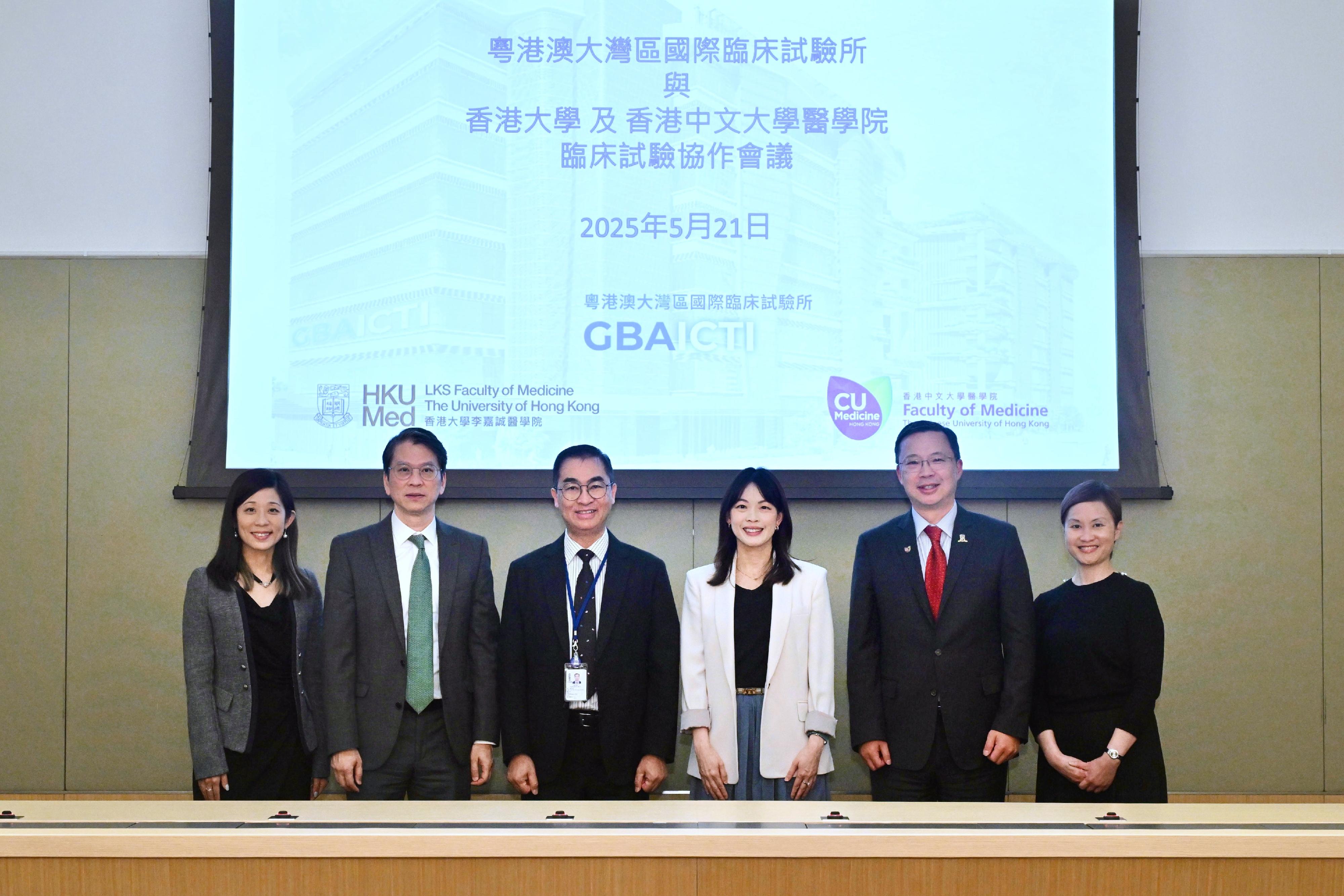
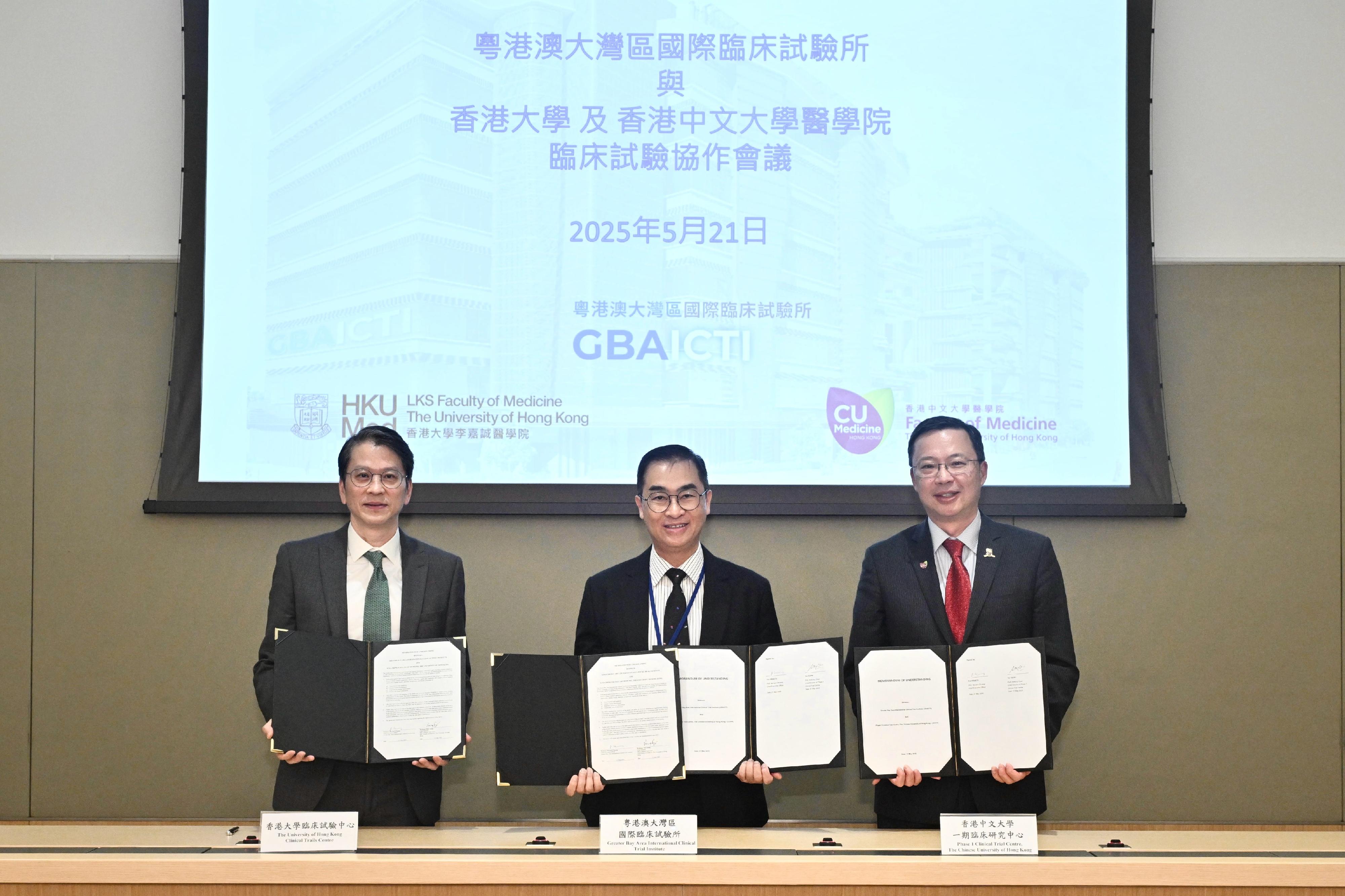
     The Greater Bay Area International Clinical Trial Institute (GBAICTI) today (May 21) held a collaboration meeting with the LKS Faculty of Medicine of the University of Hong Kong (HKUMed) and the Faculty of Medicine of the Chinese University of Hong Kong (CU Medicine) to have an in-depth exchange on advancing clinical trial collaboration. The three parties signed a Memorandum of Understanding (MOU) on clinical trial collaboration after the meeting, marking a significant milestone in the development of clinical research in Hong Kong.

     During the meeting, the GBAICTI Chief Executive Officer, Professor Bernard Cheung, had in-depth discussions with representatives of the two medical faculties on clinical trial collaboration. The two medical faculties are expected to launch more than 70 clinical trial projects in the coming year, covering innovative therapies in key areas including cancer, liver diseases, cardiovascular diseases, endocrine diseases, and rare diseases. The GBAICTI will provide comprehensive support, particularly in aspects such as co-ordinating multicentre cross-boundary clinical trials, connecting healthcare institutions across the Guangdong-Hong Kong-Macao Greater Bay Area (GBA), and streamlining processes, to facilitate efficient implementation and execution of cross-boundary clinical trials. Moreover, the three parties will also strengthen talent training co-operation to further enhance Hong Kong’s overall capability in clinical research.

     After the meeting, Deputy Secretary for Health Ms Elaine Mak witnessed the signing of the MOU on clinical trial collaboration by representatives of the three parties. The MOU aims to establish a long-term, stable, and strategic partnership among the three parties, with a view to enabling the GBAICTI to better integrate Hong Kong’s clinical trial resources and further enhance the city’s international competitiveness in biomedical innovation, positioning Hong Kong as a clinical trial hub connecting the world and the Mainland.

     Hong Kong possesses the advantages of internationally recognised clinical research institutions, professional teams, international experience and systems, extensive and standardised medical datasets, and more. Among these, both HKUMed and CU Medicine operate dedicated centres to co-ordinate clinical trial work, with extensive international collaboration experience, robust clinical research management systems, and comprehensive facilities and technology platforms to support clinical trials across different areas and development stages, playing a vital role in advancing the research and development (R&D) of novel drugs and translational medicine. The GBAICTI will continue to deepen co-operation with other healthcare institutions, including the two medical faculties, to give full play to its function as a co-ordinating platform to consolidate clinical research resources, with a view to enhancing scientific research collaboration and accelerating the R&D and translation of innovative drugs, medical devices and technologies, thereby enabling R&D results to benefit patients and the public more rapidly, while promoting high-quality development of the life and health industry.

     Established and wholly owned by the Hong Kong Special Administrative Region Government, the GBAICTI officially commenced operation on November 21 last year in the Hong Kong Park of the Hetao Shenzhen-Hong Kong Science and Technology Innovation Co-operation Zone, with the GBA International Clinical Trials Center in the Shenzhen Park also opening on the same day. Under the co-ordinated development of the “one zone, two parks” model, the “one institute, one center” will jointly establish the GBA Clinical Trial Collaboration Platform to provide support to medical research institutions within and outside Hong Kong and actively promote cross-boundary clinical trial network co-operation, in particular in the GBA, with a view to co-ordinating Hong Kong and the Mainland to commence multicentre cross-boundary clinical trials that can meet both national and international standards.

Photo  Photo  
read more