image_pdfimage_print

Author Archives: hksar gov

Judiciary launches two-year pilot scheme for live webcast of court proceedings in Court of Final Appeal

The following is issued on behalf of the Judiciary:

     The Judiciary today (March 11) announced that it will launch a pilot scheme for the live broadcasting of substantive appellate proceedings in the Court of Final Appeal (CFA) for a period of two years starting from April 1, 2025.

     Open justice is a key to maintaining public confidence in the judicial system and upholding the rule of law. Subject to the overriding consideration of the due administration of justice, live broadcasting of judicial proceedings beyond court premises will enhance the transparency of court procedures and strengthen public confidence in the judicial process. 

     The Judiciary conducted four trial runs of live broadcasting of court proceedings in four selected cases of the CFA vide the CFA website last year for testing the technical feasibility of the arrangements, as well as the logistical and operational details.
 
     Having reviewed the arrangements of the trial runs, the Judiciary plans to implement live broadcasting for all substantive appeal cases in the CFA, except for the following categories of cases:     
 

  • cases where the protection of the interests of children or mentally disabled adults, privacy interests, trade secrets or commercial confidentiality, etc is required; and
 
  • proceedings related to national security, high-profile public order cases, or highly politically charged cases.

     These exceptions are aimed to preserve judicial decorum, prevent excessive pressure on litigants and lawyers, and safeguard the fair and proper administration of justice. When such exceptions apply, hearings remain open to the public, who may still attend in person as they are always entitled to do, unless otherwise directed by the CFA.

     The first two CFA hearings will be broadcasted live on April 1 and 7 this year. 

     Arrangements for public access and viewing of the live broadcasting via the CFA website will be similar to those of the trial runs last year as follows:
 
  • Members of the public may view the live webcast of the CFA substantive appellate proceedings on the CFA website via desktop computers or mobile devices installed with common browsers.
 
  • The core written materials will be made available on the CFA website before the hearings. Relevant information of the live webcast will be provided nearer the time of the court proceedings on the websites of the CFA and the Judiciary.
 
  • Members of the public, including the media, must not record the live webcast or use the live broadcast footage for any purpose. Measures such as digital rights management commonly found on streaming platforms will be put in place to deter unauthorised recording, screen capturing and illegal distribution of the live broadcast footage.

     After the live webcast ends, the videos of the court proceedings will be uploaded to and kept on the CFA website for one month after the hearing date to allow easy access and flexible viewing. 

     Following the enactment of the Courts (Remote Hearing) Bill which is expected to resume its second reading debate in the Legislative Council in late March, the offence provisions relating to unauthorised recording and broadcasting of court proceedings will apply to the live broadcasting of the CFA hearings during the pilot period.  

     The live broadcasting will be conducted on the Judiciary’s in-house platform under the pilot scheme, replacing the outsourcing arrangements used for the four trial runs. This approach aims to ensure the most cost-effective use of public resources. 

     Upon completion of the pilot scheme, the Judiciary will review and consider long-term arrangements for live broadcasting of court proceedings outside court premises. read more

CHP responds to media enquiries on cluster of students participating in exchange tour developed gastroenteritis symptoms

     In response to media enquiries about a number of students of a secondary school in Sha Tin developed gastroenteritis symptoms after joining an exchange tour to the Mainland, the Centre for Health Protection (CHP) of the Department of Health responded today (March 10) as follows:
      
     “Upon receiving media enquiries late last night (March 9), the CHP took the initiative to contact the secondary school concerned for more information. It was learnt that about 120 teachers and students from the school went on an exchange tour to Shaoguan in Guangdong Province on March 6 and 7. On the day of their return to Hong Kong, two of the students developed acute gastroenteritis (AGE) symptoms in the morning and noon respectively while one of them vomited after alighting the coach in the afternoon. Subsequently, 21 students who participated in the same exchange tour developed AGE symptoms, including vomiting, diarrhea, abdominal pain and fever between March 8 and 10. Nine of them sought medical attention and none required hospitalisation.
      
     The CHP is investigating the source of this AGE outbreak from different aspects, including the possibility of transmission through person-to-person, or contaminated food or environment. The CHP has notified the Guangdong authority on the information of the relevant restaurants. The CHP will continue to follow up the incidents, including collecting stool specimen of patients for laboratory testing and providing advice to the school on infection control measures. The CHP’s investigation is ongoing.
      
     Viral gastroenteritis is more commonly seen in cooler months and can be caused by a variety of viruses, most commonly norovirus and rotavirus. The main symptoms of viral gastroenteritis are diarrhoea and vomiting. Other symptoms include headache, fever, and abdominal cramps. In general, the symptoms begin one to two days following infection with a virus that causes gastroenteritis. Depending on the type of viruses causing the illness, however, the symptoms may last for one to 10 days.  
      
     Alcohol-based handrub should not substitute hand hygiene with liquid soap and water, as alcohol does not effectively kill some viruses frequently causing AGE, for example, norovirus. To prevent foodborne diseases, members of the public are advised to observe good personal, food and environmental hygiene. When eating out, the following points should be observed:
      

  • Ensure proper personal hygiene;
  • Wash hands thoroughly before handling food and eating, after using the toilet or after changing diapers;
  • Wear gloves when disposing of vomitus or faecal matter, and wash hands afterwards;
  • Clean and disinfect contaminated areas or items promptly and thoroughly with diluted household bleach (by adding one part of bleach containing 5.25 per cent sodium hypochlorite to 49 parts of water). Wash hands thoroughly afterwards;
  • Maintain good indoor ventilation;
  • Pay attention to food hygiene;
  • Use separate utensils to handle raw and cooked food;
  • Avoid food that is not thoroughly cooked;
  • Drink boiled water; and
  • Do not patronise unlicensed food premises or food stalls.
     
     The public may visit the CHP’s website for more information and preventive advice on Viral Gastroenteritis.”
  read more

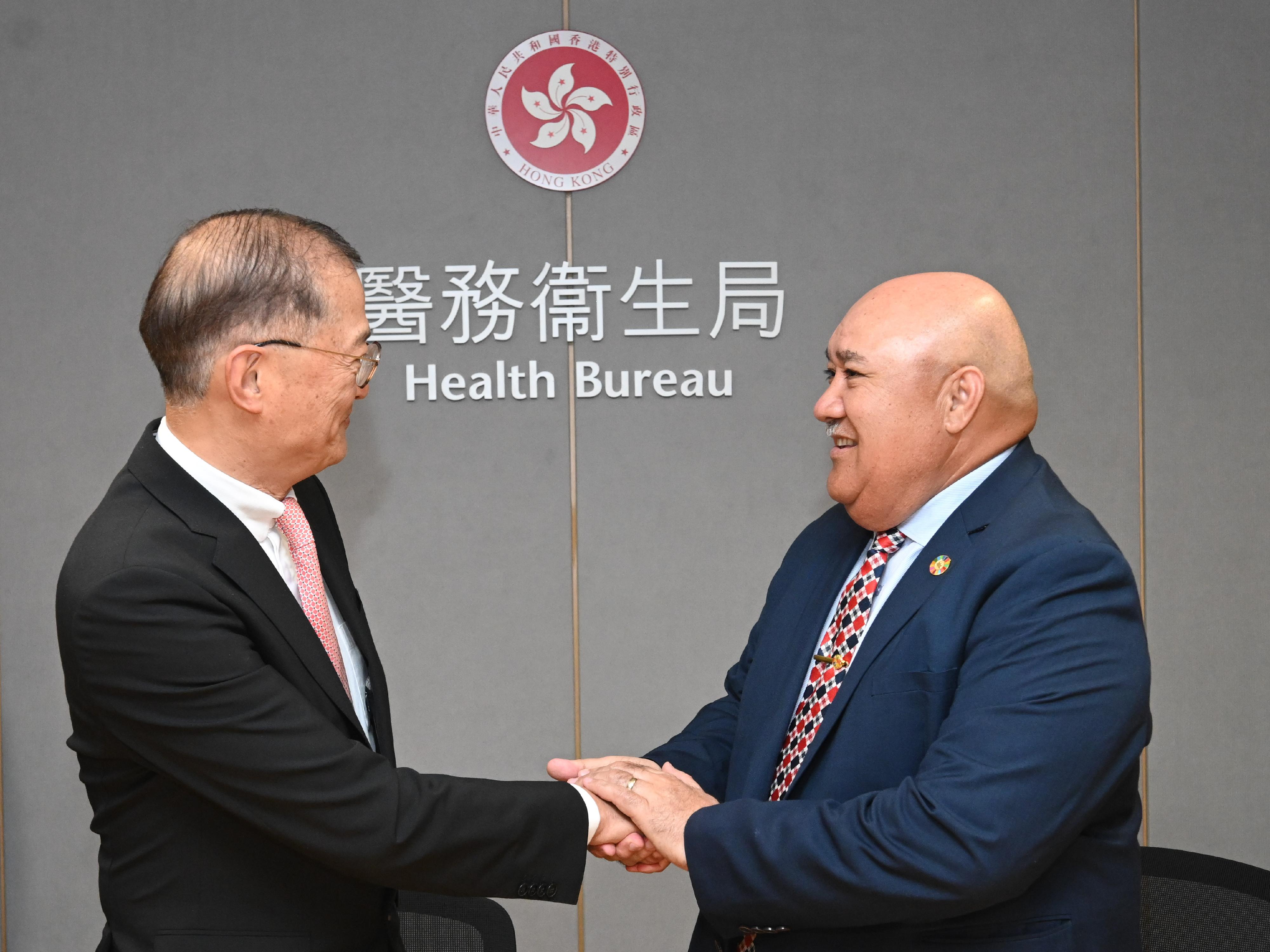
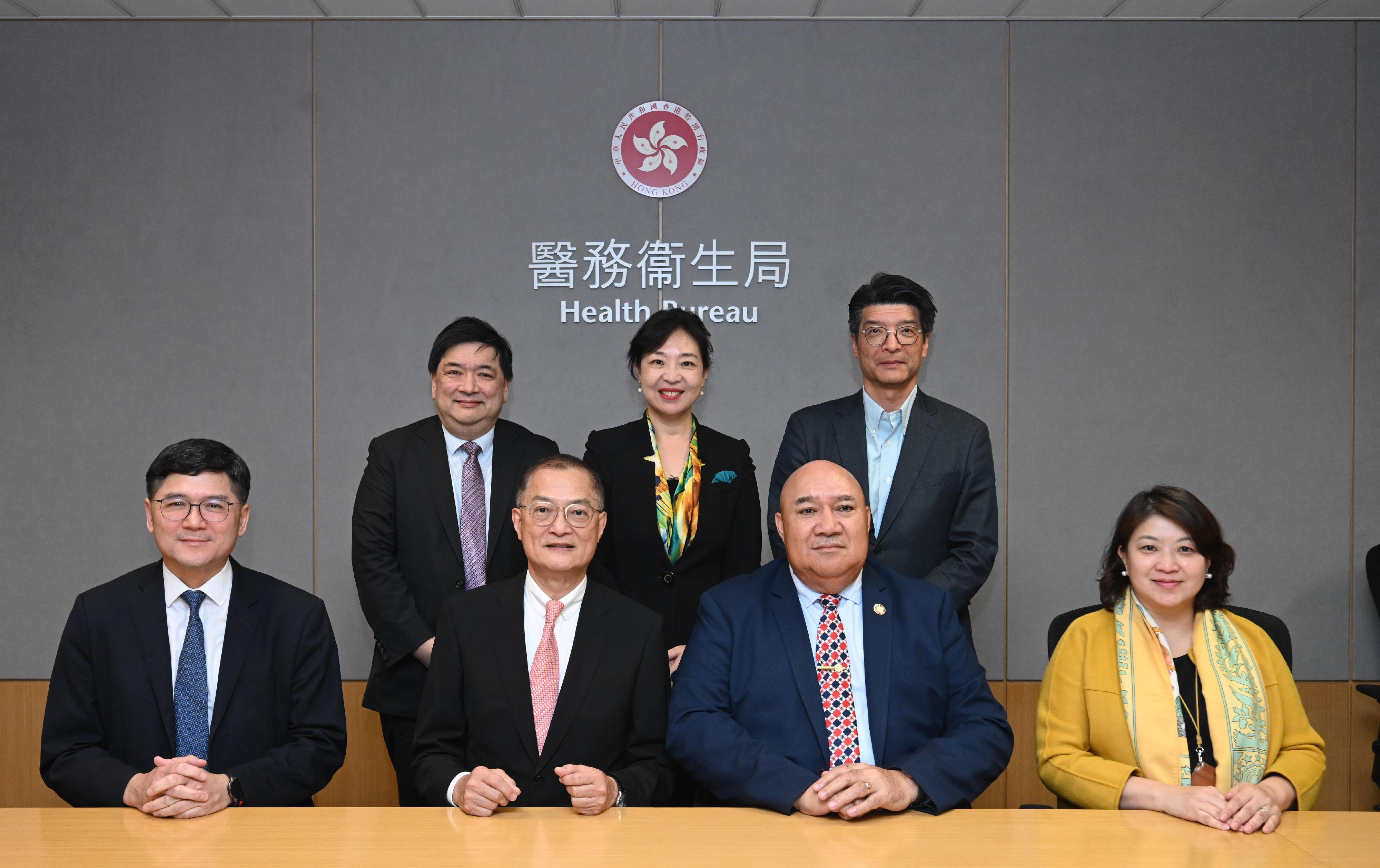
Secretary for Health meets with WHO Regional Director for Western Pacific (with photos)

     The Secretary for Health, Professor Lo Chung-mau, today (March 10) met with the World Health Organization (WHO) Regional Director for the Western Pacific, Dr Saia Ma’u Piukala, who is visiting Hong Kong, to exchange views on public health issues.
      
     Professor Lo said, “Hong Kong, China is in the WHO Western Pacific Region. Representatives of the Hong Kong Special Administrative Region (HKSAR) Government attend the World Health Assembly of the WHO as a member of the Chinese delegation every year. The HKSAR Government has been strenuously supporting and collaborating with the WHO and the nation in tackling various public health challenges, striving to safeguard public health and contribute to global public health. The Department of Health (DH) has been designated as the WHO Collaborating Centre for Traditional Medicine and the WHO Collaborating Centre for Smoking Cessation and Treatment of Tobacco Dependence. The Public Health Laboratory Services Branch of the Centre for Health Protection of the DH has also been designated as a reference laboratory for various communicable diseases, making significant contributions to global anti-epidemic work.” 
      
     At the meeting, Professor Lo gave Dr Saia Ma’u Piukala an overview of the highly efficient public healthcare system in Hong Kong. Professor Lo said, “As the main provider of public healthcare services, the Hospital Authority (HA) is the cornerstone of Hong Kong’s healthcare system. It serves nearly 90 per cent of Hong Kong’s population of some 7.5 million and provides integrated healthcare services that are heavily subsidised by the Government at nearly 98 per cent, so as to ensure that no citizen is denied appropriate healthcare services due to financial difficulty. The HKSAR Government has established a robust healthcare safety net for citizens, and Hong Kong’s healthcare system has taken the world lead in terms of quality and efficiency for many years.
      
     “However, with an ageing population and the increasing prevalence of chronic diseases, the HKSAR Government needs to keep abreast of the times and reform the healthcare system, with a view to optimising the use of precious and limited healthcare resources, and ensuring the sustainability of Hong Kong’s healthcare system to cope with the increasing healthcare needs of members of the public.”
      
     Professor Lo also introduced Dr Saia Ma’u Piukala to Hong Kong’s strategies in promoting the development of primary healthcare. The HKSAR Government released the Primary Healthcare Blueprint in December 2022, and is committed to building a prevention-oriented and community-based healthcare system, as well as providing personalised, coherent and comprehensive healthcare services to citizens through initiatives such as the Chronic Disease Co-Care Pilot Scheme and the District Health Centre network. The HKSAR Government will continue to promote primary healthcare development on all fronts and strengthen primary healthcare services as a whole, with a view to contributing to the WHO’s vision of health equity.
      
     The Chief Executive of the HA, Dr Tony Ko, and a number of officials of the Health Bureau and the DH, also attended the meeting today.

Photo  Photo  Photo  
read more

Kwong Wah Hospital announces incident of nurse suspected to have been indecently assaulted

The following is issued on behalf of the Hospital Authority.

     The spokesman for Kwong Wah Hospital (KWH) made the following statement today (March 10) regarding an incident of a nurse suspected to have been indecently assaulted:


     A nurse was suspected to have been indecently assaulted while working at the Accident and Emergency Department (A&E) nurse station this morning. Upon receiving the report, the hospital immediately reported the incident to the Police. A male patient was subsequently arrested by the Police in the A&E.


     KWH is highly concerned about the incident. The hospital strongly condemns the suspected indecent act against its staff member, resolutely adopts a zero-tolerance attitude towards this incident, and will follow up while fully co-operating with the Police’s investigation.


     The hospital has expressed sympathy and provided support to the nurse concerned.
The hospital has reported the incident to the Hospital Authority Head Office via the Advance Incident Reporting System.
  read more