Author Archives: hksar gov

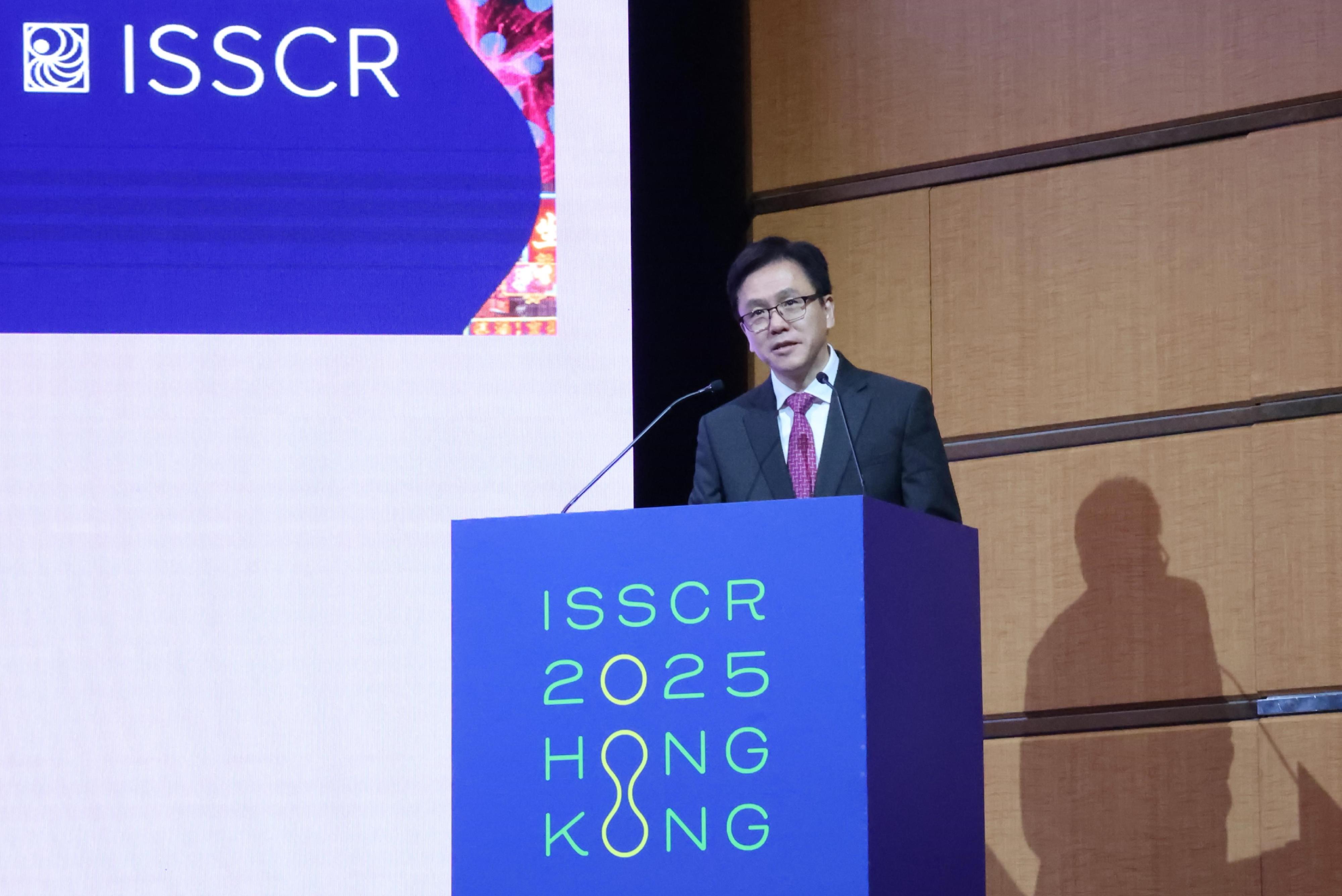
Speech by SITI at International Society for Stem Cell Research 2025 Annual Meeting (English only) (with photo)

     Following is the speech by the Secretary for Innovation, Technology and Industry, Professor Sun Dong, at the International Society for Stem Cell Research (ISSCR) 2025 Annual Meeting today (June 11):

Professor Greco (President of the ISSCR, Professor Valentina Greco), Mr Alm (Chief Executive Officer of the ISSCR, Mr Keith Alm), Professor Kathryn Cheah (2025 Annual Meeting Program Committee Co-Chair of the ISSCR), Professor Rocky Tuan (Lee Quo Wei and Lee Yick Hoi Lun Professor of Tissue Engineering and Regenerative Medicine of the Chinese University of Hong Kong), Professor Nancy Ip (President of the Hong Kong University of Science and Technology), distinguished guests, ladies and gentlemen, 

     Good morning. It gives me great honour to stand before you today as we kick off the ISSCR 2025 Annual Meeting here in Hong Kong, a city where East meets West, tradition meets innovation, and today, science meets the future.

     I still remember the pivotal moment in September 2022 when Kathryn, Nancy and Rocky approached me with a bold vision, that is, to bring this prestigious conference to Hong Kong. Without hesitation, I said, “Let’s make it happen!” And here we are, thanks to the relentless effort of the Bid Committee, the unwavering support of our three co-sponsoring universities, and of course the confidence that the ISSCR placed in us.

     I would like to thank the ISSCR for choosing Hong Kong as the host city for this very important meeting. Your decision speaks volumes. It is not just about our city’s thriving biomedical ecosystem, but about its growing role as a global hub for scientific collaboration.

     Hong Kong is more than a skyline. It is a skyline of possibilities. We are moving full steam ahead to develop Hong Kong into an international innovation and technology centre and a leading hub for life and health sciences. Hong Kong has a solid foundation in biomedical research with a good number of world-acclaimed award-winning scientists, well-accredited research outputs, an excellent clinical research track record and the state-of-art research infrastructure.

     Our flagship R&D (research and development) initiative, InnoHK, exemplifies this commitment – bringing together over 30 world-renowned universities and research institutes from 12 economies, and setting up a total of 30 top-tier research labs. Sixteen of them are life science and health-related with many involving stem cell research in various dimensions, which are pushing boundaries every day.

     Stem cell research is not just a field, it is a frontier. It holds the promise of rewriting medicine, healing the incurable, and unlocking the deepest mysteries of human biology. Over the next four days, this gathering will allow ideas to be shared, partnerships to be forged and inspiration to be ignited. The discoveries made here will not only make an impact in Hong Kong, but will also ripple across the globe.

     As we stand at the forefront of stem cell research, a field that bridges the impossible and the inevitable, may I leave you with the words of Marie Curie, a pioneer who reshaped science: “Nothing in life is to be feared; it is only to be understood. Now is the time to understand more, so that we may fear less.”

     Ladies and gentlemen, let this conference be a testament to that understanding. Together, we are not just studying stem cells, but unlocking the future of medicine. May I wish the ISSCR 2025 Annual Meeting a resounding success, and everyone a wonderful stay in Hong Kong. Thank you.

Photo  
read more

LCQ15: Development of pet-related industries

     Following is a question by the Hon Rock Chen and a written reply by the Secretary for Environment and Ecology, Mr Tse Chin-wan, in the Legislative Council today (June 11):
 
Question:
 
     It has been reported that the number of households keeping pets has increased in recent years, with pet-related industries developing rapidly. However, there are views pointing out that Hong Kong still has room for improvement in veterinary medical care and pet-friendly public facilities, as well as in data management and policies regarding the pet industry. In this connection, will the Government inform this Council:
 
(1) as it is learnt that a number of private shopping centres have introduced pet-inclusive facilities, such as pet accesses and pet rest areas, to attract spending from pet owners and thereby further unleash the potential of the pet economy, whether the Hong Kong Housing Authority will consider drawing on the relevant experience to implement pet-friendly measures in the shopping centres of the public housing estates under its purview; if so, of the details; if not, the reasons for that;
 
(2) as it has been reported that public or charity-run veterinary organisations have been established one after another in Taiwan, such as in Taoyuan City and New Taipei City, to provide basic veterinary medical services at transparent charges, which not only enhance pet health protection but also boost the pet economy, whether the HKSAR Government has conducted studies or policy planning regarding the establishment of public or semi-public veterinary medical facilities; if so, of the details; if not, the reasons for that; and
 
(3) as there are views that maintaining pet-related data can help understand the risks of pet epidemics and diseases, as well as the market structure and potential of the pet industry, whether the Government will establish a territory-wide pet data management platform to systematically collect relevant data, including the number of pets, breed distribution, keeping and vaccination records, and pet disease trends, so as to provide a scientific basis for the formulation of policies on pet-friendliness and developing the pet economy policies; if so, of the details; if not, the reasons for that?
 
Reply:
 
President,
 
     Having consulted the Housing Bureau, the reply to the question from the Hon Rock Chen is as follows:
 
(1) As pet keeping has become increasingly common in Hong Kong, there has been more attention in society to bringing animals to enter different premises and use public facilities. In general, the Government needs to take into account different factors when considering whether to further relax existing arrangements, including the nature of individual facilities, whether ancillary facilities are in place and the degree of social acceptance, in order to achieve the policy objective of facilitating people and animals to co-exist harmoniously.
 
     The shopping centres under the Hong Kong Housing Authority (HA) are mainly “neighbourhood shopping centres” located in public housing estates/courts. These shopping centres provide local residents with shopping convenience, with the aim of catering for their basic needs in daily life. All along, guide dogs accompanying the visually impaired have been allowed to enter the HA’s shopping centres. The HA has further implemented some pet-friendly policies, such as allowing pets to enter shopping centres if they are placed in pet carrier bags or pet strollers and that no hygiene and environmental nuisance will be caused. The HA will keep in view the development and needs of the community for pet-friendly spaces and facilities, and design “neighbourhood shopping centres” that are in line with the actual situation.
      
     On the other hand, the Domain located in Yau Tong is a large-scale regional shopping centre under the HA. Coupled with spacious indoor space, outdoor activity areas, wide passageways and multiple entrances at different locations, it is more equipped with the requisites for development into a pet-friendly mall than typical “neighbourhood shopping centres” located in housing estates. The HA will review whether it is appropriate to further provide pet-friendly measures in the Domain, such as installing relevant human-pet friendly facilities to appeal to pet owners for boosting consumption and visitor flow.
 
(2) The Agriculture, Fisheries and Conservation Department (AFCD) has been carrying out publicity and public education to remind the public to consider carefully before deciding to keep pets, to assess whether one could fulfil the duties of pet ownership in meeting the pets’ basic needs in diet, environment, daily care, healthcare, etc.
 
     On veterinary services, the Veterinary Surgeons Board of Hong Kong (VSB) established under the Veterinary Surgeons Registration Ordinance (Cap. 529), is currently responsible for the regulation, registration and disciplinary control of veterinary surgeons, so as to ensure a high standard of veterinary services in Hong Kong. The VSB learns about the overall veterinary services through data gathered in the regulation of the veterinary profession. The number of registered veterinary surgeons (RVS) has been consistently on the rise since 2015, from 823 in 2015 to 1 364 in April this year, representing an increase of 65 per cent. RVS comprises many specialties, such as small animal internal medicine and surgery, dermatology, cardiology, neurology and veterinary pathology, and therefore animal owners should be able to find appropriate veterinary services for their pets. To meet unexpected medical expenses, members of the public may also purchase pet insurance products available in the market as appropriate.
      
     Apart from private veterinarians, the City University of Hong Kong and some animal welfare organisations (such as the Hong Kong Society for the Prevention of Cruelty to Animals) also provide veterinary services and hence the Government currently has no plan to separately establish public medical facilities for pets.
 
(3) To safeguard public health and prevent the spread of animal diseases, the AFCD monitors and regulates animal activities in accordance with the law, and assesses the risk of pet animal diseases. The AFCD regulates the import of live animals through a permit system under the Public Health (Animals and Birds) Regulations (Cap. 139A) and the Rabies Regulation (Cap. 421A), so as to prevent the introduction of animal diseases into Hong Kong. Furthermore, the AFCD regulates the local animal activities through various licences, for example, regulating the animal trading and dog breeding activities through the Animal Trader Licence and Dog Breeder Licence respectively under the Public Health (Animals and Birds) (Trading and Breeding) Regulations (Cap. 139B), and to require dog keepers to have their dogs vaccinated against rabies, implanted with a microchip, and to apply for a dog licence under the Rabies Regulation, for the prevention of rabies.
 
     The Government last conducted a Thematic Household Survey on pet ownership among households across Hong Kong in 2018. The AFCD and the Census and Statistics Department will conduct another survey later this year to gather the latest data on trends and preferences in pet ownership of Hong Kong families. These findings will assist the trade to learn about the latest trend of pet ownership, for their provision of products and services according to market demand. read more

LCQ13: Disposal of yard waste

     Following is a question by the Hon Andrew Lam and a written reply by the Secretary for Environment and Ecology, Mr Tse Chin-wan, in the Legislative Council today (June 11):
 
Question:
 
     The Environmental Protection Department (EPD) set up Y·PARK, a yard waste recycling centre, in 2021, with the purpose of converting recycled yard waste into useful materials to reduce disposal at landfills and associated carbon emissions. Y·PARK has a target handling capacity of about 11 000 tonnes in the first year, which would gradually increase to an annual average of around 22 000 tonnes. However, information from the Government shows that Y·PARK’s throughput last year was 6 876 tonnes. Besides, earlier on some trucks were reportedly driven from Y·PARK carrying yard waste to landfills in the New Territories West for disposal, and the EPD subsequently explained that the yard waste in question was not acceptable as it contained a large amount of impurities. In this connection, will the Government inform this Council:
 
(1) of Y·PARK’s criteria for the recovery of yard waste, whether it has studied the reasons for the gradual decline in the amount of yard waste handled by Y·PARK in recent years, including whether this is affected by Y·PARK’s recovery criteria or the fact that yard waste producers recycle their own waste;
 
(2) as it is learnt that Y·PARK’s major sources of yard waste are (i) ‍construction works and (ii) clearance work arising from regular vegetation maintenance, whether there is a statistical breakdown of the amount of yard waste respectively from (i) and (ii) handled by Y·PARK from 2021 to date; of the amount of yard waste that was sent to but not accepted at Y·PARK over the past three years, and whether it has looked into how such yard waste was subsequently disposed of (such as conversion into biochar and being sent to landfills);
 
(3) given that according to a paper submitted by the Government to the Subcommittee to Study Policy Issues Relating to Municipal Solid Waste Charging, Recovery and Recycling of this Council in January 2023, a pilot biochar plant in EcoPark, which will further convert recyclable products of Y·PARK into biochar, has an estimated capability of converting about 6 000 tonnes of local woody waste into some 1 200 tonnes of biochar annually, of the amounts of waste handled and biochar produced since the plant came into operation, and whether such amounts could meet the targets; if not, when they are expected to meet the targets; and
 
(4) given that according to the report on Monitoring of Solid Waste in Hong Kong, the amounts of yard waste recovered and disposed in Hong Kong in 2023 were 10 400 tonnes and some 83 000 tonnes respectively, while the amount of yard waste handled by Y·PARK in the same year was 8 609 tonnes, whether it has assessed if there is room for improvement in Y·PARK’s handling capacity; whether the Government has further strategies in place to enhance the recovery rate of yard waste?
 
Reply:
 
President,

     After the onslaught of Super Typhoon Mangkhut, the Environmental Protection Department (EPD) set up a temporary yard waste recycling centre, Y·PARK, in 2021 to collect and process yard waste generated from regular vegetation maintenance and public construction works on one hand, and to assist in treating large quantities of yard waste generated after emergency incidents such as super typhoons on the other. The service fees paid by the EPD to the contractor are not based on the amount of yard waste received, but on the quantity of recyclable products produced by the contractor, which reflects Y·PARK’s performance more accurately.
 
     The reply to the question raised by the Hon Andrew Lam is as follows:
 
(1)To ensure the smooth operation of Y·PARK and the quality of the recyclable products, Y·PARK has established appropriate standards for yard waste recycling, including not accepting infected or infested wood, yard waste which is difficult to process such as tree stumps, pure twigs, leaves, grass clippings, or yard waste containing large amount of impurities. If yard waste is mixed with large amount of impurities, the chipping operations may be severely affected. For instance, Y·PARK’s wood chipper experienced mechanical failures due to metal rods hidden in the wood. Time and manpower were required to remove the rods, replace parts and repair the equipment. Such incidents could even halt the production line. Meanwhile, the quality of the recyclable products produced may be affected by impurities. For instance, plastics mixed into the recyclable products would limit their use in gardening. In this regard, the contractor of Y·PARK maintains communication with yard waste producers to explain how to properly separate waste at source to reduce instances where Y·PARK has to reject yard waste. 

     One of the Y·PARK’s functions is to assist in handling the large amount of yard waste generated in a short period of time after super typhoons. Therefore, when Y·PARK was set up in 2021, we required the contractor to have sufficient handling capacity as buffer of up to 30 tonnes per day (i.e. about 11 000 tonnes per year) in the first year and to gradually increase to 60 tonnes per day (i.e. about 22 000 tonnes per year) subsequently. Yet the actual amount of yard waste received at Y·PARK is subject to various factors such as the number and intensity of typhoons during the typhoon season each year, the operations and progress of government and private site formation projects, and the quality of the yard waste.
 
(2) Since its commencement of operation in 2021 up to April this year, Y·PARK has received a total of approximately 31 540 tonnes of yard waste, of which more than 50 per cent from construction works and about 40 per cent from routine vegetation maintenance. The EPD does not have the quantity of rejected yard waste and information on its final disposal means.
 
(3) The first Pilot Biochar Production Plant (PBPP) in Hong Kong established by the EPD was originally scheduled to commence production in November 2023, with an estimated handling capacity of processing about 6 000 tonnes of local wood materials and producing about 1 200 tonnes of biochar annually. The PBPP commenced its testing in May 2023, during which many technical issues were overcome and various operational conditions (including processing temperatures, duration, and different types of wood-based raw materials) were adjusted and tested, in order to identify the optimal operating conditions and ensure high-quality biochar can be produced with less energy consumption. The PBPP finally commenced production in October 2024. From the start of the PBPP’s testing stage to the end of April 2025, the PBPP has processed over 1 200 tonnes of local wood materials from yard waste, converting them into more than 270 tonnes of biochar. The purposes of setting up the PBPP are to explore the technical feasibility of converting local wood materials from yard waste into biochar, as well as to study the quality of the biochar produced and its practical applications in the local market. As such, the actual processing quantity of the PBPP is adjusted based on testing needs and is also affected by the supply of wood materials and local market demand for biochar applications. With the PBPP entering production stage for only about six months, the EPD will consolidate operational experiences with a view to gradually increasing its processing quantity upon establishing technical requirements and market applications.
 
(4) In order to further enhance the yard waste processing quantity of Y·PARK, the EPD are adopting a multi-pronged approach to increase the yard waste recycling rate. Measures include: (i) the EPD will continue to liaise with relevant government departments and other yard waste producers, encouraging them to adhere to the principles of reduce, reuse, and recycle, and treat and reuse yard waste on-site as far as possible, while yard waste that cannot be treated or reused on-site could be delivered to Y·PARK or other suitable recycling facilities for treatment; (ii) to encourage the Y·PARK contractor to recycle collected yard waste as far as possible to increase its recycling rate. The current contract stipulates that the service fees paid by the EPD to the contractor are based on the quantity of recyclable products produced, providing a financial incentive to the contractor; and (iii) in the long run, the Government reserves land in the New Territories North New Town to establish a larger-scale yard waste recycling facility to enhance yard waste handling capacity. read more

LCQ8: Public bicycle parking spaces

     Following is a question by the Hon Stanley Li and a written reply by the Secretary for Transport and Logistics, Ms Mable Chan, in the Legislative Council today (June 11):

Question:

     Some members of the public are of the view that the Government should take measures to ensure that public bicycle parking spaces in the New Territories are put to good use. In this connection, will the Government inform this Council:

(1) of the total number of public bicycle parking spaces provided by the Government in the New Territories South East (broken down by Legislative Council election geographical constituency) as at the end of last year, as well as the government departments responsible for the management of such parking spaces and the total area occupied by such parking spaces;

(2) as it is stipulated in the existing legislation that no bicycle shall be parked in a parking place for a continuous period of more than 24 ‍hours, of the follow-up mechanism adopted by government departments against bicycles parked overtime at public bicycle parking spaces (including the frequency of follow-up actions and the ways to handle such bicycles); whether the Government has reviewed the existing arrangements for the management of public bicycle parking spaces; if so, of the details; if not, the reasons for that;

(3) of the specific procedures of the inter-departmental joint operations taken by the Government against bicycles which have been parked for a long period of time, or which are unclaimed or abandoned at public bicycle parking spaces (including the government departments involved and the frequency of such operations); the number of such joint operations, the number of bicycles handled and the expenditure incurred for such operations in the past three years; whether it had assessed the effectiveness of such operations, and of the relevant assessment standards;

(4) of the number of complaints received by the Government in the past three years about public bicycle parking spaces in the New Territories South East being occupied for a long period of time or being used for stacking non-cycling articles, as well as the details of the measures taken by the Government in respect of such cases, including the specific division of work and collaborative mechanism among the law enforcement departments involved, and whether it has kept follow-up records in respect of the cityscape and hygiene problems arising from such cases; and

(5) whether the Government has considered using the New Territories South East as a pilot district to provide covered “smart bicycle parking spaces” (e.g. those equipped with anti-theft devices, surveillance devices, electronic locks and sensors, etc) on a monthly or hourly basis under the user pays mode, and making reference to the experience of other regions in the management of smart parking spaces to explore suitable options to enhance the management of public bicycle parking spaces in Hong Kong; if so, of the details; if not, the reasons for that?

Reply:

President,

     It is the Government’s policy to foster a “bicycle-friendly” environment where road safety considerations and circumstances permit by adding cycling tracks and related facilities in new development areas and new towns as well as improving existing facilities (including bicycle parking facilities), with a view to facilitating the public use of bicycles for recreational or short-distance commuting purposes, thereby reducing the use of mechanised transport. In response to the question raised by the Hon Stanley Li, our reply in consultation with the related departments is provided as follows:

(1) As of the end of 2024, the Government is managing and providing about 10 000 public bicycle parking spaces, with a total area of about 11 000 square meters in the Legislative Council New Territories South East geographical constituency. The aforementioned parking spaces are generally managed by the Transport Department (TD), the Housing Department, the Food and Environmental Hygiene Department (FEHD), and the Leisure and Cultural Services Department.

(2) and (3) According to the Road Traffic (Parking) Regulations (Cap. 374C), on public roads with street lighting, bicycles can only be parked at a designated bicycle parking place. Any person who parks a bicycle in a bicycle parking place for a continuous period of more than 24 hours commits an offence and is liable to a fine at level 1 (currently $2,000).

     At present, related departments (including the District Offices under the Home Affairs Department, the District Lands Offices, the TD, the Hong Kong Police Force (HKPF) and the FEHD) conduct joint operations as necessary based on actual circumstances and needs to remove illegally parked or abandoned bicycles. In the past three years (from 2022 to 2024), a total of 331 joint operations were conducted by the related departments, with over 20 000 illegally parked bicycles from public bicycle parking spaces being removed. The increase in the number of joint operations year by year and the slight decrease in the average number of bicycles cleared per operation have reflected the improved enforcement strength and the deterrent effect. The relevant breakdown is as follows:
 

Year Number of joint operations Number of bicycles cleared Average number of bicycles cleared per operation
2022 89 5 969 67
2023 111 7 278 66
2024 131 7 646 58
Total 331 20 893

     The joint operations and enforcement actions are conducted by relevant departments in accordance with established procedures and empowered by relevant legislations. More specifically, the TD and the HKPF will issue and post notices respectively regarding the temporary suspension of the relevant bicycle parking spaces at least 14 days prior to the joint operation. Since such areas are no longer designated public bicycle parking space during the suspension period, any bicycle parked there may be regarded as unauthorised occupation of government land. On the effective day of suspension (generally two days before the joint operation), the HKPF will cover the bicycle parking signage and close off the area. The relevant District Lands Office will post statutory notice on each bicycle still present within the operation area under the Land (Miscellaneous Provisions) Ordinance (Cap. 28) and post notices at appropriate places, requiring the persons concerned to remove the bicycles by a specific date (i.e. the day of operation); otherwise the bicycles will be removed. On the day of joint operation, the FEHD will assist in removing the remaining bicycles parked in the area with notices posted, and hand them over to the local District Lands Office for taking over and disposal; the persons concerned cannot get back the bicycles. The bicycle parking spaces will be re-opened for public use after the operation.

     The expenditures of joint operations are absorbed by the overall resources of the respective departments, and have not been separately identified.

(4) In the past three years, in respect of bicycle parking spaces in the New Territories South East, the Lands Department has received a total of 292 and 1 572 complaints about illegal bicycle parking in Sai Kung District and Sha Tin District respectively; and the FEHD has not received any complaint regarding the public bicycle parking spaces under FEHD’s management being locked or with non-bicycle items piling up. As aforementioned, the Government conducted over 300 joint operations in the past three years; and if the FEHD detects accumulation of refuse in public bicycle parking spaces, immediate cleaning by contractors will be arranged.

(5) The Government has been committed to promoting the development of a smart city and has introduced intelligent technologies in various aspects to enhance service quality and public convenience. With the promotion and co-ordination of the Government, some private development projects have introduced “smart bicycle parking systems”, while some have improved management quality by offering indoor bicycle parking spaces. The Government is studying to include bicycle parking spaces as ancillary facilities within land uses, requiring new development projects to provide sufficient bicycle parking spaces according to their land use and scale. These facilities, like other ancillary facilities, will be managed and maintained by the land developer or the responsible party to improve the facilities’ overall quality and further foster a “bicycle-friendly” environment. Regarding public bicycle parking spaces, given the relatively high construction and maintenance costs of “smart bicycle parking systems”, the Government will utilise facilities that are designed to be more effective and user-friendly, such as double-deck parking racks, and will give priority to allocating resources for more pressing transport infrastructure projects for now. Meanwhile, we will continue to keep in view the technological development of “smart bicycle parking systems”, and assess their applicability in Hong Kong’s public bicycle parking spaces in a timely manner. read more
LCQ7: Draining pipe testing with dye powder

     Following is a question by the Hon Steven Ho and a written reply by the Secretary for Environment and Ecology, Mr Tse Chin-wan, in the Legislative Council today (June 11):
 
Question:
 
     It has been reported that on February 15 this year, the water of Tuen Mun River turned red extensively, causing panic among members of the public. The Government’s initial investigation revealed that there was draining pipe testing with red dye powder. Upon arrival of the Government’s investigating officers at the scene, they found that the river water had resumed normal and no fish deaths were found. They collected water samples on the same day for testing and found that the water quality indicators remained normal as well. However, it is learnt that similar incidents also occurred on Lam Tsuen River in Tai Po and Shing Mun River in Tai Wai in August 2023 and November 2022 respectively, which have aroused widespread concern in the community. In this connection, will the Government inform this Council:
 
(1) of the number of the aforesaid similar incidents in the past five years, as well as the government department(s) involved in the investigation of each incident, the average manpower involved, the time taken for the investigations and the public expenditure involved;
 
(2) as there are views that although the test results have indicated that the aforesaid incident has not caused impact on the environment, water quality and fish for the time being, the incident has still caused panic among members of the public, whether the Government will take further actions to follow up the incident, so as to enhance protection for the public; and
 
(3) whether the Government has formulated detailed guidelines on draining pipe testing with dye powder at present; if so, of the details, including whether non-compliance with the relevant guidelines will constitute any offence or attract penalty; if not, whether it will consider formulating the guidelines and enhancing the relevant notification mechanism, so as to avoid causing misunderstanding or panic among members of the public in the event of an incident?
 
Reply:
 
President,
     
     The reply to the question raised by the Hon Steven Ho is as follows:
 
(1) and (2) In the past five years, the Environmental Protection Department (EPD) received a total of 21 cases of inquiries related to dye test. Upon receiving relevant complaints, the EPD will promptly dispatch personnel to conduct investigation on site, including measuring the dissolved oxygen content and pH level in the water, as well as collecting water samples for further testing to determine the cause of water coloration and whether pollution has occurred. The EPD will also check in the vicinity of the site concerned for any fish deaths or other unusual circumstances, and trace the source of pollution along the stormwater drains. Depending on individual circumstances, the Drainage Services Department (DSD) may also assist in the tracing investigation. If illegal discharges of wastewater are found, the EPD will take appropriate enforcement actions in accordance with the law. The investigation of water coloration incidents is part of the EPD’s integrated enforcement efforts and the duration of investigation may also vary depending on the location and scope of individual case. Therefore, there is no breakdown of the expenditure involved.
 
     To foster protection to the general public, the EPD will respond to inquiries from complainants and the media as soon as there are preliminary results of the investigation, in order to enhance information transparency and alleviate public concerns. Depending on individual circumstances, the EPD may also return to the site the day after collecting water samples to inspect whether there have been any changes and to further follow-up as required.
 
(3) Conducting dye tests is an effective method to check the sewer systems for misconnections to stormwater drains or leakage. When the EPD personnel conduct tests to examine sewer misconnection issues, they will use the minimum amount of dye possible to reduce the impact on nearby rivers and bays.
 
     For the trades and private buildings, as well as housing estates, the EPD, the Buildings Department (BD), and the Food and Environmental Hygiene Department (FEHD) have developed relevant guidelines for dye tests for pipe testing respectively (which can be downloaded from the websites of the EPD, the BD and the FEHD). Through promotion and education, we also remind the trades, including property management companies and building contractors, about the precautions and pollution prevention measures associated with dye tests. These include strictly adhering to the recommendations of the dye manufacturers during testing, arranging for personnel supervision, and notifying the property management company of the testing site and nearby residents in advance to avoid giving rise to public concerns. The above guidelines are administrative measures. However, we must emphasise that the dye used is a biodegradable and non-toxic substance, and does not affect water quality. In this regard, conducting dye test does not violate the Water Pollution Control Ordinance (Cap. 358).
 
     Regarding the notification mechanism, we understand that dye test may lead to public misunderstanding. Therefore, the DSD will issue notifications on its website before conducting regular dye tests to inform the public about the arrangements for these dye tests. The purpose of these regular tests is to ensure the integrity of the submarine outfalls of sewage treatment plants. Since conducting dye tests on submarine outfalls requires a larger amount of dye and involves a wider area, it is more likely to attract public attention.
      
     Based on the complaint and specific circumstances of the case, the EPD occasionally needs to use dye tests to check on sewage misconnection issues or carry out enforcement actions. Yet these circumstances would involve a smaller amount of dye used and a smaller impact area which in general would not cause any impact. read more