Author Archives: hksar gov

Government welcomes passage of Inland Revenue (Amendment) (Tax Concessions for Shipping-related Activities and Physical Commodity Trading) Bill 2026

     The Government welcomed the passage of the Inland Revenue (Amendment) (Tax Concessions for Shipping-related Activities and Physical Commodity Trading) Bill 2026 (the Amendment Ordinance) by the Legislative Council today (November 25) to introduce a new half-rate profits tax concession for physical commodity trading and enhance the existing tax concessions for shipping-related activities, marking a significant milestone in propelling Hong Kong full steam ahead towards becoming a global maritime capital.

     The Amendment Ordinance introduces a new half-rate profits tax concession for physical commodity trading to attract commodity traders to establish a presence in Hong Kong. Where a qualifying trader has incurred expenditure on “specified maritime services”, a certain proportion of such expenditure is required to be spent on Hong Kong service providers, thereby promoting the development of the local maritime services ecosystem.

     Furthermore, in response to the evolving international tax landscape under the Base Erosion and Profit Shifting 2.0 formulated by the Organisation for Economic Co-operation and Development, the Amendment Ordinance introduces an additional 15 per cent concessionary tax rate option under the existing preferential tax regimes for shipping-related activities, electable on an annual basis by in-scope multinational enterprises, which helps ease their compliance costs. The Amendment Ordinance also introduces tax deduction arrangements aligned with international tax standards, thereby preserving the competitiveness of Hong Kong’s tax regimes. Commodity traders under the new regime are also provided with the aforementioned additional 15 per cent concessionary tax rate option.

     A Government spokesperson said, “Under the strategic direction set out in the National 15th Five-Year Plan and Hong Kong’s First Five-Year Plan, the Government is pressing ahead with the ‘volume to value’ transformation of the Hong Kong Port. Anchored by our dual-core strategy of ‘enhancing port competitiveness’ and ‘optimising the high value-added maritime services ecosystem’, we are developing Hong Kong into a global maritime capital in all respects. A favourable tax regime serves as a core pillar and key source of competitiveness in realising this vision, and is essential for sustaining the growth momentum of Hong Kong’s high value-added maritime services industry.”

     The Amendment Ordinance will be published in the Gazette on December 4. Both the enhanced tax concession regimes for shipping-related activities and the new tax concession regime for physical commodity trading will apply to qualifying profits for years of assessment beginning on or after April 1, 2025.

     The Government will actively promote the aforementioned new tax concession locally and overseas. To help the industry understand the new requirements, the Inland Revenue Department will issue relevant guidance and maintain close communication with stakeholders to provide technical support and address enquiries. read more

SITI visits Nanjing (with photos)

     The Secretary for Innovation, Technology and Industry, Professor Sun Dong, commenced his visit to Nanjing, Jiangsu Province, yesterday (November 24) to gain a deeper understanding of the latest situation and opportunities in Jiangsu Province in promoting the development of high-tech industries.
 
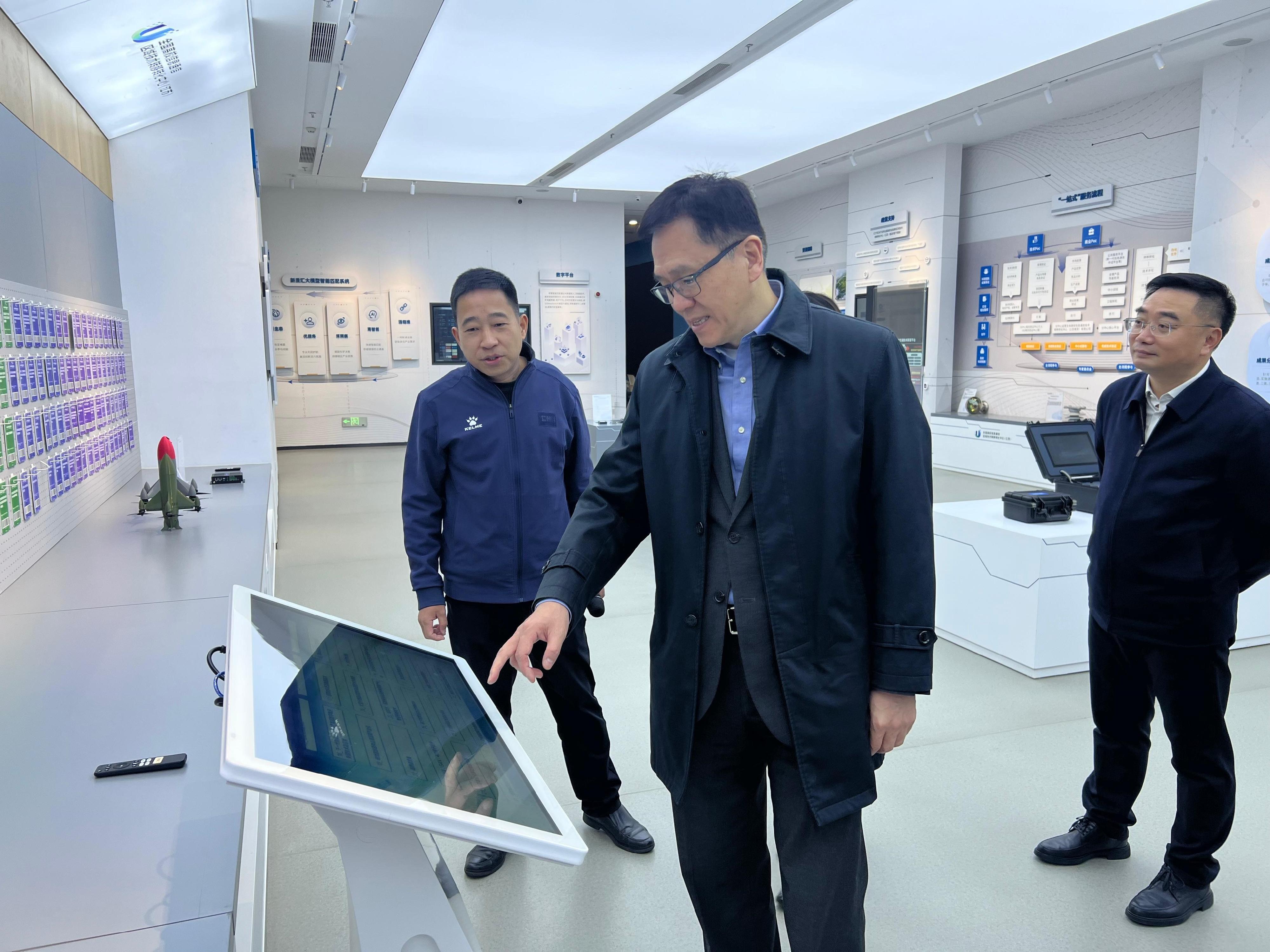
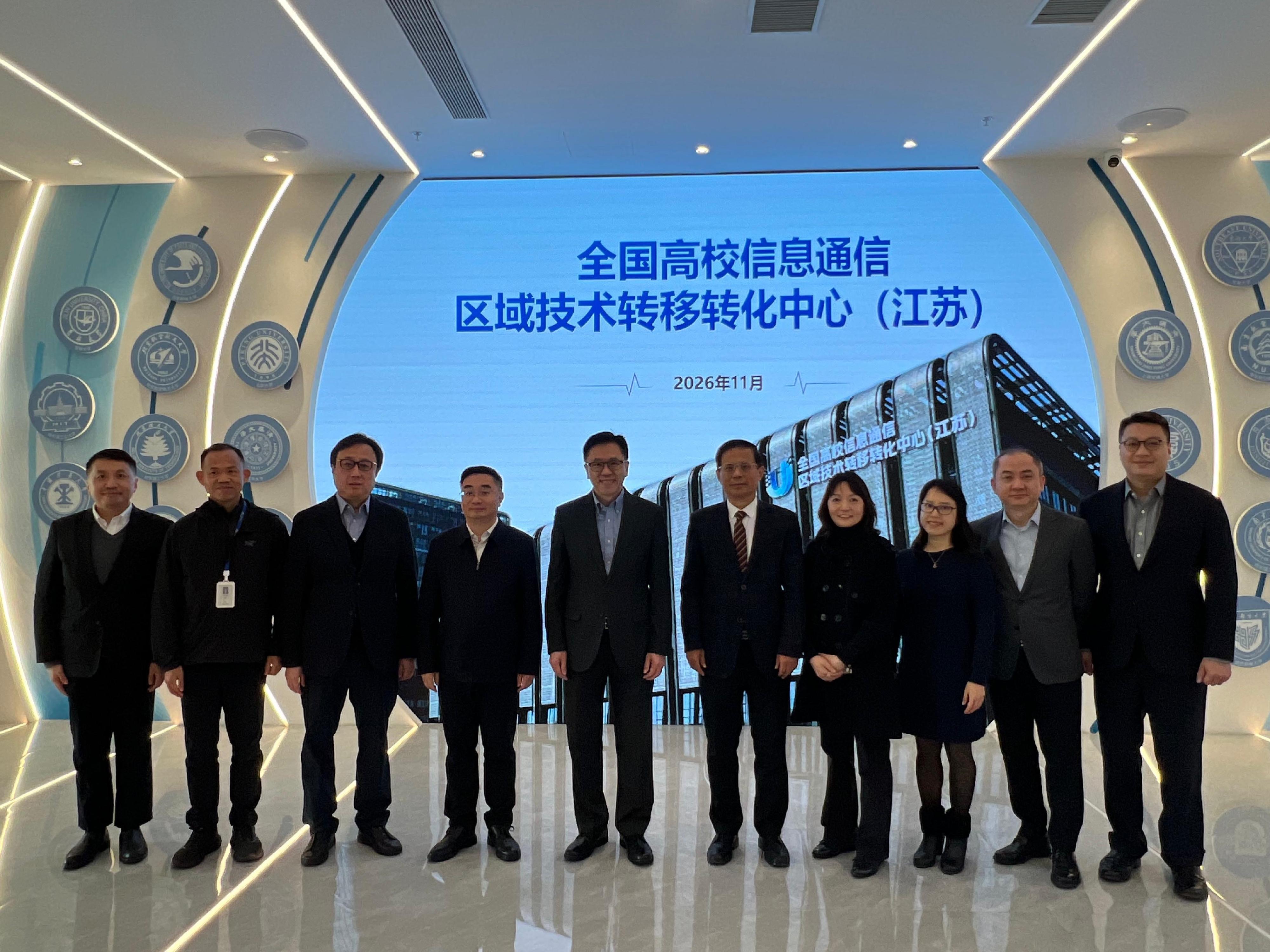
     In the morning, Professor Sun visited the Regional University-Industry Technology Transfer Center for Information and Communication (Jiangsu) and was briefed on the Center’s experience in institutional innovation, talent development, industry-academia-research planning, transformation of research outcomes, project incubation and regulatory framework matters. Focusing on areas including information and communications, future networks and integrated circuits, the Center serves as a full-chain support system and one-stop public platform for transferring university research outcomes in the information and communications field. He also toured the “New Quality Hub” which is a tangible technology transfer platform built upon the Center.
 
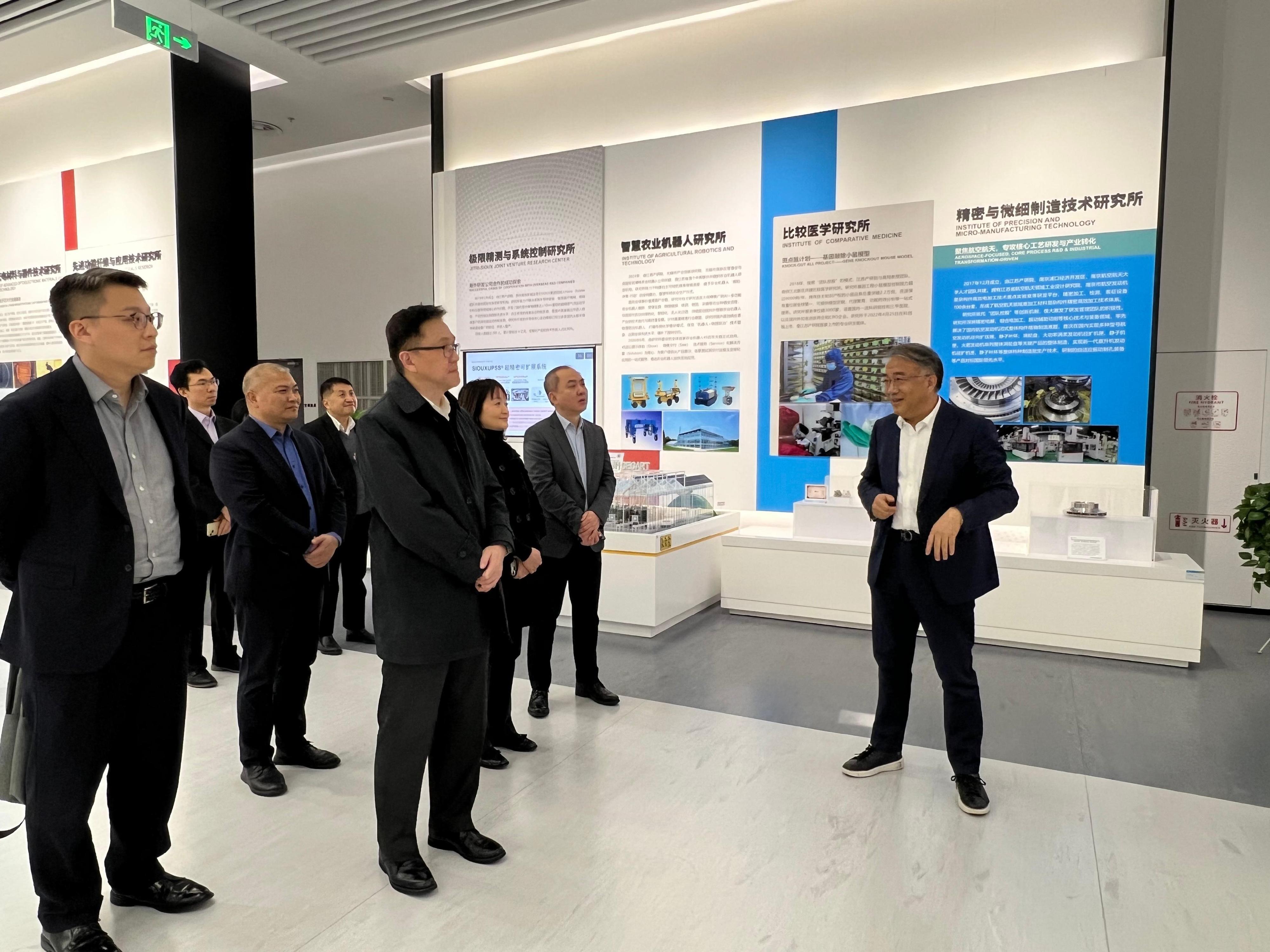
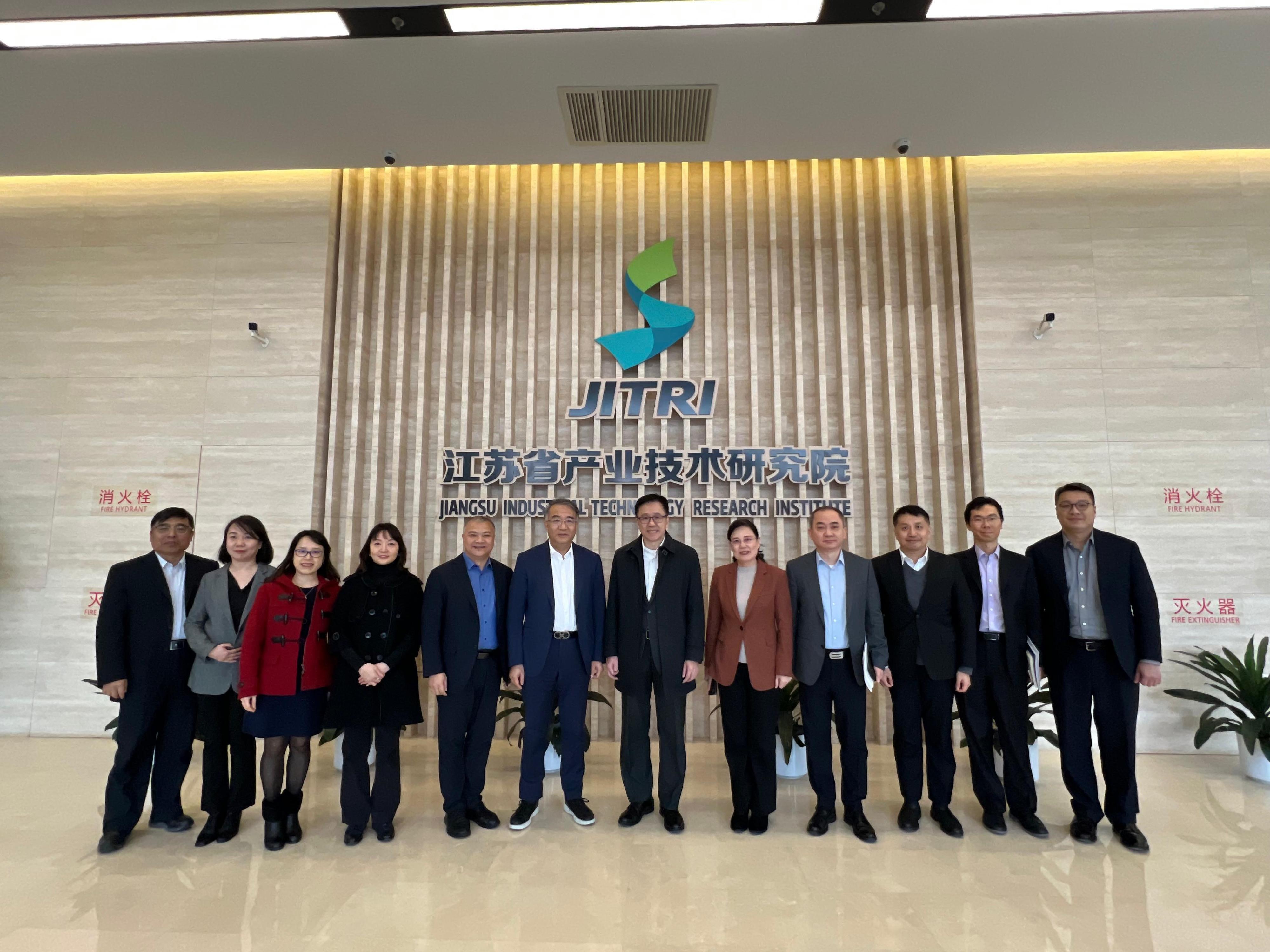
     He also visited the Jiangsu Industrial Technology Research Institute, where he was briefed on the Institute’s development goals and positioning, innovation system, resource integration, research and development (R&D) infrastructure, and efforts to align with technical requirements. The Institute focuses on the critical nexus of scientific research and technological transformation, providing ongoing technical support and platforms for industrial transformation, upgrading and future industrial development in Jiangsu. Furthermore, he learned about the initiatives and achievements of the National Innovation Center par Excellence in fostering the deep integration of innovation and industry chains across the Yangtze River Delta region, as well as its collaborations and project cases with Hong Kong’s higher education institutions. 
 
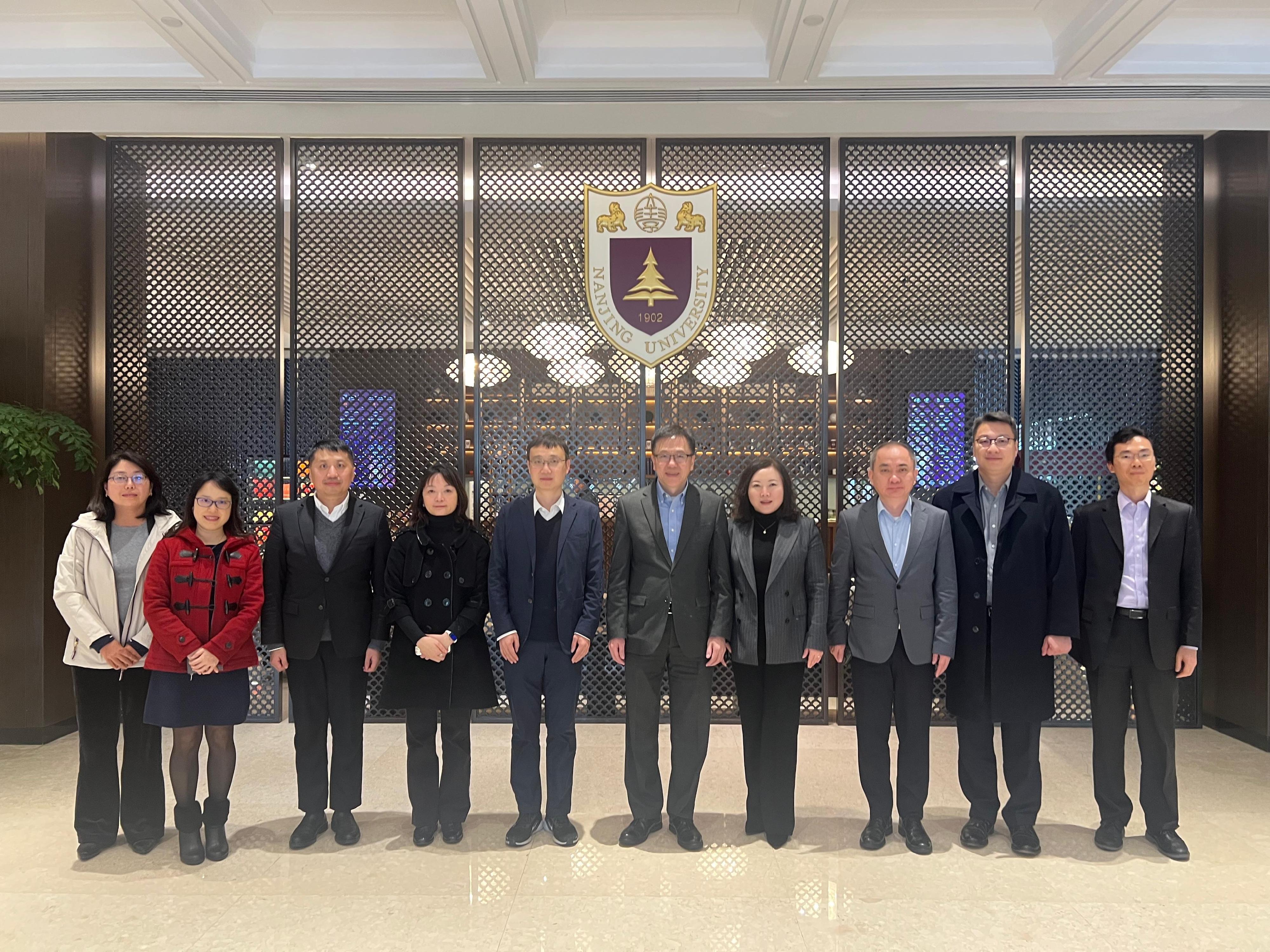
     Professor Sun visited Nanjing University and Southeast University (SEU), which are national key comprehensive universities administered directly by the Ministry of Education and co-developed with the Jiangsu Provincial People’s Government. Professor Sun met with the Chair of the Nanjing University CPC Council, Mr Tan Tieniu, and engaged in detailed discussions with the university management on talent development, co-creation of science and innovation, and the commercialisation of research outcomes.
 
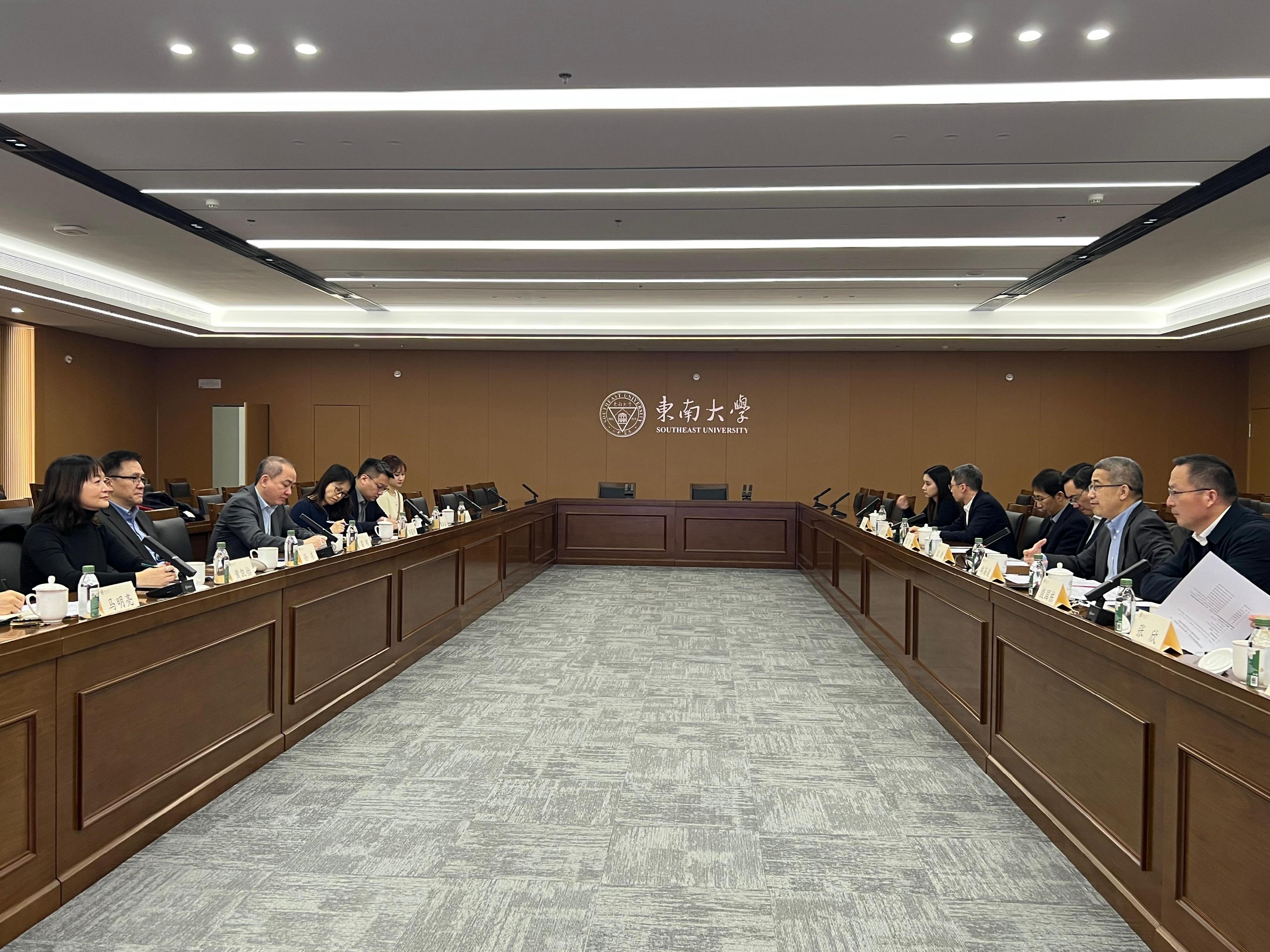
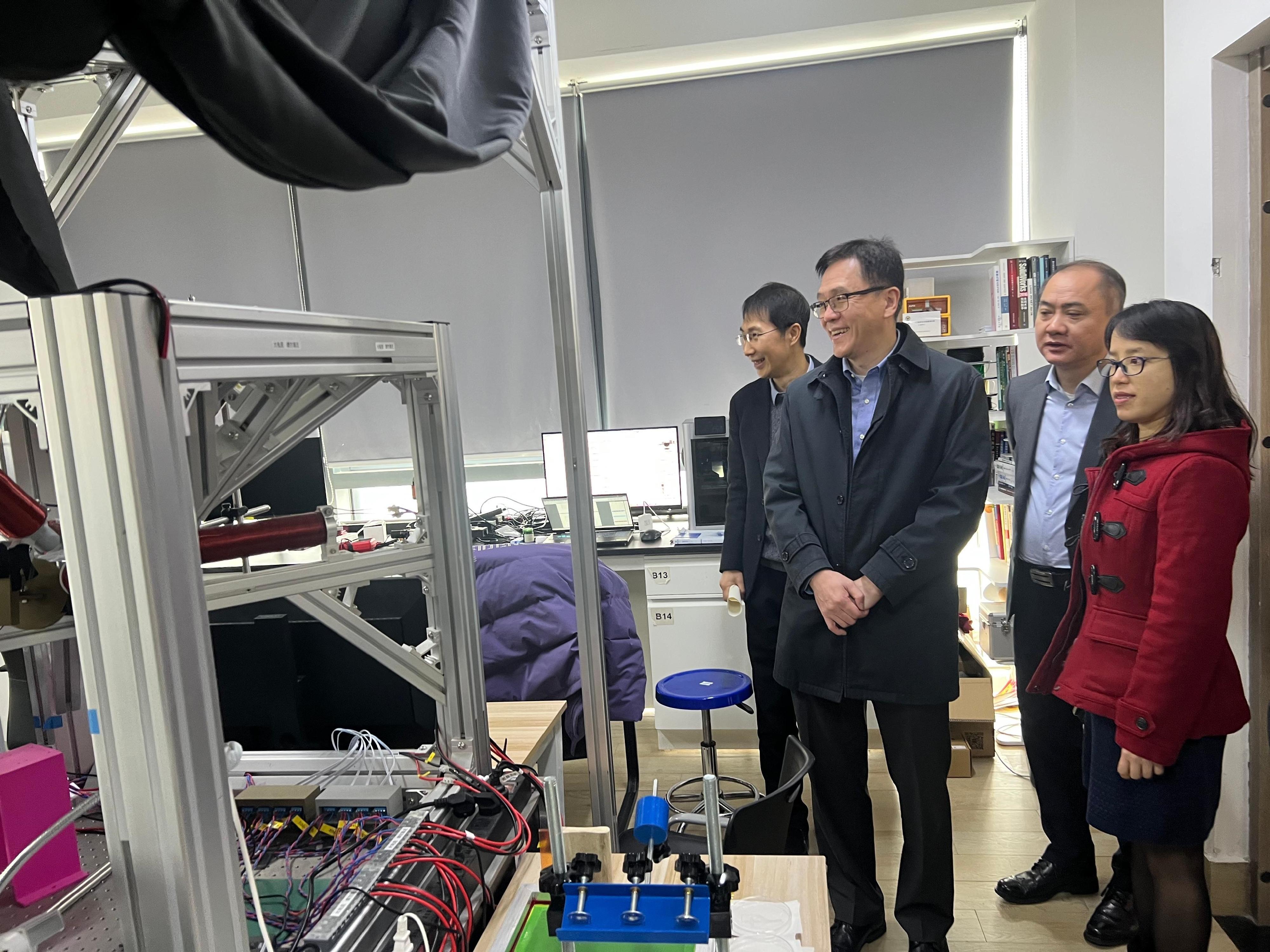
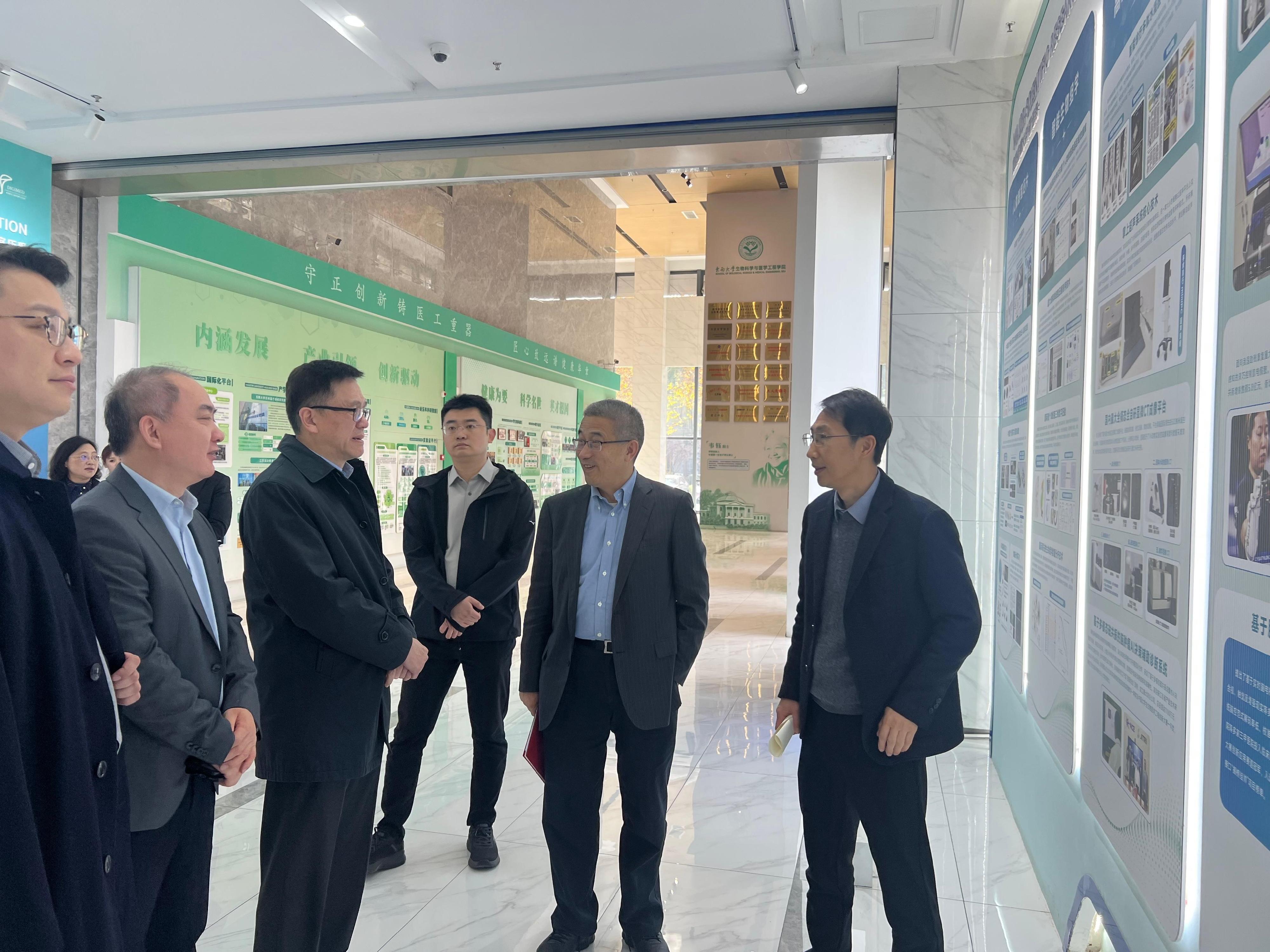
     He also visited SEU and was briefed by Vice President Mr Qiu Haibo on the university’s strategic planning, advancements at the scientific frontier, transfer of research outcomes and international partnerships. He also toured the State Key Laboratory of Digital Medical Engineering and the Jiangsu Key Laboratory for Biomaterials and Devices. He expressed hope that institutions in the Mainland and Hong Kong would further deepen their synergy in industry-academia-research innovation by building collaborative platforms in Hong Kong.
 
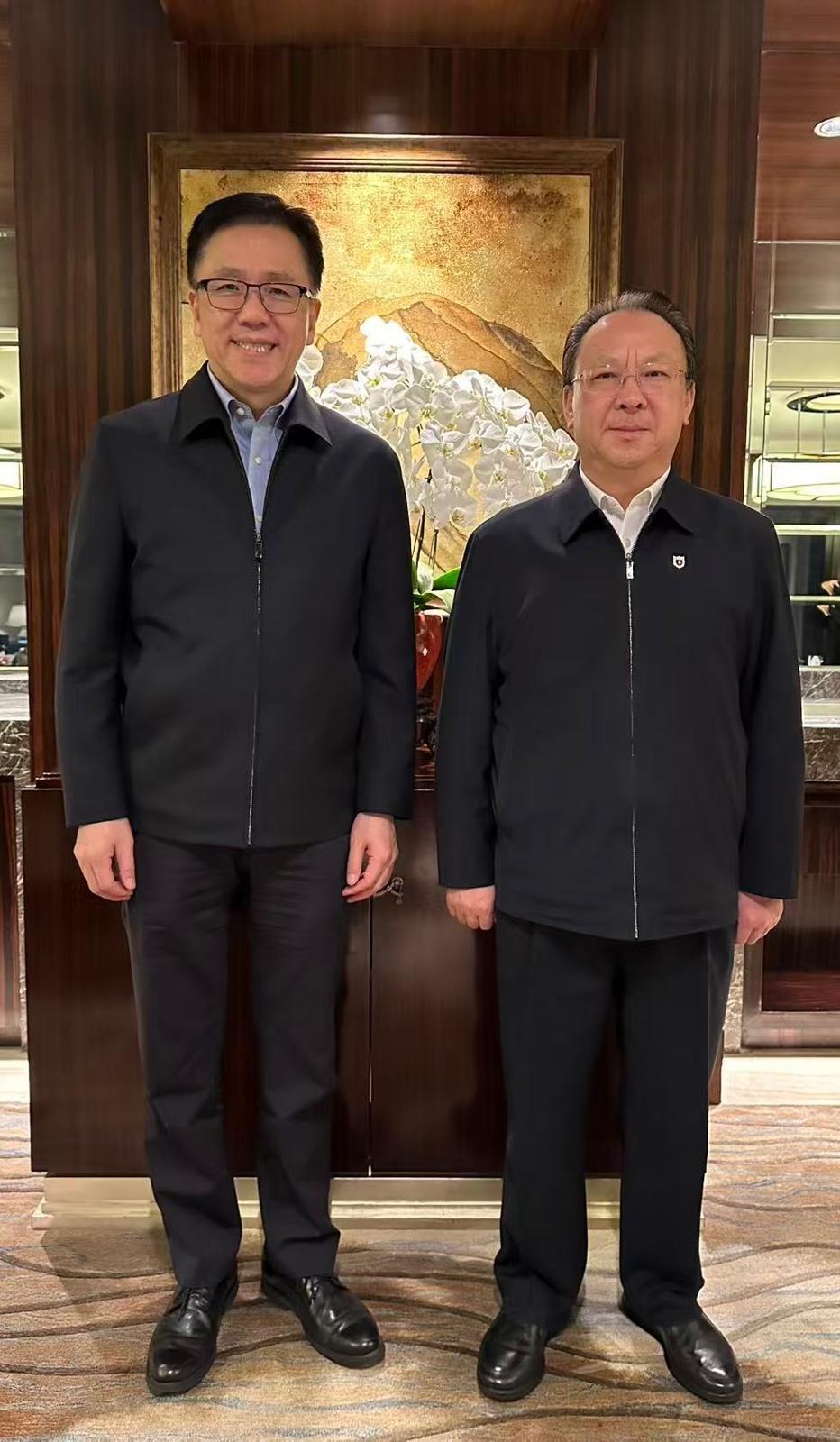
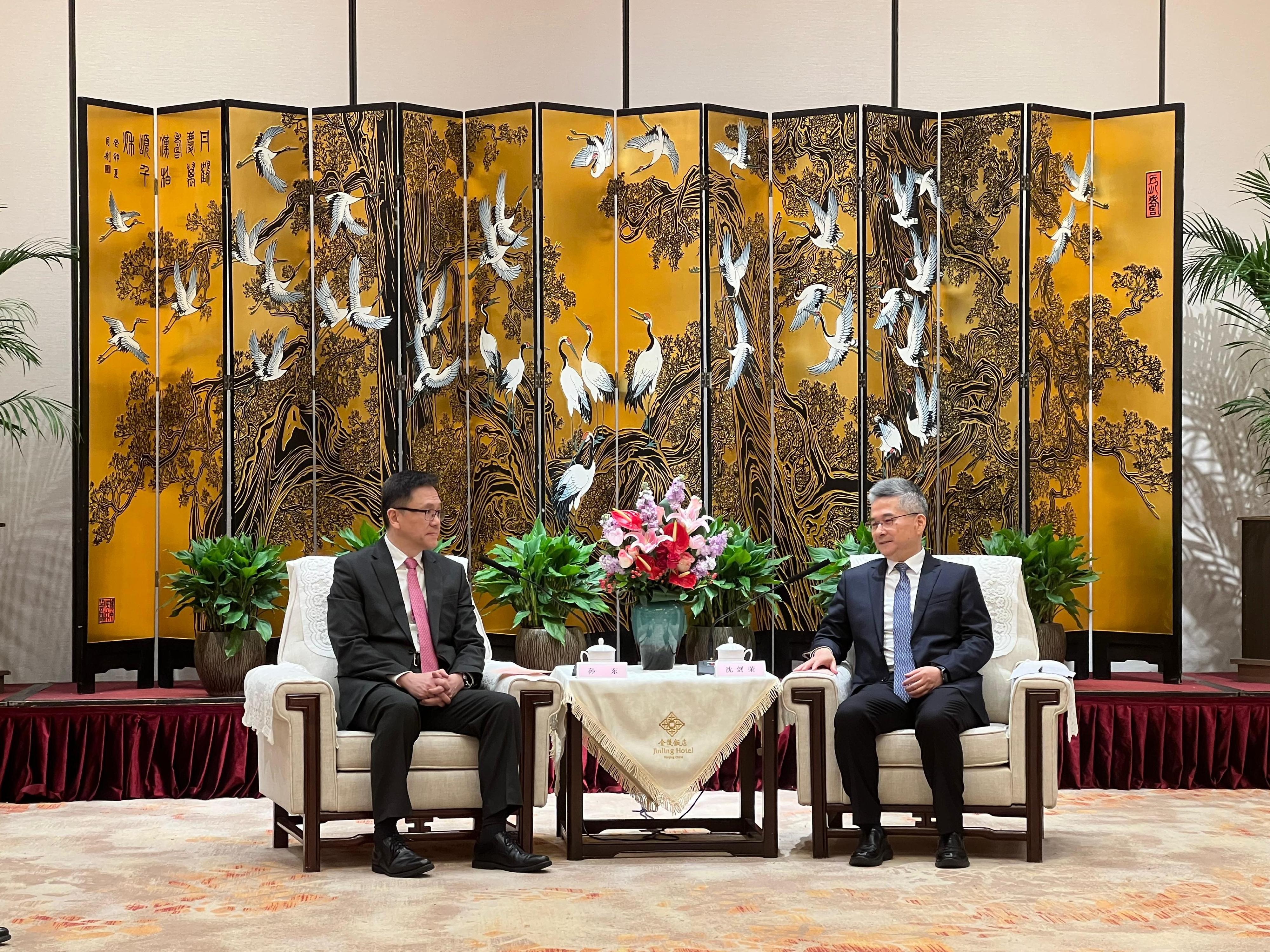
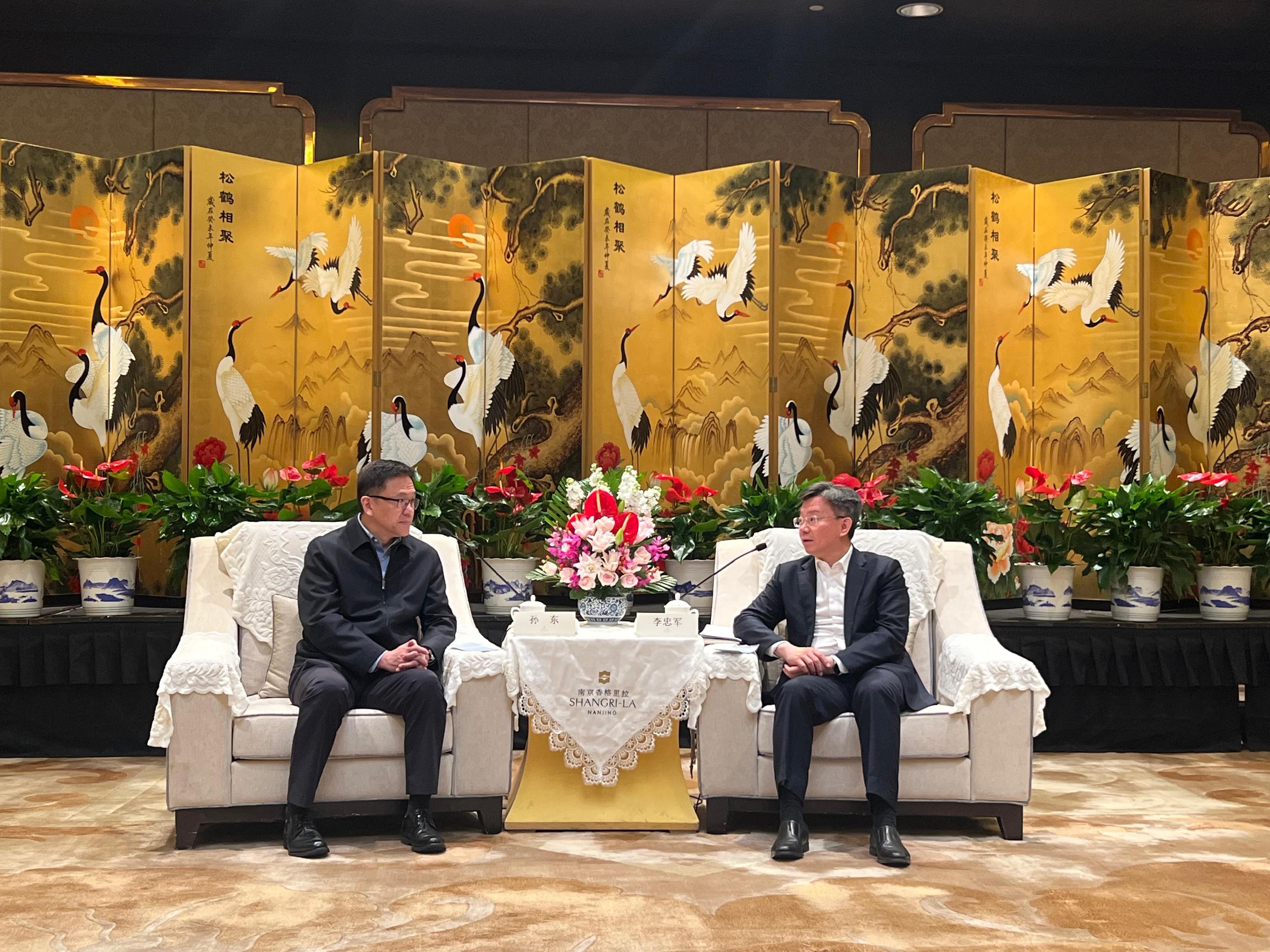
     Professor Sun also called on Vice Governor of Jiangsu Province Mr Shen Jianrong and the Mayor of Nanjing, Mr Li Zhongjun, respectively, to exchange views on promoting the matching of innovation and industrial resources between Hong Kong, Jiangsu Province and Nanjing City. He also learned about the experiences of Jiangsu Province and Nanjing City in promoting the deep integration of industry-academia-research, and expediting the commercialisation of R&D outcomes to empower the development of the real economy.
 
     Professor Sun said that the First Five-Year Plan for Economic and Social Development of the Hong Kong Special Administrative Region (2026-2030), sets out a comprehensive and forward-looking plan for the overall innovation and technology (I&T) development of Hong Kong. It promulgates to advance the development of the new “three major I&T parks and five key R&D institutions” paradigm to improve the layout of Hong Kong’s public research system and the efficacy of its I&T framework. The plan also proposes to consolidate and enhance the “dual base” advantage of the State Key Laboratories in Hong Kong and the InnoHK Research Clusters, striving to achieve greater scientific breakthroughs in technologies and areas pertaining to the core needs of the country. The experience of Jiangsu Province in integrating the industry-academia-research resources and the transfer of R&D outcomes provides a pragmatic reference for Hong Kong’s key development in high-tech industries. Professor Sun said that he looks forward to further strengthening exchanges and co-operation with Jiangsu Province and Nanjing City in the fields of I&T, R&D and talent, thereby injecting new impetus into Hong Kong’s long-term co-operation with Jiangsu and Nanjing.
 
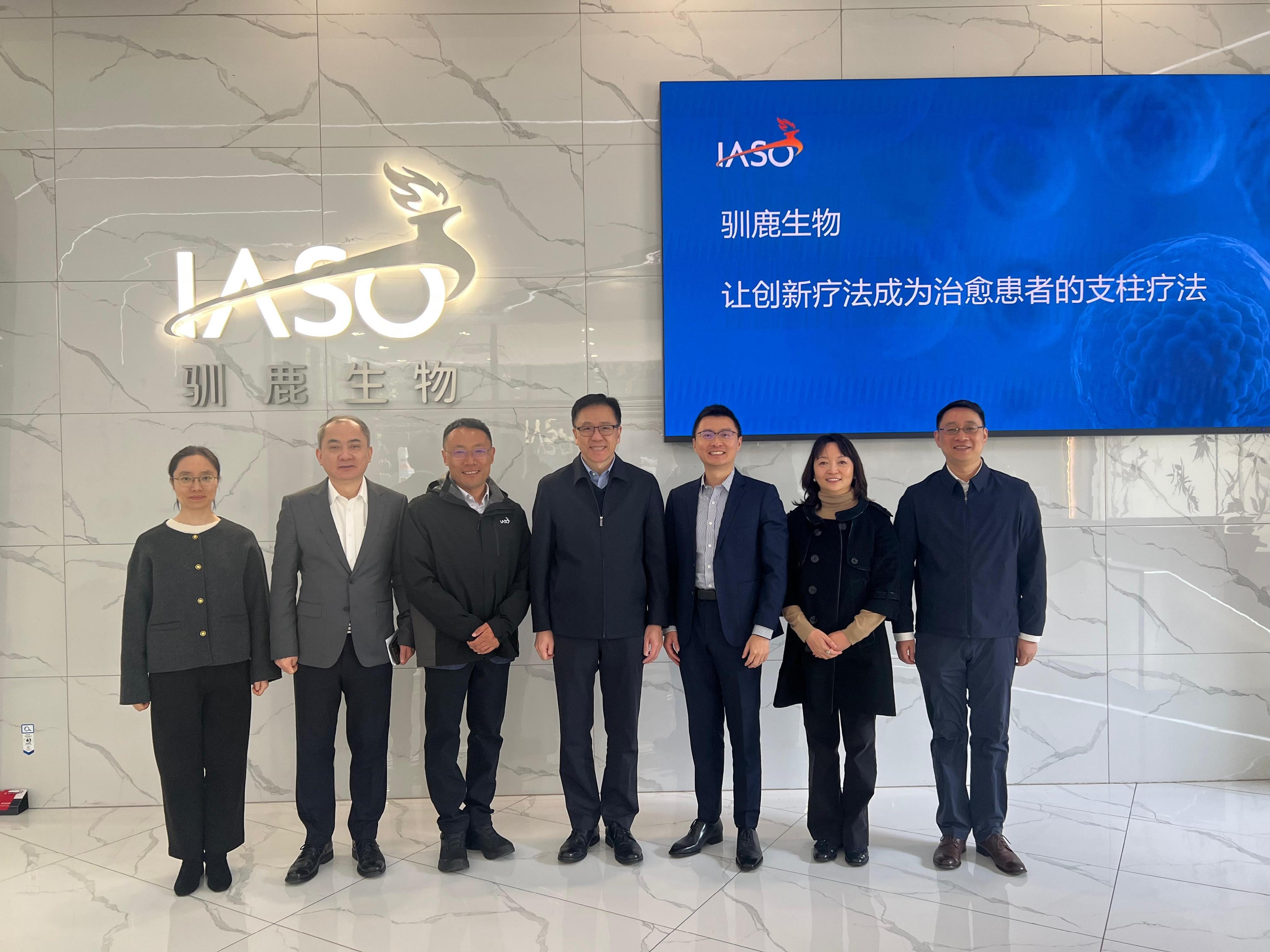
     This morning (November 25), Professor Sun visited IASO Bio, where he was briefed on the biopharmaceutical enterprise’s business development and latest technologies specialising in R&D, production and commercialisation of cell and gene therapies, and antibody drugs for haematologic malignancies and autoimmune diseases, and its plan of going global. He also encouraged the enterprise to use Hong Kong as a platform to expand businesses.
 
     The Commissioner for Industry (Innovation and Technology), Dr Ge Ming, also joined the visit.
 
     Professor Sun departed for Hefei this afternoon to continue his visit and will cochair the 20th meeting of the Mainland/Hong Kong Science and Technology Co-operation Committee with the Ministry of Science and Technology tomorrow.

Photo  Photo  Photo  Photo  Photo  Photo  Photo  Photo  Photo  Photo  Photo  Photo  
read more

Communications Authority grants consent to HKT to cease its 3G services

     The Office of the Communications Authority (OFCA) announced today (November 25) the Communications Authority (CA)’s decision to grant prior consent to Hong Kong Telecommunications (HKT) Limited (HKT) for its application to cease the provision of third generation mobile (3G) services on February 25, 2027.
 
     Having considered various relevant factors, the CA approved the application pursuant to Special Condition 10.4 of HKT’s Unified Carrier Licence. These include the low proportion of customers affected (including customers who are still using 3G handsets/devices and those using older models of 4G handsets/devices that only support the older version of VoLTE (Note) technology), and HKT’s provision of support services for the affected customers such as offers to replace handsets/devices. For customers who choose not to replace their handsets/devices and not to continue the services, HKT will make reasonable service termination arrangements and provide them with sufficient advance notification and customer service support. Moreover, the CA has required HKT to maintain satisfactory 3G services until the scheduled service cessation date.
 
     Affected customers may refer to the relevant press release issued by HKT today or contact the company for details of the arrangements.
 
     With the phased shutdown of 3G mobile networks by individual mobile network operators, OFCA takes this opportunity to remind customers of 3G services, and those who are still using 3G handsets/devices and older models of 4G handsets, to upgrade their service plans and handsets/devices. In addition, OFCA encourages members of the public to assist their family and friends, especially the elderly, in upgrading their services and/or replacing handsets in order to experience better service quality and more advanced and diversified features provided by the newer generations of mobile services.
 
     At present, 4G and 5G services are the mainstream mobile services globally, and the 6G era will arrive in a few years. Over 99 per cent of mobile service users in Hong Kong are enjoying a mobile experience supported by 4G or 5G technologies. The Chief Executive’s 2026 Policy Address announced that the Government will expedite the advancement of communications technologies and phase out existing 3G mobile networks in an orderly manner, so that the vacated radio spectrum can be better utilised in support of the development of newer generations of mobile technologies with focused resources, thereby benefiting the overall communications and economic development of Hong Kong.
 
Note: VoLTE, Voice over Long Term Evolution (LTE), is a technical standard for making voice calls over 4G or 5G networks instead of using older 2G or 3G networks.  read more

LCQ19: Measures to support persons in custody and rehabilitated persons

     Following is a question by Hon Judy Chan and a written reply by the Secretary for Security, Mr Tang Ping-keung, in the Legislative Council today (November 25):
 
Question:
 
     There are views that rehabilitation is crucial to maintaining social harmony and stability. The Government needs to continuously strengthen and adjust the relevant support policies in response to changes in the workplace environment and new challenges in social adaptation. In this connection, will the Government inform this Council:
 
(1) of the average annual number of persons in custody and rehabilitated persons for whom the Correctional Services Department provided vocational training courses in the past five years, as well as the total number of trades covered and enrolment figures; given the widespread application of artificial intelligence (AI) and automation technologies across various industries, whether the authorities have introduced training programmes incorporating AI applications, online operations or digital skills in recent years; if so, of their scope, the number of beneficiaries and the details of the recognised qualifications obtained; if not, the reasons for that;
 
(2) of the overall number of persons in custody who participated in various academic and post-secondary education programmes (including the Hong Kong Diploma of Secondary Education Examination, distance-learning programmes for tertiary education, as well as the Diploma of Applied Education and Associate Degree programmes of the Ethics College), the total number of subjects entered for examination, pass rates and graduation situations in the past five years;
 
(3) of the effectiveness of Project JET and the Caring Employer Scheme since their respective launches in 2022 and 2025 up to the third quarter of this year; the cumulative number of commercial organisations that have participated in these schemes since their commencement, and the total number of rehabilitated persons who have been successfully matched with employment; and
 
(4) of the cumulative number of participating organisations, the number of beneficiaries and the number of referral cases since the implementation of the “Rehabilitation Partners” Award Scheme, various innovative dedicated services (such as the “Companion Programme”, Multi-purpose Family and Rehabilitation Service Centres and Rehabilitation Dog Services) and Project ReAch up to the present respectively; the new measures to be taken by the Government in the future to deepen cross-sector collaboration, promote public education and facilitate the business sector in providing diversified opportunities?
 
Reply:
 
President,
 
     The Correctional Services Department (CSD) is committed to ensuring a secure, safe, humane, decent and healthy custodial environment, and provides persons in custody (PICs) with appropriate rehabilitation services. In recent years, the CSD has been enhancing its institutional rehabilitation programmes by offering diversified and up-to-date education, training and employment assistance, etc., in order to strengthen PICs’ ability to pursue further studies and employment, enhance psychological support for them, as well as to help them re-establish positive values. At the same time, by providing comprehensive post-release supervision services and by collaborating with stakeholders from various sectors of the community, the CSD strives to help PICs and rehabilitated persons turn over a new leaf and reintegrate into society after release.
 
     The reply to the questions raised by the Hon Judy Chan is as follows:
 
(1) On vocational training, the CSD provides 13 market-oriented vocational training courses for young PICs, covering application of information technology, creative multimedia technology, etc.; and over 40 vocational training courses with a total of more than 1 800 training places each year, for voluntary enrolment by lawfully residing adult PICs who are due for discharge within 24 months and eligible for employment. All the above courses are co-organised with local training bodies, and are recognised under the Hong Kong Qualifications Framework or accredited by the market, which facilitate the employment of PICs and enable them to enrol in bridging or progressive courses after release.
 
     To make more choices available for PICs, the CSD has launched some courses on skills and technologies aligned with labour market trends in recent years, including the Foundation Certificate in Internet Business Start-up (Operation and Marketing), Certificate in Artificial Intelligence (AI) Knowledge and Applications, 3D Design and Printing Course, Virtual Reality Interior Design Course and Diploma in Practical Graphic Design. In addition, the department has progressively introduced the Smart Logistics Management Training Course and the Smart Retail Management Training Course, both of which incorporate AI application elements, to help PICs obtain recognised qualifications. It is expected that these two courses will have their respective first cohort of PIC graduates in late 2026.

(2) On education for PICs, the CSD arranges for qualified teachers to conduct educational courses of junior to senior secondary level for young PICs under the age of 21, and assists them to sit for the Hong Kong Diploma of Secondary Education Examination (HKDSE). From 2021 to 2025, a total of 64 young PICs sat for the HKDSE. The respective numbers of PIC candidates, numbers of subjects taken and passing rates are tabulated below:
 

  2021 2022 2023 2024 2025
No. of PIC candidates* 7 12 18 14 20
No. of subjects taken 37 65 106 86 100
Passing rate 75.7% 75.4% 78.3% 93.0% 92.0%

*Note: Seven of the PIC candidates sat for the HKDSE twice within these five years.

     The CSD has also signed Memoranda of Understanding with the Hong Kong Metropolitan University and the eight University Grants Committee-funded universities respectively, to provide comprehensive support, including the provision of grants, credit transfers and programme articulation, for PICs who are studying tertiary programmes. Besides, having regard to the wishes of PICs, the CSD will contact their tertiary institutions for suitable modes of study and learning materials, so that they can continue to study the relevant programmes via distance learning at correctional institutions. From 2021 to 2025, 44 adult PICs obtained in total 47 degrees through studying relevant distance-learning programmes with the support of the CSD, with annual breakdown tabulated as follows:
 
  2021 2022 2023 2024 2025
Bachelor’s degree 5 5 8 11 15
Master’s degree  /  / 1  / 1
Doctoral degree  /  /  / 1  /

     To further assist PICs in their rehabilitation, the CSD established the Ethics College at Pak Sha Wan Correctional Institution and Lo Wu Correctional Institution in October 2023 to provide a one-year full-time Diploma of Applied Education (DAE) programme for voluntary enrolment by adult PICs. The Ethics College has subsequently been extended to Pik Uk Prison. Since September 2024, the College has further provided a two-year full-time Associate of General Studies (AGS) programme and a half-day AGS programme, and since September 2026, a one-year full-time Bachelor of General Studies programme has been offered. Numbers of enrolment in the Ethics College between 2023 and 2025 are tabulated as follows:
 
  2023 2024 2025
One-year full-time DAE programme 75 75 75
Two-year full-time AGS programme  / 15 14
Half-day AGS programme  / 25 19

     As at 2025, a total of 150 PICs successfully completed the DAE programme offered by the Ethics College.
 
(3) On employment assistance, the CSD launched Project JET in late October 2022 to provide “one-stop” training, matching and career development opportunities for PICs in collaboration with various enterprises and organisations. As at the end of October 2026, 63 organisations from different sectors, including public utilities and large corporations, have participated in the above project, with a total of 92 rehabilitated persons having been offered employment so far.
 
     Besides, the CSD maintains close contact and co-operation with the business sector and relevant trade associations to promote the “Caring Employer” Scheme, which provides an interactive job-matching platform for potential employers and rehabilitated persons. Job vacancies from potential employers and the latest employment information are regularly disseminated to correctional institutions and supervising sections/units for onward dissemination to PICs and rehabilitated persons. From 2021 to 2025, over 4 500 job vacancies were provided by more than 450 employers for application by PICs. Three hundred and forty two PICs were offered employment during incarceration under the Scheme; meanwhile, most rehabilitated persons were only offered employment under the Scheme after being released from the institutions, and the CSD does not maintain the relevant statistics.
 
(4) Apart from vocational training, education and employment assistance, the CSD also provides a variety of diversified rehabilitation programmes and services, including psychological counselling, post‑release rehabilitation programmes and support for family reconciliation, etc. At the same time, the CSD has been making its best endeavours to establish close partnerships with organisations and individuals from various sectors of the community, encouraging them to become Rehabilitation Partners and support rehabilitation work. 
 
     Held on a biennial basis, the Rehabilitation Partners Award Scheme aims to recognise community stakeholders who have provided employment, rehabilitation services or donations for PICs during each two-year term. In the last two-year term (i.e. between 2024 and 2025), a total of 187 organisations and individuals became Rehabilitation Partners, with more than 40 000 benefited from the services provided. Besides, the Multi-purpose Family and Rehabilitation Service Centres, the Rehabilitation Dog Services, the Companion Programme for inmates of drug addiction treatment centres and the Continuing Care Project for supervisees altogether served a total of over 12 500 beneficiaries from 2024 to 2025.
      
     Looking forward, the CSD will continue to review and enhance various rehabilitation services and programmes from time to time in light of social changes and needs. By upholding the spirit of adopting a people-oriented approach, the CSD will establish close partnerships with non-governmental organisations, charitable institutions, commercial organisations, post-secondary institutions, etc., pooling resources from various sectors of the community to proactively promote rehabilitation work in the community and disseminate messages of supporting offender rehabilitation to the public. read more
LCQ4: Deepening and promoting patriotic education

     ​Following is a question by the Hon Andrew Fan and a reply by the Acting Secretary for Constitutional and Mainland Affairs, Mr Clement Woo, in the Legislative Council today (November 25):
      
Question:

     The Hong Kong Special Administrative Region (HKSAR) Government indicated that it has attached great importance to the promotion of patriotic education, and both the First Five-Year Plan for Economic and Social Development of the Hong Kong Special Administrative Region (2026-2030) (Hong Kong’s First Five-Year Plan) and the 2026 Policy Address emphasise the need to deepen and promote patriotic education. In this connection, will the Government inform this Council:

(1) whether it has compiled statistics on the total number of patriotic education activities organised by community groups over the past two years, together with a breakdown of the number of participants by target group (e.g. students, teachers and members of the general public); if the relevant data are not maintained, whether the authorities will systematically collect and compile such statistics in the future;

(2) whether it will consider establishing, through the Working Group on Patriotic Education, a unified accreditation or thematic logo for various patriotic education activities organised by official bodies and community groups, so as to highlight the patriotic education elements of the activities and, at the same time, enhance the quality of community patriotic activities; and

(3) given that Hong Kong’s First Five-Year Plan emphasises the need to deepen patriotic education, of the systematic planning the authorities have in place for the relevant work over the next five years, and whether more diversified modes will be adopted, such as providing matching funds for activity organisers, so as to encourage community groups to organise patriotic education activities on their own initiative?

Reply:

President,

     The Hong Kong Special Administrative Region (HKSAR) Government attaches great importance to the promotion of patriotic education, and endeavours to build in the HKSAR mainstream values characterised by patriotism with affection for our country and Hong Kong and in conformity with the principle of “one country, two systems”. In April 2024, the HKSAR Government formally established the Working Group on Patriotic Education (Working Group) under the Constitution and Basic Law Promotion Steering Committee, led by the Chief Secretary for Administration. The Working Group is responsible for co-ordinating the work of government departments and non-governmental organisations in taking forward patriotic education. Over the past two years, by making suitable adjustments having regard to the actual circumstances of Hong Kong, the HKSAR Government has consistently dovetailed with the spirit of the Patriotic Education Law of the People’s Republic of China in formulating short-, mid- and long-term strategies. Leveraging significant historical milestones and events, the Working Group has strengthened patriotic education in an all-round manner. Our overall objective is to build in Hong Kong mainstream values anchored in patriotism with affection for our country and Hong Kong, thereby enabling the spirit of patriotism to take root in society and people’s heart, so that members of the public will proactively and consciously safeguard national sovereignty, unity and territorial integrity.

     Patriotism is a spontaneous emotion that comes from the heart. We encourage community groups to organise more high-quality and socially impactful activities with the support and assistance of the Government, so as to foster a strong patriotic and Hong Kong-loving atmosphere in society. In consultation with the relevant bureaux and departments, the consolidated reply to the questions raised by the Hon Andrew Fan is as follows:

(1) The HKSAR Government has been strongly encouraging and supporting community groups in organising patriotic education activities of diverse subjects and formats, such as commemorative or celebration activities on significant historical milestones and on festivals, thematic learning activities, visits to exhibitions with elements of patriotic education, and activities for promoting the understanding of Chinese culture. With the positive response from the community groups, a stronger patriotic atmosphere and a heightened sense of national identity have been fostered in the community. The number of community-led patriotic education activities subsidised by policy bureaux under various funding schemes over the past two years and the number of participants are set out in the Annex. We do not maintain statistics on self-initiated activities organised by community groups without applying for government funding.

(2) Patriotic education activities cover a wide range of topics and formats. Community groups may, having regard to local conditions and circumstances, flexibly adopt different approaches to organise diverse, creative, and life-related patriotic education activities in the community or at different levels to meet the needs of different target audiences and groups. If a unified accreditation or thematic logo is established, such activities would be required to meet specific assessment criteria, and organisers would have to spend time and resources to handle application procedures. This may undermine the creativity, spontaneity, and flexibility of the activities, and thus may not be most conducive to promoting patriotic education in an all-round manner. Therefore, we are of the view that at the present stage, there is no need to establish a unified accreditation or thematic logo for patriotic education activities.    

     Nevertheless, government-funded activities organised by community groups are currently required to display the logo of “Government-funded Programme” on their promotional materials, so that the public are able to recognise that they are supported and endorsed by the Government. 

(3) The First Five-Year Plan for Economic and Social Development of the Hong Kong Special Administrative Region (2026-2030) clearly states that the Government will deepen patriotic education, national education, national security education, and values education, and integrate them into daily teaching, with a view to nurturing a new generation with both virtue and ability, an affection for our country and Hong Kong, cultural confidence, proper values, and a global perspective.

     To achieve the aforementioned objectives, the Chief Executive has proposed a number of measures in his 2026 Policy Address, which include making good use of the Mainland’s resources to deliver multi-faceted and content-rich exchange and internship activities for students and young people, and listing the Yan’an Revolutionary Memorial Hall in Shaanxi Province as the second patriotic education base for the youth of the HKSAR in the Mainland; extending the promotion of activities for the Constitution and Basic Law Student Ambassadors Training Scheme to all publicly-funded primary and secondary schools; supporting clansmen associations for organising more activities; planning the establishment of a museum in Kwu Tung North to showcase the development and achievements of our country. Relevant policy bureaux and departments will also continue to enhance ongoing medium- and long-term policy measures. 

     In the coming year, we will also capitalise on the opportunities presented by the 90th anniversary of the victory of the Long March of the Chinese Workers’ and Peasants’ Red Army, the 30th anniversary of Hong Kong’s return to the Motherland, and the participation of Hong Kong’s payload expert in the Shenzhou-23 manned spaceflight mission to continuously deepen national identity across society and strengthen affection for the country and Hong Kong through a diverse range of activities and means.

     Currently, different policy bureaux and departments have set up various funding schemes to sponsor local community groups and non-governmental organisations in organising diverse promotional and publicity activities on different topics, with a view to enhancing the sense of national identity and patriotic sentiments of the general public. Examples of these schemes include the Community Participation Scheme, the Funding Scheme for Youth Exchange in the Mainland, the funding scheme for youth uniformed groups to promote patriotic education, and the Clansmen Culture Promotion Scheme by the Home and Youth Affairs Bureau, and the Constitution and Basic Law Promotion Activity and Research Sponsorship Scheme by the Constitutional and Mainland Affairs Bureau. The HKSAR Government will review the existing funding and subsidy schemes from time to time to encourage and promote the organisation of more patriotic education activities in diverse ways. 

     Thank you, President. read more