Author Archives: hksar gov

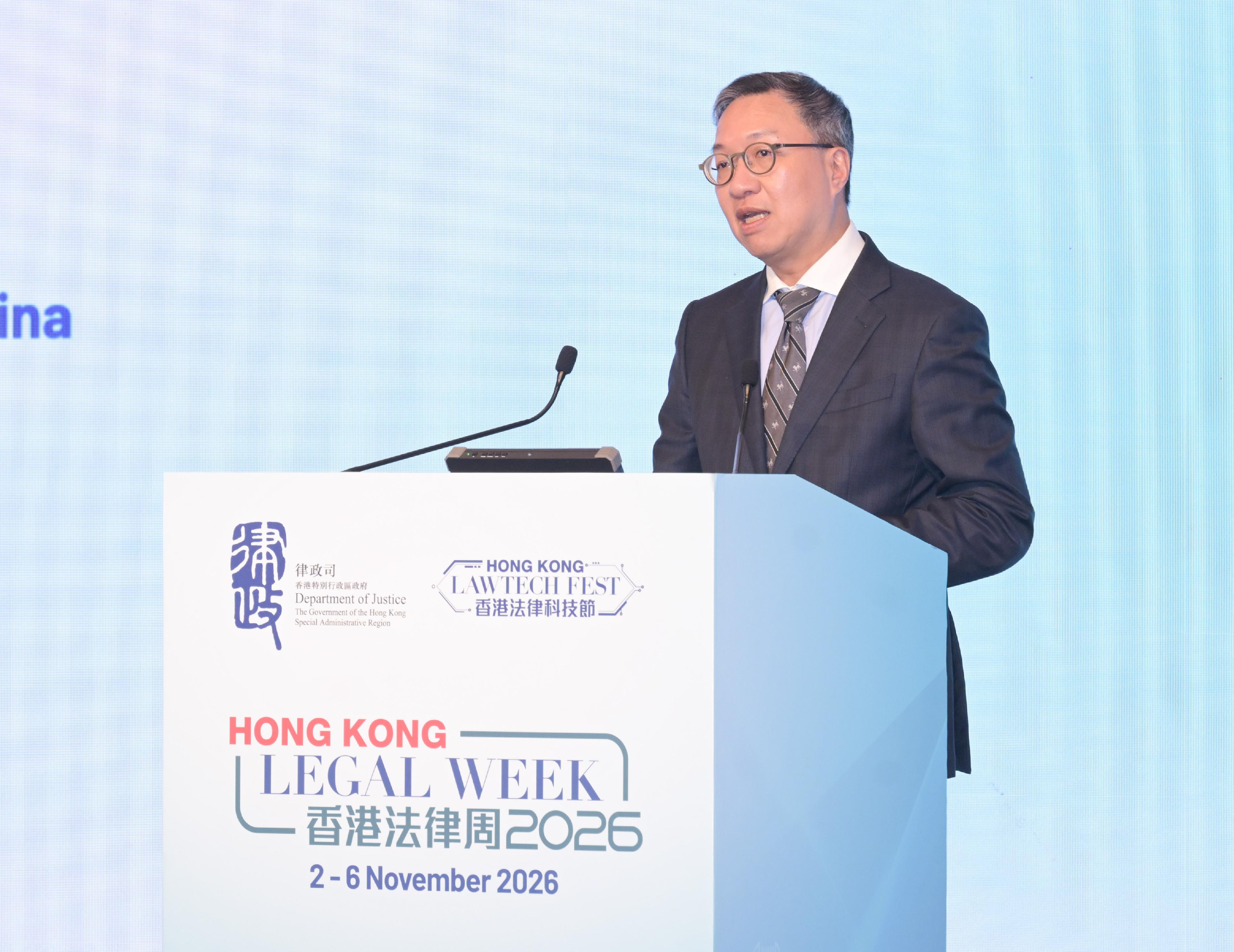
Closing remarks by SJ at Hong Kong Legal Week 2026: The Fourth Legal Forum on Interconnectivity and Development (English only) (with photo)

     Following are the closing remarks by the Secretary for Justice, Mr Paul Lam, SC, at Hong Kong Legal Week 2026: The Fourth Legal Forum on Interconnectivity and Development today (November 5):

Distinguished guests, ladies and gentlemen,

     Let me begin by expressing my sincere gratitude to all of you for participating in the Fourth Legal Forum on Interconnectivity and Development, co-organised by the Office of the Commissioner of the Ministry of Foreign Affairs in the HKSAR (Hong Kong Special Administrative Region) (OCMFA) and the Department of Justice (DoJ) of the HKSAR, with support from the Legal Affairs Department of the Liaison Office of the Central People’s Government in the HKSAR.
       
     This year marks the opening year of the National 15th Five-Year Plan, which has placed significant emphasis on accelerating the development of the system and capacity for the rule of law in foreign affairs, improving mechanisms for international commercial mediation, arbitration, and litigation, and supporting the furtherance of the role of the International Organization for Mediation (IOMed). The National 15th Five-Year Plan also reaffirms the HKSAR’s unique role and strengths, with a clear goal of deepening its development as an international legal and dispute resolution services centre, as well as promoting it as an international hub for high-calibre talent. The unique role and strengths of the HKSAR have been thoroughly discussed and demonstrated by our keynote speakers and panel discussions this morning. 

Deepening its development as an international legal and dispute resolution services centre

     It is worth repeating that the HKSAR is the only common law jurisdiction within China with a robust legal framework and an independent judiciary, and a deep pool of skilled legal professionals. Over the years, we have developed the HKSAR into an international legal and dispute resolution services centre, with diversified and all-round mechanisms for resolving international disputes, including litigation, mediation and arbitration.    

Litigation

     During his keynote speech, the Chief Judge of the High Court, Mr Justice Jeremy Poon, highlighted the significance of international commercial litigation in the HKSAR and shared the latest developments, including the Judiciary’s plan to establish the Hong Kong International Commercial Court (HKICC). Building on Hong Kong’s well-established common law jurisprudence on international commercial law that is highly regarded by the international business community and foreign investors, the establishment of the HKICC represents a timely and effective response to the increasing demand for a specialised judicial platform, dedicated to handling cases involving legal and factual complexities arising from the significant growth in international and cross-border commercial activities in recent years. Capitalising on the international background of its judges who may come from different common law jurisdictions and our efficient litigation procedures, the HKICC can make significant contributions to the development of international commercial law, and further consolidate the international reputation and status of Hong Kong’s common law system.

Mediation and arbitration

     In the “All-Round International Dispute Resolution Hub – Hong Kong” session today, we are privileged to have the Secretary-General of the IOMed, the Chairman of the Hong Kong Mediation Accreditation Association Limited and the Director of the AALCO Hong Kong Regional Arbitration Centre with us. Through the unique lenses of their respective organisations, the distinguished speakers shared their insights and experiences on the topic from the angles of practice in international mediation, resolving investor-state disputes through mediation, as well as pathways and prospects for developing Hong Kong as a sports arbitration centre.  

     Under the HKSAR’s First Five-Year Plan, the HKSAR Government will implement reforms to the mediation regulatory system, with a view to providing more international, inclusive and professional mediation services, and will fully support the IOMed in better fulfilling its role. In this regard, the DoJ aims to implement enhancements to the legal frameworks of mediation in the near future to streamline processes, making them more accessible and user-friendly. As for arbitration, according to a survey by Queen Mary University of London, the HKSAR is one of the most preferred arbitration seats in the world and is the most preferred seat in the Asia-Pacific region. The DoJ will also strive to enhance the arbitration legal framework by amending the Arbitration Ordinance. The consultation in this respect ended last week and my colleagues are finalising the proposed amendments.

     Moreover, the DoJ is in the process of preparing for the construction of the Hong Kong International Legal Service Building to be situated next to the IOMed headquarters, which will provide state-of-the-art facilities and an environment for international legal and dispute resolution services institutions to conduct arbitration, mediation, legal talent exchanges and training, international legal conferences and research.

Nurturing a new generation of legal talent

     For the sustainable development of the HKSAR as an international legal and dispute resolution services centre, ensuring a steady supply of legal talent is critical. The DoJ has been relentless in its efforts to nurture local legal talent through continuous provision of training opportunities, especially in the practice of foreign-related legal affairs.  

     In the “Hong Kong New Generation Legal Roundtable” session of the Legal Forum, participants of the DoJ secondment programmes to international organisations and “Belt and Road” Visits (Belt and Road Visits for Hong Kong Young International Legal Talents), our new generation of legal talent, have shared their invaluable experiences and key learning points from the secondment and visits, and explored the role that young legal talent can play in “Contributing to National Development on Foreign-Related Rule of Law”.

     With the strong support from the Central People’s Government, the DoJ has established secondment arrangements with law-related international organisations, including the Hague Conference on Private International Law, the International Institute for the Unification of Private Law, the United Nations Commission on International Trade Law, the IOMed and the Asian Infrastructure Investment Bank. By participating in the work of such organisations, local legal talent could gain knowledge of the operation of international organisations, broaden their horizons through working with international law experts, and inject a Hong Kong perspective when shaping the development of international law.

     At the same time, the Belt and Road Visits for Hong Kong Young International Legal Talents, jointly organised by the OCMFA and the Hong Kong International Legal Talents Training Academy of the DoJ, allow young legal professionals from Hong Kong to better understand regional legal practices and multilateral co-operation mechanisms, and to experience first-hand the fruitful outcomes of co-operation between China and the countries along the Belt and Road. It is heartening to see the fruits of our capacity-building programmes and I look forward to seeing our new generation of legal professionals taking the available opportunities to explore and learn, using their skills and talents unreservedly in contributing to China’s, including the HKSAR’s, development in foreign-related rule of law.

     Ladies and gentlemen, as President Xi emphasised in the 18th BRICS Summit, “fairness and justice are what people aspire to, and international rules should be written jointly by all nations” (公平正義是人心所向,國際規則應該由各國共同書寫). He urged states to defend the rule of international law, uphold basic principles of international relations such as sovereign equality, non-interference in internal affairs, and peaceful settlement of disputes, and ensure that international law and rules are applied equally without double standards. At a time when geopolitical tensions and strains in economic and trade relations from unilateralism and protectionism appear to dominate world news headlines, China stands firm in its commitment to revitalising multilateralism and advancing foreign-related rule of law as a means to effectively respond to international conflicts and emerging global challenges and risks.  

     In keeping with this spirit, we will continue our ongoing efforts to reinforce the HKSAR’s role as a leading international legal and dispute resolution services centre and capacity building hub, ensuring that our institutions advance with the times to meet ever-changing needs. May we all work together to chart a course towards a harmonious world based on shared values, where differences and disputes can be resolved and settled through open dialogue and in a rule-based and peaceful manner.

     Last but not least, I wish to extend my heartfelt gratitude to all the speakers and participants who have made this Legal Forum a success. Thank you for joining us today.  I look forward to seeing you again at the Legal Forum next year.
Photo  
read more

Court of First Instance hands down sentence in “conspiracy to commit collusion” case of Wong Chi-fung

     In the case of Wong Chi-fung concerning the offence of “conspiracy to commit collusion with foreign countries or with external elements to endanger national security” (contrary to Article 29 of the Hong Kong National Security Law (HKNSL)), Wong Chi-fung earlier (September 2) pleaded guilty to the charge and the relevant facts of the offence, including conspiring with absconder Law Kwun-chung and others to solicit, through various means, foreign countries or external elements to impose sanctions or blockade or to engage in other hostile activities against the People’s Republic of China and the Hong Kong Special Administrative Region (HKSAR), and their officials. The Court of First Instance of the High Court today (November 5) sentenced Wong Chi-fung to 10 years’ imprisonment.

     The reasons for sentence handed down by the court ruled that the offence in this case was of a grave nature, and pointed out that at the material time, Hong Kong was confronted with the social turmoil and the serious effects of riots, and was facing very high risks to national security and the rule of law. The acts of Wong Chi-fung and others aggravated the serious predicament. They had direct engagement with top or senior officials of foreign countries, and continued to promote the calls for sanctions through their own social media accounts and via prominent news media or outlets in the West, reaching both local and international audiences. Wong Chi-fung and Law Kwun-chung were the masterminds of the case and the advocates at the forefront calling for foreign countries to impose sanctions and hostile measures. After the implementation of the HKNSL, they persisted in acts endangering national security and deliberately adapted their respective roles, yet their roles were equally crucial. They indeed contributed to the imposition of sanctions and hostile measures by foreign countries, and such sanctions and measures significantly impacted upon and endangered national security.

     The Chief Executive, Mr John Lee, stated, “Wong Chi-fung, Law Kwun-chung and their accomplices are among the primary culprits responsible for undermining Hong Kong’s prosperity and stability. They began by obstructing the HKSAR Government’s efforts to promote national education in an attempt to weaken the national identity of the youth, followed by setting up radical organisations, inciting students to engage in unlawful acts, and advocating the notions of ‘Hong Kong independence’ and ‘self-determination’. They further fuelled the ‘black-clad violence’ and the Hong Kong version of ‘colour revolution’ in 2019, committing a multitude of egregious misdeeds. Wong Chi-fung has repeatedly broken the law, including organising, taking part in, and inciting others to take part in unauthorised assemblies, unlawful assemblies, and contempt of court, demonstrating his utter disregard for the law. Before the implementation of the HKNSL, Wong Chi-fung, Law Kwun-chung and others persistently colluded with foreign countries or external elements, actively lobbied the United States to pass so-called legislation concerning Hong Kong, and openly solicited foreign countries to impose sanctions against China and the HKSAR.”

     “Following the implementation of the HKNSL, Wong Chi-fung, Law Kwun-chung and their accomplices showed no repentance and continued to act as agents of foreign countries and external forces, wantonly persisting in conspiring to collude with foreign countries or external forces to endanger national security, in a vain attempt to exert pressure on the Central Authorities and the HKSAR Government through external forces, betraying Hong Kong while remaining incorrigible. Furthermore, Wong Chi-fung participated in the ‘Project 35+’, conspiring to subvert state power. Such acts constituted extremely serious offences, which not only severely undermined national sovereignty, security, and development interests, but also directly prejudiced the well-being of the general public and the stability of society.”

     A spokesman for the HKSAR Government said, “In the face of overwhelming facts and evidence, it was impossible for Wong Chi-fung to deny his wrongdoing and so he could only plead guilty, serving as a powerful deterrent to all those attempting to collude with external forces and undermine national interests. The court handed down a heavy sentence on Wong Chi-fung, which completely shattered the illusion of individuals endangering national security that they could escape liability under the guise of so-called ‘international battlefront’ or ‘international advocacy’, and demonstrated to the international community the HKSAR’s firm determination to safeguard national security. This sentence demonstrates that the case, involving external forces, is of a grave nature and warrants a deterrent sentence. In addition, the Government will forfeit Wong Chi-fung’s offence-related property in accordance with the law.”

     The spokesman pointed out, “The HKSAR Government has noticed that various western countries, anti-China organisations, politicians and foreign media have launched malicious attacks and smears on various cases including this case, openly exerting pressure to demand the release of certain defendants who have been convicted and sentenced by the court in accordance with the law. The HKSAR Government has stated on many occasions that Hong Kong is a society underpinned by the rule of law. All cases are handled strictly on the basis of evidence and in accordance with the law. Any suggestion that certain individuals or organisations should be immune from legal consequences for their illegal acts and activities is no different from advocating a special privilege to break the law, and this totally runs contrary to the spirit of the rule of law. In the present case, in face of overwhelming facts and evidence, Wong Chi-fung chose to plead guilty, reflecting the sufficiency of evidence gathered by the Police to apprehend based on which the Department of Justice prosecuted offenders endangering national security in accordance with the law. The court set out the relevant reasons in detail when delivering the sentence, which reflects that Wong Chi-fung was sentenced under fair and open judicial proceedings, and fully demonstrates the rule of law that the courts of the HKSAR have always upheld.”
  
     The spokesman stressed, “It is the constitutional duty of the HKSAR Government to safeguard national security, and the Government is determined and will continue to resolutely combat and pursue those anti-China and destabilising elements as well as agents of external forces. We will ensure that laws are observed and strictly enforced to bring offenders to account, so as to prevent, suppress and punish acts and activities endangering national security.” read more

World Class University Presidents Forum 2026 elevates Hong Kong’s global voice in higher education (with photos)

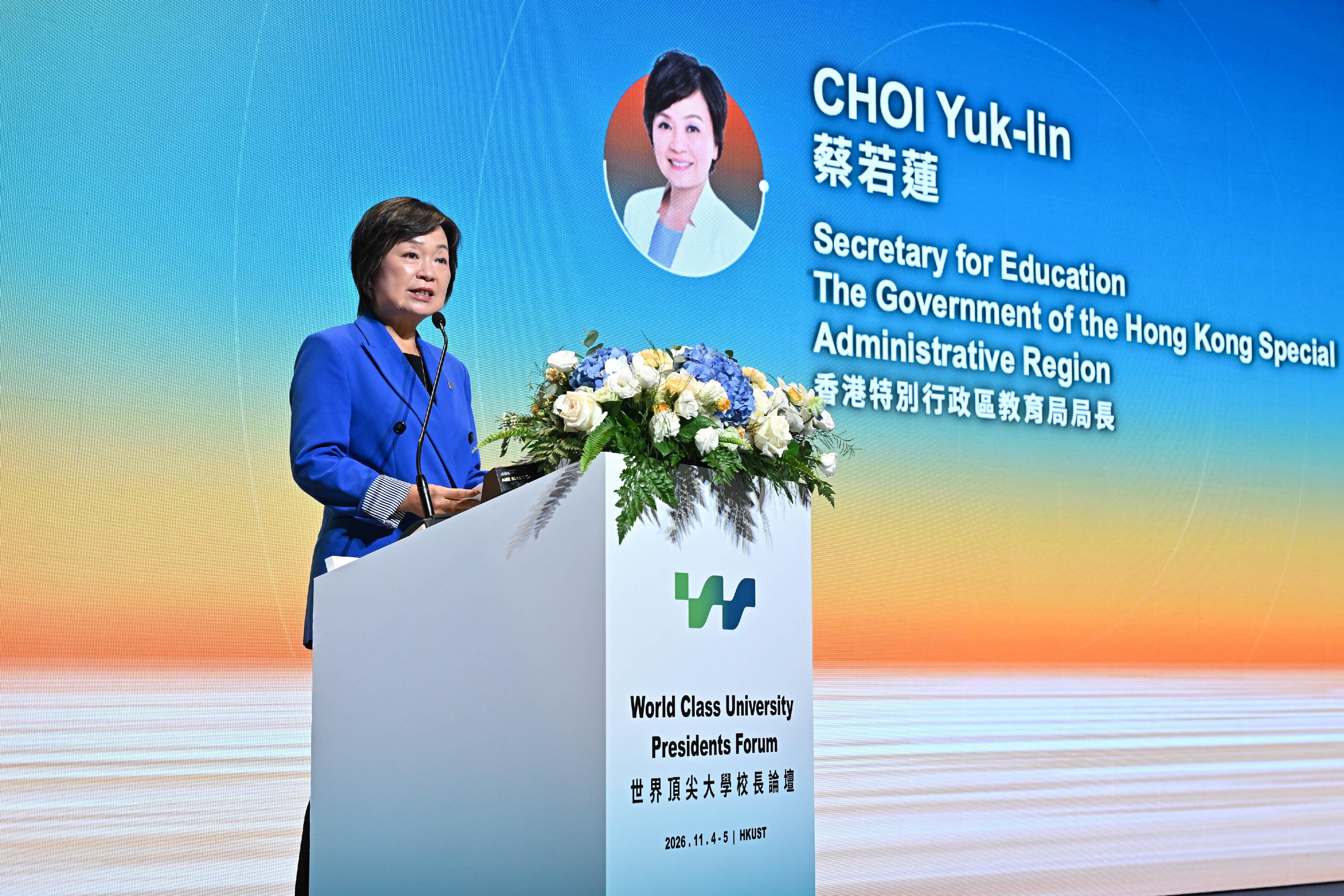
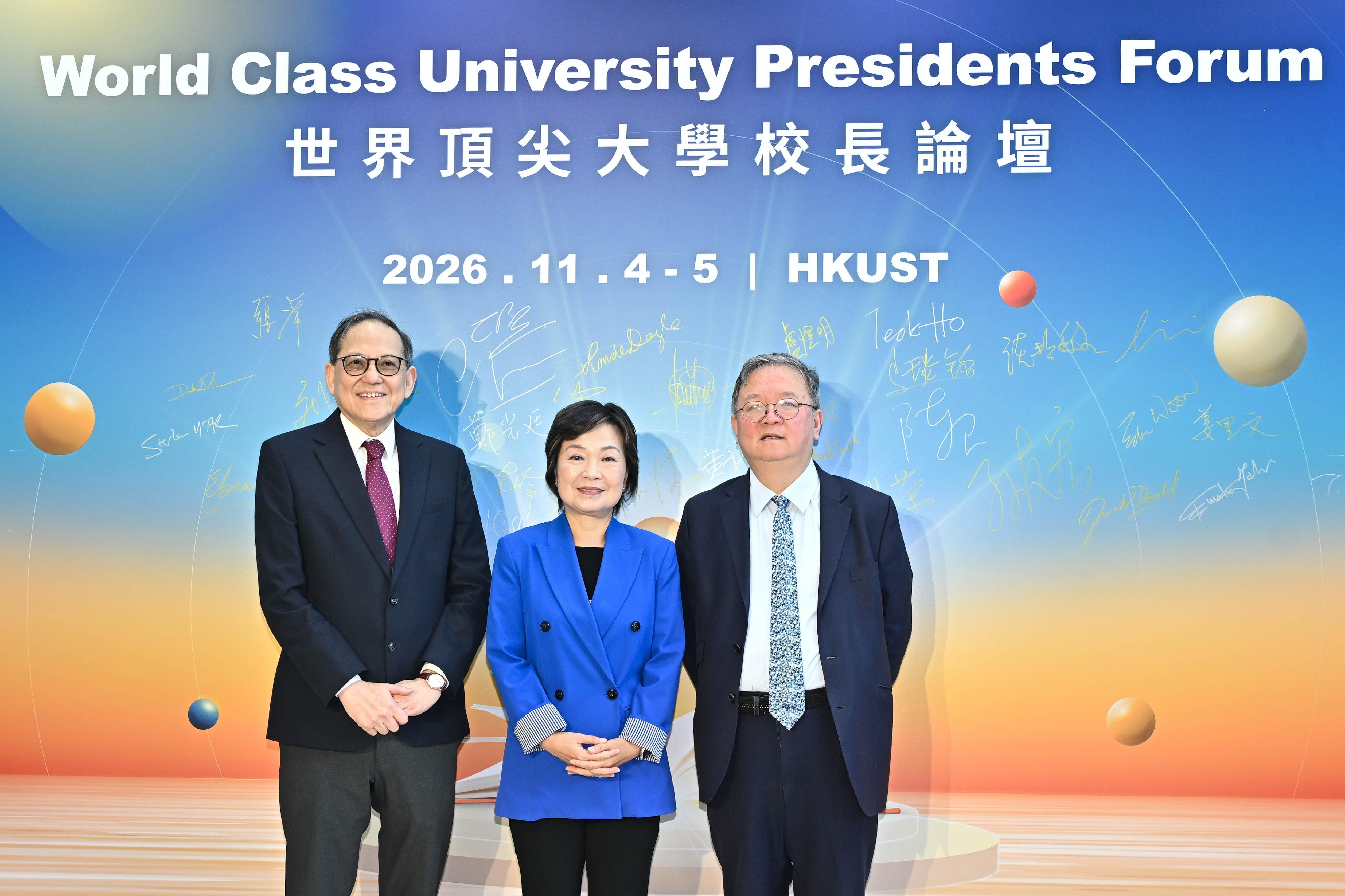
     ​The Secretary for Education, Dr Choi Yuk-lin, spoke at the World Class University Presidents Forum 2026 today (November 5), highlighting Hong Kong’s growing strength, global voice, and strategic vision as a premier international higher education hub.

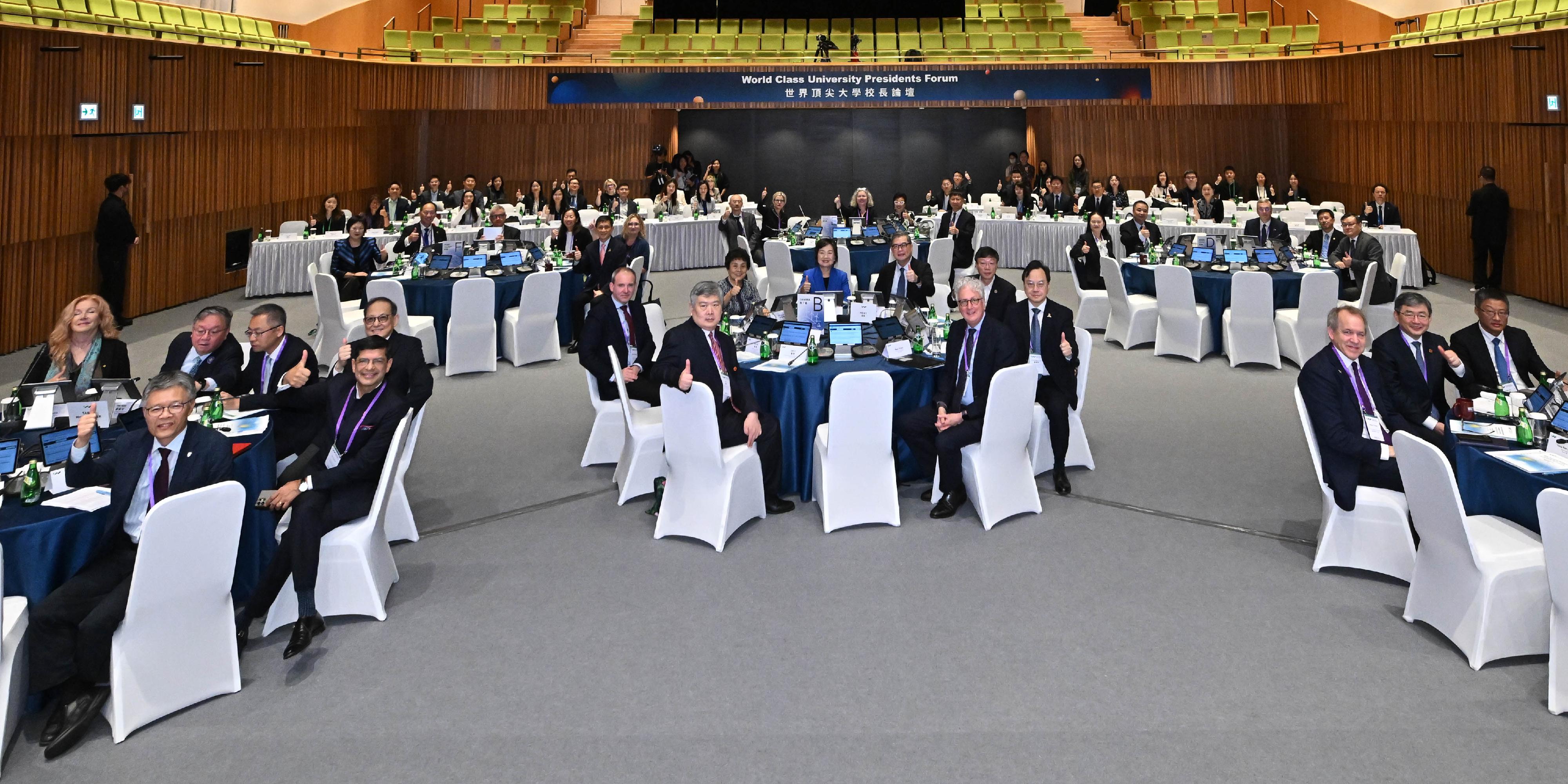
     Addressing an international audience of university presidents and academic leaders, Dr Choi noted that the forum gathered leaders and university presidents representing more than one-third of the world’s top 50 universities. “Assembling such a distinguished constellation of global academic leadership strongly reaffirms Hong Kong’s standing as an international education hub and significantly enhances the city’s discourse power in the global educational arena,” she said.

     Dr Choi emphasised that Hong Kong’s institutional strength is firmly rooted in academic excellence, robust national support, and open connectivity. Citing the latest QS World University Rankings: Asia 2027, she noted the impressive achievements of Hong Kong institutions, and pointed out that Hong Kong continues to set regional benchmarks, with five local universities securing places among Asia’s top 10. Serving as a vital bridge between East and West, Hong Kong offers a fertile ecosystem characterised by internationalisation and diversification which brings global talent together to address shared global challenges.

     “Alongside signature international events such as the Asia-Pacific Association for International Education Conference and Exhibition held in February this year, the World Class University Presidents Forum 2026 forms part of a strategic series of signature initiatives promoting the ‘Study in Hong Kong’ brand worldwide, underscoring the city’s role as a key driver shaping the future of global higher education,” added Dr Choi.

     Elaborating on the forum’s theme, “Higher Education Reimagined: Innovating for the Future”, Dr Choi stressed that no matter how the global landscape evolves, universities remain fundamentally tied to economic development, societal well-being, and human progress. World-leading institutions must stand at the forefront, guiding that transformation. Meanwhile, Hong Kong’s educational future is taking concrete physical shape through the development of the Northern Metropolis University Town.

     Under the “One Town, Five Elements” framework, the Hong Kong Special Administrative Region Government is building a holistic campus ecosystem integrating higher education, advanced research, market innovation, vibrant living spaces, and top-tier talent. Positioned at the gateway to the Chinese Mainland, the University Town will foster deep industry-academia-research integration, linking academic research directly with industry capabilities to serve national development under the 15th Five-Year Plan.

     As a premier global event in higher education, the World Class University Presidents Forum 2026 aims to further demonstrate Hong Kong’s unique strength and pivotal status as a bridge connecting the Mainland with the global higher education system. Bringing together presidents, renowned scholars, and international education leaders from dozens of world-leading universities, the forum addresses key issues including talent cultivation in the intelligent age, technology and innovation driving the future economy, and universities’ responses to major global challenges.

Photo  Photo  Photo  
read more

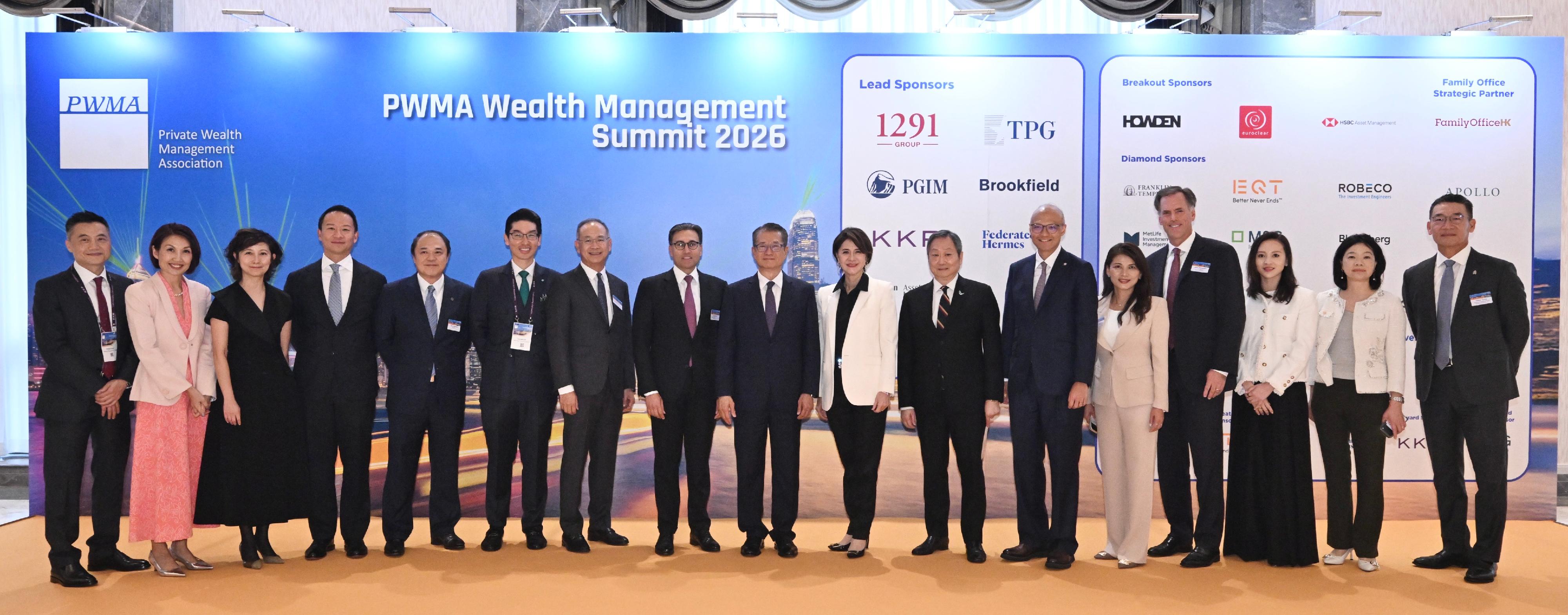
Speech by FS at PWMA Wealth Management Summit 2026 (English only) (with photos)

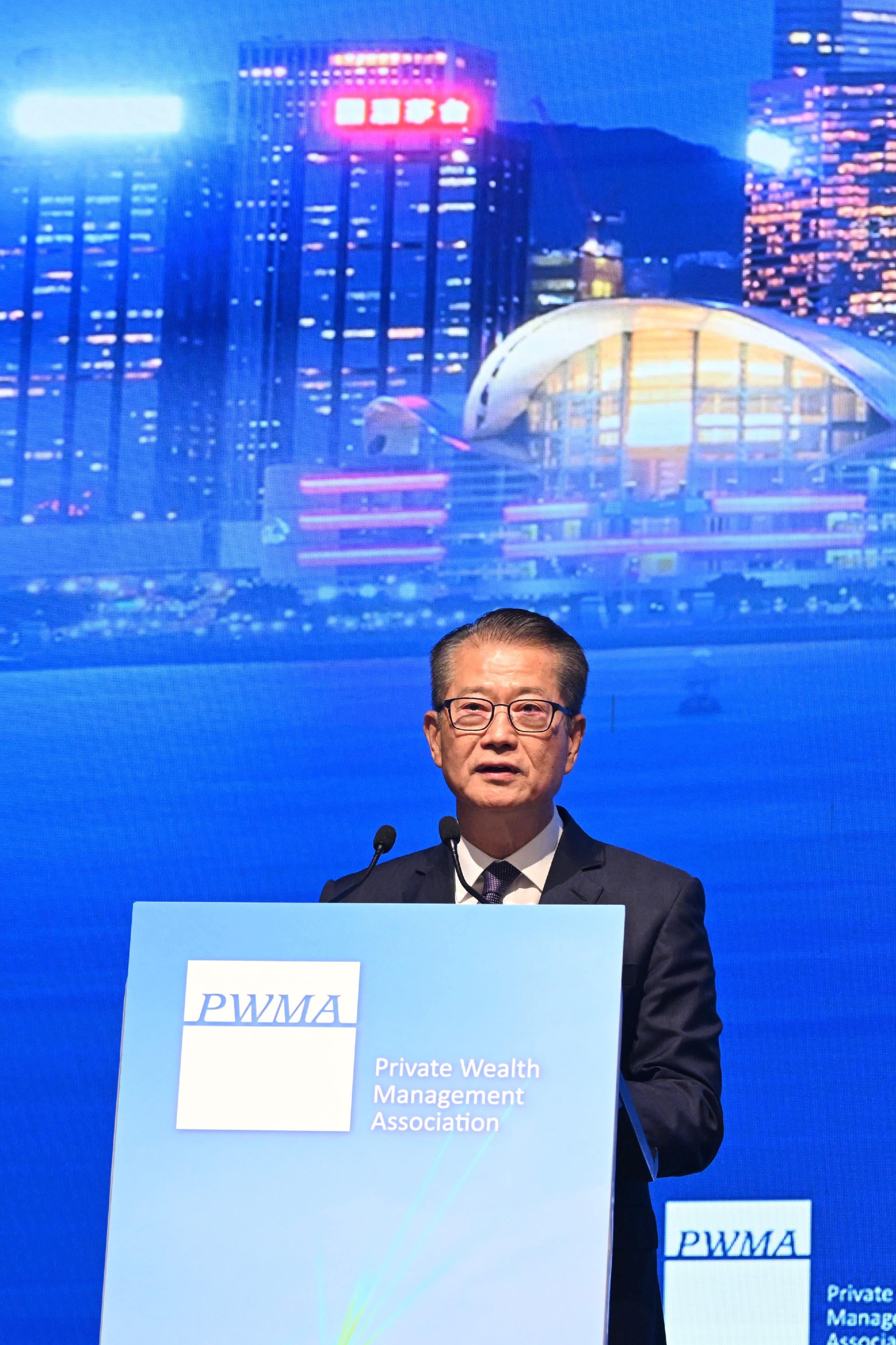
     Following is the keynote speech by the Financial Secretary, Mr Paul Chan, at the PWMA Wealth Management Summit 2026 today (November 5):
 
Amy (Chairman, Executive Committee, Private Wealth Management Association (PWMA), Ms Amy Lo), Vivien (Chief Executive Officer and Managing Director, Private Wealth Management Association, Ms Vivien Khoo), Kelvin (Chairman, Securities and Futures Commission, Dr Kelvin Wong), Eddie (Chief Executive, Hong Kong Monetary Authority, Mr Eddie Yue), Consuls-General, distinguished guests, ladies and gentlemen,
 
     Good morning. It is a pleasure to return to the PWMA Wealth Management Summit. I thank Amy and the Association for bringing us together.
 
     For an industry that believes in diversification, you have gathered a remarkable amount of expertise in one room. I am glad to see that the benefits far outweigh the concentration risk.
 
     Let me begin with congratulations on another successful year. According to the Securities and Futures Commission (SFC) survey released in July, assets under management by the industry grew by 20 per cent to over HK$42 trillion, and Hong Kong is now the largest cross-boundary wealth management centre in the world.
 
     Your new Hong Kong Private Wealth Management Report tells a similarly encouraging story. Some 77 per cent of member firms surveyed reported stronger demand to open accounts or book client assets in Hong Kong, and 94 per cent are moderately or highly optimistic about our prospects over the next five years.
 
     That optimism is widely shared. Earlier this week, the Global Financial Leaders’ Investment Summit brought some 280 international financial leaders to Hong Kong, including around 120 group chairmen and chief executives. In my conversations with them, the sentiment towards Hong Kong was decidedly positive, and a number of them told us they intend to increase their investment and headcount here. International capital is casting a fresh vote of confidence in this city.
 
     That confidence is reinforced by our policy to drive the private wealth management sector forward. Our tax concession for family-owned investment holding vehicles is now well established, and Hong Kong is home to over 3 300 single family offices, up 25 per cent in two years. The New Capital Investment Entrant Scheme has received some 4 300 applications, representing an expected HK$150 billion of investment. And we have introduced legislation to further enhance the preferential tax regimes for funds, single family offices and carried interest, which we aim to pass by the end of this year.

     The platform is in place. The more interesting question is what the business built on it will look like. Let me offer three observations, framed as open questions, because the answers will be written by you. They come down to where wealth is moving, where it is being created, and who will hold it.
 
Where wealth is moving
 
     The first question is: where is wealth moving? The global economy is being reconfigured. Geopolitical fragmentation is reshaping supply chains. Conflict in the Middle East has pushed up energy prices, and inflation with them. Sovereign borrowing and investment in new technologies are competing for the same pool of capital.
 
     The result is that interest rates have turned upwards again. In September, the Federal Reserve heightened rates for the first time in three years, the European Central Bank has raised twice in this year, and the 10-year US (United States) Treasury yield has been trading at around 5 per cent.
 
     What does a structurally higher rate environment mean for your business and your clients? For more than a decade, near-zero rates pushed investors out along the risk curve in search of yield. That logic has now reversed. Cash earns a return again, and so capital is no longer cheap and becomes more risk averse. Duration, credit quality and leverage – the fundamentals that a decade of cheap money allowed investors to set aside – matter once more.
 
     Are your portfolios and your product mix built for this environment?
 
     Higher rates and greater uncertainty are also redrawing the map of capital. Investors are diversifying across markets and currencies, Hong Kong is a clear beneficiary of capital inflow. Total deposits in our banking system grew by 7.7 per cent, reaching HK$20.9 trillion, in the first nine months of this year. Our initial public offering market raised a record HK$388 billion over the same period, second in the world. And with many of our listed companies still trading at a discount to their international peers, that valuation gap is once again drawing in global capital.
 
     Further to the US and Europe, capital is coming from the Chinese Mainland, and from Southeast Asia, Central Asia and the Middle East. So do your teams, your booking capabilities and your product shelves reflect this new client geography?
 
Where wealth is created

     The second question is: where is wealth being created? The answer, increasingly, is technology, and above all AI (artificial intelligence). Technology is now the largest source of wealth among the world’s billionaires. For example, in the Chinese Mainland, the fortunes of billionaires grew by more than 20 per cent to US$1.8 trillion last year, with technology among the biggest contributors. 
 
     These are a different kind of client. They are younger, often still running their companies, and some wealth is still tied up in a private business. They understand risk, know venture and private markets well, and care more about the next opportunity than about preserving the last one. So what is their investment appetite, and how do you serve a client whose wealth is less liquid, concentrated and growing fast?
 
     In this part of the world, we are seeing that wealth take shape in real time. Mainland companies are going global, and Hong Kong is their gateway and platform. In the first three quarters of this year, 116 companies listed here. A-plus-H listings accounted for nearly 70 per cent of the funds raised, and technology companies in AI, semiconductors and robotics made up more than half. With some 500 active listing applications, the pipeline remains deep.
 
     Every listing and every exit unlocks liquidity, and liquidity creates wealth that needs to be managed. Are you positioned to capture it at source?
 
Who will hold the wealth
 
     The third question is: who will hold the wealth? A generational transfer on a historic scale is under way. For example, in the United States alone, well over US$100 trillion is expected to change hands over the next two decades, and much of it will pass first to surviving spouses, the great majority of them women. Asia is a generation behind in this cycle, but the entrepreneurs who built the first fortunes of the Chinese Mainland and the region are now planning their succession, and the same pattern will follow here.
 
     So who will your next clients be? More of them will be women. More will be the second generation. And their priorities will differ from those of their parents.
 
     For a sense of those priorities, consider the Festival of Connoisseurs, which has brought wealthy families to Hong Kong this week around art, design, wine and craftsmanship. It points to two aspirations. The first is lifestyle: culture, arts and exceptional experiences are part of the purpose of wealth, not an afterthought, and the asset universe extends from equities and bonds to collectibles and passion assets.
 
     The second is meaning. The next generation wants their wealth to do good, not just do well. Impact and green investing are moving from the margin to the core of the portfolio. So are you prepared to discuss a carbon-credit strategy and a work of art in the same conversation?
 
Conclusion
 
     Ladies and gentlemen, these are open questions, and I have more confidence in your answers than in mine. But the direction is clear. Your next client will be more international, more entrepreneurial, more likely to be younger, with women increasing in number, and looking for both return and purpose. Hong Kong gives you the platform to serve them: the security of our institutions, the opportunities of the Mainland and the region, and a government committed to broadening both. The answers will be written here, by you.
 
     I wish the Summit every success. Thank you.

Photo  Photo  
read more