Author Archives: hksar gov

LCQ6: Work of Committee on Education, Technology and Talents

     Following is a question by the Hon Kingsley Wong and a reply by the Secretary for Labour and Welfare, Mr Chris Sun, in the Legislative Council today (November 11):

Question:

     Regarding the work of the Committee on Education, Technology and Talents (the Committee), will the Government inform this Council:

(1) as the Committee has indicated that it will adopt three major strategic directions to enhance the system, aggregation and synergy of policies, as well as the cross-bureaux co-ordination in the work on promoting integrated development of education, technology and talents, of the work the Committee has carried out and the results it has achieved since its establishment;

(2) as it is learnt that, in order to meet the needs of artificial intelligence development and industrial transformation, the country is encouraging higher education institutions to significantly phase out obsolete disciplines and substantially increase emerging disciplines, with a view to nurturing more new types of talents, whether the Committee has made reference to the relevant directions in carrying out work to nurture local talents suited to technological and industrial development; if so, of the details; if not, the reasons for that; and

(3) as the country’s Outline of the 15th Five-Year Plan proposes that Hong Kong should consolidate, enhance and develop “ten centres, two hubs, one ecosystem, one metropolitan area and one highland”, of the work plans put in place by the Committee to nurture local talents that meet the needs of Hong Kong’s development positioning?

Reply:

President,

     The Committee on Education, Technology and Talents (CETT) was established in December 2024. It is chaired by the Chief Secretary for Administration, with the Secretary for Labour and Welfare, the Secretary for Education, the Secretary for Innovation, Technology and Industry, and the Permanent Secretaries of the three policy bureaux serving as members. The CETT is tasked to co-ordinate the work to promote integrated development of education, technology and talents.

     In consultation with the Chief Secretary for Administration’s Office, Education Bureau (EDB), and Innovation, Technology and Industry Bureau (ITIB), I reply, on behalf of the CETT, to the question raised by the Member as follows:

(1) Since its establishment, the CETT has formulated macro policies and promoted related work in accordance with three strategic directions, including attracting high-quality innovation and technology (I&T) talents, establishing an international education hub, and enhancing the talent schemes and talent services. The Policy Addresses in the past two years have incorporated a number of policy measures formulated by the CETT, and Hong Kong’s First Five-Year Plan also reflects the macro policy directions proposed by the CETT.

     The progress of the CETT’s main work covers the following fronts:

     On education, the Government is committed to consolidating Hong Kong’s position as an international education hub and an international hub for high-calibre talents. The Northern Metropolis University Town (NMUT) is core to Hong Kong’s First Five-Year Plan. The three university towns of San Tin, Hung Shui Kiu and Ta Kwu Ling will be developed based on the concept of town areas and planned around “One Town, Five Elements”, with the strategic positioning that integrates the four pillars of “talent cultivation, scientific research, transformation of outcomes, industry development”, in a bid to achieve the integrated development of education, technology and talents. To dovetail with the development of the NMUT, and raise Hong Kong’s scientific research capabilities, the Government will introduce measures in 2027 to support the capacity expansion and enhancement of post-secondary education, including increasing the number of the University Grants Committee (UGC)-funded research postgraduate places, progressively increasing the number of quota of the Hong Kong PhD Fellowship Scheme, and providing additional funding to support knowledge transfer and the Fund for Innovative Technology-in-Education.

     In terms of technology development, the Government is advancing the layout and development of the “three major I&T parks and five key research and development institutes” at a high level to achieve “attracting talents through industry”. As an important national science and technology strategic platform, the Hong Kong Park of the Hetao Shenzhen-Hong Kong Science and Technology Innovation Co-operation Zone (Loop Hong Kong Park) officially opened at the end of last year. To date, over 120 industry-university-research institutions have progressively moved in. The Park is also providing talent accommodation and living facilities with a view to attracting and retaining outstanding I&T talents from the Chinese Mainland and overseas. As mentioned in Hong Kong’s First Five-Year Plan, the Loop and its natural extension, the San Tin Technopole, will synergise in an upstream-midstream-downstream manner. The two park companies will also jointly participate in the development and construction of the NMUT. In addition, the Innovation and Technology Commission (ITC) launched the $3 billion Frontier Technology Research Support Scheme in September 2025, with a view to attracting I&T talents to converge in Hong Kong. The ITC also introduced further enhancement measures to the Technology Talent Admission Scheme at the end of the same year.

     On talent attraction, we, under the steer of the CETT, have continued to enhance a package of measures to trawl for outside talents, including putting in place a groundbreaking arrangement under the Quality Migrant Admission Scheme to proactively invite top-notch and leading talents to come to Hong Kong, actively persuading targeted top-notch talents to settle in Hong Kong for development in light of various development needs of the country and Hong Kong. Furthermore, under the steer of the CETT, the Labour and Welfare Bureau introduced a new channel in late June 2025 for admitting professionals of specified skilled trades to Hong Kong to join eight skilled trades facing acute manpower shortage. The various talent attraction measures have received positive responses and are widely welcomed by outside talents. As at end-September 2026, more than 320 000 worldwide talents from diverse industries were attracted to work and pursue development in Hong Kong under the various talent admission schemes. We, under the steer of the CETT, will continue to monitor manpower changes dynamically through manpower projections and follow-up surveys, and continue to enhance talent admission arrangements to attract talents in a targeted manner.

(2) and (3) There are community expectations for the universities to meet the manpower needs of the nation and Hong Kong, as well as the Government’s policy priorities, by nurturing talents with a broad interdisciplinary knowledge base and diverse capabilities. In the 2025/26 to 2027/28 triennial planning exercise, the EDB has been supporting the universities in reviewing and introducing programmes in response to Government policies, market demand and industry trends. The information on manpower needs provided by relevant policy bureaux/departments have been repositioned as Policy Guidance on Talent Development. The Strategic Platform on Talent Development in Higher Education has also been established to facilitate close communication among relevant policy bureaux/departments, universities and industries on manpower trends and needs, and to encourage the universities to refine their curricula in closer alignment with policy objectives and market demand. The UGC-funded universities are introducing a total of 27 undergraduate programmes related to STEAM (science, technology, engineering, arts and mathematics) or the “eight centres”. Many of these programmes integrate technology with other fields, including the humanities, finance and healthcare, with a view to strengthening training in artificial intelligence applications, interdisciplinary knowledge and problem-solving skills. The Government is commencing preparations for the 2028/29 to 2030/31 triennial planning exercise and will maintain close communication with the universities, with a keen focus on talent cultivation and manpower trends in technological and industrial development, so as to strengthen the alignment between the knowledge and skills of the younger generation and Hong Kong’s future economic and social development.

     The ITIB has strengthened the nurturing of local I&T talents through various measures. The ITC will expand the STEM Internship Scheme by providing around 10 000 internship quotas within two years, with each intern receiving a subsidy of no less than $11,000. It was also announced in the Policy Address this year the creation of a young researcher category under the Innovation and Technology Support Programme to further support young people in exploring and pursuing careers in I&T. On the research talent front, the Research Talent Hub supports enterprises and research institutions in engaging research talents, with the target of increasing the number of approved applications from about 10 500 cases in 2022 to 18 500 cases in 2027. These measures help expand the local I&T talent pool and, in tandem with platforms such as the Loop Hong Kong Park and the San Tin Technopole, provide more application scenarios and development opportunities for I&T talents. read more
LCQ7: Premature termination of contracts by foreign domestic helpers

     Following is a question by the Hon Augustine Wong and a written reply by the Secretary for Labour and Welfare, Mr Chris Sun, in the Legislative Council today (November 11):

Question:

     There are views reflecting that many employers of foreign domestic helpers (FDHs) have encountered situations in which some FDHs terminated their employment contracts prematurely for various reasons. In this connection, will the Government inform this Council:

(1) of the number of FDHs who left Hong Kong upon unilaterally and prematurely terminating their contracts without giving notice to their employer in each of the past three years, broken down by the FDHs’ places of origin; 

(2) of the number of FDHs who prematurely terminated their contracts in each of the past three years, broken down by the FDHs’ places of origin; 

(3) among the cases of departure from Hong Kong under (1), of the number of FDHs who re-applied to work in Hong Kong and the number of contracts approved by the Immigration Department in each of the past three years; and 

(4) given that the costs of applying for FDHs to come to Hong Kong are considerable, whether the Government has any plans to further protect the rights and interests of employers, such as requiring employment agencies to bear the relevant costs on a pro-rata basis when FDHs terminate their contracts without cause within the first three to six months; if so, of the details; if not, the reasons for that?

Reply:

President,

     Employers who employ foreign domestic helpers (FDHs) to work in Hong Kong are required to enter into a two-year Standard Employment Contract (SEC) with FDHs. Under the Employment Ordinance (Cap. 57) and SEC, either the employer or the FDH may terminate the contract before its expiry by giving the other party one month’s notice in writing or one month’s wages in lieu of notice. The Government has consistently encouraged employers and FDHs to maintain harmonious employment relationships, and is concerned about cases in which contracts are prematurely terminated, whether at the initiative of the FDHs or the employers.

     Having consulted the Security Bureau and the Immigration Department (ImmD), the reply to the question is as follows:

(1) to (3) The ImmD is committed to combating the abuse of the arrangement for premature termination of contract by FDHs to change employers (commonly known as “job-hopping”). In June 2013, the ImmD set up a special duties team to strengthen the assessment of employment visa applications from FDHs who change employers frequently.

     In vetting the employment visa applications from FDHs, the ImmD will refer suspected “job-hopping” cases to the special duties team for investigation. Case officers will holistically consider a host of factors, including the conduct of the FDHs, records of the FDHs and their former employers, and the reported reasons for premature termination of employment contracts. Having regard to the actual circumstances of individual cases, case officers will also, where necessary, proactively contact the former employers and the applicants to verify the reasons for premature termination of contracts. For FDHs suspected of “job-hopping”, the ImmD will decisively refuse their employment visa applications and ask them to leave Hong Kong. The ImmD will also retain their application records and take them into account when vetting future applications from the FDHs concerned for employment visas or extension of stay.

     Over the past three years (as of October 2026), ImmD’s special duties team conducted investigations into 3 303 employment visa applications from FDHs suspected of “job-hopping”. Of these, 455 applications were eventually rejected, while 259 applications were withdrawn by the applicants or could not be followed up. A yearly breakdown of these statistics is at the Annex.

     The ImmD does not maintain a breakdown of the relevant statistics by the nationality of applicants, nor any of the other statistics mentioned in the question.

(4) At present, employers may hire FDHs through employment agencies (EAs) or on their own. The services provided by EAs, their fees, and the follow-up arrangements in the event of premature termination of contracts by FDHs are agreed between EAs and employers having regard to the scope of services and the needs of both parties. To safeguard employers’ interests as consumers, the Government is committed to enhancing the transparency of EAs’ services and fees, so that employers may, on an informed basis, choose different service arrangements offered by EAs according to their needs. To this end, the Labour Department revised the Code of Practice for Employment Agencies (CoP) in May 2024 to require EAs to clearly state whether, if an FDH prematurely terminates the contract, they will provide a refund, arrange a replacement FDH or make other arrangements, and whether additional fees will be charged, with a view to enhancing the transparency of charging and service arrangements, and enabling employers to make informed decisions when choosing EAs. EAs that fail to comply with the CoP may have their licences revoked or renewal refused by the Labour Department, or be issued with warnings urging rectification. read more

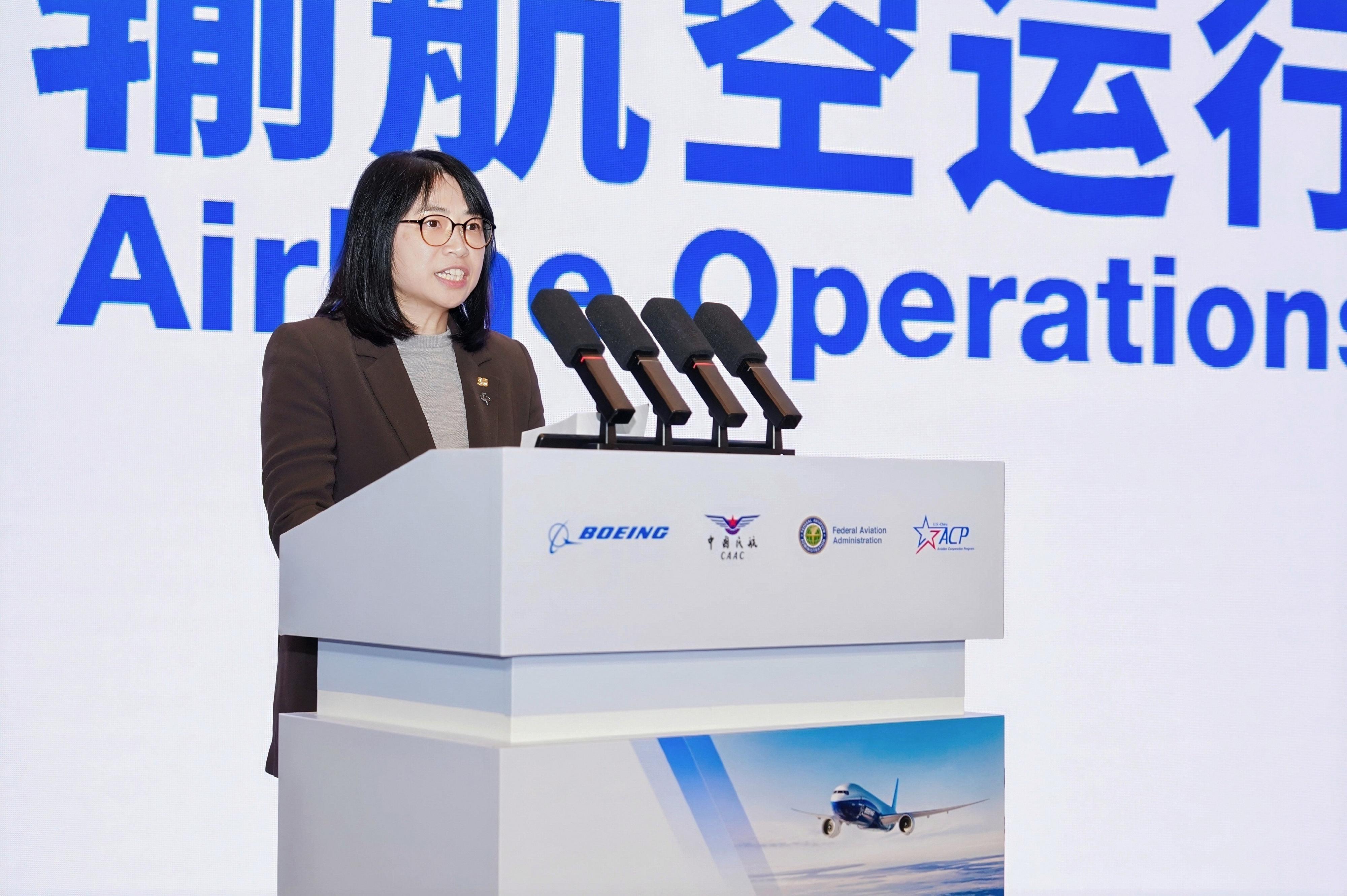
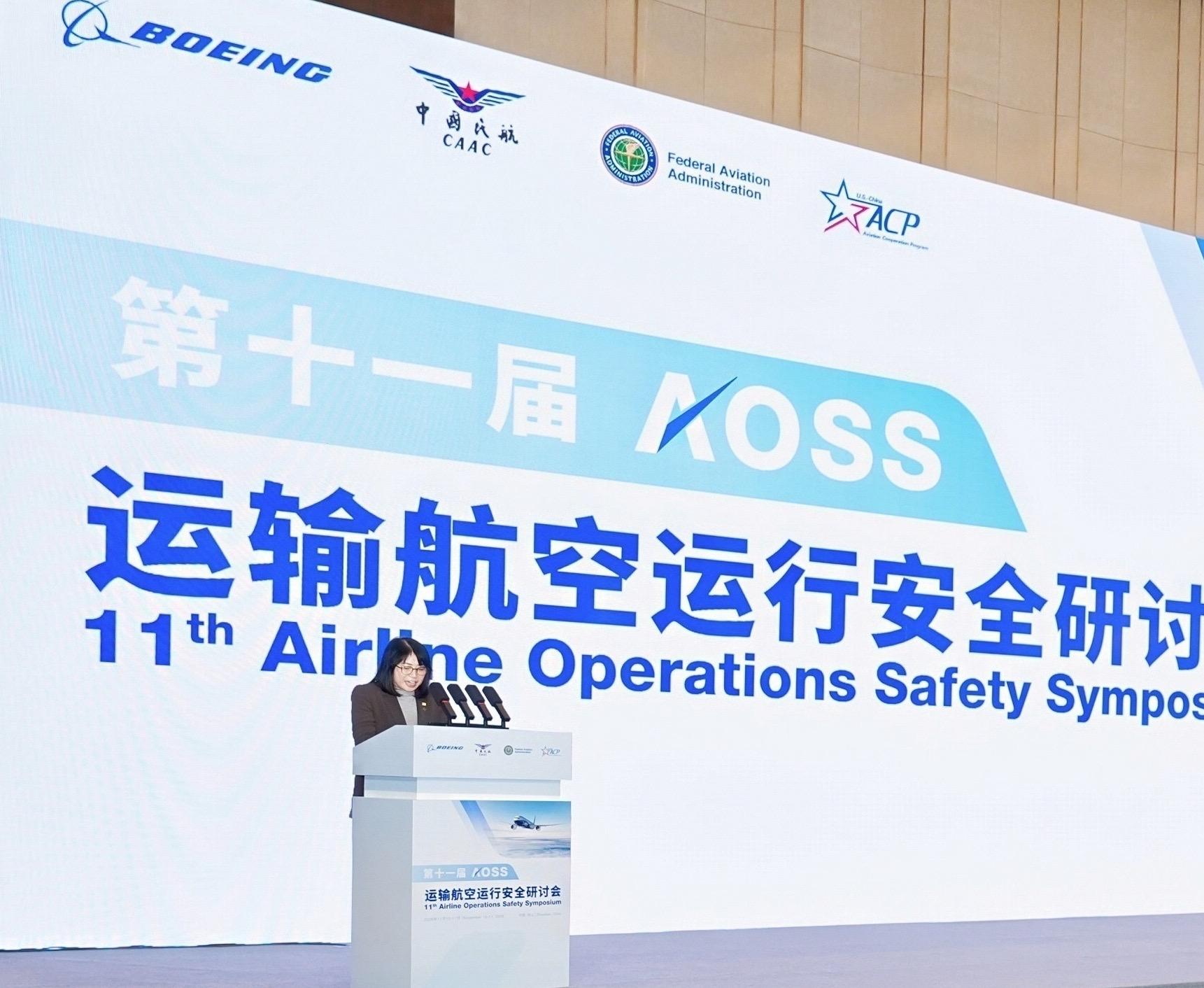
DGCA attends the 11th Airline Operations Safety Symposium in Zhoushan (with photos)

     The Director-General of Civil Aviation (DGCA), Ms Clara Wong, yesterday (November 10) led a Civil Aviation Department (CAD) delegation to attend the 11th Airline Operations Safety Symposium in Zhoushan. The two-day symposium is one of the initiatives under the US-China Aviation Cooperation Program. It serves as an important platform for exchanges and co-operation in areas including aviation safety, flight standards and airworthiness. The Chief Engineer of the Civil Aviation Administration of China (CAAC), Mr Zhu Weimin, and the President of the Civil Aviation Authority of the Macao Special Administrative Region, Mr Stanley Pun, also attended. 

     This year’s symposium focused on maintenance safety and quality control. More than 200 representatives from regulatory authorities, aircraft and component manufacturers, maintenance organisations and the industry attended. The experts discussed and shared insights on topics including aircraft maintenance safety and quality control; safety management systems in maintenance organisations; and the exploration and application of relevant innovative technologies.

     In her keynote speech, Ms Wong said that Hong Kong’s aircraft maintenance team has built rich expertise over the years. With professional aircraft maintenance, repair and overhaul services, they have earned the recognition of airlines worldwide and obtained aircraft maintenance organisation approvals from various civil aviation authorities. Looking ahead, CAD will maintain a close and longstanding partnership with the CAAC and other civil aviation authorities, thereby promoting the safe and healthy development of the industry. At the same time, CAD will continue to leverage its unique advantages of enjoying the strong support of the motherland while being closely connected to the world, actively integrate into the nation’s civil aviation development strategy, proactively align with the National 15th Five-Year Plan Outline and promote the synergistic and collaborative development of aviation resources between the Mainland and Hong Kong, thereby contributing to the advancement of the nation’s aviation industry to a higher level, underpinned by safe and efficient operations.

     Ms Wong will return to Hong Kong this afternoon (November 11).

Photo  Photo  Photo  
read more

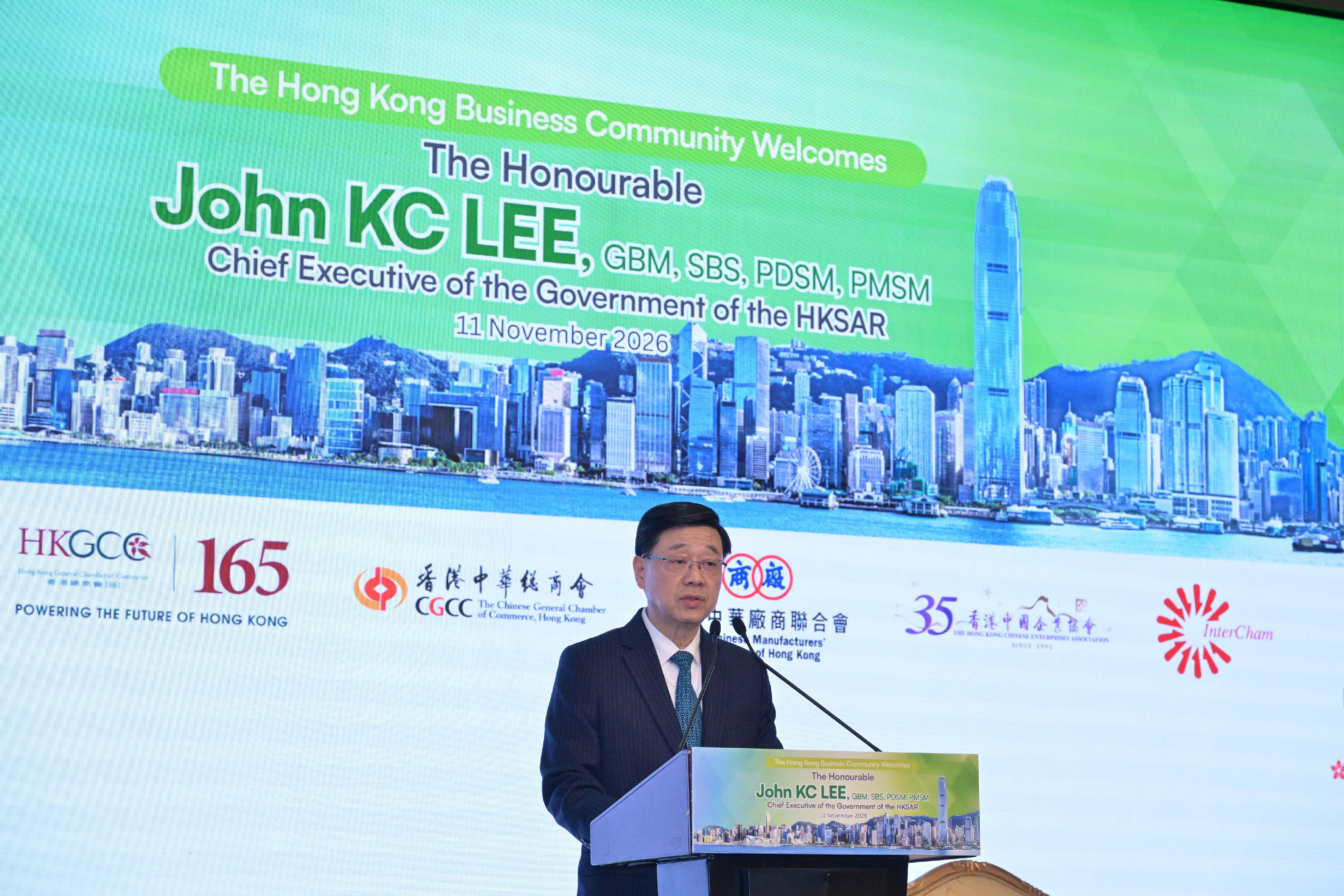
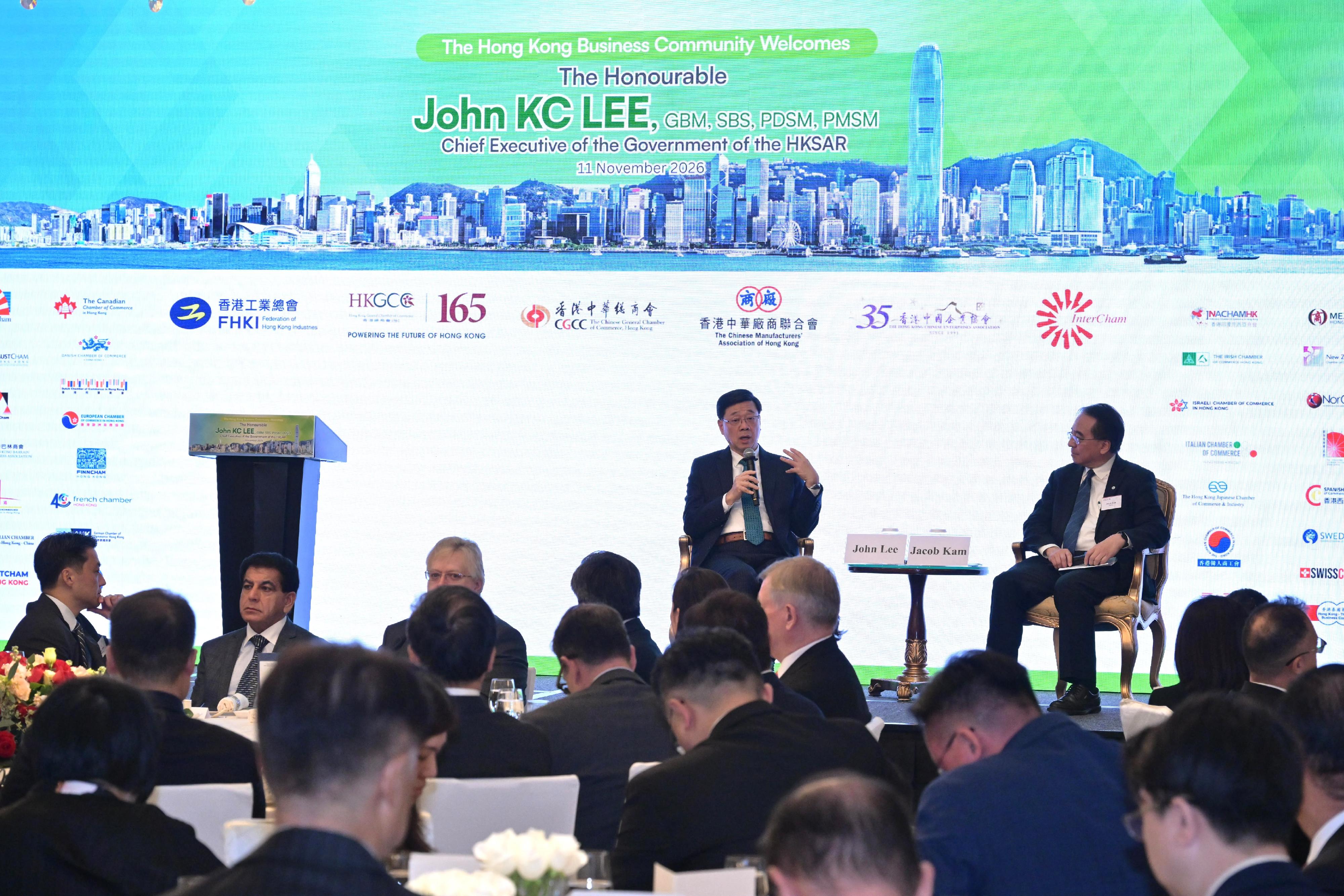
Speech by CE at Joint Business Community Luncheon (English only) (with photos)

     Following is the speech by the Chief Executive, Mr John Lee, at the Joint Business Community Luncheon today (November 11):

Dr Jacob Kam (Chairman of the Hong Kong General Chamber of Commerce), Mr Anthony Lam (Chairman of the Federation of Hong Kong Industries), Mr Ricky Tsang (Chairman of the Chinese General Chamber of Commerce, Hong Kong), Dr Wingco Lo (President of the Chinese Manufacturers’ Association of Hong Kong), Mr Yu Xiao (Vice Chairman and President of the Hong Kong Chinese Enterprises Association), Mr Paul McSheaffrey on behalf of InterCham (Chair of the British Chamber of Commerce in Hong Kong), business leaders, Consuls-General, distinguished guests, ladies and gentlemen, 

     Good afternoon. It is a pleasure to be here today, to join you, once again, for this welcome gathering – the annual Joint Business Community Luncheon. I thank you for this joint business luncheon, held each and every year after the Policy Address has been announced, and for giving me the opportunity to explain as much as possible what the Policy Address can do for the business and industry sector.

     There are some 380 of you here this afternoon. You represent five local chambers and 17 international chambers, as well as consulates-general. And I must say the room radiates business energy and, I trust, business optimism. 

     Like you, I’m very optimistic. And in the next few minutes, I would like to tell you why I’m optimistic about the future of Hong Kong.
      
     The current term of the HKSAR (Hong Kong Special Administrative Region) Government assumed office over four years ago. Over the past four years, the Hong Kong economy has turned around – and then some. Gone from minus 3.7 per cent growth to positive growth, last year, of 3.6 per cent. 

     Our GDP in the first three quarters of this year is up 5.1 per cent, year on year. And that, ladies and gentlemen, is the fastest growth, for the corresponding period, in five years. 

     Over the past four years, our goods exports are up more than 26 per cent, year on year. The number of registered local and non-local companies have hit record highs. Median monthly employment earnings climbed a cumulative 20 per cent over the past four years.

     Our international achievements are also noteworthy. We continue to be the world No.1 in economic freedom, while ranking fourth, globally, in talent competitiveness.

     If money could choose a postcode, it would choose Hong Kong – and increasingly, it does. This year, we became the largest cross-boundary wealth management centre in the world, and climbed to second place in global competitiveness. We also continue to be one of the world’s top three global financial centres.

     And there’s more cheering news in Hong Kong’s rankings. But then there’s also more, and more, uncertainty in the global economy. More geopolitical complexities. And technology, led by AI, is reshaping companies, economies and competition around the world.

     Which is why, in mid-September, we unveiled Hong Kong’s First Five-Year Plan. We believe that in creating a long-term blueprint detailing Hong Kong’s development priorities, business benefits. You benefit. 

     The Plan, designed to align with our country’s National 15th Five-Year Plan, minimises the volatility that defines today’s global economy, and the world at large. It does so by giving you confidence. The confidence to do business and invest your future in Hong Kong.
      
     Hong Kong’s First Five-Year Plan is built on the concept of “four centres and one hub”:
     • international financial centre,
     • international shipping centre,
     • international trade centre,
     • international innovation and technology centre, and
     • international hub for high-calibre talent.

     I would now like to touch on each of these policy priorities in turn.

     Let me start with finance. Finance is Hong Kong’s pivotal sector, playing an irreplaceable role in our high-quality development.

     In finance, Hong Kong’s First Five-Year Plan focuses on five core areas:
 

  • First, strengthening our roles as a global offshore Renminbi business hub and international asset and wealth management centre and risk management centre;
 
  • second, enhancing equity and bond markets, while helping Mainland enterprises go global and bringing in international capital;
 
  • third, developing a commodity trading ecosystem with gold as an entry point;
 
  • fourth, pursuing “Finance+” to serve the broader economy; and
 
  • fifth, strengthening financial risk prevention.

     On “Finance+”, it can help us better integrate our financial strengths with the rest of the economy. “Finance + Trade”, for example, is focused on strengthening trade finance, supply chain finance and risk management services to expand our support for SMEs (Small and Medium-Sized Enterprises).

     In “Finance + Technological Innovation”, the possibilities are as boundless as I&T itself. To name a few, we will encourage patient capital and venture capital investments in industry and technological innovations. We will support the expansion of financing services for I&T enterprises through the acceleration of fintech development. 

     We will expedite green and sustainable finance, advancing the international carbon market and contributing to our country’s low-carbon transition.

     Let me now turn to the next centre, shipping. As an international shipping centre, Hong Kong has ranked fourth, globally, in its comprehensive maritime strengths over the past seven years. 

     Yes, the Hong Kong port is busy. But our real edge, with our world-class service industry, is what happens when the ship leaves for business – the contracts, the insurance, the arbitration, and more. To boost our status, we will promote a “volume to value” transformation of the Hong Kong port and strengthen our high value-added maritime services.

     We are planning a network of Hong Kong-centred green energy corridors, with Mainland cities supplying green maritime fuel for bunkering and trading in Hong Kong. 

     We will deepen our co-operation with Mainland and international shipping ports, strengthening our standing as an international transhipment hub and integrating into the country’s logistics network. 

     Now I’ll come to the third centre, trading. Hong Kong has long been in the international trade arena as a trade centre. In merchandise trade last year, Hong Kong was ranked the world’s fifth-largest.

     In Hong Kong, the door always stays open – and we don’t charge those walking through it. We will continue to uphold free trade, support the rules-based multilateral trading system and maintain zero customs tariffs. In doing so, we give businesses the confidence to trade with us, to look to Hong Kong for their future. 

     Alongside our strong ties with traditional markets, we will expand Hong Kong’s interests in ASEAN and the Middle East, while exploring Central Asia, Africa and other emerging markets. 

     And we will expand our GoGlobal Task Force, established just over a year ago. To date, we have helped some 360 Mainland enterprises through GoGlobal, assisting them with listing and raising capital, aligning with overseas standards, acquiring industry certifications and fulfilling compliance requirements.

     And we are committed to two-way flow, enabling overseas companies to find business opportunities in the Mainland as well. 

     Now let me talk about the fourth and most promising centre, innovation and technology. Hong Kong is a rising international I&T centre. The Five-Year Plan outlines six main directions in I&T:

     First, improving the institutional framework for I&T development. That includes supporting the development of aerospace technology. The Innovation and Technology Commission will launch a new round of Special Call on Aerospace Technology. It will emphasise technology research related to national space missions, covering satellite technology, space exploration instruments aerospace materials and other related areas. 

     Second, developing three major I&T parks and five key R&D institutions. The three parks are Cyberport, Science Park, and the Hong Kong Park in the Hetao co-operation zone and San Tin Technopole. The five key R&D institutions cover productivity, applied science, microelectronics, artificial intelligence, and life and health technology.

     Third, advancing new industrialisation and expediting I&T industry development, including establishing Hong Kong’s first national manufacturing innovation centre. 

     Fourth, developing an international hub for science and technology co-operation. We’re off to a fine start. The United Nations Industrial Development Organization has chosen Hong Kong to launch its first centre of excellence on global advanced manufacturing in the Asia-Pacific region. It’s expected to begin operation in the first half of next year.

     Fifth, deepening development of the Greater Bay Area; and 

     Sixth, adopting a holistic approach to development and security.

     I was in Beijing and Shanghai last week. We worked to build on the close co-operation we enjoy with our country. There, I encouraged strategic Mainland enterprises to consider the Northern Metropolis and its planned research institutions, and told them about the opportunities in the three university towns of the Northern Metropolis. And I’m here today to invite you, the Hong Kong business community, to help us reap the boundless promise of the Northern Metropolis. 

     Just last week, Hong Kong held the World Class University Presidents Forum. It attracted more than 130 academic leaders from some 50 universities. Several expressed an interest in establishing a presence in Hong Kong, in the university towns, clearly attracted by the concept – the integrated development of education, technology and talent.

     We need a world of high-calibre talent to realise our ambitions, to realise also our very ambitious Five-Year Plan. It helps that Hong Kong is home to five universities among the world’s top 100, and three universities among Asia’s top five.

     Our Top Talent Pass Scheme, as of September, had approved over 145 000 applicants, many of whom from the commerce, finance and innovation sectors. 

     We are committed to developing Hong Kong into an international hub for post-secondary education and talent. To that end, we will promote the Study in Hong Kong and Study Tour in Hong Kong brands internationally. 

     We’ll be talking about the Five-Year Plan for the next five years. More important is how all of us could bring it to rewarding and inclusive life.

     Government can make plans of all shapes, sizes and promised payoffs. But without the support of business, and the community at large, they will surely remain plans and promises only. 

     I look forward to your continuous co-operation with the Government in making Hong Kong a better business hub, and a better home for all of us.

     Ladies and gentlemen, we do it all for the economy, the community and the people of Hong Kong. Enjoy your lunch and the afternoon. Thank you.
Photo  Photo  
read more

Sexual Offences Legislation (Amendment) Bill 2026 to be gazetted on Friday

     The Government will publish the Sexual Offences Legislation (Amendment) Bill 2026 (the Bill) in the Gazette on Friday (November 13).
      
     A spokesperson for the Security Bureau today (November 11) said, “The Bill aims to achieve two policy objectives, namely, strengthening protection for victims of sexual offences, and modernising the laws on sexual offences in Hong Kong to keep pace with the times.
      
     “At present, many of the sexual offences in Hong Kong are based on similar provisions in the laws of England enacted in 1956. Over the years, social perceptions related to sexual offences have been evolving. We also notice that there are inadequacies in the existing sexual offence provisions. For instance, some offences are gender-specific, resulting in a narrow scope; some provisions carry distinctions based on sexual orientation; some offences lack consistency on treatments across genders; the provisions and penalties of some sexual offences are not fully commensurate with the gravity of relevant acts; and some terminology used in some provisions is outdated. The Government considers it necessary to review and improve the laws on sexual offences in Hong Kong, so as to address the inadequacies of the current provisions and respond to changes in social perceptions related to sexual offences.”
      
     The spokesperson said, “The range of legislative amendment proposals is based on the coverage and recommendations of the Law Reform Commission in its review of relevant legislation, and on the study of developments in relevant legislation in other major common law jurisdictions (including Australia, Canada, England and Wales, New Zealand, Scotland and Singapore), covering different areas including non-consensual sexual offences, sexual offences involving children and persons with mental impairment, miscellaneous sexual offences, and other related amendments proposed to strengthen protection for victims of sexual offences.
      
     “We consulted the Panel on Security of the Legislative Council (LegCo) on July 7 on the Government’s legislative amendment proposal, and received its full support. We also conducted a one-month public consultation exercise from July 7 to August 5, with a total of 6 228 written submissions received. Among them, 99.3 per cent (6 182 written submissions) showed support and made positive comments, fully reflecting that the legislative amendment proposal has gained wide support from the community.”
      
     The spokesperson added, “Our legislative amendment proposal has also incorporated suggestions received by the Government during the public consultation exercise, including the creation of a new offence to deal with perpetrators’ criminal acts of prolonged and repeated sexual abuse against children. We will also criminalise the cybercrime of ‘cyberflashing’ through the refinement of provisions.”
      
     The spokesperson emphasised, “We hope to improve the laws on sexual offences in Hong Kong, the earlier the better, to strengthen protection for victims of sexual offences while ensuring that the laws on sexual offences can keep pace with the times.”
      
     The Government will introduce the Bill into the LegCo on November 25 for First Reading and Second Reading, with the target of completing the legislative exercise within the current term of Government. read more