Red flags hoisted at some beaches
Attention TV/radio announcers: Please broadcast the following as soon as possible: Here is an item of interest to swimmers. The Leisure and Cultural Services Department announced today (November 12) that… read more
In response to comments from a medical organisation about a lack of stock of COVID-19 vaccines and concerns about low COVID-19 vaccination rates, as well as related media enquiries, the Centre for Health Protection (CHP) of the Department of Health (DH) today (November 11) issued the following clarification:
Scientific evidence shows that COVID-19 vaccines are effective in reducing the risk of severe disease and death. Following the recommendations of the World Health Organization, and the Scientific Committee on Vaccine Preventable Diseases and the Scientific Committee on Emerging and Zoonotic Diseases (Joint Scientific Committee) under the CHP, the CHP has continuously encouraged the public to receive the vaccine at appropriate times to minimise the risk of severe disease and death after being infected by COVID-19. Thanks to the government’s and relevant sectors’ continuous efforts to promote vaccination, the uptake rate of the initial doses of COVID-19 vaccine in Hong Kong exceeds 90 per cent, which is considered high internationally.
Regarding COVID-19 booster vaccination, the Joint Scientific Committee recommended them only for high-risk priority groups. Besides, one must receive a vaccine booster at least 180 days after their last dose or COVID-19 infection (whichever is later). Therefore, the vaccination rate is expected to be relatively low. Due to reinfection or vaccination, many people infected with COVID-19 experience milder symptoms and chose not to seek medical care. The Government faces limitations in collecting and reviewing the latest infection figures. As a result, the actual vaccination rates for high-risk priority groups cannot be accurately determined.
The CHP previously announced that the shelf life of the LP.8.1 vaccine for children and adults would expire in mid-July and early September of this year respectively, and that the production and shipment of COVID-19 vaccines containing new ingredients would take time. Starting October 29, the CHP has been providing the Spikevax XFG mRNA vaccine to children aged 6 months to 11 years. The first shipment of the new batch of Spikevax XFG vaccine for individuals aged 12 or above is expected to arrive in Hong Kong next month (December). By then, market supply will resume and private doctors will be able to order from pharmaceutical companies as usual. During this transitional period while awaiting vaccine production and delivery, the absence of COVID-19 vaccinations for adults is normal and temporary.
Regarding COVID-19 vaccination venues, the mRNA COVID-19 vaccines currently in use require complex cold-chain handling and have a limited shelf life after thawing. To provide convenience to the public, minimise vaccine wastage and ensure vaccine efficacy, the Government has set up a total of 75 COVID-19 vaccination venues across Hong Kong, including Specialist Out-patient Clinics (SOPCs) and Family Medicine Clinics (FMCs) in public hospitals, private clinics, Maternal and Child Health Centres, etc. Given that patients co-infected with seasonal influenza and COVID-19 are at a higher risk of severe complications and death, the CHP all along recommends that priority groups receive both seasonal influenza vaccination and COVID-19 vaccination booster to reduce the risk of serious illness and death. Eligible persons can receive both COVID-19 and influenza vaccinations at all current COVID-19 vaccination venues, including SOPCs and FMCs of the concerned public hospitals, as well as private clinics. Therefore, the CHP considers that there is currently no need to further expand the number of COVID-19 vaccination venues.
According to a survey conducted by the medical organisation concerned, nearly 40 per cent of the doctors surveyed do not proactively remind patients to receive COVID-19 vaccination. The CHP expressed concern about this and urged healthcare professionals to proactively remind patients of the importance of receiving COVID-19 vaccination in a timely manner. Even if their clinics do not provide vaccination services, healthcare professionals can still provide patients with information about the Government’s COVID-19 Vaccination Programme to help safeguard public health.
The CHP will continue to strengthen publicity and education efforts through various online and offline channels to encourage priority groups to receive COVID-19 vaccination as soon as possible once the COVID-19 vaccines for persons aged 12 or above is available.
For more information about the COVID-19 Vaccination Programme, please visit the CHP’s website. read more
The Centre for Health Protection (CHP) of the Department of Health (DH) announced today (November 11) that it is investigating a confirmed Mpox (also known as Monkeypox) case, and strongly urged high-risk target groups to receive Mpox vaccinations. Meanwhile, the public is advised to be vigilant and avoid close physical contact with individuals suspected of contracting Mpox.
Case details
—————
The case involves a 26-year-old man who developed a rash over his genital area, hand and face since November 1, followed by a fever. He attended Tsueng Kwan O Hospital for medical consultation on November 8 and was admitted for isolation treatment. He is currently in stable condition. Upon laboratory testing by the CHP’s Public Health Laboratory Services Branch, his clinical specimen tested positive for the Monkeypox virus.
According to information provided by the patient, he had high-risk sexual contact in Hong Kong with other men met through social media platform during the incubation period. The CHP is continuing an epidemiological investigation of the case, and will report the case to the World Health Organization.
Latest situation of Mpox cases
————————————–
Since 2022, Hong Kong has recorded 119 Mpox cases (94 local cases and 25 imported cases). All patients are male. Epidemiological investigations revealed that among the 26 cases recorded since August, all patients reported having engaged in high-risk sexual activities during the incubation period, including having sex with male strangers or multiple partners, and having sex without a condom. Most of them have not received the Mpox vaccinations.
Among the local cases recorded since August, patients commonly used specific dating apps to find casual male sexual partners. After testing positive, some patients were unable to contact their newly met sexual partners, which hindered the CHP’s ability to conduct effective contact tracing and implement corresponding prevention and control measures. In view of this, the CHP has increased its outreach on social media platforms to promote Mpox prevention and vaccination, and has collaborated with the operators of relevant dating apps to regularly push information about Mpox prevention and vaccination to all users in Hong Kong.
The CHP urges individuals who have engaged in high-risk sexual contact, particularly with male strangers, to remain vigilant and take appropriate personal protective measures, including receiving the Mpox vaccination and avoiding high-risk sexual contact, so as to lower the risk of infection. Members of the public should retain their sexual partners’ contact information to facilitate contact tracing when necessary.
Strengthening prevention
——————————–
Mpox vaccine can prevent infection and severe disease. Since late September, the CHP had set up an additional Mpox vaccination centre at the CHP Building, in addition to regular vaccination venues established by the Government. The CHP had also collaborated with relevant non-governmental organisations to provide outreach vaccination services, providing convenience and incentives to encourage individuals with high-risk contacts to get vaccinated as soon as possible. Since September 28, 973 high-risk individuals have received the Mpox vaccine at the regular and additional vaccination venues.
Vaccination provides a highly effective protective barrier. Studies show that receiving two doses of the Mpox vaccine reduces the risk of infection by 82 per cent, which significantly lowers the risk of transmission to sexual partners, and protects both the vaccinated individual and others. Local data also show that vaccinated patients are 87 per cent less likely to experience viral spread to other parts of the body.
The CHP’s Mpox hotline (2125 2373) will continue to provide health assessments and advice to high-risk individuals. The hotline will arrange individuals in need to get vaccinated inside the CHP. The hotline operates daily from 9am to 6pm.
More information on Mpox
—————————–
Mpox is not transmitted through respiratory droplets or aerosols in general, and transmission would not occur through social contact. The CHP reminds the public, especially those at higher risk of exposure, to take precautions and avoid close physical contact with persons or animals suspected of being infected. They should seek medical attention as soon as possible if they experience relevant symptoms, including rash, fever, chills, swollen lymph nodes, exhaustion, muscle pain, and severe headaches. They should not engage in activities with others that may involve contact with skin rash or body fluids.
The DH has been providing Mpox vaccination services for high-risk groups, including individuals with high-risk sexual practices (such as having multiple sexual partners), sex workers, or having a history of sexually transmitted infection within the past 12 months.
For more details, please visit the CHP’s webpages on Mpox and the Mpox Vaccination Programme. read more
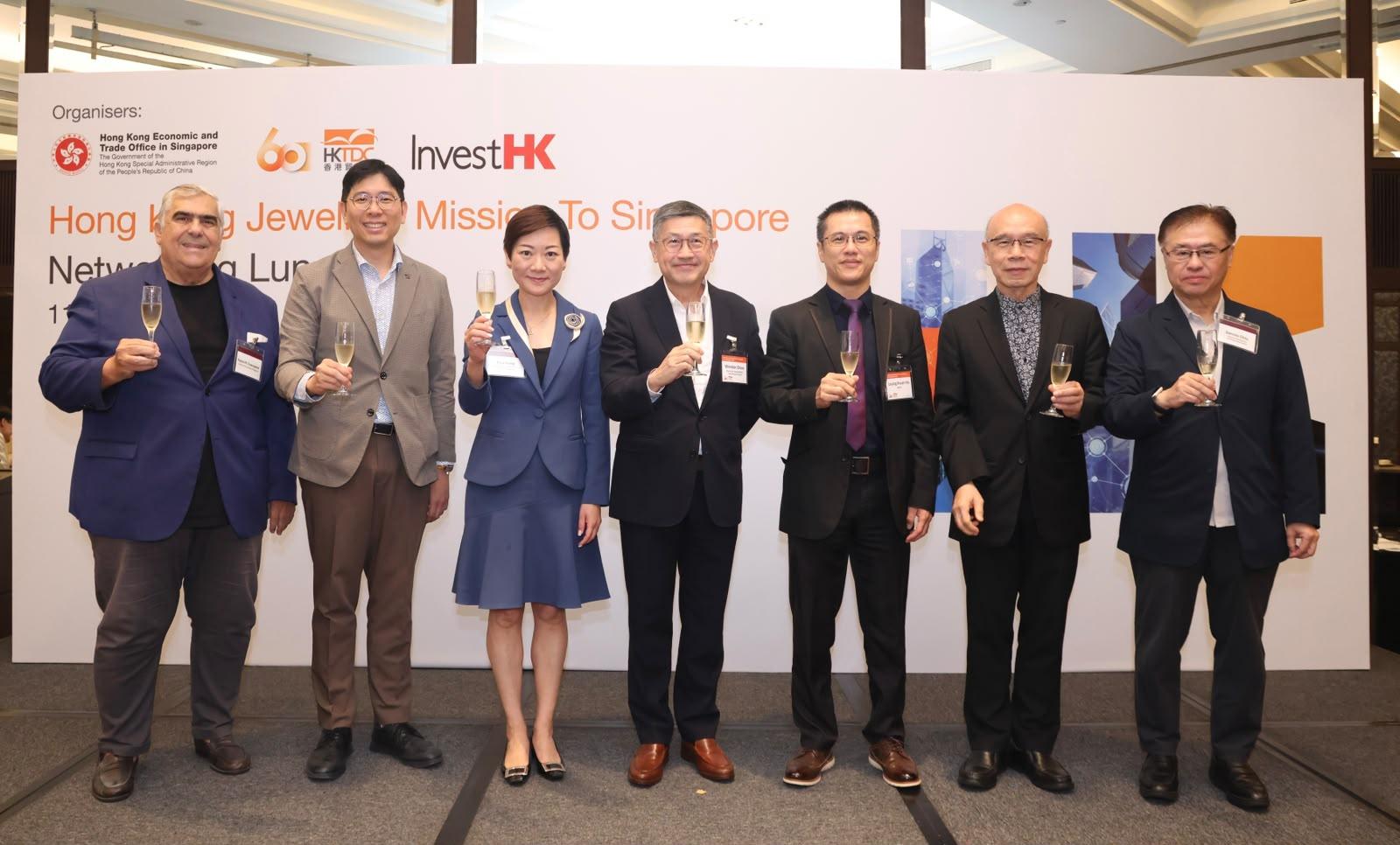
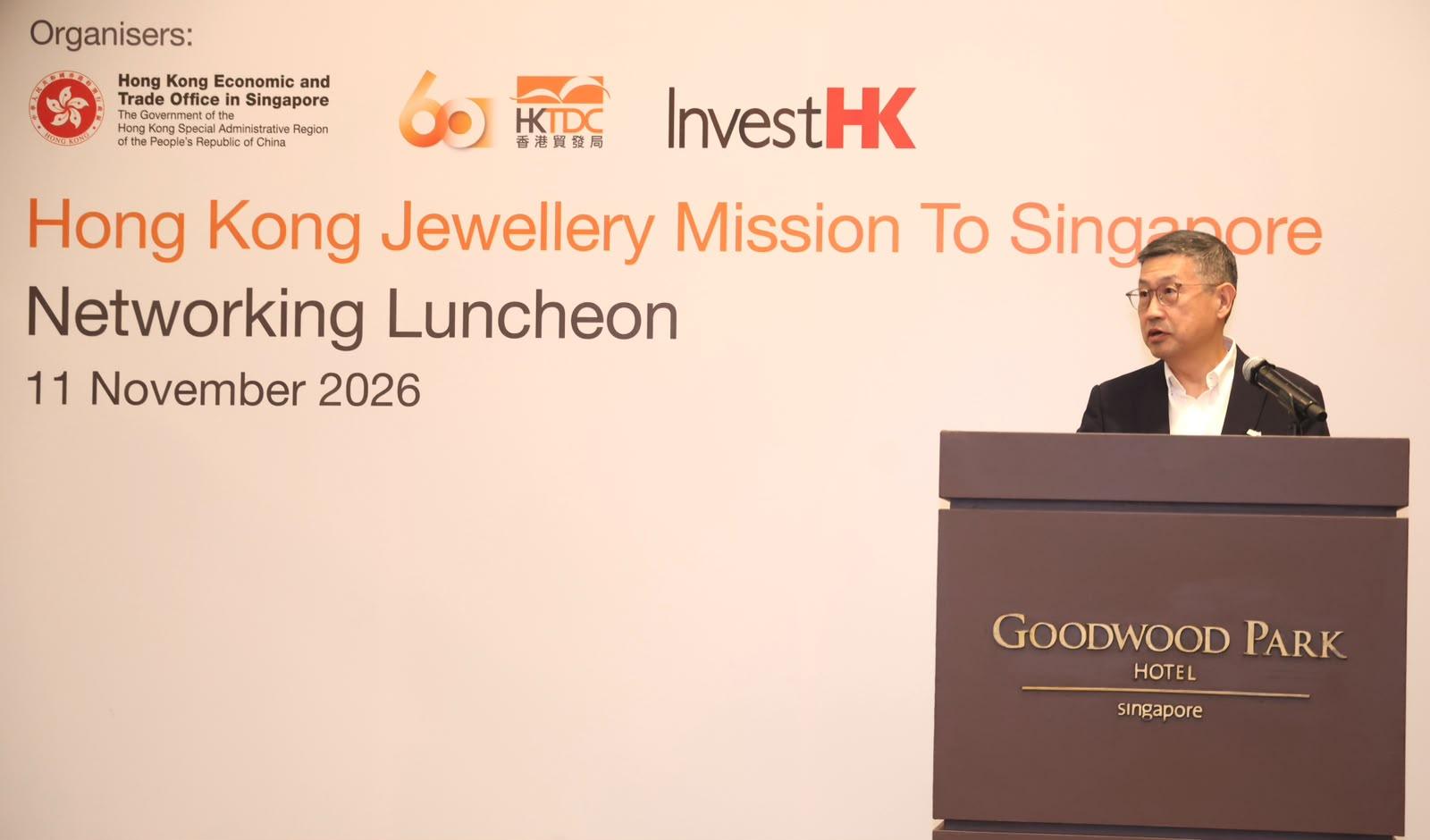
The Hong Kong Economic and Trade Office in Singapore (Singapore ETO), in collaboration with the Hong Kong Trade Development Council (HKTDC) and Invest Hong Kong, co-organised a networking luncheon in Singapore today (November 11) for the visiting HKTDC jewellery mission. The event aimed to promote exchanges and business collaboration between the jewellery industries of Hong Kong and Singapore. The Singapore mission is a key promotional activity under the Economic and Trade Express initiative, which helps Hong Kong companies seize overseas opportunities while attracting more enterprises to invest and establish operations in Hong Kong.
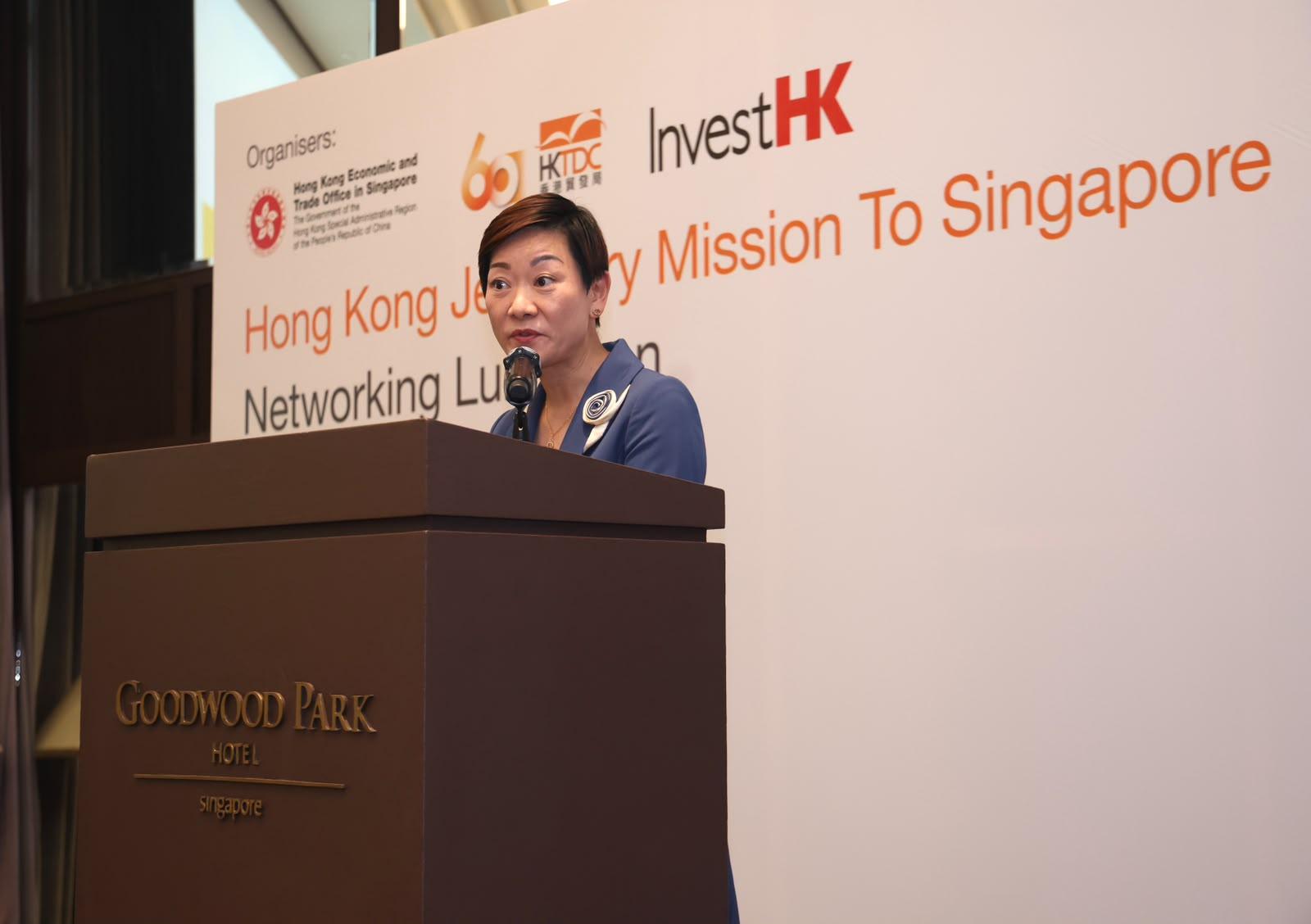
Speaking at the luncheon, the Director of the Singapore ETO, Ms Elsa Hung, highlighted Hong Kong’s strengths as an international jewellery trading hub. With its distinctive advantages under “one country, two systems”, Hong Kong serves as a “super connector” and “super value-adder” between the Chinese Mainland and overseas markets. In the first eight months of 2026, the value of Hong Kong’s exports of jewellery, goldsmiths’ and silversmiths’ wares rose by more than 47 per cent year-on-year to around US$31 billion, while jewellery imports grew by over 50 per cent to US$40 billion. The two international jewellery shows held in Hong Kong also attracted around 4 000 exhibitors from more than 40 countries and regions.
Ms Hung also outlined the First Five-Year Plan for Economic and Social Development of the Hong Kong Special Administrative Region (2026-2030) (Hong Kong’s Five-Year Plan) and the Chief Executive’s 2026 Policy Address. Unveiled in September 2026, Hong Kong’s Five-Year Plan sets out a clear roadmap to strengthen Hong Kong’s core advantages and advance the “four centres and one hub”, reinforcing its status as an international financial, maritime and trade centre and international aviation hub, and as an international innovation and technology centre and a global hub for high-calibre talent.
In particular, she highlighted that Hong Kong is building a comprehensive jewellery and precious-metals ecosystem by accelerating the development of an international gold trading market, which includes a central clearing and settlement system for gold to be formally launched in the first quarter of 2027, and enhanced cross-border connectivity with the Shanghai Gold Exchange. To fully support the development of this ecosystem, the city is implementing targeted initiatives such as establishing a dedicated Gold Hotline to provide one-stop support for overseas gold traders, and expanding storage and refining capacities.
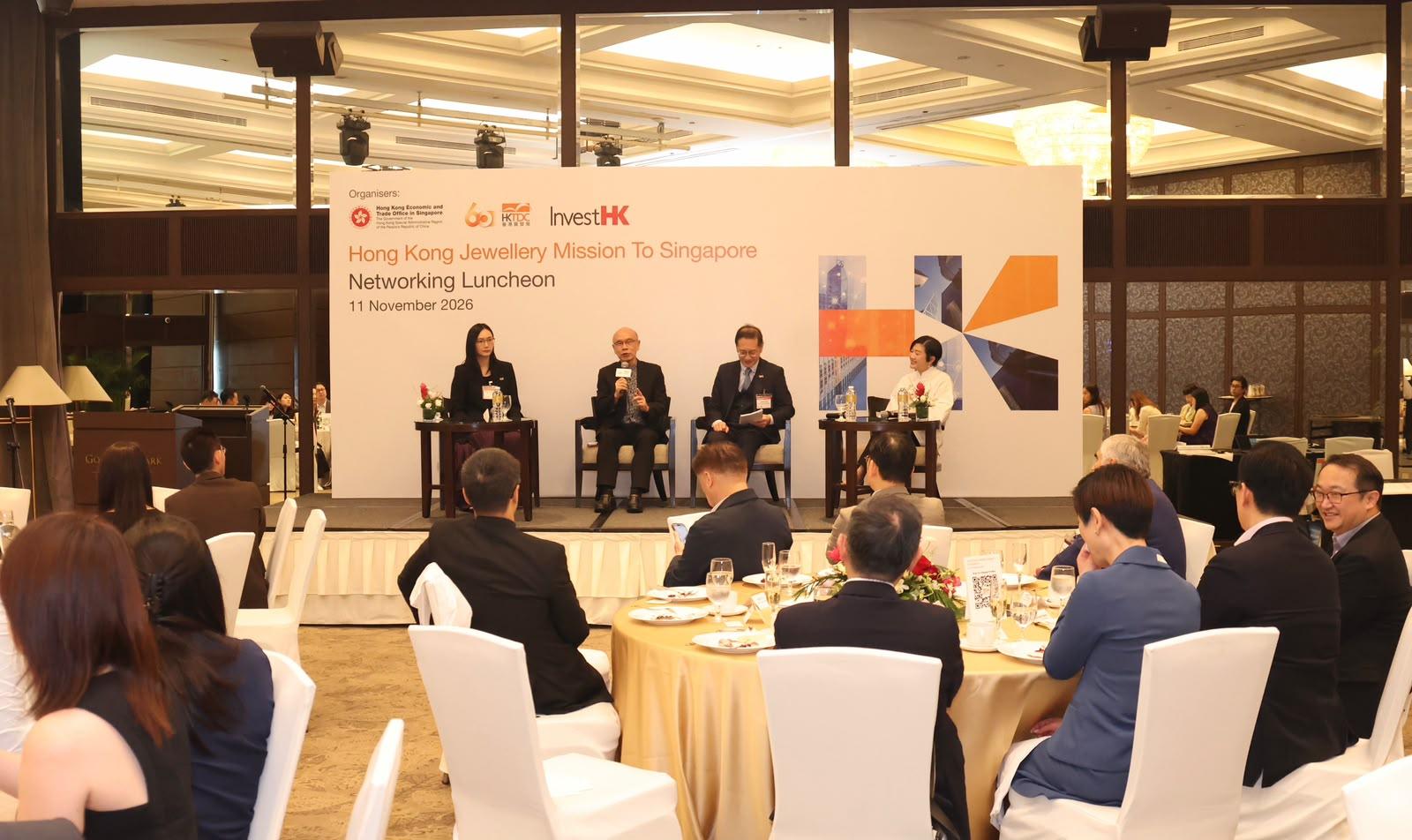
The luncheon also featured a panel discussion on market development trends and collaboration opportunities in the Hong Kong and Singapore jewellery sectors, bringing together around 80 business leaders, industry representatives and buyers from both regions. Following the luncheon, the mission also held one-on-one business matching meetings with local buyers.
Led by the HKTDC, the mission comprised 25 representatives from Hong Kong’s jewellery industry and visited Singapore from November 10 to 13 to engage with local industry players, gain insights into the latest market trends, and explore potential collaboration opportunities.
Following is a question by Dr the Hon Johnny Ng and a written reply by the Secretary for Justice, Mr Paul Lam, SC, in the Legislative Council today (November 11):
Question:
The National 14th Five-Year Plan has identified Hong Kong as a centre for international legal and dispute resolution services in the Asia-Pacific region, and the 15th Five-Year Plan further deepens Hong Kong’s role as above. There are views that, with the changes in the geopolitical landscape and competition among cities in the Asia-Pacific region, Hong Kong’s legal and dispute resolution services face new opportunities and challenges. In this connection, will the Government inform this Council:
(1) of the number of cases brought to Hong Kong from overseas for arbitration or mediation over the past two years, and of the number and proportion of those involving emerging markets;
(2) given that the SAR Government is actively establishing economic and trade ties with countries in the Middle East, in ASEAN and along the Belt and Road, of the specific measures in place to promote Hong Kong’s common law system, as well as arbitration and mediation services, to businesses in those regions, with a view to attracting them to adopt Hong Kong law as the applicable law for their contracts and choose Hong Kong as the seat for dispute resolution;
(3) given that the Chief Executive’s 2026 Policy Address proposes that the Government will continue to implement, in collaboration with the legal and sports sectors, the Pilot Scheme on Sports Dispute Resolution, exploring co-operation opportunities with international and regional sports associations, of the number of applications received since the launch of the pilot scheme, its effectiveness, and the types of sports disputes involved; and of the specific strategies and timetables in place for attracting international and regional sports organisations to establish presence in Hong Kong, or for prompting relevant sports organisations to designate Hong Kong as the preferred seat for arbitration and mediation of sports disputes in their articles of association, with a view to developing Hong Kong into an international sports dispute-resolution centre;
(4) following the introduction of policy measures such as the Guangdong-Hong Kong-Macao Greater Bay Area Mediator Accreditation Standards, how the authorities will further promote the substantive alignment and mutual recognition of legal mechanisms across Guangdong, Hong Kong and Macao; and whether they will push for further expansion of the scope of “allowing Hong Kong-invested enterprises to adopt Hong Kong law” and “allowing Hong Kong-invested enterprises to choose for arbitration to be seated in Hong Kong”; and
(5) of the latest development and financial support in promoting the digital transformation of the local legal and dispute resolution sectors (e.g. online dispute resolution platforms and artificial intelligence-based legal support systems); and of the latest specific measures to leverage Hong Kong’s strengths in innovation and technology to position Hong Kong as a LawTech hub in the region?
Reply:
President,
Regarding the questions raised by Dr the Hon Johnny Ng, having consulted the Culture, Sports and Tourism Bureau (CSTB), our reply is as follows:
(1) Under the Arbitration Ordinance (Cap. 609) and the Mediation Ordinance (Cap. 620), mediation and arbitration are generally confidential dispute resolution processes. The Department of Justice (DoJ) does not maintain the requested case statistics.
The Hong Kong International Arbitration Centre (HKIAC) publishes its case statistics annually which may be of reference purpose. Of the 388 arbitrations submitted to the HKIAC in 2025, 84.3 per cent were international arbitrations (i.e. defined by the HKIAC as having at least one party out of Hong Kong), 45.4 per cent involved no Hong Kong parties, 58.2 per cent involved no Chinese Mainland parties and 13.7 per cent involved no parties from Asia. Of 352 arbitrations submitted to the HKIAC in 2024, 76.4 per cent were international arbitration, 41.5 per cent involved no Hong Kong parties, 59.4 per cent involved no Chinese Mainland parties and 14.5 per cent involved no parties from Asia. The HKIAC’s statistics do not provide a separate breakdown for emerging markets.
(2) To attract enterprises from the Middle East, the Association of Southeast Asian Nations (ASEAN) and countries along the Belt and Road to choose Hong Kong law as governing law of the contracts and to select Hong Kong as a venue for resolving disputes arising from contracts, the DoJ has in recent years undertaken a series of proactive, comprehensive and targeted promotional measures, including senior officials leading delegations to visit abroad and promote Hong Kong’s legal, arbitration and mediation services, as well as actively signing memoranda of co-operation with local government departments and institutions so as to drive communication and exchange through high-level interactions, foster mutual understanding and establish mutual trust.
The promotional measures include: (i) the Secretary for Justice led a cross professional delegation of about 40 members comprising members of Hong Kong’s legal and dispute resolution sectors, as well as the financial and accounting sectors to visit Kazakhstan and Uzbekistan in August 2026 to strengthen the exchange and co-operation among the legal and professional service sectors of Hong Kong and the two places, and to promote Hong Kong’s advantage of connecting the Chinese Mainland and the world and the strength of its professional services; (ii) the Secretary for Justice and the Deputy Secretary for Justice led, on multiple occasions, delegations or attended international and regional legal events related to ASEAN (such as the China-ASEAN Prosecutors-General Conference, the China-ASEAN Commercial Law Forum, China Conference: Southeast Asia, etc) promoting Hong Kong’s advantages brought by its unique common law system, international legal talents and commercial mediation and arbitration to ASEAN government and business sectors as well as the legal sector; and (iii) in May 2024, the Secretary for Justice led a delegation of about 30 members, comprising representatives from the Law Society of Hong Kong, the Hong Kong Bar Association, the Hong Kong Exchanges and Clearing Limited, Invest Hong Kong and other related sectors to visit the Middle East to promote legal professional services developments and exchanges with Saudi Arabia and the United Arab Emirates.
(3) The Pilot Scheme on Sports Dispute Resolution, launched by the DoJ and supported by the CSTB, commenced accepting applications for resolving sports disputes on February 13, 2026. Since its rollout, the said pilot scheme has received multiple enquiries, has been actively processing applications and has recorded successfully mediated cases, overall demonstrating promising progress. As of September this year, the total number of sports dispute mediation and arbitration cases handled under the Pilot Scheme on Sports Dispute Resolution has reached double digits. Subject to compliance with the confidentiality requirements for mediation and arbitration, the DoJ will share further information on the operation of the said pilot scheme with the public in due course.
The CSTB has launched the three-year pilot scheme to strengthen the presence of Hong Kong in Asian and international sports associations in April this year to provide financial support for national sports associations (NSAs) in Hong Kong to attract Asian and international sports associations to establish a presence in Hong Kong by setting up their headquarters or regional headquarters in Hong Kong. The Pilot Scheme, through the NSAs in Hong Kong, provides operational grant of up to $800,000 per year for a period of three years to Asian or international sports organisations that established a presence in Hong Kong. As at the end of October this year, the Asian Bowling Federation, the Asian Squash Federation, the International Shuttlecock Federation, the International Dragon Boat Federation, the Asia Flying Disc Federation, as well as the Asian Rowing Federation have set up headquarters in Hong Kong. The CSTB will continue to support, through NSAs in Hong Kong, Asian or international sports associations to establish a presence in Hong Kong, and encourage NSAs to strengthen ties with the relevant associations.
As the administering body for the Pilot Scheme on Sports Dispute Resolution, the Asian-African Legal Consultative Organization Hong Kong Regional Arbitration Centre has also published a model clause for sports dispute resolution on its website, and actively visits various NSAs to encourage them to adopt the model clause and promote the said pilot scheme.
At the same time, the DoJ is actively exploring co-operation with international and regional sports organisations, while continuing to collaborate with the legal and sports sectors to organise promotional and training events on sports dispute resolution, including co-organising the Sports Dispute Resolution Summit with the Law Society of Hong Kong and the Hong Kong Bar Association in December 2026, so as to promote the Pilot Scheme on Sports Dispute Resolution and develop Hong Kong into an international sports dispute resolution centre.
(4) Promoting the alignment and collaboration of legal mechanisms among the three jurisdictions within the Guangdong-Hong Kong-Macao Greater Bay Area (GBA) must take place within the framework of the national Constitution and the Basic Law. It is essential to maintain clear distinctions between the legal systems of the Mainland, Hong Kong, and Macao, while simultaneously establishing connections between them. Only by doing so, the unique advantages of Hong Kong’s common law system be fully leveraged to serve the overall interests of the nation.
The DoJ published the Action Plan on the Construction of Rule of Law in the GBA in April 2024, outlining the DoJ’s blueprint for the construction of rule of law in the GBA. The Action Plan underpins the guiding principle of “Three Interfaces, Two Connects and One GBA” and the development direction, whilst at the same time systematically consolidates specific policy measures we seek to effectively implement, so as to assist the construction of an internationalised GBA with a vibrant market and a solid basis on rule of law for our country, capitalising the GBA’s unique strengths of “one country, two systems and three jurisdictions”.
Since February 2025, the measures of “allowing Hong Kong-invested enterprises to adopt Hong Kong law” and “allowing Hong Kong-invested enterprises to choose for arbitration to be seated in Hong Kong” have been further expanded – “allowing Hong Kong-invested enterprises to adopt Hong Kong law” has expanded from Qianhai to the entire cities of Shenzhen and Zhuhai, while “allowing Hong Kong-invested enterprises to choose for arbitration to be seated in Hong Kong” has been further extended beyond the Free Trade Zones to cover all nine Chinese Mainland municipalities in the GBA. We will continue to maintain contact with the relevant Mainland authorities, industry sectors and other stakeholders, closely monitor the implementation of the measures, seeking to create favourable conditions for a further extension of the scope of these measures in due course.
The legal departments of Guangdong, Hong Kong, and Macao have been committed to promoting the establishment of several GBA Standards involving mediation and arbitration in the GBA, including the GBA Mediator Accreditation Standards, the GBA Mediator Code of Conduct Best Practice, the GBA Cross-boundary Disputes Mediation Model Rules and Working Guidelines on the Panel of GBA Arbitrators, and jointly published the GBA Mediator Panel and the GBA Arbitrator Panel.
At this year’s joint conference, the legal departments of Guangdong, Hong Kong, and Macao will further explore pathways to promote the establishment of the GBA arbitration model rules, so as to provide a more stable and predictable legal environment for cross-boundary commercial activities in the region.
To adopt and implement GBA standards systematically and strategically, and under the support of the Guangdong-Hong Kong-Macao Greater Bay Area Legal Departments Joint Conference, the DoJ actively promotes the establishment of a Platform for Promotion of the GBA Standards on Arbitration and Mediation, bringing together mediation and arbitration institutions in the GBA for promoting the adoption of relevant GBA standards.
At the same time, the DoJ will actively implement the measures proposed in the Policy Address 2026 to set up a Task Force on Expediting the Alignment of Rules and Mechanisms in Guangdong, Hong Kong and Macao in the first quarter of 2027. Led by the Deputy Secretary for Justice, the Task Force will co-ordinate relevant bureaux and work with corresponding government departments in the Chinese Mainland and Macao to study and expedite the alignment of rules and mechanisms in the GBA.
(5) The DoJ is committed to promoting the development of lawtech, and has established the Consultation Group on LawTech Developmentin January 2025. With the assistance and support of the Consultation Group, the DoJ has been exchanging views with the sector and various stakeholders through diverse means to understand the sector’s needs and the development of the lawtech market, and encourage the sector to make better use of lawtech and formulates lawtech-related policies and measures. Tasks completed in 2025 and 2026 include the organisation of five rounds of LexGoTech Roundtables, the release of the LexGoTech Roundtables Report, and the launch of the Survey of LawTech Service Providers in Hong Kong. The DoJ also hosted the Hong Kong LawTech Fest for two consecutive years during its annual flagship programme, the Hong Kong Legal Week, which is well-received.
The DoJ has been receiving extensive feedback from the sector, academics, and the relevant stakeholders regarding the adoption of lawtech and the development of the legal sector. The DoJ notes that small and medium-sized law firms, as well as junior barristers, are particularly concerned about the financial burden of adopting lawtech tools. As a response to the needs of the sector, the DoJ launched the Funding Scheme for LawTech Solution Subscription by the Hong Kong Legal Sector (Funding Scheme) in November 2026. The Funding Scheme aims to encourage the Hong Kong legal sector to enhance their capability to adopt lawtech, further strengthening the competitiveness of legal services and deepening Hong Kong’s status as an international legal and dispute resolution services centre.
The DoJ also released in November 2026 a Guidance Note on the Use of LawTech in Legal Practice (Guidance Note). The Guidance Note seeks to promote the responsible, secure, and ethical use of lawtech by legal professionals in their professional practice. The Guidance Note, though not legally binding, has been formulated to incorporate comments and suggestions from the legal professional bodies, the Consultation Group, relevant experts and stakeholders. It provides key principles and practical guidance to assist legal professionals to harness lawtech’s benefits while safeguarding against the possible risks associated with the use of lawtech and upholding their fundamental professional duties. read more