Politics

image_pdfimage_print

UN agriculture agency warns of water scarcity in North Africa and Near East

9 March 2017 – Accessible fresh water in North Africa and the Middle East has fallen by two-thirds over the past 40 years, posing a huge challenge requiring &#8220an urgent and massive response,&#8221 the head of the United Nations agriculture agency said today.

Access to water is a fundamental need for food security, human health and agriculture, and sustainable water use for agriculture requires transforming food systems and diets, said Jose Graziano da Silva, the Director-General of the Food and Agriculture Organization (FAO), in a news release on his visit to Egypt.

Per capita availability of fresh water in the region is now 10 times less than the world average, he said, underscoring the need for a significant overhaul of farming systems.

A recent FAO study showed that higher temperatures may shorten growing seasons in the region by 18 days and reduce agricultural yields a further 27 per cent to 55 per cent less by the end of this century.

The rising sea level in the Nile Delta is exposing Egypt to the danger of losing substantial parts of the most productive agriculture land due to salinization.

Moreover, &#8220competition between water-usage sectors will only intensify in the future between agriculture, energy, industrial production and household needs,&#8221 he said.

Mr. Graziano da Silva attended a high-level meeting on FAO’s collaboration with Egypt on the &#391.5 million feddan initiative,’ the Government’s plan to reclaim eventually up to two million hectares of desert land for agricultural and other uses.

Policy advice and best practice ideas on the governance of irrigation schemes is a key offering in FAO’s Near East and North Africa Water Scarcity Initiative, backed now by a network of more than 30 national and international organizations.

The initiative has gained momentum, buoyed by its endorsement by the League of Arab States as well as donor support, Mr. Graziano da Silva said, noting that urgent actions supporting it include measures aimed at reducing food loss and waste and bolstering the resilience of smallholders and family farmers.

read more
UN agriculture agency warns of water scarcity in North Africa and Near East

9 March 2017 – Accessible fresh water in North Africa and the Middle East has fallen by two-thirds over the past 40 years, posing a huge challenge requiring &#8220an urgent and massive response,&#8221 the head of the United Nations agriculture agency said today.

Access to water is a fundamental need for food security, human health and agriculture, and sustainable water use for agriculture requires transforming food systems and diets, said Jose Graziano da Silva, the Director-General of the Food and Agriculture Organization (FAO), in a news release on his visit to Egypt.

Per capita availability of fresh water in the region is now 10 times less than the world average, he said, underscoring the need for a significant overhaul of farming systems.

A recent FAO study showed that higher temperatures may shorten growing seasons in the region by 18 days and reduce agricultural yields a further 27 per cent to 55 per cent less by the end of this century.

The rising sea level in the Nile Delta is exposing Egypt to the danger of losing substantial parts of the most productive agriculture land due to salinization.

Moreover, &#8220competition between water-usage sectors will only intensify in the future between agriculture, energy, industrial production and household needs,&#8221 he said.

Mr. Graziano da Silva attended a high-level meeting on FAO’s collaboration with Egypt on the &#391.5 million feddan initiative,’ the Government’s plan to reclaim eventually up to two million hectares of desert land for agricultural and other uses.

Policy advice and best practice ideas on the governance of irrigation schemes is a key offering in FAO’s Near East and North Africa Water Scarcity Initiative, backed now by a network of more than 30 national and international organizations.

The initiative has gained momentum, buoyed by its endorsement by the League of Arab States as well as donor support, Mr. Graziano da Silva said, noting that urgent actions supporting it include measures aimed at reducing food loss and waste and bolstering the resilience of smallholders and family farmers.

read more

Americas region adopts ‘historic’ disaster risk reduction plan at UN-backed forum in Montreal

9 March 2017 – Around 50 countries and territories of the Americas at a United Nations-supported conference in Montreal, Canada, agreed a Regional Action Plan today to better protect their citizens from the destruction caused by natural and man-made disasters.

The plan, which is the centerpiece of the Montreal Declaration outcome document, marks the end of three days of deliberation and discussion by close to 1,000 government delegations and officials; non-governmental organizations (NGOs), civil society and other representatives, under the umbrella of the UN-backed Fifth Regional Platform for Disaster Risk Reduction in the Americas.

The conference, supported by the UN Office for Disaster Risk Reduction (UNISDR), aimed to put into action the principles and priorities agreed by more than 180 countries across the world in the 2015 Sendai Framework on disaster risk reduction, named after the Japanese city in which it was adopted.

That enshrined the same priorities outlined by the Canadian Minister of Public Safety and Emergency Preparedness, Ralph Goodale, who chaired and hosted the Montreal Conference, when he summarized the thrust of Thursday’s Regional Action Plan.

He said there were 16 &#8220specific actions&#8221 arising, covering four key areas, namely understanding risk better; improving governance when it comes to dealing with disasters; improving on resilience at all levels regarding risk reduction efforts, and finally, better preparedness.

According to UNISDR, while disaster deaths have gradually fallen around the world &#8211 expect in anomalous years marked by mega-disasters such as the 2004 Indian Ocean tsunami or the 2010 Haiti earthquake &#8211 economic impacts have skyrocketed and are now estimated at $500 billion a year.

Hurricane Matthew alone caused damage estimated at $15 billion when it ripped across Haiti, Cuba, the Dominican Republic, the Bahamas, the United States and the Canadian Maritimes last October.

UNISDR chief Robert Glasser gave UN News more details of the 16-point action plan, saying “there are things like cooperating on science and technology research; on developing early warning and building back better after disasters; on embedding risk in core economic planning, on building coherence between disaster risk, climate risk and sustainable development more broadly.&#8221

Mr. Glasser said the Montreal Declaration was an &#8220historic&#8221 moment for the Americas, and marked the first time that Member States in the region had come together and agreed a collective plan to make the Sendai Framework a reality.

&#8220This is the number one an issue that effects both less developed and highly developed countries alike. It is an issue that results in huge loss of life each year and that is causing at least $500 billion a year in economic losses that is all money that could be used to fight poverty, increase access to education or healthcare or promote economic development.”

&#8220So this is not a hypothetical subject. It is a subject that is a matter of life and death and prosperity,&#8221 added Mr Glasser.

The Regional Action Plan now goes forward to the Global Platform on Disaster Risk Reduction, taking place in Cancun, Mexico, in May.

read more

Cliff walkway decorated with 3D images

Photo taken on March 7, 2017 shows 3D images created on the walkway encircling the vertical cliffs in Shiniuzhai National Geological Park in Pingjiang County, Central China’s Hunan province. Seven painters worked to complete the drawing on a 106-meter-long walkway. [Photo/Ecns.cn]

read more

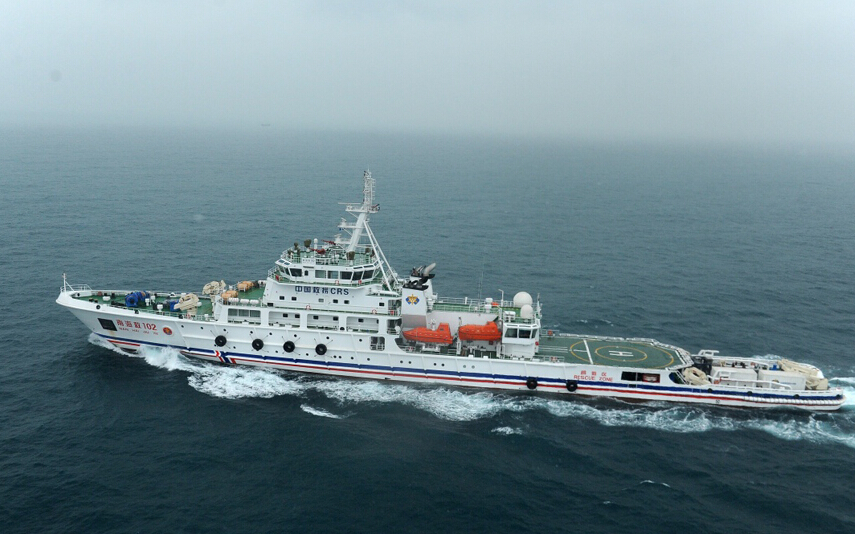
Most advanced rescue ship put into use in S. China Sea


Nanhaijiu 102, China’s most advanced rescue vessel put into service on Wednesday in the South China Sea. [Xinhua photo]

China’s first vessel capable of conducting rescue in deep, open water was delivered and put into service on Wednesday in the South China Sea.

The ship, Nanhaijiu 102, is the most advanced rescue vessel in the area and will play a role in emergencies, said the Ministry of Transport.

An all-weather, high-powered rescue ship designed and built by China, is 127 meters long and 16 meters wide, with displacement of 7,300 tonnes and range of 16,000 nautical miles.

Carrying a towing system and autonomous underwater vehicle that can dive as deep as 6,000 meters, the ship is the country’s first rescue ship that can conduct air, sea and underwater searches at the same time.

The ministry said Nanhaijiu 102, which can rescue 200 people at a time, is designed for bad sea conditions including 12th grade waves and is suitable for the refueling and landing of helicopters.

China has 74 special rescue ships, among which 31 are in southern sea areas. In addition, the country has 20 rescue helicopters, according to the ministry.

read more