‘Holistic thinking’ needed for peace, development in Lake Chad region – Deputy UN chief Mohammed

9 March 2017 – Highlighting the multifaceted nature of the crisis in Africa’s Lake Chad Basin, the deputy United Nations chief underlined the need for a holistic approach that includes responding to the Boko Haram as well as closing the gap between humanitarian assistance and development interventions.

&#8220Lasting recovery will entail supporting reconstruction of schools, health centres, and reviving essential infrastructure […] that support the necessary livelihoods,&#8221 Amina Mohammed, the UN Deputy Secretary-General, told the Security Council today.

&#8220Effective prevention of future radicalization and violence will also entail comprehensive responses that benefit all members of society,&#8221 she added.

Ms. Mohammed’s briefing follows last week’s visit of the Security Council to the region and a global UN-backed conference to raise funding to sustain critical aid operations in the region, held on 24 February.

According to estimates, more than 10 million people in the Lake Chad Basin are in need of humanitarian assistance, including more than seven million needing food support, with 515,000 children affected by severe acute malnutrition.

Noting the response by UN agencies to support the local populations and the contributions pledged by countries at the Oslo Humanitarian Conference, the Deputy Secretary-General said that the needs outstripped the resources and urged UN Member States to ensure that the $1.5 billion humanitarian appeal is funded fully.

Speaking on the region’s security challenges and the activities of Boko Haram, Ms. Mohammed informed the Council of UN’s work to document information on human rights abuses, as well as its assistance to affected countries to ensure that their counter-terrorism efforts fully complied with international human rights, humanitarian and refugee laws.

In particular, she spoke of the plight of women affected by Boko Haram, many of whom are still displaced in camps, detained by the authorities, or are struggling to reintegrate into their communities.

&#8220We also need to scale up efforts to provide access to sexual and reproductive health and psychosocial support and livelihood support for female-headed households,&#8221 she said, noting the need to ensure that women have key roles in the response &#8211 from food distribution and camp management to all efforts to counter violent extremism, restore state authority and build peace.

Further in her remarks, Ms. Mohammed also underlined the need to address the root causes of the crisis to achieve durable peace and of the importance of the 2030 Agenda for Sustainable Development for the region.

&#8220My single clear message today is that the solution lies in holistic thinking,&#8221 she noted, hailing the role of the African Union and the continent’s regional organizations to peace, security and the integrated implementation of the 2030 Agenda for sustainable development and Africa’s own Agenda 2063.


UN agriculture agency warns of water scarcity in North Africa and Near East

9 March 2017 – Accessible fresh water in North Africa and the Middle East has fallen by two-thirds over the past 40 years, posing a huge challenge requiring &#8220an urgent and massive response,&#8221 the head of the United Nations agriculture agency said today.

Access to water is a fundamental need for food security, human health and agriculture, and sustainable water use for agriculture requires transforming food systems and diets, said Jose Graziano da Silva, the Director-General of the Food and Agriculture Organization (FAO), in a news release on his visit to Egypt.

Per capita availability of fresh water in the region is now 10 times less than the world average, he said, underscoring the need for a significant overhaul of farming systems.

A recent FAO study showed that higher temperatures may shorten growing seasons in the region by 18 days and reduce agricultural yields a further 27 per cent to 55 per cent less by the end of this century.

The rising sea level in the Nile Delta is exposing Egypt to the danger of losing substantial parts of the most productive agriculture land due to salinization.

Moreover, &#8220competition between water-usage sectors will only intensify in the future between agriculture, energy, industrial production and household needs,&#8221 he said.

Mr. Graziano da Silva attended a high-level meeting on FAO’s collaboration with Egypt on the &#391.5 million feddan initiative,’ the Government’s plan to reclaim eventually up to two million hectares of desert land for agricultural and other uses.

Policy advice and best practice ideas on the governance of irrigation schemes is a key offering in FAO’s Near East and North Africa Water Scarcity Initiative, backed now by a network of more than 30 national and international organizations.

The initiative has gained momentum, buoyed by its endorsement by the League of Arab States as well as donor support, Mr. Graziano da Silva said, noting that urgent actions supporting it include measures aimed at reducing food loss and waste and bolstering the resilience of smallholders and family farmers.


UN agriculture agency warns of water scarcity in North Africa and Near East

9 March 2017 – Accessible fresh water in North Africa and the Middle East has fallen by two-thirds over the past 40 years, posing a huge challenge requiring &#8220an urgent and massive response,&#8221 the head of the United Nations agriculture agency said today.

Access to water is a fundamental need for food security, human health and agriculture, and sustainable water use for agriculture requires transforming food systems and diets, said Jose Graziano da Silva, the Director-General of the Food and Agriculture Organization (FAO), in a news release on his visit to Egypt.

Per capita availability of fresh water in the region is now 10 times less than the world average, he said, underscoring the need for a significant overhaul of farming systems.

A recent FAO study showed that higher temperatures may shorten growing seasons in the region by 18 days and reduce agricultural yields a further 27 per cent to 55 per cent less by the end of this century.

The rising sea level in the Nile Delta is exposing Egypt to the danger of losing substantial parts of the most productive agriculture land due to salinization.

Moreover, &#8220competition between water-usage sectors will only intensify in the future between agriculture, energy, industrial production and household needs,&#8221 he said.

Mr. Graziano da Silva attended a high-level meeting on FAO’s collaboration with Egypt on the &#391.5 million feddan initiative,’ the Government’s plan to reclaim eventually up to two million hectares of desert land for agricultural and other uses.

Policy advice and best practice ideas on the governance of irrigation schemes is a key offering in FAO’s Near East and North Africa Water Scarcity Initiative, backed now by a network of more than 30 national and international organizations.

The initiative has gained momentum, buoyed by its endorsement by the League of Arab States as well as donor support, Mr. Graziano da Silva said, noting that urgent actions supporting it include measures aimed at reducing food loss and waste and bolstering the resilience of smallholders and family farmers.


Cliff walkway decorated with 3D images

Photo taken on March 7, 2017 shows 3D images created on the walkway encircling the vertical cliffs in Shiniuzhai National Geological Park in Pingjiang County, Central China’s Hunan province. Seven painters worked to complete the drawing on a 106-meter-long walkway. [Photo/Ecns.cn]


Most advanced rescue ship put into use in S. China Sea


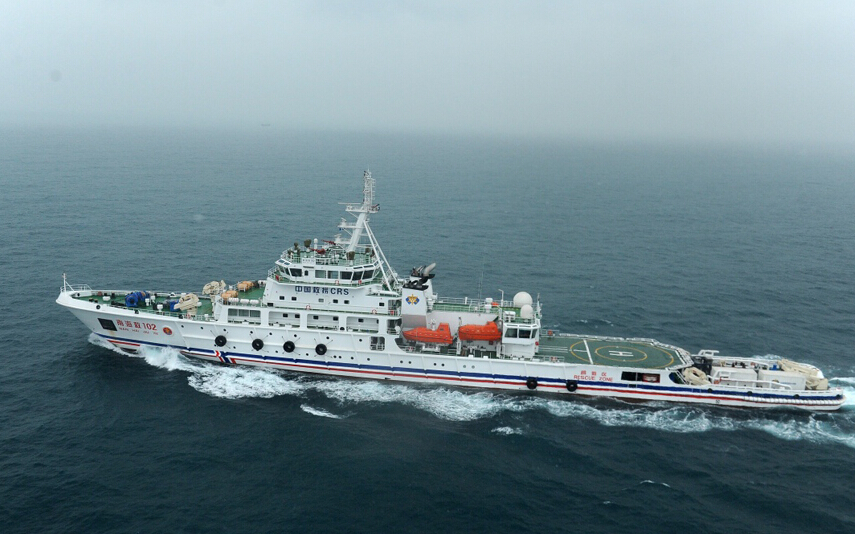
Nanhaijiu 102, China’s most advanced rescue vessel put into service on Wednesday in the South China Sea. [Xinhua photo]

China’s first vessel capable of conducting rescue in deep, open water was delivered and put into service on Wednesday in the South China Sea.

The ship, Nanhaijiu 102, is the most advanced rescue vessel in the area and will play a role in emergencies, said the Ministry of Transport.

An all-weather, high-powered rescue ship designed and built by China, is 127 meters long and 16 meters wide, with displacement of 7,300 tonnes and range of 16,000 nautical miles.

Carrying a towing system and autonomous underwater vehicle that can dive as deep as 6,000 meters, the ship is the country’s first rescue ship that can conduct air, sea and underwater searches at the same time.

The ministry said Nanhaijiu 102, which can rescue 200 people at a time, is designed for bad sea conditions including 12th grade waves and is suitable for the refueling and landing of helicopters.

China has 74 special rescue ships, among which 31 are in southern sea areas. In addition, the country has 20 rescue helicopters, according to the ministry.