Tag Archives: China

image_pdfimage_print

CFS urges public not to consume two kinds of prepackaged cheese spread that may be contaminated with Clostridium botulinum

     The Centre for Food Safety (CFS) of the Food and Environmental Hygiene Department today (June 19) urged the public not to consume two kinds of prepackaged cheese spread imported from the United Kingdom (UK) due to possible contamination with Clostridium botulinum. The trade should also stop using or selling the products concerned immediately if they possess them.

     Product details are as follows:

Product name: Original Cheese Spread
Brand: Primula
Place of origin: UK
Importer: CitySuper
Packing size: 150 grams per tube
Best-before dates: December 29, 2020; January 7, 2021; January 12, 2021; and January 14, 2021

Product name: Cheese Spread with Chives
Brand: Primula
Place of origin: UK
Importer: CitySuper
Packing size: 150g per tube
Best-before dates: December 29, 2020; January 5, 2021; January 12, 2021; and January 19, 2021

     A CFS spokesman said, “The CFS, through its Food Incident Surveillance System, noted notices issued by the UK Food Standards Agency that the manufacturer of the products is recalling the above-mentioned batches of the products which may be contaminated with Clostridium botulinum due to a production fault.”

     Upon learning of the incident, the CFS immediately followed up with major local importers and retailers. Preliminary investigation found that the above-mentioned importer had imported the above batches of the products which were sold in its retail outlets. Upon notification by the UK manufacturer earlier, the importer concerned had already stopped sale, removed from shelves the affected products and initiated a recall. Members of the public may call the importer’s hotline at 2736 3866 during office hours for enquiries about the recall.

     “Foodborne botulism is caused by ingestion of food containing very potent neurotoxin produced by Clostridium botulinum. Symptoms of intoxication include marked fatigue, weakness and vertigo, often followed by blurred vision and difficulty in speaking and swallowing. The toxin may paralyse the breathing muscles and cause death. Onset of symptoms is usually around 18 to 36 hours after the ingestion of the toxin, but may range from four hours to eight days,” the spokesman said.

     The spokesman urged consumers not to consume the affected batches of the products if they have bought any. The trade should also stop using or selling the products concerned immediately if they possess them.

     The CFS will alert the trade to the incident, continue to follow up and take appropriate action. Investigation is ongoing. read more
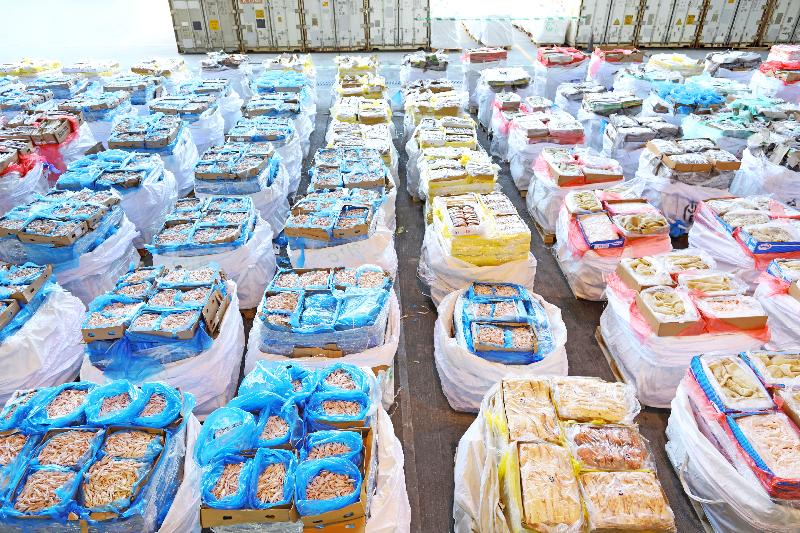
Hong Kong Customs spares no effort to combat sea smuggling of frozen meat (with photos)

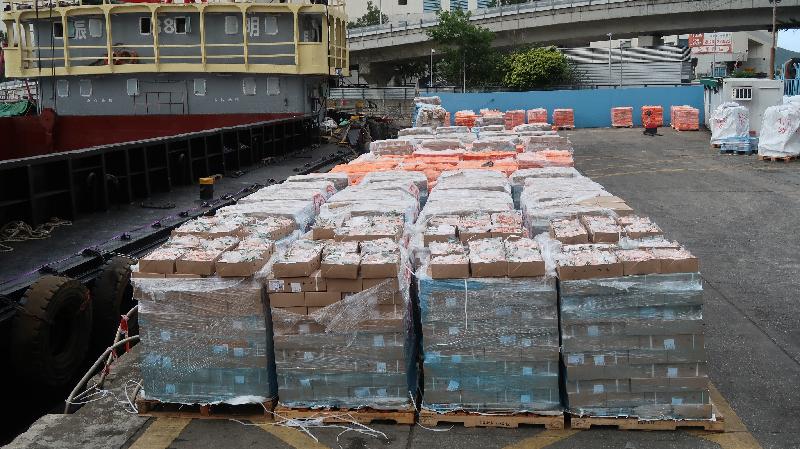
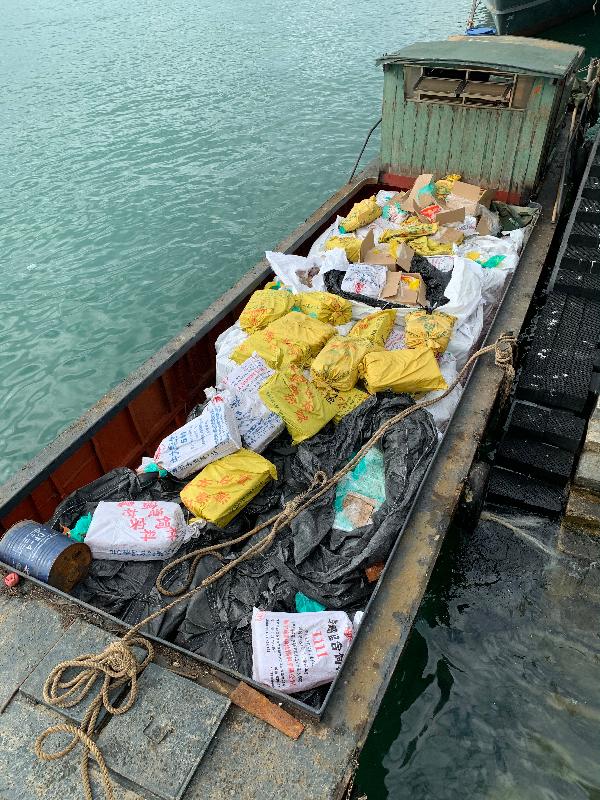
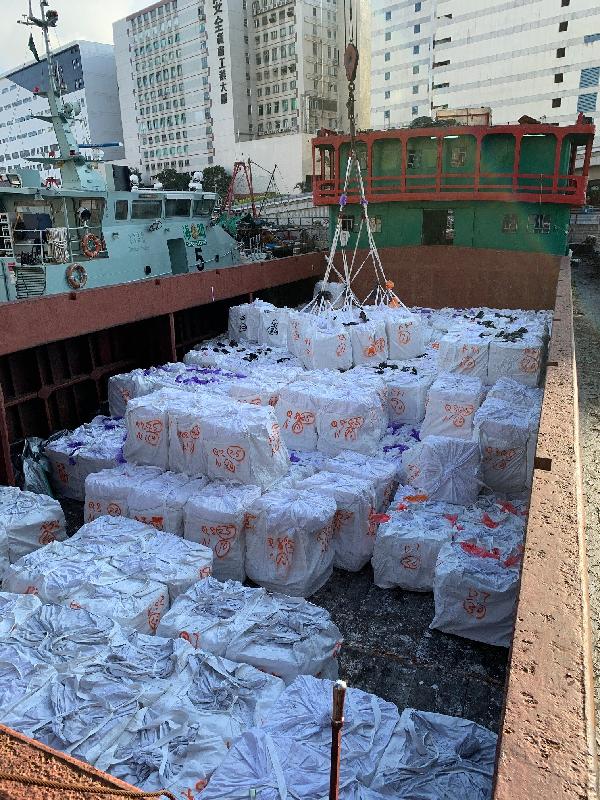
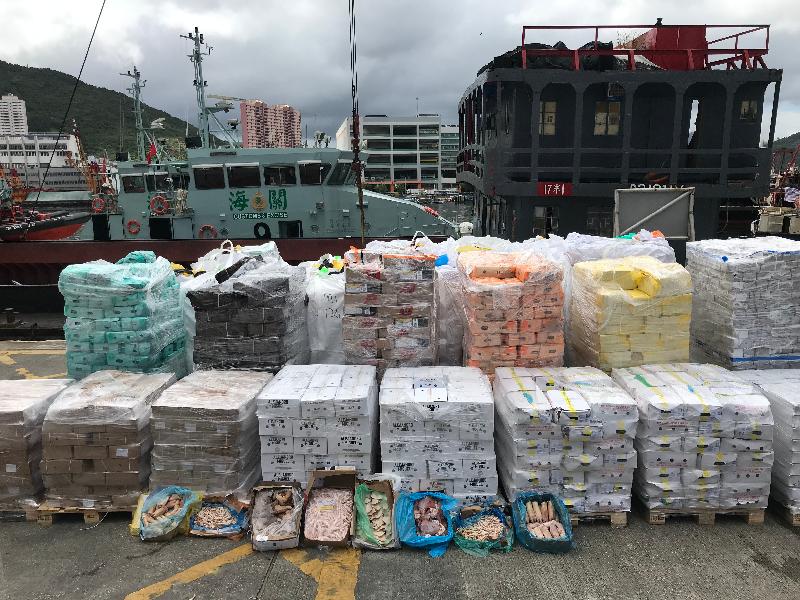
     Hong Kong Customs has conducted a series of enforcement actions targeting frozen meat smuggling activities in Hong Kong’s western waters since early this year, and has mounted a special operation codenamed “Minesweeping” from early May to present with a view to expand enforcement efforts. As at June 17 this year, a total of 23 sea smuggling cases of frozen meat have been detected, resulting in seizures of about 2 500 tonnes of suspected smuggled frozen meat, including beef, chicken feet and pork feet, with an estimated market value of about $90 million. The seizure amount this year has surpassed the total amount recorded over the past 11 years.

     Since early this year, Customs had discovered an upward trend of frozen meat smuggling activities from Hong Kong to the Mainland. Smugglers would first use barges to transport large batches of frozen meat to the western waters of Hong Kong. Then they would move the frozen meat from the barges to speedboats or fishing vessels by nightfall or late evening in order to smuggle the frozen meat into the Mainland.

     Customs has detected 13 frozen meat smuggling cases from January to April this year and has made seizures of about 800 tonnes of suspected smuggled frozen meat with an estimated market value of about $30 million. To expand the enforcement efforts, Customs has strengthened its deployment and launched the “Minesweeping” special operation in early May to further step up enforcement against frozen meat smuggling activities. During the special operation, a total of 10 cases have been detected so far and about 1 700 tonnes of suspected smuggled frozen meat with an estimated market value of about $60 million has been seized. Both the seizure amount and market value have surpassed the total of the first four months by more than double.

     Significant results have been achieved through Customs’ operations against sea smuggling of frozen meat this year. The department stresses that it will keep up its enforcement action and will continue to fiercely combat sea smuggling of frozen meat by actively pursuing risk-management and intelligence-based enforcement strategies, along with mounting targeted anti-smuggling operations at suitable times and maintaining close co-operation in its intelligence exchanges with local and overseas law enforcement agencies to land a solid blow against relevant activities.

     Smuggling is a serious offence. Under the Import and Export Ordinance, any person found guilty of importing or exporting unmanifested cargo is liable to a maximum fine of $2 million and imprisonment for seven years.

     Members of the public may report any suspected smuggling activities to Customs’ 24-hour hotline 2545 6182 or its dedicated crime-reporting email account (crimereport@customs.gov.hk).

Photo  Photo  Photo  Photo  Photo  
read more

Man sentenced for violating compulsory quarantine regulation

     A 51-year-old man was sentenced to immediate imprisonment for three weeks by the Tuen Mun Magistrates’ Courts today (June 19) for violating the Compulsory Quarantine of Certain Persons Arriving at Hong Kong Regulation (Cap. 599C).
 
     The man was issued a compulsory quarantine order stating that he must conduct quarantine at the residential address stated by himself on the quarantine order for 14 days. The man was later found to have given a false residential address for use as the place of quarantine to an authorised officer at Shenzhen Bay Control Point upon return to Hong Kong from the Mainland on May 8. He was charged with contravening Section 9 of the Regulation and was sentenced by the Tuen Mun Magistrates’ Courts today to immediate imprisonment for three weeks.
 
     Pursuant to the Regulation, save for exempted persons, all persons who have stayed in the Mainland, Macao or Taiwan in the 14 days preceding arrival in Hong Kong, regardless of their nationality or travel documents, will be subject to compulsory quarantine for 14 days. Moreover, pursuant to the Compulsory Quarantine of Persons Arriving at Hong Kong from Foreign Places Regulation (Cap. 599E), starting from March 19, all persons arriving from countries or territories outside China would also be subject to compulsory quarantine for 14 days. Giving false or misleading information to an authorised officer is a criminal offence and offenders are subject to a maximum fine of $25,000 and imprisonment for six months. The Department of Health (DH) solemnly reminds persons under quarantine to comply with the statutory requirements and provide accurate information to authorised officers.
 
     A spokesman for the DH said the sentence sends a clear message to the community that giving false or misleading information to an authorised officer is a criminal offence and that the Government will not tolerate such actions. As of today, a total of 21 persons have been convicted by the court for offences related to violation of compulsory quarantine with sentences to imprisonment for up to three months or a fine of $10,000. The spokesman reiterated that resolute actions will be taken against anyone who has violated the law relating to compulsory quarantine. read more

Registration for Cash Payout Scheme to start on June 21

     Registration for the Cash Payout Scheme will start on June 21 (Sunday). The 21 participating banks will start accepting electronic registration from 7am that day. Special arrangements have also been made so that about 1 000 bank branches and 120 post offices across the territory will be open from 9am to 5pm to facilitate the submission of registration forms.
 
​     A Government spokesman stressed that registering electronically through banks to receive the payment with a sole-name account is the fastest and most convenient, and also the quickest way to receive the payment. Internet banking users only need to provide their local contact number and choose a sole-name account to receive the payment. People who do not have an Internet banking account may register electronically at the websites of the banks by simply providing their local contact number, their bank account number for receiving the payment and the first four alphanumeric characters of their Hong Kong permanent identity card.
 
​     Payment for electronic registrations submitted through banks from June 21 to 30 will be deposited simultaneously into the sole-name bank accounts specified by registrants from around July 8. There is no need for the public to rush for registration in the first days. For electronic registrations submitted on or after July 1, registrants will receive the payment one week after registration.
 
​     Apart from one virtual bank (i.e. ZA Bank), all the participating banks will also accept registration by paper form (Form 1). People who do not opt to register online may put completed paper registration forms into drop-in boxes at banks or mail them to GPO Box No. 182020.
 
​     People who wish to receive the payment by order cheques may submit an electronic registration form at the Hongkong Post website, or put the completed paper registration form (Form 2) into a drop-in box at a post office or mail it to GPO Box No. 182020. Registrants have to collect the cheque in person later at the chosen post office by producing the notification issued by Hongkong Post and their Hong Kong permanent identity card.
 
​     The Government spokesman reminded the public that registration by paper form will be conducted in three batches according to the registrants’ year of birth. The first batch (i.e. for persons born in 1955 or before) may submit the forms from June 21. Those submitting registration forms in the first two weeks will receive the payment or notification of cheque collection from July 20. There is no need to rush for registration during the first days or submit the paper forms in person. 
 
​     The Government held four briefing sessions on June 15 and 18 to explain details of the Scheme to representatives of about 600 elderly homes, residential care homes for persons with disabilities and non-governmental organisations, especially on how the elderly and people with specials needs may register for the Scheme and receive the payment, and the points to note for the organisations in providing assistance to them.
 
​     The public may visit the website of the Scheme (www.cashpayout.gov.hk) or call 18 2020 for detailed information on the Scheme. read more