Tag Archives: China

image_pdfimage_print

Monetary Authority Announces Countercyclical Capital Buffer Ratio for Hong Kong

The following is issued on behalf of the Hong Kong Monetary Authority:

     The Monetary Authority announced today (May 5) that the countercyclical capital buffer (CCyB) ratio for Hong Kong remains unchanged at 1 per cent.
      
     “The latest economic indicators point to a slowdown of economic activities in Hong Kong in the first quarter of 2022, and uncertainties about the global and domestic economic environment have increased,” the Monetary Authority, Mr Eddie Yue, said. “It is therefore appropriate to keep the CCyB ratio unchanged at the current level for the time being and continue to monitor the situation closely.”
      
     Further details of the decision may be found in the Announcement of the CCyB to Authorized Institutions on the Hong Kong Monetary Authority website.
 
Background
 
     In setting the CCyB ratio the Monetary Authority considered a series of quantitative indicators and qualitative information including an “indicative buffer guide” (which is a metric providing a guide for CCyB ratio based on the gap between the ratio of credit to GDP and its long term trend, and between the ratio of residential property prices to rentals and its long term trend). The latest indicative buffer guide, calculated based on 2021 Q4 data, signals a CCyB of 1 per cent. The projection based on all available data suggests that the indicative buffer guide would likely signal a CCyB lower than 1 per cent when all relevant 2022 Q1 data become available.
      
     Whilst the indicative buffer guide, as its name suggests, provides only a “guide” for CCyB decisions, the determination of the jurisdictional CCyB ratio for Hong Kong is not a mechanical exercise and, in addition to the indicative buffer guide, the Monetary Authority also reviewed a range of other reference indicators. The latest economic indicators point to a slowdown of economic activities in Hong Kong in 2022 Q1, and uncertainties about the global and domestic economic environment have increased. It is therefore appropriate to keep the CCyB ratio unchanged at 1 per cent for the time being and continue to monitor the situation closely.
      
     The CCyB is an integral part of the Basel III regulatory capital framework and is being implemented in parallel by Basel Committee member jurisdictions worldwide. The CCyB has been designed by the Basel Committee to increase the resilience of the banking sector in periods of excess credit growth. The banking sector can then act as a “shock absorber” in times of stress, rather than as an amplifier of risk to the broader economy.
      
     The power to implement the CCyB in Hong Kong is provided by the Banking (Capital) Rules, which enable the Monetary Authority to announce a CCyB ratio for Hong Kong. The specific CCyB requirement applicable to a given Authorized Institution (AI) is expressed as a percentage of its CET1 capital to its total risk-weighted assets. Each AI’s CCyB requirement may vary depending on the geographic mix of its private sector credit exposures and the CCyB applicable in each jurisdiction where it has such exposures. read more

Hong Kong and New Zealand conduct fourth Joint Commission meeting under Closer Economic Partnership Agreement (with photos)

     The Joint Commission established under the Closer Economic Partnership Agreement (CEP Agreement) between Hong Kong and New Zealand concluded its fourth meeting via video conferencing today (May 5).
 
     Those attending the meeting concurred that the CEP Agreement, since its entry into force in January 2011, had been implemented smoothly and effectively, providing better market access and certainty to businesses of both sides through total elimination of tariffs on trade in goods and broad trade in services liberalisation commitments in sectors including business and professional services, communication services, financial services and transport services.
 
     At the meeting, both sides also exchanged views on enhancing co-operation to mitigate the impact of the COVID-19 pandemic and prepare for post-pandemic recovery.
 
     The meeting was co-chaired by the Acting Director-General of Trade and Industry, Mr Francis Ho, and the Divisional Manager of the Trade Policy Engagement and Implementation Division of the Ministry of Foreign Affairs and Trade of New Zealand, Mr Greg Andrews.
 
     To further the co-operation between Hong Kong and New Zealand under the CEP Agreement, three implementing arrangements were signed at the meeting to facilitate the ongoing co-operation and communication in the areas of rules of origin, sanitary and phytosanitary measures, and government procurement.
 
     Hong Kong and New Zealand also agreed in principle to update commitments on trade in services pursuant to the most favoured nation treatment provision under the CEP Agreement. Under this, the service providers of each side will be able to enjoy the other side’s additional service commitments in its future free trade agreements (FTAs) with other trading partners. Both sides will continue to work closely with a view to promulgating details of the services sectors involved as soon as possible. The updated commitments will help boost trade and investment flows as well as create more opportunities for businesses and investors in Hong Kong and New Zealand during the post-pandemic economic recovery.
 
     Mr Ho said, “New Zealand is a valuable trading partner and the first foreign economy we entered into an FTA with. Since the implementation of the Agreement in 2011, the bilateral merchandise trade between Hong Kong and New Zealand grew by 18 per cent to $9.7 billion in 2021.
 
     “Despite the rising protectionism and uncertainties in the global trade environment amidst the pandemic situation, the CEP Agreement has demonstrated our mutual commitment to free and open trade and investment. We look forward to working closely together with New Zealand to strengthen our trade and investment ties.”
 
     Both sides also had a discussion on Hong Kong’s request for accession to the Regional Comprehensive Economic Partnership (RCEP), of which New Zealand is a member. Hong Kong reiterated its readiness to begin substantive discussions with RCEP members and that its accession would bring mutual benefits to both Hong Kong and RCEP members. Both sides will continue to maintain communication in this regard.
 
     To date, Hong Kong has signed eight FTAs with 20 economies, namely the Mainland, the Macao Special Administrative Region, the 10 member states of the Association of Southeast Asian Nations, Australia, Chile, the four member states of the European Free Trade Association, Georgia and New Zealand, all of which have entered into force.
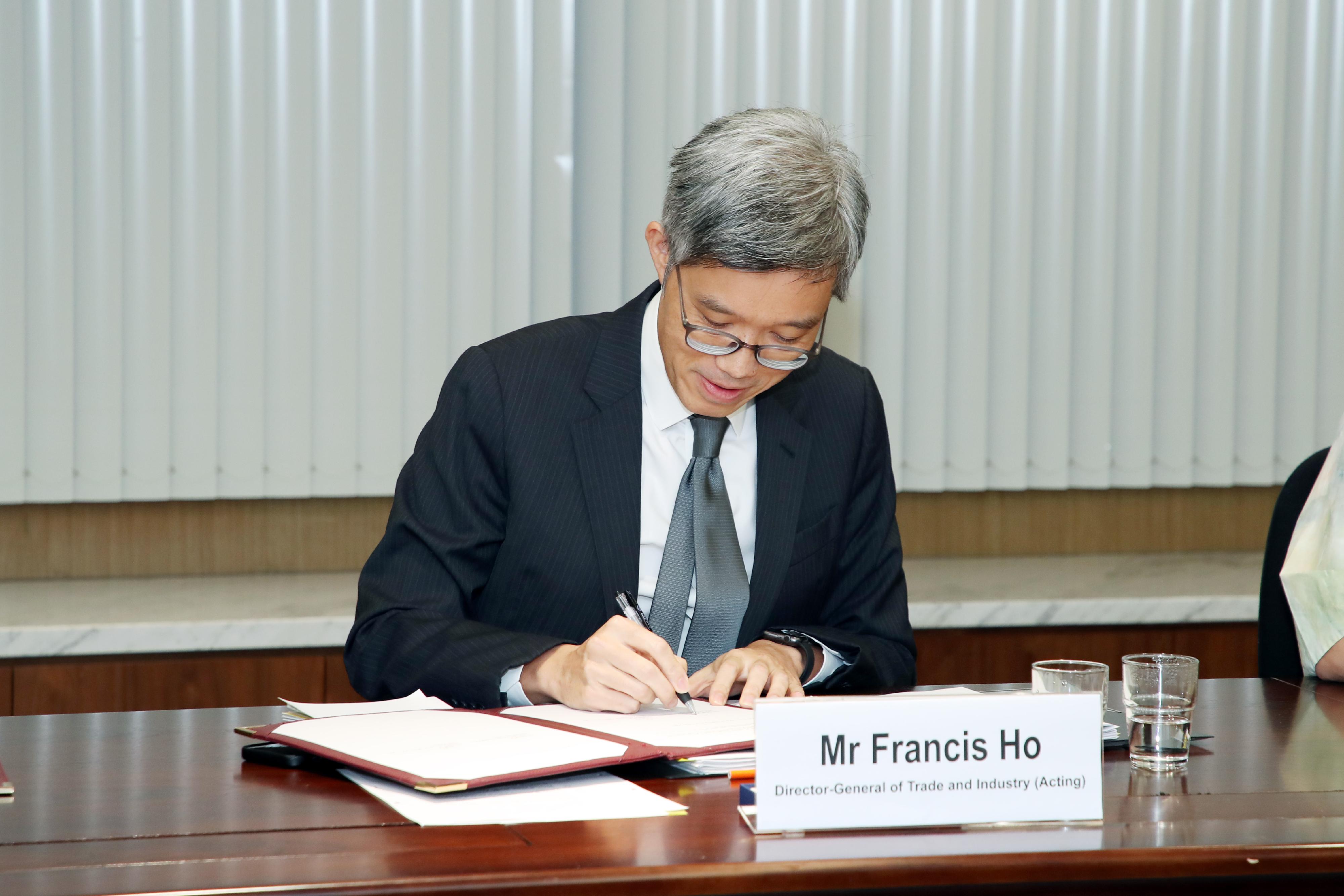
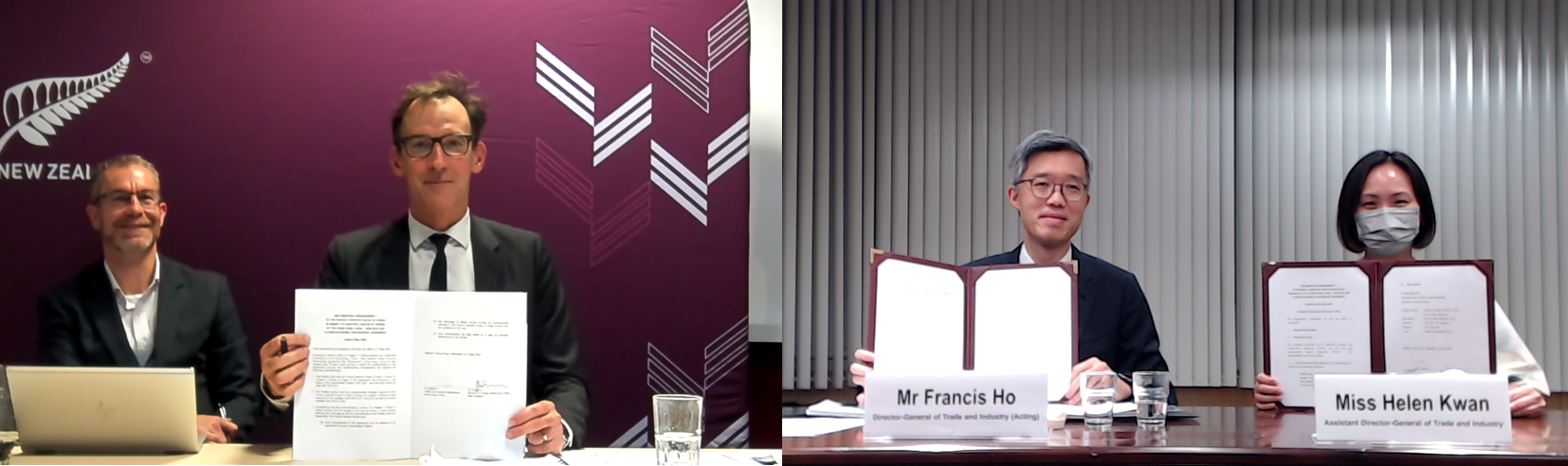
Photo  Photo  
read more