Speech by CE at HKQAA International Symposium – Sustainable Finance and Climate Resilience · Hong Kong 2022 (English only) (with photos/video)
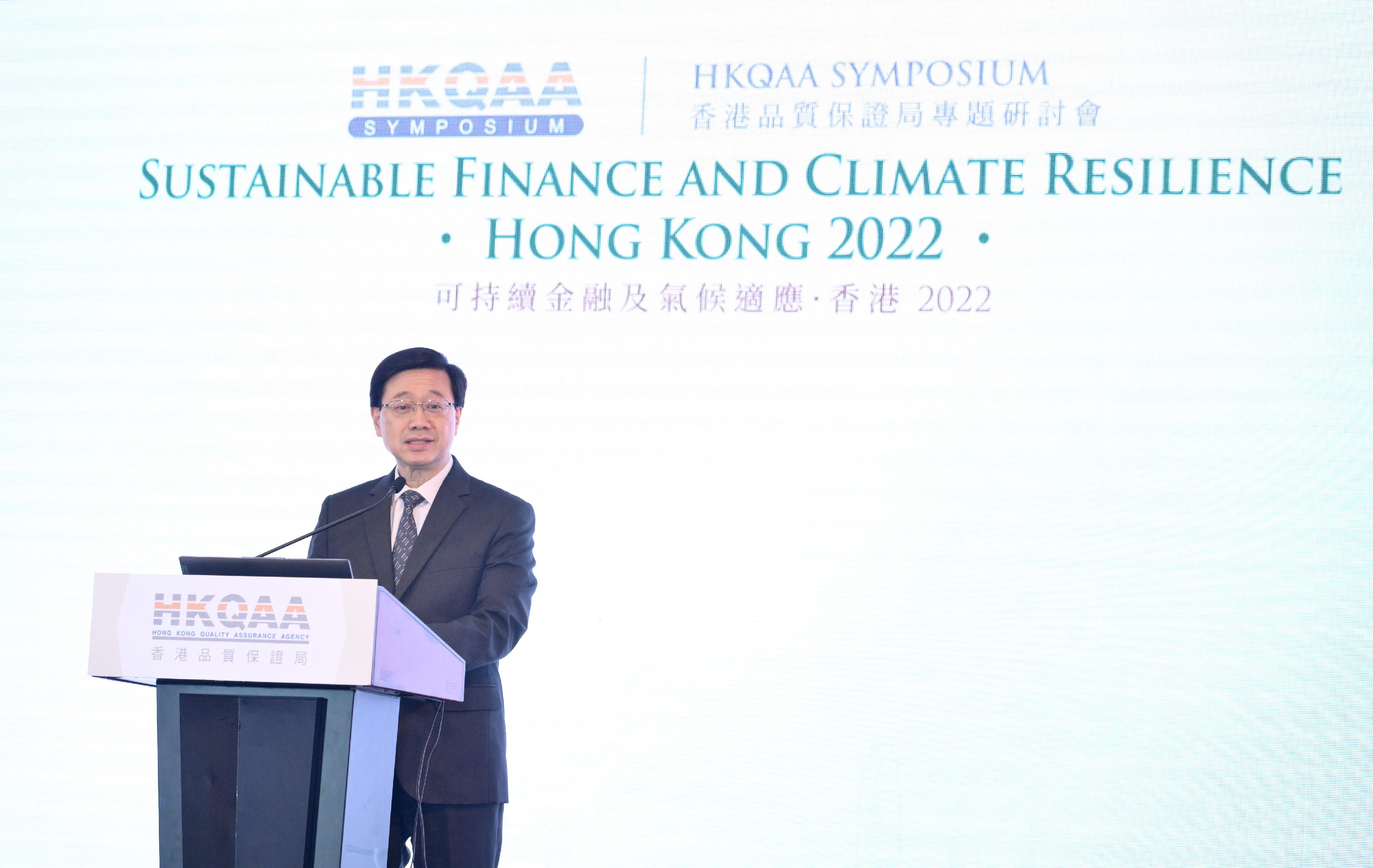
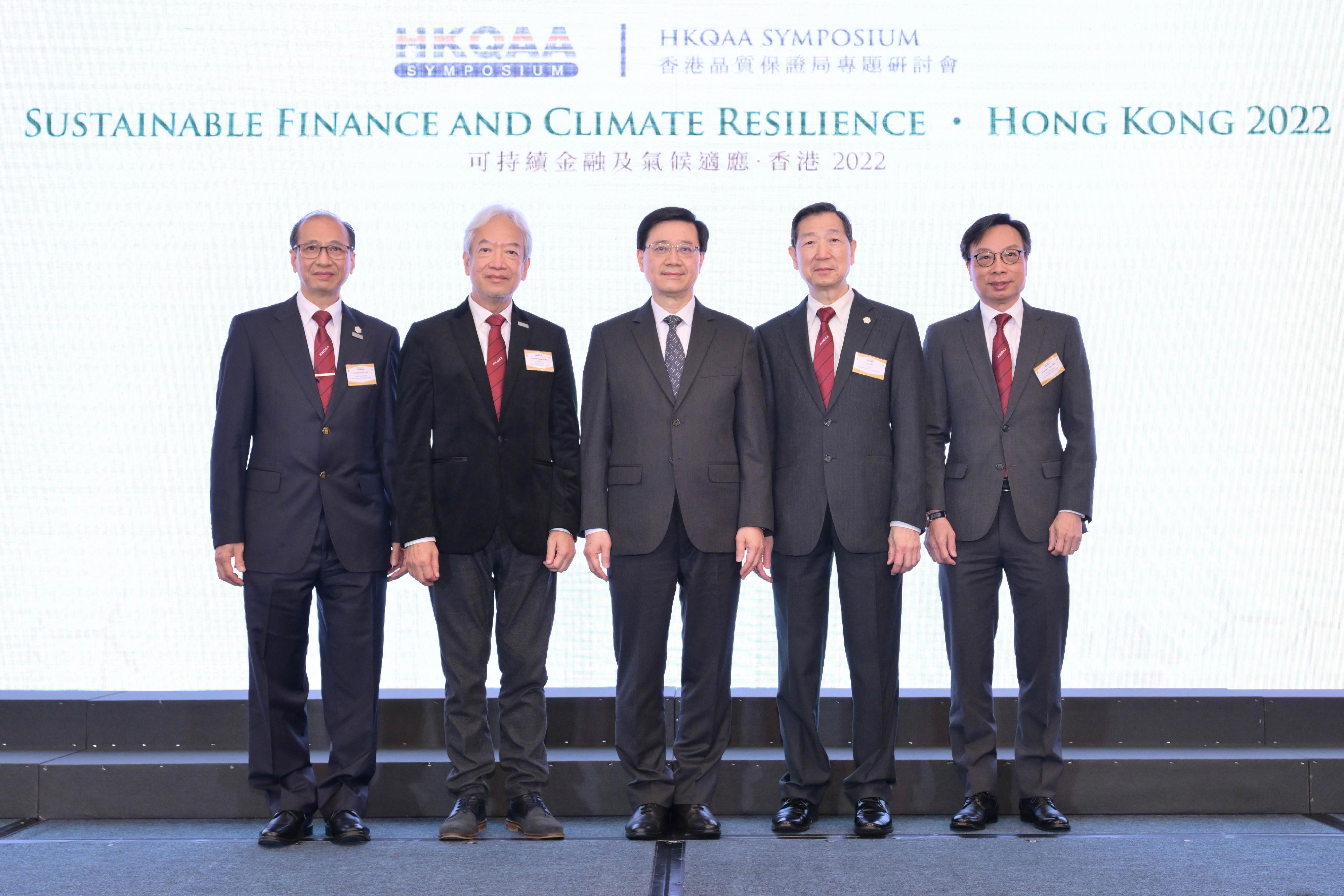
Following is the speech by the Chief Executive, Mr John Lee, at the HKQAA International Symposium – Sustainable Finance and Climate Resilience · Hong Kong 2022 today (December 1):
Ir C S Ho (Chairman of the Hong Kong Quality Assurance Agency (HKQAA), Mr Ho Chi-shing), distinguished guests, ladies and gentlemen,
Good afternoon. I am pleased to join you for the Hong Kong Quality Assurance Agency’s International Symposium, under the theme “Sustainable Finance and Climate Resilience”. My thanks to the Agency for organising this year’s gathering, for hosting this symposium every year since 2001.
It has been a full and rewarding afternoon, I’m delighted to say. Nearly 1 000 high-profile professionals, in-house and online, have heard from a wealth of speakers representing international organisations, regulatory bodies, governments and businesses local and global. All of you focused on advancing green and sustainable finance in Hong Kong, in the Guangdong-Hong Kong-Macao Greater Bay Area, throughout our country and around the world.
Climate change is a global problem, and it demands a global solution. Concerted, collective action.
President Xi Jinping underlined that in his written speech at the APEC CEO Summit in Bangkok, just two weeks ago. The President emphasised the importance of building an Asia-Pacific community with a shared future – and a shared responsibility. And I quote, “It is important for us to pursue green and low-carbon development, foster green economic sectors, promote green finance, and speed up the establishment of an Asia-Pacific green cooperation framework”.
Hong Kong, as you know, is working closely with our motherland in pursuing those goals. To align with the country’s commitment to peak carbon before 2030 and carbon neutrality before 2060, Hong Kong is determined to achieve carbon neutrality before 2050. By 2035, we aim to reduce our total carbon emissions from our 2005 level by half.
Hong Kong’s Climate Action Plan 2050 details four ambitious decarbonisation strategies on the road to carbon neutrality: “net-zero electricity generation”, “energy saving and green buildings”, “green transport” and “waste reduction”.
We need, as well, to adopt a comprehensive adaptation and resilience strategy if we are to safeguard the life, health and property of our people and our community from extreme weather.
This is particularly challenging given that Hong Kong is a coastal city. We are, as you well know, susceptible to tropical cyclones, rainstorms, storm surges and other weather-induced threats.
In response, we are strengthening our critical public infrastructure, stepping up coastal protection, boosting the city’s flood resistance, stabilising slopes, and more, to minimise extreme weather’s chaotic consequences.
We will continue, too, to enhance building design and promote urban forestry to alleviate and cope with rising temperatures. Over the next 15 to 20 years, the Hong Kong SAR Government will allocate about HK$240 billion to combat climate change through such strategies as green buildings, renewable energy, green transport, waste management and more. The money will also fund such adaptation strategies as strengthening coastal management, stabilising slopes and improving drainage.
Meanwhile, we are creating, and we will continue to create, manifold opportunities for the development of green and sustainable finance.
That means issuing government green bonds. To date, we’ve issued close to US$10 billion worth. It also means providing subsidies to cover the expenses of bond issuers and loan borrowers in their issuances and external review services. It means, too, supporting green finance talent training, developing climate-related disclosure reporting standards. All these will, rest assured, be aligned with global practices.
In my Policy Address, I made it clear that developing green and sustainable finance is essential to our future. Next month, we will move another determined step in that direction with the opening of a new Office of Climate Change and Carbon Neutrality in the Hong Kong SAR Government. It will help us strengthen co-ordination and promote decarbonisation.
There’s more. The Council for Sustainable Development will be reorganised, becoming the Council for Carbon Neutrality and Sustainable Development. It will offer advice on decarbonisation strategies and promote community participation.
We need the involvement, the commitment, the participation of everyone – government, business and, yes, the community, if we are to achieve carbon neutrality and enhance our adaptive capacity.
In that regard, I am grateful for the support of the Hong Kong Quality Assurance Agency in our continuing low-carbon transformation as a leading climate-resilient city. Your experience and technical expertise, your participation in the development of national and international standards, your wide-ranging role in our progress as a regional green and sustainable finance hub, is as welcome as it is essential.
Allow me, as well, to thank the many green and sustainable finance issuers, and professionals and service providers from so many related sectors, here for today’s symposium. Your continuing support and wide-ranging efforts to support Hong Kong’s rise as a regional green and sustainable finance hub will be instrumental to our ultimate success.
Ladies and gentlemen, I look forward to your co-operation, and collaboration, in the year to come – and every year that follows on our collective mission to carbon neutrality. To the flourishing future we all want.
Thank you.