Tag Archives: China

image_pdfimage_print

Expert Committee on Clinical Events Assessment Following COVID-19 Immunisation assesses serious adverse events relating to COVID-19 vaccination

     The Expert Committee on Clinical Events Assessment Following COVID-19 Immunisation, set up under the Department of Health (DH) to provide independent assessment on the potential causal link between Adverse Events Following Immunisation (AEFIs) and COVID-19 vaccination in Hong Kong, convened a meeting today (September 5) to assess serious adverse events relating to COVID-19 vaccination.

     According to the World Health Organization, an AEFI is any medical occurrence that follows immunisation and that does not necessarily have a causal relationship with the usage of the vaccine. The DH has put in place a pharmacovigilance system for COVID-19 immunisation, and is partnering with the University of Hong Kong to conduct an active surveillance programme for Adverse Events of Special Interest (AESI) under the COVID-19 Vaccines Adverse Events Response and Evaluation Programme (CARE Programme). The main purpose of the pharmacovigilance system is to detect potential signals of possible side effects of the vaccines.

     As of August 31, about 20.85 million doses of COVID-19 vaccines had been administered for members of the public in Hong Kong. Around 6.92 million people had received at least one vaccine dose. In the same period, the DH received 8 132 reports of adverse events (0.04 per cent of total vaccine doses administered). There was no new AEFI report involving death received since June 1, 2023.

     â€‹The Expert Committee has reviewed available clinical data and information for conducting causality assessment of serious or unexpected AEFIs and AESIs. The results will be included in the updated safety monitoring report (as at August 31) to be published on the Government’s designated website on September 8.  read more
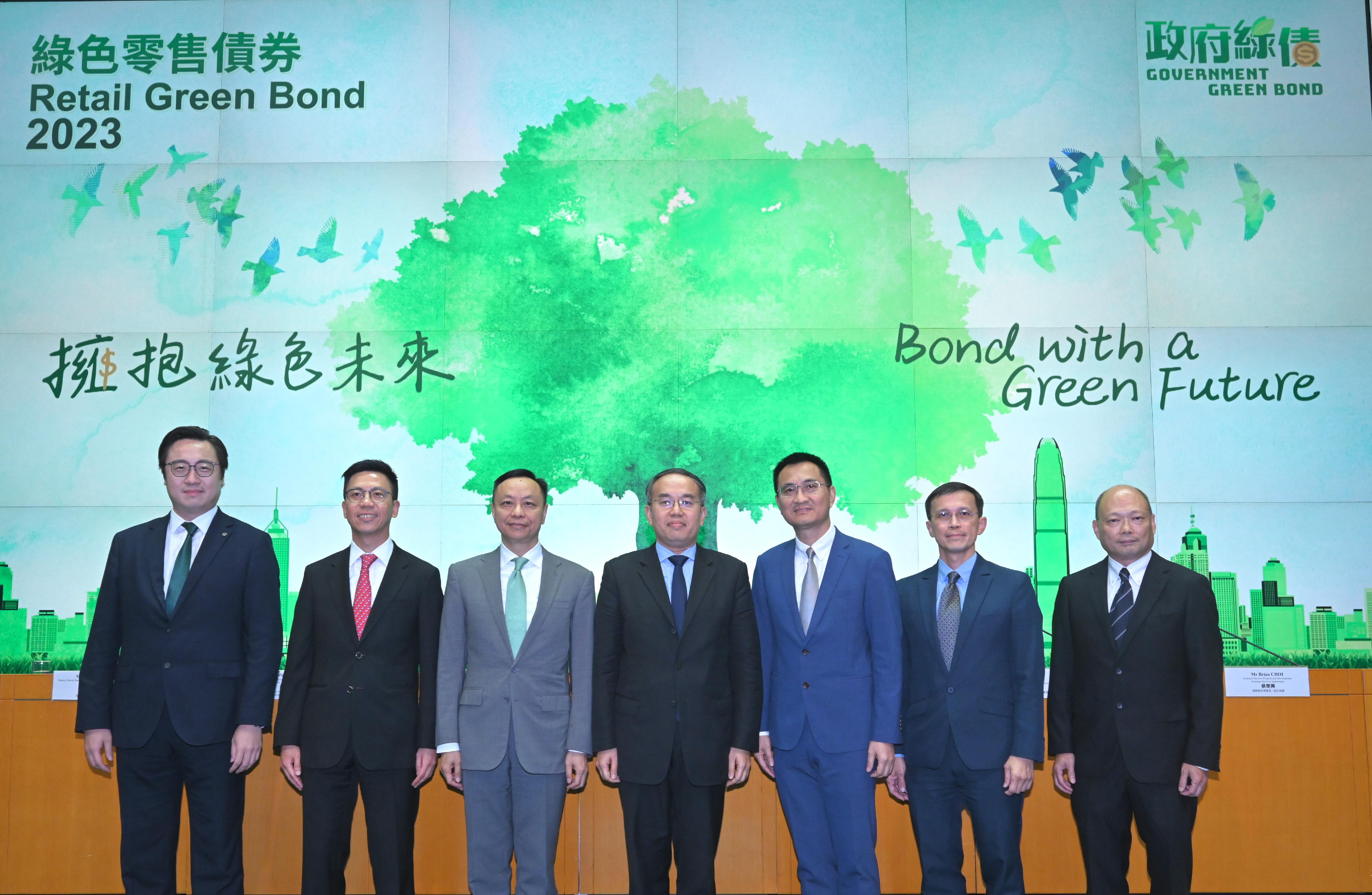
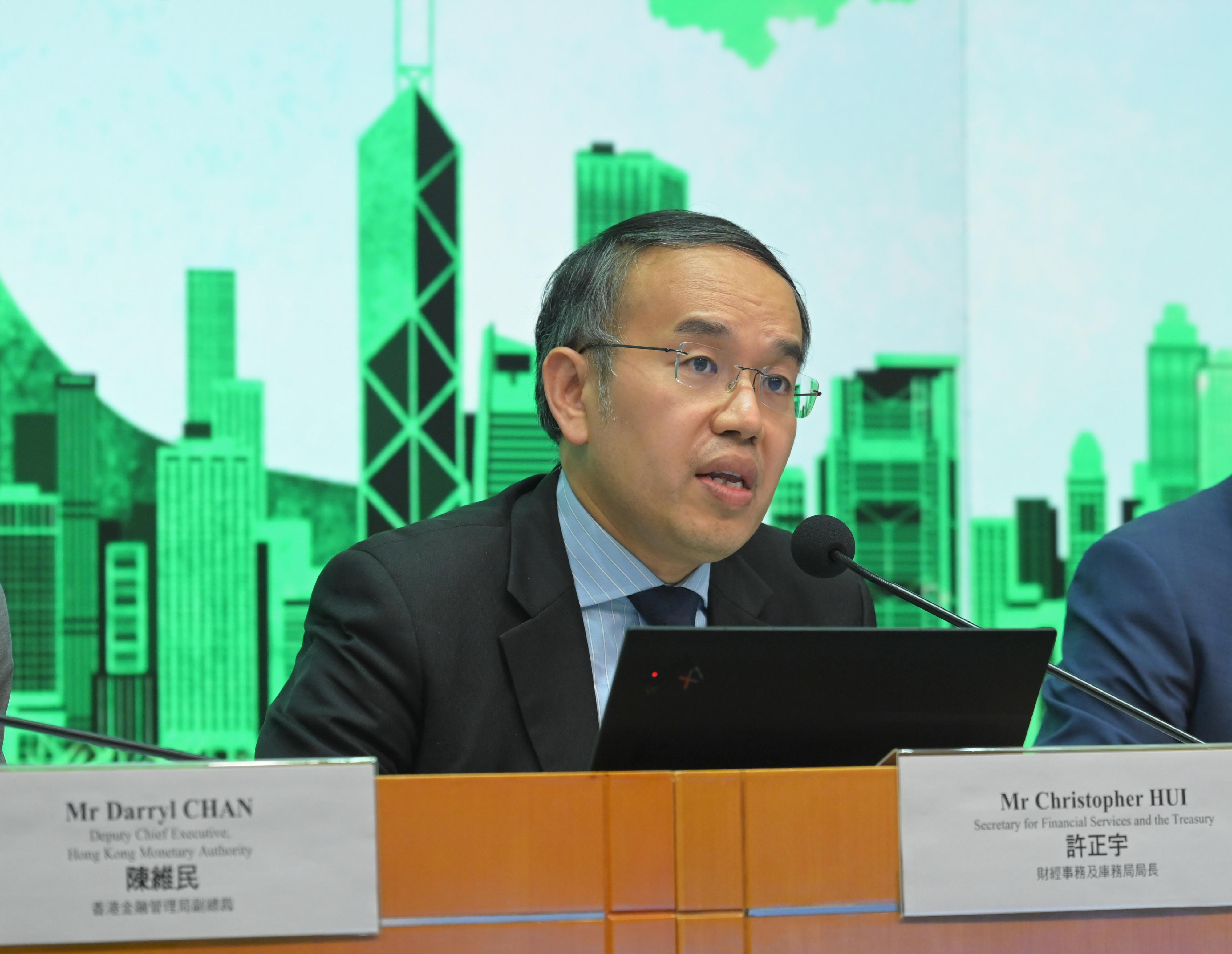
Opening remarks by SFST at press conference on launch of retail green bond (with photos/video)

     Following are the opening remarks by the Secretary for Financial Services and the Treasury, Mr Christopher Hui, at the press conference on the launch of retail green bond today (September 5):
 
     The Financial Secretary announced in the 2023-24 Budget that the Government would issue retail green bond again this year, so as to facilitate market development and at the same time offer members of the community investment options with steady returns. Today, I am very pleased to announce the details of the issuance at this press conference.
 
     To demonstrate the Government’s commitment to combating climate change and promoting green finance, as well as developing Hong Kong into a more sustainable and liveable city, we launched the Government Green Bond Programme back in 2018, and have so far issued close to US$22 billion worth of green bonds involving various currencies across different tenors. These issuances were very well received by investors and have achieved a number of breakthroughs, establishing important benchmarks for the market. For instance, the inaugural retail green bond issued last year was well received by the public and was the world’s largest retail green bond at issuance. We also issued a tokenised green bond this year, which was the first of its kind issued by a government globally. The issuance demonstrated our capacity in providing a flexible and favourable legal and regulatory environment for innovative forms of bond issuance.
 
     The target size for the upcoming retail green bond issuance is HK$15 billion. Depending on the market conditions, the Government may consider increasing this amount to a maximum of HK$20 billion. The retail green bond will have a tenor of three years and the bond holders will be paid interest once every six months at a rate linked to the inflation in Hong Kong, subject to a minimum rate of 4.75 per cent. The subscription period will start from September 18, which is the Monday after next, to September 28, which is the last Thursday of this month. Hong Kong residents, i.e. holders of valid Hong Kong identity card, may apply through specified placing banks, securities brokers or the Hong Kong Securities Clearing Company Limited. To align with the overarching message of environmental awareness, we encourage investors to make use of electronic application channels.
 
     The proceeds of Government green bonds will be credited to our Capital Works Reserve Fund to finance or refinance green projects with environmental benefits. The Steering Committee on the Government Green Bond Programme, chaired by the Financial Secretary, has been overseeing the implementation of the Programme including the use and management of proceeds, the selection of eligible projects and the publication of Green Bond Reports to provide information on the allocation of proceeds and expected environmental benefits of green projects on an annual basis.
 
     For reference, some examples of eligible green projects include:
 
(i) “Drainage improvement works in Tsim Sha Tsui” under the category of “Climate change and adaptation”;
 
(ii) “North East New Territories sewerage system upgrade” under the category of “Water and wastewater management”; and
 
(iii) “The establishment of Government Chinese Medicines Testing Institute in Tseung Kwan O” under the category of “Green buildings”.
 
     Now, I would like to invite HKMA (Hong Kong Monetary Authority) colleague Darryl (Deputy Chief Executive of HKMA Mr Darryl Chan) to further introduce the details of this offering.

Photo  Photo  
read more

Inspection of aquatic products imported from Japan

     In response to the Japanese Government’s plan to discharge nuclear-contaminated water at the Fukushima nuclear power station, the Director of Food and Environmental Hygiene issued a Food Safety Order which prohibits all aquatic products, sea salt and seaweeds originating from the 10 metropolis/prefectures, namely Tokyo, Fukushima, Ibaraki, Miyagi, Chiba, Gunma, Tochigi, Niigata, Nagano and Saitama, from being imported into and supplied in Hong Kong.
 
     For other Japanese aquatic products, sea salt, and seaweeds that are not prohibited from being imported into Hong Kong, the Centre for Food Safety (CFS) of the Food and Environmental Hygiene Department will conduct comprehensive radiological tests to verify that the radiation levels of these products do not exceed the guideline levels before they are allowed to be supplied in the market.
 
     As the discharge of nuclear-contaminated water is unprecedented and will continue for 30 years or more, the Government will closely monitor and step up the testing arrangements. Should anomalies be detected, the Government does not preclude further tightening the scope of the import ban.
 
     From noon on September 4 to noon today (September 5), the CFS conducted tests on the radiological level of 155 food samples imported from Japan, which were of the “aquatic and related products, seaweeds and sea salt” category. No sample was found to have exceeded the safety limit. Details can be found on the CFS’s thematic website titled “Control Measures on Foods Imported from Japan” (www.cfs.gov.hk/english/programme/programme_rafs/programme_rafs_fc_01_30_Nuclear_Event_and_Food_Safety.html).
     
     In parallel, the Agriculture, Fisheries and Conservation Department (AFCD) has also tested 50 samples of local catch for radiological tests. All the samples passed the tests. Details can be found on the AFCD’s website (www.afcd.gov.hk/english/fisheries/Radiological_testing/Radiological_Test.html).
     
     The Hong Kong Observatory (HKO) has also enhanced the environmental monitoring of the local waters. No anomaly was detected so far. For details, please refer to the HKO’s website
 (www.hko.gov.hk/en/radiation/monitoring/seawater.html).
 
     From August 24 to noon today, the CFS and the AFCD have conducted tests on the radiological level of 1 869 samples of food imported from Japan (including 1 025 samples of aquatic and related products, seaweeds and sea salt) and 600 samples of local catch respectively. All the samples passed the tests. read more