Tag Archives: China

image_pdfimage_print

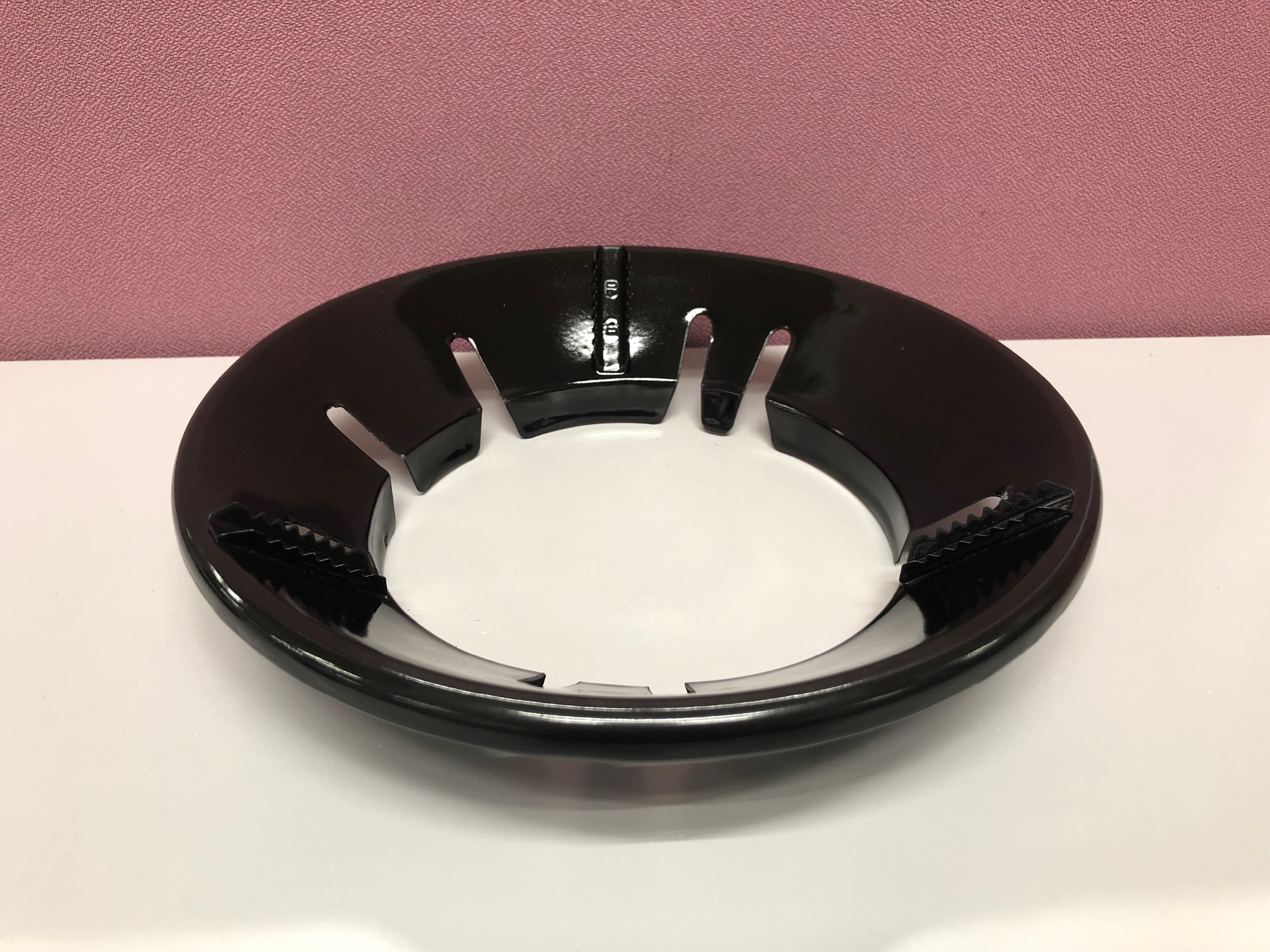
EMSD and Customs urge public to stop using “energy-saving ring” on gas cookers (with photos)

     The Electrical and Mechanical Services Department (EMSD) and the Customs and Excise Department (C&ED) today (September 5) urged the public to stop using an “energy-saving ring” on gas cookers to avoid carbon monoxide poisoning accidents.
 
     The EMSD was notified by the Department of Health earlier on two carbon monoxide poisoning incidents in connection with the use of gas cookers and conducted on-site investigation. The incidents were caused by poor indoor ventilation. The gas cookers in both cases had been fitted with an accessory, commonly known as “energy-saving ring”, which was not supplied by the original gas cooker manufacturers and claimed to be energy-saving. The EMSD has sent the “energy-saving rings” for testing by laboratory. The results showed that when using gas cookers with the “energy-saving rings”, emission of carbon monoxide increased substantially, which has significantly exceeded the safety standard specified in the “Basic Safety Assessment under Approval of Domestic Gas Appliances”. There was also no energy-saving effect as claimed. Noting the test results, the EMSD and the C&ED immediately conducted inspections at shops in various districts in Hong Kong.
 
     The EMSD urged the public to ensure adequate ventilation when using gas cookers by keeping kitchen windows open and exhaust fans operating, and avoid using any accessories not supplied by original cooker manufacturers, such as the “energy-saving rings”. For proper use and maintenance of domestic gas cooking appliances, please visit the EMSD website:
www.emsd.gov.hk/en/gas_safety/gas_safety_tips_to_users/safe_use_proper_use_and_maintenance/domestic_gas_cooking_appliances/index.html.
 
     Under the Consumer Goods Safety Ordinance, it is an offence to supply, manufacture or import into Hong Kong consumer goods unless the goods comply with the general safety requirement for consumer goods. The maximum penalty for the offence is a fine of $100,000 and an imprisonment for one year on first conviction, and $500,000 and two years’ imprisonment on subsequent conviction. If members of the public find the “energy-saving rings”, they may make a report via the C&ED’s 24-hour hotline 2545 6182, or via email to crimereport@customs.gov.hk or by filling in an online form (eform.cefs.gov.hk/form/ced002/).

Photo  Photo  
read more

Executive Council approves financial arrangements for Kwu Tung Station and Tuen Mun South Extension

     The Chief Executive in Council today (September 5) approved the financial arrangements for the Kwu Tung Station (KTU) and Tuen Mun South Extension (TME) projects. Subsequently, the Transport and Logistics Bureau has signed with the MTR Corporation Limited (MTRCL) the project agreements for the KTU and the TME. The construction of the KTU and TME projects are expected to complete by 2027 and 2030 respectively.

     A Government spokesman said, “The KTU and TME projects are implemented under the ownership approach. The MTRCL will be responsible for the financing, design, construction, operation and maintenance of the projects. The Government, supported by an independent checking consultant, has checked and verified the project financial estimates provided by the MTRCL. The capital cost estimate for the KTU project is about $9.8 billion (in July 2023 prices), including the capital cost for the KTU of about $5.9 billion (in July 2023 prices) and the estimated costs of about $3.9 billion (in July 2023 prices) for the detailed planning and design and some advance works of the Northern Link Main Line. The capital cost estimate for the TME project is about $15.8 billion (in July 2023 prices). The Government will provide funding support to the MTRCL in order to implement the two projects.”

     The Executive Council approved granting the MTRCL the property development rights of Kwu Tung North Areas 20, 22 and 25 adjoining the KTU, with an area of about 4.7 hectares, for high and medium residential developments, and deducting a total fixed lump sum of $15.16039 billion in money-of-the-day prices from the full market value land premium of the sites assessed on a “with-railway” basis in the future as funding support to the MTRCL to implement the KTU project, as well as the detailed planning and design, and some advance works of the Northern Link Main Line.

     As for the TME project, the Executive Council approved granting the MTRCL the property development rights of Tuen Mun Area 16 with an area of about 6 hectares, for integrated development for commercial and residential uses, and deducting a total fixed lump sum of $24.2138 billion in money-of-the-day prices from the full market value land premium of the site assessed on a “with-railway” basis in the future as funding support to the MTRCL to implement the project.

      “The Government has been advocating the ‘infrastructure-led’ and ‘capacity-creating’ planning principles in taking forward transport infrastructure projects. As the Phase 1 of the Northern Link, the KTU is an intermediate station between the Sheung Shui Station and Lok Ma Chau Station of the Lok Ma Chau Spur Line and will connect to the Northern Link Main Line (i.e. Phase 2 of the Northern Link). The KTU will serve the transport need of the Kwu Tung North New Development Area (KTN NDA), and significantly reduce the travelling time between the KTN NDA and Sheung Shui, and support the continued growth in population and employment opportunities of that area,” the spokesman said.

     Kwu Tung North/Fanling North New Development Areas is the first new development area project of the Northern Metropolis that has proceeded to the construction stage. Upon full development, the KTN NDA alone is expected to accommodate a planned population of approximately 131 600. As the main transportation backbone of the Northern Metropolis, the Northern Link will connect to the existing East Rail Line and Tuen Ma Line, and form a railway loop linking up the New Territories and urban Kowloon, which will not only improve the existing railway connections but also help promote the development of the Northern Metropolis and Hong Kong as a whole.

     “The TME project will extend the Tuen Ma Line from Tuen Mun Station southwards by about 2.4 kilometres and provide two new stations, namely the Tuen Mun South (TMS) Station near Tuen Mun Ferry Pier and an intermediate station at Tuen Mun Area 16 (A16 Station). The TME will improve railway access to the community south of the current Tuen Mun town centre and connectivity to Tuen Mun Ferry Pier. Currently, the area near TMS Station has approximately 60 000 residents while there are about 49 000 residents living around the proposed A16 Station. The TME will offer an alternative commuting choice to the residents in the vicinity, which will help relieve the congestion of the existing roads, thus bringing significant transport benefits by reducing the travelling time for the residents in the area concerned,” the spokesman added. read more

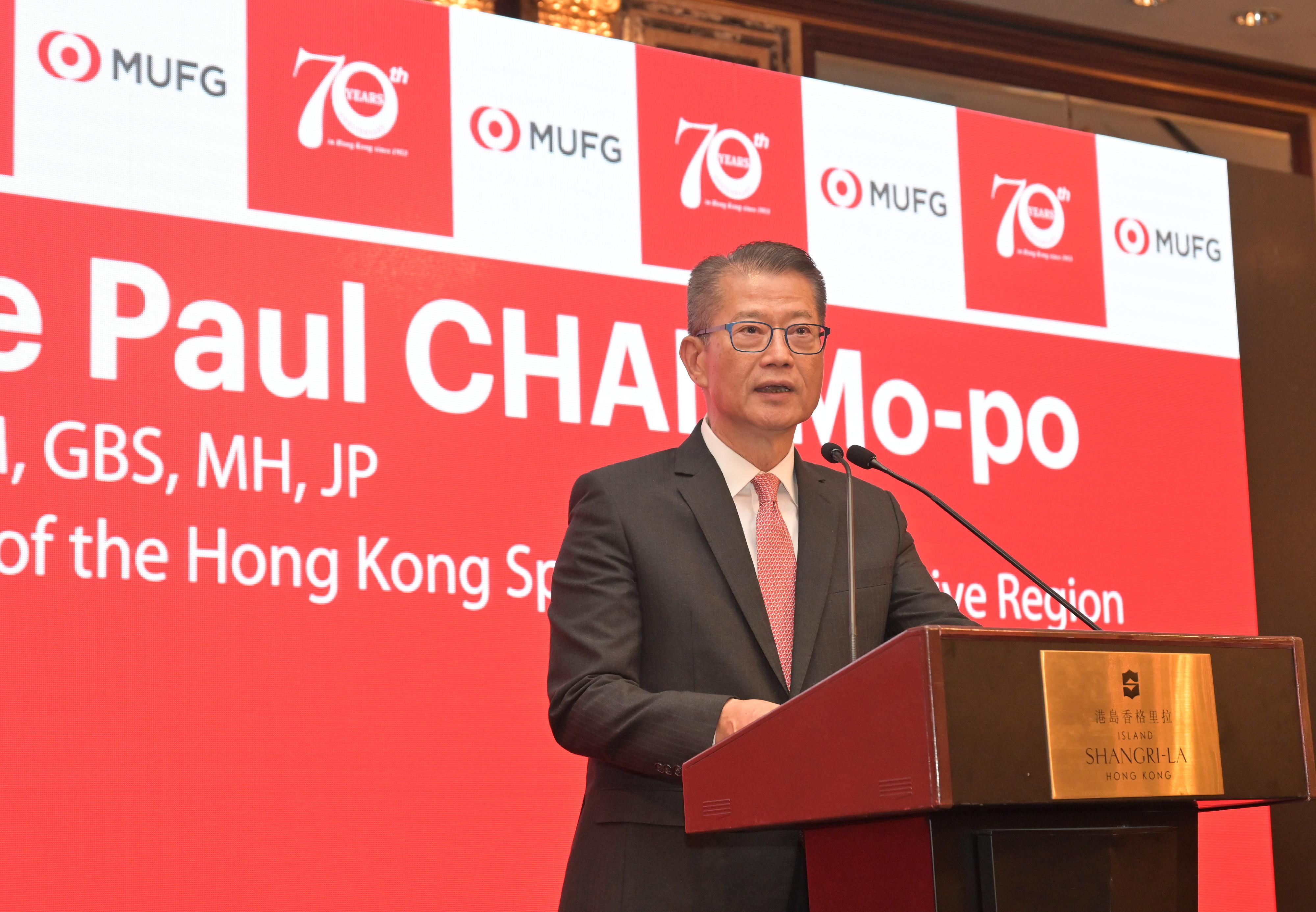
Speech by FS at 70th Anniversary of MUFG Hong Kong Branch (English only) (with photo)

     Following is the speech by the Financial Secretary, Mr Paul Chan, at the 70th Anniversary of Mitsubishi UFJ Financial Group, Hong Kong Branch today (September 5):
 
Mr Yasushi Itagaki (Deputy President of MUFG Bank), Mr Hiroshi Masaki (Executive Officer, Managing Director and Head of MUFG Hong Kong Branch), Ambassador Kenichi Okada (Consul-General of Japan in Hong Kong), Ladies and gentlemen,
 
     Good evening. It gives me great pleasure to join you tonight in celebration of the 70th anniversary of the MUFG Hong Kong Branch.
 
     The Group’s predecessor, the Bank of Tokyo, opened a full-service branch in Hong Kong in 1953.
 
     The Branch has since been a valued player, and partner, in Hong Kong’s meteoric rise over the past seven decades, providing a variety of services for businesses and enterprises.  
 
     For the past 26 years, since Hong Kong’s return to the motherland, the “one country, two systems” principle and the unwavering support of our country have further strengthened Hong Kong’s importance as one of the world’s leading financial centres and China’s international financial centre.
 
     Our banking sector is testimony to this amazing story. Despite economic and financial headwinds elsewhere, our banking system remains enviably stable, robust and resilient. At the end of June, our banking system held assets of about US$3.4 trillion, equivalent to some 9.6 times our GDP (gross domestic product). The banking sector’s deposits stood at US$1.9 trillion, about 5.5 times of our GDP. The capital adequacy ratio stood at 20 per cent, much higher than the international standard of 8 per cent. Liquidity coverage ratio was at 160 per cent, where the international benchmark is only 100 per cent. And the classified loan ratio was just at 1.5 per cent. They all compare very favourably internationally.
 
     At last count, 73 of the world’s top 100 banks operated here, including, of course, the MUFG Hong Kong Branch.
 
     By gathering the world’s top financial institutions and talent, and riding on the singular advantages of “one country, two systems”, Hong Kong continues to be the best strategic financial hub for businesses, investors and people interested in exploring the Mainland and Asia markets.  
 
     To this end, this Government is fully engaged in creating vast opportunities for all.
 
     That includes building on our core strengths and opening new frontiers. 
 
     Our world-class fund-raising platform has been a cornerstone of Hong Kong’s success as an IFC (international financial centre). Over the past few years, through continuous reforms to facilitate the listing of new economy companies, SPACs (special purpose acquisition companies) and hard-tech companies, we have brought our stock market to new and higher levels. 
 
     To further enhance its competitiveness and unleash its growth potential, I have set up a task force to enhance stock market liquidity. Its mandate includes reviews of our listing regime, market structure and trading mechanisms – and covering short, medium and long-term measures, too.
 
     Hong Kong plays an outstanding and unique role in connecting the capital markets and investors of the Mainland and the world. We are the world’s No. 1 Renminbi (RMB) hub. With the support of the Central Government, we will continue to deepen and expand our various connect schemes, and offer a greater variety of RMB-denominated investment and risk management products to cater for the needs of a fast growing number of RMB holders worldwide.
 
     We are equally keen on venturing into new promising areas. They include green and sustainable finance, which is certainly gaining greater and greater momentum.  
 
     Indeed, the global initiative to reach carbon neutrality is creating a massive financing need. Estimates show that Asia will need US$66 trillion in the coming three decades. 
 
     Hong Kong is already Asia’s No. 1 in green finance – as you may know, green bonds and loans issued last year here reached more than US$80 billion. In collaboration with our sister cities in the Greater Bay Area – which have strengths in technological commercialisation and manufacturing, Hong Kong is also home to a vibrant ecosystem of green technology. 
 
     There is extraordinary potential for Hong Kong to become the green tech and green finance centre of the world, creating a complete and new financial and industry chain.  
 
     I am pleased to note that MUFG is part of this remarkable endeavour. For example, it is working closely with CLP Power Hong Kong for its JPY15 billion, ESG-linked syndicated facility in the Japanese financial market.
 
     In finance, and in other areas, I hope to count on the MUFG Hong Kong Branch as a longstanding partner, to build a brighter future for us all.
 
     Once again, my congratulations to your proud 70th anniversary.
 
     I wish you all the best of health and business in the years to come. Thank you. 
Photo  
read more

Air Quality Objectives review

     The Environment and Ecology Bureau (EEB) proposed to tighten five prevailing Air Quality Objectives (AQOs) and set three new parameters introduced in the Global Air Quality Guidelines (AQGs) of the World Health Organization (WHO), and launched a two-month public consultation on August 31. The Advisory Council on the Environment (ACE) was briefed at a meeting yesterday (September 4) on the findings on the review of the AQOs and the proposed updates of the AQOs. Apart from acknowledging the Hong Kong Special Administrative Region (HKSAR) Government’s achievements in improving the air quality of Hong Kong, the ACE also expressed their support on the proposed updates of the AQOs.

     The air quality of Hong Kong has been improving continuously, with an over 40 per cent to 60 per cent reduction in major air pollutants and a significant enhancement of visibility over the past decade. The air quality of Hong Kong in 2022 was also the best since the return to the motherland.
 
     The HKSAR Government announced the Hong Kong Roadmap on Popularisation of Electric Vehicles, the Clean Air Plan for Hong Kong 2035 and the Hong Kong’s Climate Action Plan 2050 (the Three Blueprints) in 2021, covering strategies for promoting the use of new energy transport technologies, combating climate change and achieving carbon neutrality in various aspects, as well as setting out a number of targets for the short, medium and long-term.
 
     The current review of the AQOs has considered 21 air quality improvement measures with substantial emission reduction impacts by 2030 on basis of the Three Blueprints, and projected the air quality improvement by 2030 through air quality assessment. Based on the assessment results, the HKSAR Government proposed to tighten ï¬�ve prevailing AQOs and set three new parameters introduced in the WHO AQGs. If the proposal is adopted, the 15 updated AQOs will all be benchmarked to the interim targets and AQG levels of the WHO AQGs, amongst which seven AQOs are set at the most stringent levels of the WHO.
 
     A spokesman of the EEB said, “The AQOs of fine suspended particulates are proposed to be tightened to the interim target level 3 as set out in the WHO AQGs, which will be broadly in line with the standards of Japan, Singapore, Korea and the United States (US), and more stringent than those of the European Union (EU). According to the findings of the review, the AQO of annual nitrogen dioxide will remain at the WHO AQGs’ interim target level 1, which is on par with the relevant standards of Singapore and the EU, and more stringent than those of Korea and the US.”
 
     The spokesman supplemented, “The air quality of Hong Kong has now reached its best level since the return to the motherland, and blue skies are part of people’s daily lives. To further protect public health and improve air quality, the HKSAR Government will implement the various emission reduction strategies as laid down in the Three Blueprints as planned, and through reviewing at least once every five years to explore suitable AQOs and formulate corresponding air quality management measures. We will also strengthen the collaboration with Guangdong authorities to tackle regional air quality management issues.”
 
     The EEB will arrange two public consultation forums to brief the public on the work and findings of the review of the AQOs and garner their views. Members of the public may visit the dedicated website of the public consultation (aqoreview.hk) for more details. The public consultation will end on October 31, 2023. The HKSAR Government will make the final recommendations after taking into account the outcome of the public consultation. read more