Tag Archives: China

image_pdfimage_print

Grading of beach water quality released

     The Environmental Protection Department (EPD) today (March 28) released the latest grading of water quality for 10 gazetted beaches that are open for swimming.
 
     Ten beaches were rated as Good (Grade 1).
 
Grade 1 beaches are:          

Big Wave Bay Beach Lido Beach
Casam Beach Repulse Bay Beach
Clear Water Bay Second Beach Silver Mine Bay Beach
Deep Water Bay Beach Silverstrand Beach
Golden Beach Stanley Main Beach
 
     Compared with the grading released last week, Silverstrand Beach has been upgraded from Grade 2 to Grade 1.
 
     Under the present grading system, beaches are classified into four grades, namely Good (Grade 1), Fair (Grade 2), Poor (Grade 3) and Very Poor (Grade 4), according to the level of E. coli in the water. Grades are calculated on the basis of the geometric mean of the E. coli counts on the five most recent sampling occasions.
 
     While the ratings represent the general water quality at the beaches, an EPD spokesman reminded members of the public that water quality could be temporarily affected during and after periods of heavy rain. Bathers should avoid swimming at beaches for up to three days after a tropical cyclone or heavy rainfall.
 
     A summary of beach grades is published weekly before the weekend. The latest beach grades based on the most current data may be obtained from the EPD’s website on Beach Water Quality (www.epd.gov.hk/epd/beach) or the beach hotline, 2511 6666. Members of the public can also obtain the latest daily water quality forecast information for all beaches that are open for swimming through the EPD’s dedicated webpage on the beach water quality forecast (www.epd.gov.hk/en/BWQForecast). read more

Grading of beach water quality released

     The Environmental Protection Department (EPD) today (March 28) released the latest grading of water quality for 10 gazetted beaches that are open for swimming.
 
     Ten beaches were rated as Good (Grade 1).
 
Grade 1 beaches are:          

Big Wave Bay Beach Lido Beach
Casam Beach Repulse Bay Beach
Clear Water Bay Second Beach Silver Mine Bay Beach
Deep Water Bay Beach Silverstrand Beach
Golden Beach Stanley Main Beach
 
     Compared with the grading released last week, Silverstrand Beach has been upgraded from Grade 2 to Grade 1.
 
     Under the present grading system, beaches are classified into four grades, namely Good (Grade 1), Fair (Grade 2), Poor (Grade 3) and Very Poor (Grade 4), according to the level of E. coli in the water. Grades are calculated on the basis of the geometric mean of the E. coli counts on the five most recent sampling occasions.
 
     While the ratings represent the general water quality at the beaches, an EPD spokesman reminded members of the public that water quality could be temporarily affected during and after periods of heavy rain. Bathers should avoid swimming at beaches for up to three days after a tropical cyclone or heavy rainfall.
 
     A summary of beach grades is published weekly before the weekend. The latest beach grades based on the most current data may be obtained from the EPD’s website on Beach Water Quality (www.epd.gov.hk/epd/beach) or the beach hotline, 2511 6666. Members of the public can also obtain the latest daily water quality forecast information for all beaches that are open for swimming through the EPD’s dedicated webpage on the beach water quality forecast (www.epd.gov.hk/en/BWQForecast). read more
Qualified person prohibited by disciplinary board from certifying prescribed inspections and repairs of windows for six months

     The Registered Contractors’ Disciplinary Board (the Board) has completed a disciplinary inquiry under the Buildings Ordinance (BO) and decided that a registered minor works contractor (RMWC) appointed as a qualified person (QP) under the Mandatory Window Inspection Scheme (MWIS) should be disciplined for failing to discharge the duties or abide by the requirements imposed on a QP under the BO. 

     The Board ordered the RMWC to be prohibited from certifying any prescribed inspection, or certifying or supervising any prescribed repair of windows, for six months with effect from the date of the Gazette, and to pay a total of $43,400, being the costs of the Board and the Buildings Department (BD) for conducting the inquiry. 

     The Board’s written decision and order issued on March 14 was published in the Gazette today (March 28). Details are available at the following link: www.gld.gov.hk/egazette/pdf/20252913/egn202529131789.pdf.

     The RMWC submitted a certificate to the BD in April 2021, certifying that a prescribed inspection had been carried out to the windows of a residential unit in Tuen Mun, and that those windows were safe and no prescribed repair was required. Subsequently, the BD conducted an investigation in response to a report and found that the rivets of some windows showed greyish white power or rust. 

     The RMWC was later prosecuted, convicted and fined $9,000 at the Tuen Mun Magistrates’ Courts in May 2022, pursuant to sections 40(2B)(b) of the BO, for having carried out a prescribed inspection in a manner likely to cause a risk of personal injury or property damage. 

     In view of the convictions and investigation results, the BD notified the Board for its consideration of disciplinary action against the RMWC under the provisions of section 13(1) of the BO. 

     A spokesperson for the BD reiterated that in order to ensure building safety, the BD attaches great importance to the quality of the prescribed inspection and repair of windows by a QP under the MWIS. Any QP who contravenes the relevant provisions of the BO in carrying out a prescribed inspection and repair of windows under the MWIS is not only liable to criminal prosecution but also disciplinary action under the BO.  read more

World-renowned museum and institution representatives share expertise at Museum Summit 2025 (with photos)

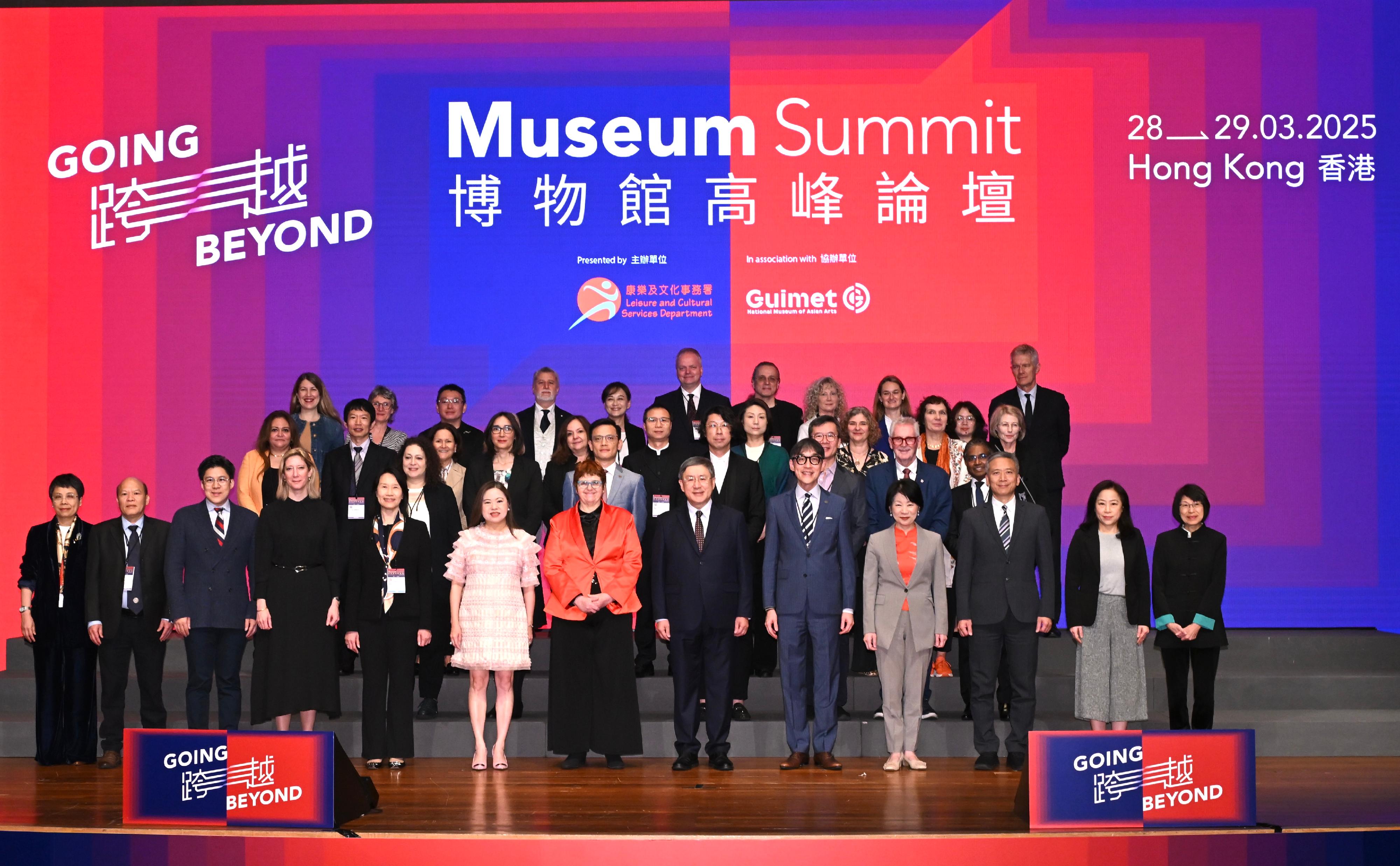
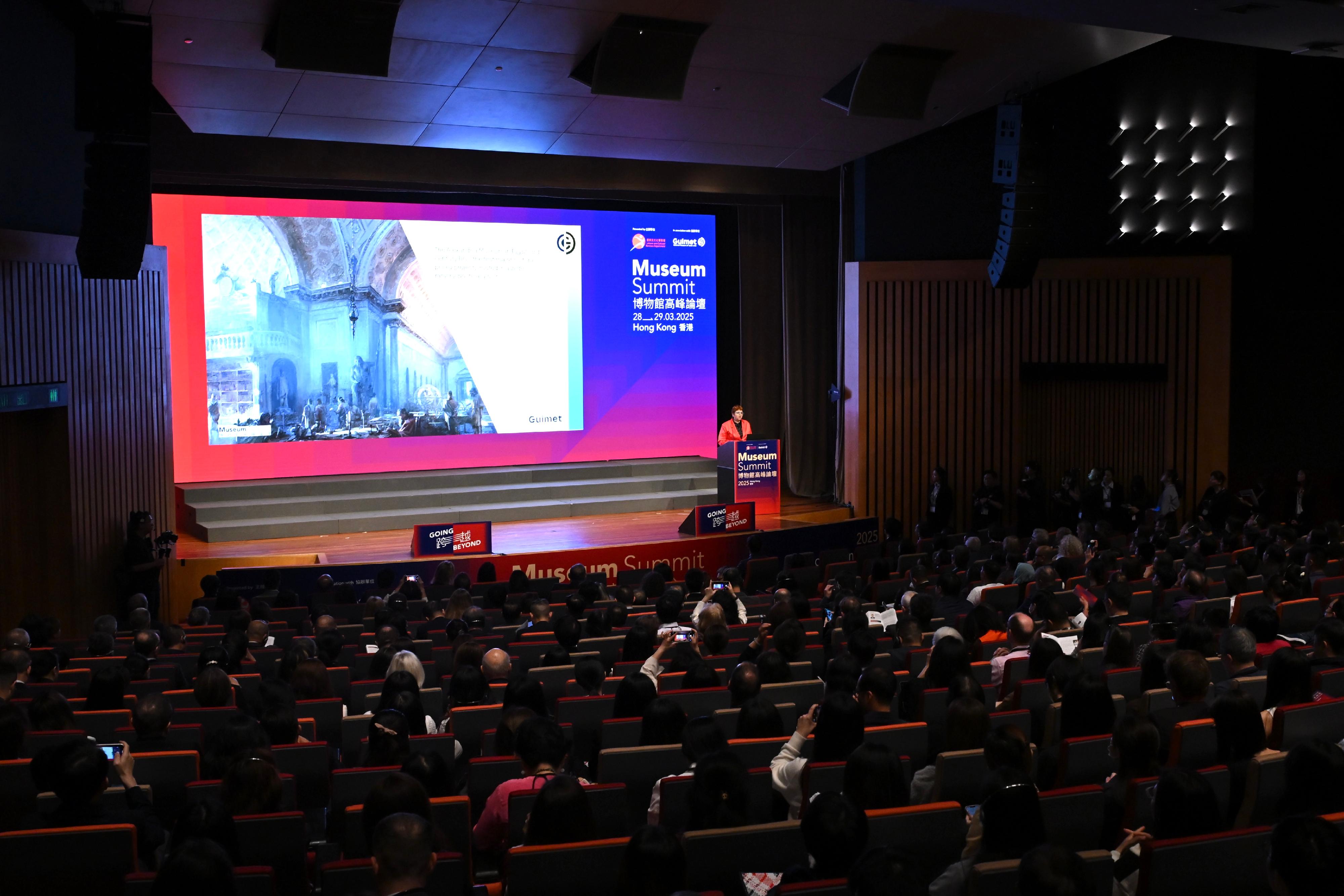
     In partnership with The Guimet – National Museum of Asian Arts (France), the Leisure and Cultural Services Department commenced the Museum Summit 2025 at the Hong Kong Convention and Exhibition Centre today (March 28). Themed “Going Beyond”, the two-day Summit has brought together over 30 leading figures and professionals from world-renowned museums and institutions in 17 countries to exchange and share their professional experiences, research findings and innovative concepts. Five countries including Egypt, Hungary, Norway, Qatar and Türkiye, are new participants this year.
     
     The Museum Summit this year is its fourth edition since the inaugural one in 2017. Officiating at the opening ceremony, the Deputy Chief Secretary for Administration, Mr Cheuk Wing-hing, highlighted that the Summit had established itself not only as a highly acclaimed international event in the museum world, but also an iconic mega event in the city’s vibrant cultural calendar.
 
     Mr Cheuk said that the Summit had recorded a total registration of over 7 000 participants, with about one-third from the Mainland and overseas, and two delegations comprising over 40 museum experts from the Guangdong-Hong Kong-Macao Greater Bay Area Museum Alliance and ASEAN (Association of Southeast Asian Nations). This stellar mix is a strong testament to the increasing importance of the Summit and Hong Kong’s position as an East-meets-West centre for international cultural exchange.
     
     The President of The Guimet – National Museum of Asian Arts (France), Dr Yannick Lintz, also delivered an opening address at the Summit.
 
     The Summit features four thematic sessions, namely “Museums + Tourism”, “Museums + Technology”, “Museums + Sustainability”, and “Museums + Wellness”. The discussions will encompass how museums could leverage the advantages brought by the tourism industry and technological advances to promote sustainable development as well as mental and physical well-being.
     
     For details of the Museum Summit 2025, please visit www.museumsummit.gov.hk.

Photo  Photo  Photo  
read more

Inspection of aquatic products imported from Japan

     In response to the Japanese Government’s plan to discharge nuclear-contaminated water at the Fukushima Nuclear Power Station, the Director of Food and Environmental Hygiene issued a Food Safety Order which prohibits all aquatic products, sea salt and seaweeds originating from the 10 metropolis/prefectures, namely Tokyo, Fukushima, Ibaraki, Miyagi, Chiba, Gunma, Tochigi, Niigata, Nagano and Saitama, from being imported into and supplied in Hong Kong.
 
     For other Japanese aquatic products, sea salt and seaweeds that are not prohibited from being imported into Hong Kong, the Centre for Food Safety (CFS) of the Food and Environmental Hygiene Department is conducting comprehensive radiological tests to verify that the radiation levels of these products do not exceed the guideline levels before they are allowed to be supplied in the market.
 
     As the discharge of nuclear-contaminated water is unprecedented and will continue for 30 years or more, the Government will closely monitor the situation and continue to implement the enhanced testing arrangements. Should anomalies be detected, the Government does not preclude further tightening the scope of the import ban.
 
     From noon on March 27 to noon today (March 28), the CFS conducted tests on the radiological levels of 233 food samples imported from Japan, which were of the “aquatic and related products, seaweeds and sea salt” category. No sample was found to have exceeded the safety limit. Details can be found on the CFS’s thematic website titled “Control Measures on Foods Imported from Japan” (www.cfs.gov.hk/english/programme/programme_rafs/programme_rafs_fc_01_30_Nuclear_Event_and_Food_Safety.html).

     In parallel, the Agriculture, Fisheries and Conservation Department (AFCD) has also tested 50 samples of local catch for radiological levels. All the samples passed the tests. Details can be found on the AFCD’s website (www.afcd.gov.hk/english/fisheries/Radiological_testing/Radiological_Test.html).
 
     The Hong Kong Observatory (HKO) has also enhanced the environmental monitoring of the local waters. No anomaly has been detected so far. For details, please refer to the HKO’s website
(www.hko.gov.hk/en/radiation/monitoring/seawater.html).
 
     From August 24, 2023, to noon today, the CFS and the AFCD have conducted tests on the radiological levels of 125 552 samples of food imported from Japan (including 82 516 samples of aquatic and related products, seaweeds and sea salt) and 28 930 samples of local catch respectively. All the samples passed the tests. read more