Effective Exchange Rate Index
The effective exchange rate index for the Hong Kong dollar on Friday, March 28, 2025 is 106.7 (same as yesterday's index).
The effective exchange rate index for the Hong Kong dollar on Friday, March 28, 2025 is 106.7 (same as yesterday's index).
The effective exchange rate index for the Hong Kong dollar on Friday, March 28, 2025 is 106.7 (same as yesterday's index).
The Town Planning Board today (March 28) announced amendments to the approved Tai Po Outline Zoning Plan (OZP).
The amendments mainly involve (i) rezoning a site at the junction of Lo Fai Road and Ting Kok Road from "Green Belt" ("GB") and an area shown as 'Road' to "Residential (Group A)11" to facilitate a public housing development under a Land Sharing Pilot Scheme (LSPS) application (LSPS Site A); (ii) rezoning a site at Ting Kok Road to the north of Fortune Garden from "GB" and an area shown as 'Road' to "Residential (Group A)12" to facilitate a private housing development under a LSPS application (LSPS Site B); (iii) rezoning a site to the north of Shek Kwu Lung from "Open Space" to "Government, Institution or Community (3)"; (iv) rezoning two parcels of land adjoining the LSPS Site A and Site B along Ting Kok Road from areas shown as 'Road' to "GB"; (v) rezoning a strip of land to the east of the LSPS Site B along Ting Kok Road from "GB" to an area shown as 'Road'; (vi) rezoning two parcels of land to the north of Fortune Garden along Ting Kok Road from "Residential (Group C)1" ("R(C)1") to areas shown as 'Road'; and (vii) rezoning a parcel of land to the north of Fortune Garden along Ting Kok Road from an area shown as 'Road' to "R(C)1".
The Notes and Explanatory Statement of the OZP are amended to take into account the above amendments. Opportunity is also taken to update the general information of various land use zones and the planning scheme area, where appropriate.
The draft Tai Po OZP No. S/TP/31, incorporating the amendments, is available for public inspection during office hours at (i) the Secretariat of the Town Planning Board, (ii) the Planning Enquiry Counters, (iii) the Sha Tin, Tai Po and North District Planning Office, (iv) the Tai Po District Office, and (v) the Tai Po Rural Committee.
Any person may make written representations in respect of the amendments to the Secretary of the Town Planning Board on or before May 28. Any person who intends to make a representation is advised to read the Town Planning Board Guidelines No. 29C on "Submission and Processing of Representations and Further Representations" (TPB PG-No. 29C).
Submission of a representation should comply with the requirements set out in TPB PG-No. 29C. In particular, the representer should take note of the following:
* If the representer fails to provide his or her full name and the first four alphanumeric characters of his or her Hong Kong identity card or passport number as required under TPB PG-No. 29C, the representation submitted shall be treated as not having been made; and
* The Secretariat of the Town Planning Board reserves the right to require the representer to provide identity proof for verification.
The Guidelines and the submission form are available at the above locations (i) and (ii) as well as the Town Planning Board's website (www.tpb.gov.hk).
Copies of the draft Tai Po OZP are available for sale at the Map Publications Centre in North Point. The electronic version of the OZP can be viewed on the Town Planning Board's website (www.tpb.gov.hk).
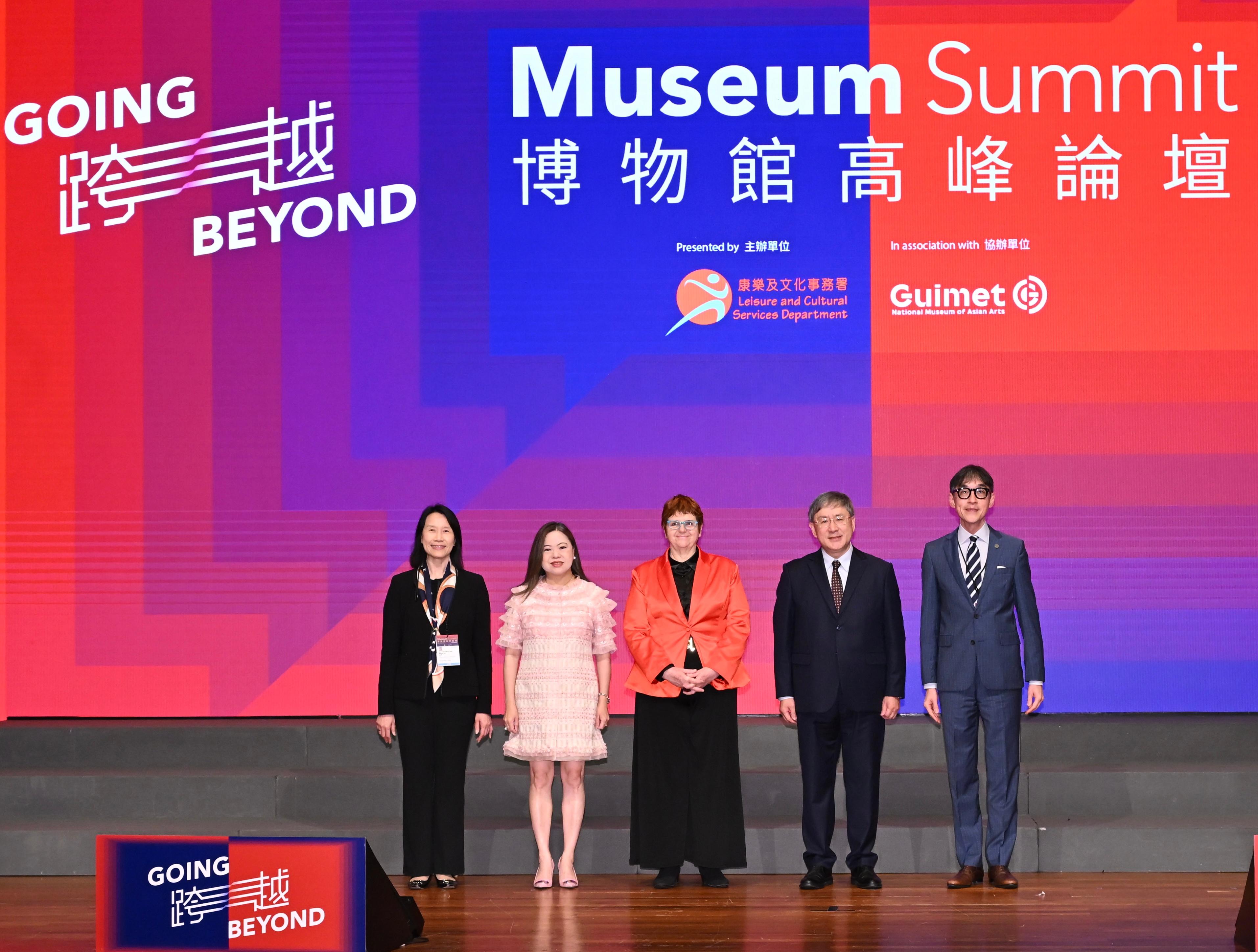
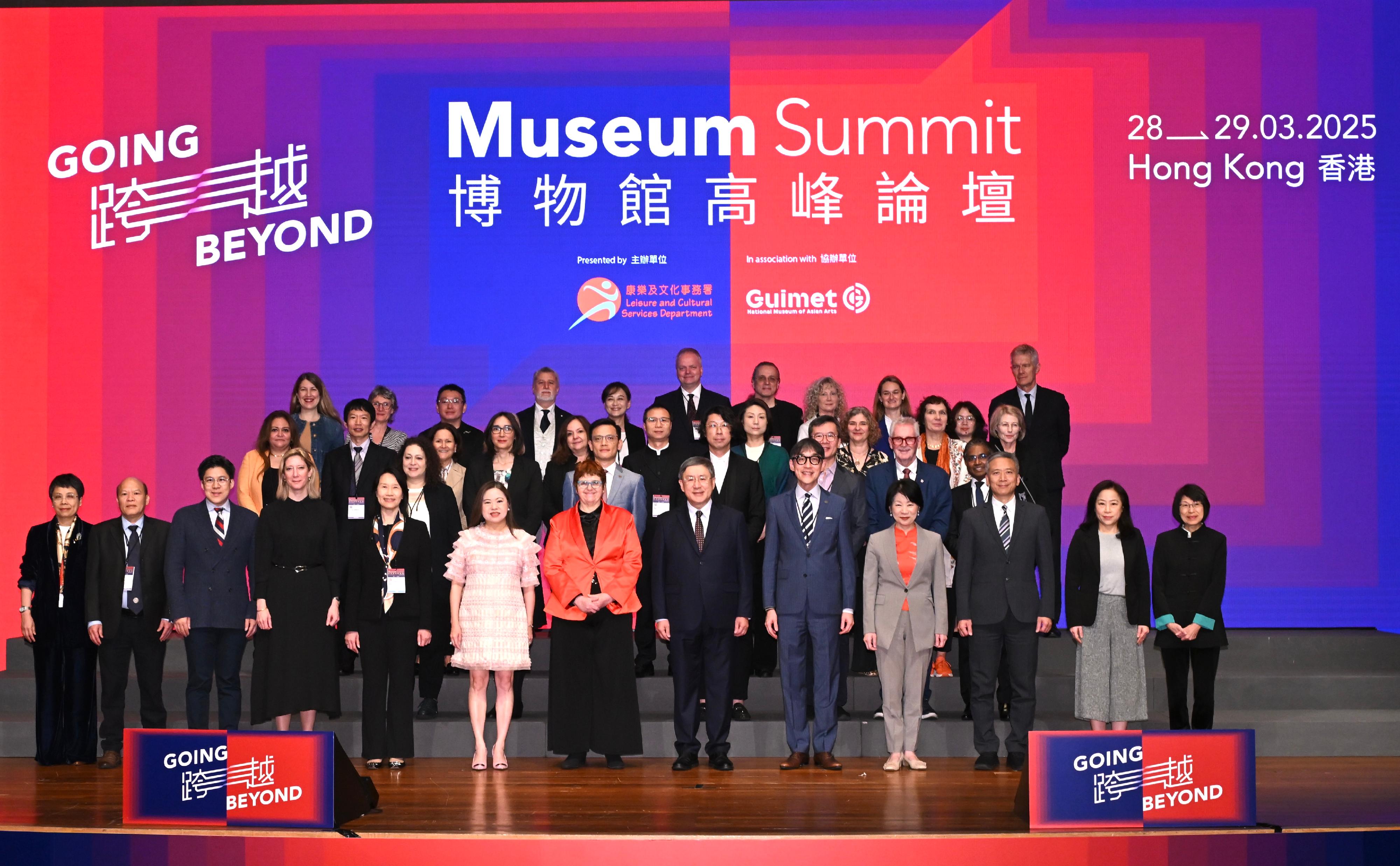
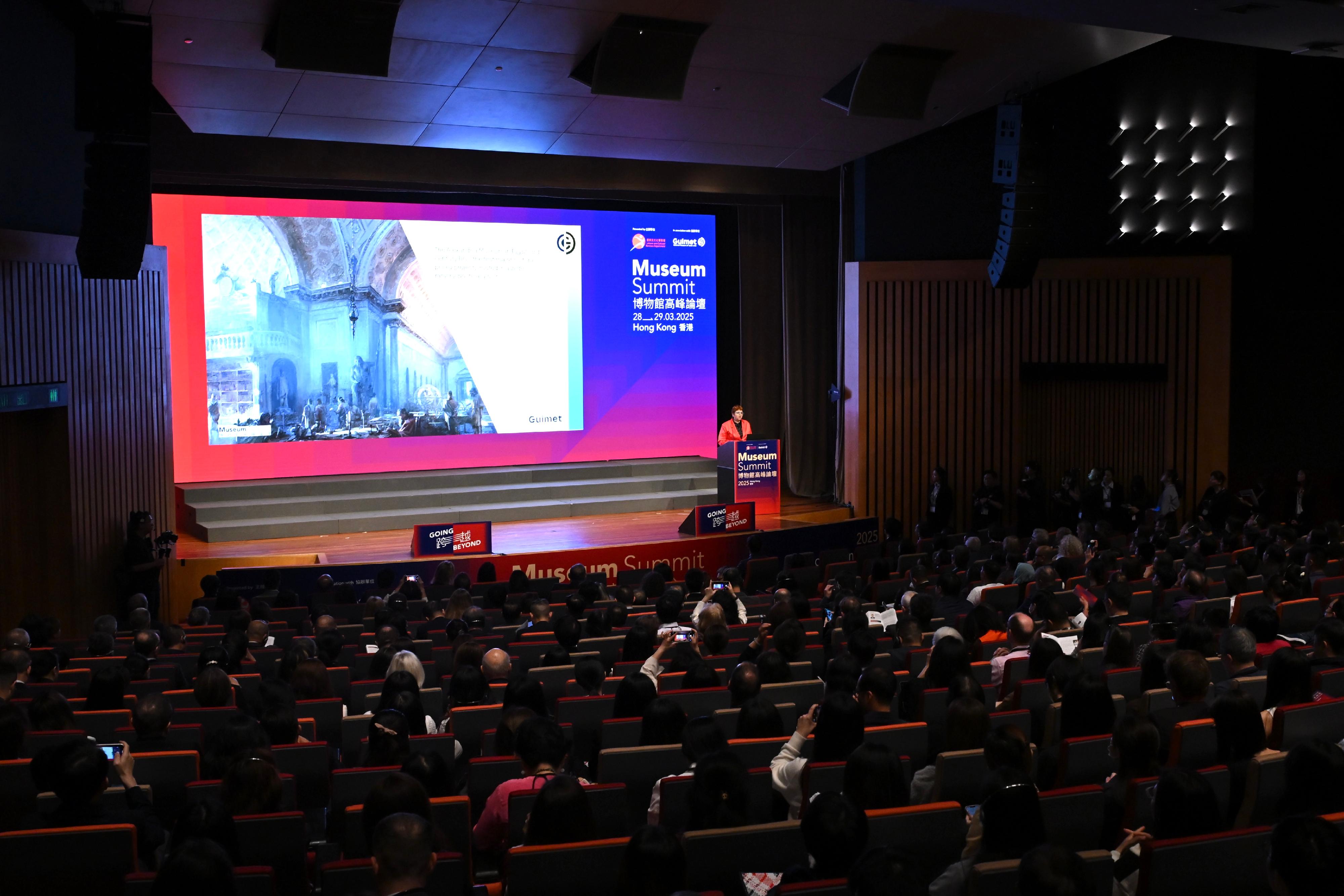
In partnership with The Guimet – National Museum of Asian Arts (France), the Leisure and Cultural Services Department commenced the Museum Summit 2025 at the Hong Kong Convention and Exhibition Centre today (March 28). Themed "Going Beyond", the two-day Summit has brought together over 30 leading figures and professionals from world-renowned museums and institutions in 17 countries to exchange and share their professional experiences, research findings and innovative concepts. Five countries including Egypt, Hungary, Norway, Qatar and Türkiye, are new participants this year.
The Museum Summit this year is its fourth edition since the inaugural one in 2017. Officiating at the opening ceremony, the Deputy Chief Secretary for Administration, Mr Cheuk Wing-hing, highlighted that the Summit had established itself not only as a highly acclaimed international event in the museum world, but also an iconic mega event in the city's vibrant cultural calendar.
Mr Cheuk said that the Summit had recorded a total registration of over 7 000 participants, with about one-third from the Mainland and overseas, and two delegations comprising over 40 museum experts from the Guangdong-Hong Kong-Macao Greater Bay Area Museum Alliance and ASEAN (Association of Southeast Asian Nations). This stellar mix is a strong testament to the increasing importance of the Summit and Hong Kong's position as an East-meets-West centre for international cultural exchange.
The President of The Guimet – National Museum of Asian Arts (France), Dr Yannick Lintz, also delivered an opening address at the Summit.
The Summit features four thematic sessions, namely "Museums + Tourism", "Museums + Technology", "Museums + Sustainability", and "Museums + Wellness". The discussions will encompass how museums could leverage the advantages brought by the tourism industry and technological advances to promote sustainable development as well as mental and physical well-being.
For details of the Museum Summit 2025, please visit www.museumsummit.gov.hk.
In response to the Japanese Government's plan to discharge nuclear-contaminated water at the Fukushima Nuclear Power Station, the Director of Food and Environmental Hygiene issued a Food Safety Order which prohibits all aquatic products, sea salt and seaweeds originating from the 10 metropolis/prefectures, namely Tokyo, Fukushima, Ibaraki, Miyagi, Chiba, Gunma, Tochigi, Niigata, Nagano and Saitama, from being imported into and supplied in Hong Kong.
For other Japanese aquatic products, sea salt and seaweeds that are not prohibited from being imported into Hong Kong, the Centre for Food Safety (CFS) of the Food and Environmental Hygiene Department is conducting comprehensive radiological tests to verify that the radiation levels of these products do not exceed the guideline levels before they are allowed to be supplied in the market.
As the discharge of nuclear-contaminated water is unprecedented and will continue for 30 years or more, the Government will closely monitor the situation and continue to implement the enhanced testing arrangements. Should anomalies be detected, the Government does not preclude further tightening the scope of the import ban.
From noon on March 27 to noon today (March 28), the CFS conducted tests on the radiological levels of 233 food samples imported from Japan, which were of the "aquatic and related products, seaweeds and sea salt" category. No sample was found to have exceeded the safety limit. Details can be found on the CFS's thematic website titled "Control Measures on Foods Imported from Japan" (www.cfs.gov.hk/english/programme/programme_rafs/programme_rafs_fc_01_30_Nuclear_Event_and_Food_Safety.html).
In parallel, the Agriculture, Fisheries and Conservation Department (AFCD) has also tested 50 samples of local catch for radiological levels. All the samples passed the tests. Details can be found on the AFCD's website (www.afcd.gov.hk/english/fisheries/Radiological_testing/Radiological_Test.html).
The Hong Kong Observatory (HKO) has also enhanced the environmental monitoring of the local waters. No anomaly has been detected so far. For details, please refer to the HKO's website
(www.hko.gov.hk/en/radiation/monitoring/seawater.html).
From August 24, 2023, to noon today, the CFS and the AFCD have conducted tests on the radiological levels of 125 552 samples of food imported from Japan (including 82 516 samples of aquatic and related products, seaweeds and sea salt) and 28 930 samples of local catch respectively. All the samples passed the tests.