Tag Archives: China

image_pdfimage_print

Auction of vehicle registration marks to be held on June 7

     The Transport Department (TD) today (May 20) announced that the auction of vehicle registration marks will be held on June 7 (Saturday) at Meeting Room N101, L1, New Wing, Hong Kong Convention and Exhibition Centre, Wan Chai.

     “A total of 120 personalised vehicle registration marks (PVRMs) will be put up for public auction in the morning session, and 200 traditional vehicle registration marks (TVRMs) will be put up for auction in the afternoon session. The list of marks has been uploaded to the department’s website, www.td.gov.hk/en/public_services/vehicle_registration_mark/index.html,” a department spokesman said.

     For the auction of TVRMs, only registration marks starting with “HK” or “XX” and special vehicle registration marks are put up for physical auction. Applicants should attend the auction and take note of the opening price as announced by the auctioneer before participating in the bidding of the mark.

     The reserve price of each of PVRMs is $5,000. Applicants who have paid a deposit of $5,000 should also attend the physical auction and participate in the bidding (including the first bid at the reserve price). Otherwise, the PVRM concerned may be sold to another bidder at the reserve price.

     People who wish to participate in the bidding at the physical auction should take note of the following points:

(1) Bidders are required to produce the following documents for completion of registration and payment procedures immediately after the successful bidding:

(i) the identity document of the successful bidder;
(ii) the identity document of the purchaser if it is different from the successful bidder;
(iii) a copy of the Certificate of Incorporation if the purchaser is a body corporate; and
(iv) a crossed cheque payable to “The Government of the Hong Kong Special Administrative Region” or “The Government of the HKSAR”. Any bidder who wishes to bid for both TVRMs and PVRMs on the same day, should bring along at least two crossed cheques for payment of auction prices (for an auctioned mark paid for by cheque, the first three working days after the date of auction will be required for cheque clearance confirmation before processing of the application for mark assignment can be completed). Successful bidders may also pay through the Easy Pay System (EPS), but are reminded to note the maximum transfer amount in the same day of the payment card. Payment by post-dated cheque, cash, credit card or other methods will not be accepted.

(2) Purchasers must make payment of the purchase price through EPS or by crossed cheque and complete the Memorandum of Sale of Vehicle Registration Mark or the Memorandum of Sale of PVRM immediately after the bidding. Subsequent alteration of the particulars in the Memorandum will not be permitted.

(3) A registration mark can only be assigned to a motor vehicle which is registered in the name of the purchaser. The Certificate of Incorporation must be produced immediately by the purchaser if a vehicle registration mark purchased is to be registered under the name of a body corporate.

(4) The display of a vehicle registration mark on a motor vehicle should be in compliance with the requirements stipulated in Schedule 4 to the Road Traffic (Registration and Licensing of Vehicles) Regulations.

(5) Any change to the arrangement of letters, numerals and blank spaces of a PVRM, i.e. single and two rows as auctioned, will not be allowed.

(6) Special vehicle registration marks are non-transferable. Where the ownership of a motor vehicle with a special vehicle registration mark is transferred, the allocation of the special vehicle registration mark shall be cancelled.

(7) The purchaser shall, within 12 months after the date of auction, apply to the Commissioner for Transport for the vehicle registration mark to be assigned to a motor vehicle registered in the name of the purchaser. If the purchaser fails to assign the registration mark within 12 months, allocation of the registration mark will be cancelled and arranged for reallocation by the Commissioner for Transport in accordance with the statutory provision without prior notice to the purchaser.

     “Upon completion of the Memorandum of Sale of PVRM, the purchaser will be issued a receipt and a Certificate of Allocation of Personalised Registration Mark. The Certificate of Allocation will serve to prove the holdership of the PVRM. Potential buyers of vehicles bearing a PVRM should check the Certificate of Allocation with the sellers and pay attention to the details therein. For transfer of vehicle ownership, this certificate together with other required documents should be sent to the TD for processing,” the spokesman added.

     For other auction details, please refer to the Guidance Notes – Auction of TVRMs (www.td.gov.hk/en/public_services/vehicle_registration_mark/tvrm_auction/index.html) and Guidance Notes – Auction of PVRMs (www.td.gov.hk/en/public_services/vehicle_registration_mark/pvrm_auction/index.html). read more
Remarks by CE at media session before ExCo (with video)

     Following are the remarks by the Chief Executive, Mr John Lee, at a media session before the Executive Council meeting today (May 20):
 
Reporter: Good morning. I have two questions, one on the national security subsidiary, and the other on the Ocean Empire congee shop. For the national security, just wondering, why does the subsidiary (legislation) have to be passed within a week, even without your presence in Hong Kong? Does that give an impression that there was insufficient time for public discussion and LegCo (Legislative Council) scrutiny? Is the subsidiary legislation needed, because you foresee the likeliness for Beijing’s national security office to exercise jurisdiction here, and would you be able to review the establishment of the office, as in how many staff? For Ocean Empire, the shutdown with bosses leaving workers’ outstanding salaries to the Labour Department to handle, how do you see the trend of closures amid the poor economy, and is the trend worrying? And what’s your take on some of what some see as irresponsible acts of not settling workers’ pay and referring them to the Government? Thank you very much.
 
Chief Executive: I have said many times that national security risks are like viruses. The risks always exist around us, poised to cause harm. The world is currently undergoing unprecedented changes at an accelerating pace. Geopolitics is complex, and global instability is growing. It is imperative to complete the scrutiny of the subsidiary legislation as early as possible to ensure legal certainty. The subsidiary legislation does not grant new powers to the Office for Safeguarding National Security of the Central People’s Government in the Hong Kong Special Administrative Region. It provides a clearer and more detailed description of the powers that already exist under the present law, thereby increasing legal certainty and precision.
 
     I appreciate the work of the Legislative Council subcommittee for its serious and rigorous scrutiny of the subsidiary legislation. It took five hours, during which members raised over 150 questions and opinions. I also commend the government team for their work providing detailed explanations and responses to LegCo members’ extensive and in-depth questions and comments. The Hong Kong National Security Law provides for the mandate of the Office. The subsidiary legislation refines the implementation rules. There are details and administrative matters of these provisions, making them clearer. It also clearly marks the boundaries of prohibited places of the Office, using co-ordinates. The Office has also put up notices within the prohibited places to inform the public of the boundaries. The subsidiary legislation also clarifies the assistance that public officers are required to provide under the law, providing clearer directions.
 
     The serious and close scrutiny of the legislation and the quick result of the subcommittee that scrutinised the subsidiary legislation reflect that the Executive and the Legislature are working together to safeguard national security in accordance with their constitutional responsibility and obligation.
 
     Regarding some shops being closed, I have said previously that the economy is undergoing a transitional period. New demands and new likings are emerging. There are sectors which do well and some sectors which don’t do as well. Some shops are closed, while many are opened. The number of registered companies in Hong Kong has reached a record high. By the end of last year, for example, local companies that are registered in Hong Kong reached 1.46 million, which is an increase of some 29 000 companies. This is thanks to the hard work of both the Office for Attracting Strategic Enterprises and Invest Hong Kong. For example, the Office for Attracting Strategic Enterprises has recruited 84 strategic enterprises, which will bring in direct investments of over $50 billion. They will also create over 20 000 jobs. Invest Hong Kong has assisted enterprises to set up or expand in Hong Kong, and the figures show an increase of 13 per cent compared to the same period last year.
 
     The Government Economist has recently announced that the GDP growth this year remains 2 to 3 per cent. The stock market is performing very well, and it is very active, with an average daily turnover (in April) amounting to $270 billion, which is a 1.4-fold increase compared to the same period last year. There will be ups and downs in different sectors during this transitional period, but overall, we will see positive growth in our GDP this year.
 
     The Government will also open up new emerging markets. The government team will continue to go to visit different parts of the world to create new business opportunities. It is important that we maintain confidence, reform ourselves, and keep ourselves competitive. We should have confidence to sail through this transitional period, which will end with an overall positive GDP growth. Thank you.
 
(Please also refer to the Chinese portion of the remarks.) read more

S for Housing commences visit to Paris (with photos)

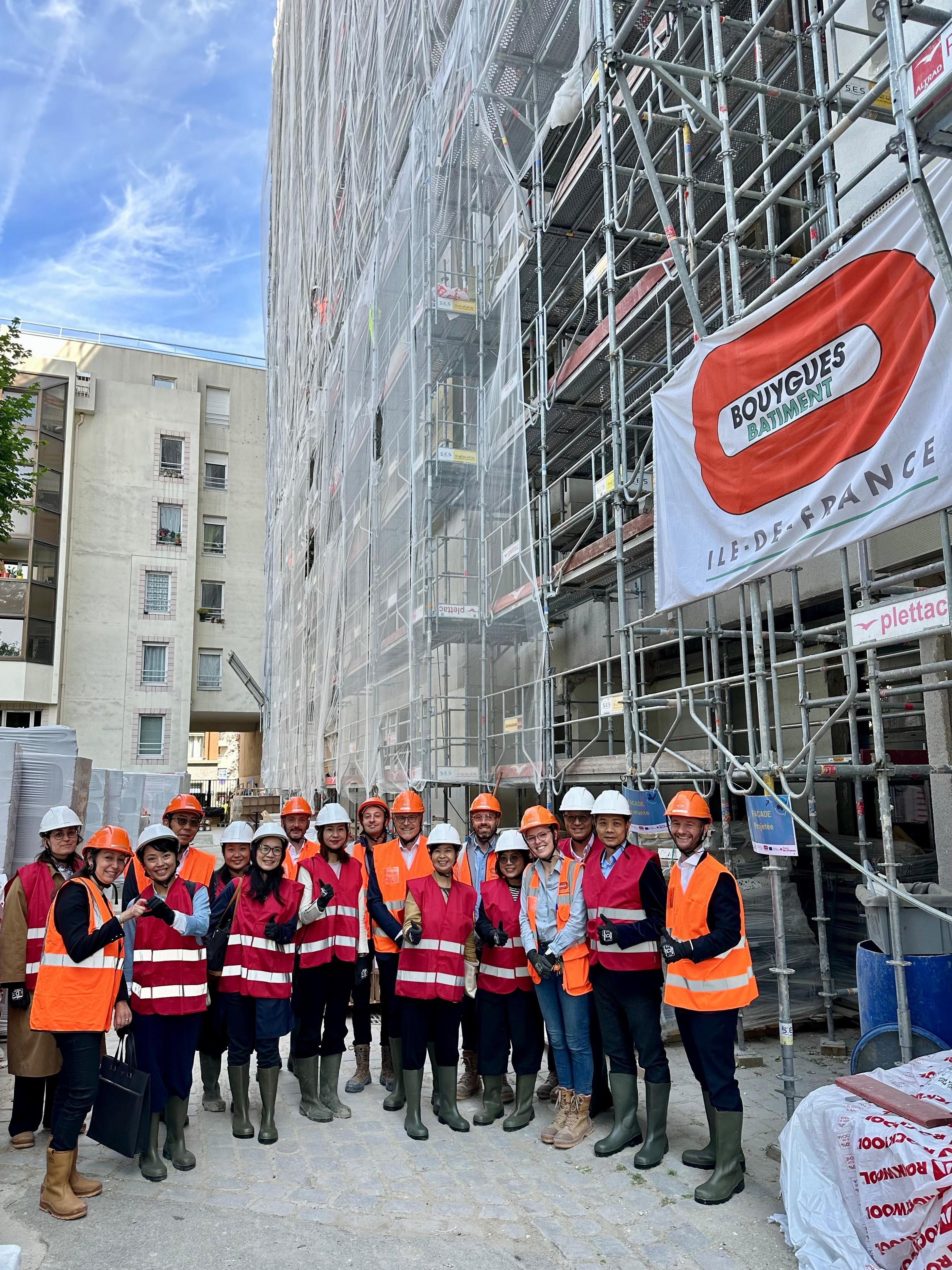
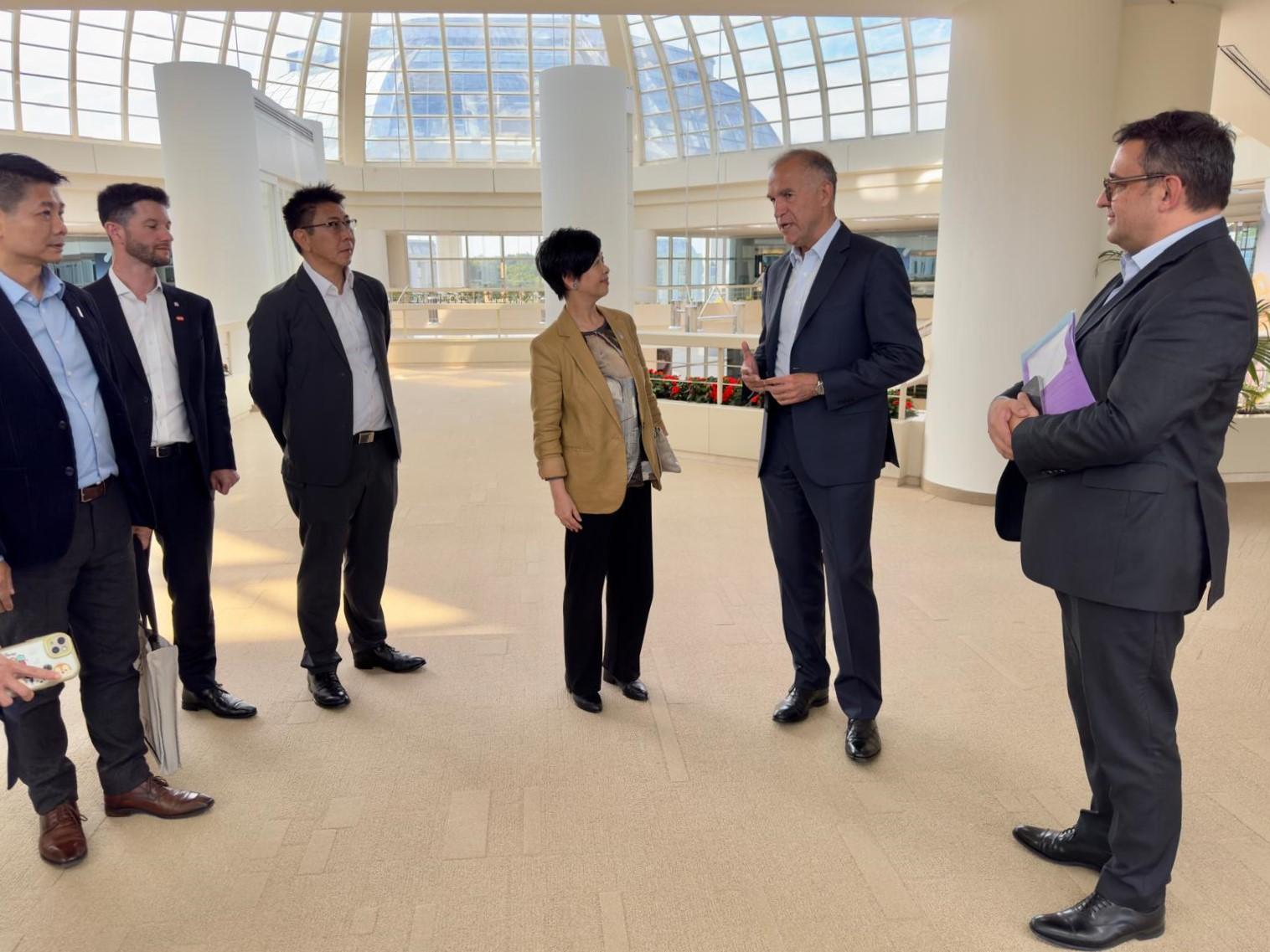
     The Secretary for Housing, Ms Winnie Ho, began her visit to Paris, France, yesterday (May 19, Paris time).
 
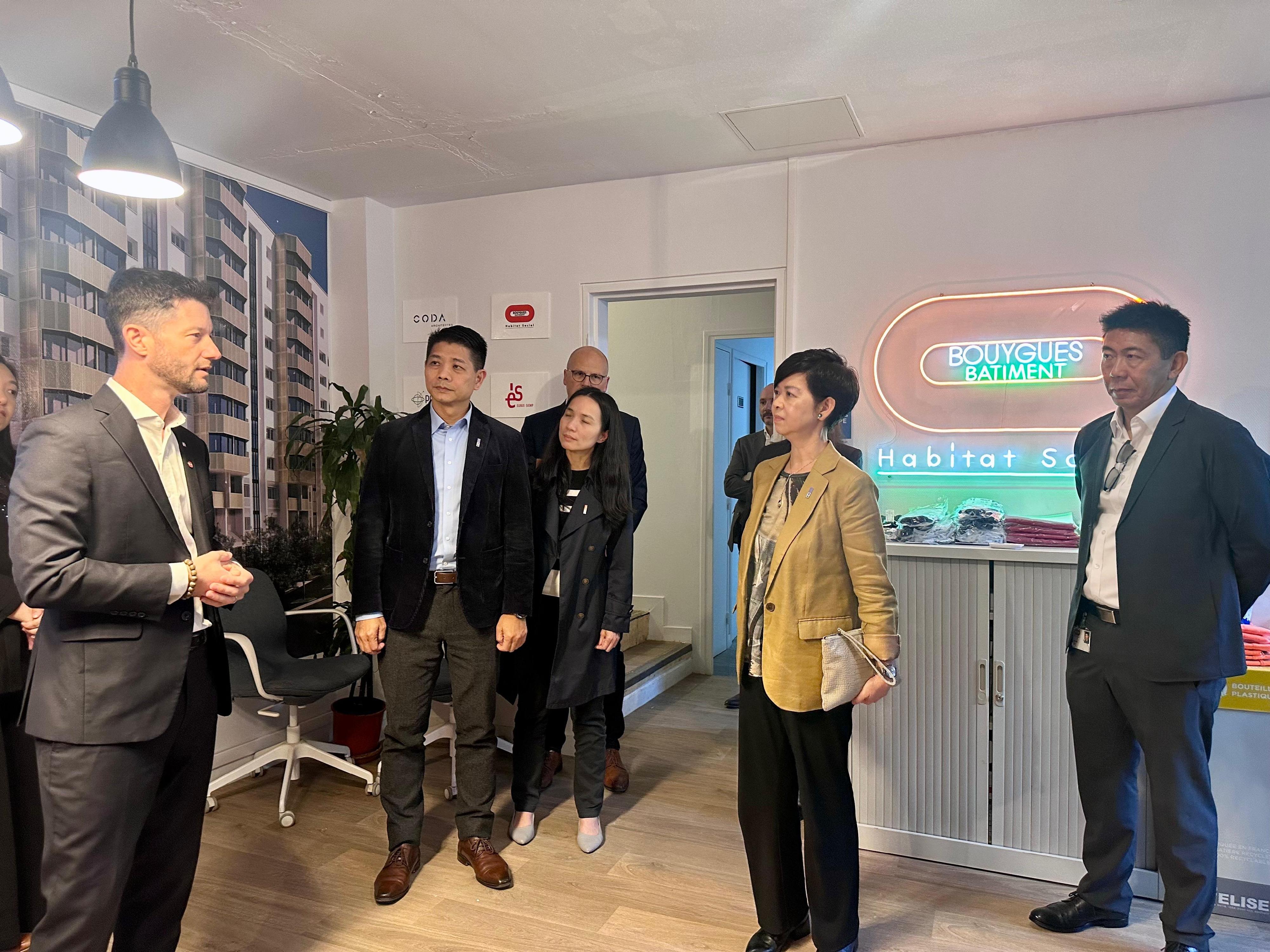
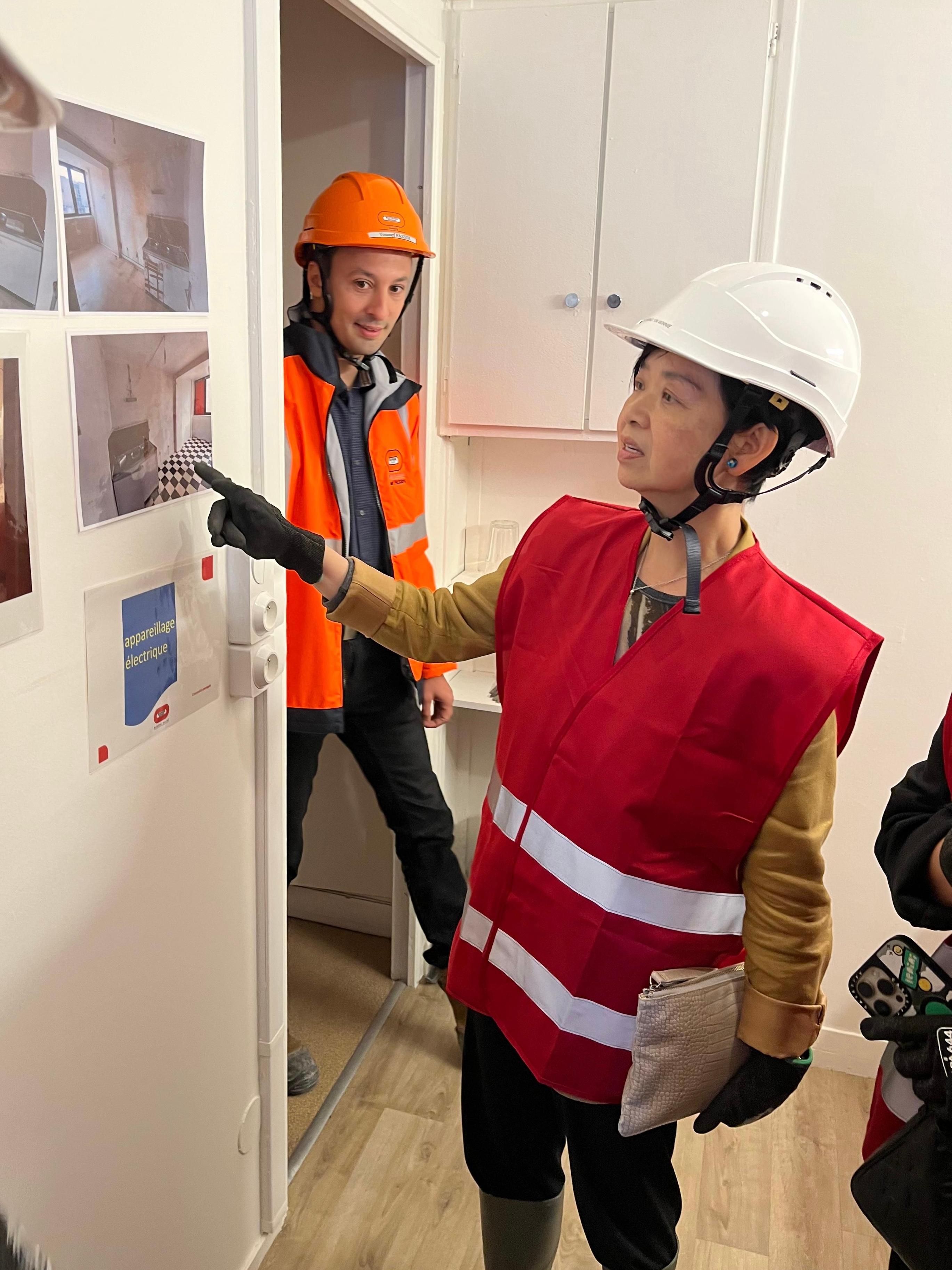
     In the morning, Ms Ho visited a social housing project which is undergoing renovation and will be upgraded into an energy saving and environmentally friendly building. She learned about the city’s ways to minimise impacts of the works on the residents while they remain in place during the renovation. During the visit, Ms Ho shared the Hong Kong Housing Authority (HKHA)’s experience in redeveloping aged public housing estates. This included conducting detailed studies and listening carefully to stakeholders’ views through diversified means to forge a consensus and formulate the most suitable and cost-effective redevelopment plans to ensure that the needs of affected residents are catered for, while improving the environment of the public housing estates and neighbourhood. Furthermore, to enhance the sense of well-being of the residents, the Housing Bureau (HB) and the HKHA launched a resident-oriented “Well-being design” guide last year. It serves as a reference for the future design of new public housing estates and the improvement works of existing estates to create a more comfortable and inclusive estate environment.
 
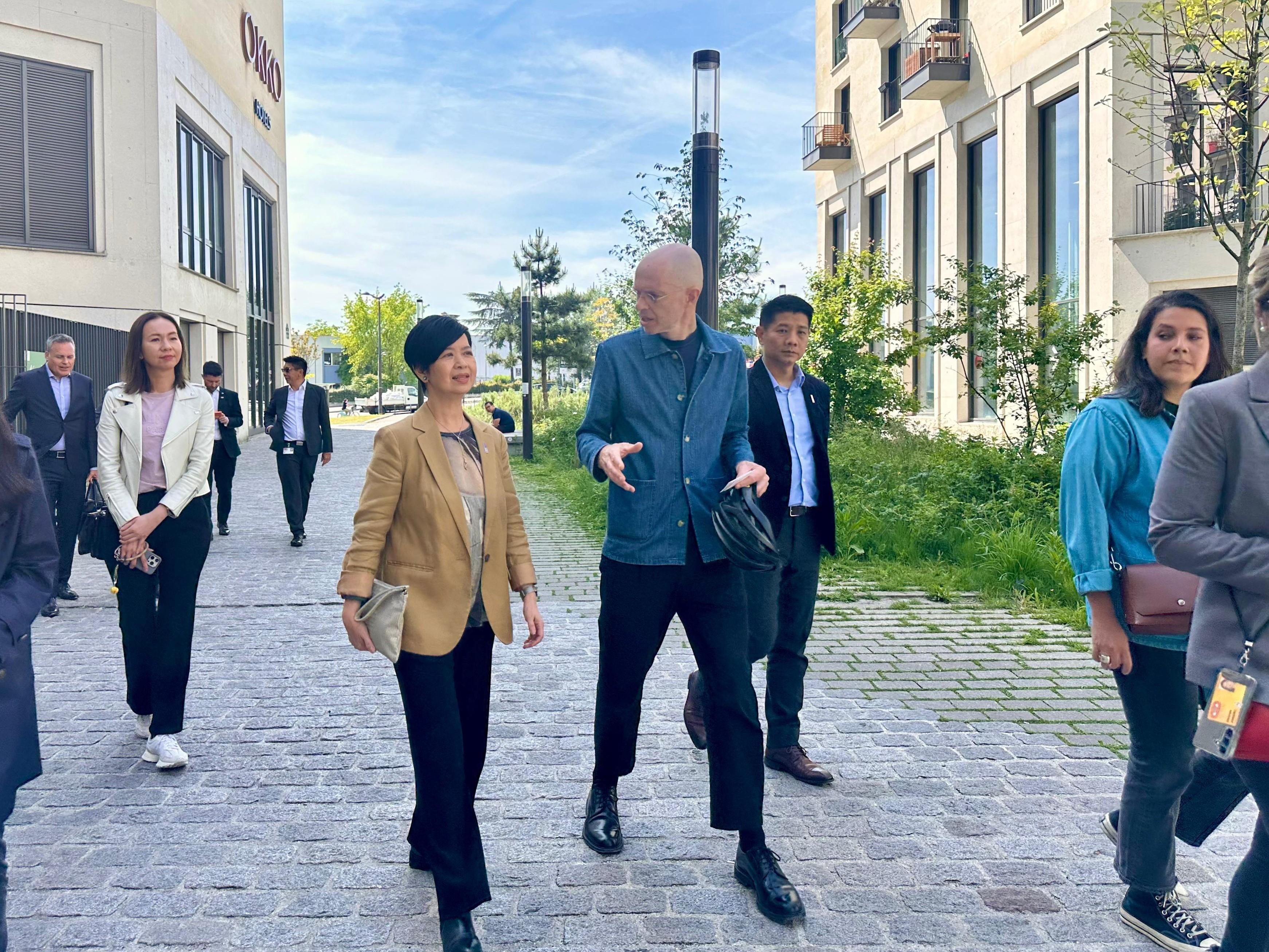
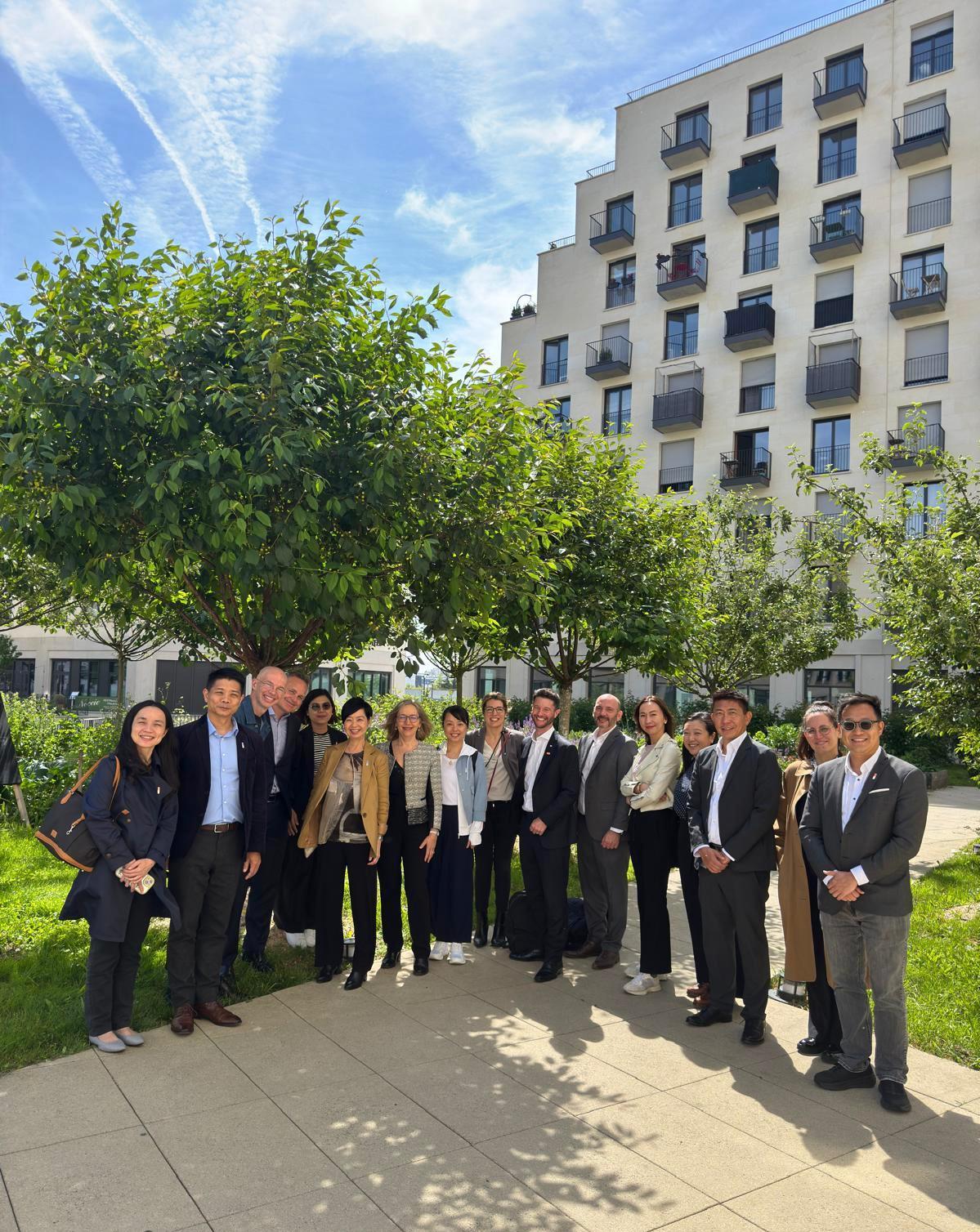
     She visited a zero carbon district in Paris, Îlot Fertile, in the afternoon. Îlot Fertile is a composite development project with abundant green space, integrating social housing, office, commercial, retail, hostels and more. Renewable energy systems and innovative construction technologies are adopted during the construction to implement low-carbon building initiatives and enhance energy efficiency in buildings.
 
     Ms Ho said that air ventilation assessments and microclimate studies are carried out for the HKHA’s new public housing developments to enhance environmental performance in aspects such as wind environment, natural ventilation and natural light exposure in buildings. The HB and the HKHA have also been actively promoting the application of innovative construction technologies such as Modular Integrated Construction (MiC), Multi-trade Integrated Mechanical, Electrical and Plumbing (MiMEP) and construction robotics. These help to enhance construction quality and efficiency, shorten construction time and greatly reduce material waste, making the construction more environment friendly. Hong Kong and Paris share the same vision in promoting energy saving and green buildings, and she hoped to strengthen relevant co-operation between the two cities.
 
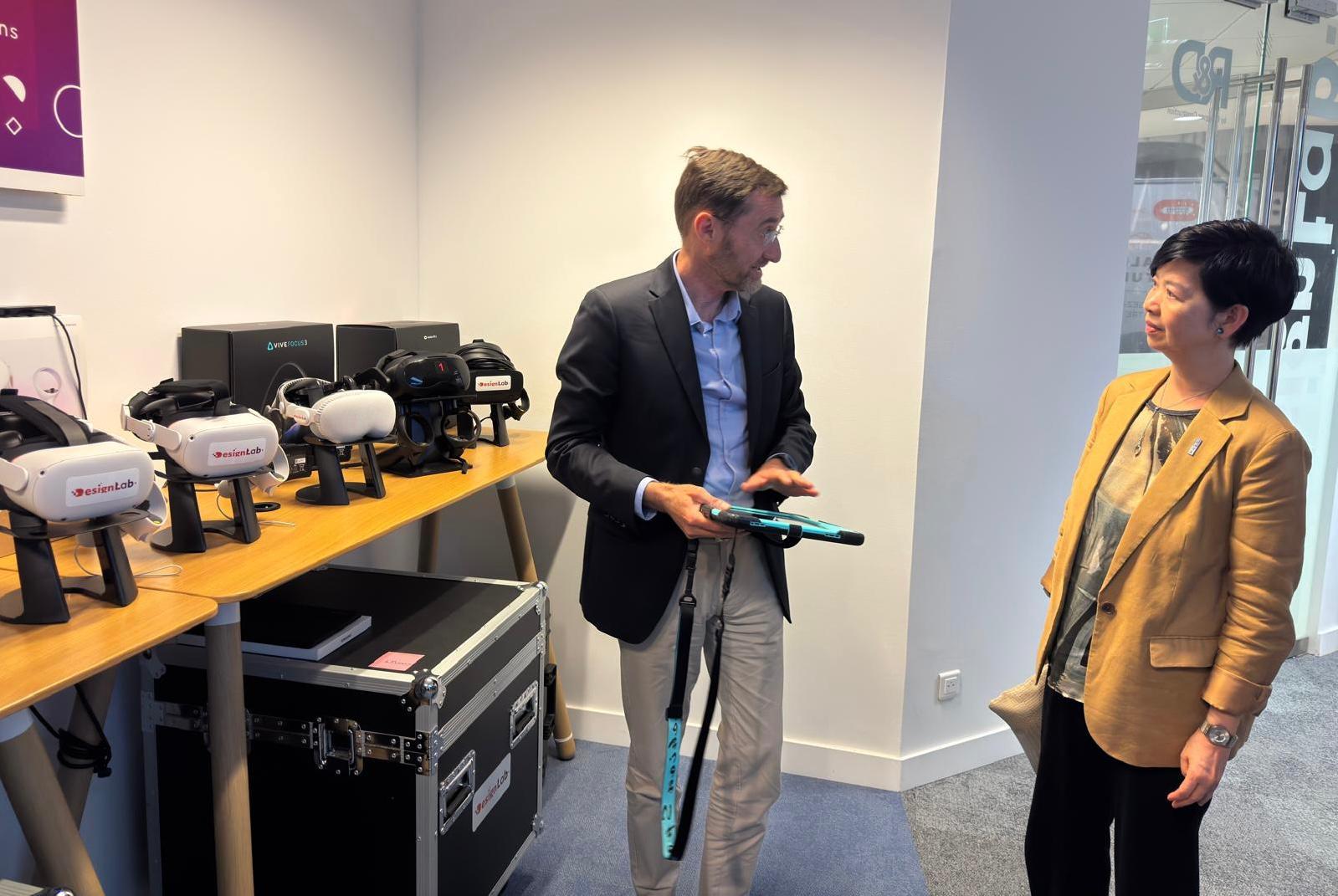
     Ms Ho visited the Construction Innovation Centre at the Bouygues Construction headquarters afterwards. She met with the Chairman and Chief Executive Officer (CEO) of the Bouygues Construction Group (the Group), Mr Pascal Minault, and Deputy CEO of the Group Mr Pierre-Éric Saint-André to exchange ideas on the latest smart building technologies, green building and sustainable urban development. Ms Ho said that Bouygues Construction and Dragages Hong Kong, headed by the Group, have established a presence in Hong Kong for many years, and have contributed in various infrastructure, government buildings and public housing projects. She looked forward to continued collaboration in driving the industry to usher in a new era of smart construction.
 
     Ms Ho will continue her visit today (May 20, Paris time).

Photo  Photo  Photo  Photo  Photo  Photo  Photo  Photo  Photo  Photo  
read more

TD renews electronic audible traffic signals at crossings to provide convenience for visually impaired persons and public at large (with photos/videos)

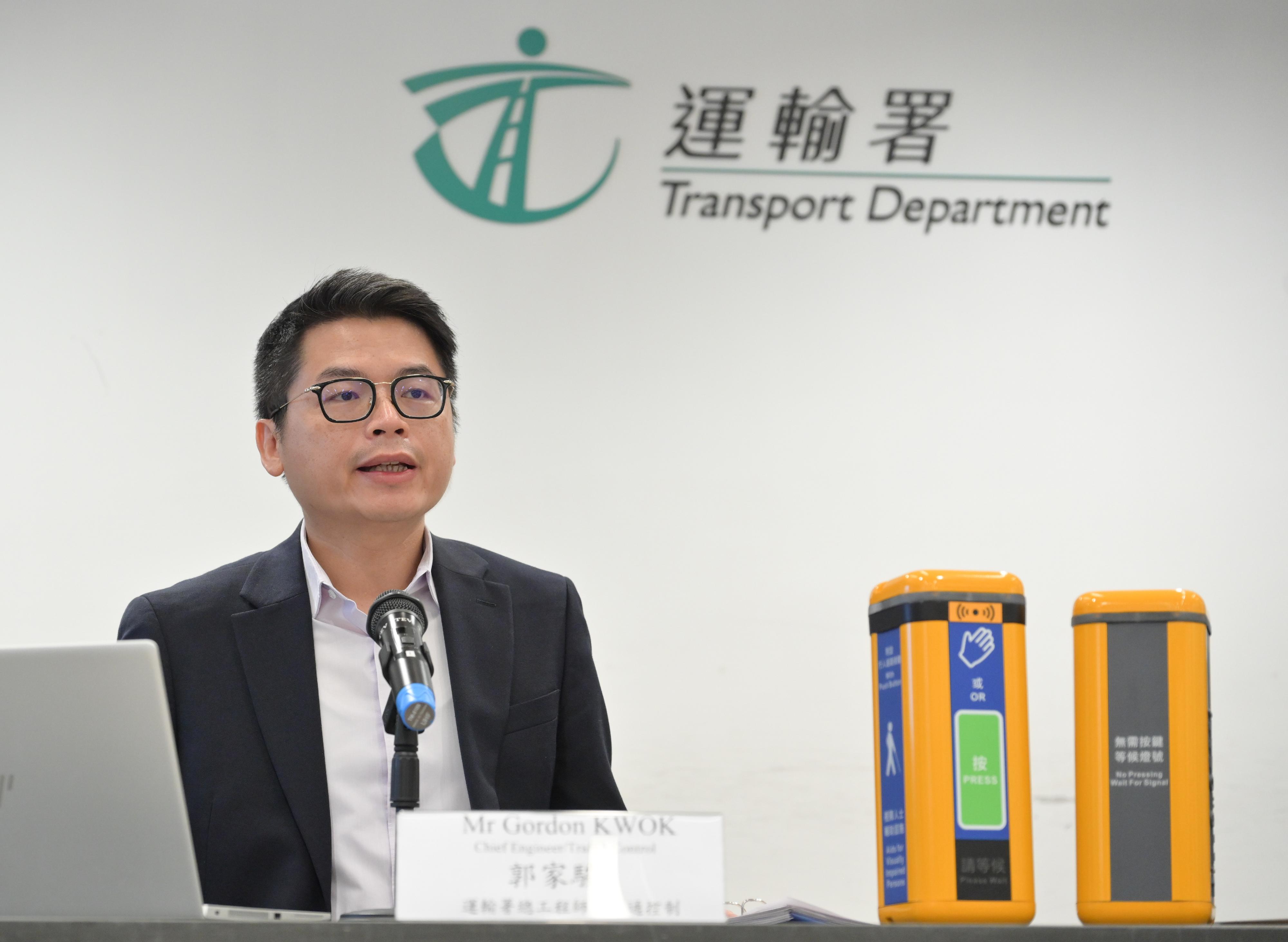
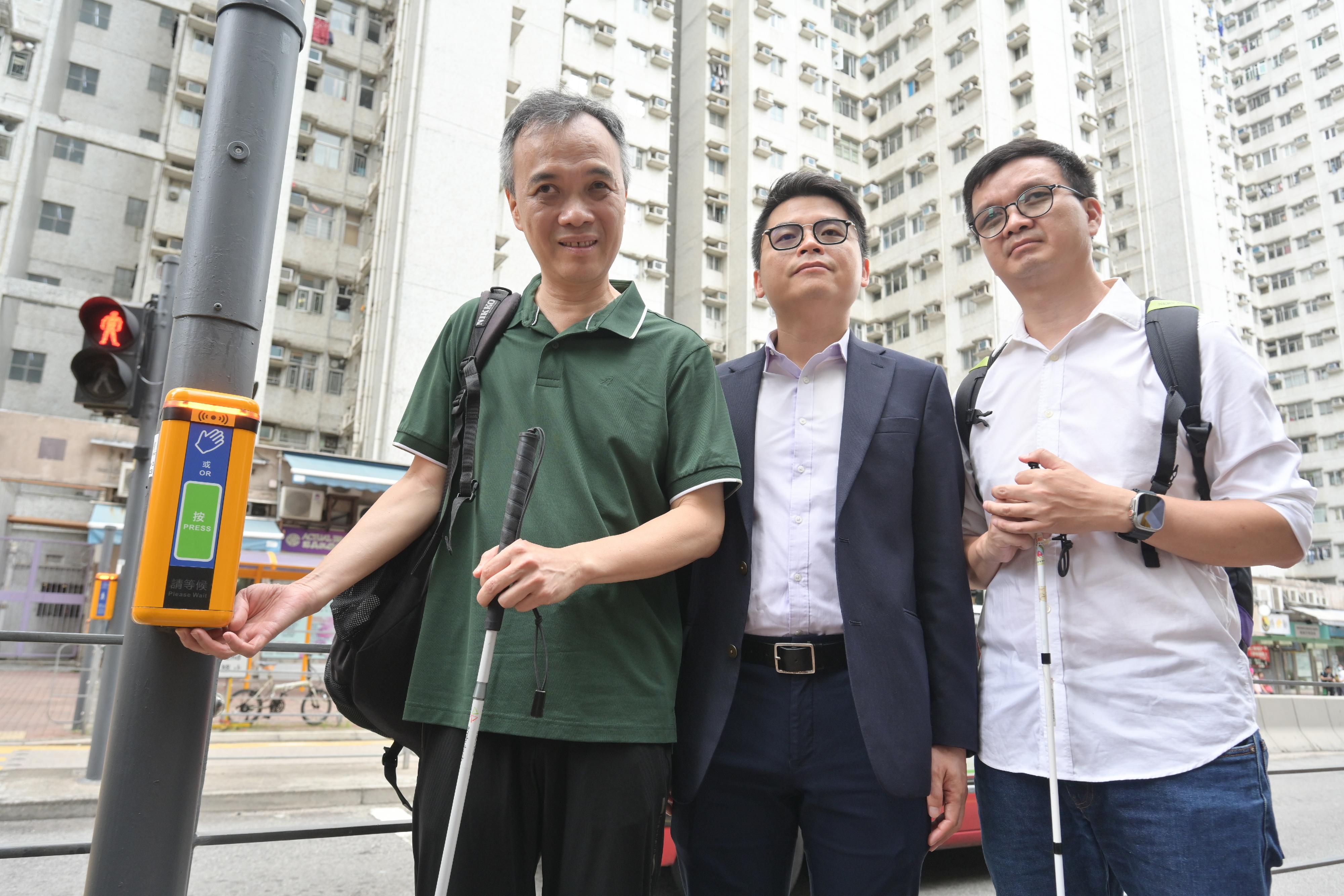
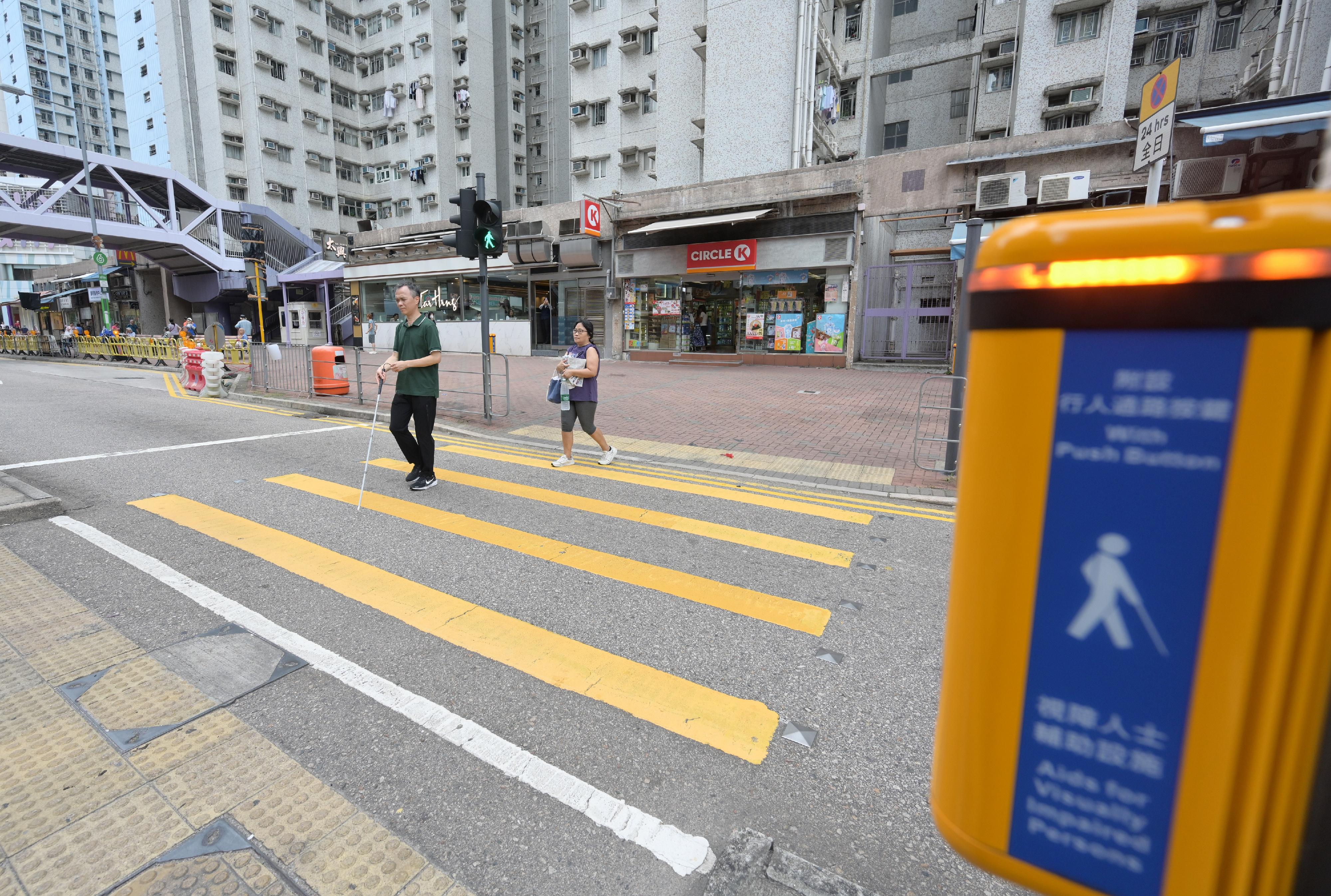
     The Transport Department (TD) today (May 20) announced the territory-wide gradual renewal of electronic audible traffic signals (eATS) at signalised crossings. People-oriented new features have been incorporated to provide convenience for visually impaired persons and other members of the public.

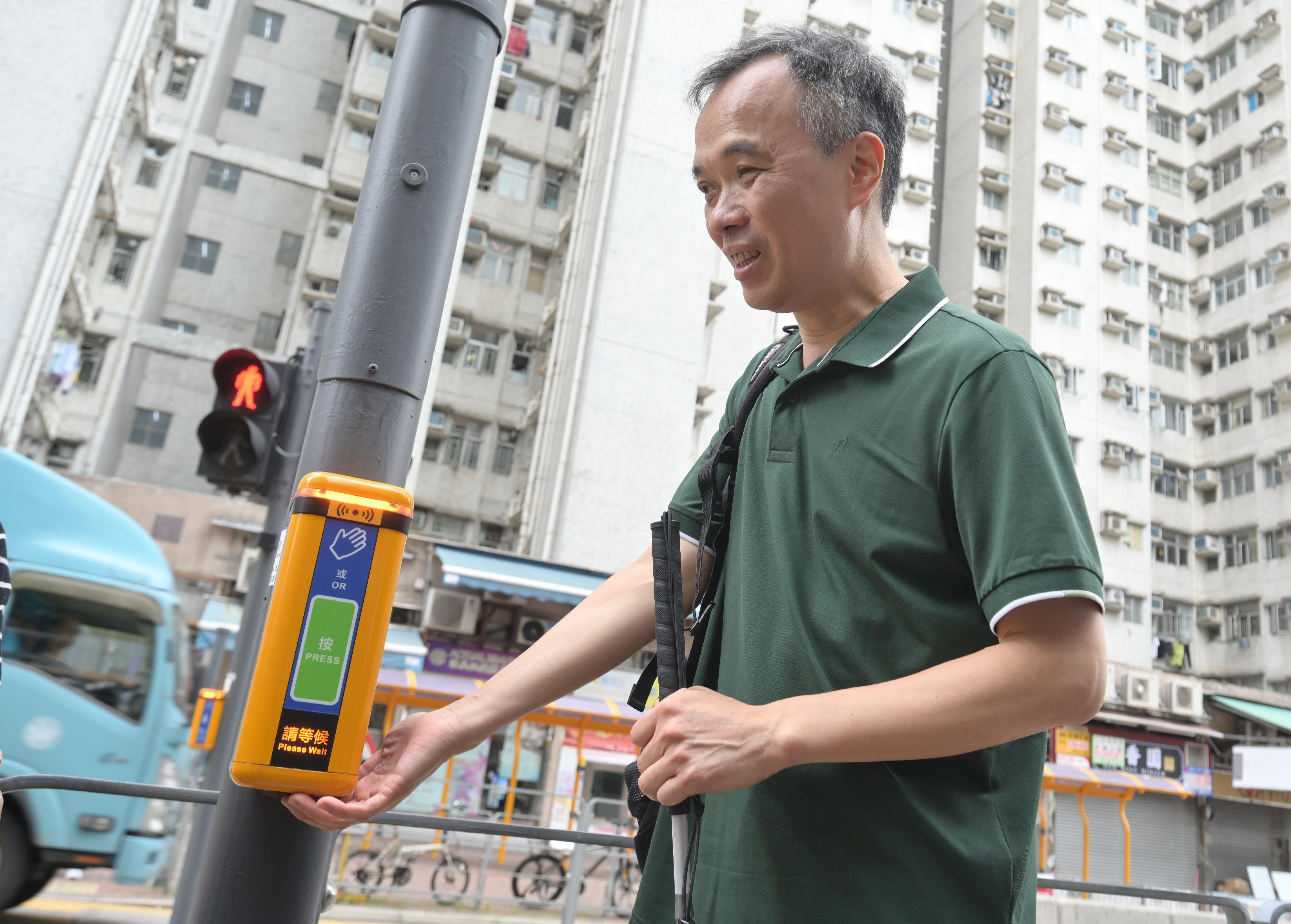
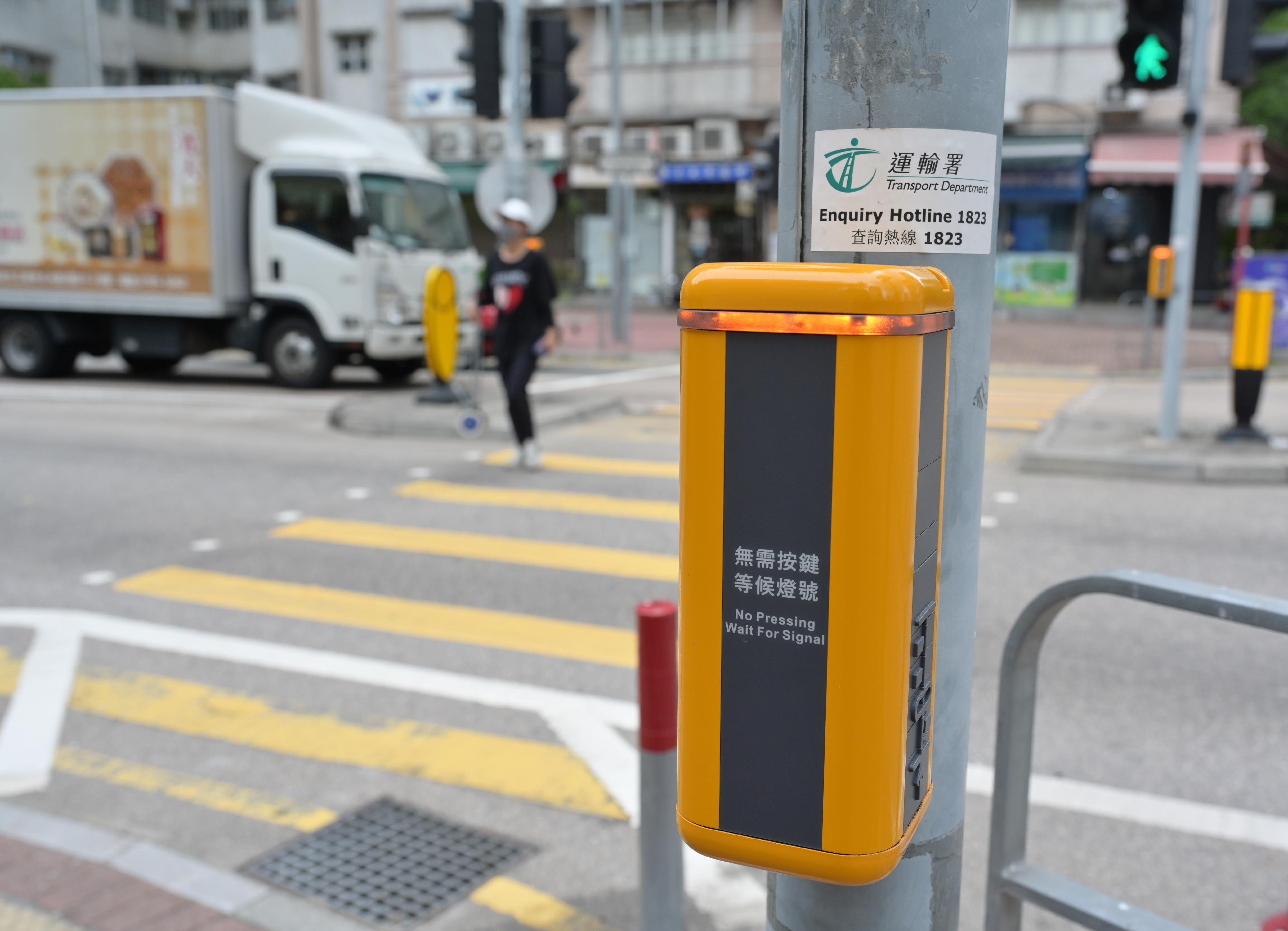
     The original eATS indicate the status of the pedestrian traffic signal to visually impaired persons by emitting sound and vibration signals so that they can cross the road safely according to the sound signal. At some crossings with higher vehicle flows and lower pedestrian traffic, the eATS are equipped with a pedestrian push-button function. The green pedestrian signal will only be activated after it is pressed, allowing more vehicles to pass through the junction. Apart from retaining these existing functions, five new features have been introduced into the new-generation eATS (see Annex for details) to better meet users’ needs:
 

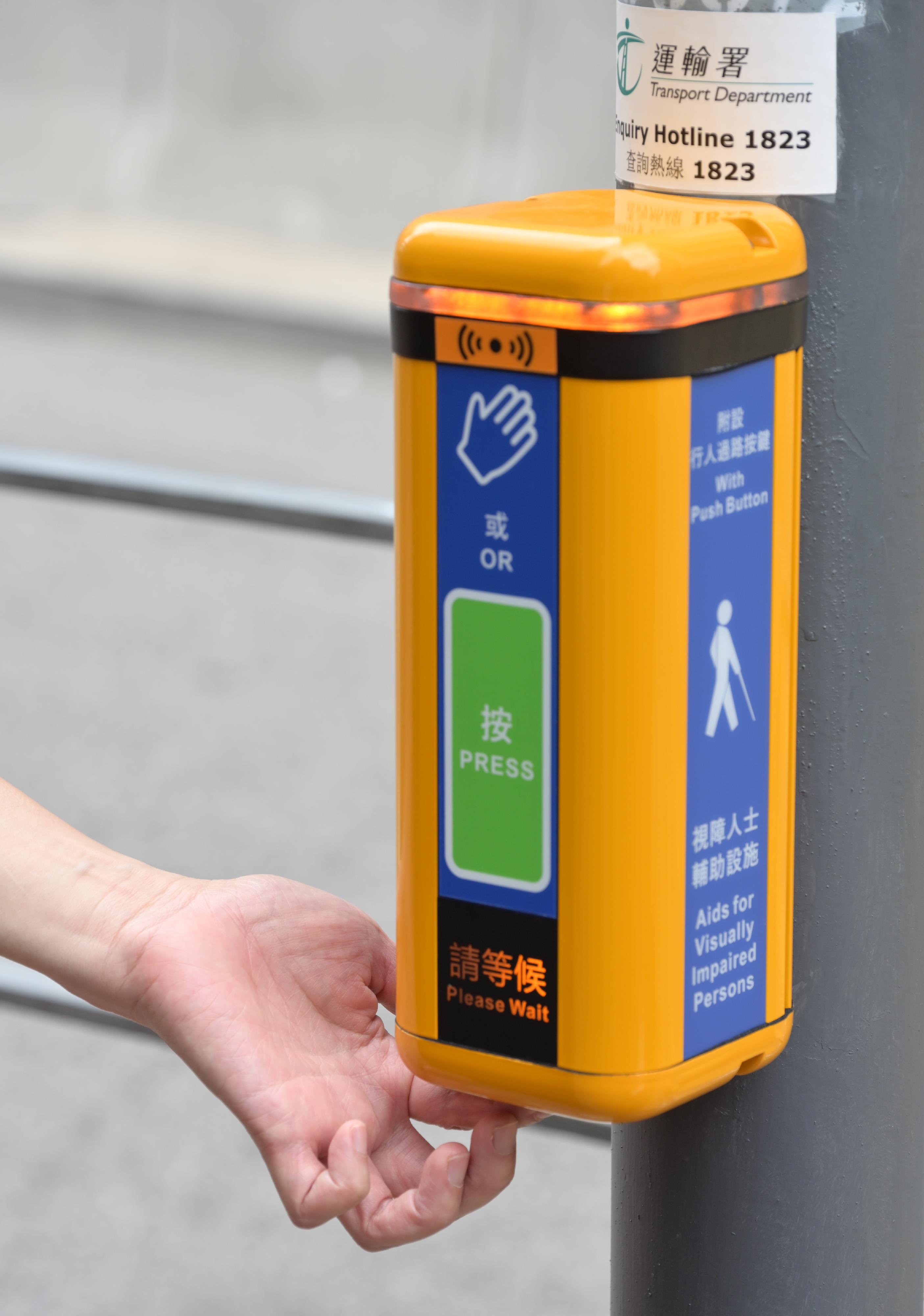
  1. A light illumination unit is installed at the top of the new eATS, making it easier for persons with amblyopia to locate the pedestrian crossing;
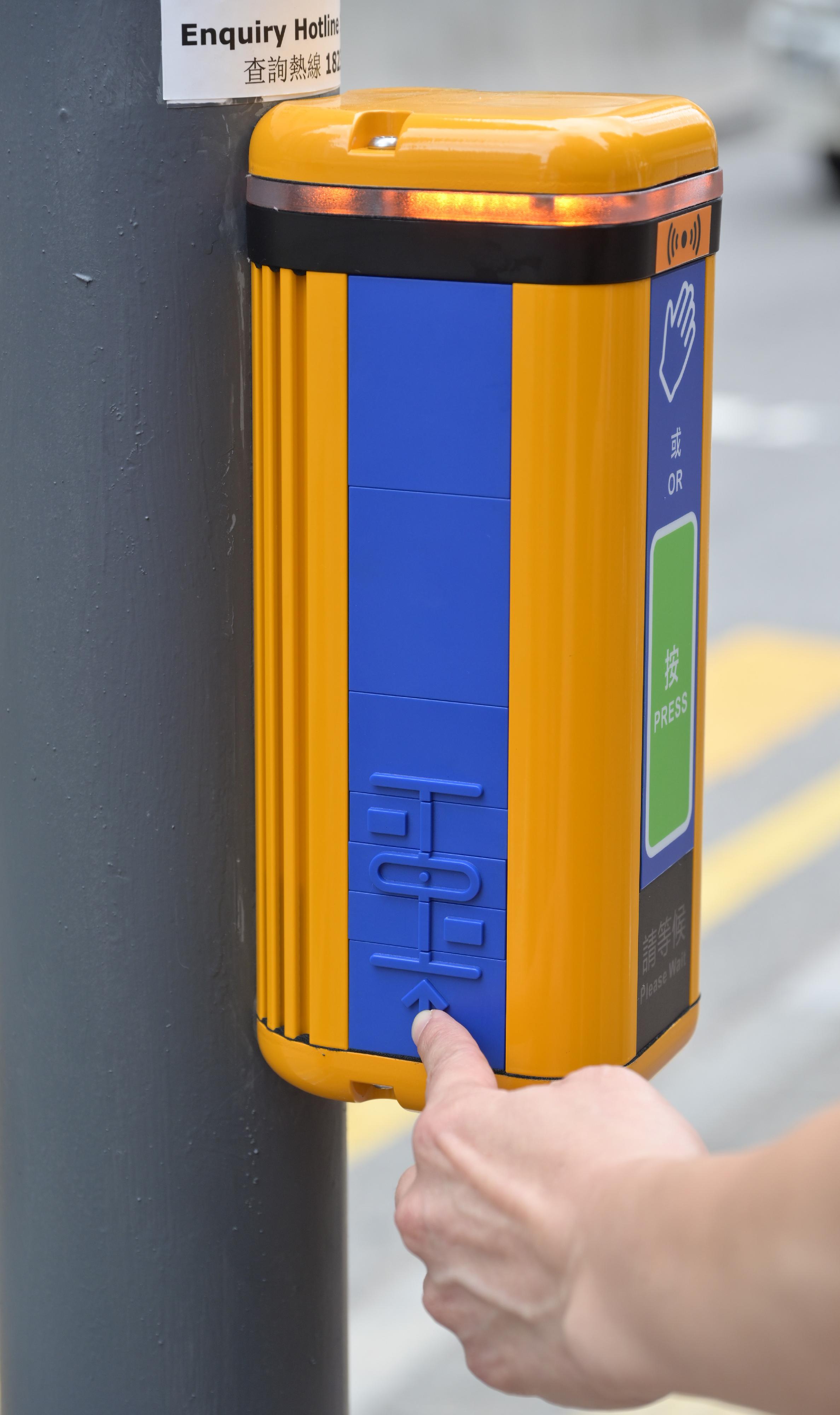
  2. A tactile map is provided on its side, providing the layout information of the crossing for visually impaired persons;
  3. A voice message of the crossing’s location is added. By pressing the activation button at the bottom, the device will read out the name of streets near the crossing in Cantonese, Putonghua and English to inform users of their location;
  4. A touchless pedestrian push button sensor is provided, reducing users’ hygiene concerns; and
  5. Featuring a new night-time operation mode, when there are no visually impaired persons seeking to cross the road at night, its operating volume will be lower than the existing level, thereby reducing its impact on neighbouring residents. Visually impaired persons can use the remote control function of a newly designed dedicated wireless device or the TD’s “HKeMobility” mobile app to temporarily increase its volume when they need to cross the road to ensure safety. The TD will distribute about 15 000 one-off dedicated wireless devices free of charge to visually impaired persons for their use through a relevant organisation in the third quarter of 2025 to launch this new function.

     A spokesman for the TD said, “We have consulted the Subcommittee on Access under the Rehabilitation Advisory Committee and the Legislative Council Panel on Transport, and have been maintaining good communication with representatives of visually impaired groups to optimise the functions and settings of the new eATS. The operation of the new eATS under the pilot project earlier has been smooth, and we are pleased to note the overall satisfaction of visually impaired groups with various new features which better cater for and strike a fine balance between the needs of the users and the public at large. This is conducive to upgrading the road safety experience in Hong Kong as we aspire to be barrier-free city.”

     The spokesman added that most of the existing eATS have been in operation for over two decades, exceeding their normal lifespan. Their fault rate has also been gradually increasing, necessitating a large-scale replacement. The TD commenced replacement of a total of some 13 000 eATS at about 2 000 junctions across the territory from April 2025 in phases, and is expected to complete the replacement by end-2027.
Photo  Photo  Photo  Photo  Photo  Photo  Photo  
read more