Tag Archives: China

image_pdfimage_print

FSD and Education University of Hong Kong sign MOU to nurture young generations (with photos)

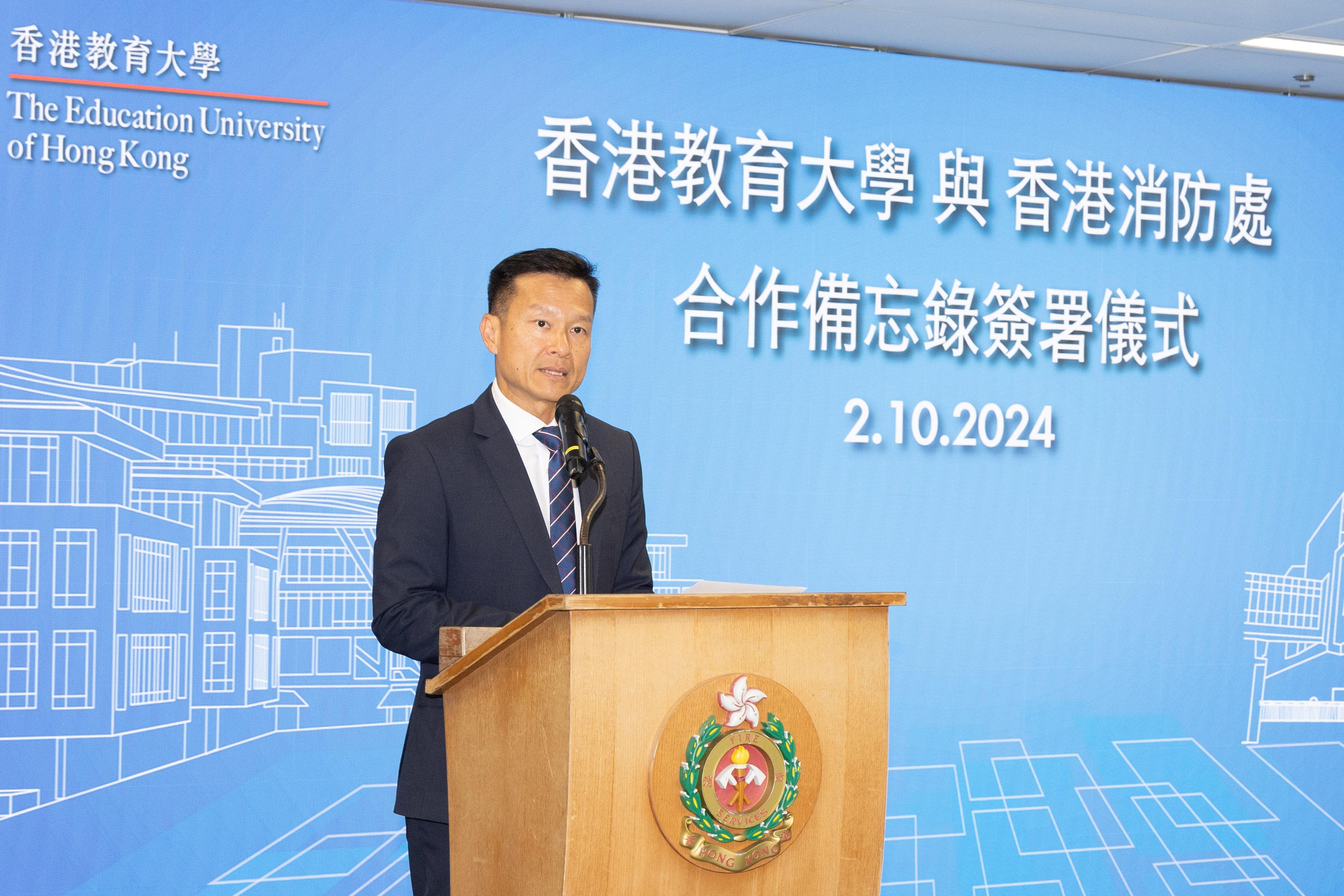
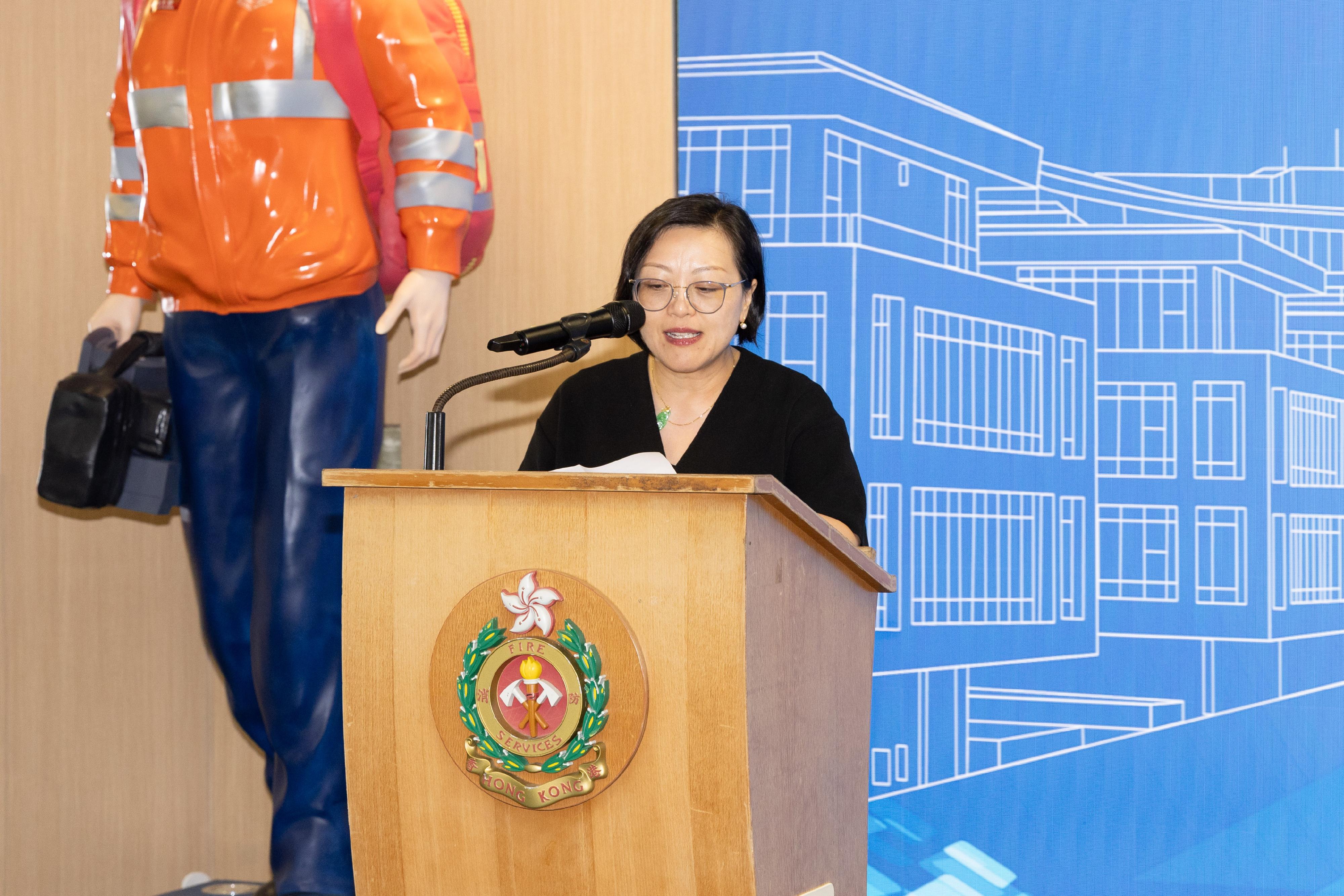
     The Fire Services Department (FSD) and the Education University of Hong Kong (EdUHK) signed a Memorandum of Understanding (MOU) today (October 2) to establish a collaborative partnership in organising a training module on the fundamentals of emergency care and critical response by the Fire and Ambulance Services Academy (FASA) and the Department of Health and Physical Education of the EdUHK. 

     The module will equip students with the skills and knowledge of fire safety measures and emergency evacuation procedures, as well as the application of cardiopulmonary resuscitation (CPR) and automated external defibrillators (AEDs). The aim is to further enhance the awareness of community emergency preparedness in a bid to elevate the efficiency of life-saving treatments. 

     The FSD has long been formulating and implementing strategies on community emergency preparedness, while the Department of Health and Physical Education of the EdUHK has been pursuing excellence on nurturing local physical education teachers and talent in the fields of sports and health. The collaboration will help the FSD to further promote the “three basic skills on emergency preparedness” (namely Extinguish and Prevent Fire, Self-help and Help Others, and Escape and Evacuate) in the community and also cultivate a culture of “self-help and help others” in the wider community. 

     Witnessed by the Commandant of FASA, Mr Yiu Men-yeung, and the Associate Vice President (Quality Assurance) of the EdUHK, Professor Susanna Yeung, the MOU was signed by the Deputy Commandant (Ambulance Services Training) of FASA, Mr Terry Wu, and the Dean of the Faculty of Liberal Arts and Social Sciences of the EdUHK, Professor Li Wai-keung. 

     Mr Yiu said that the training module would enhance students’ competence and confidence in saving patients from cardiac arrest to strengthen the support for local patients in the community to receive rescue services in a timely manner, thus increasing their chances of survival. The MOU also signifies a key step in maintaining sustainable co-operation of both sides to provide diversified trainings in different aspects for young generations in Hong Kong. 

     Professor Yeung thanked the FSD for its unwavering support for the collaboration. She expressed that the training module would enable students to integrate their subject knowledge with the awareness of emergency preparedness and safety, thereby enhancing their vigilance and problem-solving abilities, and cultivating a spirit of mutual assistance and care among them. 
       
     The collaborative training module will be included as a core module in the curriculum of the Bachelor of Education (Honours) (Physical Education) programme and the Bachelor of Science (Honours) in Sports Science and Coaching programme. Students who have completed the module will become members of the Resuscitation Alliance who pledge to give a helping hand in cardiac arrest cases. 
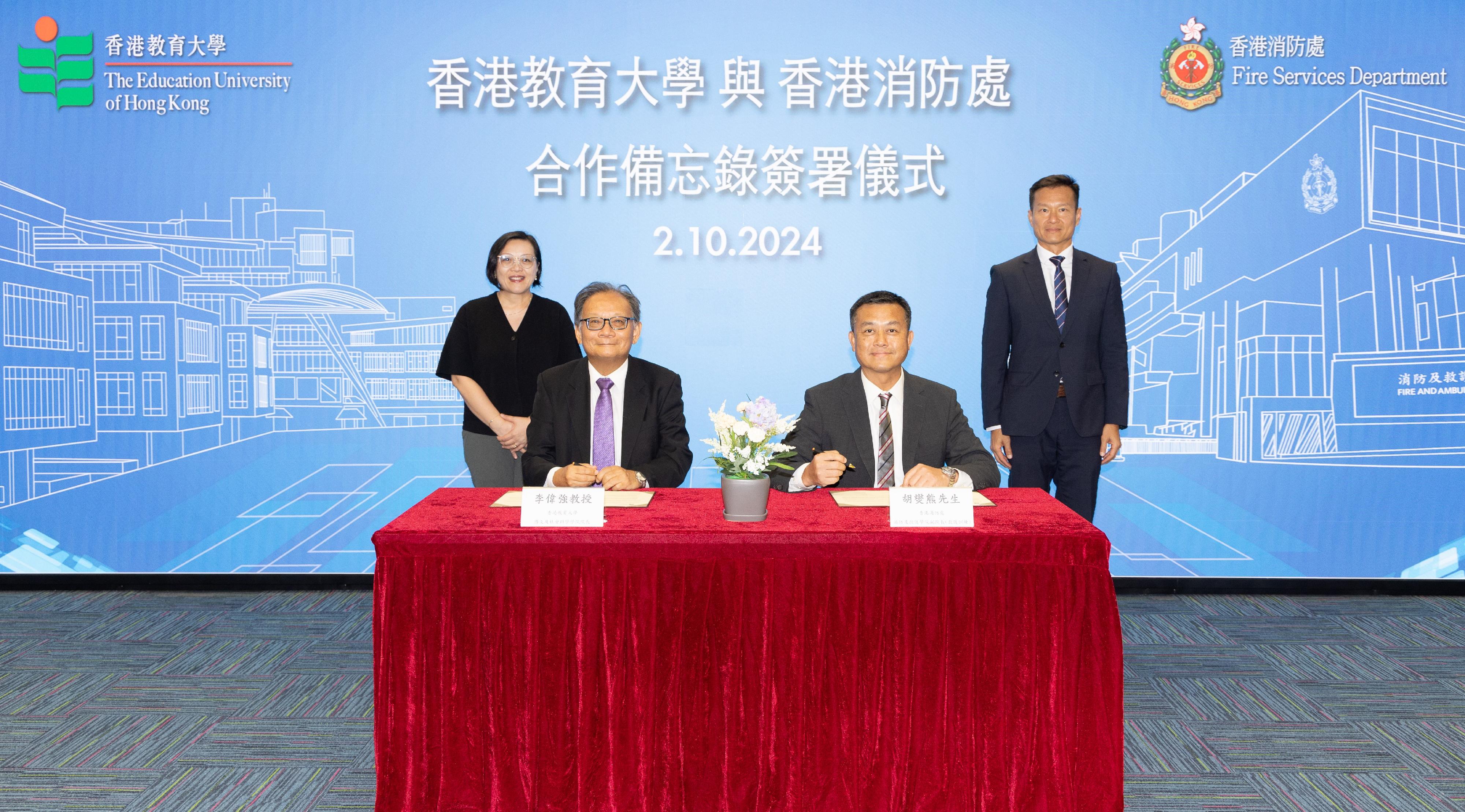
Photo  Photo  Photo  
read more

Hong Kong Customs seizes suspected dangerous drugs worth about $1.5 million in anti-narcotics operation (with photos)

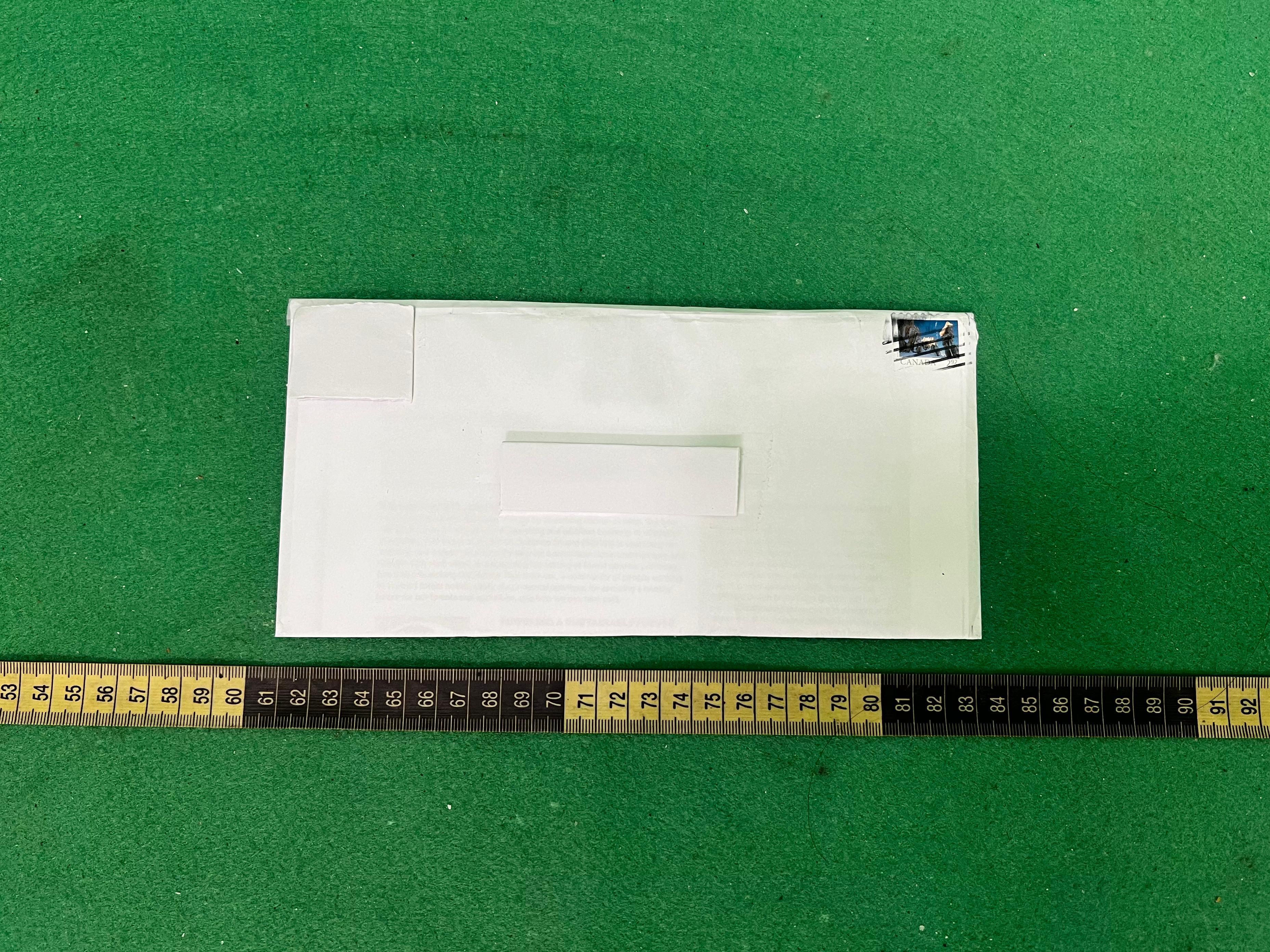
     â€‹Hong Kong Customs has conducted an anti-narcotics operation since early August to combat syndicates trafficking drugs by exploiting secretarial companies to receive postal articles.  

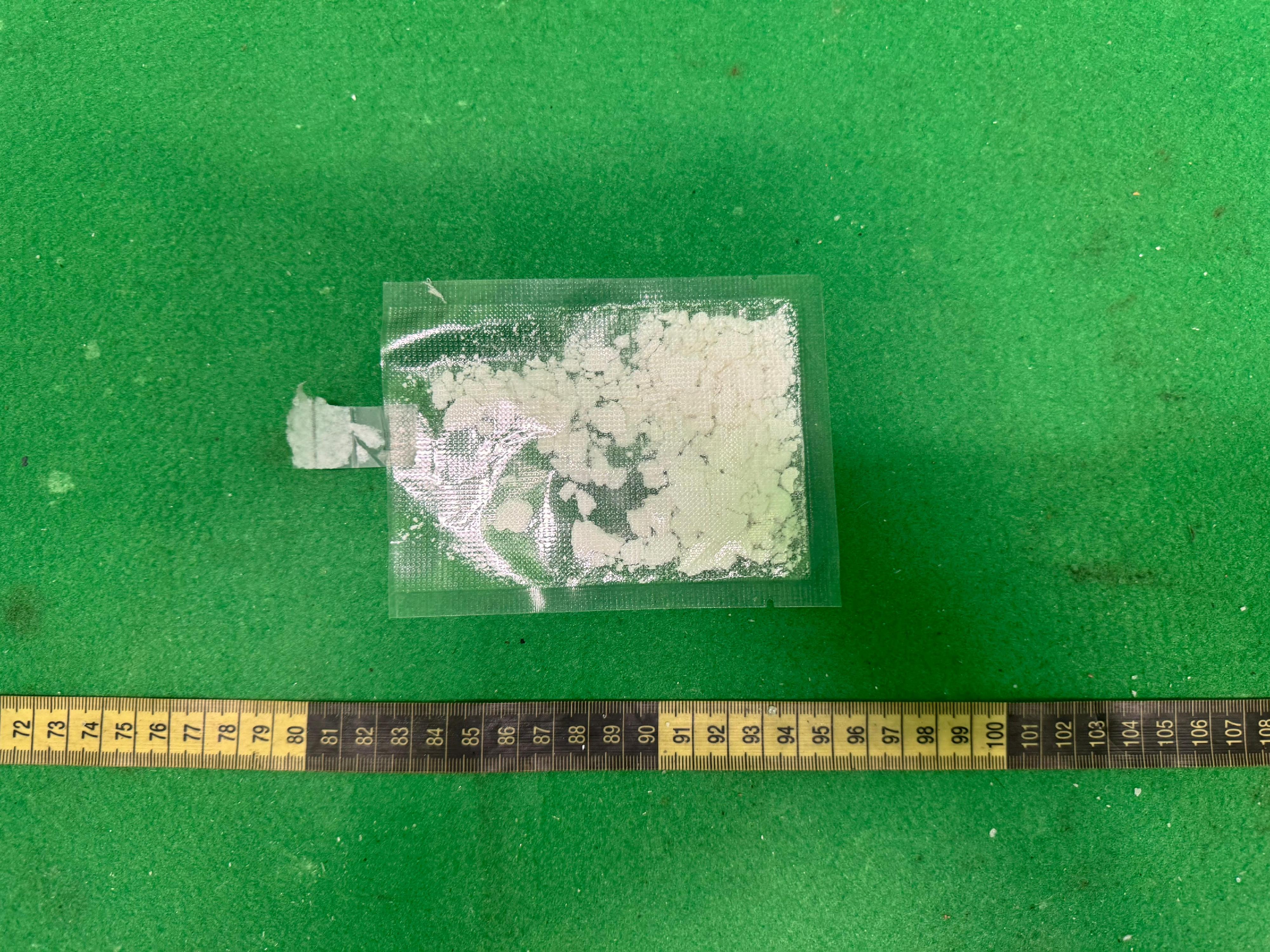
     In view of the upward trend of drug syndicates using secretarial companies to transport drugs into Hong Kong by postal articles, Customs, through risk assessment, has stepped up inspections of suspicious postal articles. During the operation, Customs detected 200 cases and seized about 2.4 kilograms of suspected dangerous drugs, including about 1.2kg of suspected methamphetamine and about 1.2kg of suspected cocaine. The total estimated market value of the seizures was about $1.5 million. 

     Subsequently, Customs arrested five persons suspected of trafficking in a dangerous drug in Hung Hom, Lam Tin, Tuen Mun, Tin Shui Wai and North Point. The individuals are aged between 27 and 59. An investigation is ongoing and the likelihood of further arrests is not ruled out.  

     The postal articles seized in this operation were mainly delivered to mailboxes belonging to different secretarial companies in industrial or commercial buildings. The drug-trafficking syndicates intended to divide the drugs into small packages and transfer them into Hong Kong using an “ant-moving-home” approach via the postal channel, aiming to increase the difficulty of Customs’ detection. 

     The operation is ongoing. 

      Customs will continue to step up enforcement against drug trafficking activities through intelligence analysis and maintain close contact with the industry. The department reminds secretarial companies to remain vigilant and report to Customs any suspicious activities. Customs reiterates its call for the public to stay alert and not to participate in drug trafficking activities for monetary return. 

     Under the Dangerous Drugs Ordinance, trafficking in a dangerous drug is a serious offence. The maximum penalty upon conviction is a fine of $5 million and life imprisonment.

     Members of the public may report any suspected drug trafficking activities to Customs’ 24-hour report hotline 182 8080 or its dedicated crime reporting email account (crimereport@customs.gov.hk) or online form (eform.cefs.gov.hk/form/ced002/).

Photo  Photo  
read more

Inspection of aquatic products imported from Japan

     In response to the Japanese Government’s plan to discharge nuclear-contaminated water at the Fukushima Nuclear Power Station, the Director of Food and Environmental Hygiene issued a Food Safety Order which prohibits all aquatic products, sea salt and seaweeds originating from the 10 metropolis/prefectures, namely Tokyo, Fukushima, Ibaraki, Miyagi, Chiba, Gunma, Tochigi, Niigata, Nagano and Saitama, from being imported into and supplied in Hong Kong.
 
     For other Japanese aquatic products, sea salt and seaweeds that are not prohibited from being imported into Hong Kong, the Centre for Food Safety (CFS) of the Food and Environmental Hygiene Department will conduct comprehensive radiological tests to verify that the radiation levels of these products do not exceed the guideline levels before they are allowed to be supplied in the market.
 
     As the discharge of nuclear-contaminated water is unprecedented and will continue for 30 years or more, the Government will closely monitor and step up the testing arrangements. Should anomalies be detected, the Government does not preclude further tightening the scope of the import ban.
 
     From noon on September 30 to noon today (October 2), the CFS conducted tests on the radiological levels of 315 food samples imported from Japan, which were of the “aquatic and related products, seaweeds and sea salt” category, in the past two days. No sample was found to have exceeded the safety limit. Details can be found on the CFS’s thematic website titled “Control Measures on Foods Imported from Japan” (www.cfs.gov.hk/english/programme/programme_rafs/programme_rafs_fc_01_30_Nuclear_Event_and_Food_Safety.html).

     In parallel, the Agriculture, Fisheries and Conservation Department (AFCD) has also tested 100 samples of local catch for radiological levels. All the samples passed the tests. Details can be found on the AFCD’s website (www.afcd.gov.hk/english/fisheries/Radiological_testing/Radiological_Test.html).
 
     The Hong Kong Observatory (HKO) has also enhanced the environmental monitoring of the local waters. No anomaly has been detected so far. For details, please refer to the HKO’s website
(www.hko.gov.hk/en/radiation/monitoring/seawater.html).
 
     From August 24, 2023, to noon today, the CFS and the AFCD have conducted tests on the radiological levels of 88 874 samples of food imported from Japan (including 56 845 samples of aquatic and related products, seaweeds and sea salt) and 20 156 samples of local catch respectively. All the samples passed the tests. read more