Tag Archives: China

image_pdfimage_print

Hong Kong Customs seizes suspected cocaine worth about $15 million at airport (with photo)

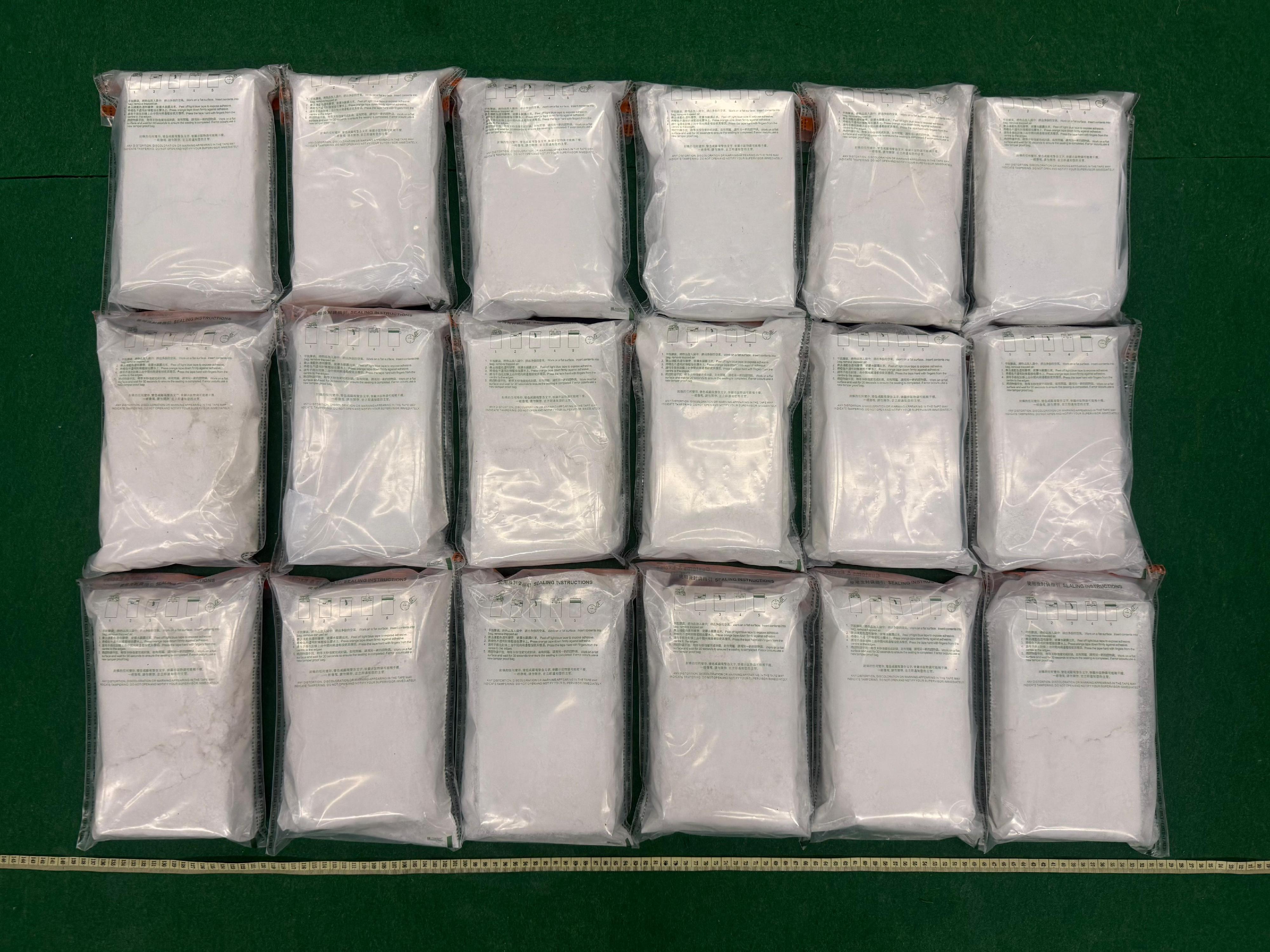
     Hong Kong Customs yesterday (June 1) detected a passenger drug trafficking case at Hong Kong International Airport and seized about 18 kilograms of suspected cocaine with an estimated market value of about $15 million. A male and a female were arrested.

     A 22-year-old male passenger and a 16-year-old female passenger arrived in Hong Kong from Johannesburg, South Africa, yesterday. During customs clearance, 18 packets of suspected cocaine weighing about 18kg in total were found inside their carry-on suitcases. The pair was subsequently arrested. An investigation is ongoing.

     Customs will continue to step up enforcement against drug trafficking activities through intelligence analysis. The department also reminds members of the public to stay alert and not to participate in drug trafficking activities for monetary return. They must not accept hiring or delegation from another party to carry controlled items into and out of Hong Kong. They are also reminded not to carry unknown items for other people.

     Customs will continue to apply a risk assessment approach and focus on selecting passengers from high-risk regions for clearance to combat transnational drug trafficking activities.

     Under the Dangerous Drugs Ordinance, trafficking in a dangerous drug is a serious offence. The maximum penalty upon conviction is a fine of $5 million and life imprisonment.

     Members of the public may report any suspected drug trafficking activities to Customs’ 24-hour hotline 182 8080 or its dedicated crime-reporting email account (crimereport@customs.gov.hk) or online form (eform.cefs.gov.hk/form/ced002).

Photo  
read more

Provisional statistics of retail sales for April 2025

     The Census and Statistics Department (C&SD) released the latest figures on retail sales today (June 2).

     The value of total retail sales in April 2025, provisionally estimated at $28.9 billion, decreased by 2.3% compared with the same month in 2024. The revised estimate of the value of total retail sales in March 2025 decreased by 3.5% compared with a year earlier. For the first 4 months of 2025 taken together, it was provisionally estimated that the value of total retail sales decreased by 5.6% compared with the same period in 2024.

     Of the total retail sales value in April 2025, online sales accounted for 8.1%. The value of online retail sales in that month, provisionally estimated at $2.3 billion, decreased by 3.5% compared with the same month in 2024. The revised estimate of online retail sales in March 2025 decreased by 0.5% compared with a year earlier. For the first 4 months of 2025 taken together, it was provisionally estimated that the value of online retail sales decreased by 2.2% compared with the same period in 2024.

     After netting out the effect of price changes over the same period, the provisional estimate of the volume of total retail sales in April 2025 decreased by 3.3% compared with a year earlier. The revised estimate of the volume of total retail sales in March 2025 decreased by 4.7% compared with a year earlier. For the first 4 months of 2025 taken together, the provisional estimate of the total retail sales decreased by 7.2% in volume compared with the same period in 2024.

     Analysed by broad type of retail outlet in descending order of the provisional estimate of the value of sales and comparing April 2025 with April 2024, the value of sales of commodities in supermarkets decreased by 2.4%. This was followed by sales of jewellery, watches and clocks, and valuable gifts (-1.7% in value); wearing apparel (-5.6%); motor vehicles and parts (-53.4%); fuels (-12.5%); footwear, allied products and other clothing accessories (-5.1%); furniture and fixtures (-16.7%); and optical shops (-0.2%).

     On the other hand, the value of sales of other consumer goods not elsewhere classified increased by 13.4% in April 2025 over a year earlier. This was followed by sales of medicines and cosmetics (+7.2% in value); food, alcoholic drinks and tobacco (+3.0%); electrical goods and other consumer durable goods not elsewhere classified (+1.6%); commodities in department stores (+2.1%); books, newspapers, stationery and gifts (+11.7%); and Chinese drugs and herbs (+3.8%).

     Based on the seasonally adjusted series, the provisional estimate of the value of total retail sales increased by 4.2% in the three months ending April 2025 compared with the preceding three-month period, while the provisional estimate of the volume of total retail sales increased by 7.1%.

Commentary

     A government spokesman said that retail sales performance showed signs of stabilisation in recent months. The value of total retail sales recorded a modest year-on-year decline of 2.3% in April 2025. The decline narrowed further in April compared with the previous months despite the effect of the late arrival of the Easter holidays this year (in mid-April this year but in the junction of March and April last year) when more residents made outbound trips during the month.

     Looking ahead, the spokesman said that the Government’s proactive promotion of tourism and mega events will help stimulate the consumption market. Increase in employment earnings and sustained steady growth of the Mainland economy will also bolster consumption sentiment. These factors will be supportive to the retail sector, though ongoing changes in consumption patterns and competition among businesses amid the uncertain macroeconomic environment will still pose challenges.

Further information

     Table 1 presents the revised figures on value index and value of retail sales for all retail outlets and by broad type of retail outlet for March 2025 as well as the provisional figures for April 2025. The provisional figures on the value of retail sales for all retail outlets and by broad type of retail outlet as well as the corresponding year-on-year changes for the first 4 months of 2025 taken together are also shown.

     Table 2 presents the revised figures on value of online retail sales for March 2025 as well as the provisional figures for April 2025. The provisional figures on year-on-year changes for the first 4 months of 2025 taken together are also shown.

     Table 3 presents the revised figures on volume index of retail sales for all retail outlets and by broad type of retail outlet for March 2025 as well as the provisional figures for April 2025. The provisional figures on year-on-year changes for the first 4 months of 2025 taken together are also shown.

     Table 4 shows the movements of the value and volume of total retail sales in terms of the year-on-year rate of change for a month compared with the same month in the preceding year based on the original series, and in terms of the rate of change for a three-month period compared with the preceding three-month period based on the seasonally adjusted series.

     The classification of retail establishments follows the Hong Kong Standard Industrial Classification (HSIC) Version 2.0, which is used in various economic surveys for classifying economic units into different industry classes.

     These retail sales statistics measure the sales receipts in respect of goods sold by local retail establishments and are primarily intended for gauging the short-term business performance of the local retail sector. Data on retail sales are collected from local retail establishments through the Monthly Survey of Retail Sales (MRS). Local retail establishments with and without physical shops are covered in MRS and their sales, both through conventional shops and online channels, are included in the retail sales statistics.

     The retail sales statistics cover consumer spending on goods but not on services (such as those on housing, catering, medical care and health services, transport and communication, financial services, education and entertainment) which account for over 50% of the overall consumer spending. Moreover, they include spending on goods in Hong Kong by visitors but exclude spending outside Hong Kong by Hong Kong residents. Hence they should not be regarded as indicators for measuring overall consumer spending.

     Users interested in the trend of overall consumer spending should refer to the data series of private consumption expenditure (PCE), which is a major component of the Gross Domestic Product published at quarterly intervals. Compiled from a wide range of data sources, PCE covers consumer spending on both goods (including goods purchased from all channels) and services by Hong Kong residents whether locally or abroad. Please refer to the C&SD publication “Gross Domestic Product by Expenditure Component” for more details.

     More detailed statistics are given in the “Report on Monthly Survey of Retail Sales”. Users can browse and download this publication at the website of the C&SD (www.censtatd.gov.hk/en/EIndexbySubject.html?pcode=B1080003&scode=530).

     Users who have enquiries about the survey results may contact the Distribution Services Statistics Section of the C&SD (Tel: 3903 7400; email : mrs@censtatd.gov.hk). read more

DH announces latest situation of Legionnaires’ disease cases

     The Centre for Health Protection (CHP) of the Department of Health today (June 2) reported the latest number of cases of Legionnaires’ disease (LD), and reminded the public of the importance of using and maintaining properly designed man-made water systems, adding that susceptible groups should strictly observe relevant precautions.

     From May 25 to 31, the CHP recorded three community-acquired LD cases. The details of the cases are as follows:
 

  1. A 63-year-old male patient with good past health living in Yuen Long District;
  2. A 74-year-old male patient with underlying illnesses living in Kwun Tong District; and
  3. A 63-year-old male patient with underlying illnesses living in Eastern District.

     The CHP is conducting epidemiological investigations to identify potential sources of infection, high-risk exposure and clusters, if any.

     As of May 31, 53 LD cases had been recorded this year. In 2024 and 2023, there were 135 and 121 LD cases respectively.

     Men, people aged over 50, smokers, alcoholics and persons with weakened immunity are more susceptible to LD. Some situations may also increase the risk of infection, including poor maintenance of water systems; living in areas with old water systems, cooling towers or fountains; using electric water heaters, whirlpools and spas or hot water spring spas; and recent stays in hotels or vessels.

     Legionellae are found in various environmental settings and grow well in warm water (20 to 45 degrees Celsius). They can be found in aqueous environments such as water tanks, hot and cold water systems, cooling towers, whirlpools and spas, water fountains and home apparatus that support breathing. People may become infected when they breathe in contaminated droplets (aerosols) and mist generated by artificial water systems, or when handling garden soil, compost and potting mixes.

     Immunocompromised persons should:
 
  • Use sterile or boiled water for drinking, tooth brushing and mouth rinsing;
  • Avoid using humidifiers, or other mist- or aerosol-generating devices; and
  • If using humidifiers, or other mist- or aerosol-generating devices, fill the water tank with only sterile or cooled freshly boiled water, and not water directly from the tap. Also, clean and maintain humidifiers/devices regularly according to manufacturers’ instructions. Never leave stagnant water in a humidifier/device. Empty the water tank, wipe all surfaces dry, and change the water daily. 
     
     The public should observe the health advice below:
 
  • Observe personal hygiene;
  • Do not smoke and avoid alcohol consumption;
  • Strainers in water taps and shower heads should be inspected, cleaned, descaled and disinfected regularly or at a frequency recommended by the manufacturer;
  • If a fresh-water plumbing system is properly maintained, it is not necessary to install domestic water filters. Use of water filters is not encouraged as clogging occurs easily, which can promote growth of micro-organisms. In case water filters are used, the pore size should be 0.2 micrometres (µm) and the filter needs to be changed periodically according to the manufacturer’s recommendations;
  • Drain and clean water tanks of buildings at least quarterly;
  • Drain or purge for at least one minute infrequently used water outlets (e.g. water taps, shower heads and hot water outlets) and stagnant points of the pipework weekly or before use;
  • Seek and follow doctors’ professional advice regarding the use and maintenance of home respiratory devices and use only sterile water (not distilled or tap water) to clean and fill the reservoir. Clean and maintain the device regularly according to the manufacturer’s instructions. After cleaning/disinfection, rinse the device with sterile water, cooled freshly boiled water or water filtered with 0.2 µm filters. Never leave stagnant water in the device. Empty the water tank, keep all surfaces dry, and change the water daily; and
  • When handling garden soil, compost and potting mixes: 
  1. Wear gloves and a face mask;
  2. Water gardens and compost gently using low pressure;
  3. Open composted potting mixes slowly and make sure the opening is directed away from the face;
  4. Wet the soil to reduce dust when potting plants; and
  5. Avoid working in poorly ventilated places such as enclosed greenhouses.

     â€‹â€‹The public may visit the CHP’s LD page, the Code of Practice for Prevention of LD and the Housekeeping Guidelines for Cold and Hot Water Systems for Building Management of the Prevention of LD Committee, and the CHP’s risk-based strategy for prevention and control of LD. read more

Inspection of aquatic products imported from Japan

     In response to the Japanese Government’s plan to discharge nuclear-contaminated water at the Fukushima Nuclear Power Station, the Director of Food and Environmental Hygiene issued a Food Safety Order which prohibits all aquatic products, sea salt and seaweeds originating from the 10 metropolis/prefectures, namely Tokyo, Fukushima, Ibaraki, Miyagi, Chiba, Gunma, Tochigi, Niigata, Nagano and Saitama, from being imported into and supplied in Hong Kong.
 
     For other Japanese aquatic products, sea salt and seaweeds that are not prohibited from being imported into Hong Kong, the Centre for Food Safety (CFS) of the Food and Environmental Hygiene Department is conducting comprehensive radiological tests to verify that the radiation levels of these products do not exceed the guideline levels before they are allowed to be supplied in the market.
 
     From noon on May 30 to noon today (June 2), the CFS conducted tests on the radiological levels of 461 food samples imported from Japan, which were of the “aquatic and related products, seaweeds and sea salt” category, in the past three days (including last Saturday and Sunday). No sample was found to have exceeded the safety limit. Details can be found on the CFS’s thematic website titled “Control Measures on Foods Imported from Japan” (www.cfs.gov.hk/english/programme/programme_rafs/programme_rafs_fc_01_30_Nuclear_Event_and_Food_Safety.html).
 
     In parallel, the Agriculture, Fisheries and Conservation Department (AFCD) has also tested 150 samples of local catch for radiological levels. All the samples passed the tests. Details can be found on the AFCD’s website (www.afcd.gov.hk/english/fisheries/Radiological_testing/Radiological_Test.html).
 
     The Hong Kong Observatory (HKO) has also enhanced the environmental monitoring of the local waters. No anomaly has been detected so far. For details, please refer to the HKO’s website
(www.hko.gov.hk/en/radiation/monitoring/seawater.html).
 
     From August 24, 2023, to noon today, the CFS and the AFCD have conducted tests on the radiological levels of 140 376 samples of food imported from Japan (including 92 454 samples of aquatic and related products, seaweeds and sea salt) and 32 238 samples of local catch respectively. All the samples passed the tests. read more