Tag Archives: China

image_pdfimage_print

Exteriors of three historic buildings at University of Hong Kong declared monuments (with photos)

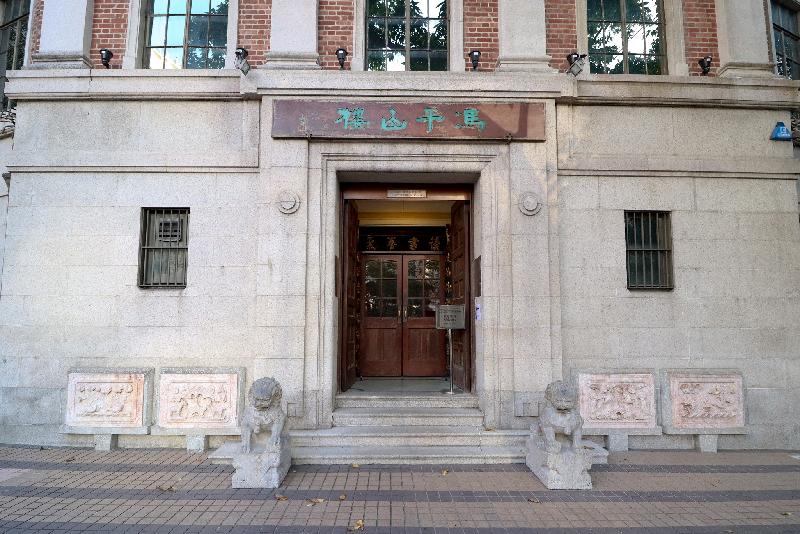
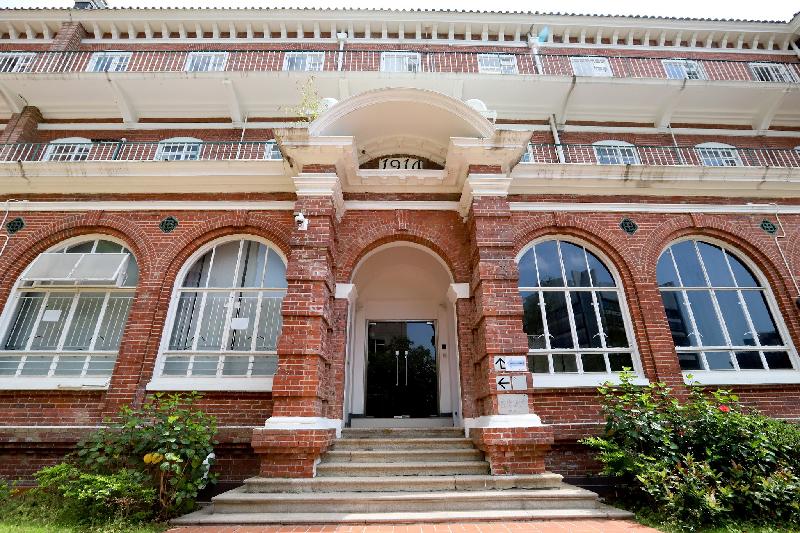
     The Government today (November 16) announced that the Antiquities Authority (i.e. the Secretary for Development) has declared the exteriors of Fung Ping Shan Building, Eliot Hall and May Hall at the University of Hong Kong as monuments under the Antiquities and Monuments Ordinance. The notice of the declaration was gazetted today.
      
     Fung Ping Shan Building, originally named Fung Ping Shan Library, was opened on December 14, 1932, as a library for Chinese books of the University thanks to the generous donation by the late Mr Fung Ping-shan. During World War II, the building was also used as a repository for books of private individuals, schools and government organisations. In 1953, the Museum of Chinese Art and Archaeology was established with exhibitions held in a room of the Fung Ping Shan Library. In 1962, the collection of the Fung Ping Shan Library was transferred to the newly constructed Main Library of the University, and the original library building was then converted into the Fung Ping Shan Museum. It was renamed the University Museum and Art Gallery in 1994, before its new wing in the TT Tsui Building opened to the public in 1996.
      
     Designed by Leigh & Orange, Fung Ping Shan Building is a three-storey building with a red-brick facade, carved granite ornaments and a prominent glass dome on the roof and a symmetrical elevation. The overall design also reflects distinctive architectural features, including the fan-shaped floor plan and the rounded central section of the front. The facade is elegantly decorated with giant pilasters, window architraves, pediments and moulded cornices and parapets. Most of the old finely carved hardwood doors and windows with original brass fittings are still in place.
      
     Eliot Hall was opened in 1914 as the second student residential hall under the direct management of the University. It was named after the first Vice-Chancellor of the University, Sir Charles Eliot. May Hall was opened in 1915 to become the third student residential hall under the direct management of the University. It was named after the second Chancellor of the University and the 15th Governor of Hong Kong, Sir Francis Henry May.
      
     The design of Eliot Hall and May Hall was modelled from Lugard Hall, which was the first student residential hall under the direct management of the University, with students’ rooms located on the first and second floors. The refectory, common rooms, servants’ quarters and bathrooms were on the ground floor. During World War II, Eliot Hall became the relief hospital to provide additional support to Queen Mary Hospital while May Hall served as the main residence for staff and students. On New Year’s Day of 1942, a congregation was held in May Hall and wartime degrees were granted to 14 medical students who took their final examinations at the time of the Japanese attack. Eliot Hall was turned into a gymnasium in 1956, and subsequently renovated as a student residential hall in 1963.
      
     The landslide at the slope adjacent to Eliot Hall and May Hall in June 1966 caused by torrential rain led to an immediate evacuation of these two halls for extensive repairs and the demolition of the two wardens’ quarters at the east end of Eliot Hall and May Hall. The University took this opportunity to combine Lugard Hall, Eliot Hall and May Hall into one large residential unit and renamed them as the Old Halls. The Old Halls opened in 1969 and consisted of three wings, namely Lugard Wing (originally Lugard Hall), Eliot Wing (originally Eliot Hall) and May Wing (originally May Hall). Since then, female students were accepted in the Old Halls and some of them were accommodated at the east wing on the first and second floors of May Wing. Eliot Wing and May Wing reverted to their old names, Eliot Hall and May Hall, when Lugard Wing was demolished in 1992.
      
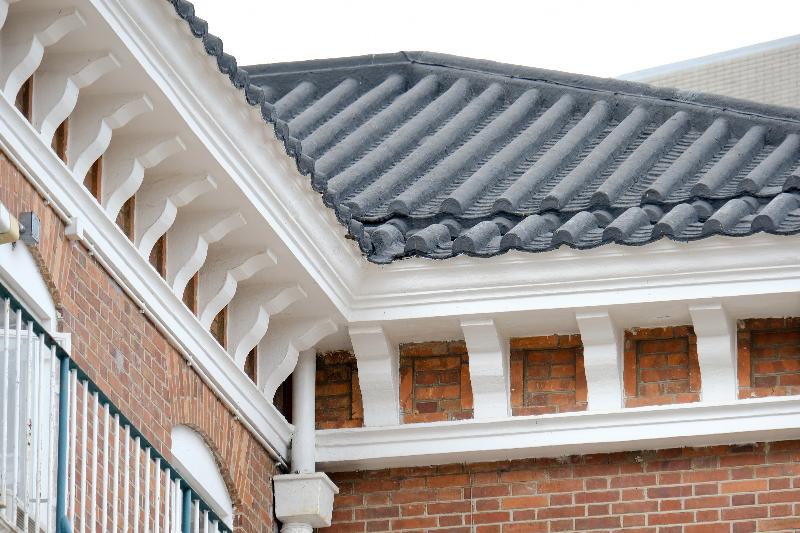
     Eliot Hall and May Hall were designed by Denison, Ram and Gibbs. These three-storey red-brick buildings have elegant facades featuring a rich variety of architectural elements, including curved pediments over the entrance doorways, rusticated columns, doric capitals, window cills, cornices and balustrades. Chinese-style ceramic grilles are found on the facade to contrast with the red brick wall. The pitched and double-tiled Chinese roofs are a local adaption.
      
     Information on the three monuments is available on the heritage conservation website of the Development Bureau (www.heritage.gov.hk).

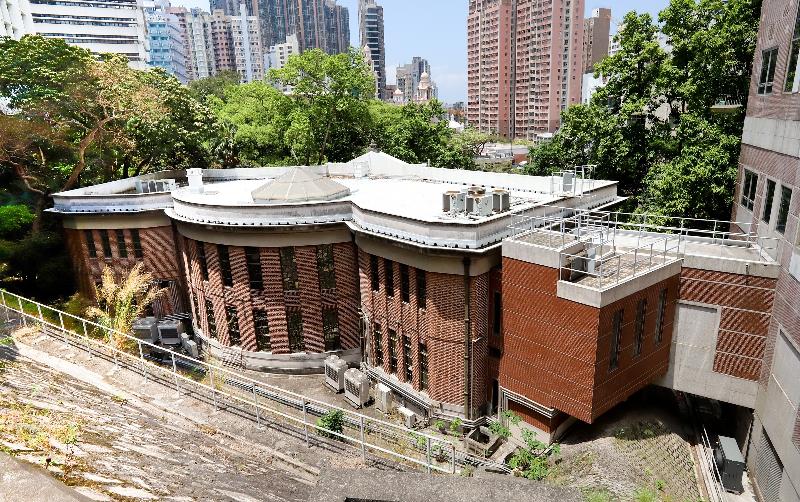
Photo  Photo  Photo  Photo  Photo  Photo  Photo  
read more

Fees for services under Mining Ordinance and Dangerous Goods Ordinance to be adjusted

     The Government published in the Gazette today (November 16) the Mines (Safety) (Amendment) (No.2) Regulation 2018, the Dangerous Goods (General) (Amendment) (No.2) Regulation 2018 and the Dangerous Goods (Government Explosives Depots) (Amendment) (No.2) Regulation 2018 to adjust fees for 17 services specified under the Regulations.

     The fee adjustment covers some services provided by the Government in respect of:
(a) mine blasting;
(b) the manufacture, storage, movement and discharge of certain dangerous goods in category 1 (explosives and blasting agents); and
(c) the storage and delivery of explosives and explosive accessories.

     In line with the “user pays” principle, it is the Government’s policy that fees and charges should in general be set at levels sufficient to recover the full cost of providing the services. In order to achieve full cost recovery gradually and avoid a steep fee increase, the existing 17 fees under the Regulations will increase by about 9 to 15 per cent or decrease by about 6 to 8 per cent.

     The Regulations will be tabled at the Legislative Council on November 21. Subject to approval by negative vetting, the revised fees will come into effect on February 1, 2019. read more

LD to hold occupational health public talks

     â€‹The Labour Department (LD) will hold a public talk entitled “Infection control in the workplace” on November 23 (Friday) for employees who may come into contact with pathogenic bacteria and viruses in the workplace. The talk will explain how micro-organisms enter the human body and affect people’s health. The concept of infection control in the workplace will also be covered. It will be held at 3pm in the Lecture Hall of the Hong Kong Space Museum, 10 Salisbury Road, Tsim Sha Tsui.
      
     The LD will hold another public talk entitled “Work and general diseases (diabetes mellitus and hypertension)” on November 28 (Wednesday). The talk will cover health tips for working in hot environments or on irregular schedules, or performing heavy manual work, in order to promote the occupational health awareness of employees with diabetes mellitus or hypertension. It will be held at 2.30pm in the lecture room of Fanling Occupational Health Clinic (7/F, Fanling Health Centre, 2 Pik Fung Road, Fanling).
      
     Both talks will be given by the LD’s occupational health nurse in Cantonese. Admission is free. For enquiries or registration, please call 2852 4040. read more

Proposed road works at On Hing Lane in Shek Mun gazetted

     The Government gazetted today (November 16) the proposed road works at the cul-de-sac at On Hing Lane, Shek Mun, Shatin, to accommodate the proposed columbarium development there.

     Details of the proposal are set out in the Annex. The plan and scheme of the works are available for public inspection at the following government offices during office hours:

Central and Western Home Affairs Enquiry Centre,
G/F, Harbour Building,
38 Pier Road, Central, Hong Kong

Sha Tin Home Affairs Enquiry Centre,
G/F, Sha Tin Government Offices,
1 Sheung Wo Che Road, Sha Tin, New Territories

District Lands Office, Sha Tin,
11/F, Sha Tin Government Offices,
1 Sheung Wo Che Road, Sha Tin, New Territories

     The gazette notice, scheme, plan and location plan will be available at 
www.thb.gov.hk/eng/psp/publications/transport/gazette/gazette.htm.

     Any person who wishes to object to the works or the use, or both, is required to address to the Secretary for Transport and Housing an objection in writing, which can be submitted via the following means:
 

  • By post or by hand to the Transport and Housing Bureau’s drop-in box No. 6 located at the entrance on 2/F, East Wing, Central Government Offices, 2 Tim Mei Avenue, Tamar, Hong Kong. The box is available for use between 8am and 7pm from Monday to Friday (except public holidays);
  • By fax to 2868 4643; or
  • By email to gazettethb@thb.gov.hk.

     A notice of objection should describe the objector’s interest and the manner in which he or she alleges that he or she will be affected by the works or the use. Objectors are requested to provide contact details to facilitate communication. A notice of objection should be delivered to the Secretary for Transport and Housing not later than January 15, 2019. read more