The Government of India today announced with profound sorrow the death of Shri Anil Madhav Dave, Union Minister of State (Independent Charge) for Environment, Forest and Climate Change.
May182017
May182017
The Government of India today announced with profound sorrow the death of Shri Anil Madhav Dave, Union Minister of State (Independent Charge) for Environment, Forest and Climate Change.
May182017
It joins other great Welsh produce, such as Conwy Mussels, Welsh Lamb and Halen Môn/Anglesey Sea Salt, as well as other well-known European products, such as Champagne and Parma Ham, which have been recognised for their distinct quality and awarded protection against imitation and misuse.
Welsh Laverbread is protected by the European Protected Designation of Origin (PDO) status, which will provide consumers with the confidence they are eating the genuine Welsh product.
In total, 12 Welsh products have now been awarded Protected status.
The Welsh Government has supported Selwyn’s Seafood, based in Penclawdd in the Gower, over the past four years during the complicated and extensive application process.
Laverbread is a well-known Welsh delicacy recognised both within and outside Wales. Its taste and appearance is affected by the cleanliness and temperature of the sea water, as well as the method of producing it, making it a characteristic of its origin.
Collecting the laver, a type of seaweed, to make Welsh Laverbread was a small cottage industry in Pembrokeshire, dating back to 1800. The laver was thrown over thatched huts to dry before being sold to businesses in Swansea where it was cooked into Welsh Laverbread and sold at local markets.
Welcoming the protected status for Welsh Laverbread, the Cabinet Secretary for Environment and Rural Affairs, Lesley Griffiths said:
“Wales’ reputation for high-quality food and drink continues to go from strength to strength. I am delighted Welsh Laverbread is the latest Welsh product to join our growing list of food and drink awarded protected status. It is very much an icon of Welsh food, which brings to mind its historic origins on the beaches of west Wales.
“Food and drink is a priority sector of the Welsh Government, which is why we have set an ambitious target to grow the sector by 30% by 2020. The recognition from the European Commission is important as it demonstrates the quality of Wales’ unique produce as we strive to reach new markets to grow the industry and prepare for a future outside of the EU.”
May182017
 |
|
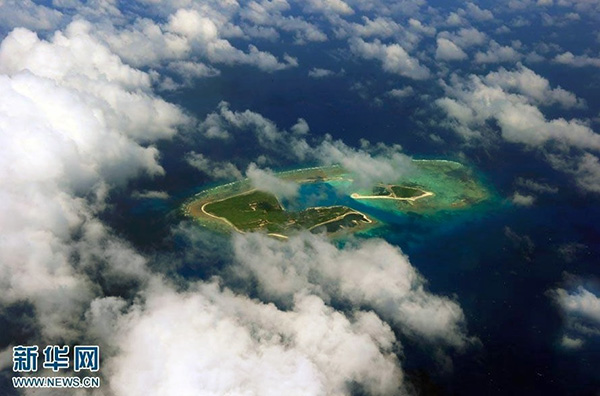
File photo of South China Sea. [Photo/Xinhua] |
China has succeeded in collecting samples of combustible ice in the South China Sea, a major breakthrough that may lead to a global energy revolution, Minister of Land and Resources Jiang Daming said Thursday.
This is China’s first success in mining flammable ice at sea, after nearly two decades of research and exploration, the minister said at a trial mining site in the Shenhu area of the South China Sea Thursday.
China found flammable ice, a kind of natural gas hydrate, in the South China Sea in 2007.
International scientific circles have predicted that natural gas hydrate is the best replacement for oil and natural gas.
May182017
PM condoles the passing away of Shri Anil Madhav Dave
May182017
Inflation has risen by similar amounts in Europe, the UK and the US. Yesterday the Euro area figure for April hit 1.9%, compared to minus 0.2% a year earlier. German inflation reached 2%, compared to minus 0.3% a year earlier. UK inflation at 2.7% compared with plus 0.3% a year ago has risen almost identically to German inflation over the last year, implying the UK inflation is not to do with sterling or Brexit as some allege.
The annual UK figure for April inflation at 2.7% reflected higher energy prices over the year. 30% of the price rise came from transport, with a surge in airfares for Easter a particularly strong item for April, and higher Vehicle Excise Duties adding to the pain. 22% of it came from household items, where Council tax rises and dearer electricity were two of the big movers. Motor fuel prices fell a little, after being the dominant cause of inflation for the last year.
There are no signs of a wage/price spiral developing as it used to do in the last century. There is not much evidence of companies pushing through price rises to offset the fall in sterling that has taken place over the last two years, though where they can companies seek a small rise as some compensation for general cost pressures. It is interesting that on both sides of the Atlantic with differing patterns of currency performance, the rise in inflation has been so similar. It mainly reflects energy and commodity prices, with some price pressures from China on her exports. Later this year unless there is another oil and commodity price surge, inflation might fall back a little.
Published and promoted by Fraser Mc Farland on behalf of John Redwood, both at 30 Rose Street Wokingham RG40 1XU