|
|
|
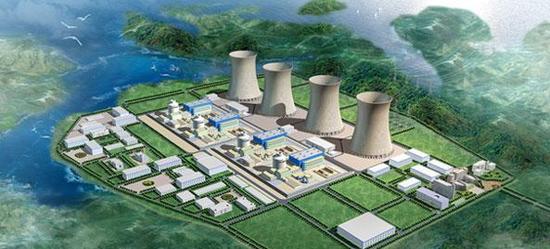
The photo shows the architectural rendering for the nuclear power station to be built in Nanyang in Henan Province. [File photo]
|
Central China’s Henan Province has planned to build four nuclear power stations to ease the populous province’s pressing demand for electricity and to continue optimizing the structure of local energy consumption during the country’s 13th Five-Year Plan (2016-20).
The four nuclear power stations will be set up in Nanyang, Xinyang, Luoyang and Pingdingshan. But construction can only start when the country lifts the ban on new inland nuclear power facilities due to safety concerns.
Under the province’s plan for energy development (2016-20), nuclear power, wind power and distributed solar power will join natural gas and non-fossil energies to reduce the percentage of coal in the local energy consumption structure.
As per the plan’s requirements, by 2020 consumption of non-fossil energies will account for at least 7 percent and natural gas for 7.5 percent in the province’s total energy consumption.
While urging the continued optimization of the local energy structure, the plan also requires the total installed capacity for power generation to increase to 87,000 megawatts by 2020, a 30 percent increase over that of 2015.

