Activist unhappy with zoo’s explanation

image_pdfimage_print

An animal welfare campaigner has accused the head of a Hangzhou zoo of failing to properly answer accusations over abuse of its tigers.

Hu Chunmei triggered widespread outrage when she shared edited footage online of a performance involving white tigers at Hangzhou Safari Park, which she recorded on Jan 12.

The two-minute clip features a confrontation between a tiger and a handler, which ended with the animal falling off the stage into a pool of water, and images of a tiger with a wound on the right side of its nose.

The footage has been shared thousands of times on Sina Weibo and other social media platforms, with many netizens criticizing the park.

In response, a manager at the zoo who was identified only as Ma gave an interview on Monday to Qianjiang Evening News, a local daily, in which he denied the animals had been abused.

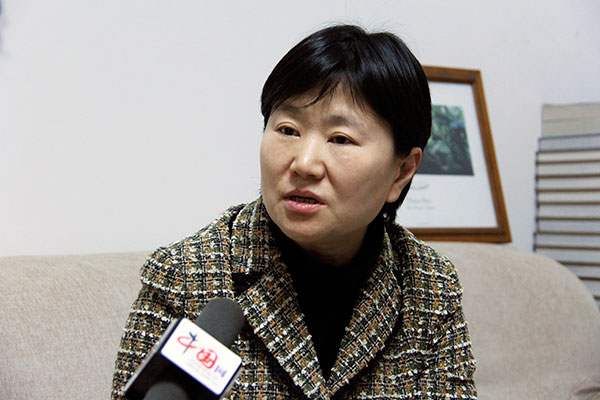
However, Hu, head of the Saving Performing Animals Project run by the China Biodiversity Conservation and Green Development Foundation, a private NGO based in Beijing, said she was not satisfied with his explanation.

“He showed a photo of a tiger to the newspaper, saying that it was the one that fell into the water and that it was in a very good condition. But it’s not the same tiger. Its stripes are clearly different than the one in the video,” she said.

“The zoo manager also said the tiger that fell into the water was the same one with the wound on its face. He’s not telling the truth. When the tiger falls in the video, the one with a scar on its nose can be seen on the other side of the stage.”

Ma was quoted by the paper as saying the wound was an “inflammation of lymph nodes below the skin” and that the reason the animal had no canine teeth was because it was “in a dental transitional period”. All the tigers in the show were under the age of 3, he added.

Calls to the management office at Hangzhou Safari Park went unanswered on Tuesday.

The tourist attraction, which is in Fuyang district of Hangzhou, the capital of Zhejiang province, has been in operation since 2002 and is the largest wildlife park in East China, covering 2.66 square kilometers.

A statement issued on Monday by the Zhejiang Forestry Administration said the park had been ordered to suspend all animal performances.

HK returns armed vehicles to Singapore

image_pdfimage_print

Hong Kong customs officials announced on Tuesday that nine Singaporean armed vehicles seized two months ago will be returned after the completion of an investigation.

The Singaporean vehicles were impounded by customs on Nov 23″because there was a suspected breach of Hong Kong law”, said Roy Tang, commissioner of customs and excise of the Hong Kong Special Administrative Region.

The armed vehicles were inside a cargo ship from Taiwan that was passing through Hong Kong. They were on their way back to Singapore following a military drill in Taiwan.

Tang said that customs has finished its investigation. The case may lead to criminal prosecution, according to a news release from the Hong Kong government.

“Import, export and transshipment/transit of strategic commodities in breach of licensing requirements are criminal offenses punishable under the Hong Kong law,” he said, adding that the military vehicles and the associated equipment will be returned to Singapore.

In a statement released on Tuesday, Singapore’s Ministry of Foreign Affairs said that Prime Minister Lee Hsien Loong had thanked Hong Kong Chief Executive Leung Chun-ying for resolving the matter.

“This is a positive outcome,” the Singaporean ministry said.

On Jan 17 in Beijing, Foreign Ministry spokeswoman Hua Chunying urged the Singaporean government to stick to the one-China principle when she was asked about the seizure of the vehicles.

China attaches great importance to its relationship with Singapore, and at the same time, China’s stance on the one-China principle is firm and unchanged, she said.

Jia Duqiang, a senior researcher in Southeast Asia studies at the Chinese Academy of Social Sciences, said that by seizing the vehicles, China sent a signal to Singapore that the city-state should stick to the one-China principle, especially as Taiwan authorities led by Tsai Ing-wen are challenging Beijing on sovereignty.

Returning the vehicles is a positive sign for the China-Singapore relationship, he said, adding that bilateral ties have been frustrated in recent months as a result of what he called Singapore’s “improper remarks” on China’s stance on the South China Sea issue.

In July, Singapore asked “all parties to fully respect” the ruling of an arbitration case on South China Sea territorial disputes. China insisted that the ruling is “null and void”, and has no binding force.

Mother and daughter jailed over vaccines

image_pdfimage_print

A mother and daughter have been jailed for selling vaccines without a license in east China’s Shandong Province.

Pang Hongwei was sentenced to 15 years in prison for illegally purchasing vaccines which she stored in warehouses in Jinan and Liaocheng, and then sold to clients between June 2013 and April 2015, according to Jinan Intermediate People’s Court.

The court said the vaccines had been improperly stored and that Pang had earned nearly 75 million yuan (US$11 million).

In 2009, Pang was sentenced to three years in prison with a five-year probationary period for illegally trading vaccines in Heze, another city in Shandong. In April last year the case was retried, as required by the provincial higher people’s court, and her sentence was extended to six years without probation.

The intermediate court ruled that Pang will serve 19 years in prison in total for the two cases. In addition, all her property will be confiscated.

Sun Qi, Pang’s daughter, was sentenced to six years in prison for assisting her mother and being involved in the sale of vaccines worth over 42 million yuan between September 2014 and April 2015. She will have more than 7.4 million yuan of her property confiscated, the court ruled.

PHOTO FEATURE: Mosul under siege – 100 days on, and the UN’s humanitarian response

image_pdfimage_print

24 January 2017 – Armed conflict in Iraq has caused the displacement of more than three million people since June 2014 – one million of those displaced may be as a direct result of the Iraqi military’s efforts to liberate Mosul and surrounding areas from the control of the Islamic State in Iraq and the Levant (ISIL/Da’esh), according to the Office of the UN High Commissioner for Refugees.

One hundred days into the Iraqi military operation, people continue to be exposed to violence, human rights violations, restricted access to safety and freedom of movement, abduction and illegal detention, limited access to basic services. As well, many lack of the documentation necessary to enjoy their basic rights.

Before and after the start of the military operation, United Nations agencies rallied efforts to assist civilians with a range of targeted services, from distributing much-needed relief supplies, such as food and health care, to providing shelter and other humanitarian assistance.

Since 17 October 2016, when the Iraqi military operation to retake Mosul began, the International Organization for Migration (IOM) has tracked the movements of more than 26,873 displaced families – 161,238 individuals – the majority of whom desperately need life-saving humanitarian assistance.

Emergency supplies are desperately needed. The UN Children’s Fund (UNICEF) is providing food, water and hygiene items to displaced families – these supplies include water purification tablets, high energy biscuits, jerry cans, baby hygiene kits and leaflets with information on child protection and basic mine awareness.

Knowing what is needed and when is crucial for helping those most in need in a timely fashion. The UN Office for the Coordination of Humanitarian Affairs (OCHA) is monitoring the situation on the ground, and providing updates on funding and the humanitarian response – including gaps and constraints on camp coordination and management; shelter and non-food items; food security; health; water, sanitation and hygiene; education; logistics; and emergency telecommunications.

Providing those in need with the right sustenance to survive falls under the responsibility of the World Food Programme (WFP), which has been providing monthly food rations and ready-to-eat food to the affected people. These food rations contain items such as rice, lentils, wheat flour, bulgur wheat, beans and vegetable oil.

The need for impartial respect and protection of human rights is crucial in Iraq to ensure that, among other things, women and children are protected from sexual and gender-based violence and diverse ethnic and religious minorities and persons with disabilities are granted access to basic services without discrimination. The UN Assistance Mission for Iraq (UNAMI) has a human rights unit that works with the authorities and members of Iraqi civil society to support this requirement. The Mission’s work includes tracking civilian deaths and injuries to tally casualty figures on a monthly basis. Shown here, the head of UNAMI’s Human Rights Office, Francesco Motta, sits in a camp for displaced persons, hearing from a man whose children were abducted by ISIL (Da’esh).

Whether women live or die in a crisis often depends on their access to basic sexual and reproductive health services – often taking a back seat to other urgent needs, like food and shelter. The UN Population Fund (UNFPA) has been working with Iraq’s Ministry of Health and civil society organizations to deliver these vital services to vulnerable populations. UNFPA has also been working hard in Mosul to provide immediate relief to women and girls affected by the conflict – including through the distribution of dignity kits, which contain hygiene supplies such as toothbrushes, toothpaste, shampoo, soap, sanitary pads and underclothes.

The World Health Organization (WHO) has been on the ground in Iraq since 1960. Through its various programmes, the UN health agency is currently work on revitalizing, strengthening and sustaining the Iraqi health system based on primary health care. For Mosul, in addition to delivering medicines and supplies to treat injuries and chronic conditions, WHO has conducted trauma management training for medical doctors in Erbil, Ninewa and Dohuk, and for paramedical teams engaged in managing civilian casualties from Mosul.

The fighting in Iraq has caused a massive displacement of people seeking safety – with some 3.1 million displaced inside Iraq, while another 220,000 are refugees in other countries. From Mosul, where, in early December 2016, the number of displaced people approached 100,000, UNHCR stepped up the distribution of winter material – providing thermal blankets and quilts to 11,200 people around Mosul.

Press release: Minister Ellwood statement on the advance of Iraqi forces in eastern Mosul

image_pdfimage_print

FCO Minister Tobias Ellwood welcomes the progress of Iraqi forces as another step towards defeating Daesh.

Minister Ellwood said:

We welcome progress made by Iraqi forces in eastern Mosul which marks another step towards defeating Daesh.

There is still a long way to go. As Iraqi forces prepare for western Mosul, I pay tribute to their bravery and urge them to continue to put the protection of Mosul’s innocent civilians at the heart of everything they do.

The UK, as part of the Global Coalition, is committed to continuing to provide the government of Iraq with political, military, humanitarian and stabilisation support, as they work to deliver the political reform, national reconciliation and basic services all Iraqis want and deserve.

Further information

Follow Foreign Office Minister Tobias Ellwood on Twitter: @TobiasEllwoodMP.

Follow the Foreign Office on Facebook & Twitter.

Follow the Foreign Office on Instagram, YouTube and LinkedIn