Expats’ dinner party on Shanghai subway criticized

image_pdfimage_print

The photo has drawn criticism online. [Photo/ Eastday.com]

A group of foreign passengers are seen having a “dinner party” on Shanghai’s Subway Line 11 on April 7, 2017. The passengers placed a table in the aisle and held up goblets, eating and drinking wantonly inside the train.

The photo has drawn criticism online, as according to the Shanghai Rail Transit Passenger Code, it’s forbidden to consume food or drinks on subway.

The rule warns passengers that such behavior could affect the normal running of the trains because open liquids could spill over other passengers, and food debris would encourage cockroaches and rats, damaging the fabric and facilities of the subway tunnel.

However, the rules are only for guidance and are not legally binding. There are no specific penalties for violations at present.

Human-AI battle in Go scheduled in May in China

image_pdfimage_print

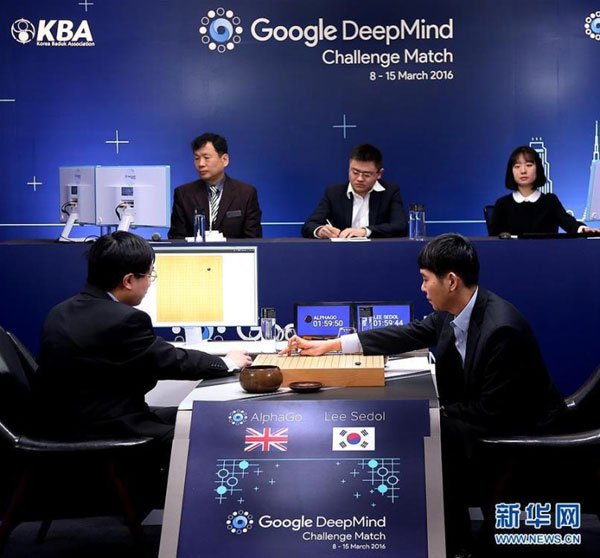
AlphaGo beats South Korean professional Go player Lee Sedol in a game in March, 2016. [Photo/Xinhua] 

It’s been officially announced that AlphaGo will battle with top human Go players including the World No.1 Ke Jie next month in Wuzhen, east China.

Google along with the provincial sports authority in Zhejiang will hold a five-day AI summit in Wuzhen from May 23 to 27.

The event will also feature other Go games between human players with AI such as AlphaGo.

Ke Jie lost to AlphaGo twice previously in online Go games. The AI, using the pseudonym of Master, clinched 60 wins online against many of the world’s top human players, with zero losses.

Google’s AI system AlphaGo gained fame after it scored a landmark 4-1 victory over South Korean Go master Lee Se-dol in a five-round showdown in March 2016.

Go is an ancient board game originating in China, and is a game of strategy with an element of luck.

Press Statement

image_pdfimage_print

PRIME MINISTER:

Thank you, Prime Minister for your welcome. Your hospitality is as warm as it is magnificent. We are very honoured to be here at your invitation.

As you said, our two nations have so much in common. Cricket, of course, but we have a commitment to democracy and the rule of law, and you lead, sir, the largest democracy in the world. Indian historians have often described that India was an improbable democracy but it is the world’s largest. The success you have achieved is the wonder of the world. The largest democracy in the world, shortly to be the largest nation in the world, built out of so much diversity and you’ve achieved this remarkable unity of purpose and defying again skeptics, you’ve delivered a growth rate that is equally the wonder of the world, recognising that opening markets, deregulation, enabling businesses and individuals to pursue their own dreams, their own freedom,  is the way to deliver the prosperity upon which all depends.

Now, Australia has, Prime Minister, the resources and the expertise as we’ve just seen to make a very substantial contribution to India’s growth and development. Spanning education, training, science and innovation, our dynamic and growing knowledge partnership can be truly transformative.

We are already working together to harness the creativity and the drive of our best and brightest minds. Our flagship joint research fund, the Australia India Strategic Research Fund is Australia’s largest with any country.

It has helped our universities, research institutions and companies to solve the practical challenges in critical areas to both countries, including health, food security, and energy, as you’ve noted.

The Deakin-TERI Nanobiotechnology Research Centre, which we just inaugurated, and I might say Prime Minister, having been involved in the technology business in the past, I always approach any live demonstration with great anxiety. In the technology business they talk about the demo-God, which is a malevolent deity which generally makes sure that live online demonstrations don’t quite work, but that was brilliant and I want to say thank you to the Chancellor and Vice-Chancellor of Deakin University for allaying my concerns. So well done.

But this research centre will bring up to 100 researchers together to solve some of the world’s biggest problems in developing biofuels to early detection of crop diseases to improve productivity. And these are practical solutions with commercial prospects for both of our countries.

Likewise there is the potential to work with your government, Prime Minister, as you pursue your ambition to train 400 million Indians over the next few years.

Our world-class skills training system including train-the-trainer courses which are already piloted in five Indian cities can help India build scale quickly and open up opportunities for Australian training providers.

As you noted, more than 60,000 Indian students studied in our institutions in 2016, and I am committed, and we had a very fruitful discussion about this and Prime Minister you gave me a lot of great advice, you have made education and higher education such a passion from your time in Gujarat to now as Prime Minister of India, it was very, very helpful. We will continue to ensure that we provide outstanding opportunities for Indian students and also that Australian students learn more about India by visiting and studying here including through the scholarships and grants supported by my Government’s New Colombo Plan.

Our deepening collaboration on water management is supporting your National Water Policy by improving river basin planning and management, hydrological modelling and sustainable water use.

And I might say the management of water resources in India has been a passion of several prime ministers of Australia including one of our earliest, Alfred Deakin who made a study of the irrigation system in India a particular focus of his as he took learnings from that and set up the irrigation models for Australia.

Our know-how and resources are already partnering with India’s 24×7 Power For All, Smart Cities and Make in India programs, but there is room for further growth.

We’ve worked closely with India to meet our respective requirements for the provision of fuel for India’s civil nuclear program, and we look forward to the first export of Australian uranium to India as soon as possible.

Now, Prime Minister, you recognise that all Indians need access to reliable and affordable energy, and like us, you share a technology agnostic all of the above approach. Pragmatic. That’s exactly how we focus on the issue. So we are pleased to be providing increasing quantities of high quality coal for steel making and increasingly for power generation with advanced super critical technology. Like Australia, India is planning to increase its pumped hydro storage capacity and we look forward to sharing expertise in that vitally important part of the 21st century energy system.

And India, like Australia and many other countries is also advancing solar energy. Indeed, we believe that by next year, about 60 per cent of the world’s solar cells will use technology developed by Australian researchers. Solar energy offers lower cost distributed energy which is of particular importance in the developing world.

So I want to congratulate you, Prime Minister, for your global leadership in establishing the International Solar Alliance and I am very happy to announce that we will join that alliance.

Now, our trading relationship is delivering significant benefits to our respective nations. Last year two-way trade in goods and services was nearly $20 billion, more than double what it was a decade ago. But given the complementarities of our two economies, this is a fraction of the level it could and should be.

Now we are working with India to secure timely conclusion of a quality Regional Comprehensive Economic Partnership, the RCEP, which would provide a significant boost to regional confidence.

We had a very good discussion about the CECA, the Comprehensive Economic Cooperation Agreement between India and Australia and I think it is fair to say that we feel that progress has not been as fast as either of us would like it to be.

And so, as you said, we have asked our, we will ask our chief negotiators to schedule an early meeting to get the process moving. We will ask them to tabulate the areas of ambition where each side is seeking access so that we can see where and to what extent the parties, the negotiators are apart and they will report back to us as soon as possible so that we can keep the focus on delivering the CECA and identifying the areas where more work needs to be done.

But in the meantime, the wheels of industry go on and we are working to identify tangible, commercial opportunities to strengthen two-way trade and investment and this will be a particular focus of my visit to Mumbai later this week.

Finally, as you noted sir, our work together in the strategic and security spheres continues to gain momentum, through regular engagement across all three armed services and high-level talks with our defence ministers and officials.

As Indo-Pacific democracies committed to the rules based international order, we share interests on a broad range of regional and global security issues.

Building on the 2014 Framework for Security Cooperation, I hope that our new MoU on Combatting Transnational Organised Crime including International Terrorism will continue to strengthen this strategic partnership.

It will facilitate closer collaboration on counter-terrorism, cyber-security, people smuggling and human trafficking, money laundering and a tax on critical infrastructure.

And in addition, as you noted, we are working more closely together with our friends and partners in the region, including through the East Asia Summit and the Indian Ocean Rim Association.

In conclusion, thank you Prime Minister Modi for your personal commitment to helping us realise the full potential of the Australia India partnership. With our shared commitment and the passion, the ingenuity, the determination of our two nations, I have no doubt that our partnership will go from strength to strength.

[ends]

Press release: Families to benefit from £55 million boost to childcare schemes

image_pdfimage_print

Thousands of new childcare places for working parents around the country are being created thanks to a multi-million grant scheme, the Early Years Minister Caroline Dinenage has announced today.

The £50 million capital grants double the government’s investment to help nurseries, pre-schools and playgroups invest in new buildings and upgrade facilities. This will deliver more than 9,000 additional childcare places – helping to meet the government’s commitment to give working families 30 hours free childcare from September.

The money builds on the £50 million funding announced in January, doubling the total spend to £100 million and altogether providing nearly 18,000 extra childcare places.

Alongside this, nearly £5 million will go to organisations that are helping children from disadvantaged backgrounds or with additional needs to access high-quality early education, so that every child can reach their full potential, regardless of their background.

The 12 opportunity areas announced by the Education Secretary will also benefit from £5 million as part of the government’s latest capital investment. These areas, identified as social mobility ‘coldspots’, are already benefitting from a share of £72 million – today’s funding will be a further boost for families living there.

As part of its Plan for Britain, the government is working to create a society where success is defined by work and talent, not birth or circumstance. Supporting parents with the cost and availability of quality childcare to enable them to work if they choose to is an important part of this ambition.

Minister for the Early Years Caroline Dinenage said:

In my visits around the country I have heard from families whose lives have been improved by access to 30 hours. As part of our Plan for Britain we want to make this a country that works for everyone, not just the privileged few, so that means removing the barriers facing parents struggling to balance their jobs with the cost of childcare.

This investment will deliver more childcare places to working parents, giving them the benefits of 30 hours’ free childcare while giving their children high-quality early education that sets them up for life. This is backed by our record £6 billion investment in childcare per year by 2020.

Up to £5 million of voluntary and community sector (VCS) grants will be shared among 13 projects working to improve the quality of early education and supporting professionals to deliver the 30 hours offer. This includes:

  • more than £1.5 million for 5 organisations working with parents of children with special educational needs and disabilities (SEND), delivering workshops and training that will raise awareness of the support available for these families
  • nearly £1.7 million to directly support disadvantaged children by boosting outreach programmes in areas such as early literacy and home learning
  • more than £1 million to groups working directly with providers, developing tools and resources to support the delivery of 30 hours

The government has also relaunched its Childcare Business Grant Scheme, aimed at supporting new childminders or childminder agencies who are looking to start their own businesses. Eligible professionals could receive grants of £500 or £1,000 to help with the costs of setting up, making it easier for those who want to offer 30 hours free childcare to prepare.

Childminders will also benefit from grants to Action for Children and PACEY, worth £370,000 and £381,000, which will help upskill and empower them to deliver 30 hours and make sure their businesses are sustainable.

The announcement is on top of the government’s record £6 billion each year investment for childcare by 2020 and follows the recent publication of a new fairer funding system for early years education. This formula will see the minimum hourly rate for councils increased to £4.30 per hour, ensuring the 30 hours free offer is sustainable for providers.

The government has recently launched its Childcare Choices website. This sets out details of all of the childcare support available for parents from across the government and allows them to register for email alerts that will notify them when applications for 30 hours open nationally.

Opportunity areas will see local partnerships formed with early years providers, schools, colleges, universities, businesses, charities and local authorities to ensure all children have the opportunity to reach their full potential. Opportunity areas include:

  • Blackpool
  • Bradford
  • Derby
  • Doncaster
  • Fenland & East Cambridgeshire
  • Hastings
  • Ipswich
  • Norwich
  • Oldham
  • Scarborough
  • West Somerset

The priority of the council bid round, which closed in August, was to target grants to areas where there was a demonstrable need for additional places to support the delivery of the 30 hours offer. Each bidder was required to contribute at least 25% of the total funding they requested, in order to share the budget around the maximum possible projects around the country.

The capital grants are being matched by around £40 million in additional funding from various local sources across the country, resulting in a total investment of approximately £140 million.

We are providing tools to support childcare providers, including a package of 30 hours delivery resources and an updated business sustainability toolkit.

Successful bids for VCS grants were required to demonstrate they met specific priorities: their positive impact on disadvantaged communities – including children with special educational needs and disabilities (SEND) or ethnic minorities – distinct ways of enhancing the quality of the early years workforce, or helping to boost the number of 30 hours places available. The grants run over 15 months to March 2018.

Security Council condemns ‘barbaric and cowardly’ terrorist attack in Stockholm

image_pdfimage_print

10 April 2017 – The United Nations Security Council condemned in the strongest terms the “barbaric and cowardly” terrorist attack which took place in Stockholm on 7 April, and during which at least four people, including a child, were killed and over a dozen injured.

In a press statement, the members of the Council expressed their deep sympathy and condolences to the families of the victims, as well as to the Government of Sweden.

Reaffirming that terrorism in all its forms and manifestations constitutes one of the most serious threats to international peace and security, the Council reiterated that any acts of terrorism are criminal and unjustifiable, regardless of their motivation, wherever, whenever and by whomsoever committed.

Through its statement, the Council also reaffirmed the need for all States to combat by all means, in accordance with the UN Charter and other obligations under international law, threats to international peace and security caused by terrorist acts.

The members of the Security Council underlined the need to bring the perpetrators of these terrorist acts to justice.