
Boy injects rice soup into belly

image_pdfimage_print

Si Shunyang, a nine-year-old boy in Yunnan, has to inject liquid food to live. [Photo/cjn.cn

Si Shunyang, a nine-year-old boy in Yunnan Province, has to inject liquid food such as porridge and milk into his belly to live.

He drank sodium hydroxide by mistake on Feb. 21, 2016 and was sent to a local hospital immediately. Sodium hydroxide is a corrosive strong alkali that burned the boy’s esophagus. Si Xingchang, the boy’s father, said that sodium hydroxide is used for cooking at home but his son drank it because he thought it was beverage.

After leaving the hospital, the boy could not swallow food. “I took my kid to the hospital in Kunming, and the doctor told me that only hospitals in Beijing, Shanghai and overseas countries can cure my son,” said the boy’s father.

Si Xingchang took his son to Shanghai, where he had surgery on April 14, 2016. “The result of the surgery was good at first. But my son again could not swallow any food after coming back from Shanghai,” said by Si Xingchang.

He then took his son to Chengdu for treatment. “The doctor told me that my son’s condition is not suitable for surgery now,” said Si Xingchang. Since then, he feeds his son liquid food such as porridge and milk by injecting the liquid food from a fistula on his son’s belly.

Half a year ago, the doctor told Si Xingchang that his son could be in danger without a surgery. However, he has already spent out all of his money.

After the report of local media this February, Si Xingchang received 200,000 yuan in (US$29,000) donations.

He took his son to a hospital in Chengdu on March 7. The little boy will have two examinations on March 11 and March 13. The doctor will decide whether the surgery can be arranged or not based on the results of the two examinations.

The little boy has been out of school for a year. He said his biggest wish is to go back to school as soon as possible.
Women hit six times harder this Budget by government cuts

image_pdfimage_print

House of Commons analysis commissioned by Labour has revealed that as of the Chancellor’s budget yesterday, women continue to be hit six times harder than men by government policies.

Sarah Champion MP, Labour’s Shadow Secretary of State for Women and Equalities, said:

“Yesterday the Prime Minister and Chancellor talked up the significance of International Women’s Day yet their warm words have amounted to nothing.

“Calls for a budget that works for women have been ignored.

“Women are still bearing the brunt of this Tory Government’s failed austerity agenda – with the 86 per cent impact figure on women remaining unchanged since last year. Things are just as bad as ever for women under this Tory Government.

“Labour calls on the Government to urgently publish analysis of the true impact of their budgets and spending announcements on women and to explain how they intend to reverse this disproportionate impact.

Under a Labour Government, all economic policies will be gender audited to ensure that we have an economy that works for all.”

China to build undersea lab

image_pdfimage_print

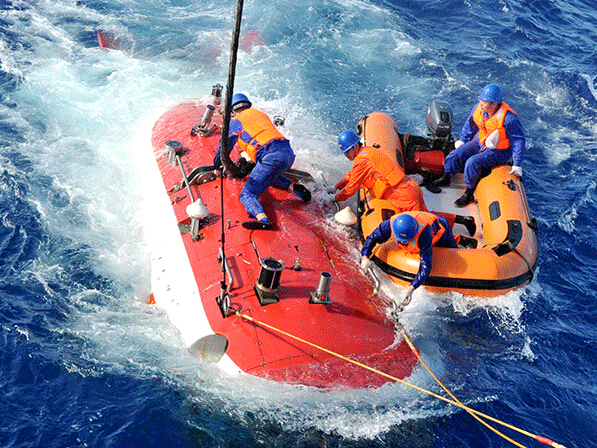
China’s deep-sea manned submersible Jiaolong conducts scientific exploration in the southwestern Indian Ocean in December.[Photo/Xinhua]

China will build an undersea lab that can contain dozens of people. “China’s manned deep-sea submersible Jiaolong can hold a few people and stay under water for 12 hours. Our future deep-sea lab station can stay under the sea for half a month or even months,” said Yan Kai, an NPC deputy and director of National Key Lab for Deep-Sea Manned Equipment.

Wan Gang, minister of Ministry of Science and Technology of China, said that deep-sea lab station was listed as a key project in China’s Science and Technology Innovations 2030 Project during a national science and technology conference in January.

According to Yan Kai, the difficulty of building a deep-sea lab station is almost the same as building a space station. Yan said that scientists can cultivate and research deep-sea creatures, explore deep-sea mineral, oil and gas resources and research the genes of deep-sea creatures for medical use.

Yan said the deep-sea lab station will use fuel cell or nuclear power because it will stay under the sea for a long time.

The material used for the deep-sea lab station is a major technical problem. “The submarine pressure in 1,000 meters deep sea is 100 times than the pressure of the atmosphere, which means even a tiny nail will bear the pressure of 100 kilograms,” said Yan.

Therefore, special material with light weight and high pressure resistance will be a must if the deep-sea lab station needs to stay under 1,000 meters of water. Moreover, the problems of deep-sea navigation and communication, precise control and manipulation in lab station also need to be accounted for.

China issues report on US human rights

image_pdfimage_print

China published a report on the United States’ human rights situation on Thursday.

The report, titled “The Human Rights Record of the United States in 2016,” was released by the Information Office of the State Council, China’s cabinet, in response to “the Country Reports on Human Rights Practices for 2016” issued by the U.S. State Department on March 3 local time.

China’s report says that the United States poses once again as “the judge of human rights”.

“Wielding ‘the baton of human rights,’ it pointed fingers and cast blame on the human rights situation in many countries while paying no attention to its own terrible human rights problems,” it says.

“With the gunshots lingering in people’s ears behind the Statue of Liberty, worsening racial discrimination and the election farce dominated by money politics, the self-proclaimed human rights defender has exposed its human rights ‘myth’ with its own deeds,” it added.

Concrete facts show that the United States saw continued deterioration in some key aspects of its existent human rights issues last year, according to the report.

The United States had the second highest prisoner rate, with 693 prisoners per 100,000 of the national population, the report says.

Roughly 2.2 million people were incarcerated in the United States in 2014. And there had been 70 million Americans incarcerated – that’s almost one in three adults – with some form of criminal record, the report cites media reports as saying.

Occurrence of gun-related crimes also sustained a high level, according to the report.

There were a total of 58,125 gun violence incidents, including 385 mass shootings, in the United States in 2016, leaving 15,039 killed and 30,589 injured, says the report, citing figures from a toll report by the Gun Violence Archive.

In 2016, the U.S. social polarization became more serious, with the proportion of adults who had full-time jobs hitting a new low since 1983, income gaps continuing to widen, the size of middle class reaching a turning point and beginning to shrink, and living conditions of the lower class deteriorating, the report says.

According to consulting firm Gallup, the percentage of Americans who said they were in the middle or upper-middle class had fallen by 10 percentage points, from an average of 61 percent between 2000 and 2008 to 51 percent in 2016.

“That drop meant 25 million people in the United States fared much worse in economic terms,” it says.

Besides, one in seven Americans, or at least 45 million people, lived in poverty, the report quotes the Daily Mail as saying.

4 grave robbers killed by poison

image_pdfimage_print

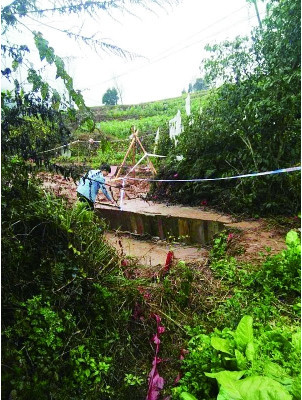
The crime scene. [Photo/gywb.cn] 

Four of 10 grave robbers who managed to break into a tomb built during the Song Dynasty (960-1297) died from the poisonous air wafting from below the graveyard in Xishui Town, Guizhou Province, on March 7, 2017.

The grave they attempted to loot has been preserved as a county-level cultural heritage relic.

Around 1:00 am last Monday, a man brought to a local hospital claimed he’d inhaled deadly gas while working underground in a mining area. However, when the doctors tried to rescue the man as he fell into coma, three of his friends outside the emergency room collapsed.

Realizing the complexities of the issue, the doctors called police.

Until the arrival of the police and local officials, the men who were still conscious admitted that they tried to break into an ancient tomb with the help of an old generator, the emission of which had made them feel uncomfortable. They rushed to the hospital after several fainted inside the grave.

According to the local government, three of the 10 men involved in the grave robbery died inside the mausoleum, while another died after being hospitalized. Four were in stable condition and two were arrested.

A cave going eight meters deep into the grave has been capped and restored. It is highly assumed that the robbers who tried to reach the mausoleum were obstructed by rocks, so they switched on the generator hoping to break their way through. But when attempting to mitigate the noise of the rumbling machine, they covered the entrance with quilts and caused the poisonous air to condense.