National Statistics: Final UK greenhouse gas emissions national statistics: 1990-2015

image_pdfimage_print

Updated: Data updated

This publication provides the final estimates of UK greenhouse gas emissions going back to 1990. Estimates are presented by source in February of each year and are updated in March of each year to include estimates by end-user and fuel type.

When emissions are reported by source, emissions are attributed to the sector that emits them directly. When emissions are reported by end-user, emissions by source are reallocated in accordance with where the end-use activity occurred. This reallocation of emissions is based on a modelling process. For example, all the carbon dioxide produced by a power station is allocated to the power station when reporting on a source basis. However, when applying the end-user method, these emissions are reallocated to the users of this electricity, such as domestic homes or large industrial users. BEIS does not estimate embedded emissions however the Department for Environment Food and Rural Affairs publishes estimates annually. The alternative approaches to reporting UK greenhouse gas emissions report outlines the differences between them.

For the purposes of reporting, greenhouse gas emissions are allocated into a small number of broad, high level sectors as follows: energy supply, business, transport, public, residential, agriculture, industrial processes, land use land use change and forestry (LULUCF), and waste management.

These high level sectors are made up of a number of more detailed sectors, which follow the definitions set out by the International Panel on Climate Change (IPCC), and which are used in international reporting tables which are submitted to the United Nations Framework Convention on Climate Change (UNFCCC) every year. A list of corresponding Global Warming Potentials (GWPs) used and a record of base year emissions are published separately.

This is a National Statistics publication and complies with the Code of Practice for Official Statistics. Data downloads in csv format are available from the UK Emissions Data Selector.

Please check our frequently asked questions or email Climatechange.Statistics@beis.gov.uk if you have any questions or comments about the information on this page.
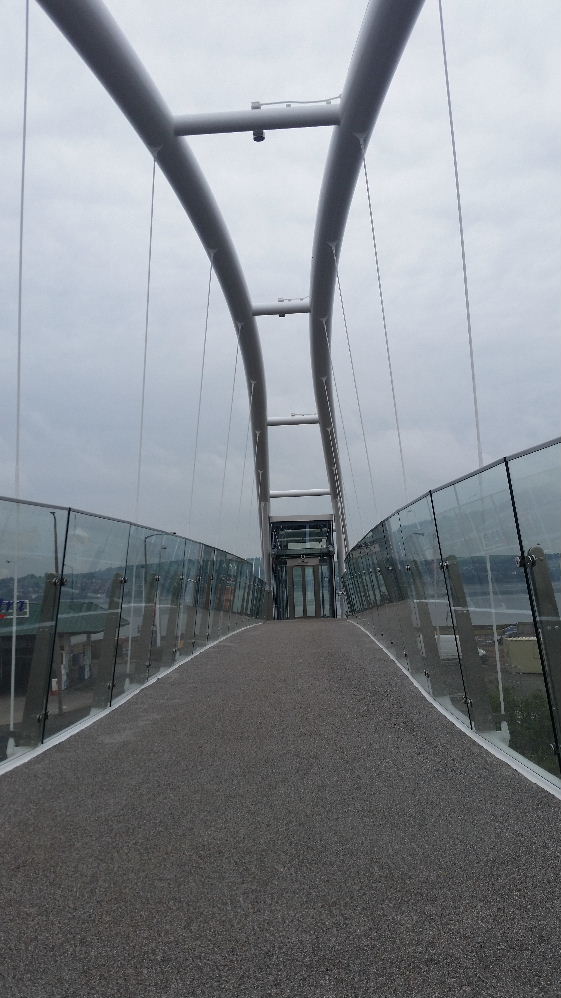

Seabraes Bridge – lift

image_pdfimage_print
Residents pointed out to me that there is still no signage at the Seabraes Bridge to let people know who to call if the bridge is out of order.

I contacted the engineer responsible for the bridge maintenance and he has updated me as follows :

“At present there is no signage on the bridge to advise users of the phone number to call in order to report a fault with the lift.  
I have been advised that the call out telephone number is likely to change at the end of February, therefore I will arrange for a temporary sign with the current number to be displayed at the bridge by the end of this week.
Once the new number is confirmed late February, I will arrange for a more permanent sign to be installed.”

Review of Community Safety announced

image_pdfimage_print

Addressing Assembly Members in the Senedd, the Cabinet Secretary said he intends to establish an Oversight Group to review current community safety arrangements and to develop a shared vision for safer communities in Wales. 

The Cabinet Secretary said: 

“The safety and security of our communities has always been a priority. That is why we are supporting our emergency services and other agencies in building and strengthening their capability to protect us from these risks. 

“But the agenda is, by nature, complex. Legislation and policies straddle devolved and non-devolved responsibilities. Seventeen years of devolution have necessarily resulted in differences between our policy approach and that of the UK Government. These changes have brought new opportunities but have not all simplified the context in which we work. 

“Late last year, the Auditor General for Wales published a report on Community Safety in Wales. The report reflected the complexities of the agenda, highlighted some of the positive work within Wales but also raised a number of matters. I believe the report provides a valuable opportunity for us all to take stock.

“With the agreement of, and alongside, those key partners who hold the levers for change, I am establishing an Oversight Group to review the current arrangements. It will help to develop a shared vision for safer communities in Wales that builds on the excellent work already done or underway. This review will also take account of the recommendations from the Auditor General for Wales. I want the review to be ambitious in its thinking and develop a clear vision for community safety that is robust, relevant and responsive. A vision for the long term.” 

Vertical forest building to improve air quality in China

image_pdfimage_print

An artistic rendering of the vertical forest towers planned for Nanjing. [Photo from the official website of designer Stefano Boeri Architetti]

Nanjing of East China’s Jiangsu province will become the third city in the world where Italian architect Stefano Boeri will build Vertical Forest buildings, which could possibly improve the city’s air quality, according to CNET, an American media outlet on technology.

In architect Boeri’s design, a set of two towers will be stylized with around 1,100 trees and a combination of over 2,500 shrubs and plants, which is believed to make 60 kilograms of oxygen every day by absorbing carbon dioxide.

The two towers are expected to be completed by next year and will stand at 107m and 199m tall respectively. The shorter building will house a Hyatt hotel, while the taller one will be home to a museum, offices and an architecture school.

Two previous vertical forest buildings were built in Milan, Italy, and Lausanne, Switzerland.

Boeri’s plan in China is much more ambitious as similar structures are also planned for Shanghai, southwestern Chongqing, northern Shijiazhuang and southern Liuzhou.