State research project dedicated to marine microplastics

image_pdfimage_print

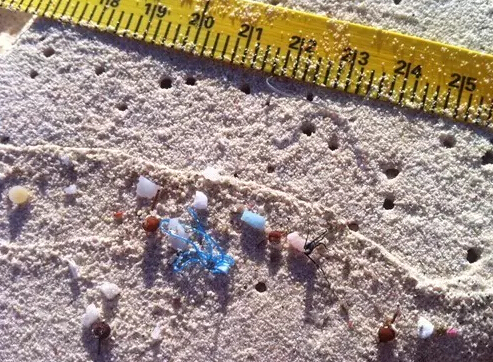
Microplastics, which are small particles of plastic debris found in cosmetics and cleaning products like toothpastes, is viewed as a major environmental concern along with climate change, ozone depletion and ocean acidification.

A national key research project on microplastics was recently launched in Shanghai to assess their impact on the ecological environment, especially in the ocean.

Led by East China Normal University, the study will be conducted by several college laboratories and research institutions in a time span from 2016 to late 2020 and aims to detect marine microplastics, establish research standards and monitoring procedures and develop ways to control their risks on the ecosystem.

Microplastics, which are small particles of plastic debris found in cosmetics and cleaning products like toothpastes, are too small to be captured through existing wastewater treatment processes and are washed straight into the oceans.

GESAMP (The Joint Group of Experts on the Scientific Aspects of Marine Environmental Protection), an inter-agency body of the United Nations, listed microplastics as a mild killer whose harm is equal to marine garbage. In 2015, it was viewed as a major environmental concern along with climate change, ozone depletion and ocean acidification.

Due to its widespread presence in the oceans and potential harm to marine life, some countries have already rolled out countermeasures to deal with the increasing concern.

The US was the first country to announce that it would ban microbeads use in cosmetics; the European Commission is developing proposals to ban them in cosmetics across the EU, following calls from a number of member states. And the UK government has announced plans to ban microbeads use in related products by 2017.

Environmental agencies should tighten emissions of microplastics in different land- and sea-based activities, formulate stricter punishment measures for violations and accelerate legislation research on limiting the production and use of microplastics, said Professor Li Daoji, chief expert of the project.

Observers say the public also needs increased awareness of their potential harm to marine life and should refuse to buy cleansing products with polyethylene (PE), polypropylene (PP), polyethylene terephthalate (PET), polymethyl methacrylate (PMMA), polytetrafluoroethylene (PTFE) and nylon.
Food officials to be tested on new law

image_pdfimage_print

 [Photo/Shanghai Daily]

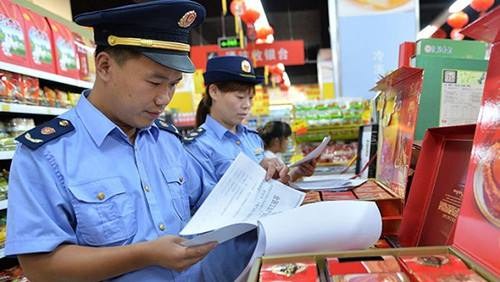
Food safety officials, along with staff of food production and sales companies, will be tested on the nation’s new food safety law and city regulation, officials from Shanghai Food and Drug Administration said yesterday.

Government officials will be demoted if they fail the tests and companies will be scrutinized more frequently by the administration.

Shanghai’s tough food safety regulation takes effect on March 20, and food companies have been told to train their staff about the new regulation.

Companies will be first warned — and then fined — if they fail to do the job. In serious instances, their licenses will be revoked.

Officials and staff from some 200 food companies, including those from high-risk companies like meat, dairy, raw aquatic food and infant food, received training from Shanghai FDA yesterday.

“We have a database of about 1000 questions about food safety law and regulation. They can do the tests on WeChat according to their convenience,” said Chao Qiangguo, director of Shanghai FDA’s food production department.

“Those involved in food industry must understand the regulations. If all the companies understand and follow the regulations, we can ensure safety,” Chao said.

Wang Huimin from Shanghai Bright Dairy Co’s quality department said food safety was the key issue for the food.

“We will organize training for all relevant staff and test them accordingly to make sure all of them have a clear understanding of the new regulation,” he said.

There are some 200,000 food production and sales companies in the city. All of them have to brief and train their staff.

The bureau will test them at a later stage.

The new regulation carries a lifetime ban for operators convicted of food safety crimes and a five-year ban for those whose business licenses have been revoked.

Copyrights rise as awareness expands

image_pdfimage_print

China has set a new record for copyrights, processing more than 2 million new registrations last year, a rise of 22.3 percent compared with 2015, the National Copyright Administration of China said on Monday.

Nearly 1.6 million registrations were publications including literary works and photographs, while 407,774 were software, according to the administration.

The number of software copyright registrations has increased about 40 percent compared with 2015. More than 80 percent of the software works were registered in 10 cities in Guangdong province, along with Beijing and Shanghai.

China’s copyright registrations have seen a steady, rapid rise. The number has increased about fourfold since 2011, when the number of copyright registrations was 570,000.

In 2013, China’s copyright registrations hit what was then a record 1 million.

“The increase in copyright registrations shows the rise of people’s copyright protection awareness,” said Du Ying, a professor of intellectual property rights at Central University of Finance and Economics in Beijing. The State’s strategy to promote copyright protection and innovation has created a positive environment for copyright, she added.

“Registration is used as concrete evidence when disputes arise,” she said.

The vitality of China’s cultural products market contributed to the rise, Du said.

The future of the High Street

image_pdfimage_print

The changes to rates has once again highlighted the rapid changes on UK High Streets. Large centres with numerous coffee shops, restaurants, boutiques and the main multiples are usually trading successfully. The Metro Centre, Oxford Street, Bicester Village, Meadowhall and the other well established shopping centres are flourishing. People want a good range of shops, good brands, and the capacity to make a half day or a day of it with stops for food and drink. Big new shopping centres like Westfield are still being added, with the redevelopment of Birmingham Bullring and other leading City retail destinations.

In contrast many of the smaller High Streets are suffering from the attack of internet shopping offering keener prices, and destination shopping offering more choice. Many a small butcher, baker, fishmonger and green grocer has given up the struggle to compete with the volumes, prices and freshness of the leading supermarkets. In their turn the large supermarkets are under strong competitive pressure from the discounters, who target a narrower range of popular products so they can use their dominant volume in these items to command great prices from suppliers.

The advent of new or expanded and revamped destination shopping centres, and more space for the main discounters has intensified the bricks and mortar shopping competition. The large food retailers have added to the complexity of their tasks by opening a range of local smaller stores, seeking to tap into the narrow range essentials that many people buy daily or several times a week at a convenience store near their homes.

The changes to rate valuations seek to mirror the changing fortunes, but some think they throw up anomalies. The aim is to reduce or remove business rates from small independents, to cut the tax on those many shopping centres with falling revenues or weaker margins, whilst boosting the tax on the successful destination shopping areas. We will find out how successful this has been in the debate that has been unleashed by the new rating schedules.

Multilingual education is ‘absolutely essential,’ UNESCO chief says on Mother Language Day

image_pdfimage_print

21 February 2017 – Learning languages is a promise of peace, innovation and creativity, and will contribute to the achievement of global development goals, the head of the United Nations agency for culture and education has said, marking International Mother Language Day.

&#8220There can be no authentic dialogue or effective international cooperation without respect for linguistic diversity, which opens up true understanding of every culture,&#8221 said UN Educational, Scientific and Cultural Organization (UNESCO) Director-General Irina Bokova in her message on the Day.

&#8220Access to the diversity of languages can awaken the curiosity and mutual understanding of peoples. That is why learning languages is at one and the same time a promise of peace, of innovation and of creativity,&#8221 she stated.

This year, the International Day, observed annually on 21 February, is devoted to multilingual education.

Ms. Bokova said the Day is an opportunity to mobilize for the Sustainable Development Goals (SDGs), and in particular Goal 4, to ensure inclusive and quality education for all and promote lifelong learning.

&#8220Education and information in the mother language is absolutely essential to improving learning and developing confidence and self-esteem, which are among the most powerful engines of development,&#8221 she said.

As such, she appealed for the potential of multilingual education to be acknowledged everywhere, in education and administrative systems, in cultural expressions and the media, cyberspace and trade.

International Mother Language Day was proclaimed by UNESCO’s General Conference in November 1999, and it has been observed every year since February 2000 to promote linguistic and cultural diversity and multilingualism.