image_pdfimage_print

On 23 June 2016 citizens of the United Kingdom (UK) voted to leave the European Union (EU). On 29 March 2017 the UK formally notified the European Council of its intention to leave the EU by…

Over the past 20 years, the European Union has put in place some of the highest common asylum standards in the world. And in the past two years, European migration policy has advanced in leaps and…

‘Europe will not be made all at once, or according to a single plan.It will be built through concrete achievementswhich first create a de facto solidarity.’Robert Schuman9 May 1950On 25 March 2017,…

In response to the illegal annexation of Crimea and deliberate destabilisation of a neighbouring sovereign country, the EU has imposed restrictive measures against the Russian Federation.Overview…

European Commission President Jean-Claude Juncker delivered his annual State of the Union speech at the European Parliament on 14 September 2016, just two days ahead of the informal meeting of 27…

Enlargement is the process whereby countries join the EU. Since it was founded in 1957, the EU has grown from 6 member countries to 28.Any European country that respects the principles of liberty,…

Discours de la HR/VP Federica Mogherini au Comité de Suivi de l’

image_pdfimage_print

Seul le discours prononcé fait foi

Monsieur le Président, Monsieur le Haut Représentant, chers amis,

Je voudrais d’abord en mon nom personnel, en celui de ma délégation et de l’Union européenne, souhaiter un ramadan Karim à toutes et tous.

Je suis ravie d’être ici avec vous, les acteurs clé de la paix au Mali. Et c’est un honneur pour moi de vous porter le message de l’Union Européenne : un message de soutien, et un message de responsabilité.

La renaissance du Mali est possible, si nous tous travaillons, ensemble, pour un nouvel élan de paix.

Ce pays est une terre de traditions anciennes et de grande vitalité culturelle. Jusqu’à peu, les trésors de Tombouctou attiraient des visiteurs du monde entier. La guerre civile et le terrorisme sont des fardeaux qui ont ralenti le Mali, et imposé d’énormes souffrances à tous les Maliens.

Nous savons aussi que l’instabilité régionale a eu un impact négatif sur les événements au Mali. L’idéologie des terroristes n’a rien à voir avec les traditions culturelles et religieuses de ce pays. Ils ont aussi détruit “matériellement” ces traditions et vos trésors – un crime contre le peuple du Mali mais aussi contre un patrimoine de toute l’humanité.

Pour faire face à la menace terroriste, la communauté internationale s’est engagée fermement aux côtés du peuple et des institutions du Mali. Les attaques de ces derniers jours sont une nouvelle tentative de créer des divisions parmi nous: notre réponse ne peut qu’être une unité renouvellée.

Dans quelques instants, je vais annoncer un soutien encore plus important de l’Union européenne au processus de paix au Mali. Mais d’abord, permettez-moi de dire qu’une solution durable aux problèmes du Mali ne peut venir que des citoyens maliens, de l’intérieur de la société malienne.

Le gouvernement, la Coordination des mouvements de l’Azawad et la Plateforme ont accompli des progrès remarquable jusqu’ici, malgré les retards. Je voudrais remercier aussi le Haut Représentant du Président pour son travail.

Un exemple concret est l’installation des autorités intérimaires dans les cinq régions du Nord. C’est une étape importante envers des institutions vraiment représentatives de tous les secteurs de la population.

Il est essentiel que les gens du Mali conservent leur confiance dans les acteurs de l’Accord de Paix. Mais pour que cela se produise, les maliens doivent récolter les dividendes de la paix. 

N’oublions pas que la première priorité pour les maliens reste la lutte contre la pauvreté.  Sans institutions crédibles et représentatives, sans sécurité supplémentaire, il sera très difficile de relever le défi du développement économique.

L’Union Européenne voudrait faire beaucoup plus pour améliorer les conditions de vie des populations dans le Nord du Mali, et pour assurer le développement économique des régions. 1.5 million des Maliens dans le nord du pays ont des difficultés d’accès à des services de base comme l’eau et la santé. Des milliers d’enfants ne peuvent plus aller à l’école. Et plus de 140.000 réfugiés ont du mal à rentrer chez eux. Des localités entières sont sous le contrôle de groupes qui ne veulent pas la paix.

Les signataires de l’Accord ont la responsabilité d’assurer la sécurité et protection des citoyens maliens. Cela relève de la responsabilité première des groupes qui disent les représenter. L’engagement des parties signataires à l’accord pour la stabilisation du Nord est attendu. A ce titre, les patrouilles mixtes et le mecanisme operationel de coordination à Tombouctou et Kidal doivent demarrer au plus vite: cela facilitera le travail des autorités intérimaires et le retour des réfugiés chez eux.

Tout affrontement sur le terrain entre les groupes signataires et ceux qui adhèrent à l’Accord de paix ne ferait qu’accroître la souffrance du peuple du Mali. Nous, les Européens, sommes déjà très impliqués à soutenir le processus de cantonnement et le désarmement, la démobilisation et la réinsertion. Mais la percée décisive ne peut venir que des forces maliennes.

De même pour la question des trafics illicites dans le Nord. Des intérêts économiques, de pouvoir et d’influence sont au cœur des entraves à la mise en œuvre de l’Accord, et au retour de la paix au Mali.

La persistance des groupes terroristes et des réseaux criminels est un obstacle de poids sur le chemin de la paix. Les jeux de pouvoir, les alliances opportunistes ne pourront jamais créer un développement et un bien-être durable. Seule une économie solide, et une société ne vivant pas dans la peur peuvent générer la croissance économique et humaine à laquelle les Maliens aspirent.  

Tout accord de paix prévoit des concessions et des compromis. Je suis consciente aussi du manque de confiance entre beaucoup des acteurs, ainsi que de la frustration de ceux qui ne sont pas encore inclus dans l’Accord. Mais les concessions d’aujourd’hui servent à atteindre un objectif plus élevé : la paix au Mali, et la renaissance de ce pays.

Ne laissez pas passer cette opportunité pour la paix.

Seule la collaboration entre toutes les parties et toutes les communautés peut relancer le développement socio-économique du Nord, la cohésion sociale et la réconciliation.

De notre côté, l’Union Européenne, signataire de l’Accord de Paix, en est également le garant comme membre de la Médiation et du Comité de Suivi de l’Accord. Nous sommes toujours disponibles et prêts à travailler ensemble, à toutes les solutions possibles pour soutenir la paix à travers l’implication active de notre Représentant Spécial pour le Sahel et notre Délégation au Mali. Et nous sommes prêts à travailler avec le G5 Sahel pour encourager leur implication plus résolue.

Aujourd’hui je peux annoncer un soutien supplémentaire de l’UE de 500.000 € au fonctionnement du Comité de Suivi pour les prochains mois, pourvu qu’il y ait de vraies avancées.

L’Europe est aux côtés du peuple du Mali. Mais le destin de ce pays est d’abord entre vos mains. La renaissance du Mali est possible : elle a besoin de notre amitié, mais elle dépend surtout de votre détermination à réaliser la paix. Merci.

Communiqué conjoint : rencontre entre l’Union Européenne et les

image_pdfimage_print

05/06/2017 – 19:50

50 millions d’euros pour la nouvelle Force conjointe des pays du Sahel: l’Union européenne renforce son soutien en faveur de la sécurité dans la région

05/06/2017 – 19:03

Discours de la HR/VP Federica Mogherini au Comité de Suivi de l’Accord de Paix (CSA) à Bamako

05/06/2017 – 17:03

Communiqué conjoint : rencontre entre l’Union Européenne et les ministres en charge des Affaires étrangères des pays du G5 Sahel

04/06/2017 – 18:29

Extraits du discours de la HR/VP Federica Mogherini au Sommet de la Communauté Économique des États d’Afrique de l’Ouest

04/06/2017 – 18:16

Discours de la HR/VP Federica Mogherini au Sommet de la Communauté Économique des États d’Afrique de l’Ouest

FEATURE: Climate change and the world’s oceans

image_pdfimage_print

5 June 2017 – The vital link between oceans and climate change is among the issues at the forefront of discussions at the United Nations Ocean Conference taking place in New York from 5 to 9 June.

SDG 14 is the only universally agreed road map for conserving and sustainably managing marine resourcesPeter Thomson, President of the UN General Assembly

The oceans, which cover three quarters of the Earth’s surface, play a vital role in the global climate system, generating oxygen and absorbing carbon dioxide from the atmosphere. Changes to the climate, brought about by increasing levels of greenhouse gases in the atmosphere, will thus lead to changes in the oceans, including sea-level rise and ocean acidification, which will put marine ecosystems and coastal communities at risk.

World leaders acknowledged the importance of the oceans when they adopted the 17 Sustainable Development Goals (SDGs), the universal blueprint for ending poverty, protecting the planet and ensuring that all people enjoy peace and prosperity. SDG 14 sets out specific targets to be met in order to conserve and sustainably use the oceans, seas and marine resources for sustainable development.

“SDG 14 is the only universally agreed road map for conserving and sustainably managing marine resources. Its faithful implementation is therefore our best hope for remedying the ocean’s woes,” said Peter Thomson, President of the 71st session of the UN General Assembly.

Rising ocean temperatures

Although the ocean is the single largest habitat on the planet and is inextricably linked to human survival, climate change and the impact of increasing carbon dioxide emissions on the oceans have been largely overshadowed in the climate change debate, according to Isabella Lövin, Deputy Prime Minister of Sweden, one of the co-chairs of the Ocean Conference.

The oceans – which produce half of the world’s oxygen, regulate the earth’s climate and temperature, provide food and water, and are home to hundreds of thousands of species – have been a staunch ally in curbing climate change.

More than 93 per cent of all the heat people have added to the planet since the 1950s has been absorbed by the oceans – but at a price, Ms. Lövin stressed. Rising ocean temperatures and increased acidification are now becoming apparent in melting Arctic sea ice and coral bleaching. Immediate mitigation, protection, restoration and adaptation actions are needed.

Healthy oceans, stable climate

 “Whether on the coast or in the high seas far away from all, safeguarding biodiverse marine sites is vital for ensuring the sustainable long-term use of precious natural resources,” says  Irina Bokova, Director-General of the UN Educational, Scientific and Cultural Organization (UNESCO).

The importance of the ocean to global climate cannot be underestimated, according to UNESCO. It absorbs a significant portion of carbon and an overwhelming amount of excess heat. Still, warmer atmospheric temperatures and increasing concentrations of greenhouse gases exert an enormous pressure on the ocean’s ability to regulate the climate.

UNESCO’s Intergovernmental Oceanographic Commission (IOC) helps in developing ocean sciences, observations and capacity-building to monitor the ocean’s major role in the climate system and predict ocean changes.

Laying the ground for efficient climate adaptation and mitigation strategies, IOC focuses on the most damaging impacts, such as temperature increase, sea-level rise, storm variations and changes in marine biodiversity. Its scientifically-founded services help countries, particularly coastal and small island developing States, become more resilient to present and future climate impacts.

Impact of sea-level rise

The oceans are experiencing “major stress” from climate change, according to Deputy Secretary-General Amina J. Mohammed. “Globally, the sea level has risen by 20 centimetres since the start of the 20th century, due mostly to thermal expansion of the oceans and melting of glaciers and ice caps. Some regions are experiencing even greater sea level rise.

“General warming trends, massive episodes of coral bleaching, acidification and the sea level rise are affecting eco­systems in all regions, threatening fisheries, food chains and the oceans’ ability to act as efficient carbon sinks.

“Warmer temperatures are causing more extreme weather events, and a projected two-metre rise in sea levels by the end of the century would be catastrophic for coastal habitats and economies. Hundreds of millions of people are at risk,” she warns.

Particularly at risk are the inhabitants of small island States, with hurricanes, cyclones and tsunamis becoming increasingly more common threats.

Ocean health and economic prosperity

“Trouble for the oceans means trouble for people. Human well-being and health, economic prosperity, and a stable climate depend on healthy oceans,” says Wu Hongbo, Under-Secretary-General for Economic and Social Affairs and Secretary-General of the Ocean Conference.

According to the UN Office for Disaster Risk Reduction (UNISDR), losses due to disasters from natural and man-made hazards including floods, storms and the impacts of climate change are mounting, costing governments over $300 billion globally each year.

UNISDR recently aligned its Disaster Resilience Scorecard, which provides a set of overarching assessments on disaster resilience, with the Sendai Framework – boosting the number of cities and towns capable of reducing their disaster losses by 2020

Global warming and the Polar Region

The effects of worldwide greenhouse gas emissions, one of the leading causes of global warming, are felt most intensely in the Polar Region.

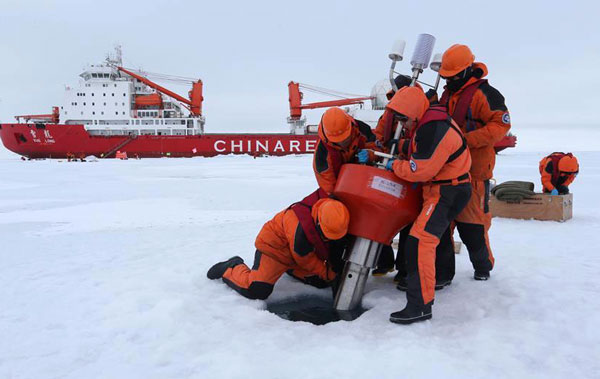
According to the World Meteorological Organization (WMO), both the Artic and Antarctica are warming twice as fast as the rest of the world. Glaciers and ice shelves are melting and sea ice and snow coverage are shrinking.

Polar wildlife ecosystems and indigenous population are already feeling the impact of climate change as polar conditions impact weather across the globe.

“Because of teleconnections, the poles influence weather and climate conditions in lower latitudes where hundreds of millions of people live,” warns Petteri Taalas, WMO’s Secretary-General. “Warming Arctic air masses and declining sea ice are believed to affect ocean circulation and the jet stream, and are potentially linked to extreme phenomena such as cold spells, heat waves and droughts in the northern hemisphere.”

With relatively little data available on the Earth’s Polar Regions, the UN weatheragency kicked off of a two-year international effort to close gaps in polar forecasting capacity and improve future environmental safety.

The Year of Polar Prediction was launched in May to close the gaps in polar forecasting capacity and improve predictions of weather, climate and ice conditions in the farthest reaches of the planet. The  global campaign aims to minimize environmental risks and maximize opportunities associated with climate change in polar regions.

Social scientists will examine how polar forecasts can be factored into socio-economic decision making while stakeholders in transport, shipping and tourism will provide input on community needs.

Coral reefs under threat from climate change

Tropical coral reefs cover a mere 1 per cent of the ocean but are among the most bio-diverse systems on the planet, supporting one quarter of all marine species.

According to the UN Environment Programme (UNEP), coral reefs exist in over 100 nations, including more than 80 developing countries. They sustain human society through a range of ecosystem services, such as livelihoods and food security from fisheries; revenue from tourism; erosion prevention; and protection from extreme weather events through dissipation of wave energy. They also help to lessen inundation and damage during storms.

Among the planet’s natural ecosystems, mangroves, sea-grass beds and coral reefs return the highest value in terms of ecosystem services. A square kilometre of healthy, well-managed coral reef can yield a catch of over 15 tons of fish and other seafood every year. Some 850 million people live within 100 km of coral reefs, deriving some benefits –with at least 275 million depending directly on reefs for livelihoods and sustenance.

Climate change and water supply

According to the UN Development Programme (UNDP), the planet’s freshwater and oceans are inextricably linked through the earth’s water cycle. The agency notes that 97 per cent of the world’s water is in the ocean and the ocean supplies almost all the water that falls on land as rain and snow.  Of the small portion that is fresh water; about a third is in in the ground and a mere .3 per cent in accessible surface waters.

Climate change scenarios project that discrepancies between water supply and demand will heighten. The frequency and severity of floods and droughts will likely change many river basins worldwide – with droughts causing significant socio-economic and environmental consequences.

The UNEP estimates the cumulative economic impact of poor ocean management practices at minimally $200 billion per year. In the absence of mitigation measures, climate change will increase the cost of damage to the ocean by an additional $322 billion annually by 2050.

“In a world where demands for freshwater are ever growing, and where limited water resources are increasingly stressed by over-abstraction, pollution and climate change, neglecting the opportunities arising from improved wastewater management is nothing less than unthinkable in the context of a circular economy,” according to the UN World Water Development Report 2017, Wastewater: The Untapped Resource

Weighing the linkages and significant socio-economic benefits of the earth’s freshwater and marine systems, UNDP underscores the need to take adaptive, integrated, ecosystem-based approaches to manage freshwater and ocean resources.

As such, UNDP is assisting countries in equitably allocating water resources and implementing integrated management through adaptive water governance, which helps to reduce poverty and vulnerability, sustain and enhance livelihoods and protect environmental resources.

Oceans are part of the solution

Humanity owes much to the oceans in many aspects of life: providing invaluable ecosystems, climate regulation and cultural support to the millions of people who live near the sea, according to José Graziano da Silva, Director-General of the Food and Agriculture Organization (FAO).

As 3 billion people ultimately depend on marine and coastal biodiversity, all nations agree on the need to step up efforts to protect oceans and seas, especially in the era of climate change, when transformational interventions are becoming even more urgent and encompassing.

The oceans cover almost three quarters of the Earth’s surface, storing one third of all the carbon emissions stemming from human activity. They are part of the solution, and they must be a key focus of global efforts to cope with and mitigate climate change, he stresses.

“Oceans play a crucial role in the achievement of global food security, as well as human health and well-being,” says Miguel de Serpa Soares, UN Legal Counsel and Special Adviser to the Presidents of the Ocean Conference on oceans and legal matters.

“They are the primary regulator of the global climate, function as an important sink for greenhouse gases, serve as the host for huge reservoirs of biodiversity and play a major role in producing the oxygen we breathe.”

He adds that oceans, seas and marine resources are increasingly threatened by human activities, including increased CO2 emissions, climate change, marine pollution, unsustainable extraction of marine resources, and physical alterations and destruction of marine and coastal habitats.

Welsh Labour want to scrap Barnett Formula

image_pdfimage_print

5 Jun 2017

Campaign photography for Murdo Fraser by Angus Forbes

Responding to the news that Carwyn Jones has said that Welsh Labour would scrap the Barnett Formula, Scottish Conservative shadow finance secretary Murdo Fraser said:

“This is total chaos. The Scottish Labour manifesto is based on the Barnett formula operating – under their plans, spending on policies from arts education to council funding in England is supposed to lead to an increase in the Scottish budget.

“In the past, Kezia Dugdale has actually said that scrapping it would lead to £4 billion in cuts for Scotland.

“The Conservatives have explicitly promised to keep the Barnett formula.

“Jeremy Corbyn needs to come clean – and quick. Will Labour keep the Barnett formula? If they will, why is Labour in Wales saying they won’t?

“And if they won’t, why is it used in their manifesto and how much will Scotland lose if they cut it?”


Scottish Labour’s manifesto relied on Barnett to fund its spending promises:

The manifesto said:

  • Labour will extend the current provision of free school meals to all primary school children in England, paid for by removing the VAT exemption for private schools. Scotland would benefit from the Barnett consequentials of this policy, which would allow it to be replicated here. (p.42)
  • A Labour government will give councils in England extra funding next year – and Scotland will benefit financially (p.84)
  • Labour’s pledge to recruit 10,000 more police officers to work on community beats in England and Wales will mean Scotland will benefit from an investment of £70 million. (p.76)
  • A Labour government will halt cuts to fire services in England and Wales, and recruit 3,000 new firefighters – investment which would mean a boost to Scotland’s valued emergency services (p.79)
  • The arts pupil premium we will introduce for every primary school in England – a £160 million a year boost for schools – will mean more money for the Scottish government to invest in arts education. (p.93)

UK Labour’s manifesto promised huge spending increases in Scotland based on Barnett:

  • The Scottish Parliament will receive a huge funding increase from our policies, and massive numbers of Scots will benefit from our plans in areas reserved to Westminster (p.104).

Ian Murray has said said Barnett was ‘incredibly important’ to Scotland

  • Ian Murray: “It is incredibly important that Scotland’s position in the UK is maintained through the block grant and the Barnett formula” (Ian Murray, Hansard, 21 July 2016, link).

Kezia Dugdale has previously said that scrapping the Barnett formula would lead to £4 billion in cuts and could cost 138,000 jobs:

  • ‘Alex Salmond’s plans to scrap the Barnett formula means £4 billion worth of cuts’ (12 January 2015, link)
  • ‘Buy a Daily Record to read why I’m backing Nicola Sturgeon’s efforts to protect the Barnett formula.’ (14 February 2016, link)
  • ‘I’ll keep the Barnett Formula today, tomorrow, forever @JimforScotland #Scotdebates’ (8 April 2015, link)
  • ‘Scrapping the Barnett Formula for Full Fiscal Autonomy is economic madness and would cost 138,000 jobs’ (6 January 2014, link)

The Scottish Conservative manifesto reads:
‘We will continue to work in partnership with the Scottish and Welsh governments and the Northern Ireland Executive, in a relationship underpinned by pooling and sharing resources through the Barnett Formula’ (Scottish Conservative Manifesto 2017, link).