From Blether Tay-Gither :
Our July Blether will be on Tuesday 25th July at 7pm in Madigan’s Food Emporium and Bookshop, Castle Street.
The theme this month is “Travel and Transport.”
Hope to see some of you there – all welcome!
Jul212017
Jul212017
|
|
|
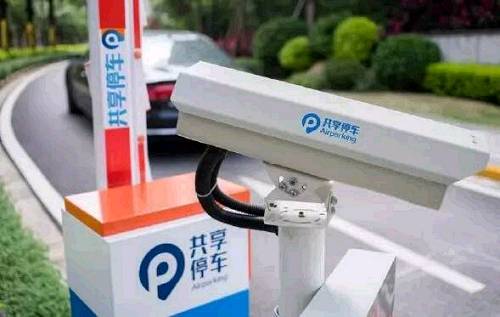
Airparking, a shared parking company, starts their business recently. [File Photo] |
Parking lot sharing, a solution to ease shortages in Chinese cities, is expected to boom just as online taxi bookings and bike sharing have attracted public attention.
The shared parking business model enables different vehicle owners to share the same parking lot at different times arranged by relevant APPs.
He Yuefeng, general manager of the Shanghai Xiaoma Zhiting Internet of Things Co. Ltd., said: “By unblocking the information obstacles, the parking space-sharing app can help users find parking lots easier, especially at peak times.”
A privately-owned parking lot can be rented to others who may otherwise fail to find an appropriate space, while, property management firms can work out a timetable for different cars parked in the same lot at different times, he explained.
In addition to share parking lots, the app will also enable drivers to pay through mobile and locate the cars by remote control.
However, some private parking lot owners are afraid of having their space occupied by drivers who could refuse to leave in due time.
In this regard, He devised a system of extra charges growing with passage of time to compel the occupants to leave.
To realize above mentioned functions, the app requires complicated technological support, He said.
There have been other attempts adopted to alleviate the strain engendered by limited parking resources in big cities.
Cities like Beijing and Wuhan, launched the Sky Parking Garages several years ago in hope of relieving the tension caused by insufficient land resources. However, their efforts were made in vain as the concept has been largely abandoned due to the complex parking procedures and high maintenance costs.
According to National Development and Reform Commission, the ratio of vehicle owners to parking spaces in China’s big cities is 0.8, while, in second- and third- tier cities, it’s only 0.5. However, in the developed world, the rate is as high as 1.3. The quotients of the parking lots in the Chinese cities imply a shortage of at least 50 million parking berths, falling ever-further behind the growing number of vehicle owners.
Jul212017
On [20th July] the Foreign and Commonwealth Office’s (FCO) made public its annual Human Rights Report for 2016. Maldives is one of 30 ‘Human Rights Priority Countries’ (HRPCs), countries with which the UK looks for positive engagement that contributes to addressing human rights concerns.
The Report notes that democratic space, political and civil freedoms continued to deteriorate in Maldives during 2016. It sets out concerns at anti-democratic legislation that was passed during 2016, particularly the Defamation and Freedom of Speech Act which seeks to clamp down on freedom of expression, and the Freedom of Assembly Act which restricts the right of assembly.
The Report raises concern at the intimidation of and threats to journalists, noting that during the year journalists were arrested and news organisations raided, threatened or closed down. It draws attention to several long prison sentences handed out to high-profile political figures, including opposition leaders, at the end of trials that lacked transparency and judicial independence, and that failed to follow due process.
The report mentions the UK’s disappointment at Maldives’ decision to leave the Commonwealth in 2016.
British Ambassador to Maldives, James Dauris, said:
“The purpose of our Annual Report is to draw attention to human rights issues of concern in countries around the world, to encourage progress and recognize achievements made. As a friend of Maldives the UK is concerned by the lack of an effective separation of powers and the continued use of anti-terrorism, defamation and other legislation to silence and discourage opposition voices and journalists. We will continue to engage with Maldives and raise concerns alongside our international partners.”
The Report underlines the UK’s desire to work positively with countries facing human rights challenges to help them improve their human rights performance.
The 30 HRPCs are: Afghanistan, Bahrain, Bangladesh, Burma, Burundi, Central African Republic, China, Colombia, Democratic People’s Republic of Korea, Democratic Republic of Congo, Egypt, Eritrea, Iran, Iraq, Israel and the Occupied Palestinian Territories, Libya, Maldives, Pakistan, Russia, Saudi Arabia, Somalia, South Sudan, Sri Lanka, Sudan, Syria, Turkmenistan, Uzbekistan, Venezuela, Yemen and Zimbabwe.
Promoting human rights is a central foreign policy objective of the British Government. The FCO began publishing the Annual Human Rights Report in 1998 and it is now published online As well as the Annual Report, twice-yearly updates on the 30 HRPCs are also published.
Jul212017
On [20th July] the Foreign and Commonwealth Office’s (FCO) made public its annual Human Rights Report for 2016. The report recognises and welcomes improvements in the human rights situation in Sri Lanka, while also emphasising the need for further progress. Sri Lanka is one of 30 ‘Human Rights Priority Countries’ (HRPCs), countries with which the UK looks for positive engagement that contributes to addressing human rights concerns.
It commends progress by the Government of Sri Lanka against commitments reflected in UN Human Rights Council (HRC) Resolution 30/1, while pointing out that greater progress is needed.
The report welcomes the encouraging step towards reconciliation by the passing of legislation establishing an Office of Missing Persons (OMP), while urging the government to operationalise the OMP. The Report also calls on the Government to repeal the Prevention of Terrorism Act (PTA) and draft new counter-terrorism legislation in line with international human rights standards.
It recognises the need for further development of the police force in order to reduce the risk of human rights violations, including torture, and improving public confidence in the rule of law. The UK is continuing support for projects that build capabilities and will help the Sri Lankan Police meet international standards.
The report notes that intercommunal tensions remain an area of concern. The High Commission notes that these tensions have subsequently escalated in 2017 and hopes that calls to address hate speech as seriously as the problem merits will be heeded.
The UK Government has pledged £6.6m in the period 2016 – 2019 to continue support for reconciliation and human rights. Work with the Government of Sri Lanka will aim to continue to strengthen democracy and the rule of law, and to share UK experience and expertise.
British High Commissioner to Sri Lanka James Dauris, said:
“The purpose of our Annual Report is to draw attention to human rights issues of concern in countries around the world, to encourage progress and recognize achievements made. In the past year we have engaged closely with the Sri Lankan Government and many others to support delivery on human rights commitments.”
The Report reflects the UK’s desire to work positively with countries facing human rights challenges to help them improve their human rights performance.
The 30 HRPCs are: Afghanistan, Bahrain, Bangladesh, Burma, Burundi, Central African Republic, China, Colombia, Democratic People’s Republic of Korea, Democratic Republic of Congo, Egypt, Eritrea, Iran, Iraq, Israel and the Occupied Palestinian Territories, Libya, Maldives, Pakistan, Russia, Saudi Arabia, Somalia, South Sudan, Sri Lanka, Sudan, Syria, Turkmenistan, Uzbekistan, Venezuela, Yemen and Zimbabwe.
Promoting human rights is a central foreign policy objective of the British Government. The FCO began publishing the Annual Human Rights Report in 1998 and it is now published online As well as the Annual Report, twice-yearly updates on the 30 HRPCs are also published.
Jul212017
Under Labour junior Ministers spent most of their time it seemed on local and regional media and trade press. They tended to define the Ministers role as communication. If you went to a meeting with one of them about a constituency issue or problem they usually left the substance to officials, whilst thumbing through files of press clippings to highlight items they disliked. To me it looked as if they were only doing part of the job . Before you can communicate as a Minister you need to have satisfied yourself about the policies, and played your part in ensuring good delivery of service. You have a media problem if the department is letting people down through poor policy or poor execution of policy. The fix for that is not to get better at media handling, but to engage with sorting out the underlying problem.
The ONS study of public sector productivity shows it fell most during the middle Labour years when they threw plenty of public money at their departments and programmes. Ministers did not supervise the way the money was spent properly, and did not supervise it to achieve better results. The new Conservative government needs to learn from this disappointing history, and put Ministers of State in charge of supervising budgets, achieving higher quality results, ensuring extra spending is matched by extra output. Taking an interest in what staff can achieve with the money, encouraging them and assisting in putting it in the right places should be an essential task of Ministerial leadership. Cabinet Ministers need to be strategic and to contribute to the wider government policy debate, so this is an ideal task to delegate to experienced Ministers of State.
I held two important Minister of State commands. One was in the business department in the days when that department was the financial and general business regulator for all firms apart from the banks. I needed to take an active part in ensuring quality and in targeting resources on the handful of cases where we needed to take action. The second was as Minister for local government, where I had a huge budget to allocate and supervise. In both departments various quangos reported to the Secretary of State. I took on the detailed tasks of setting and reviewing budgets, setting and reviewing performance targets, mentoring or replacing Directors and CEOs. It was interesting and worthwhile work. There was plenty of what business calls low hanging fruit or easy wins when it came to finding ways to do things cheaper, better, faster.
The new government needs to hone its skills and use its Ministers to raise the game of the bodies they supervise. The Chancellor is right to make higher productivity his main crusade. What better place to start than the public sector which he helps control. We already have the people in place to do the job. The Ministers need directing and energising to perform this role.