UN report reveals shocking abuse African migrant women face on their journey to Europe

21 July 2017 – The United Nations migration agency today said that perhaps 80 per cent of Nigerian migrant women and girls arriving on Europe’s shores in Italy could potentially be sex trafficking victims, spotlighting the horrific levels of abuse and violence migrants face along their arduous journeys for a better future.

In its report, Human Trafficking through the Central Mediterranean Route (in Italian), the International Organization for Migration (IOM) highlights the plight of those who have been assisted by the UN agency and calls for urgent action against the &#8220market&#8221 which are supplied these victims was well as what is called is a &#8220growing demand&#8221 for paid sexual services.

&#8220Trafficking is a transnational crime that devastates the lives of thousands of people and is the cause of untold suffering,&#8221 Federico Soda, the Director of the IOM Coordinating Office for the Mediterranean, said in a news release announcing the findings.

&#8220This is a theme we have been working on for years, committing to protect, prevent and collaborate with the authorities dealing with organized crime.&#8221

According to the UN agency, over the past three years, its office in Italy has witnesses an almost 600 per cent increase in the number of potential sex trafficking victims arriving in Italy by sea. The upward trend has continued during the first six months of this year, with most victims arriving from Nigeria.

The data feeding the report was drawn from IOM operations in various parts of Italy, where staff met with potential victims of trafficking as soon as they reached the country, allowing the UN agency to develop a list of indicators that can help identify potential victims.

Described in the report, the indicators include gender (most sex trafficking victims are women); age (most victims age between 13-24 years); nationality (most are Nigerians); and psycho-physical wellness (victims are mostly silent and often &#8220controlled&#8221 by other migrants who speak on their behalf or refuse to let them be interview by IOM).

When IOM staff identify a potential victim of trafficking, they explain to them that it is possible to access protection mechanisms and, with the victim’s consent, the staff inform the anti-trafficking helpline about the victim.

Also, if the person agrees, IOM staff provides assistance in communicating and filing a report to the investigating authorities.

&#8220The report describes IOM’s activities in the face of this phenomenon: the difficulties in protecting victims and the main vulnerabilities identified among several cases of people who were assisted by [the agency],&#8221 said Carlotta Santarossa, the project’s manager at IOM, adding:

&#8220We also wanted to tell some of the stories of people who have been assisted by IOM staff to highlight the true nature of this painful and hateful form of slavery.&#8221

The English version of the report will be released shortly, according to IOM.
News story: Ambassador Chris Campbell delivers speeches on Global Britain

Ambassador Chris Campbell has certainly kept busy as he visited various Dominican institutions and universities to deliver speeches on BREXIT and Global Britain. This comes at a moment of ever growing interest on BREXIT and the opportunities it might bring to the Dominican Republic. Certainly, the UK wants to be a Global Britain – a true partner to the European Union but also a country that reaches beyond the borders of Europe and goes out, into the world, to build relationships with old friends and new allies alike. With this in mind, invitations poured into the Embassy to hear more about the topic.

On 3 April 2017, Ambassador Campbell was interviewed for an hour on Dominican National Television (on Channel 4, which is a State Owned Channel and is highly viewed by Dominican Audiences). There he spoke about BREXIT and future possibilities and opportunities between Dominican Republic and the UK. Likewise, on that same day, he gave a speech in FUNGLODE, a Dominican NGO and political think-tank. His speech was live-tweeted from the British Embassy’s Twitter account.

Ambassador Campbell highlighted Global Britain once again on 6 April, when he was invited as the Keynote Speaker for the International Business Week 2017 at Universidad Iberoamericana (UNIBE). More than 100 people attended this event and it was widely reported on in the Dominican press.

More recently, on 19 June, Ambassador Campbell visited the Universidad Pedro Henriquez Ureña (UNPHU). The event was extremely well attended by undergraduate and postgraduate students. There, he mentioned that the UK will continue to look at markets around the world, including Dominican Republic, where there is growth potential and it will want to make it as easy as possible to do business together. This prompted great interest and questions from the audience.

Finally, on 20 June, the Ambassador delivered a speech in the Dominican Ministry of Defence. There, the auditorium was at its full capacity. Once again, Ambassador Campbell spoke about Global Britain, the UK’s role as a world champion of trade and the promotion of UK values around the world.

Ambassador Chris Campbell’s message was clear: United Kingdom wishes to emerge from BREXIT stronger, fairer, more united and more outward looking than ever before, as a fully independent, sovereign country, and as the champion of free trade. To deliver that, it needs stronger commercial and political relations around the world with countries such as the Dominican Republic. This is a great opportunity to strengthen the existing bonds between both countries – it must not be wasted!

Press Contact

Miriam Stern

Miriam.Stern@fco.gov.uk

Death toll rises to 4 in Shanghai demolition accident

The death toll has risen to four after an accident during the demolition of a multi-story building in Shanghai Friday afternoon, the local government said.

A total of six people have been rescued and sent to hospital, and four died after medical treatment failed.

The accident occurred when a multi-story building in Jiading District was being demolished and fell onto a neighboring hotel, trapping an unknown number of people.

Police and firefighters are currently undertaking rescue operations.

News story: International Development Secretary visits Catterick Garrison

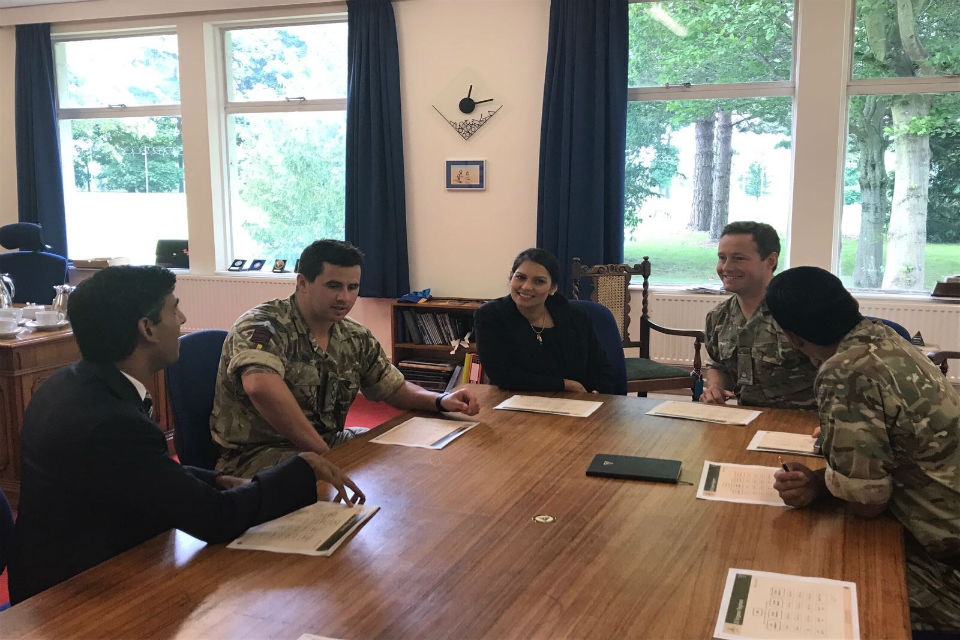
Priti Patel visited members of 32 Engineer Regiment today, as they prepare to deploy in support of the UN Peacekeeping mission in South Sudan.

The deployment of 162 British personnel from Catterick Garrison in Yorkshire will increase the number of UK military in South Sudan to approximately 400.

These troops are primarily split between Malakal and Bentiu in the north of South Sudan, where they are providing engineering and medical support at UN camps and helping to develop logistical routes to improve the delivery of humanitarian aid, a vital task in a country where movement by road is virtually impossible due to a lack of infrastructure.

International Development Secretary Priti Patel said:

The brave members of our Armed Forces are a credit to our country and ahead of their deployment to the UN peacekeeping mission to save lives in South Sudan, I’m delighted to have met men and women from 32 Engineer Regiment.

The situation on the ground in South Sudan is catastrophic and a man-made disaster. Conflict and instability has led to grotesque levels of violence and persecution, and Britain is leading the way in providing life-saving and emergency food, water and medicine to those in need.

The engineering and medical expertise of our deployed British soldiers will make a real difference, bringing skills that the UN desperately needs to protect innocent people in this terrible conflict.

Britain can stand tall in the world, with the dedication of our Armed Forces helping to save lives, rebuild South Sudan and bringing stability and peace to the people who live there.

Priti Patel learns more about the UK's support to the UN Peacekeeping mission in South Sudan.
Priti Patel learns more about the UK’s support to the UN Peacekeeping mission in South Sudan. Picture: Matt Lower/DFID

In South Sudan, 6 million people face the daily reality of going without enough food and water and nearly 4 million people have been forced from their homes because of ruthless violence and widespread sexual assault.

The International Development Secretary visited South Sudan in April to urge parties to the conflict stop the spiral of violence, end the atrocious human rights abuses and allow urgently needed aid to reach those in need. This followed intense fighting between Government and opposition forces and restrictions on access for humanitarian organisations trying to deliver lifesaving supplies.

The UK is the second largest bilateral provider of lifesaving humanitarian assistance in South Sudan and is the leading provider of health and education services. This year the UK will provide 500,000 people with food, safe drinking water for more than 300,000 people, and with other donors is providing nutritional supplements to over 100,000 children and pregnant women.

Notes to Editors

  • The UK was one of the first major donors to respond to the UN’s appeal to South Sudan – pledging less than 24 hours after the appeal was launched – and we are leading the way by making sure millions of people in South Sudan get urgently needed food, water and medicine, as well as longer term support to provide much-needed education.
  • We are providing £100 million of humanitarian assistance to South Sudan this year. This will provide food for over 500,000 people, safe drinking water for over 300,000 people, emergency health services for over 100,000 people and support for 650,000 people to build their livelihoods.
  • The UK has also matched £10 million of the public donations to the DEC’s East Africa appeal which has raised £60 million since its launch.
  • Over half a million new refugees arrived in Uganda in 2016, 88% of them from South Sudan – more than crossed the Mediterranean into Europe. Around 2,200 arrive each day. There are now nearly 1 million South Sudanese Refugees in Uganda.

News story: International Development Secretary visits Catterick Garrison

Priti Patel visited members of 32 Engineer Regiment today, as they prepare to deploy in support of the UN Peacekeeping mission in South Sudan.

The deployment of 162 British personnel from Catterick Garrison in Yorkshire will increase the number of UK military in South Sudan to approximately 400.

These troops are primarily split between Malakal and Bentiu in the north of South Sudan, where they are providing engineering and medical support at UN camps and helping to develop logistical routes to improve the delivery of humanitarian aid, a vital task in a country where movement by road is virtually impossible due to a lack of infrastructure.

International Development Secretary Priti Patel said:

The brave members of our Armed Forces are a credit to our country and ahead of their deployment to the UN peacekeeping mission to save lives in South Sudan, I’m delighted to have met men and women from 32 Engineer Regiment.

The situation on the ground in South Sudan is catastrophic and a man-made disaster. Conflict and instability has led to grotesque levels of violence and persecution, and Britain is leading the way in providing life-saving and emergency food, water and medicine to those in need.

The engineering and medical expertise of our deployed British soldiers will make a real difference, bringing skills that the UN desperately needs to protect innocent people in this terrible conflict.

Britain can stand tall in the world, with the dedication of our Armed Forces helping to save lives, rebuild South Sudan and bringing stability and peace to the people who live there.

Priti Patel learns more about the UK’s support to the UN Peacekeeping mission in South Sudan. Picture: Matt Lower/DFID

In South Sudan, 6 million people face the daily reality of going without enough food and water and nearly 4 million people have been forced from their homes because of ruthless violence and widespread sexual assault.

The International Development Secretary visited South Sudan in April to urge parties to the conflict stop the spiral of violence, end the atrocious human rights abuses and allow urgently needed aid to reach those in need. This followed intense fighting between Government and opposition forces and restrictions on access for humanitarian organisations trying to deliver lifesaving supplies.

The UK is the second largest bilateral provider of lifesaving humanitarian assistance in South Sudan and is the leading provider of health and education services. This year the UK will provide 500,000 people with food, safe drinking water for more than 300,000 people, and with other donors is providing nutritional supplements to over 100,000 children and pregnant women.

Notes to Editors

  • The UK was one of the first major donors to respond to the UN’s appeal to South Sudan – pledging less than 24 hours after the appeal was launched – and we are leading the way by making sure millions of people in South Sudan get urgently needed food, water and medicine, as well as longer term support to provide much-needed education.
  • We are providing £100 million of humanitarian assistance to South Sudan this year. This will provide food for over 500,000 people, safe drinking water for over 300,000 people, emergency health services for over 100,000 people and support for 650,000 people to build their livelihoods.
  • The UK has also matched £10 million of the public donations to the DEC’s East Africa appeal which has raised £60 million since its launch.
  • Over half a million new refugees arrived in Uganda in 2016, 88% of them from South Sudan – more than crossed the Mediterranean into Europe. Around 2,200 arrive each day. There are now nearly 1 million South Sudanese Refugees in Uganda.