Public hospitals to become nonprofit by 2020, State Council says

Public hospitals in China will operate under a new system not driven by profits by 2020, according to a guideline the State Council, China’s Cabinet, released on Tuesday.

China should establish a “modern hospital management system” that adheres to putting people’s health at the center and adheres to the nonprofit nature of public hospitals and putting the public’s interest as a priority, the guideline said.

By 2020, it said, the new system will ensure that a nonprofit, higher-efficiency and sustainable development has been established.

Public hospitals are the main provider of healthcare in China. These hospitals, which numbered more than 12,700 by the end of last year, provided 2.85 billion outpatient and emergency services last year, accounting for more than 87 percent of the cases provided by all hospitals in China, according to the National Health and Family Planning Commission. Private facilities accounted for the rest.

To ensure the new nonprofit hospital structure is sustainable, health authorities will make new health plans and establish integrated healthcare systems in different regions for a better distribution of health resources between big hospitals and community health centers, Wang Hesheng, vice-minister of the health commission and head of the State Council Medical Reform Office, said at a news conference on Wednesday.

The government will increase funding to public hospitals and help them repay loans so they can retain a nonprofit status, he said.

Health authorities also will establish a new merit evaluation system on presidents of public hospitals that is not profit-oriented, highlighting indexes such as quality of medical services provided, cost control and satisfactory ratings from patients, he said.

The result of the evaluations will be linked with the amount of government subsidy, payment of public medical insurance fund and salaries and promotions of hospital presidents, he said.

China started a new round of medical reform in 2010 aiming at public hospitals. One major task was abolishing the generally practiced price markups of drugs sold in hospitals. Drug prices contributed to a profit-driven system, in which many public hospitals were encouraged to use excessive and more expensive drugs and even unnecessary checkups to generate higher profits, according to experts.

Under the system, doctors’ incomes are closely linked with the incomes of their departments in public hospitals, which increased medical bills for patients, according to some experts.

The practice of markups for medications, which has been practiced in public hospitals in China for decades, will be abolished in all public hospitals before the end of September, the National Development and Reform Commission said earlier this year.

“Establishing the new public hospital management system in China that emphasizes their nonprofit nature can ensure a healthy development of public hospitals,” said Fu Wei, director of the Heath Development Research Center, which is part of the health commission. “In the process, public hospitals should be given more autonomy in their management, and more participation from hospital employees in management and supervision of hospitals should be encouraged.”

Chinese medical experts develop drug to kill Zika virus

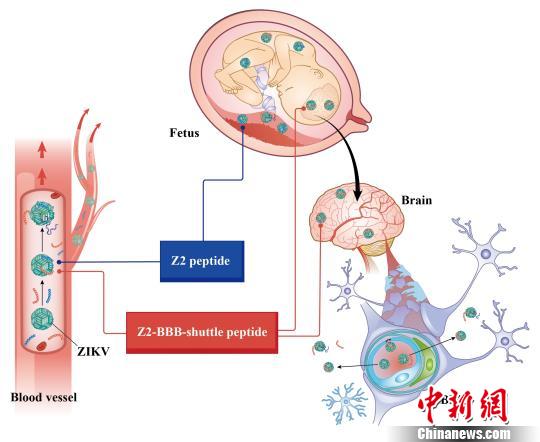
Chinese medical experts have developed Z2, an antiviral peptide that can kill the Zika virus. [Photo/Chinanews.com] 

Chinese medical experts have developed Z2, an antiviral peptide that can kill the Zika virus.

The achievement was published in the international journal Nature Communications on July 26 and has aroused wide attention in the global medical field, China News reported.

The World Health Organization warned about the Zika virus after 2007 outbreak, calling it a public health emergency of international concern. More than 80 countries have reported infection cases by March 2017.

The new drug has been show to kill the Zika virus in rats and can prevent pregnant rats from passing on the virus. It was developed by Lu Lu and Jiang Shibo’s research team at the School of Basic Medical Sciences at Fudan University and by research teams at the Shanghai Public Health Clinical Center as well as the Institute of Microbiology and Epidemiology under the Academy of Military Medical Sciences.

Jiang said there is currently no vaccine or drug that can effectively prevent infection. But the Z2 peptide can combine with surface proteins of the virus to make it inactive.

Jiang added that the peptide is able to penetrate the placental barrier. This not only lowered the infection rate of the pregnant rat but also that of the fetus, stopping vertical transmission.

Experts said that the polypeptide inactivating agent could become a new drug for preventing the virus, as it is also safe for high risk groups, including the pregnant.

BCC: Home Secretary right to take objective look at migration trends and needs

Director General Adam Marshall comments on the Home Secretary’s decision to ask the Migration Advisory Committee to evaluate migration impacts on the UK economy.

“We welcome the Home Secretary’s decision to commission rigorous and independent analysis to inform the shape of our future immigration system. Business communities across the UK tell us that immigration rules need to be based on an objective look at economic trends and needs, which are better evaluated by the experts on the Migration Advisory Committee than by politicians or commentators.  

“Over the coming years, changes to the UK immigration system should be based on firm evidence, input from employers, and a clear understanding of the different requirements facing each region and nation. While businesses are committed to filling vacancies locally wherever they can, they will still need access to both EU and global candidates with a range of skills in the future. We will work to ensure that the views of business communities all across the UK are heard loud and clear by the Migration Advisory Committee over the coming year.”

On EU nationals, Marshall added:

“Amber Rudd has given EU nationals and their employers some much-needed reassurance, by signalling that any significant changes to the immigration rules for EU citizens will take place in an orderly fashion over time. Businesses need clear information to support their existing employees – and to know, right now, who they can hire with confidence over the coming years.

“The Home Secretary has given some important reassurances for EU nationals working in UK businesses, and for those businesses considering hiring EU nationals in the immediate future. Her department now needs to work with employers to get the detail right, and ensure that EU nationals do not face complex administrative processes to confirm their status here in the UK.” 

Ends 

Notes to editors:

The British Chambers of Commerce (BCC) sits at the heart of a powerful network of 52 Accredited Chambers of Commerce across the UK, representing thousands of businesses of all sizes and within all sectors. Our Global Business Network connects exporters with nearly 40 markets around the world. For more information, visit: www.britishchambers.org.uk

Media contacts:

Allan Williams – Senior Press Manager

020 7654 5812 / 07920583381

Orla Hennessy – Press and Communications Officer

020 7654 5813 / 07825746812

Press release: Sports Minister Tracey Crouch praises governing bodies for reforms that will ‘collectively strengthen sport’

Tracey Crouch announced her plan for the new code in the government’s sport strategy ‘Sporting Future’ in December 2015 in a move to ensure that sports bodies in the UK lead the world with the highest levels of governance and transparency.

The code was published by Sport England and UK Sport in October 2016. Sports governing bodies are working with Sport England and UK Sport to become compliant by 31 October 2017.

If sports bodies do not adhere to the code and cannot demonstrate full commitment to becoming compliant with its requirements they will not be eligible to receive public funding. Governance requirements include:

  • Greater transparency
  • Increased skills and diversity in decision making – with a target of at least 30 per cent gender diversity on boards – and a commitment to greater diversity more generally
  • Constitutional arrangements that make boards the ultimate decision-makers

The changes will mark the single, biggest collective step forward in sports governance in the UK, and will set a template for global best practice.

Significant progress is being made, with 50 sports bodies including the Football Association, England and Wales Cricket Board, Lawn Tennis Association, Rugby Football Union and British Cycling all having plans already agreed on how they will become compliant.

The FA’s board, council and shareholders have agreed to reduce the board in size from 12 to 10 members, introducing term limits of 3 x 3 years for both the board and the FA Council while also ensuring that the inclusive and diverse nature of English football is better reflected.

The Lawn Tennis Association agreed all article changes to become compliant with the code in May. This includes reducing council term limits and confirming the primacy of the board as the decision making body.

The RFU has formed an action plan that includes making changes to the composition of the board, including ensuring primacy of the board and the introduction of maximum term limits for council members. The proposals are to be formally presented to the Council in October 2017.

The ECB has committed to reducing the size of its Board and ensure its appointment process and term limits of directors are compliant with the code. The ECB has also initiated its own governance review to ensure that it is best in class for sports bodies.

British Cycling’s National Council agreed at its recent EGM to make the necessary changes to enable it to become compliant with the Code by October. This includes an increase in the number of openly recruited independent board members and an independent chair. The reforms also include a limit for directors of three, three-year terms, with six of the eight current elected members of the board who have exceeded that maximum due to stand down in the autumn.

Sports Minister Tracey Crouch said:

I am really pleased with how governing bodies have responded to the introduction of the code. I appreciate for many sports this is not an easy task, due to the complexities of current governance structures, but virtually all of them have stepped up, understand the importance of this work and have changes in the pipeline that will collectively strengthen sport in this country.

Good governance and transparency in sport is absolutely paramount – not just for effective decision making but to increase diversity, maintain sport’s integrity and ensure millions of sport fans have complete faith in those that run sport.

UK Sport CEO Liz Nicholl said:

Our funded sports, in receipt of support from Government and The National Lottery, have all embraced the new code for sport governance, with 100% of the summer Olympic and Paralympic sports with funded World Class Programmes having agreed detailed action plans with us to be compliant by October.

The changes that are required do present some challenges as they represent a transformational step up for sports governance in this country. It’s time to focus energy on the opportunity to develop a modern sporting system that can grow and adapt to the challenges of the 21st century.

Sport England CEO Jennie Price said:

Implementation of the Code has been a huge undertaking but we are very pleased with the progress NGBs have made. A lot of change is now happening in a relatively short period of time. Despite the hard work involved, sports bodies have embraced the Code, recognising that better governance means better decision making, and have welcomed the chance to bring their business processes in line with best practice in other sectors. We think these changes will pay off for years to come, with British sport leading the world.

Progress is also being made throughout Olympic and Paralympic sport governing bodies. This includes:

British Gymnastics having strong gender diversity on its board, with 50 per cent of it female, while article changes to ensure the sport is code compliant are due to be agreed at its AGM in October

Royal Yachting Association – board committed to implementing the code in full and “create a world class solution” to its governance.

Boccia UK – already adheres to the majority of the code with 43 per cent of its board being female. The sport is committed to improving transparency through better communication of how it operates.

Notes to Editors:

Angling Trust, Archery GB, England Athletics, UK Athletics, Badminton England, Baseball Softball UK, British Amateur Boxing Association, British Basketball Federation, England Basketball, Boccia UK, Bowls Development Alliance, England Boxing, British Canoeing, England and Wales Cricket Board, British Cycling, British Equestrian Federation, Exercise Move Dance UK, British Fencing. Football Association, Goalball UK, English Golf Union, British Gymnastics, England Handball, GB Hockey, England Hockey, British Judo, English Lacrosse, England Netball, British Orienteering, Modern Pentathlon Association of Great Britain, Rounders England, British Rowing, Rugby Football League, Rugby Football Union, British Shooting, British Swimming, Snowsport England, England Squash, Swim England, GB Taekwondo, British Triathlon Federation, British Weightlifting, Lawn Tennis Association, Disability Table Tennis, Volleyball England, British Waterski and Wakeboard, Great Britain Wheelchair Basketball, Wheelchair Rugby, British Wrestling, Royal Yachting Association

  • There are two sports governing bodies that do not have action plans agreed to become code compliant with Sport England and UK Sport. These are: Table Tennis England and the British Mountaineering Council.

  • Table Tennis England has called an Extraordinary General Meeting for 12th August to consider its Board’s proposal on governance changes to become code compliant.

  • The British Mountaineering Council is undertaking an independent governance review and Sport England will continue to work with them to agree an action plan.

Quotes from National Governing Bodies

FA Chairman Greg Clarke said:

Good corporate governance is essential for any successful organisation and The FA is delighted to have agreed the changes necessary to meet the best practice outlined in the code. I would like to thank Sport England for striking a considered balance between constructive engagement and commitment to excellence in governance

We have started putting the new governance structures in place. This month, the newly structured Council will meet for the first time with new members ensuring better diversity and representation across football. From next year the Council will be subject to term limits too. We have also started to change the structure of Board, reducing the size and ensuring we have at least 30% female representation. It is great to see that the code is helping improve governance across all sports and I am delighted that everyone in football is embracing its principles.

ECB Chairman Colin Graves said:

We look forward to continuing to work with the Government and Sport England to ensure good governance across the sports sector. For ECB, ensuring good governance is an integral part of making sure that we have the right structures and plans in place to be able to make the right decisions to grow cricket across England and Wales.

LTA Chairman David Gregson said:

The Lawn Tennis Association believes that world-class governance is essential for any sport to thrive, and as a result has warmly welcomed the new Sports Governance Code. Over the last decade, we have made wide-ranging governance reforms, enabling us to become SGC compliant earlier this year with a small number of additional changes. We look forward to working closely with Sport England to continue improving our corporate governance for the benefit of tennis in Britain.

RFU Chief Executive Officer Ian Ritchie said:

The RFU has been focusing on strengthening our governance for some time. Good governance is a core part of any well run organisation – the RFU council has been reviewing a series of governance reforms which are in line with the Sport England Code recommendations, which will be put to the members for approval later this year.
Press release: Welsh Secretary meets Welsh Veterans in Cardiff

Commonly known as Passchendaele, the battle is remembered as one of the bloodiest campaigns of the First World War.

Units of the 38th Welsh Division, which had fought bravely in the actions at Mametz Wood a year previously, found themselves on the front line at Passchendaele. The renowned Welsh language poet, Hedd Wyn was also killed in battle here on 31 July 1917 and is buried at the nearby Artillery Wood cemetery, close to Ypres.

Ahead of his visit to Belgium this weekend, the Welsh Secretary has taken the opportunity to meet with veterans at Royal British Legion’s Cardiff Pop In to underline the gratitude and respect the people of Wales have for the sacrifices they made

Mr Cairns recognises the importance of honouring Welsh Veterans:

Secretary of State for Wales Alun Cairns said:

The First World War centenary commemorations are playing a crucial role in educating and connecting current and future generations with the stories of every man or woman whose lives were touched by this significant event in our history.

We are privileged to have a long and proud military history in Wales and it is a huge honour today to meet with Welsh veterans that have lived through a range of conflicts over the years. The sacrifices that they and so many others made to ensure our future security cannot be forgotten and it is crucial that it is understood and appreciated by those growing up today.

The work that the Legion does to improve the lives of the armed forces community cannot be underestimated. It plays such a critical role from awarding grants, offering emotional support and comradeship and ensuring the nation comes together to remember. These veterans truly are an inspiration. They gave so much and for that we owe them a great deal.

Ant Metcalfe, Wales Area Manager, The Royal British Legion said:

We look forward to welcoming the Secretary of State and members of our veteran community to the Pop In today to discuss current veterans issues as well as the importance of remembering the fallen from past conflicts. As the nation’s biggest Armed Forces charity and the custodians of Remembrance the Legion work to provide care and support to all members of the British Armed Forces past and present and their families.

Notes to editors

Welsh forces in Passchendaele

  • The Third Battle of Ypres is of particular resonance for Wales as it claimed the lives of many Welsh soldiers including the renowned Welsh language poet, Hedd Wyn. Hedd Wyn was killed on 31 July 1917 and is buried at the nearby Artillery Wood cemetery, close to Ypres.

  • Units of the 38th Welsh Division, which had fought bravely in the actions at Mametz Wood a year previously, found themselves on the front line at the Third Battle of Ypres (Passchendaele). The 38th (Welsh) Division were heavily involved at Pilckem Ridge. Alongside the experienced troops were who had seen action in the Battle of the Somme were new recruits who had been conscripted in early 1917.

  • During the action three Welshmen won the Victoria Cross, Sergeant Ivor Rees 11th South Wales Borderers, Corporal James Llewellyn Davies 13th Royal Welsh Fusiliers and Sergeant Robert Bye 1st Welsh Guards. The 38th (Welsh) Division sustained a total of 2,922 casualties during the actions of 31st July and 2nd August.